

C0561 on 2007-2009 Cadillac SRX: StabiliTrak Disabled Causes and Fixes
On a 2007-2009 Cadillac SRX, code C0561 usually indicates a communication network problem, not a faulty brake module. The issue is often caused by corroded wiring, faulty connectors, or a fault in another module entirely, as highlighted in GM's Technical Service Bulletin #PIC4740E. In many real-world cases, the root cause is an issue like low engine oil pressure, a bad wheel speed sensor, or even a poor ground connection, which sends invalid data to the brake module, causing it to shut down Stab
- C0561 means the StabiliTrak system was disabled due to receiving bad data from another module; it is not a brake system failure.
- Do NOT replace the Electronic Brake Control Module (EBCM) for this code. The problem is almost always elsewhere.
- The root cause is very likely a communication network issue, often related to wiring or connectors, as documented in TSB #PIC4740E for the SRX.
- A professional-grade scan tool is required to see codes from all modules and properly diagnose the issue.
- Always diagnose and fix other 'U', 'P', or 'B' codes before attempting to resolve C0561.
What's Unique About the 2007-2009 Cadillac SRX
The first-generation Cadillac SRX and its platform mates (Cadillac STS, CTS) are built on GM's Sigma platform, which features a highly integrated GMLAN communication network. A well-documented issue, outlined in TSB #PIC4740E, points to communication breakdowns that can trigger a cascade of trouble codes, including C0561. 🎬 Watch: A quick breakdown of the C0561-71 fault code. These failures often manifest with strange symptoms like the door locks cycling while driving, alongside the 'Service Stability' message. This directly links the C0561 code to a known platform-specific wiring or network problem rather than a random component failure. Forum users have reported that issues like melted GMLAN wires near the transmission can ground out the communication line, causing these exact symptoms.
Diagnostic Flowchart
Tap your situation to follow the diagnostic path that matches what you're seeing on this vehicle.
Symptoms You May Notice
- "Service Stability System" or "StabiliTrak Off" message on the driver information center
- ABS warning light illuminated
- Traction Control warning light illuminated
- Door locks cycling on their own while driving (as per TSB #PIC4740E).
- Loss of communication with the Transmission Control Module (TCM) or Engine Control Module (ECM)
- Check Engine Light may be on if the root cause is an engine-related fault
- Vehicle may enter a "reduced engine power" or "limp mode".
- In rare cases related to network failure, the vehicle may fail to start or stall while driving.
- Replacing the Electronic Brake Control Module (EBCM). This is the most frequent mistake. The C0561 code is the EBCM reporting a problem it sees from another module; replacing the EBCM will not fix the root cause.
- Focusing only on the ABS/StabiliTrak system while ignoring primary trouble codes stored in the Engine (ECM), Body (BCM), or Transmission (TCM) control modules.
Most Likely Causes
- Communication Network Wiring/Connector Fault 🔴 High Probability TSB #PIC4740E specifically calls out issues with communication codes, including C0561, stemming from wiring problems. Owners have reported specific failures where the GMLAN wiring harness running to the transmission chafes or melts against a heat shield, causing the wires to ground out and disrupt the entire network. Poor ground strap connections are also a notorious GM issue that can cause widespread communication faults.
How to confirm: A technician will use a specialized scan tool to check which modules are offline. They will then perform a visual inspection of the CAN bus wiring harness and connectors, particularly the harness running along the transmission and major ground points. Testing the GMLAN bus resistance with a multimeter (should be ~60 ohms) can also identify wiring issues.
Typical fix: Repairing the damaged section of the wiring harness or cleaning/tightening the terminals in the faulty connector. In many cases, dielectric grease is applied to prevent future corrosion. For melted wires near the transmission, the damaged section must be carefully repaired, ensuring the original wire length and twist are maintained, and then rerouted or shielded to prevent recurrence.
Est. part cost: $5-$50 - Fault in Another Control Module or its Sensor 🟡 Medium Probability The C0561 code is a reaction to bad data. A failing Engine Control Module (ECM), Body Control Module (BCM), or Transmission Control Module (TCM) can send out corrupt data, causing the EBCM to disable StabiliTrak. More commonly, a simple sensor fault, like a bad wheel speed sensor or even low engine oil pressure causing camshaft actuator codes, can be the root cause. The EBCM sees the fault from the other module and disables itself as a safety measure.
How to confirm: A full-system scan with a professional tool is required to find primary trouble codes stored in other modules. The presence of codes like P0700 (TCM), wheel speed sensor codes, or even engine performance codes alongside C0561 in the EBCM is a strong indicator.
Typical fix: Diagnose and fix the primary trouble code first. This could involve replacing a faulty wheel speed sensor, fixing an engine oil pressure issue, or replacing the module that has the primary fault. Once the primary issue is resolved and codes are cleared, the C0561 will disappear.
Est. part cost: $150-$800 - Weak or Failing Battery / Poor Ground Connection 🟡 Medium Probability Low or unstable system voltage is a common cause of serial data errors and communication faults on many GM vehicles. A weak battery or a corroded/loose ground strap can cause multiple modules to report errors or lose communication simultaneously, leading to a C0561 code.
How to confirm: Test the battery voltage and the charging system output. A resting voltage below 12.4V indicates a weak battery. Inspect the main battery terminals and the primary ground straps (from the battery to the chassis and engine to firewall) for corrosion or looseness.
Typical fix: Clean the battery terminals and ground connections thoroughly. If corrosion is severe, the ground strap may need to be replaced. If the battery is weak or fails a load test, it should be replaced.
Est. part cost: $10-$250
Rare But Worth Checking
- Failing Electronic Brake Control Module (EBCM): While C0561 is designed to report a problem *outside* the EBCM, it is possible, though rare, for the module itself to fail internally in a way that triggers this code. This should only be considered after all other possibilities, especially wiring and other module faults, have been exhaustively ruled out.
Diagnosis Steps
- Perform a full vehicle scan with a tool that can read codes from all modules (EBCM, ECM, BCM, TCM, etc.). Do not use a basic code reader that only checks the ECM.
- Prioritize diagnosis of any other 'U' (network), 'P' (powertrain), or 'B' (body) codes found. C0561 is a secondary code and should be addressed last.
- If network codes like U0073 are present, consult TSB #PIC4740E. The bulletin directs inspection of the wiring and connectors. A real-world example points to the GMLAN harness near the transmission, checking for melting or chafing against the heat shield.
- Inspect and test the battery and charging system. Ensure voltage is stable and above 12.4V at rest. Clean and tighten all major ground connections, especially the battery-to-chassis and engine-to-firewall straps.
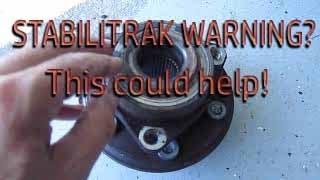
- If a specific module is reporting a fault (e.g., a wheel speed sensor code), diagnose that component and its wiring harness directly. On SRX models, the magnetic encoder ring on the wheel bearing can break or collect debris, causing a bad signal.
- Using the scan tool's live data function, monitor the signals being sent from various modules to see which one is providing invalid data.
- If no other codes are present and the wiring appears intact, the issue may be an intermittent fault. Test drive the vehicle while monitoring live data to try and replicate the fault.
- Only consider replacing a control module after confirming all wiring and connectors are in perfect condition and another module has been definitively identified as the source of the fault.
Parts You'll Likely Need
- Wiring Harness Repair Supplies — The most likely cause, per TSB #PIC4740E and owner experiences, is a fault in the communication wiring or grounds. The fix is often a repair to the existing harness, not a full part replacement.
Trusted brands: 3M, ACDelco
OEM price range: $10-$50
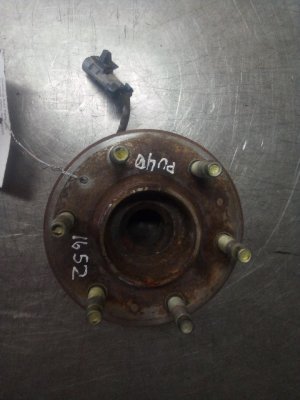
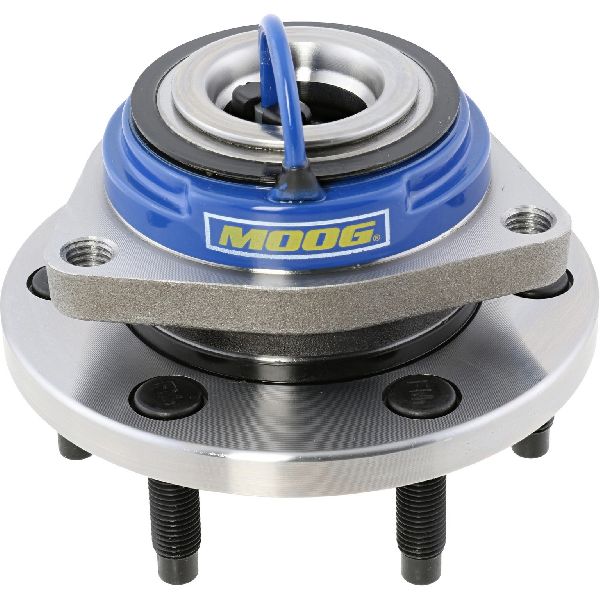
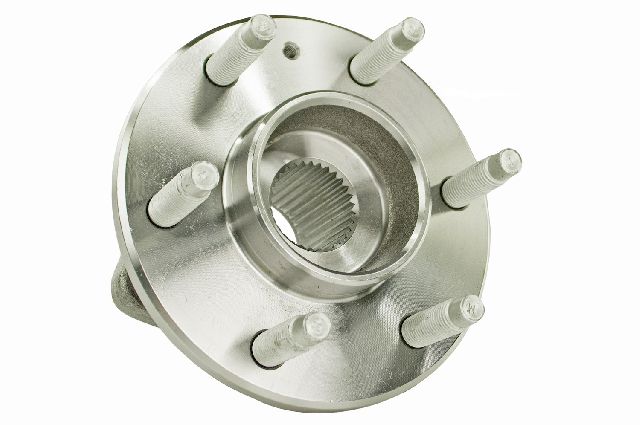
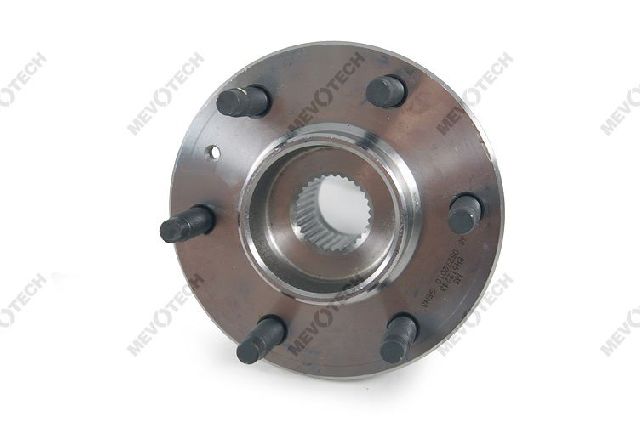
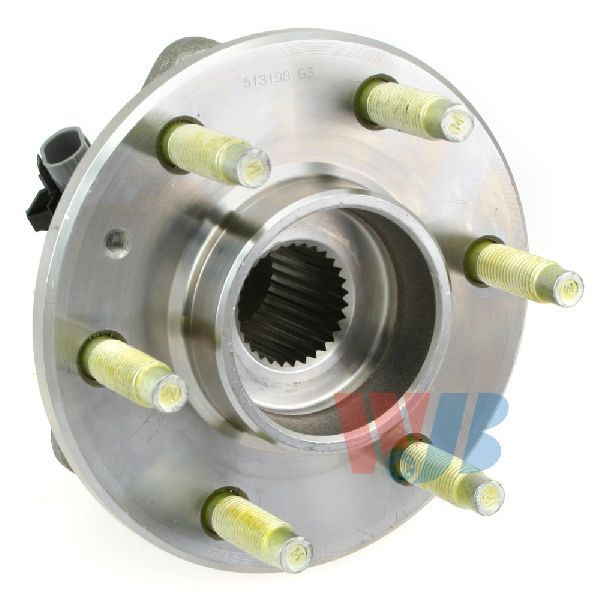
Aftermarket price range: $5-$30 - Wheel Hub Bearing Assembly — A common primary fault that triggers C0561 is a bad wheel speed signal. On the SRX, the magnetic encoder ring is integrated into the wheel bearing hub. This ring can crack or become damaged, requiring replacement of the entire hub assembly to fix the signal.
Trusted brands: ACDelco, Timken, MOOG
OEM price range: $200-$350
Aftermarket price range: $80-$200
Related Codes That Often Appear With This One
- U0073 — This code means 'Control Module Communication Bus A Off,' indicating a general communication failure on the high-speed CAN bus, which is the direct cause for the EBCM setting C0561. It is listed in TSB #PIC4740E.
- U0100 — Indicates 'Lost Communication With ECM/PCM.' If the EBCM can't hear from the engine computer, it will disable stability control as a precaution. This code is also mentioned in TSB #PIC4740E.
- U0121 — This code means 'Lost Communication With Anti-Lock Brake System (ABS) Control Module.' While C0561 is stored *in* the EBCM, other modules may log U0121 when the EBCM goes offline due to network issues. It is also part of the list in TSB #PIC4740E.
- P0700 — This is a general 'Transmission Control System Malfunction' code. If the TCM has a problem and reports it to the ECM, the invalid data can be passed along the network, triggering C0561. This code is also cited in TSB #PIC4740E.
- C0561-71 — This is a common sub-code for C0561, specifically meaning 'Invalid Serial Data Received.' It reinforces that the EBCM received data it could not validate, often pointing to a faulty sensor (like a wheel speed sensor) or a network issue.
Technical Service Bulletins (TSBs) & Recalls
- PIC4740E: Addresses multiple communication DTCs (including C0561) and unusual symptoms like cycling door locks, pointing to inspection of the vehicle's communication network wiring and connectors.
Platform-Specific Known Issues
- TSB #PIC4740E documents an issue where various communication DTCs, including C0561, can be set due to wiring or connector issues. Symptoms can include door locks cycling while driving and loss of communication with the TCM or ECM.
- A specific, owner-documented failure point is the GMLAN communication line that runs near the transmission. The protective plastic conduit can break down from heat, allowing the wires to rest against a metal heat shield, melt, and ground out the network.
Mechanic-Grade Diagnostic Values
- High-Speed GMLAN Bus Resistance — expected: 60 ohms (± 5 ohms) when measured across pins 6 and 14 of the DLC with the battery disconnected.. Failure: A reading of ~120 ohms indicates an open in the bus or a missing termination resistor. A reading near 0 ohms indicates the GMLAN High and Low wires are shorted together.
- High-Speed GMLAN Bus Voltage — expected: Approximately 2.5V on both GMLAN High (Pin 6) and GMLAN Low (Pin 14) at rest (key on, engine off). When communicating, GMLAN High should toggle to ~3.5V and GMLAN Low should toggle to ~1.5V.. Failure: Voltages stuck high, low, or at 0V indicate a short to power, short to ground, or an open circuit.
- System Voltage (Engine Running) — expected: 13.8V – 14.4V, stable.. Failure: Voltage below this range, especially during load, can cause random communication faults across all modules.
- System Voltage (Key On, Engine Off) — expected: Greater than 12.4V.. Failure: A resting voltage below 12.4V indicates a weak or discharged battery, a primary cause of electronic communication issues.
Hidden / Shadow Codes Worth Checking
- C0561-71: System Disabled, Invalid Serial Data Received. This is the most common symptom byte, indicating the EBCM received data it could not validate. Often points to a faulty sensor or communication issue. (see via GM Tech 2, GDS2, or other professional-grade scan tool that can read manufacturer-specific codes and symptom bytes.)
- C0561-72: System Disabled, Alive Counter Incorrect. This indicates a problem with the data packet counter, suggesting an issue with the data bus itself or the sending module is failing intermittently. (see via GM Tech 2, GDS2, or other professional-grade scan tool.)
- C0561-74: System Disabled, Value of Signal Protection Calculation Incorrect. This is a checksum error, meaning the data arrived but its validation signature is wrong. This often points to a module that needs reprogramming or is failing. (see via GM Tech 2, GDS2, or other professional-grade scan tool.)
Wiring & Ground Locations
- EBCM (Electronic Brake Control Module) — At the right front corner of the engine compartment.. This is the module that sets code C0561. Its connector and the surrounding harness are key inspection points for corrosion or damage.
- GMLAN Data Link Resistor — Behind the right rear quarter trim panel, approximately 47.5 cm from the rear subwoofer breakout.. This is one of the two 120-ohm termination resistors for the GMLAN bus. A failure or poor connection here will cause the total bus resistance to read 120 ohms instead of 60, leading to communication errors.
- G200 — Behind the left kick panel.. This is a major instrument panel ground point. A loose or corroded G200 can affect the Body Control Module (BCM) and other interior modules that communicate on the GMLAN.
- G100 / G102 (4.6L V8) — On the right rear of the engine, on the cylinder head.. These are primary engine ground points. A poor connection here can cause electrical noise and data corruption from the Engine Control Module (ECM).
- G101 — Left rear of the engine compartment, on the frame.. This is a key chassis ground. A bad connection here can cause a wide range of seemingly unrelated electrical issues, including communication faults.
Real Owner Repair Stories
- YouTube comment on '07-13 SERVICE STABILITRAK FIX' (GM Truck/SUV (GMT900 platform, similar wiring architecture to SRX)) — Service Stabilitrak light, door locks cycling randomly, transmission shifting into one gear and not changing, vehicle failed to start.
❌ Tried (didn't work) Initially fixed by adding a ground strap, but the problem returned and worsened.
✅ What actually fixed it Found the GMLAN communication line wiring harness that runs to the transmission had rested against a heat shield. The protective plastic conduit had broken away, allowing the wires to melt against the shield and ground out the communication bus. A temporary repair was made by carefully taping the damaged wires with 3M rubber splicing tape and securing the harness away from the heat shield, which resolved all electrical problems. - YouTube video 'How to fix Stabilitrak service light' (2007 Chevy Tahoe (shares platform elements and diagnostic logic with SRX)) — Service Stabilitrak light on, Check Engine Light on with codes P0172 and P0175 (System Too Rich).
❌ Tried (didn't work) Initially focusing on the C0561 code in the EBCM.
✅ What actually fixed it The technician followed the GM service bulletin which states to diagnose other module DTCs before C0561. The rich condition was caused by an incorrect fuel alcohol content reading in the ECM (reading 61% instead of a normal ~3%). Using a scan tool, the 'Fuel Composition Reset' function was performed. This corrected the fuel trims, which resolved the engine codes. After clearing the codes and test driving, the C0561 in the EBCM did not return, proving the StabiliTrak issue was a direct result of the engine running incorrectly.
OEM Part Supersession History
25758395→89060339, 25896031, 22783391— Standard part evolution and updates by the manufacturer.
Heads up: Part numbers are specific to vehicle options (e.g., with/without certain suspension packages). Always verify the correct part number for the specific VIN before ordering. Part number 22783391 is listed for 2007-2009 SRX with 3.6L or 4.6L engines.
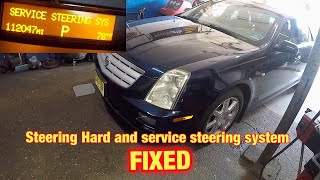
Helpful Videos
Used OEM Parts in Stock


New Aftermarket Parts Available



The information in this article is provided for general reference and educational purposes only. Vehicle specifications, procedures, and part compatibility can vary by production date, trim level, and region. Always consult your vehicle's factory service manual and verify part numbers before purchasing or performing repairs. Safety-critical components such as airbags, seat belts, and braking systems should be installed by a qualified professional.
- Cadillac SRX:
- 🎬 Helpful Videos
- 🛍️ Shop This Part
- What's Unique About the 2007-2009 Cadillac SRX
- Diagnostic Flowchart
- Symptoms You May Notice
- Most Likely Causes
- Rare But Worth Checking
- Diagnosis Steps
- Parts You'll Likely Need
- Related Codes That Often Appear With This One
- Technical Service Bulletins (TSBs) & Recalls
- Platform-Specific Known Issues
- Mechanic-Grade Diagnostic Values
- Hidden / Shadow Codes Worth Checking
- Wiring & Ground Locations
- Real Owner Repair Stories
- OEM Part Supersession History
- 🎟️ Get 5% Off