

C0561 on 2008-2014 Cadillac CTS: Service StabiliTrak Causes and Fixes
C0561 on a Cadillac CTS means the StabiliTrak system is disabled because it received invalid data from another module. This is a 'messenger' code; do not replace the brake module. The real problem is almost always a fault in another system, most commonly a bad wheel speed sensor, a failing mass airflow sensor, or a throttle body issue. A full-system scan is required to find the primary code.
- Code C0561 means the StabiliTrak/ABS system is off because of a problem in another part of the car.
- Do not replace the brake control module (EBCM). The problem is almost never the EBCM itself.
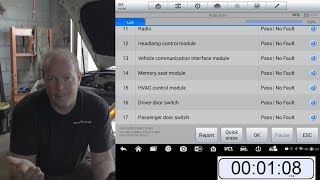
- You must use a full-system scanner to find the 'real' trouble code in the Engine, Body, or Transmission control modules.
- Common culprits are faulty wheel speed sensors, a bad mass airflow sensor, or wiring issues.
- Fixing the primary problem and clearing the codes will make the C0561 code go away.
What's Unique About the 2008-2014 Cadillac CTS

On the second-generation Cadillac CTS, the StabiliTrak system is highly integrated with powertrain and body modules. A fault in a seemingly unrelated component, like the mass airflow sensor, throttle body, or even a loose spark plug wire, can interrupt the data stream the EBCM needs to calculate wheel slip and vehicle stability. This causes the EBCM to shut down as a precaution and set C0561. Owners often mistakenly focus on the brake module, but TSBs and mechanic experience show the root cause is almost always an issue in another module that needs to be diagnosed and fixed first.
Diagnostic Flowchart

Tap your situation to follow the diagnostic path that matches what you're seeing on this vehicle.
Symptoms You May Notice

- "Service StabiliTrak" or "Service Traction Control" message on the Driver Information Center (DIC).
- ABS warning light is on.
- Traction Control System (TCS) warning light is on.
- The vehicle may seem to drive normally under regular conditions.
- In some cases, related to network issues, door locks may cycle while driving. [⭐ MANUFACTURER TSB — highest authority]
- Reduced engine power or "limp mode" if the primary fault is with a critical powertrain component like the throttle body.
- Rough or uneven idle.
- Replacing the Electronic Brake Control Module (EBCM). Manufacturer TSBs like PIT4169F and service information explicitly advise against replacing the EBCM for this code, as it is almost always a messenger for a fault elsewhere.
Most Likely Causes

- Fault Code Stored in Another Module (e.g., ECM, BCM, TCM) 🔴 High Probability The EBCM relies on data from other modules. If any of this data is compromised due to a fault (like a bad sensor reporting to the ECM), the EBCM disables itself as a safety measure. Service information explicitly states to diagnose other DTCs first before C0561.
How to confirm: Use a professional-grade scan tool capable of reading codes from ALL vehicle modules (EBCM, ECM, BCM, TCM, etc.). Find and diagnose the other codes first. Common primary codes include those for the MAF sensor, throttle position sensor, or even engine misfires.
Typical fix: Diagnose and repair the primary fault code found in the other module. For example, replacing a faulty mass airflow sensor or cleaning a dirty throttle body will often resolve the C0561 code after clearing.
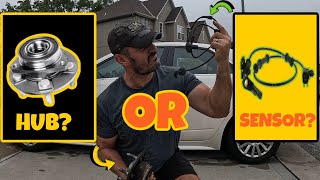
Est. part cost: $50-$400 - Faulty Wheel Speed Sensor or Hub Bearing Assembly 🟡 Medium Probability The magnetic encoder ring on the wheel bearing can accumulate metallic debris or crack, causing the wheel speed sensor to send an erratic signal. This invalid data is passed to the EBCM, triggering the C0561 code. The wiring to the sensor can also fail from repeated flexing.
How to confirm: Scan for wheel speed sensor-specific codes (C0035-C0050). Use a scan tool to monitor live data from all four wheel speed sensors while driving; look for one that drops out or reads differently. 🎬 Watch: How to diagnose a faulty wheel speed sensor. Visually inspect the wheel bearing's magnetic encoder ring for debris or cracks.
Typical fix: Often, simply cleaning the metallic debris off the magnetic encoder ring on the hub is enough, as recommended by GM TSB PIC5428E. If the sensor itself has failed, it can be replaced. If the encoder ring on the bearing is damaged, the entire wheel hub assembly must be replaced.
Est. part cost: $30-$250 - Dirty or Failing Throttle Body 🟡 Medium Probability Carbon buildup on the throttle plate can cause it to stick or respond slowly, leading to a mismatch between the expected and actual throttle position. The ECM detects this, sets a powertrain code, and sends invalid data to the EBCM, triggering C0561.
How to confirm: Scan for throttle position sensor (TPS) codes (e.g., P2135). Observe throttle response on a scan tool. Visually inspect the throttle body for carbon buildup. 🎬 See this walkthrough on cleaning your CTS throttle body. A rough idle is a common symptom.
Typical fix: Remove and thoroughly clean the throttle body and plate with a dedicated throttle body cleaner. If the internal electronics have failed, the entire throttle body assembly needs to be replaced.
Est. part cost: $10-$350 - Wiring Harness or Connector Issue ⚪ Low Probability TSB #PIC4740E points to potential communication issues caused by chafed or corroded wiring, particularly in the complex harnesses that connect the various control modules. [⭐ MANUFACTURER TSB — highest authority] Forum users have reported LAN communication wires near the transmission or alternator melting or grounding out. A poor ground connection for the ECM or EBCM can also cause this code.
How to confirm: Visually inspect wiring harnesses connected to the EBCM, ECM, and transmission for signs of damage, corrosion, or improper routing. Pay close attention to areas where the harness may rub against brackets or the engine itself. Check main engine and body ground points for corrosion or looseness.
Typical fix: Repair the damaged section of the wiring harness. Clean and secure corroded connectors. Ensure harnesses are properly secured away from heat sources or moving parts.
Est. part cost: $10-$100 - Low or Unstable Battery Voltage ⚪ Low Probability Low voltage can cause unpredictable communication errors between modules on the vehicle's network, leading to invalid data messages and codes like C0561.
How to confirm: Test the battery and charging system. With the engine running, voltage should be stable between 13.8V and 14.4V.
Typical fix: Charge or replace the weak battery. Diagnose and repair any charging system faults.
Est. part cost: $150-$300
Rare But Worth Checking
- Steering Angle Sensor (SAS) Failure:
- Loose Spark Plug Wire or Engine Misfire:
- Incorrect Fuel Composition (Flex Fuel Models):
Diagnosis Steps
- Perform a full system scan with a tool that can read codes from all modules (ECM, BCM, TCM, EBCM). Do not use a basic engine code reader.
- IGNORE C0561 INITIALLY. Focus on any other codes present in the ECM, BCM, or other modules, especially P-codes (powertrain) and U-codes (network).
- Diagnose and repair the root cause of the primary codes found in step 2. This could be a faulty sensor (MAF, Throttle Position), a wiring issue, etc.
- If no other codes are present, use the scan tool to monitor live data. Check wheel speed sensor readings while driving, check throttle position sensor voltage, and monitor MAF sensor grams/sec readings.
- If wheel speed sensor data is erratic, inspect the sensor and its corresponding magnetic encoder ring on the wheel hub for metallic debris or damage. Clean as necessary.
- Inspect the throttle body for carbon buildup. If dirty, clean it thoroughly.
- Check battery voltage and charging system stability.
Parts You'll Likely Need
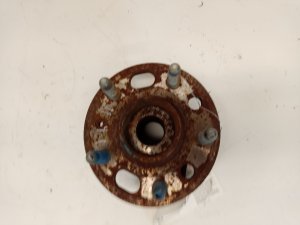
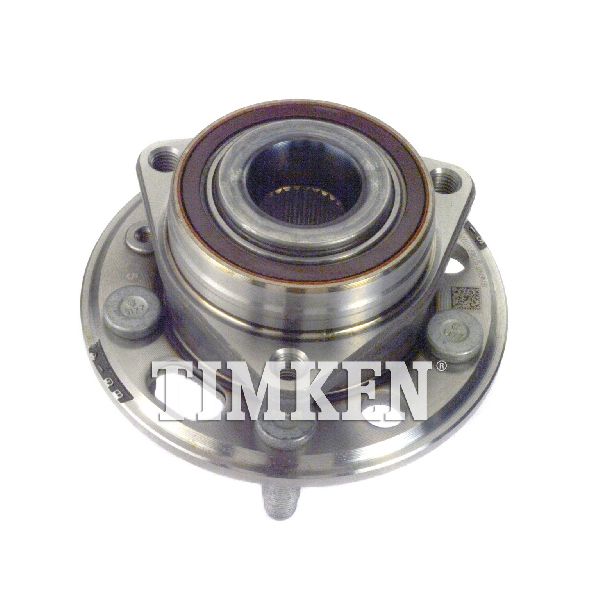
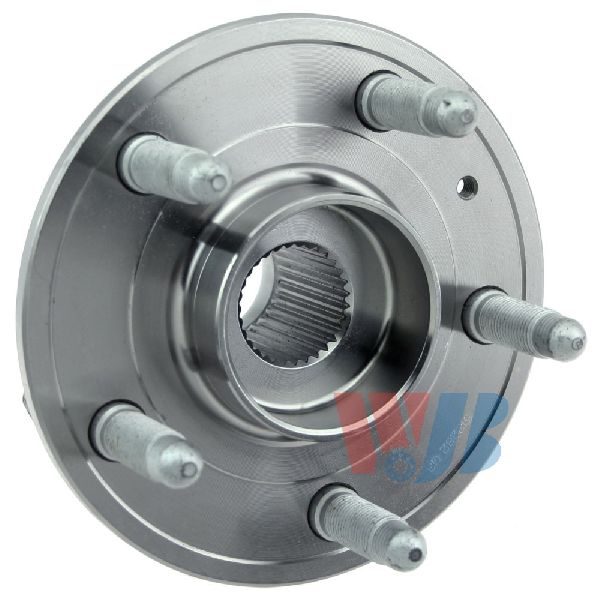
- Wheel Hub Bearing Assembly
(OEM #13546785 (Front), 25954415 (Rear))— The magnetic encoder ring for the wheel speed sensor is integrated into the hub. If the ring is damaged or the bearing is failing, it must be replaced as a unit. This is a very common failure point.
Trusted brands: ACDelco, SKP, MOOG, Timken
OEM price range: $125-$300
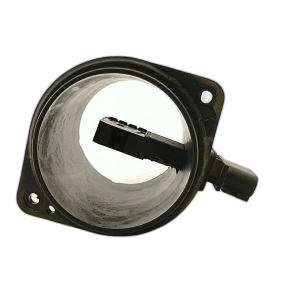
Aftermarket price range: $70-$180 - Mass Airflow (MAF) Sensor
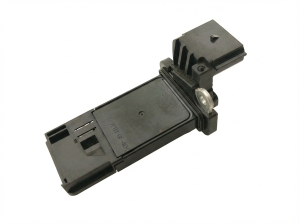
(OEM #ACDelco 213-4222)— A failing MAF sensor can set a code in the ECM, which then sends invalid data to the EBCM, triggering the C0561 code as a secondary fault.
Trusted brands: ACDelco, Denso, Hitachi
OEM price range: $150-$250
Aftermarket price range: $70-$150 - Throttle Body Assembly
(OEM #ACDelco 12670839)— If cleaning the throttle body doesn't resolve a related TPS code, the entire assembly with its integrated sensor may need replacement.
Trusted brands: ACDelco, Bosch, Hitachi
OEM price range: $200-$350
Aftermarket price range: $100-$220 - Wheel Speed Sensor
(OEM #ACDelco 22810020 (Front))— A faulty wheel speed sensor is a very common primary fault that causes the EBCM to receive invalid data and set C0561. Sometimes the sensor fails independently of the hub.
Trusted brands: ACDelco, Delphi, Bosch
OEM price range: $60-$120
Aftermarket price range: $30-$80
Related Codes That Often Appear With This One
- U0073 — Indicates a general Control Module Communication Bus 'A' Off error, which aligns with the invalid data message that triggers C0561. [⭐ MANUFACTURER TSB — highest authority]
- U0100 — Indicates lost communication with the Engine Control Module (ECM), a primary source of data for the EBCM. [⭐ MANUFACTURER TSB — highest authority]
- U0121 — Indicates lost communication with the Anti-Lock Brake System (ABS) Control Module itself, often logged by other modules when the EBCM shuts down. [⭐ MANUFACTURER TSB — highest authority]
- C0035 - C0050 — These are specific wheel speed sensor circuit fault codes. A fault in one of these sensors is a common primary trigger for C0561.
- P0101 / P0102 — These codes relate to the Mass Airflow (MAF) sensor. A faulty MAF sensor is a well-documented cause for the ECM to send invalid data to the EBCM.
- P2135 / P0641 — These codes relate to the throttle/pedal position sensor correlation. A throttle body issue is another common primary fault that triggers C0561.
Technical Service Bulletins (TSBs) & Recalls
- PIC4740E: Mentions C0561 in a list of many communication DTCs that can be caused by wiring issues, leading to symptoms like door locks cycling. It directs technicians to inspect harness connectors like X115 for issues. [⭐ MANUFACTURER TSB — highest authority, 21]
- PIT4169F: Specifically addresses C0561 on GM trucks but the logic is identical. It warns technicians NOT to replace the EBCM and to look for primary fault codes in the ECM or other modules, even if the Check Engine Light is not on.
Platform-Specific Known Issues
- TSB #PIC4740E notes that C0561 can appear with a host of other communication codes (U-codes) and symptoms like door locks cycling, pointing to a potential network communication problem caused by a wiring issue. [⭐ MANUFACTURER TSB — highest authority]
Mechanic-Grade Diagnostic Values
- Wheel Speed Sensor Resistance — expected: 800Ω – 1400Ω. Failure: A reading outside this range indicates a faulty sensor.
- Wheel Speed Sensor Signal (Scan Tool) — expected: Switches between 7mA (Low) and 14mA (High) DC current.. Failure: Signal that is stuck high, low, or does not change with wheel rotation indicates a fault in the sensor, wiring, or encoder ring.
- Battery Voltage (Engine Running) — expected: 13.8V – 14.4V. Failure: Voltage below this range can cause communication faults between modules.
Hidden / Shadow Codes Worth Checking
- C0561-71: Invalid Serial Data Received. This is the most common sub-code and indicates the EBCM received data it could not validate. (see via A professional-grade scan tool like the GM Tech 2 or equivalent that can read manufacturer-specific symptom bytes.)
- C0561-72: Alive Counter Incorrect. The data packet's counter isn't incrementing correctly, suggesting a data bus or sending module issue. (see via A professional-grade scan tool that can read manufacturer-specific symptom bytes.)
- C0561-74: Value of Signal Protection Calculation Incorrect. A checksum error in the received data, often pointing to a module that needs reprogramming or is failing. (see via A professional-grade scan tool that can read manufacturer-specific symptom bytes.)
- C0561-4B: Calibration Not Learned. This can set after a module replacement if a learning procedure was not completed. (see via A professional-grade scan tool that can read manufacturer-specific symptom bytes.)
Scan Tool Commands That Help
- GM Tech 2 / GDS2 or equivalent: Steering Angle Sensor Calibration / Reset — Required after a wheel alignment, or replacement of the steering angle sensor, clock spring, or steering rack to re-learn the straight-ahead position. Failure to do so can send invalid data to the EBCM.
- GM Tech 2 / GDS2 or equivalent: Automated Bleed / ABS Bleed — After replacing the EBCM or any hydraulic brake components to ensure no air is trapped in the ABS modulator, which could cause other hydraulic-related faults.
- GM Tech 2 / GDS2 or equivalent: Read All Modules / Full System Scan — This is the first and most critical step. It is used to identify the primary fault code in other modules (ECM, TCM, BCM) that is causing the C0561 to be set in the EBCM.
Wiring & Ground Locations
- G101 — On the lower front of the engine block.. This is a primary ground for the Engine Control Module (ECM) and Transmission Control Module (TCM). A poor connection here can corrupt data sent from the ECM/TCM to the EBCM.
- G103 — On the cowl at the left rear of the engine compartment, above the brake booster.. Grounds the Body Control Module (BCM) and the Data Link Connector (DLC). A fault here can directly cause GMLAN communication network errors.
- G105 — On the right side of the engine compartment, on the inner fender wall near the battery (location varies slightly by engine).. This is a major engine bay ground point. While not directly tied to the EBCM in all diagrams, poor grounding in this area can introduce electrical noise affecting various sensors.
- EBCM Connector — The large electrical connector on the Electronic Brake Control Module, which is attached to the ABS hydraulic block in the engine compartment.. This is the central connection point for all wheel speed sensors and the GMLAN communication bus to the EBCM. Corrosion or backed-out pins here can directly cause C0561.
Real Owner Repair Stories
- Cadillac Forums user (2012 Cadillac CTS) — Service Stabilitrak message, ABS and TC lights on, codes C0045 (Left Rear Wheel Speed Sensor) and C0561.
❌ Tried (didn't work) Replacing the left rear wheel speed sensor did not fix the problem.
✅ What actually fixed it The wiring harness leading to the wheel speed sensor was found to be damaged. Repairing the broken wire in the harness resolved all codes. - LS1Tech Forums user (Cadillac CTS-V) — Service Stabilitrak, Powertrain/ECM code P0300 (Random Misfire), and Chassis/EBCM code C0561-71.
❌ Tried (didn't work) Clearing codes would only work temporarily.
✅ What actually fixed it A visual inspection under the hood revealed the #6 spark plug wire was completely disconnected. Reconnecting the spark plug wire fixed the P0300 misfire code, which in turn cleared the C0561 code after a reset. - YouTube video by 'Carboage' (Cadillac CTS) — Traction control light on, code C0561 in the EBCM and a mass airflow sensor code in the ECM.
❌ Tried (didn't work) Diagnosing the C0561 code directly.
✅ What actually fixed it The technician found the mass airflow sensor was unplugged. Plugging the sensor back in fixed the ECM code, and subsequently, the C0561 code in the EBCM cleared, restoring StabiliTrak function. This demonstrates C0561 as a secondary code.
Model Year Variations Within This Range
- 2012-2014: For the 2012 model year, the standard 3.6L V6 engine was updated from the LLT to the LFX. The LFX engine uses a different Delphi ECU (vs. the LLT's Bosch), has integrated exhaust manifolds, a composite intake manifold, and other internal changes. While the C0561 code's meaning is the same, diagnostic paths related to the ECM or its inputs (MAF, MAP) may differ slightly due to the different hardware and software.
Helpful Videos

Used OEM Parts in Stock


New Aftermarket Parts Available


The information in this article is provided for general reference and educational purposes only. Vehicle specifications, procedures, and part compatibility can vary by production date, trim level, and region. Always consult your vehicle's factory service manual and verify part numbers before purchasing or performing repairs. Safety-critical components such as airbags, seat belts, and braking systems should be installed by a qualified professional.
- Cadillac CTS:
- 🎬 Helpful Videos
- 🛍️ Shop This Part
- What's Unique About the 2008-2014 Cadillac CTS
- Diagnostic Flowchart
- Symptoms You May Notice
- Most Likely Causes
- Rare But Worth Checking
- Diagnosis Steps
- Parts You'll Likely Need
- Related Codes That Often Appear With This One
- Technical Service Bulletins (TSBs) & Recalls
- Platform-Specific Known Issues
- Mechanic-Grade Diagnostic Values
- Hidden / Shadow Codes Worth Checking
- Scan Tool Commands That Help
- Wiring & Ground Locations
- Real Owner Repair Stories
- Model Year Variations Within This Range
- 🎟️ Get 5% Off