

OBD-II Code C0547: Vacuum Sensor Power Supply Problem
What C0547 means, why it triggers, and how to fix it
- Code C0547 indicates a missing or unstable 5-volt power supply to a vacuum or pressure sensor, disabling critical engine or brake assist functions.
- Test the sensor's power wire with a multimeter before replacing any parts; a healthy reference circuit must read between 4.8 and 5.2 volts.
- Inspect the wiring harness for chafing or corrosion first, as a short to ground or broken wire causes over 80% of C0547 faults.
- On 2003-2011 Saab 9-3 models, C0547 points exclusively to a Steering Column Lock (SCL) or Ignition Switch Module (ISM) failure, requiring a $150-$400 module replacement rather than a sensor fix.
What Does C0547 Mean?
Code C0547 means your car's main computer (ECM or EBCM) lost the power supply to a vacuum sensor. This sensor requires a steady 5-volt reference 🎬 Watch: How to diagnose a 5V reference circuit failure. signal to function. Without this voltage, systems like engine fuel management or power brake assist fail to operate safely.
Technical definition: The SAE/ISO definition is "Vacuum Sensor Supply Voltage Circuit/Open". The control module detected a loss of the 5-volt reference voltage on the sensor's power circuit due to an open wire, a short to ground, or an internal module failure.
Can I Drive With C0547?
Yes, But With Caution. Driving is possible, but not recommended. It causes stalling, rough idling, poor acceleration, and reduced brake assist. Continued driving damages the engine or leaves you stranded. Driving over 50 miles with a rich fuel mixture destroys the catalytic converter, a $1,200-$2,500 repair.
Common Causes
- Open or Corroded Wiring Harness (Very Common) — The thin wires providing the 5-volt reference break or chafe from engine heat and vibration. Connectors also suffer from water intrusion and road salt, causing pin corrosion that blocks electricity flow.
- Short to Ground in Power Supply Wire (Common) — The sensor's power supply wire rubs against a metal chassis or engine part, wearing away the insulation. This creates a direct path to ground, dropping the reference voltage to zero and blowing a protective fuse.
- Blown Fuse (Common) — A fuse protecting the sensor circuit blows. This is almost always a secondary symptom caused by a short circuit in the wiring harness or a failed sensor.
- Poor Ground Connection (Common) — The sensor requires a solid ground to complete its circuit. Corrosion or a loose connection at the sensor's ground wire creates high resistance, leading to erratic voltage readings and triggering the fault.
- Faulty Vacuum Sensor (Less Common) — The sensor develops an internal short circuit. This draws excessive current, forcing the control module to shut down the power supply circuit as a protective measure.
- Internal Control Module Failure (ECM/EBCM) (Rare) — The internal voltage regulator or software inside the main computer fails due to thermal stress, age, or a corrupted update. The computer itself becomes the source of the missing voltage and requires replacement or reprogramming.
Symptoms
- Check Engine Light is On — The vehicle's computer illuminates the Malfunction Indicator Lamp (MIL) immediately after detecting the voltage drop.
- Reduced Brake Assist Performance — If the sensor monitors the power brake booster, you experience a hard brake pedal and increased stopping distances. A 'Service Brake Assist' warning often appears.
- ABS and/or Traction Control Lights On — Because the Electronic Brake Control Module (EBCM) relies on this sensor data, a power failure triggers warning lights for the Anti-lock Braking System (ABS) and Traction Control.
- Engine Hesitation, Stalling, or Rough Idle — The engine shakes, hesitates during acceleration, or stalls at low speeds because the computer cannot calculate the correct air-fuel mixture without sensor input.
- Reduced Fuel Economy — Fuel efficiency drops by 5-10%. The computer compensates for the missing data by running a richer, fuel-heavy mixture to prevent engine lean-out.
Common Fixes & Costs
- Wiring Harness Repair — Parts: $10-$50, Labor: $150-$300, ~1.5 hr book time (Intermediate)
- Vacuum Sensor Replacement
— Parts: $50-$150, Labor: $50-$100, ~0.8 hr book time
(DIY)
Chevrolet Silverado (2007-2014): OEM - Fuse Replacement — Parts: $1-$10, Labor: $0-$50, ~0.2 hr book time (DIY)
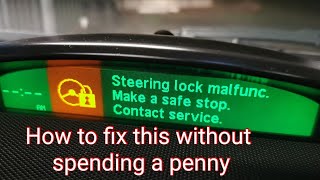
- Ignition Switch Module (ISM) Replacement (Saab) 🎬 See this walkthrough for fixing Saab steering lock malfunctions.
— Parts: $75-$300, Labor: $150-$400, ~1.2 hr book time
(Professional)
Saab 9-3 (2003-2011): OEM - Engine/Brake Control Module (ECM/EBCM) Replacement or Reflash
— Parts: $600-$1500, Labor: $200-$400, ~2 hr book time
(Professional)
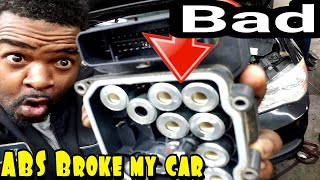
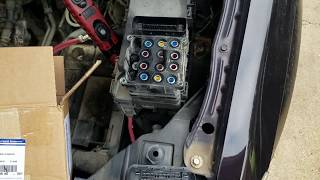
Dodge Grand Caravan (2008-2019): OEM 🎬 Watch: Step-by-step guide to replacing a Dodge ABS module.
DIY vs Professional
- Wiring Harness Repair — Beginner:
Tools: Multimeter, wire strippers, crimpers, heat shrink tubing, soldering iron. - Vacuum Sensor Replacement — Beginner:
Tools: Basic hand tools (socket set, screwdriver). - Fuse Replacement — Beginner:
Tools: Fuse puller or small pliers. - Ignition Switch Module (ISM) Replacement (Saab) — Beginner:
Tools: Torx bit set (T25), trim removal tools, screwdrivers. - Engine/Brake Control Module (ECM/EBCM) Replacement or Reflash — Beginner:
Tools: Socket set, screwdrivers, professional scan tool for VIN programming.
Used vs. New Parts: Buying Guide
When a used part is worth it: For electronic modules like an EBCM or a Saab ISM, a used part from a reputable recycler is cost-effective. For a simple vacuum sensor, buy new to get a warranty.
Donor-vehicle mileage cap: roughly under 100000 miles for the part to have meaningful remaining life.
Donor quality checklist:
- Verify the donor vehicle was not scrapped due to flood, fire, or a major electrical failure.
- Match the part number exactly. Even a single digit difference means incompatibility.
- Purchase from a seller offering a 30-90 day warranty.
Decision logic:
- If Part is a simple sensor and a new one costs < $150 → Buy new. The warranty and peace of mind are worth the premium.
- If Part is an electronic module (EBCM, ECM, ISM) and the vehicle is over 10 years old → A tested, warranted used module is a reasonable choice. Factor in the cost of professional programming.
- If The part is a wiring harness → Repair the existing harness. A used harness has hidden issues, and a new one is extremely expensive and labor-intensive to install.
Warranty tradeoff: Used parts typically have a 30-90 day functional warranty. New aftermarket parts offer 1-year to limited lifetime warranties. New OEM parts carry a 1-2 year warranty but are the most expensive.
Worst-case if a used part fails: $300-$600 if a used electronic module fails after installation, requiring repeat labor and another attempt at programming.
What Happens If You Wait — Timeline
- 0-1 month: Check Engine Light is on. A subtle drop in fuel economy and occasional rough idle occur. Brake pedal feel becomes slightly harder. (MPG impact: 0-5%% · Added cost: $0-30 in wasted fuel)
- 1-3 months: Engine performance issues become consistent: noticeable hesitation, unstable idle, and stalling at low speeds. The computer runs a default rich fuel mixture. (MPG impact: 5-10%% · Added cost: $50-150 in wasted fuel)
- 3-6 months: Sustained rich fuel mixture fouls spark plugs and overheats the catalytic converter, reducing its efficiency and causing internal damage. (MPG impact: 10-15%% · Added cost: $800-$2500 (catalytic converter replacement becomes likely))
- 6+ months: Complete catalytic converter failure is highly probable. High exhaust temperatures cause premature exhaust valve wear. Sudden loss of brake assist occurs. (MPG impact: 15-25%% · Added cost: $1500-$4000 (catalytic converter and potential engine or brake system repairs))
Cost of Not Fixing It
- Immediate - 1 month: Noticeable drop in fuel economy (5-10%), poor engine performance (hesitation, rough idle), and harder brake pedal. (Added cost: $20-$50 per month in wasted fuel.)
- 1-6 months: The computer runs a rich fuel mixture to protect the engine, overheating and destroying the catalytic converter. (Added cost: $1200-$2800 for catalytic converter replacement.)
- 6+ months: Sustained high exhaust temperatures lead to premature exhaust valve wear or severe engine damage. (Added cost: $2000-$4000+ for cylinder head repair or engine work.)
Diagnosis Steps
- Scan for All Codes and Check Freeze Frame Data
Use an OBD-II scanner to confirm C0547. Look for related codes (P0641, U-codes) in ALL modules (Engine, Brake, Body). Note the freeze frame data to see the exact conditions when the code set.
Tools: OBD-II Scanner (Beginner) - Check for Technical Service Bulletins (TSBs)
Search for TSBs related to C0547 for your specific vehicle. Manufacturers frequently release bulletins for known wiring harness chafing locations or module software updates.
Tools: Online Repair Database (Beginner) - Perform a Thorough Visual Inspection
Inspect the wiring harness and connector for the vacuum sensor. Look for chafed wires, rodent damage, green/white corrosion on pins, or loose connectors.
Tools: Flashlight, Inspection Mirror (Beginner) - Test for Reference Voltage at the Sensor
Turn the ignition ON (engine OFF). Unplug the vacuum sensor and use a multimeter set to DC Volts to check the power wire. A healthy circuit reads 4.8 to 5.2 volts. A reading of 0V confirms an open circuit or short to ground.
Tools: Digital Multimeter (Intermediate) - Isolate the Faulty Circuit
If multiple sensors share the 5V reference circuit, unplug them one by one while monitoring the voltage. If the voltage jumps back to 5V after unplugging a specific sensor, that sensor is internally shorted.
Tools: Digital Multimeter (Intermediate) - Check for a Short to Ground
With the ignition OFF, disconnect the sensor and the ECM/EBCM connector. Use a multimeter set to Ohms to check continuity between the 5V reference wire and chassis ground. Any reading less than infinite resistance (OL) indicates a short circuit in the harness.
Tools: Digital Multimeter, Vehicle-Specific Wiring Diagram (Advanced) - Perform a Voltage Drop Test on the Ground Circuit
Connect the black multimeter lead to the battery negative and the red lead to the sensor's ground pin (plugged in, key ON). A reading above 0.1 volts indicates excessive resistance in the ground circuit.
Tools: Digital Multimeter (Advanced) - Test Sensor with a Vacuum Pump
Disconnect the vacuum hose and attach a hand-held vacuum pump. With the sensor connected electrically and key ON, monitor the signal voltage. As you apply vacuum, the voltage must drop smoothly. No change indicates a failed sensor.
Tools: Digital Multimeter, Hand-held Vacuum Pump (Advanced) - Test for Voltage Directly at the Control Module
If there is no voltage at the sensor and wiring tests good, check for 5V coming directly out of the ECM/EBCM pin. If 5V is present at the module but not the sensor, the wire is broken. If there is no voltage at the module, the module is faulty.
Tools: Digital Multimeter, Vehicle-Specific Wiring Diagram (Advanced)
When This Code Triggers (Freeze-Frame Conditions)
- Engine Coolant Temp: 180-200°F (The fault is most reliably detected when the engine is fully warmed up and operating in closed loop.)
- RPM: 1500-2500 RPM (Often triggered during steady-state cruise control or light throttle application on the highway.)
- Engine Load: 20-50% (Occurs under consistent, moderate engine load where voltage fluctuations are not expected.)
- Vehicle Speed: 45-65 mph (Highway driving provides the stable operating conditions for the ECU to confidently identify a persistent voltage circuit fault.)
Related Codes
- P0641 — Means 'Sensor Reference Voltage A Circuit/Open'. This is the generic powertrain equivalent of C0547. Seeing both confirms a major 5-volt reference circuit failure originating from the PCM.
- U0121 — Means 'Lost Communication With ABS Control Module'. If present with C0547, the ABS module is offline. Diagnose the U-code first, as C0547 is just a symptom of the module failure.
- C0040 — Indicates a problem with the 'Right Front Wheel Speed Sensor Circuit'. Inspect shared wiring harnesses and grounds between the wheel speed sensor and the vacuum sensor.
- P0106 — Means 'MAP Sensor Circuit Range/Performance'. P0106 sets when the signal is irrational, while C0547 sets due to a total loss of power. Fix the C0547 power supply issue first.
Climate & Environmental Factors
- Road Salt (Winter Climates): Salt spray infiltrates wiring harnesses and connectors, accelerating corrosion of copper wires and pins, leading to high resistance or open circuits.
- High Humidity: Moisture penetrates poorly sealed connectors over time, promoting corrosion and creating pathways for short circuits.
- Extreme Cold: Cold temperatures make wire insulation brittle and susceptible to cracking from engine vibration. It also drops battery voltage, triggering spurious codes.
How to Clear the Code After You Fix It
- Reconnect any disconnected components (battery, modules).
- Use an OBD-II scan tool to clear all Diagnostic Trouble Codes (DTCs) from all modules.
- Perform a complete drive cycle to allow readiness monitors to run.
Drive cycle (~30 minutes): Start with a cold engine. Idle for 3 minutes with A/C and defroster on. Accelerate to 55 mph and hold steady for 10 minutes. Decelerate without braking. Perform 15 minutes of mixed city driving.
Readiness monitors affected: Catalyst Monitor, Evaporative System (EVAP) Monitor, Oxygen (O2) Sensor Monitor
Before emissions retest: drive at least 100 miles to fully set monitors.
Watch out for:
- Disconnecting the battery clears the code but resets all readiness monitors, guaranteeing an emissions test failure.
- The code returns immediately if the underlying electrical fault is not properly repaired.
- Not driving long enough at steady highway speeds prevents monitors from setting.
Will This Fail Emissions / State Inspection?
Yes — this code typically fails an OBD-II emissions inspection.
- California: An active Check Engine Light is an automatic failure. After repair, most readiness monitors must be 'Complete'. For 2001+ vehicles, only one monitor is allowed to be 'Incomplete'.
- New York: The NYS DMV inspection includes an OBD-II scan. An illuminated Check Engine Light causes an automatic emissions failure.
- Texas: In emissions counties, an illuminated Check Engine Light is an automatic fail. After clearing the code, you can have at most one monitor 'Not Ready' to pass.
Most Commonly Affected Vehicles
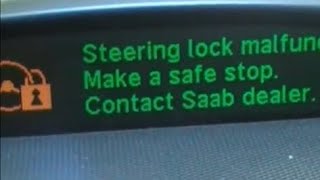
- Saab 9-3 (2003-2011) — C0547 relates exclusively to an electrical fault in the Steering Column Lock (SCL) or Ignition Switch Module (ISM), causing a 'Steering Lock Malfunction' and no-start condition.
- Chevrolet Silverado, Suburban, Tahoe (2007-2014) — Prone to wiring harness chafing near the intake manifold. A failing oil pressure sensor sharing the 5V reference rail also triggers this code.
- GMC Sierra, Yukon (2007-2014) — Shares the exact wiring and sensor vulnerabilities as Chevrolet trucks, including EBCM communication faults.
- Cadillac CTS, STS (2005-2011) — Triggered by faults in shared 5V sensors (like the mass airflow sensor) sending bad data to the brake control module.
- Dodge Grand Caravan (2008-2019) — Triggered by internal faults in the ABS module (code C2200) or lost communication due to bad grounds under the brake fluid reservoir.
- Chrysler Town & Country (2008-2016) — Shares the Dodge minivan ABS module failures. The primary fault is almost always an internal failure of the ABS module itself.
- BMW 3-Series (E90/E92) (2006-2013) — The DSC module is highly sensitive to low battery voltage or alternator problems, causing a cascade of unrelated chassis codes like C0547.
- Ford F-150, Explorer (2004-2010) — Logs this code due to corroded connectors or breaks in the 5-volt reference circuit wiring running across the top of the engine.
Manufacturer-Specific Notes
- Saab: For 9-3 models, C0547 is NOT a vacuum sensor. It indicates a security system fault between the CIM, ISM, and SCL. Suffixes specify the fault: '01' (Short to B+), '02' (Short to Ground), and '04' (Open Circuit).
- General Motors (Chevy, GMC, Cadillac): Diagnostic logic requires checking for other module faults first. A failing oil pressure sensor on trucks brings down the entire 5V reference circuit, setting C0547 in the brake module.
- Chrysler/Dodge/Jeep: C0547 is often a secondary code caused by an internal failure of the ABS control module (primary code C2200). A known design flaw allows water to enter the ABS module ground wire.
- BMW: Notoriously sensitive to battery voltage. An aging battery or failing alternator causes the DSC module to behave erratically and set chassis codes that appear unrelated to the root cause.
Real Owner Stories
2008 Saab 9-3 with ~100K miles
Car suddenly wouldn't start, displaying a "Steering Lock Malfunction" message. A scan tool revealed code C0547-04 (Open Circuit).
Outcome: The fault was traced to a faulty Ignition Switch Module (ISM). The mechanic replaced the ISM (Part No. 12801010). The car started immediately, and the code cleared. Total repair cost was $500.
Lesson: On a Saab 9-3, C0547 is never about a vacuum sensor. It points directly to the ignition and security system (ISM/SCL/CIM). Do not waste time diagnosing engine sensors.
2011 Chevy Silverado 1500 at 125K miles
Check Engine Light came on, along with ABS and Traction Control lights. The truck had a rough idle and hesitated when accelerating. Codes pulled were C0547 and P0641.
Outcome: A different shop performed a detailed wiring inspection. They found the 5V reference wire chafed against a bracket near the intake manifold, causing a short to ground. They repaired the wire for $250. All codes cleared.
Lesson: This code points to a circuit problem, not a failed part. Always perform a visual and electrical inspection of the wiring harness before replacing expensive modules. Code P0641 confirms a 5V reference circuit issue.
2012 Dodge Grand Caravan at 85K miles
ABS and Traction Control lights were on. The brakes worked but felt normal. A scan showed C0547 and U0121 (Lost Communication with ABS module).
Outcome: Diagnosed as an internal failure of the ABS control module. The owner sent the original module to a rebuild service for $250 instead of paying $2,000 at the dealer. After reinstalling, the system functioned normally.
Lesson: When a communication code (U-code) accompanies a circuit code, the module itself is the culprit. Rebuilding common failure modules like the Dodge ABS unit is a cost-effective alternative to buying new.
How to Prevent This Code From Triggering
- Apply Dielectric Grease to Connectors (Whenever a connector is unplugged for service) — Dielectric grease blocks moisture, dirt, and road salt from entering electrical connectors, preventing the pin corrosion that causes open circuits.
- Secure and Protect Wiring Harnesses (During any under-hood maintenance) — Zip-tying harnesses away from sharp metal edges and hot exhaust prevents insulation from melting or chafing, stopping short circuits before they happen.
- Clean Engine Bay and Chassis Ground Points (Every 30,000 miles or 2 years) — Corrosion on main ground straps creates high resistance. Cleaning contact points to bare metal ensures a solid return path for all 5-volt sensors.
Frequently Asked Questions
What is a vacuum sensor and what does it do?
A vacuum sensor measures intake manifold pressure or brake booster vacuum. The car's computers use this data to calculate fuel delivery, adjust ignition timing, and verify power brake assist.
What are the most common misdiagnosis mistakes for C0547?
The most common mistake is replacing the sensor without testing its power supply. Code C0547 explicitly points to a voltage problem, usually caused by a broken wire or blown fuse. On Saabs, diagnosing an engine sensor is a mistake because the code relates to the steering lock system.
Can a bad battery cause a C0547 code?
Yes. A weak battery or failing alternator causes low system voltage, triggering spurious electrical codes like C0547. Always verify battery health before chasing complex electrical faults.
How much does it cost to diagnose a C0547 code?
A professional shop typically charges between $120 and $180 for a diagnostic inspection. This covers scanning all modules and performing initial wiring checks.
My Saab has a C0547 code but no symptoms. What's wrong?
On Saab vehicles, C0547 points to a problem in the steering column lock circuit. It is often an intermittent fault or stored historical code from a past low-voltage event. Investigate it promptly, as a complete failure causes a no-start condition.
Will clearing the code make it go away?
Clearing the code with a scanner turns off the light temporarily, but it returns immediately if the underlying electrical short or open circuit remains.
What's the difference between C0547 01, 02, and 04 on a Saab?
These suffixes pinpoint the exact electrical fault in the steering lock circuit. '01' indicates a Short to Battery Positive, '02' indicates a Short to Ground, and '04' indicates an Open Circuit.
Key Takeaways
- Code C0547 indicates a missing or unstable 5-volt power supply to a vacuum or pressure sensor, disabling critical engine or brake assist functions.
- Test the sensor's power wire with a multimeter before replacing any parts; a healthy reference circuit must read between 4.8 and 5.2 volts.
- Inspect the wiring harness for chafing or corrosion first, as a short to ground or broken wire causes over 80% of C0547 faults.
- On 2003-2011 Saab 9-3 models, C0547 points exclusively to a Steering Column Lock (SCL) or Ignition Switch Module (ISM) failure, requiring a $150-$400 module replacement rather than a sensor fix.
Helpful Videos


The information in this article is provided for general reference and educational purposes only. Vehicle specifications, procedures, and part compatibility can vary by production date, trim level, and region. Always consult your vehicle's factory service manual and verify part numbers before purchasing or performing repairs. Safety-critical components such as airbags, seat belts, and braking systems should be installed by a qualified professional.
- 🎬 Helpful Videos
- What Does C0547 Mean?
- Can I Drive With C0547?
- Common Causes
- Symptoms
- Common Fixes & Costs
- DIY vs Professional
- Used vs. New Parts: Buying Guide
- What Happens If You Wait — Timeline
- Cost of Not Fixing It
- Diagnosis Steps
- When This Code Triggers (Freeze-Frame Conditions)
- Related Codes
- Climate & Environmental Factors
- How to Clear the Code After You Fix It
- Will This Fail Emissions / State Inspection?
- Most Commonly Affected Vehicles
- Manufacturer-Specific Notes
- Real Owner Stories
- 2008 Saab 9-3 with ~100K miles
- 2011 Chevy Silverado 1500 at 125K miles
- 2012 Dodge Grand Caravan at 85K miles
- How to Prevent This Code From Triggering
- Frequently Asked Questions
- What is a vacuum sensor and what does it do?
- What are the most common misdiagnosis mistakes for C0547?
- Can a bad battery cause a C0547 code?
- How much does it cost to diagnose a C0547 code?
- My Saab has a C0547 code but no symptoms. What's wrong?
- Will clearing the code make it go away?
- What's the difference between C0547 01, 02, and 04 on a Saab?
- Key Takeaways
- 🎟️ Get 5% Off