

C0543 on 2019 Jeep Cherokee: Brake Pressure Sensor 2 Circuit High Causes and Fixes
Code C0543 on a 2019 Jeep Cherokee indicates a 'Brake Pressure Sensor 2 Circuit High' fault. This is most often caused by an internal failure of the ABS Hydraulic Control Unit (HCU), as the sensor is integrated and not sold separately. Other causes include damaged wiring or a poor connection. Expect ABS and Electronic Stability Control (ESC) warning lights on the dashboard. Repair is complex and requires replacing the entire ABS module.
- Code C0543 on a 2019 Jeep Cherokee means the secondary brake pressure sensor is sending a signal that is too high.
- This sensor is integrated into the ABS module and is not a separate part, meaning the entire ABS module assembly must be replaced to fix it.
- The repair is expensive and complex, requiring special programming ('PROXI Alignment') and brake bleeding procedures that put it beyond the scope of most DIY mechanics.
- Driving with this fault is possible but risky, as critical safety systems like ABS and Electronic Stability Control will be disabled.
What's Unique About the 2019-2019 Jeep CHEROKEE
For the 2019 Jeep Cherokee (KL generation), the braking system is deeply integrated with multiple safety features like ABS, Electronic Stability Control (ESC), and traction control. A fault in a primary input like the brake pressure sensor will cause the system to disable these safety aids as a precaution. Crucially, this pressure sensor is an integral, non-serviceable part of the ABS Hydraulic Control Unit (HCU). This means a sensor failure requires the replacement of the entire expensive module, which then must be electronically programmed to the vehicle using a 'PROXI Alignment' procedure. Failure to perform this programming will result in a flashing odometer 🎬 See why your Jeep odometer is flashing and how to fix it. and continued system malfunction.
Diagnostic Flowchart
Tap your situation to follow the diagnostic path that matches what you're seeing on this vehicle.
Symptoms You May Notice
- Anti-Lock Brake (ABS) warning light is on.
- Electronic Stability Control (ESC) or Traction Control warning light is on.
- Service 4x4 light may appear in some cases.
- Cruise control may be disabled.
- Brake pedal may feel different or less responsive.
- Flashing odometer if the ABS module has been replaced without proper programming.
- Replacing the ABS module before verifying the wiring is good.
- Attempting to find and replace a standalone 'Brake Pressure Sensor 2', which does not exist as a separate part on this vehicle.
- Replacing wheel speed sensors, which can also cause ABS/ESC lights but typically set different codes.
Most Likely Causes
- Internal Failure of the ABS Hydraulic Control Unit (HCU) / Module 🔴 High Probability The pressure sensor is integrated into the HCU, which is subject to pressure cycles, heat, and vibration. An internal electronic failure of this sensor is the most common trigger for C0543, but it is not a separately serviceable part.
How to confirm: Use a diagnostic scan tool to monitor live data from Brake Pressure Sensor 2. If the voltage reads consistently high (e.g., near 5 volts) regardless of pedal pressure, it confirms the circuit high fault. After verifying the wiring is intact, the HCU itself is condemned.
Typical fix: Replace the entire ABS Pump and Control Module Assembly. This must be followed by a 'PROXI Alignment' to sync the new module with the vehicle and an 'ABS Bleed' procedure to remove air from the hydraulic unit.
Est. part cost: $800-$1200 for the OEM module assembly. - Wiring Harness Damage or Short to Power 🟡 Medium Probability Wiring can become damaged from chafing against other components, heat exposure from the engine bay, or corrosion from moisture intrusion.
How to confirm: Visually inspect the wiring harness leading to the main ABS module connector for any signs of damage, melting, or corrosion. Perform a continuity test and check for a short to voltage on the signal wire between the sensor connector and the ABS module.
Typical fix: Repair the damaged section of the wiring harness and ensure it is properly secured away from heat sources and sharp edges.
Est. part cost: $5-$50 for repair materials - Corroded or Damaged ABS Module Connector ⚪ Low Probability The main connector for the ABS module is in the engine bay and can be susceptible to moisture and dirt, leading to corrosion over time.
How to confirm: Disconnect the main harness from the ABS module and inspect the connector pins on both the module and harness side for corrosion, moisture, or bent pins.
Typical fix: Clean the connector pins with electrical contact cleaner. If the connector or pins are severely damaged, the connector pigtail may need to be replaced.
Est. part cost: $20-$60
Rare But Worth Checking
- Faulty Powertrain Control Module (PCM): This is extremely rare. The PCM communicates with the ABS module, but it is highly unlikely to cause a specific 'Circuit High' code for a sensor connected to the ABS module. All other causes should be exhausted before considering the PCM.
Diagnosis Steps
- Connect a professional-grade OBD-II scanner capable of reading Chassis (C) codes and viewing live data from the ABS module.
- Confirm C0543 is the active code and check for any other related codes in the ABS or other modules.
- Access the live data stream for the 'Brake Pressure Sensor 2' (or Sensor B).
- Observe the voltage reading with the brake pedal released (should be low, around 0.5V) and fully depressed (should be high, but below 5V). A reading stuck at or near 5V indicates a 'Circuit High' condition.
- If the voltage is stuck high, turn off the vehicle and disconnect the main electrical connector from the ABS module.
- Turn the ignition on (engine off) and check the voltage on the corresponding signal wire in the harness-side connector. If voltage is still present, there is a short to power in the wiring harness that needs to be found and repaired.
- If no voltage is present on the signal wire with the module disconnected, the wiring is likely okay, and the ABS module has failed internally.
- Inspect the ABS module connector and harness for any signs of corrosion, moisture, or physical damage.
- If the ABS module is confirmed to be faulty, it must be replaced. The replacement procedure requires special tools and software to perform a 'PROXI Alignment' and an 'ABS Bleed' to ensure proper function.
Parts You'll Likely Need
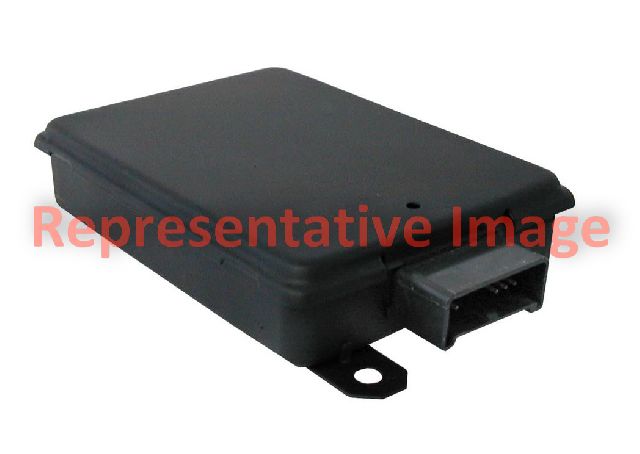
- ABS Pump and Control Module Assembly
(OEM #68287912AF, 68373861AA)— This is the primary point of failure. The pressure sensor is integrated into this unit and cannot be replaced separately. The entire assembly must be swapped out.
Trusted brands: Mopar
OEM price range: $810-$1200
Aftermarket price range: $500-$900 (Remanufactured)
Related Codes That Often Appear With This One
- C0542 — C0542 is 'Brake Pressure Sensor 2 Circuit Low'. Seeing C0542 and C0543 together or intermittently can point to an erratic sensor or a wiring issue causing fluctuating voltage.
- U0415 — This code means 'Invalid Data Received From Anti-Lock Brake System Control Module'. It often appears in other modules (like the powertrain or drivetrain control module) when the ABS module sets a fault like C0543 and broadcasts faulty data over the vehicle's network.
Technical Service Bulletins (TSBs) & Recalls
- 1807722: A manufacturer TSB from 2022 that lists C0543 - Brake Pressure Sensor 2 Circuit High as a possible fault code on 2019 model year Jeeps, among others.
Platform-Specific Known Issues
- Mandatory PROXI Alignment: After replacing the ABS module, a 'PROXI Alignment' procedure is mandatory. This uses a dealer-level scan tool to synchronize the new module with the vehicle's other computers. If skipped, a flashing odometer and persistent warning lights will occur.
- Adaptive Cruise Control (ACC) vs. Non-ACC Modules: It is critical to order the correct ABS module based on whether the vehicle is equipped with Adaptive Cruise Control (ACC). The modules are not interchangeable. Installing the wrong one will cause communication errors.
- Related Recalls on Sister Vehicles: A recall on 2018-2019 Jeep Grand Cherokees (NHTSA 24V838000) was issued for an ABS module that could falsely read brake pressure, leading to disabled ESC and other issues. While not for the Cherokee (KL), it shows a pattern of this specific failure type in FCA vehicles from the same period.
Mechanic-Grade Diagnostic Values
- Brake Pressure Sensor 2 Signal Voltage (Live Data) — expected: Approximately 0.5V with brake pedal released. Voltage should rise proportionally with pedal pressure, but stay below 4.5V.. Failure: A reading that is stuck high, at or near 5.0V, regardless of pedal pressure, indicates a 'Circuit High' fault.
Scan Tool Commands That Help
- wiTECH (or equivalent professional scan tool): PROXI Alignment / Proxy Configuration — This is a mandatory procedure after replacing the ABS module. It synchronizes the new module with the vehicle's other computers (BCM, PCM). Failure to perform this will result in a flashing odometer and communication errors.
- wiTECH (or equivalent professional scan tool): ABS Bleed / Automated Bleed — After replacing the hydraulic unit or opening any brake lines connected to it. This function cycles the internal ABS pump and valves to purge trapped air that cannot be removed by manual bleeding alone.
- wiTECH (or equivalent professional scan tool): ABS Initialization — After module replacement, this function may be required to initialize the module and clear internal 'rolls information' before it will operate correctly.
- wiTECH (or equivalent professional scan tool): Set VIN — When installing a used ABS module, this function may be available to write the correct vehicle VIN to the replacement module, which can resolve communication and mismatch errors.
Wiring & Ground Locations
- F53, F93 — In the main fuse box (Power Distribution Center) located under the hood.. These fuses supply power to the ABS module/valves (F53) and the ABS pump motor (F93). A blown fuse will cause the module to be inoperative and can set various codes. Always check these before assuming the module has failed.
- F14, F30 — In the main engine fuse box under the hood.. These are additional fuses, potentially micro three-blade types, that provide power to the ABS module. They must be checked as part of a complete electrical diagnosis before replacing the module.
- ABS Module Connector — The main electrical connector on the ABS module itself, located in the engine bay.. This is the primary connection point for all sensor inputs and power/ground for the module. A visual inspection for corrosion, bent pins, or moisture is a critical diagnostic step. The 'Circuit High' fault could be caused by a pin shorting to a power source within this connector.
Helpful Videos






Used OEM Parts in Stock


New Aftermarket Parts Available

The information in this article is provided for general reference and educational purposes only. Vehicle specifications, procedures, and part compatibility can vary by production date, trim level, and region. Always consult your vehicle's factory service manual and verify part numbers before purchasing or performing repairs. Safety-critical components such as airbags, seat belts, and braking systems should be installed by a qualified professional.
- Jeep CHEROKEE:
- 🎬 Helpful Videos
- 🛍️ Shop This Part
- What's Unique About the 2019-2019 Jeep CHEROKEE
- Diagnostic Flowchart
- Symptoms You May Notice
- Most Likely Causes
- Rare But Worth Checking
- Diagnosis Steps
- Parts You'll Likely Need
- Related Codes That Often Appear With This One
- Technical Service Bulletins (TSBs) & Recalls
- Platform-Specific Known Issues
- Mechanic-Grade Diagnostic Values
- Scan Tool Commands That Help
- Wiring & Ground Locations
- 🎟️ Get 5% Off