

C0542 on 2019 Jeep Cherokee: Brake Pressure Sensor 2 Circuit Low Causes and Fixes
This code indicates a low voltage signal from the second brake pressure sensor, which is part of the ABS module. The most common fix is replacing the entire ABS module/hydraulic unit, as the sensor is integrated. Expect ABS and traction control warning lights on your dashboard.
- Code C0542 on a 2019 Jeep Cherokee points to a problem with the second brake pressure sensor, which is integrated into the ABS module.
- You will likely see the ABS and ESC warning lights on your dashboard.
- The most probable cause is an internal failure of the ABS module/sensor assembly, followed by wiring issues. A standalone sensor replacement is not possible.
- Driving is possible, but key safety systems are offline, so the issue should be addressed promptly.
- Professional diagnosis and repair are highly recommended due to the need for specialized scan tools for programming (PROXI Alignment) and bleeding the new ABS module.
What's Unique About the 2019-2019 Jeep CHEROKEE
For the 2019 Jeep Cherokee (KL generation), this code is tied into the sophisticated electronic stability control (ESC) and ABS systems. While sensor failures are common across many brands, the specific sensor is integrated into the ABS hydraulic control unit (HCU) or module, making diagnosis critical to avoid replacing the entire expensive assembly unnecessarily. This design means a sensor failure requires the replacement of the entire ABS module assembly, which then must be programmed to the vehicle using a procedure called a "PROXI Alignment". Failure to perform this programming will result in a flashing odometer 🎬 Watch: How to perform a PROXI alignment using a scan tool. and continued system errors.
Diagnostic Flowchart
Tap your situation to follow the diagnostic path that matches what you're seeing on this vehicle.
Symptoms You May Notice
- Anti-Lock Brake (ABS) warning light is on.
- Electronic Stability Control (ESC) or traction control warning light is on.
- Brake pedal may feel different (spongy, hard, or inconsistent).
- A 'Service ABS' or similar message may appear on the instrument cluster.
- Brake lights may illuminate incorrectly or stay on (as noted in a related recall for other Jeep models).
- Replacing the entire ABS module when only the external wiring is at fault.
- Searching for a separate, replaceable brake pressure sensor, which does not exist for this application as it is integrated into the ABS module.
- Replacing wheel speed sensors, which are part of the ABS system but are not related to this specific pressure code.
Most Likely Causes
- Faulty ABS Control Module / Integrated Sensor 🔴 High Probability The brake pressure sensor is internal to the ABS module. Internal failure of the sensor's diaphragm, electronics, or the module's processing circuits can cause the voltage to drop, triggering the code. This is the most common point of failure for this specific code on this platform.
How to confirm: After confirming the wiring is intact, the diagnosis points to the module itself. Using a diagnostic scan tool, monitor the live data for 'Brake Pressure Sensor 2 Voltage'. The voltage should be around 0.5V with no pedal pressure and rise towards 4.5-5.0V when the pedal is fully depressed. If the voltage is stuck near zero or doesn't respond correctly and wiring is confirmed good, the integrated sensor within the ABS module has failed.
Typical fix: Replace the entire ABS Control Module/Hydraulic Control Unit assembly. The new module must be programmed to the vehicle's VIN using a 'PROXI Alignment' procedure. The system will also require a special ABS bleeding procedure with a scan tool to cycle the pump and remove air.
Est. part cost: $600-$1200 - Wiring or Connector Issue 🟡 Medium Probability The wiring harness leading to the ABS module can be exposed to moisture, heat, and vibration, leading to corrosion in the main connector, chafing against chassis components, or loose pin connections over time.
How to confirm: Visually inspect the main wiring harness and connector at the ABS module for any signs of damage, corrosion, or fluid contamination. Perform a 'wiggle test' on the harness while monitoring the live sensor data to see if the reading fluctuates. Use a multimeter and pinout diagram to check for continuity, short to ground, and proper voltage on the signal, power, and ground wires at the ABS module connector.
Typical fix: Repair the damaged section of the wiring harness or clean/replace the faulty connector.
Est. part cost: $10-$100 - Low System Voltage ⚪ Low Probability A weak or failing battery can cause various electronic modules to receive insufficient voltage, sometimes triggering low circuit codes. Some FCA TSBs note that communication codes can be set erroneously due to a battery voltage below 10 volts.
How to confirm: Before extensive diagnostics, test the battery's health and the alternator's output. Ensure battery voltage is stable and above 12.4V with the engine off and around 13.5-14.5V with the engine running.
Typical fix: Charge or replace the failing battery.
Est. part cost: $150-$350
Rare But Worth Checking
- Faulty Powertrain Control Module (PCM): While extremely rare for this specific code, a faulty PCM could theoretically misinterpret the data from the ABS module. This would typically be accompanied by numerous other communication (U-prefix) codes and is a last-resort diagnosis.
Diagnosis Steps
- Connect a professional scan tool capable of reading ABS codes and live data.
- Confirm C0542 is present. Note any other codes, especially C0543 or U-codes.
- Access the live data stream for the ABS module. Monitor the parameter for 'Brake Pressure Sensor 2'.
- With the engine on and foot off the brake, the voltage should be low (around 0.5V). Press the brake pedal firmly; the voltage should rise smoothly towards 4.5V or higher.
- If the voltage is stuck low or does not change, proceed to inspect the hardware.
- Locate the ABS module and its main electrical connector. Disconnect the battery. Inspect the connector and wiring harness for visible damage, corrosion, or moisture.
- If the wiring looks good, use a multimeter and a factory service manual pinout to test the power supply, ground, and signal circuits between the PCM and the ABS module connector.
- If wiring, power, and ground are all confirmed to be good, but the signal remains low on the scan tool, the ABS module with its integrated sensor has failed internally.
- If wiring is damaged, repair it, clear codes, and re-test.
- If the ABS module is replaced, a PROXI alignment and ABS brake bleed procedure must be performed with a compatible scan tool.
Parts You'll Likely Need
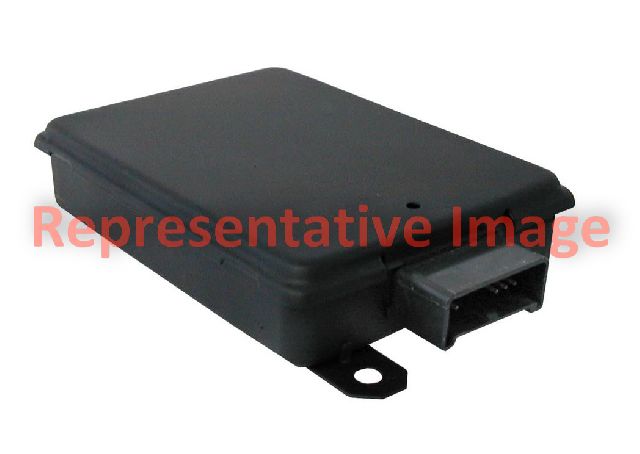
- ABS Control Module / Hydraulic Unit
(OEM #68373859AC (replaces 68373859AA, 68373859AB), 68373861AA, 68373858AA, 68373860AC)— This is the most common failure point for code C0542, as the sensor is integral to the ABS module. The specific part number depends on vehicle options like FWD/4x4 and Adaptive Cruise Control.
Trusted brands: Mopar
OEM price range: $700-$1200
Aftermarket price range: $600-$900 (Remanufactured) - ABS Module Connector — In cases of corrosion or damage to the harness connector, a replacement pigtail or connector may be needed.
Trusted brands: Mopar, Standard Motor Products
OEM price range: $40-$80
Aftermarket price range: $15-$50
Related Codes That Often Appear With This One
- C0543 — This code is for 'Brake Pressure Sensor 2 Circuit High'. It's the counterpart to C0542 and can appear intermittently if there's a wiring issue causing shorts to power instead of ground. Both are listed in TSB #1807722.
- U1409 — Mentioned in TSB #1807722, this code for 'Implausible LF WSS Received' can occur alongside brake system faults as the modules share data.
- U140A — Also from TSB #1807722, 'Implausible RF WSS Received' indicates issues with wheel speed sensor data, which can be triggered by a primary fault in the ABS controller.
- U0418 — A related TSB for a newer Cherokee (KL) notes that code U0418 - 'Implausible Data Received From Brake System Control Module' can be set due to system faults, highlighting the interconnectedness of these modules.
Technical Service Bulletins (TSBs) & Recalls
- 1807722: A 2022 TSB that lists C0542 - Brake Pressure Sensor 2 Circuit Low among several other potential electronic fault codes for the 2019 Jeep Cherokee. The TSB itself is a PCM software update for the 3.2L V6 engine to address a range of potential codes, not a direct fix for a failed sensor.
Platform-Specific Known Issues
- The brake pressure sensor for this code is confirmed to be integrated within the ABS module, not a separate part. This is a critical distinction for diagnosis and repair.
- Replacement of the ABS module is not plug-and-play. It requires a 'PROXI Alignment' with a capable scan tool to synchronize it with the vehicle's other computers. Failure to do so will cause a flashing odometer and other errors.
- The specific Mopar part number for the ABS module varies depending on the vehicle's configuration (e.g., with or without Adaptive Cruise Control, with or without auto stop-go). It is crucial to order the correct part for the vehicle's VIN.
Mechanic-Grade Diagnostic Values
- Brake Pressure Sensor 2 Signal Voltage (Live Data) — expected: ~0.5V with brake pedal released, rising smoothly to ~4.5V with pedal fully depressed.. Failure: Voltage is stuck near 0.0-0.3V, does not change with pedal pressure, or is erratic.
- ABS Module Ground Circuit Resistance — expected: Below 5 mΩ (0.005 Ohms) when measured between the ground pin on the module connector and a clean chassis ground.. Failure: Higher than specified resistance, indicating a poor ground connection which can cause low voltage faults.
Scan Tool Commands That Help
- wiTECH, AlfaOBD, Appcar DiagFCA, or equivalent professional scanner: Proxy Alignment / Proxi Configuration — This is mandatory after replacing the ABS control module. It synchronizes the new module with the vehicle's other computers (like the BCM) and writes the vehicle's VIN to it. Failure to perform this step will result in a flashing odometer and a VIN mismatch fault code (C2202).
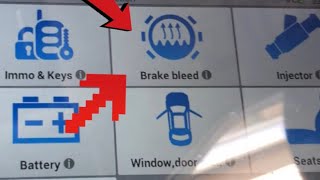
- wiTECH, AlfaOBD, or equivalent bidirectional scanner: ABS Bleed / Automated Bleed — Required after replacing the ABS hydraulic unit or opening any brake lines connected to it. This function cycles the internal ABS pump and valves to purge trapped air that cannot be removed by manual brake bleeding alone.
- wiTECH or equivalent: ABS Initialization — Used to initialize a new or used module to the vehicle. This may be a prerequisite step before or as part of the Proxy Alignment to make the vehicle recognize the hardware.
Wiring & Ground Locations
- F53 and F93 Fuses — Located in the main fuse box (Power Distribution Center) under the hood.. These fuses supply power to the ABS module/valves (F53) and the ABS pump motor (F93). A blown fuse will cause the module to lose power and can set various codes, including communication or circuit faults. Always check these before condemning the module.
- Security Gateway Module (SGM) Bypass — The SGM is typically located behind the dashboard, near the OBD-II port or radio. A 12+8 pin bypass cable is connected to the SGM connectors to allow full diagnostic access.. For 2019 and newer Jeep Cherokees, the SGM blocks aftermarket scan tools from performing bidirectional commands. To perform a Proxy Alignment or ABS Bleed with a tool like AlfaOBD, a bypass cable is required to gain control of the ABS module.
- G907A (Example Chassis Ground) — On a 2019 Cherokee, this specific ground point is located on the engine block, right above the transmission.. While this specific ground was identified for the EPS module, its location is near the ABS module and serves as a prime example of a critical ground point that can become loose or corroded. A poor ground for the ABS module would cause low voltage conditions and trigger a C0542 code. Verifying the integrity of the main ABS module ground stud is a crucial step.
OEM Part Supersession History
68373859AA, 68373859AB→68373859AC— Part revision and update by the manufacturer.
Heads up: Part number 68373859AC is specified for models equipped WITH Adaptive Cruise Control (ACC) and auto stop-go. Installing this module on a vehicle without ACC (or vice-versa) will result in a configuration mismatch, a non-functional system, and fault codes. It is critical to verify the correct part number for the vehicle's specific VIN and options.
Model Year Variations Within This Range
- 2019: The primary variation within the 2019 model year is based on vehicle options, not production date. The ABS control module is different for vehicles with Adaptive Cruise Control (ACC) versus those without. The parts are not interchangeable.
- 2019+: Unlike the 2014-2018 models, 2019 and newer Cherokees are equipped with a Security Gateway Module (SGM). This requires the use of a special 12+8 pin bypass cable to perform advanced diagnostics and programming functions (like Proxy Alignment) with most aftermarket scan tools.
Helpful Videos


Used OEM Parts in Stock


New Aftermarket Parts Available

The information in this article is provided for general reference and educational purposes only. Vehicle specifications, procedures, and part compatibility can vary by production date, trim level, and region. Always consult your vehicle's factory service manual and verify part numbers before purchasing or performing repairs. Safety-critical components such as airbags, seat belts, and braking systems should be installed by a qualified professional.
- Jeep CHEROKEE:
- 🎬 Helpful Videos
- 🛍️ Shop This Part
- What's Unique About the 2019-2019 Jeep CHEROKEE
- Diagnostic Flowchart
- Symptoms You May Notice
- Most Likely Causes
- Rare But Worth Checking
- Diagnosis Steps
- Parts You'll Likely Need
- Related Codes That Often Appear With This One
- Technical Service Bulletins (TSBs) & Recalls
- Platform-Specific Known Issues
- Mechanic-Grade Diagnostic Values
- Scan Tool Commands That Help
- Wiring & Ground Locations
- OEM Part Supersession History
- Model Year Variations Within This Range
- 🎟️ Get 5% Off