

Ultimate C0526 Guide: Steering Angle Sensor Failure (Expert Diagnosis & Fixes)
The Most In-Depth Guide to Diagnosing and Fixing OBD-II Code C0526
- Code C0526 disables your Electronic Stability Control (ESC), increasing the risk of a fatal single-vehicle rollover by up to 75%.
- The #1 cause is a lost zero-point calibration, which happens immediately after a wheel alignment or battery replacement.
- Always scan all modules first; a faulty $60 ABS wheel speed sensor frequently tricks the computer into misdiagnosing the steering angle sensor.
- Fixes range from a simple $80-$180 scan tool recalibration to a full sensor replacement costing upwards of $1,000 on luxury vehicles.
What Does C0526 Mean?

Code C0526 indicates the vehicle's primary computer (ECU) detects a fault within the Steering Angle Sensor (SAS) Module. This sensor measures the steering wheel's rotation and rate of turn, feeding data to the Electronic Stability Control (ESC) and Traction Control Systems (TCS). When this data is lost or incorrect, the computer disables these safety systems and illuminates a dashboard warning light.
Technical definition: The SAE/OBD-II definition for C0526 is "Steering Angle Sensor Module." Manufacturers append a two-digit sub-code to pinpoint the exact issue, such as C0526-96 (Internal Component Failure), C0526-46 (Calibration/Parameter Memory Failure), or C0526-1C (Circuit Voltage Out of Range).
Can I Drive With C0526?
Yes, But With Caution. Yes, you can drive the car, but your most important active safety system is disabled. Without Electronic Stability Control (ESC), your vehicle is significantly more likely to be involved in a single-vehicle crash. NHTSA studies show ESC reduces the risk of fatal single-vehicle rollovers by 75% for SUVs and 72% for cars. Drive cautiously to a repair shop, avoiding high speeds, aggressive maneuvers, and slippery conditions.
Common Causes

- Steering Angle Sensor needs calibration (Very Common) — The sensor loses its 'zero point' or straight-ahead position after a wheel alignment, battery replacement, or suspension repair. Skipping the mandatory scan-tool recalibration forces the sensor to send conflicting data, triggering the code.
- Faulty Steering Angle Sensor (Common) — The sensor's internal electronics fail from age, vibration, thermal stress, or internal power supply breakdown. This causes no signal, an erratic signal, or a complete loss of communication.
- Damaged wiring or poor connection (Common) — Wires in the steering column chafe, pinch, or break from steering wheel rotation. Connectors loosen or suffer from moisture corrosion, interrupting the signal.
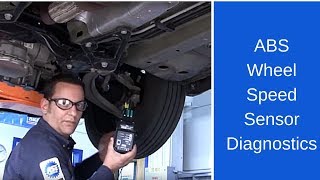
- Faulty ABS Wheel Speed Sensor (Misdiagnosis) (Less Common) — The ESC module compares steering angle with individual wheel speeds. An erratic reading from a failing ABS sensor tricks the system into flagging the SAS. Always check for ABS codes first. 🎬 See this guide on diagnosing ABS wheel speed sensor faults.
- Low battery voltage or blown fuse (Less Common) — The SAS module requires stable voltage to operate and retain memory. A dying battery, failing alternator, or blown fuse causes the module to malfunction or lose calibration.
- Damaged Clock Spring Assembly (Less Common) — The SAS mounts directly onto the clock spring (roll connector). Physical damage to the clock spring during a previous steering column repair destroys the sensor or its connections.
- Corrupted module software or firmware (Rare) — The software within the SAS module becomes corrupted or outdated. Manufacturers occasionally release firmware updates to resolve glitches causing a C0526 code.
- Faulty Yaw Rate / Lateral Acceleration Sensor (Rare) — The stability system uses the yaw rate sensor to detect sideways sliding. A faulty yaw sensor provides data conflicting with the steering angle, leading the control module to incorrectly set a C0526 code.
Symptoms

- Traction Control (TCS) or Stability Control (ESC) light is on — The dashboard displays a warning light, often a car with squiggly lines, or a message like "ESC OFF," "Service StabiliTrak," or "TCS OFF."
- Steering wheel is not centered after an alignment — If the steering wheel is crooked when driving straight after a recent wheel alignment, the SAS was not recalibrated, causing it to report a turn when the car is going straight.
- Advanced safety features are disabled — Modern systems like adaptive cruise control, lane-keeping assist, pre-collision braking, and adaptive headlights disable automatically because they depend on accurate steering angle data.
- Steering feels heavy, inconsistent, or makes unexpected corrections — On vehicles with electric power steering (EPS), a faulty SAS causes the steering effort to feel unusually heavy or change unpredictably.
- Steering angle warning light on the dashboard — Some vehicles have a specific warning light for the steering system, depicted as a steering wheel with an exclamation mark.
Diagnostic Flowchart
Tap your situation to follow the diagnostic path that matches what you're seeing on this code.
Common Fixes & Costs
- Recalibrate Steering Angle Sensor — Parts: $0, Labor: $80-$180, ~0.8 hr book time (Professional)
- Replace Steering Angle Sensor
— Parts: $150-$550, Labor: $150-$500, ~1.8 hr book time
(Advanced)
Toyota / Lexus (RAV4, Camry): OEM 89245-06080, 8924B-42010 (Alt: Dorman, Standard Motor Products (SMP))
Chevrolet / GMC (Silverado, Sierra): OEM 20910871 (Alt: Dorman 601-175, AC Delco 19418403)
Hyundai / Kia (Elantra, Santa Fe): OEM 56310-F2000, 56310-3Z500 (Alt: Standard Motor Products (SMP), Mando) - Repair Damaged Wiring or Connector — Parts: $10-$30, Labor: $100-$250, ~1.5 hr book time (Intermediate)
- Update Module Software/Firmware — Parts: $0-$50, Labor: $100-$200, ~0.8 hr book time (Professional)
- Replace Blown Fuse — Parts: $1-$10, Labor: $50-$100, ~0.2 hr book time (DIY)
Used vs. New Parts: Buying Guide
When a used part is worth it: A used OEM sensor from a low-mileage, accident-free donor vehicle is a cost-effective option for vehicles over 10 years old. You must match the part number exactly.
Donor-vehicle mileage cap: roughly under 70000 miles for the part to have meaningful remaining life.
Donor quality checklist:
- Verify the donor vehicle was not involved in a collision, as impact damages these sensitive electronics.
- Match the part number precisely; superseded numbers are often incompatible.
- Avoid parts from flood-damaged or rust-belt vehicles due to corrosion risk.
Decision logic:
- If Vehicle is under 8 years old OR the new OEM part costs less than $300 → Buy a new OEM part. The reliability and warranty outweigh the minimal savings of a used part.
- If Vehicle is over 10 years old AND budget is the primary concern → A tested, used OEM part from a reputable salvage yard is a reasonable choice, but carries the risk of a shorter lifespan.
- If An aftermarket part is significantly cheaper than OEM (e.g., 75% less) → Consider it for an older, non-critical vehicle, but expect potential fitment and longevity issues.
Warranty tradeoff: Used parts typically offer a 30-90 day warranty. Aftermarket new parts come with a 1-year to limited lifetime warranty. New OEM parts offer the best assurance, often with a 1-2 year warranty.
Worst-case if a used part fails: $250-$600 if a used or cheap aftermarket part fails prematurely, requiring repeat labor for replacement and recalibration.
What Happens If You Wait — Timeline
- Immediate: Code C0526 is set. ESC, TCS, and ADAS features are disabled. A warning light appears on the dashboard. (MPG impact: 0%% · Added cost: $0 (Safety risk is the primary concern))
- 1-3 months: If the fault is due to a bad alignment, uneven tire wear begins. The outer or inner edges of the front tires show accelerated wear. (MPG impact: 0-1%% · Added cost: $50-$150 in lost tire value)
- 3-9 months: Uneven tire wear becomes severe, causing vibrations or noise. Tires wear down to the steel belts on one edge, requiring premature replacement. (MPG impact: 1-3%% · Added cost: $400-$1000 for a new set of tires, plus the cost of an alignment.)
- 9+ months: Driving continuously on a severely misaligned suspension places chronic stress on ball joints, tie rods, and wheel bearings, accelerating their wear. (MPG impact: 1-3%% · Added cost: $1000-$2500+ if suspension components require replacement.)
Cost of Not Fixing It
- Immediate: Electronic Stability Control (ESC) and Traction Control (TCS) are disabled. This dramatically increases the risk of losing control in an emergency maneuver. Other ADAS features like lane-keep assist fail. (Added cost: N/A (Safety Risk))
- 1-6 months: If the fault stems from an incorrect alignment, it leads to accelerated and uneven tire wear. (Added cost: $200-$800 for premature tire replacement.)
- 6+ months: Continued driving with an uncalibrated sensor places extra stress on power steering components. Inconsistent steering assist contributes to premature wear of the steering rack or motor. (Added cost: $500-$2000+ for steering component replacement.)
Diagnosis Steps
- Scan ALL Vehicle Modules for Codes
Use an OBD-II scanner capable of accessing the ABS, Chassis (BCM), and steering modules. Confirm C0526 is active and document any other codes. Codes for wheel speed sensors, yaw rate sensors, or communication errors (U-codes) are critical clues.
Tools: OBD-II Scanner (with ABS/Chassis capability) (Beginner) - Analyze Live Steering Angle Sensor Data
Access the live data stream for the steering angle sensor. With the wheels pointing straight ahead, the angle must read 0° (within +/- 3 degrees). Slowly turn the steering wheel lock-to-lock. The degree reading must change smoothly. Jumps, dropouts, or a frozen value indicate a faulty sensor or wiring.
Tools: Professional Scan Tool (Intermediate) - Attempt a Zero Point Recalibration
If live data is responsive but off-center, attempt a recalibration. This is the mandatory first step after an alignment or battery change. Use a scan tool procedure to set the zero point.
Tools: Professional Scan Tool (Intermediate) - Inspect Wiring and Connectors
Visually inspect the wiring harness leading to the SAS, located on the steering column behind the clock spring. Look for chafing, pinched wires, or corrosion on the connector pins.
Tools: Flashlight, Trim removal tools (Intermediate) - [PRO TIP] Perform a Harness 'Wiggle Test'
With live data displayed on your scan tool, gently wiggle the wiring harness at the sensor connector and along the steering column. If the reading jumps or drops out, you have an intermittent break or short in the wiring.
Tools: Professional Scan Tool (Advanced) - Test Power and Ground at the Sensor
Identify the power, ground, and signal wires at the SAS connector using a wiring diagram. With the key on, use a multimeter to verify correct supply voltage (12V or 5V reference) and a solid ground connection (less than 0.1V). No power or a bad ground means the sensor cannot operate.
Tools: Multimeter, Vehicle-specific wiring diagram (Advanced) - [PRO TIP] Check CAN Bus Health (Voltage & Resistance)
If the sensor has power and ground but won't communicate (setting a U0126 code), check the CAN network. With the battery disconnected, measure resistance between CAN High and CAN Low pins; it must be ~60 Ohms. With the battery connected and key on, CAN High must be ~2.6V and CAN Low ~2.4V. Deviations point to a network wiring problem.
Tools: Multimeter, Vehicle-specific wiring diagram (Advanced) - [ADVANCED] Test Analog Sensor Signal Voltage
For older analog sensors, back-probe the signal wire. With a 5V reference, the signal voltage must be around 2.5V with the steering wheel centered. As you turn the wheel, the voltage sweeps smoothly towards 0V in one direction and 5V in the other. Abrupt jumps confirm a faulty sensor element.
Tools: Multimeter, Back-probe kit, Wiring diagram (Advanced) - Isolate the Sensor with an Oscilloscope
For definitive diagnosis of digital sensors, connect an oscilloscope to the CAN High and CAN Low signal wires. You must see a clean, mirrored square wave pattern. A distorted or absent waveform, despite good power and ground, confirms an internal sensor failure.
Tools: Oscilloscope, Wiring diagram (Professional)
When This Code Triggers (Freeze-Frame Conditions)
- Vehicle Speed: 15-45 mph (Steady driving. The fault is flagged when the vehicle moves straight at a consistent speed, but the sensor does not report a 0-degree angle.)
- Steering Angle: Erratic or non-zero value (The stored value is incorrect for the driving condition (e.g., reading 15 degrees while driving straight).)
- Engine RPM: 1200-2500 RPM (Normal operating range for city or highway cruising.)
- System Voltage: 13.5-14.5 V (Normal charging system voltage; a value below 12V indicates a power supply issue as the root cause.)
Related Codes
- U0126 — Means 'Lost Communication With Steering Angle Sensor Module.' If you have U0126 with C0526, the problem is a wiring issue (power, ground, CAN bus) or a completely dead sensor module.
- C0710 — A generic code for 'Steering Position Sensor Signal.' If it appears with C0526, it reinforces that the fault originates within the SAS module itself.
- C0035 through C0050 (Wheel Speed Sensor Codes) — Any wheel speed sensor code is a major red flag. The stability control system gets conflicting data and blames the SAS. ALWAYS diagnose and repair wheel speed sensor faults first.
- C0530 — Defined as 'Steering Angle Sensor Signal Out of Range.' This indicates the data being sent is implausible (e.g., reporting a 900-degree turn), pointing strongly towards an internal sensor failure.
Climate & Environmental Factors
- Cold Weather: Low temperatures make pre-existing calibration issues more apparent. Extreme cold also causes plastics and wiring insulation to become brittle and susceptible to damage.
- High Humidity / Moisture: High humidity leads to condensation and moisture intrusion into the sensor module or its connectors. This causes short circuits, corrosion on connector pins, and internal failure.
- Road Salt (Winter Climates): Corrosive road salt residue accelerates corrosion of wiring connectors for the SAS and ABS controller, interrupting communication and triggering a C0526 code.
How to Talk to a Mechanic About This Code
Say this: "I have a C0526 code and an ESC light on. I need a diagnostic that starts by checking for ABS wheel speed sensor codes and viewing the live data from the steering angle sensor. If the live data is responsive but off-center, I want to start with a zero-point calibration."
This signals you understand the common causes (calibration) and misdiagnoses (wheel speed sensors), directing the technician to follow a logical diagnostic path rather than immediately quoting a sensor replacement.
Avoid saying:
- 'My traction control light is on, can you fix it?'
- 'I think I need a new steering angle sensor.'
- 'Just do whatever it takes to get the light off.'
Questions to ask before authorizing the repair:
- Did you check for any ABS wheel speed sensor codes first?
- What did the live data for the steering angle sensor show? Was it frozen, erratic, or just off-center?
- If you recommend sensor replacement, did you confirm the sensor has good power and ground?
- Is a 'zero point calibration' included in the price of the repair?
- What is your warranty on this specific repair and part?
Where to Take It: Dealer vs Independent vs Chain
- Dealer:
Recommended if the issue is complex, involves software, or is on a newer, high-end vehicle.
Best for: Vehicles under warranty, Complex cases involving software updates or brand-specific issues (e.g., BMW, newer Toyota/Lexus), If the issue appeared after a collision
Downsides: Highest labor rates, Defaults to sensor replacement without thorough electrical diagnosis (Typical cost: +50% vs. baseline) - Independent Shop:
Best fit for most common scenarios, provided the shop is well-equipped with modern diagnostic tools.
Best for: Out-of-warranty vehicles, Straightforward calibration or sensor replacement on common models, Cost-conscious repairs
Downsides: You must verify they have a modern scan tool capable of SAS calibration for your specific vehicle. (Typical cost: +0% vs. baseline) - Chain Shop:
AVOID for diagnosis. Only use for an alignment if you explicitly confirm beforehand that they will perform the SAS zero-point calibration.
Best for: Wheel alignments (with a major caveat)
Downsides: High risk they perform an alignment but lack the scan tool to perform the mandatory SAS calibration, causing the C0526 code., Technician skill varies widely; not recommended for electrical diagnosis. (Typical cost: -10% vs. baseline)
When to Walk Away From the Repair
If the estimated repair cost for the C0526 code exceeds 40-50% of your car's private-party value, pause and evaluate the car's overall condition.
- Car worth $4000, fix is $2000: Walk away. A $2000 repair is 50% of the car's value and likely not the only issue on a $4k car.
- Car worth $12000, fix is $750: Fix it. This is a relatively low-cost repair (6% of vehicle value) that restores a critical safety feature.
- Car worth $2500, fix is $1500: Walk away. The repair cost is 60% of the car's value. It is not financially sound.
What Scan Tool You Need for This Code

Minimum: A scan tool that reads ABS/Chassis codes (C-codes) and performs a Steering Angle Sensor (SAS) calibration/reset.
A basic $20 engine code reader cannot see Chassis codes like C0526, nor can it perform the mandatory calibration procedure.
Budget: BlueDriver Pro (~$100) — Reads and clears ABS/ESC codes like C0526 and views live steering angle data. It lacks the bidirectional capability to perform the SAS calibration on many vehicle models.
Mid-range: Foxwell NT510 Elite (~$180) — Provides full system diagnostics and includes a dedicated SAS calibration function. This is a powerful bidirectional tool for a specific brand (e.g., BMW, Toyota).
Professional: Autel MaxiCOM MK808 / Launch X431 Series (~$450-900) — Offers full bidirectional control, allowing you to read live data, command components, and perform the SAS zero-point calibration on a wide range of makes and models.
Rent vs buy: You cannot rent a scanner with SAS calibration capability from a typical auto parts store. If this is a one-time fix, pay a shop the ~$120 diagnostic/calibration fee. Buy a midrange or pro-level scanner only if you perform your own maintenance regularly.
How to Clear the Code After You Fix It
- Perform mandatory steering angle sensor calibration using a compatible scan tool.
- Use the scan tool to clear the C0526 code from the ABS/Chassis module.
- Perform a test drive including turns and straight-line driving above 15 mph to confirm the light stays off.
Drive cycle (~20 minutes): After clearing the code, idle the engine for 2 minutes. Drive for 10-15 minutes in mixed conditions including several left and right turns. Drive straight for at least 2 minutes at a speed above 20 mph. Park and cycle the ignition to confirm the fault does not reappear.
Readiness monitors affected: This is a chassis code (C-code) and does not directly affect emissions readiness monitors.
Before emissions retest: drive at least 50 miles to fully set monitors.
Watch out for:
- Clearing the code without performing the required calibration causes the code to return immediately.
- Disconnecting the battery does not clear this fault code from the ABS/ESC module's permanent memory.
- Forgetting to check for and fix underlying ABS wheel speed sensor codes first.
Will This Fail Emissions / State Inspection?
No — by itself this code doesn't fail OBD inspection (but it can keep readiness monitors from setting, which causes a separate fail).
- California: This chassis code does not cause a failure of the OBD-II emissions check, but the illuminated ESC/TCS warning light causes a failure of the overall vehicle safety inspection.
- New York: The NYS safety inspection requires all manufacturer-installed safety equipment to be functional. An illuminated ABS, TCS, or ESC warning light is an automatic inspection failure.
- Texas: During a Texas safety inspection, the inspector checks for illuminated warning lights. The ESC/TCS light being on results in a safety inspection failure.
Most Commonly Affected Vehicles
- Toyota / Lexus RAV4, Corolla, Camry, IS250 (2018-2022) — Extremely prone to setting internal failure sub-codes (C0526-96, C0526-46) after a rear-end collision or minor accident. Replacement at a dealership costs $800-$1000.
- Chevrolet / GMC Silverado, Sierra, Tahoe, Suburban (2007-2014) — A very common cause of the "Service StabiliTrak" message. The sensor is a known high-failure item on these GMT900 platform trucks. Common OEM part number is 20910871.
- Hyundai / Kia Elantra, Santa Fe, Veloster, Azera (2014-2018) — Subject to Technical Service Bulletin (TSB) 19-01-031H for intermittent warning lights. The TSB calls for a software update and SAS reset procedure after any steering or suspension work.
- Ford Focus, C-Max, F-150, Escape (2012-2019) — Highly sensitive to the calibration process. The code appears immediately after a wheel alignment if the shop skips the mandatory SAS reset with a compatible scan tool.
- Volkswagen / Audi Golf, Jetta, Tiguan, A3 (2006-2016) — Frequently triggers a steering warning light after a battery disconnect. This is often resolved with a manual recalibration: start engine, turn wheel fully to one lock, fully to the other, then center.
- Subaru Outback, Forester, Impreza, Legacy (2008-2014) — The sensor is a known failure point. Replacement requires removing the steering wheel and the clock spring assembly, to which the sensor is attached.
- Nissan Versa, Sentra, Rogue (2012-2018) — A common failure item. Repair involves disconnecting the battery, removing the driver's airbag and steering wheel, and replacing the sensor/clock spring assembly before performing a calibration.
- BMW 3 Series (F30), 5 Series (F10) (2012-2018) — The sensor is part of a complex switch cluster unit in the steering column. Replacement and programming are involved, leading to repair costs exceeding $1,000 at a dealership.
Manufacturer-Specific Notes
- Toyota / Lexus: Notorious for setting an internal failure code (C0526-96) in the SAS after a minor accident with no front-end damage. The shock damages the delicate sensor internals, necessitating replacement.
- General Motors (GM): The "Service StabiliTrak" message on 2007-2014 trucks and SUVs is most frequently caused by a failing steering angle sensor. It is the primary suspect for this specific warning message.
- Ford: Performing a wheel alignment without immediately following it with a scan tool SAS reset procedure is the leading cause of C0526 on modern Fords. It is a mandatory step.
- Hyundai / Kia: TSB 19-01-031H addresses intermittent ESC/TCS lights. The fix involves a SAS reset or a software update for the module, which must be performed before replacing any parts.
Real Owner Stories
2013 GMC Sierra at 115K miles - The Classic 'Service StabiliTrak' Failure
The 'Service StabiliTrak' and 'Traction Control Off' messages appeared on the dashboard during normal driving. There were no other symptoms.
Outcome: The shop replaced the steering angle sensor, a known high-failure part on this platform. The total cost was $450 ($120 for an AC Delco part, $330 for labor and calibration). The warning lights cleared permanently.
Lesson: On 2007-2014 GM trucks and SUVs, the 'Service StabiliTrak' message is most often caused by a failed steering angle sensor. Confirm the SAS is frozen via scan tool live data before replacing parts.
2018 Ford Focus at 60K miles - The Post-Alignment Headache
Immediately after getting a wheel alignment at a chain tire shop, the ESC/Traction Control light came on. The steering wheel was perfectly straight.
Outcome: The Ford dealership technician explained that an SAS recalibration is a mandatory step after any alignment. The tire shop failed to perform this procedure. The dealer charged $120 for the 30-minute calibration, solving the problem completely.
Lesson: If C0526 appears immediately after an alignment, the cause is a failure to perform the mandatory SAS recalibration. Insist the alignment shop performs this procedure.
2016 Toyota Tacoma at 85K miles - The Battery Swap Surprise
After replacing a dead battery at home, multiple warning lights illuminated on the dash, including ABS, traction control, and a steering warning light.
Outcome: Using the scanner's service menu, he performed the 'Zero Point Calibration' for the steering angle sensor in under 5 minutes. After clearing the codes, all warning lights stayed off.
Lesson: Disconnecting the battery erases the SAS calibration memory. If C0526 appears after a battery change, perform a scan tool recalibration before suspecting a part failure.
2012 Honda CR-V at 130K miles - The Misdiagnosis Story
The traction control light came on intermittently during slow, tight turns. The code was C0526.
Outcome: A second technician scanned all modules and found a history code for the front right ABS wheel speed sensor (C0040). Live data showed the right front wheel speed drop to zero during sharp turns, conflicting with the SAS data. Cleaning the corroded tone ring and replacing the $60 ABS sensor fixed the problem permanently.
Lesson: Always diagnose and fix ABS wheel speed sensor codes FIRST. A faulty wheel speed sensor is a very common cause of a misdiagnosed C0526.
How to Prevent This Code From Triggering
- Mandate SAS Calibration After Alignment (Every wheel alignment or steering/suspension component replacement) — Adjusting toe changes the steering wheel's center position. Failing to perform the SAS recalibration is the #1 cause of this code. Explicitly instruct your service provider to perform this.
- Use a Battery Memory Saver (During any battery replacement) — Plugging a memory saver into the OBD-II port provides power to the vehicle's modules while the main battery is disconnected. This prevents the SAS module from losing its calibration memory.
- Apply Dielectric Grease to Connectors (When sensor is replaced or if connectors are exposed) — Moisture enters connectors and causes corrosion on delicate pins, leading to high resistance. Dielectric grease seals the connector from moisture.
- Inspect and Clean ABS Tone Rings (During brake service or tire rotation) — Ferrous debris and rust build up on magnetic encoder rings used by ABS sensors. This causes an erratic wheel speed signal, frequently misdiagnosed as a C0526 fault.
Frequently Asked Questions
Is it safe to drive with code C0526?
While the car steers and brakes, it is significantly less safe because Electronic Stability Control (ESC) is disabled. NHTSA data shows ESC reduces the risk of fatal single-vehicle rollovers by over 70%. Drive cautiously and repair it promptly.
How much does it cost to fix code C0526?
A simple recalibration at a repair shop costs between $80 and $180. Replacing the sensor costs between $350 and $750 for parts and labor. On luxury or newer vehicles, dealership repairs easily exceed $1,000.
Can I replace the steering angle sensor myself?
This is an advanced DIY task requiring airbag removal, which is dangerous if handled improperly. The new sensor is not plug-and-play and requires a professional scan tool for mandatory calibration. Leave this job to experienced technicians.
What is the most common misdiagnosis for C0526?
The most frequent mistake is replacing the steering angle sensor when the true fault is a bad ABS wheel speed sensor. The control module sees conflicting data and incorrectly blames the SAS. Always scan all modules and fix ABS codes first.
Can a bad alignment cause code C0526?
An alignment does not cause the code, but failing to recalibrate the steering angle sensor afterward does. Adjusting the toe changes the steering wheel's center position. If the sensor isn't updated with the new center, it sends incorrect data and triggers the fault.
Why did C0526 appear after replacing my car battery?
Disconnecting the battery erases the volatile memory in the steering angle sensor, including its calibration data. Once power is restored, the sensor requires a scan tool recalibration to learn its 'straight-ahead' position and clear the code.
What is a 'zero point calibration'?
Zero point calibration is a scan tool procedure that tells the steering angle sensor the exact 'straight-ahead' or 0-degree position. This baseline measures all steering inputs. You must perform it whenever replacing the sensor, changing the battery, or altering the wheel alignment.
Key Takeaways
- Code C0526 disables your Electronic Stability Control (ESC), increasing the risk of a fatal single-vehicle rollover by up to 75%.
- The #1 cause is a lost zero-point calibration, which happens immediately after a wheel alignment or battery replacement.
- Always scan all modules first; a faulty $60 ABS wheel speed sensor frequently tricks the computer into misdiagnosing the steering angle sensor.
- Fixes range from a simple $80-$180 scan tool recalibration to a full sensor replacement costing upwards of $1,000 on luxury vehicles.
Helpful Videos

The information in this article is provided for general reference and educational purposes only. Vehicle specifications, procedures, and part compatibility can vary by production date, trim level, and region. Always consult your vehicle's factory service manual and verify part numbers before purchasing or performing repairs. Safety-critical components such as airbags, seat belts, and braking systems should be installed by a qualified professional.
- 🎬 Helpful Videos
- What Does C0526 Mean?
- Can I Drive With C0526?
- Common Causes
- Symptoms
- Diagnostic Flowchart
- Common Fixes & Costs
- Used vs. New Parts: Buying Guide
- What Happens If You Wait — Timeline
- Cost of Not Fixing It
- Diagnosis Steps
- When This Code Triggers (Freeze-Frame Conditions)
- Related Codes
- Climate & Environmental Factors
- How to Talk to a Mechanic About This Code
- Where to Take It: Dealer vs Independent vs Chain
- When to Walk Away From the Repair
- What Scan Tool You Need for This Code
- How to Clear the Code After You Fix It
- Will This Fail Emissions / State Inspection?
- Most Commonly Affected Vehicles
- Manufacturer-Specific Notes
- Real Owner Stories
- 2013 GMC Sierra at 115K miles - The Classic 'Service StabiliTrak' Failure
- 2018 Ford Focus at 60K miles - The Post-Alignment Headache
- 2016 Toyota Tacoma at 85K miles - The Battery Swap Surprise
- 2012 Honda CR-V at 130K miles - The Misdiagnosis Story
- How to Prevent This Code From Triggering
- Frequently Asked Questions
- Is it safe to drive with code C0526?
- How much does it cost to fix code C0526?
- Can I replace the steering angle sensor myself?
- What is the most common misdiagnosis for C0526?
- Can a bad alignment cause code C0526?
- Why did C0526 appear after replacing my car battery?
- What is a 'zero point calibration'?
- Key Takeaways
- 🎟️ Get 5% Off