

OBD-II Code C0514: Right Rear Wheel Speed Sensor Circuit Low
What C0514 means, why it triggers, and how to fix it
- Code C0514 disables your ABS and traction control by flagging a low voltage signal in the right rear wheel speed sensor circuit.
- Always inspect the wiring harness and connector within 12 inches of the sensor first, as broken or corroded wires cause over 50% of these faults.
- Do not replace the sensor without verifying live data on an OBD-II scanner; a reading of 0 MPH confirms a dead circuit.
- Expect to pay between $150 and $290 at an independent shop for the most common fix: splicing in a new wiring pigtail connector.
What Does C0514 Mean?

Code C0514 indicates the vehicle's computer detects a low voltage signal in the electrical circuit for the right rear wheel speed sensor. Because the ABS module cannot trust the speed reading from that specific wheel, it shuts down dependent safety systems like ABS and traction control to prevent unpredictable braking behavior.
Technical definition: The official SAE/OBD-II definition is "Right Rear Wheel Speed Sensor A Circuit Low". This means the Anti-lock Brake System (ABS) module detects a continuous low voltage condition (typically below 0.5V) or high resistance in the right rear wheel speed sensor circuit while the vehicle is moving.
Can I Drive With C0514?
Yes, But With Caution. You can drive, but do not delay repairs. Your Anti-lock Braking System (ABS) and Traction/Stability Control (ESC) are disabled, creating a significant safety risk. In emergency stops or on slick surfaces, your stopping distance increases and you lose the system's ability to prevent skidding. Drive cautiously, increase following distance, and avoid aggressive maneuvers until the circuit is repaired.
Common Causes

- Damaged or Corroded Wiring Harness and Connector (Very Common) — The wiring and connector running to the wheel speed sensor are exposed to water, salt, and road debris. Wires frequently chafe, break, or suffer from pin corrosion at the connector, creating high resistance or an open circuit that drops the voltage.
- Faulty Right Rear Wheel Speed Sensor (Common) — The sensor fails internally from age, heat, or vibration. A dead sensor stops generating the required AC voltage or digital square wave, prompting the ABS module to flag a low circuit.
- Bad Wheel Bearing or Damaged Tone Ring (Uncommon) — The sensor reads a magnetic tone ring built into the wheel bearing or hub. If the bearing has excessive play, or the tone ring is cracked or covered in metallic rust, the sensor cannot generate a strong signal. The ABS module interprets this weak signal as a circuit fault.
- Failing ABS Control Module (Rare) — An internal fault within the ABS module's circuitry, or a corrupted software calibration, prevents it from providing the correct 5V/12V reference voltage or accurately reading the returning sensor signal.
- Low System Voltage (Rare) — A weak battery or failing alternator drops voltage across all electronic systems. While this usually triggers multiple codes, it occasionally manifests as a single sensor circuit low fault.
Symptoms

- ABS Light On — A steady Anti-lock Brake System (ABS) warning light illuminates on the dashboard.
- Traction Control / Stability Control (ESC) Light On — The traction control light (a car with squiggly lines) or "ESC" light illuminates, indicating the system is offline.
- Loss of ABS and Traction Control — Wheels lock up and skid during hard braking. Drive wheels spin freely during acceleration on slippery surfaces.
- All-Wheel Drive (AWD/4x4) System Disabled — On AWD/4x4 vehicles, the system disables itself and triggers a warning light because it requires accurate speed data from all four wheels to route power.
- Service Safety System Messages — The information display shows messages like "Service ESC," "Service Trailer Brake System," or "Traction Control Off".
Diagnostic Flowchart
Tap your situation to follow the diagnostic path that matches what you're seeing on this code.
Common Fixes & Costs
- Repair Damaged Wiring Harness or Connector — Parts: $15-$40, Labor: $150-$250, ~1.5 hr book time (Intermediate)
- Replace Right Rear Wheel Speed Sensor — Parts: $30-$100, Labor: $100-$150, ~1.0 hr book time (DIY)
- Replace Wheel Hub/Bearing Assembly — Parts: $150-$300, Labor: $200-$400, ~2.0 hr book time (Intermediate)
- Replace ABS Control Module — Parts: $400-$800, Labor: $150-$300, ~2.0 hr book time (Professional)
DIY vs Professional
- Repair Damaged Wiring Harness — Beginner:
Tools: Wire strippers, weatherproof butt connectors, heat shrink tubing, soldering iron, multimeter. - Replace Right Rear Wheel Speed Sensor — Beginner:
Tools: Socket set, penetrating oil, torque wrench, jack and jack stands. - Replace Wheel Hub/Bearing Assembly — Beginner:
Tools: Large axle nut socket, torque wrench, slide hammer, bearing press kit. - Replace ABS Control Module — Beginner:
Tools: Socket set, advanced bidirectional scan tool for VIN programming and automated brake bleeding.
Used vs. New Parts: Buying Guide
When a used part is worth it: A used wheel speed sensor makes sense only for older, high-mileage vehicles where budget is the absolute priority and the donor part comes from a dry, rust-free climate.
Donor-vehicle mileage cap: roughly under 60000 miles for the part to have meaningful remaining life.
Donor quality checklist:
- Verify the donor vehicle was not scrapped due to flood damage.
- Inspect the used sensor's wiring for brittleness or cracking.
- Match the part number exactly; sensors for different trim levels look identical but are electrically incompatible.
Decision logic:
- If The cost of a new aftermarket sensor is less than $50. → Buy new. The minimal savings of a used part do not justify the risk of repeat labor.
- If The vehicle is less than 10 years old. → Buy a new OEM or premium aftermarket part for reliability and warranty coverage.
- If The OEM part exceeds $200 and the vehicle has over 150K miles. → A low-mileage used OEM sensor is a reasonable compromise.
Warranty tradeoff: Used parts offer a 30-90 day warranty covering only the part. New aftermarket parts include a 1-year to lifetime warranty. OEM parts carry a 12-month warranty.
Worst-case if a used part fails: $150-$300 if a used sensor fails shortly after installation, requiring repeat diagnostic and labor fees.
What Happens If You Wait — Timeline
- Immediate: ABS, Traction Control, and Stability Control warning lights illuminate. The associated safety systems are disabled. (MPG impact: 0%% · Added cost: $0)
- 0-3 months: Increased risk of an accident. In a panic stop or on a slippery surface, the wheels lock, causing a skid and loss of steering control. Stopping distances increase significantly. (MPG impact: 0%% · Added cost: Potential cost of an at-fault accident.)
- 3-12 months: The initial fault worsens. Water and road salt penetrate deeper into the wiring harness, causing corrosion to spread several inches from the original failure point. (MPG impact: 0%% · Added cost: $200-$500 (A simple pigtail repair is no longer possible, requiring extensive harness replacement).)
- 12+ months: Severe corrosion creates high resistance or intermittent shorts that stress the input circuitry of the ABS control module, potentially destroying it. (MPG impact: 0%% · Added cost: $800-$1500+ (Cost of ABS control module replacement).)
Cost of Not Fixing It
- Immediate: Loss of Anti-lock Braking (ABS), Traction Control (TCS), and Electronic Stability Control (ESC). This increases the chance of skidding and loss of control during emergency braking. (Added cost: N/A)
- 0-6 Months: Disabled ABS leads to premature or uneven tire wear due to wheel lock-up during hard braking. (Added cost: $100-$300 (Uneven tire wear))
- 6+ Months: Continued exposure of a damaged wiring harness to moisture causes corrosion to spread deep into the main harness, requiring extensive rewiring. (Added cost: $300-$800 (Complex wiring harness replacement))
Diagnosis Steps

- Read Codes and Analyze Live Sensor Data
Use an advanced OBD-II scanner to confirm C0514. View the live data graph for all four wheel speed sensors while driving slowly. The right rear sensor should closely match the others. A reading of 0 MPH confirms a dead circuit, while an erratic line points to a failing sensor or damaged tone ring.
Tools: Advanced OBD-II Scanner (Beginner) - Visually Inspect Wiring and Connector
Safely raise the vehicle. Trace the wiring from the right rear wheel hub to the main harness. Look for cuts, chafing, or green/white corrosion on the connector pins. Gently tug the wires at the connector to check for internal breaks.
Tools: Jack, Jack Stands, Flashlight (Beginner) - Test Sensor Circuit at the Connector
Disconnect the sensor. With the ignition on, use a multimeter to check for reference voltage (typically 5V or 12V) and ground on the harness side of the connector. This confirms the ABS module and wiring are supplying power to the sensor.
Tools: Multimeter, Back-probe kit (Intermediate) - Test Passive Sensor Output and Resistance
For 2-wire passive sensors, set a multimeter to AC Volts across the sensor pins and spin the wheel by hand. It must generate at least 0.25V AC. Next, check resistance; a good passive sensor reads between 800 and 2,000 Ohms. An open (OL) or short (0 Ohms) reading confirms a failed sensor.
Tools: Multimeter (Advanced) - Check for a Bad Wheel Bearing or Damaged Tone Ring
With the wheel off the ground, grab the tire at 12 and 6 o'clock and rock it. Significant play indicates a worn wheel bearing, which alters the sensor air gap. Visually inspect the tone ring for cracks or heavy rust.
Tools: Jack, Jack Stands (Intermediate) - Test Circuit Integrity
Disconnect the sensor and the ABS module connectors. Use a multimeter to check for continuity on the power, ground, and signal wires between the two ends. Resistance must be under 1 Ohm. Check for shorts to ground or power.
Tools: Multimeter, Vehicle-specific wiring diagram (Advanced) - Perform a Magnet Test (Pro Tip)
If live data shows zero output, remove the sensor from the hub but leave it plugged in. Wave a magnet over the sensor tip while watching live data. If the scanner shows a speed reading, the sensor and wiring are good; the tone ring inside the hub is damaged.
Tools: Basic Hand Tools, Magnet, Advanced OBD-II Scanner (Advanced) - Test with an Oscilloscope
Back-probe the sensor's signal wire with an oscilloscope. A good active sensor shows a clean square wave; a passive sensor shows a sine wave. A flat line or noisy signal confirms a bad sensor, wiring issue, or bad tone ring.
Tools: Oscilloscope, Back-probe kit (Advanced)
When This Code Triggers (Freeze-Frame Conditions)
- Vehicle Speed: 15-55 mph (The fault logs during initial acceleration or steady cruising as the ABS module performs self-checks and compares wheel speeds.)
- System Voltage: 12.0-14.5V (The code sets under normal operating voltage. Freeze frame data helps rule out a low battery as the primary cause.)
- Brake Pedal Status: Off (This circuit monitoring code usually sets when the brakes are not applied, during a routine system self-test.)
- ABS/TCS/ESC Status: Inactive (The fault is detected when the systems are in a ready/monitoring state, not during an active ABS event.)
Related Codes
- C0513 — Left Rear Wheel Speed Sensor Circuit Low. If both C0513 and C0514 are present, suspect a damaged main wiring harness where the two circuits run together, or a failed ABS control module.
- C0515 / C0516 — C0515 is 'Circuit High' and C0516 is 'Circuit Intermittent'. Seeing these alongside C0514 points to a wire intermittently shorting to power and then breaking connection, or a sensor sending chaotic signals before dying.
- P25A2 — Brake System Control Module Requested MIL Illumination. Common on GM trucks, this means the brake module told the engine computer to turn on the Check Engine Light due to the C0514 fault. Fixing the sensor clears both.
- U0415 — Invalid Data Received From Electronic Brake Control Module. Indicates other modules (steering, AWD) are receiving illogical data from the ABS module. This confirms the C0514 sensor fault is the root cause, not a network failure.
Climate & Environmental Factors
- Cold Climates and Road Salt: Road salt accelerates corrosion of the wiring harness and connector pins. It also causes the sensor body to rust and seize within the wheel hub, complicating replacement.
- High Humidity and Water Exposure: Water intrusion into a damaged wiring harness or poorly sealed connector causes a short circuit, dropping the voltage. This is why the code frequently appears after a car wash or heavy rain.
- Extreme Temperatures: Extreme temperature swings alter the sensitivity of aging Hall effect sensors, causing intermittent signal dropouts.
How to Talk to a Mechanic About This Code
Say this: "I have an ABS light on and my scanner is showing a C0514 code. I'd like to book a diagnostic appointment. Based on my research, it's likely a wiring or sensor issue at the right rear wheel. Can you please start by visually inspecting the harness and connector, and then check the live wheel speed data before recommending any part replacements?"
This signals you are an informed customer. It directs them to the most likely and cheapest-to-fix causes first (wiring/connector) and asks them to use data (live sensor readings) to prove the fault, preventing unnecessary part replacements.
Avoid saying:
- My ABS light is on, can you fix it?
- The car is acting weird, just tell me what's wrong.
- I think I need a new ABS computer.
Questions to ask before authorizing the repair:
- Did you find a visual problem with the wiring or connector? Can you send me a picture?
- What did the live data from the right rear wheel speed sensor show compared to the other three?
- If you're recommending a sensor replacement, did you test the wiring to confirm it's supplying the correct voltage and ground to the sensor?
- What is the warranty on the recommended parts and labor?
Where to Take It: Dealer vs Independent vs Chain
- Dealer:
Recommended only if the diagnosis points to a failed ABS control module that requires programming, or if the vehicle is under warranty. For most sensor/wiring issues, they are unnecessarily expensive.
Best for: Vehicles still under warranty., Complex repairs requiring ABS module replacement and VIN programming., Known manufacturer-specific software updates (TSBs) are available.
Downsides: Highest labor rates, often 1.5-2x more than independent shops., Less willing to perform a simple wiring repair, favoring full harness replacement. (Typical cost: +50% vs. baseline) - Independent Shop:
Best fit for most C0514 scenarios. A good independent mechanic easily handles the most common causes (wiring, sensor, hub) at a fair price.
Best for: Out-of-warranty vehicles where cost is a factor., Diagnosing and repairing common faults like bad sensors, damaged wiring, or corroded connectors.
Downsides: Shop quality and diagnostic skill vary; look for ASE certifications., May lack specific tools to program a new ABS module for all makes. (Typical cost: +0% vs. baseline) - Chain Shop:
AVOID for initial diagnosis of an ABS light, as they lack the expertise to trace wiring or hub issues. Acceptable only if you are certain the sensor is the sole problem.
Best for: Simple, clear-cut wheel speed sensor replacement if you have already diagnosed the issue yourself.
Downsides: Technician skill varies dramatically., Lack advanced diagnostic tools for anything beyond a simple part swap., High pressure to upsell services. (Typical cost: -10% vs. baseline)
When to Walk Away From the Repair
If the estimated repair cost exceeds 40-50% of the car's private-party value, pause and carefully consider your options.
- Car worth $12000, fix is $450: Fix it. A sensor or hub replacement is well below the threshold and restores a critical safety system.
- Car worth $4000, fix is $1800: Walk away. The repair cost is 45% of the car's value and points to a failed ABS module, a major electronic failure. Other age-related issues will likely follow.
- Car worth $6000, fix is $2500: Borderline, get a second opinion. If a failed ABS module is confirmed, this repair is not worth it. If another shop traces it to a complex wiring issue that can be fixed for less, it is viable.
What Scan Tool You Need for This Code

Minimum: An OBD-II scanner that reads and clears Chassis (C) codes for the ABS system, and displays live data for all four wheel speed sensors.
A basic $20 engine code reader cannot access the ABS module. It will not see or clear 'C' codes like C0514. You MUST be able to see if the right rear sensor reads 0 MPH while the others work, requiring live data capabilities.
Budget: BlueDriver Pro Scan Tool (~$99) — Connects to your smartphone via Bluetooth to read/clear ABS codes and graph the live output of all four wheel speed sensors simultaneously, allowing you to visually confirm a dead circuit.
Mid-range: Foxwell NT630 Plus (~$150) — A dedicated handheld unit providing robust ABS/SRS code reading and live data graphing for wheel speed sensors, without requiring a smartphone.
Professional: Autel MaxiCOM MK808 (~$450) — A professional-grade tool with full bidirectional capabilities. It performs automated ABS brake bleeding after a module replacement and potentially performs VIN programming for a new ABS module.
Rent vs buy: Auto parts stores offer free loaner tools, but they are often basic readers that CANNOT read ABS codes. You must specifically ask for a scanner with ABS capabilities. Buying a budget pick like the BlueDriver is a worthwhile investment.
How to Clear the Code After You Fix It
- Use an ABS-capable OBD-II scan tool to clear the C-codes.
- Perform a short test drive including several turns and smooth stops.
- Do not rely on disconnecting the battery; it rarely clears ABS codes on modern vehicles and causes other electronic resets.
Drive cycle (~15 minutes): Drive the vehicle for 10-15 minutes at moderate speeds. The ABS module performs self-tests continuously. If the repair is successful, the light remains off.
Readiness monitors affected: Chassis (C) codes do not directly affect emissions readiness monitors., However, clearing codes with a scanner resets all emissions readiness monitors to 'Not Ready'.
Before emissions retest: drive at least 50 miles to fully set monitors.
Watch out for:
- Using a basic $20 code reader that only accesses Powertrain (P) codes; it cannot read or clear ABS (C) codes.
- Clearing the code without fixing the electrical fault causes the light to return within seconds of driving.
- Forgetting that clearing codes resets emissions monitors, leading to an automatic smog test failure.
Will This Fail Emissions / State Inspection?
No — by itself this code doesn't fail OBD inspection (but it can keep readiness monitors from setting, which causes a separate fail).
- California: An illuminated ABS light does not fail a smog inspection. However, clearing the C0514 code resets emissions monitors, causing an automatic failure until a drive cycle is completed.
- New York: The safety inspection checks for an illuminated ABS light. If the light is on, the vehicle fails and cannot be registered.
- Texas: An illuminated ABS light is not a cause for failure of the annual safety inspection, provided the standard service brakes function correctly.
Most Commonly Affected Vehicles
- Chevrolet Silverado / GMC Sierra (2019-2024) — Highly prone to broken wires in the rear wheel speed sensor harness near the connector. Triggers C0514 along with a P25A2 code and multiple dash warnings.
- Dodge / Ram 1500 (2011-2018) — Features a known factory wire splice failure on the frame crossmember above the rear axle, causing an open circuit.
- BMW 3-Series (E90, F30) (2006-2018) — Rear sensors frequently fail, illuminating ABS, DSC, and 4x4 warnings simultaneously.
- Ford Focus (2012-2018) — Requires strict attention to part numbers; sensors for cars with and without Active Park Assist look identical but are electrically incompatible.
- Chrysler / Dodge Town & Country / Grand Caravan (2012-2020) — Sensors notoriously seize in the steering knuckle due to corrosion, often breaking upon removal and requiring drilling.
- Jeep Wrangler (JK, JL) (2007-2024) — Wiring harnesses are vulnerable to snagging and stretching during off-roading or suspension modifications.
- Subaru Outback, Forester, Crosstrek (2013-2019) — A single sensor fault disables ABS, VDC, and Hill Start Assist, illuminating a flashing BRAKE light alongside standard warnings.
- Hyundai Elantra (2011-2016) — Occasionally logs chassis codes for a faulty steering angle sensor under similar conditions, requiring careful scanner diagnosis.
Manufacturer-Specific Notes
- General Motors (GM): TSB PIT5950 warns that left and right wheel speed sensors look similar but are not interchangeable; installing the wrong part causes repeat DTCs. On older GM vehicles, C0514 sometimes points to the steering angle sensor.
- Ford: Models like the Focus have different sensor part numbers for vehicles with and without Active Park Assist. Installing the wrong sensor is a common mistake that leaves the code active.
- Dodge / Ram / Chrysler: Ram 1500 trucks (2011-2018) suffer from a factory splice failure on a crossmember, causing an open circuit. Minivan sensors are notorious for seizing and breaking during removal.
- Subaru: Subaru's highly integrated VDC system responds to a single sensor fault by disabling ABS, VDC, and Hill Start Assist, while flashing the 'BRAKE' light to indicate the system is offline.
Real Owner Stories
2021 Chevy Silverado Trail Boss with C0514 & P25A2
Multiple dash warnings appeared, including 'Service ESC,' 'Service Trailer Brake System,' and 'Engine Power Is Reduced.' 4x4 was disabled.
Outcome: Found broken wires right at the sensor connector. Splicing in a new pigtail connector resolved all codes and warning messages. The fix was a simple wiring repair, not a faulty sensor.
Lesson: On late-model GM trucks, a cascade of warning lights points to a single wheel speed sensor circuit failure. Always inspect the wiring harness thoroughly before replacing the sensor.
2012 Dodge Grand Caravan with recurring ABS light
ABS light was on. The owner replaced the indicated wheel speed sensor, but the light and code returned.
Outcome: Mismatched tire sizes caused the wheels to rotate at different speeds, which the ABS module interpreted as a fault. Installing a matching set of four tires resolved the code permanently.
Lesson: The ABS system compares the rotational speed of all four wheels. Ensure all tires are the correct, matching size and properly inflated before diving into complex electrical diagnosis.
2002 Subaru Outback with intermittent ABS light
The ABS light came on and went off randomly, sometimes staying off for weeks at a time.
Outcome: Forum members suggested the cause on an older Subaru from a rust-belt area was a corroded tone wheel on the axle. This creates an 'implausible signal' that is intermittent. Cleaning the tone ring resolved the issue.
Lesson: For intermittent faults in wet or salty climates, the issue is often a physically damaged or rusted tone ring rather than an electrical failure. Live data shows an erratic signal as the wheel turns.
How to Prevent This Code From Triggering
- Apply Dielectric Grease to Connectors (During any brake or tire service) — Dielectric grease seals out moisture and oxygen, preventing the metal pins in the sensor connector from corroding. This is the single best step to prevent circuit faults.
- Inspect and Secure Wiring Harness (During every oil change or tire rotation) — Visually check that the sensor wiring is properly secured in its clips and is not rubbing against suspension components. Catching a chafed wire early prevents a code.
- Clean Wheel Hub Area During Brake Jobs (Whenever brake pads or rotors are replaced) — Thoroughly clean the area around the sensor and tone ring with a wire brush and brake cleaner. This removes metallic dust and rust buildup that interferes with the sensor's magnetic reading.
- Use Anti-Seize on Sensor Body Before Installation (When replacing a sensor) — Applying a thin layer of anti-seize compound to the metal body of a new sensor prevents it from galvanically seizing inside the steering knuckle, making future replacement dramatically easier.
Frequently Asked Questions
What does C0514 mean in simple terms?
It indicates an electrical fault in the right rear wheel speed sensor circuit. The ABS module detects a low voltage signal and disables safety systems like anti-lock brakes and traction control as a precaution.
Is it safe to drive with code C0514?
You can drive, but your regular brakes lack ABS assistance in a panic stop, increasing the risk of skidding. Stopping distances on wet or loose surfaces will be longer. Drive cautiously until repaired.
How much does it cost to fix code C0514?
A simple wiring repair costs $150-$290, while replacing the sensor itself runs $130-$250. If the wheel bearing or hub is damaged, expect to pay $350-$700. ABS module replacement exceeds $800.
Can I fix C0514 myself?
Yes, if the issue is a damaged wire or a faulty sensor, it is a straightforward DIY job requiring basic hand tools and a multimeter. However, sensors can seize in the hub and require drilling. Stop and consult a shop if you suspect a failed ABS module or wheel bearing.
Will clearing the C0514 code fix the problem?
No. Clearing the code only turns off the warning lights temporarily. The code returns within seconds of driving as soon as the ABS module runs its self-test and detects the electrical fault.
Why did my 4x4 and ABS lights both come on?
Traction control, ABS, and 4x4 systems all rely on speed data from the four wheel sensors. When the right rear sensor fails, all dependent systems shut down simultaneously for safety.
Can a bad wheel bearing cause code C0514?
Yes. A worn wheel bearing creates excessive movement, increasing the gap between the sensor and the magnetic tone ring. This weak signal triggers the circuit low code.
Key Takeaways
- Code C0514 disables your ABS and traction control by flagging a low voltage signal in the right rear wheel speed sensor circuit.
- Always inspect the wiring harness and connector within 12 inches of the sensor first, as broken or corroded wires cause over 50% of these faults.
- Do not replace the sensor without verifying live data on an OBD-II scanner; a reading of 0 MPH confirms a dead circuit.
- Expect to pay between $150 and $290 at an independent shop for the most common fix: splicing in a new wiring pigtail connector.
Helpful Videos
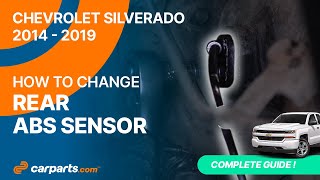

The information in this article is provided for general reference and educational purposes only. Vehicle specifications, procedures, and part compatibility can vary by production date, trim level, and region. Always consult your vehicle's factory service manual and verify part numbers before purchasing or performing repairs. Safety-critical components such as airbags, seat belts, and braking systems should be installed by a qualified professional.
- 🎬 Helpful Videos
- What Does C0514 Mean?
- Can I Drive With C0514?
- Common Causes
- Symptoms
- Diagnostic Flowchart
- Common Fixes & Costs
- DIY vs Professional
- Used vs. New Parts: Buying Guide
- What Happens If You Wait — Timeline
- Cost of Not Fixing It
- Diagnosis Steps
- When This Code Triggers (Freeze-Frame Conditions)
- Related Codes
- Climate & Environmental Factors
- How to Talk to a Mechanic About This Code
- Where to Take It: Dealer vs Independent vs Chain
- When to Walk Away From the Repair
- What Scan Tool You Need for This Code
- How to Clear the Code After You Fix It
- Will This Fail Emissions / State Inspection?
- Most Commonly Affected Vehicles
- Manufacturer-Specific Notes
- Real Owner Stories
- 2021 Chevy Silverado Trail Boss with C0514 & P25A2
- 2012 Dodge Grand Caravan with recurring ABS light
- 2002 Subaru Outback with intermittent ABS light
- How to Prevent This Code From Triggering
- Frequently Asked Questions
- What does C0514 mean in simple terms?
- Is it safe to drive with code C0514?
- How much does it cost to fix code C0514?
- Can I fix C0514 myself?
- Will clearing the C0514 code fix the problem?
- Why did my 4x4 and ABS lights both come on?
- Can a bad wheel bearing cause code C0514?
- Key Takeaways
- 🎟️ Get 5% Off