

OBD-II Code C0507: Right Front Wheel Speed Sensor Performance
What C0507 means, why it triggers, and how to fix it
- Code C0507 indicates an illogical signal from the right front wheel speed sensor, immediately disabling your ABS and traction control systems.
- A faulty wheel speed sensor causes 70% of C0507 codes, followed closely by damaged wiring harnesses or a cracked magnetic tone ring.
- Always verify the fault by driving 5-15 mph while monitoring live scanner data to confirm the right front sensor reads 0 MPH or fluctuates erratically.
- Check for Technical Service Bulletins (TSBs) before replacing parts on 2015-2019 Jeep, Ram, and Chevrolet vehicles, as a dealership software update often resolves this code.
What Does C0507 Mean?

Code C0507 indicates the Anti-lock Brake System (ABS) module detected an illogical signal from the right front wheel speed sensor. If three wheels report 30 MPH and the right front wheel reports 0 MPH or 80 MPH, the computer flags the signal as irrational and sets this code.
Technical definition: The official SAE/ISO definition for C0507 is "Right Front Wheel Speed Sensor A Range/Performance." Manufacturers also define this as "Wheel Speed Signal Right Front Rationality." Both indicate the signal from the right front wheel speed sensor is erratic, implausible, or mismatched with the other sensors.
Can I Drive With C0507?
Yes, But With Caution. You can drive, but exercise extreme caution. Your Anti-lock Braking System (ABS) and Traction/Stability Control are disabled. During a panic stop or on slick surfaces, your wheels will lock up, increasing stopping distances and causing a loss of steering control. The vehicle reverts to its base braking system, requiring you to manually pump the brakes to avoid skidding. This fault also disables dependent systems like power steering assist or 4WD on certain models.
Common Causes

- Faulty Right Front Wheel Speed Sensor (Very Common) — The sensor is the most common failure point. Exposure to heat, water, and road debris causes internal failure over time.
- Damaged Wiring or Corroded Connector (Common) — The wiring harness is vulnerable to road debris, chafing against suspension parts, or moisture-induced connector corrosion.
- Damaged or Contaminated Tone Ring (Common) — The tone ring (or reluctor ring) cracks or accumulates metallic debris from brake wear, corrupting the sensor's magnetic reading. On modern cars, this ring is integrated into the wheel bearing/hub assembly.
- Failing Wheel Bearing/Hub Assembly (Less Common) — A worn wheel bearing introduces excessive play, altering the air gap between the sensor and tone ring and causing an erratic signal.
- Outdated ABS or Powertrain Control Module (PCM) Software (Less Common) — Original ABS or PCM software on certain vehicles is overly sensitive and falsely triggers C0507. A dealership software update fixes the logic.
- Incorrect Tire Size or Software Calibration Mismatch (Uncommon) — Mismatched tire sizes or severely uneven tread wear causes wheels to rotate at different speeds, tricking the ABS module into flagging a sensor fault.
- Low Battery Voltage or Charging System Issues (Uncommon) — A weak battery or failing alternator starves control modules of stable voltage, triggering spurious electronic faults including C0507.
- Failing ABS Control Module (Rare) — The ABS control module rarely fails. Consider this only after thoroughly ruling out the sensor, wiring, tone ring, and software.
Symptoms

- ABS Warning Light On — The ABS light on your dashboard illuminates immediately.
- Traction/Stability Control Light On — The traction control (TCS) or electronic stability control (ESC/VSC) light turns on, as these systems rely on wheel speed data.
- Cruise Control is Disabled — The vehicle disables cruise control as a safety measure when an ABS fault is present.
- Erratic Braking or Pedal Pulsation — The brake pedal pulses at low speeds or exhibits jerky braking as the ABS system incorrectly intervenes.
- Vehicle Enters 'Limp Mode' — The vehicle limits engine power and acceleration to ensure safety while the braking system is compromised.
- ABS Self-Test Failure on Startup — The dashboard information display reports a sensor or system error immediately after starting.
Diagnostic Flowchart

Tap your situation to follow the diagnostic path that matches what you're seeing on this code.
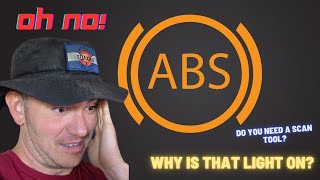
🎬 Watch: How to diagnose an ABS light with or without a scan tool.Common Fixes & Costs
- Replace Right Front Wheel Speed Sensor — Parts: $25-$188, Labor: $87-$150, ~1 hr book time (DIY)
- Repair Wiring or Replace Connector Pigtail — Parts: $15-$50, Labor: $100-$180, ~1.2 hr book time (Intermediate)
- Replace Front Wheel Bearing/Hub Assembly — Parts: $100-$500, Labor: $150-$300, ~1.5 hr book time (Intermediate)
- Reprogram ABS/Powertrain Control Module — Parts: $0, Labor: $120-$250, ~1 hr book time (Professional)
- Replace ABS Control Module — Parts: $600-$1200, Labor: $150-$250, ~1.5 hr book time (Professional)
DIY vs Professional
- Replace Right Front Wheel Speed Sensor — Beginner: Yes
Tools: Jack, jack stands, lug wrench, socket set, torque wrench, wire brush. - Repair Wiring or Replace Connector Pigtail — Beginner: No
Tools: Soldering iron, heat shrink tubing, wire strippers, multimeter. - Replace Front Wheel Bearing/Hub Assembly — Beginner: No
Tools: Large socket for axle nut, high-capacity torque wrench, breaker bar, slide hammer. - Reprogram ABS/Powertrain Control Module — Beginner: No
Tools: Vehicle-specific programming interface and manufacturer service portal subscription.
Used vs. New Parts: Buying Guide
When a used part is worth it: Buying a used wheel speed sensor rarely makes sense. It is a cheap wear-and-tear item. A used sensor carries an unknown history and high risk of early failure.
Donor-vehicle mileage cap: roughly under 40000 miles for the part to have meaningful remaining life.
Donor quality checklist:
- Only buy used if it's integrated into an expensive hub assembly from a low-mileage donor vehicle.
- Match the part number exactly to ensure software compatibility.
- Avoid parts from regions with heavy road salt.
Decision logic:
- If The part is a standalone wheel speed sensor → Buy a new aftermarket or OEM part.
- If The sensor is integrated into a wheel hub assembly over $400 → A low-mileage used assembly is a budget option, but carries a limited lifespan.
- If The vehicle is older than 15 years and you plan to sell it soon → A cheap, new aftermarket sensor is acceptable.
Warranty tradeoff: Used parts have a 30-90 day warranty. New aftermarket parts offer 1-year to lifetime warranties.
Worst-case if a used part fails: $150-$250 if a used part fails, requiring a second labor charge and a new part.
What Happens If You Wait — Timeline
- Immediate: ABS, Traction Control, and Stability Control are disabled. Warning lights illuminate. (MPG impact: 0%% · Added cost: $0)
- 0-3 months: The risk of skidding during a panic stop increases significantly. The vehicle fails state safety inspections. (MPG impact: 0%% · Added cost: $50-$200 in failed inspection fees.)
- 3-12 months: If caused by a failing wheel bearing, continued driving leads to severe mechanical failure. (MPG impact: 0-5%% · Added cost: $500-$1000+ for a new hub, knuckle, and axle if the bearing fails completely.)
- 12+ months: Catastrophic wheel bearing failure causes the wheel to wobble severely or separate from the vehicle. (MPG impact: 0%% · Added cost: Cost of a major accident and potential vehicle total loss.)
Cost of Not Fixing It
- Immediate: Disabled ABS, traction control, and stability control. This causes a significant loss of vehicle safety on slippery surfaces. (Added cost: $0)
- 0-6 months: Increased risk of collision. Wheels lock during a panic stop, leading to skidding and loss of steering control. (Added cost: Potential cost of an accident deductible.)
- 6+ months: Failed state safety inspection and potential uneven tire wear from intermittent brake application. (Added cost: $50-$200 for a failed inspection and re-test.)
Diagnosis Steps
- Read Fault Codes and Live Data
Use an OBD-II scanner capable of reading ABS codes. Confirm C0507 is active. Access the live data stream and monitor the speed of all four wheels while driving slowly (5-15 mph). A faulty right front sensor reads 0, fluctuates erratically, or shows a speed that doesn't match the others. All wheels must read within 1-2 MPH of each other when driving straight.
Tools: OBD-II Scanner with ABS/Live Data capability (Beginner) - Visually Inspect the Sensor, Wiring, and Tone Ring
Raise and secure the vehicle. Remove the right front wheel. Visually inspect the wheel speed sensor for physical damage and its wiring harness for cuts, chafing, or melting. Check the connector for corrosion or bent pins. Inspect the tone ring for cracks, missing teeth, or heavy metallic debris buildup.
Tools: Jack, Jack Stands, Lug Wrench, Flashlight (Intermediate) - Perform a Harness 'Wiggle Test'
With the scanner displaying live wheel speed data, have an assistant wiggle and flex the wiring harness between the sensor and the ABS module. Focus on areas where the harness bends for steering or suspension travel. If the scanner reading suddenly drops out, you found the break in the wire.
Tools: OBD-II Scanner with Live Data (Intermediate) - Check Battery Health and System Voltage
Use a multimeter to check the battery voltage with the car off (must be >12.4V) and while running (must be 13.7-14.7V). A weak battery or failing alternator causes spurious wheel speed sensor codes.
Tools: Multimeter (Beginner) - Check for Technical Service Bulletins (TSBs)
Check online or with a dealership for TSBs related to code C0507 for your specific vehicle. Manufacturers like Stellantis (Jeep, Ram) frequently release software updates to fix this issue without replacing parts.
Tools: Computer with Internet Access (Beginner) - Pro Tip: Perform a Sensor Swap Test
If the left and right sensors are identical, swap them. Clear the codes and drive. If the code changes to C0501 (Left Front Wheel Speed Sensor Performance), the sensor is faulty. If C0507 returns, the problem is in the right front wiring or hub.
Tools: Basic hand tools, OBD-II Scanner (Intermediate) - Pro Tip: Test a Passive Sensor (2-Wire) with a Multimeter
Disconnect the sensor. Set your multimeter to Ohms (Ω) and probe the two sensor pins. Resistance is typically 800-2,000 Ohms. An open loop (OL) or 0 Ohm reading indicates a failed sensor. Next, set the multimeter to AC Volts (V~), backprobe the wires, and spin the wheel by hand. You must see a rising AC voltage between 0.5V and 1.0V. No voltage indicates a failed sensor or tone ring.
Tools: Multimeter, Backprobe pins (Advanced) - Pro Tip: Test an Active Sensor (3-Wire) with a Multimeter
Disconnect the sensor harness. Turn the ignition to 'ON' (engine off). On the vehicle-side connector, test the three pins. You must find: 1) a reference voltage (5V or 12V), 2) a ground (less than 0.1V), and 3) a signal wire. If reference voltage or ground is missing, the problem is in the vehicle's wiring or ABS module.
Tools: Multimeter (Advanced) - Pro Tip: Analyze the Waveform with an Oscilloscope
Backprobe the sensor's signal wire. An active sensor produces a clean square wave that increases in frequency with wheel speed. A passive sensor produces an AC sine wave that increases in frequency and amplitude. Dropouts or erratic patterns point to a bad sensor, tone ring, or air gap.
Tools: Oscilloscope, Backprobe pins (Advanced)
When This Code Triggers (Freeze-Frame Conditions)
- Vehicle Speed: 15-45 mph (The code sets during steady city driving. The ABS module constantly compares wheel speeds, spotting discrepancies easiest during moderate travel.)
- Brake Pedal Status: Not Applied (C0507 compares wheel speeds during normal driving. It triggers when one sensor's reading deviates from the others over several seconds, not during hard braking.)
- System Voltage: 13.5 - 14.5 V (The fault is valid when the charging system operates normally. If freeze frame shows low voltage (<12V), C0507 is a secondary symptom of an electrical problem.)
- Time Since Code Clear: 5-10 minutes (The code sets after the ABS module gathers enough data to confirm an implausible signal, usually within the first few minutes of driving.)
Related Codes
- C0501 — Identical code for the Left Front Wheel Speed Sensor. Seeing both C0501 and C0507 simultaneously points to a shared issue like a required software update or systemic low battery voltage.
- U0415 — Means 'Invalid Data Received From ABS Control Module'. This is a secondary symptom set in the ECM or TCM because they lack valid speed data. Resolving C0507 automatically clears U0415.
- C0035 — A generic code for 'Front Left Wheel Speed Sensor Circuit'. C0507 indicates an illogical performance signal, while C0035 indicates a hard electrical fault like an open or short circuit.
- P25A2 — Set by the Engine Control Module (ECM) to illuminate the Check Engine Light when a critical chassis fault like C0507 occurs. Commonly seen on the Chevrolet Volt.
Climate & Environmental Factors
- Cold Climates / Road Salt: Road salt causes aggressive corrosion on the sensor's mounting bolt, making it seize. It also corrodes connector pins and degrades wiring insulation, leading to shorts.
- High Humidity / Heavy Rain: Moisture penetrates non-sealed connectors or damaged wiring, causing short circuits that disrupt the sensor signal. This leads to intermittent C0507 codes in wet weather.
- Off-Roading / Rough Roads: Excessive suspension travel causes the wiring harness to chafe against the frame, wearing through the insulation. Impacts directly damage the sensor or tone ring.
How to Talk to a Mechanic About This Code
Say this: "I have an ABS light on, and my scanner shows code C0507 for the right front wheel speed sensor. Can you check the live data to confirm the fault before replacing parts?"
This shows you understand the diagnostic process and prevents the shop from blindly swapping parts if the fault is actually in the wiring or hub.
Avoid saying:
- 'My ABS light is on, can you fix it?'
- 'I'm not sure what's wrong, just do whatever it takes.'
- 'My friend said it's probably the sensor, just change it.'
Questions to ask before authorizing the repair:
- Did the live data show an erratic or missing signal from the right front sensor?
- Did you inspect the wiring harness and connector for damage?
- Is there a warranty on the new part and your labor?
- Have you checked for any Technical Service Bulletins (TSBs) for this code?
Where to Take It: Dealer vs Independent vs Chain
- Dealer:
Recommended only if a software update is needed or the car is under warranty.
Best for: Vehicles under warranty, Vehicles requiring a TSB software update (Jeep/Ram/Chevy), Complex electrical issues
Downsides: Highest labor rates, Often recommends replacing the entire hub assembly instead of just the sensor (Typical cost: +50% vs. baseline) - Independent Shop:
Best fit for most C0507 repairs. A reputable shop easily diagnoses and replaces a sensor or hub at a fair price.
Best for: Out-of-warranty vehicles, Sensor or wiring repairs, Hub/bearing replacement
Downsides: Quality varies, Lacks tools for proprietary software updates (Typical cost: +0% vs. baseline) - Chain Shop:
Use with caution. Acceptable only if you have already diagnosed the sensor as the definite cause.
Best for: Simple sensor replacement if you are certain that is the issue.
Downsides: Technician skill varies widely, Lacks advanced diagnostic tools, leading to misdiagnosis, High pressure to upsell unnecessary services (Typical cost: -10% vs. baseline)
When to Walk Away From the Repair
If the estimated repair cost exceeds 50% of the car's private-party value, consider selling the car as-is.
- Car worth $4000, fix is $350: Fix it. The cost is well below the threshold and restores a critical safety feature.
- Car worth $15000, fix is $800: Fix it. This is a reasonable cost to maintain a higher-value vehicle.
- Car worth $3000, fix is $1800: Walk away. The repair requires replacing the ABS module and exceeds 50% of the car's value.
What Scan Tool You Need for This Code

Minimum: A scanner that reads ABS fault codes and views live sensor data.
A basic $20 engine code reader cannot access the ABS module to see C0507 or view live wheel speed data.
Budget: BlueDriver Pro Scan Tool (~$119) — Connects via Bluetooth to read ABS codes and display live data for all four wheel speed sensors.
Mid-range: Foxwell NT630 Plus or Autel AutoLink AL619 (~$120-180) — Dedicated handheld units that read ABS codes and show live data. The Foxwell offers bidirectional controls like activating the ABS pump.
Professional: Autel MaxiCOM MK808BT or Foxwell NT809 (~$500-800) — Offers full bidirectional control to command the ABS module directly, definitively ruling out module issues. Performs software updates if required.
How to Clear the Code After You Fix It
- Use an OBD-II scan tool with ABS capabilities to clear the C0507 code.
- Perform a test drive reaching 15-20 mph, including turns, to allow the system to self-test and confirm the repair.
Drive cycle (~15 minutes): Drive for 10-15 minutes, including stop-and-go city driving and a short period over 25 mph. This allows the ABS module to verify all four sensors report logical speeds.
Readiness monitors affected: This code does not affect emissions readiness monitors.
Watch out for:
- A basic $20 engine code reader cannot erase a C-code from the ABS module.
- Disconnecting the battery does not clear the ABS code on modern vehicles.
- If the code returns immediately, the root cause was not fixed.
Will This Fail Emissions / State Inspection?
Yes — this code typically fails an OBD-II emissions inspection.
- California: An illuminated ABS light causes a safety inspection failure.
- New York: An illuminated ABS light is increasingly enforced as an automatic safety inspection failure.
- Texas: An ABS light does NOT cause rejection during a safety inspection, but the primary red 'Brake' warning light does.
Most Commonly Affected Vehicles
- Jeep Compass (2017-2021) — A highly common failure point. While sensor failure is frequent, always check for PCM software updates, as TSBs address rationality codes via software flash.
- Jeep Cherokee (2014-2020) — TSB #18-032-17 specifically calls for a PCM software update to resolve 'Rationality Errors', though sensor replacement remains the most common physical fix.
- Chevrolet Volt (2016-2019) — An 'anti-vibration' washer between the axle and wheel bearing cracks and cuts the wheel speed sensor wire. TSB #19-NA-206 advises removing this washer and replacing the sensor.
- Chevrolet Silverado / GMC Sierra (2014-2018) — The wheel speed sensor fails internally without visible damage. Replacing the sensor and securing the wiring away from moving parts resolves the code.
- Ford F-150 (2015-2020) — Often caused by damage to the wiring harness where it routes near the suspension. Chafing and broken wires are common from steering movement.
- Ram ProMaster City (2015-2018) — TSBs (#18-063-17 REV. A, #18-008-16 REV. B) indicate this code is fixed by reprogramming the PCM to correct overly sensitive diagnostic logic.
- Jeep Renegade (2015-2020) — Prone to software glitches. The front sensor part number has been superseded multiple times. TSBs suggest a PCM software update resolves the code.
- BMW 3-Series (E90/E92) (2006-2013) — Illuminates the DSC light. Triggered by a failed wheel speed sensor, a weak battery, or a failing steering angle sensor, all of which provide critical input to the DSC module.
Manufacturer-Specific Notes
- General Motors (GMC/Chevrolet): On older GM trucks (e.g., 1997 Suburban), C0507 indicates a fault with the Steering Wheel Position Sensor signal, not a wheel speed sensor.
- Stellantis (Jeep, Ram, Fiat): For 2015-2018 models, TSBs frequently call for a PCM or ABS software update to correct overly sensitive fault logic. Always check TSBs before replacing hardware.
- General Motors (Chevrolet): On 2016-2019 Volts, an 'anti-rattle' washer on the front axle breaks and cuts the sensor wire. TSB #19-NA-206 instructs technicians to discard this washer when replacing the sensor.
- BMW: On the E90 platform, a C0507-equivalent code is triggered by a bad wheel speed sensor, a failing steering angle sensor, or low battery voltage causing the DSC module to register an implausible signal.
Real Owner Stories
2017 Chevy Volt with multiple warning lights
The Check Engine, ABS, and Traction Control lights illuminated with codes C0507, P25A2, and U0415.
Outcome: The magnetic tone ring integrated into the wheel hub assembly was rusted. Replacing the entire right front wheel hub assembly fixed the issue.
Lesson: If replacing the sensor on a Volt fails, the hub/tone ring is the next culprit.
2018 Chevy Silverado with sudden C0507
The truck threw code C0507 immediately on startup, disabling Traction Control.
Outcome: Replacing the right front wheel speed sensor with a new $26 GM part immediately cleared all codes.
Lesson: Sensors fail internally without visible damage. If the code returns instantly, the sensor is the probable cause.
2018 Jeep Compass with recurring C0507
The ABS, ESC, and Hill Holder lights illuminated with code C0507.
Outcome: A dealership PCM software update fixed the 'Rationality Error' permanently without hardware replacement.
Lesson: Always check TSBs for Stellantis vehicles. A software update often fixes the problem permanently.
How to Prevent This Code From Triggering
- Clean the Tone Ring During Brake Service (Every time brakes are replaced) — Brake dust and metallic debris corrupt the magnetic signal. Cleaning the ring removes this contamination.
- Apply Dielectric Grease to the Sensor Connector (When replacing a sensor) — Dielectric grease seals connectors from moisture, preventing pin corrosion and intermittent faults.
- Inspect and Secure Wiring Harnesses (During tire rotations) — Securing the wire away from moving parts prevents chafing and shorts.
- Perform Periodic Battery Terminal Cleaning (Annually) — Corroded terminals cause unstable voltage to the ABS computer, leading to spurious fault codes.
Frequently Asked Questions
Can I just replace the C0507 sensor myself?
Yes, replacing the wheel speed sensor is a manageable DIY job involving removing the wheel, unclipping the old sensor, and installing the new one. However, the sensor seizes in the steering knuckle in rusty environments, requiring extra effort to extract.
Why are my ABS and traction control lights on?
The ABS and traction control systems require accurate speed readings from all four wheels. Code C0507 tells the computer the right front data is unreliable, so it disables these safety systems and turns on the warning lights.
Will clearing the code fix the problem?
No. The code returns as soon as the ABS module runs its self-test during your next drive.
The shop replaced the sensor, but the light came back on. What now?
The problem lies elsewhere. Inspect the wiring harness for intermittent breaks, check the tone ring on the wheel hub for damage, and verify if a manufacturer software update (TSB) is required.
What is a common misdiagnosis for C0507?
Replacing the expensive ABS control module when the problem is a cheap sensor or wiring issue. Always rule out the sensor, wiring, and tone ring before condemning the module.
Can having different size tires on my car cause a C0507 code?
Yes. The ABS module expects all wheels to rotate at similar speeds. Mismatched tire sizes cause rotational differences that the computer interprets as a sensor performance problem.
Is a C0507 code a safety inspection failure?
Yes, in most jurisdictions. An illuminated ABS warning light indicates a fault in a critical safety system and results in an automatic failure.
Can I drive in the rain with the ABS light on?
It is highly dangerous. Without ABS, your wheels lock up on wet pavement during braking, leading to skidding and a complete loss of steering control. Drive with extreme caution and increase your following distance.
What is the difference between code C0507 and C0035?
C0507 is a 'performance' code meaning the sensor produces an illogical signal compared to other wheels. C0035 is a 'circuit' code indicating a complete loss of signal or short circuit. C0507 requires a driving test to diagnose, while C0035 is found with a multimeter while stationary.
Key Takeaways
- Code C0507 indicates an illogical signal from the right front wheel speed sensor, immediately disabling your ABS and traction control systems.
- A faulty wheel speed sensor causes 70% of C0507 codes, followed closely by damaged wiring harnesses or a cracked magnetic tone ring.
- Always verify the fault by driving 5-15 mph while monitoring live scanner data to confirm the right front sensor reads 0 MPH or fluctuates erratically.
- Check for Technical Service Bulletins (TSBs) before replacing parts on 2015-2019 Jeep, Ram, and Chevrolet vehicles, as a dealership software update often resolves this code.
Helpful Videos

The information in this article is provided for general reference and educational purposes only. Vehicle specifications, procedures, and part compatibility can vary by production date, trim level, and region. Always consult your vehicle's factory service manual and verify part numbers before purchasing or performing repairs. Safety-critical components such as airbags, seat belts, and braking systems should be installed by a qualified professional.
- 🎬 Helpful Videos
- What Does C0507 Mean?
- Can I Drive With C0507?
- Common Causes
- Symptoms
- Diagnostic Flowchart
- Common Fixes & Costs
- DIY vs Professional
- Used vs. New Parts: Buying Guide
- What Happens If You Wait — Timeline
- Cost of Not Fixing It
- Diagnosis Steps
- When This Code Triggers (Freeze-Frame Conditions)
- Related Codes
- Climate & Environmental Factors
- How to Talk to a Mechanic About This Code
- Where to Take It: Dealer vs Independent vs Chain
- When to Walk Away From the Repair
- What Scan Tool You Need for This Code
- How to Clear the Code After You Fix It
- Will This Fail Emissions / State Inspection?
- Most Commonly Affected Vehicles
- Manufacturer-Specific Notes
- Real Owner Stories
- 2017 Chevy Volt with multiple warning lights
- 2018 Chevy Silverado with sudden C0507
- 2018 Jeep Compass with recurring C0507
- How to Prevent This Code From Triggering
- Frequently Asked Questions
- Can I just replace the C0507 sensor myself?
- Why are my ABS and traction control lights on?
- Will clearing the code fix the problem?
- The shop replaced the sensor, but the light came back on. What now?
- What is a common misdiagnosis for C0507?
- Can having different size tires on my car cause a C0507 code?
- Is a C0507 code a safety inspection failure?
- Can I drive in the rain with the ABS light on?
- What is the difference between code C0507 and C0035?
- Key Takeaways
- 🎟️ Get 5% Off