

C0501 on 2016-2017 Jeep Cherokee: Left Front Wheel Speed Sensor Causes and Fixes
Code C0501 on a 2016-2017 Jeep Cherokee indicates a problem with the left front wheel speed sensor. The most common fix is replacing the sensor itself, which costs about $60-$90 for an OEM part and is a relatively simple DIY repair for many. This fault will disable ABS, traction control, and sometimes cruise control.
- C0501 specifically points to the left front wheel speed sensor circuit.
- The most common cause is a failed sensor, which is an affordable and accessible part to replace.
- Always inspect the wiring harness for damage before replacing parts, as this is another common point of failure.
- A scan tool that can read live ABS data is the most important tool for a confident diagnosis.
- Do not ignore this code, as it disables important safety systems like ABS and stability control.
What's Unique About the 2016-2017 Jeep CHEROKEE

For the 2016-2017 Jeep Cherokee (KL generation), this code is part of a pattern of 'Wheel Speed Sensor Rationality Errors' documented in multiple Technical Service Bulletins (TSBs) issued by the manufacturer. This indicates a known sensitivity in the system. TSB 18-032-17, for example, bundles this code with many others and prescribes a Powertrain Control Module (PCM) software update to fix various issues, including idle performance and other DTCs. This suggests C0501 can sometimes be a symptom of broader software logic issues, not just a faulty sensor. Unlike some older vehicles, the sensor on the Cherokee is relatively easy to access without removing the brake rotor or caliper.
Diagnostic Flowchart
Tap your situation to follow the diagnostic path that matches what you're seeing on this vehicle.
Symptoms You May Notice
- ABS warning light is on
- Traction Control or Electronic Stability Control (ESC) warning light is on
- "Service 4WD" light may illuminate
- ABS and stability control features are disabled
- Cruise control will not function
- Replacing the ABS module when the actual fault is simple wiring damage.
- Replacing the wheel speed sensor when the underlying cause is a bad wheel bearing creating excessive play.
- Replacing parts before checking for a relevant PCM software update as mentioned in TSBs.
Most Likely Causes

- Faulty Left Front Wheel Speed Sensor 🔴 High Probability Sensors are exposed to harsh conditions (water, heat, debris) and can fail internally over time. This is the most common point of failure for this code.
How to confirm: Use a scan tool with live data capability (like AlfaOBD or a professional scanner) to monitor all four wheel speeds while driving. If the left front sensor reads erratically, differently from the others, or drops to zero, the sensor is likely bad.
Typical fix: Replace the left front wheel speed sensor. The sensor is typically held in by a single 10mm bolt.
Est. part cost: $20-$90 - Damaged Wiring or Connector 🟡 Medium Probability The wiring harness runs down the suspension and is subject to flexing, impacts from road debris, and corrosion, which can cause breaks or shorts. Chafing can occur where the harness passes near the shock tower or other suspension components.
How to confirm: Visually inspect the entire length of the sensor's wiring harness from the sensor to its main connection point. Look for chafing, breaks, or corrosion in the connector pins. Perform a continuity test on the wires with a multimeter.
Typical fix: Repair the broken or shorted wire(s) or replace the pigtail connector. Use heat-shrink tubing to protect the repair.
Est. part cost: $10-$40 - Damaged or Contaminated Tone Ring ⚪ Low Probability The tone ring, which the sensor reads, is integrated into the wheel bearing/hub assembly. While protected, rust or debris can accumulate on it, or it can be damaged during other suspension work, leading to an implausible signal.
How to confirm: After removing the wheel speed sensor, visually inspect the tone ring through the sensor mounting hole using a flashlight. Look for rust buildup, missing teeth, or other damage. One owner noted cleaning the tone rings with a wire wheel and brake cleaner as part of their diagnosis.
Typical fix: The tone ring is part of the wheel bearing/hub assembly. The entire hub assembly must be replaced.
Est. part cost: $100-$250 - Failing Wheel Bearing ⚪ Low Probability A worn wheel bearing can introduce excessive play or 'wobble' in the hub. This changes the gap between the sensor and the tone ring, leading to an erratic signal.
How to confirm: With the vehicle safely raised on jack stands, grasp the tire at the top and bottom and try to rock it. If there is any play or movement, or if you hear a grinding noise when spinning the wheel, the bearing is bad.
Typical fix: Replace the entire front wheel bearing/hub assembly.
Est. part cost: $100-$250
Rare But Worth Checking
- ABS Control Module Software Issue: TSB 18-032-17 involves a PCM flash for a wide range of DTCs, including the C05xx wheel speed sensor rationality codes. This suggests that if all hardware checks out, a trip to the dealer for a potential software flash may be necessary to resolve the fault logic.
- Low Battery Voltage: Some owners have reported that a failing battery can cause a cascade of electronic issues, including erroneous wheel speed sensor codes. Before replacing parts, ensure the battery is healthy and providing stable voltage (typically above 12.4V at rest).
- Faulty ABS Control Module: This is rare and should only be considered after all other possibilities (sensor, wiring, hub, software) have been definitively ruled out. It is an expensive part to replace.
Diagnosis Steps
- Connect an OBD-II scanner capable of reading ABS codes (e.g., AlfaOBD, Autel, Foxwell) to confirm C0501 is present and active.
- Use the scanner's live data function to view the wheel speed readings from all four sensors while driving in a straight line at a low speed. The left front sensor's reading should match the others. If it is erratic, drops out, or is zero, proceed with inspection.
- Raise and secure the front of the vehicle on jack stands.
- Visually inspect the left front wheel speed sensor's wiring harness for any signs of damage, such as cuts, melting, chafing, or heat damage from the exhaust.
- Unplug the sensor and inspect the connector for corrosion or bent pins. Clean with electrical contact cleaner if necessary.
- Remove the single 10mm bolt holding the sensor in place and carefully twist and pull the sensor out of the steering knuckle. If stuck, use penetrating oil and gentle persuasion with pliers, being careful not to break it off in the knuckle.
- Inspect the sensor tip for damage or metallic debris.
- Inspect the tone ring (located on the hub) through the sensor hole for rust, debris, or damage.
- Check for play in the wheel bearing by attempting to rock the wheel from top to bottom. Any play indicates a bad bearing.
- If the sensor or wiring is the suspected cause, replace the sensor. If the wheel bearing has play or the tone ring is damaged, replace the hub assembly.
- After the repair, clear the codes with the scanner. A short drive is typically required for the warning lights to turn off as the system re-verifies the sensor signal.
Parts You'll Likely Need

- Front Wheel Speed Sensor
(OEM #68141887AF)— This is the most frequent cause of code C0501. The sensor fails internally from age and exposure to the elements. This part number supersedes 68141887AA, AB, AC, AD, and AE.
Trusted brands: Mopar, Standard Motor Products (SMP), Delphi, Bosch, Duralast
OEM price range: $60-$90
Aftermarket price range: $20-$50 - Front Wheel Bearing and Hub Assembly
(OEM #5154492AC (Note: This part number appears related to other Mopar vehicles and may not be correct for the Cherokee; VIN verification with a dealer is essential))— This is needed if the integrated tone ring is damaged or if the bearing itself has failed, causing excessive play that disrupts the sensor's reading.
Trusted brands: Mopar, Timken, SKF, MOOG
OEM price range: $200-$300
Aftermarket price range: $100-$180
Related Codes That Often Appear With This One
- C0507 — This is the corresponding rationality code for the Right Front Wheel Speed Sensor. Seeing them together could point to a systemic issue or a common cause like mismatched tire sizes.
- C050D — This is the corresponding rationality code for the Left Rear Wheel Speed Sensor.
- C0513 — This is the corresponding rationality code for the Right Rear Wheel Speed Sensor. TSBs #18-032-17 and #18-122-16 show these codes appearing together.
- U0428 — Implausible Data Received From Steering Angle Sensor Module. This code is listed alongside C0501 in TSB #1806620, suggesting a related system fault that can be triggered simultaneously.
Technical Service Bulletins (TSBs) & Recalls

- 1806620: Mentions C0501 - Left Front Wheel Speed Sensor Range/Performance.
- 18-032-17: Lists C0501 as a 'Wheel Speed Sensor Rationality Error' and recommends a PCM software flash as a fix for a collection of codes.
- 1801317: Mentions C0501 - Left Front Wheel Speed Sensor Range/Performance.
- 18-122-16: Lists C0501 as a 'Wheel Speed Sensor Rationality Error'.
Platform-Specific Known Issues
- Jeep has issued multiple Technical Service Bulletins (TSBs) for the 2016-2017 Cherokee that include code C0501 and other 'Wheel Speed Sensor Rationality Errors', indicating a known pattern of faults with this system.
- TSB 18-032-17 specifically calls for a PCM software update to address a list of DTCs including C0501, suggesting the fault can be software-related and not always a hardware failure.
Mechanic-Grade Diagnostic Values
- Live Data Voltage (Digital Sensor) — expected: Signal should rise smoothly from 0V up to a calibrated maximum, typically 2-5V, as the wheel is spun. The reading should be stable and consistent with other wheels.. Failure: A flat, erratic, or zero voltage reading while the wheel is turning indicates a fault in the sensor or circuit.
- Sensor Resistance (Passive Sensor Test) — expected: A common range for passive 2-wire sensors is between 800 and 1,700 Ohms. This can be compared between the left and right side sensors, which should be similar.. Failure: A reading of infinite resistance (open circuit) or zero resistance (short circuit), or a value wildly different from the opposing sensor.
- AC Voltage Output (Passive Sensor Test) — expected: Should generate over 100 millivolts (0.1V) AC when the wheel is spun by hand.. Failure: No AC voltage is generated, indicating the sensor is not producing a signal.
Scan Tool Commands That Help
- wiTECH, AlfaOBD, Appcar DiagFCA: Proxy Alignment — This procedure is mandatory after replacing the ABS control module to ensure the new module is recognized and configured to the vehicle's network and options.
- wiTECH or equivalent professional scanner: ABS Bleed — After replacing the ABS hydraulic unit or opening the brake hydraulic system, this function is required to cycle the internal pump and valves to purge all air from the module.
- wiTECH: Brake Pedal Calibration — A miscellaneous function found in the ABS module section used to calibrate sensors related to brake pedal position after service.
- wiTECH: Longitudinal G-Sensor Calibration — A miscellaneous function in the ABS module section used to calibrate the G-sensor, which is critical for the Electronic Stability Control (ESC) system.
- wiTECH: ABS Module Reprogram/Flash — Used to update the ABS module's software to the latest version, which can resolve logic errors that falsely trigger DTCs like C0501, as noted in service bulletins.
Wiring & Ground Locations
- ABS Module Ground — While specific diagrams for the 2016-2017 Cherokee KL were not found, other Jeep models (like the Grand Cherokee WJ) utilize a dedicated ground point (e.g., G107) on the driver's side inner fender for the ABS system. Technicians should inspect inner fender ground points near the ABS module for corrosion.. A poor ground connection for the ABS module can cause a variety of erratic behavior and fault codes, including misinterpretation of a perfectly good wheel speed sensor signal.
- ABS Module Connector Power/Ground Pins — At the main electrical connector for the ABS control module.. Before condemning the module, a technician must verify it is receiving proper power and has a solid ground directly at its connector pins. On similar Chrysler products, these are typically the largest four pins in the connector (two for power, two for ground).
Real Owner Repair Stories
- YouTube channel 'Fixing cars and stuff' (2017 Jeep Cherokee Trailhawk) — Multiple warning lights illuminated on the dash, including ABS, traction control, and the check engine light. A basic scanner showed code U1412 (Implausible Wheel Speed Signal Received), but a professional scanner was needed to isolate the specific wheel.
❌ Tried (didn't work) Using a basic OBD-II scanner which could not pinpoint the specific fault within the ABS system.
✅ What actually fixed it Replacing the front passenger side (right front) ABS wheel speed sensor. After the part was replaced, the vehicle was driven a short distance, which allowed the system to self-test and extinguish the warning lights without needing a scanner to clear the codes.
OEM Part Supersession History
68141887AA, 68141887AB, 68141887AC, 68141887AD, 68141887AE→68141887AF— Standard part revision and improvement by the manufacturer.
Heads up: No known incompatibilities. The latest part number (68141887AF) is the correct service replacement for all previous versions on the specified vehicles.
Model Year Variations Within This Range
- 2016-2017: While there were minor cosmetic and feature packaging changes between the 2016 and 2017 models (e.g., HID headlamps on more trims), the core powertrain, chassis, and ABS hardware relevant to code C0501 are identical. The diagnostic and repair procedures are the same for both years.
Helpful Videos

Used OEM Parts in Stock
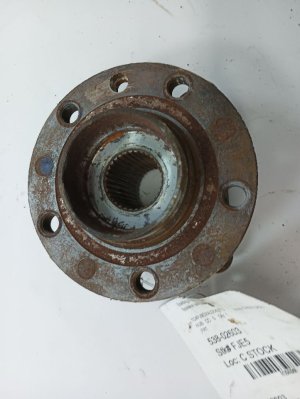
New Aftermarket Parts Available

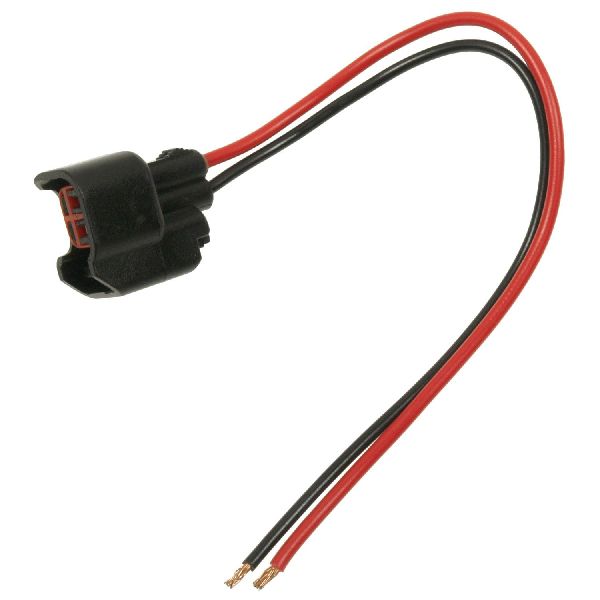

The information in this article is provided for general reference and educational purposes only. Vehicle specifications, procedures, and part compatibility can vary by production date, trim level, and region. Always consult your vehicle's factory service manual and verify part numbers before purchasing or performing repairs. Safety-critical components such as airbags, seat belts, and braking systems should be installed by a qualified professional.
- Jeep CHEROKEE:
- 🎬 Helpful Videos
- 🛍️ Shop This Part
- What's Unique About the 2016-2017 Jeep CHEROKEE
- Diagnostic Flowchart
- Symptoms You May Notice
- Most Likely Causes
- Rare But Worth Checking
- Diagnosis Steps
- Parts You'll Likely Need
- Related Codes That Often Appear With This One
- Technical Service Bulletins (TSBs) & Recalls
- Platform-Specific Known Issues
- Mechanic-Grade Diagnostic Values
- Scan Tool Commands That Help
- Wiring & Ground Locations
- Real Owner Repair Stories
- OEM Part Supersession History
- Model Year Variations Within This Range
- 🎟️ Get 5% Off