

OBD-II Code C0501: Left Front Wheel Speed Sensor Performance
What C0501 means, why it triggers, and how to fix it
- Code C0501 indicates a signal failure in the left front wheel speed sensor circuit, immediately disabling your ABS and electronic stability control.
- Replacing a faulty left front wheel speed sensor resolves this code 70% of the time and costs between $150 and $280 at a repair shop.
- Check for Technical Service Bulletins (TSBs) before buying parts; Jeep, Fiat, and Chrysler vehicles frequently trigger false C0501 codes that require a dealer software update.
- Driving with code C0501 increases emergency stopping distances by up to 20% on wet roads due to disabled ABS; repair the issue immediately to restore critical safety systems.
What Does C0501 Mean?

Code C0501 means the ABS Control Module receives an illogical, erratic, or missing signal from the left front wheel speed sensor. Because the computer cannot trust this data, it shuts down ABS, traction control, and stability control as a fail-safe measure.
Technical definition: Left Front Wheel Speed Sensor A Range/Performance. The Anti-Lock Brake System (ABS) control module detects that the left front wheel speed sensor signal is illogical, intermittent, or mismatched compared to the other three wheel speed sensors.
Can I Drive With C0501?
Yes, But With Caution. You can drive the vehicle, but your Anti-lock Braking System (ABS) and Electronic Stability Control (ESC) are disabled. In a panic stop, your wheels will lock up, increasing stopping distances and causing a loss of steering control on wet or icy surfaces. Normal braking functions for short-term, low-speed driving in dry conditions, but continued driving poses a severe safety risk in emergencies. Ignoring this code compromises the vehicle's most critical safety systems.
Common Causes

- Faulty Left Front Wheel Speed Sensor (Very Common) — The sensor itself is the most common failure point. Exposed to extreme heat, moisture, and vibration, it fails due to internal shorts or degraded electronic components.
- Damaged Wiring or Connector (Common) — The wiring harness sustains damage from road debris, suspension movement, or chafing. Corroded connector pins frequently cause open or short circuits that interrupt the signal.
- Damaged or Dirty Tone Ring (Common) — The sensor reads a toothed or magnetic tone ring on the wheel hub. Cracked rings, missing teeth, or heavy rust buildup prevent the sensor from capturing a clean reading.
- Failing Wheel Hub Bearing (Less Common) — A failing wheel bearing creates excessive play in the hub. This alters the critical air gap between the sensor and the tone ring, generating an erratic signal.
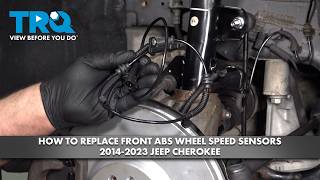
- Outdated Control Module Software (Less Common) — FCA vehicles (Jeep, Fiat) often feature overly sensitive control module software that incorrectly flags normal sensor signals as faults. 🎬 See this walkthrough for replacing a Jeep front wheel speed sensor. Dealers resolve this via software updates (TSBs).
- Loose or Corroded ABS Module Ground (Less Common) — A loose or corroded main ground connection for the ABS module causes erratic behavior and false trouble codes, including C0501.
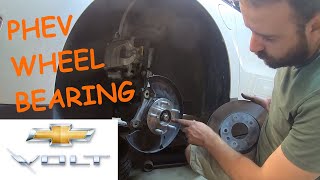
- Fractured Half-Shaft Anti-Click Washer (Rare) — On 2016-2019 Chevrolet Volts, a fractured front half-shaft anti-click washer creates debris that physically destroys the wheel speed sensor. 🎬 Watch: Diagnosing and replacing a Chevy Volt wheel bearing.
- Electromagnetic Interference (EMI) (Rare) — Poorly shielded aftermarket electrical components (like HID headlights) generate electromagnetic interference that disrupts the sensitive wheel speed sensor signal.
- Faulty ABS Control Module (Rare) — The ABS module rarely fails internally. Consider this expensive repair only after definitively ruling out the sensor, wiring, and hub.
Symptoms

- ABS Warning Light On — A steady or flashing ABS light illuminates on the dashboard.
- Traction Control/Stability Control Light On — The traction control or electronic stability control light illuminates, confirming system deactivation.
- Cruise Control Not Working — Cruise control becomes inoperable because it relies on accurate wheel speed data.
- Erratic Speedometer or Limp Mode — The speedometer behaves erratically, or the vehicle enters 'limp mode' with reduced engine power.
- Longer Stopping Distances — Wheels lock up during hard braking, significantly increasing stopping distances on wet or icy roads.
- Disabled Advanced Driver-Assistance Systems (ADAS) — Advanced Driver-Assistance Systems like Forward Collision Warning and Automatic Emergency Braking disable automatically.
Diagnostic Flowchart
Tap your situation to follow the diagnostic path that matches what you're seeing on this code.
Common Fixes & Costs
- Replace Left Front Wheel Speed Sensor
— Parts: $30-$100, Labor: $120-$180, ~1.2 hr book time
(DIY)
Jeep Cherokee (2016-2017): OEM Mopar 68141887AF (Alt: Standard Motor Products ALS2806, Duralast ABSB10335)
Fiat 500X (2016): OEM Mopar W0133-2072459 (Alt: Holstein 2ABS3234, Autopart Premium APABS0800)
Chevrolet Volt (2016-2019): OEM GM 39124497 (Alt: ACDelco 23498355, Dorman 970-053)
Volkswagen Jetta/Golf (2010-2018): OEM VW/Audi WHT003857 (Alt: Bosch 0986594504, Delphi SS20293) - Repair Damaged Wiring or Connector — Parts: $10-$50, Labor: $125-$275, ~1.8 hr book time (Intermediate)
- Clean Tone Ring and Sensor Mounting Surface — Parts: $5-$10, Labor: $75-$150, ~0.8 hr book time (DIY)
- Update Control Module Software — Parts: $0, Labor: $100-$200, ~1.0 hr book time (Professional)
- Replace Front Wheel Hub Bearing Assembly — Parts: $100-$250, Labor: $175-$350, ~2.0 hr book time (Intermediate)
- Replace ABS Control Module — Parts: $600-$1200, Labor: $200-$350, ~2.2 hr book time (Professional)
Used vs. New Parts: Buying Guide
When a used part is worth it: Buying a used wheel speed sensor is never recommended. The minimal cost savings do not justify the high risk of a used electronic component failing shortly after installation.
Donor-vehicle mileage cap: roughly under 20000 miles for the part to have meaningful remaining life.
Donor quality checklist:
- If buying used is unavoidable, source from a very low-mileage vehicle scrapped for reasons unrelated to the chassis or brakes.
- Visually inspect the wiring for brittleness, cracking, or previous repairs.
- Match the part number exactly, as different model years use different sensor types (active vs. passive).
Decision logic:
- If The part is a wheel speed sensor → Buy a new part from a reputable OEM or aftermarket brand. The low cost and availability of new parts make buying used impractical.
- If The required fix is a complete hub assembly → New is strongly preferred. A used hub contains a used bearing with an unknown lifespan. The labor to replace it is significant, making it a poor gamble.
- If The required fix is the ABS Control Module → A professionally rebuilt unit with a warranty is a cost-effective alternative to a new OEM module. A used module from a junkyard is risky and requires expensive dealership programming.
Warranty tradeoff: Used sensors typically have a 30-day warranty. New aftermarket sensors offer 1-year to limited lifetime warranties. New OEM parts carry a 1-2 year warranty.
Worst-case if a used part fails: $150-$250 if a used sensor fails after installation, requiring repeat labor costs plus the cost of another part.
What Happens If You Wait — Timeline
- Immediate: Code C0501 sets. ABS, Traction Control, and Stability Control warning lights illuminate, disabling these safety systems. (MPG impact: 0%% · Added cost: $0)
- 1-4 weeks (if cause is wiring/sensor): The fault remains consistent. Driving without ABS/ESC becomes normalized, increasing risk in an emergency maneuver. No further mechanical damage occurs. (MPG impact: 0%% · Added cost: $0)
- 1-6 months (if cause is a failing wheel bearing): Bearing wear accelerates. A humming noise progresses to grinding, and the wheel begins to wobble. (MPG impact: 1-2%% · Added cost: $275 - $600)
- 6+ months (if cause is a failing wheel bearing): Complete wheel bearing failure. The wheel locks up or separates from the vehicle while driving, damaging the steering knuckle and axle. (MPG impact: N/A% · Added cost: $800 - $2000+)
Cost of Not Fixing It
- Immediate: ABS and Stability Control disable. Increased risk of losing control and longer stopping distances in emergencies. (Added cost: $0)
- 0-6 months: If caused by a failing wheel bearing, continued driving destroys the bearing, causing wheel wobble and grinding noises. (Added cost: $400 - $800)
- 6+ months: Complete wheel bearing failure causes the wheel to separate from the vehicle while driving, resulting in catastrophic damage or a major accident. (Added cost: $1000+)
Diagnosis Steps

- Read the Trouble Codes
Use an ABS-capable OBD-II scanner to confirm C0501. Note any other stored codes, as they provide critical clues to the root cause.
Tools: OBD-II Scanner (with ABS capability) (Beginner) - Check for Technical Service Bulletins (TSBs)
Check manufacturer Technical Service Bulletins (TSBs) online using your VIN. FCA and GM frequently issue TSBs indicating a software update or specific non-obvious part is the required fix.
Tools: Smartphone or Computer with internet access (Beginner) - Analyze Live Data
Monitor live data (PIDs) from all four wheels while driving slowly. The left front sensor will likely read 0 MPH, fluctuate erratically, or differ significantly from the other three wheels.
Tools: OBD-II Scanner (with ABS capability) (Intermediate) - Visually Inspect the Sensor, Wiring, and Tone Ring
Raise and secure the vehicle. Inspect the left front sensor, wiring harness, and connector for frayed wires, corrosion, or chafing. Remove the sensor and inspect the tone ring for rust, debris, or cracks.
Tools: Jack, Jack Stands, Flashlight, Socket/Wrench Set (Intermediate) - Perform a 'Wiggle Test'
While watching live scanner data, wiggle the wiring harness at the sensor connector and along its path. If the speed reading jumps or drops, you have an intermittent wiring break.
Tools: OBD-II Scanner (with ABS capability) (Intermediate) - Swap Sensors (If Applicable)
Swap the left and right front sensors if they share the same part number. If the code changes to C0507 (Right Front), the sensor is faulty. If C0501 remains, the issue is the wiring or ABS module.
Tools: Socket/Wrench Set, OBD-II Scanner (Intermediate) - Test Sensor with a Multimeter (Voltage/Resistance)
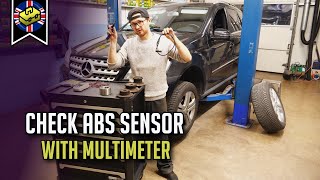
For older 2-wire passive sensors, measure resistance across the pins with a multimeter (typically 1,000-2,500 Ohms). For newer active sensors, backprobe the connector with the key on to verify a 5V or 12V reference voltage from the ABS module.
Tools: Multimeter, Vehicle-specific wiring diagram (Advanced) - Advanced: Test Passive Sensor AC Voltage Output
Disconnect a passive sensor, set a multimeter to AC Volts, and spin the wheel by hand. A healthy sensor generates at least 0.25V AC. Zero voltage indicates a failed sensor or tone ring issue.
Tools: Multimeter (with AC Volts) (Advanced) - Advanced: Analyze Waveform with an Oscilloscope
Connect an oscilloscope to the sensor wires and spin the wheel. Passive sensors produce a clean AC sine wave; active sensors produce a digital square wave. Distorted waveforms confirm a faulty sensor, damaged tone ring, or bad bearing.
Tools: Oscilloscope, Back-probe kit (Advanced)
When This Code Triggers (Freeze-Frame Conditions)
- Vehicle Speed: 25-55 mph (Steady highway or city driving. The code sets when the module compares all four wheel speeds over time and finds a persistent, illogical difference from the left front sensor.)
- Engine RPM: 1500-2500 RPM (Light to moderate acceleration or cruising.)
- Brake Pedal Status: Not Applied (The fault is a rationality check that runs continuously while driving, not just during a braking event.)
- System Voltage: 13.0-14.5 V (Normal operating voltage. A low system voltage (below 11.5V) from a failing battery triggers false electronic module codes.)
Related Codes
- C0507 — Identical code for the Right Front wheel speed sensor. Swapping front sensors helps differentiate a bad sensor (code changes to C0507) from bad wiring (code remains C0501).
- C050D — Rationality code for the Left Rear sensor. Seeing C0501 and C050D together indicates a systemic issue like a faulty ABS module or bad ground, rather than a single sensor failure.
- P25A2 — Brake System Control Module Requested MIL. The ABS module detects a fault and commands the Check Engine Light on. Fixing C0501 automatically resolves P25A2.
- U0415 — Invalid Data Received From Anti-Lock Brake System Control Module. Other vehicle modules (ECU, TCM) reject the speed signal because the ABS module distrusts the faulty wheel speed sensor input.
Climate & Environmental Factors
- Cold Climates / Rust Belt: Road salt and moisture in cold climates accelerate corrosion in wiring harnesses and connectors, causing open or short circuits. Rust buildup on the steering knuckle seizes the sensor in its bore, complicating removal.
How to Talk to a Mechanic About This Code
Say this: "I have an ABS light on and my scanner shows code C0501 for the left front wheel speed sensor. Please check the live data from all four wheel sensors to confirm the fault before replacing parts. Also, check for any open TSBs related to this code for my VIN."
This tells the shop you've done basic research and points them toward an efficient diagnosis. Mentioning live data and TSBs prevents them from replacing the sensor without confirming it's the root cause, saving you money if the issue is wiring or software.
Avoid saying:
- 'My ABS light is on, can you fix it?' (Too vague, invites a lengthy diagnostic process.)
- 'I think I need a new wheel speed sensor.' (Don't diagnose it for them; ask them to confirm your suspicion.)
- 'Just do whatever it takes to turn the light off.'
Questions to ask before authorizing the repair:
- Did the live data show the left front sensor dropping out or reading differently than the others?
- Did you visually inspect the wiring harness and connector for corrosion or damage?
- Is the recommended repair to replace the sensor, repair the wiring, or something else, like a wheel hub?
- What is the warranty on the parts and labor for this repair?
Where to Take It: Dealer vs Independent vs Chain
- Dealer:
Recommended if you own an FCA vehicle (Jeep, Fiat, Chrysler) due to the high likelihood of a software-based fix. Also the best choice for warranty work.
Best for: Vehicles under warranty., Vehicles with known TSBs requiring a software update (common on Jeep/Fiat/Chrysler)., Complex electrical issues where other shops have failed to find the cause.
Downsides: Highest labor rates., May recommend replacing an entire assembly when a smaller component is the cause. (Typical cost: +50% vs. baseline) - Independent Shop:
Best fit for most common C0501 scenarios, such as a bad sensor, damaged wire, or faulty wheel bearing on common vehicle models (e.g., Ford, Subaru, VW).
Best for: Out-of-warranty vehicles with a straightforward sensor or wiring failure., Building a long-term relationship with a trusted mechanic., Cost-effective diagnosis and repair.
Downsides: Quality and diagnostic capabilities vary widely., May not have access to the latest manufacturer software updates. (Typical cost: +0% vs. baseline) - Chain Shop:
Acceptable only for simple sensor replacements if you have already definitively diagnosed the issue yourself.
Best for: Simple, clear-cut wheel speed sensor replacements where you have already confirmed the diagnosis.
Downsides: Technician skill varies greatly., High pressure to upsell additional services (e.g., brake flushes, alignments) that may not be necessary., May lack the advanced diagnostic tools to differentiate between a sensor, wiring, or module fault. (Typical cost: -10% vs. baseline)
When to Walk Away From the Repair
If the estimated repair cost exceeds 50% of the car's private-party value, consider selling or trading in the vehicle.
- Car worth $4000, fix is $2200: Walk away. The repair cost is over half the car's value.
- Car worth $12000, fix is $800: Fix it. This repair is well below the threshold and restores a critical safety feature.
- Car worth $3000, fix is $1600: Walk away. It's not economical to invest this much into a low-value car.
What Scan Tool You Need for This Code
Minimum: A scanner that can read and clear Anti-Lock Brake System (ABS) codes and view live data for all four wheel speed sensors.
A basic $20 engine code reader cannot access the ABS module. It will not see the C0501 code or read the live wheel speed data, leaving you completely blind to the problem.
Budget: BlueDriver Pro (~$100) — Connects to your smartphone via Bluetooth. It reads and clears ABS codes and graphs live data from all four wheel speed sensors simultaneously, making it easy to spot the failing sensor.
Mid-range: Foxwell NT630 Plus (~$150) — A dedicated handheld unit that reads/clears ABS codes and shows live data. Its key advantage is bidirectional control, allowing it to perform an 'automated bleed' of the ABS pump.
Professional: Autel MaxiCOM MK808 (~$450) — A professional-level tablet scanner. It offers full bidirectional control, comprehensive live data, and performs system-level resets and calibrations.
Rent vs buy: Many AutoZone and O'Reilly Auto Parts locations scan ABS codes for free in the parking lot. This is the best option for a one-time diagnosis. If you plan to do your own repairs, buying a capable scanner like the BlueDriver is a worthwhile investment.
How to Clear the Code After You Fix It
- Use an ABS-capable OBD-II scan tool to erase the fault codes.
- Drive the vehicle for 10-15 minutes at mixed speeds (up to 45 mph), including several gentle stops and turns.
- Re-scan the ABS module to verify C0501 remains cleared.
Drive cycle (~15 minutes): The ABS module performs a self-test upon startup and confirms sensor functionality within the first few minutes of driving. A 10-15 minute drive with a mix of speeds and gentle turns is sufficient for the system to verify the repair.
Readiness monitors affected: None. A C-code (chassis) like C0501 does not affect emissions readiness monitors.
Watch out for:
- Disconnecting the battery fails to clear the code from the ABS module's memory.
- The code returns immediately if the underlying mechanical or electrical fault remains unfixed.
- Some systems require a steering angle sensor recalibration if the battery is disconnected for an extended period.
Will This Fail Emissions / State Inspection?
No — by itself this code doesn't fail OBD inspection (but it can keep readiness monitors from setting, which causes a separate fail).
- California: A C-code does not fail the OBD-II emissions test. However, an illuminated ABS light is a safety issue and fails the overall inspection at the technician's discretion.
- New York: An illuminated ABS warning light causes an automatic failure of the annual safety inspection.
- Texas: An illuminated ABS light does NOT fail the safety inspection, but an illuminated red 'Brake' warning light will.
Most Commonly Affected Vehicles

- Jeep Cherokee (2016-2017) — Prone to setting this code due to overly sensitive software. TSB 18-032-17 recommends a PCM software update. The front sensors are identical, allowing for diagnostic swapping.
- Jeep Renegade (2015-2018) — Shares a platform with the Fiat 500X and is susceptible to the same sensor, wiring, and software issues. A weak battery is a known cause of multiple electrical faults.
- Fiat 500X (2016) — A known issue addressed by TSB #08-010-16 REV. D, which calls for a software update to the PCM, BCM, and TCM on 2.4L models built on or before Oct 16, 2015.
- Jeep Compass (2017-2018) — Often caused by a simple sensor failure, but known to appear with unrelated codes. TSB 18-082-22 recommends a PCM software update as the fix in these cases.
- Chevrolet Volt (2016-2019) — TSB 19-NA-103 indicates the cause is a fractured front half-shaft anti-click washer that damages the sensor. This often occurs alongside code P25A2.
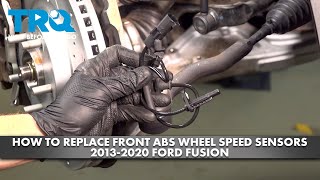
- Ford Fusion (2017-2018) — The code is typically resolved by replacing the left front wheel speed sensor. It is considered a straightforward DIY replacement completed in under an hour.
- Subaru Outback (2015-2019) — The sensor seizes in the steering knuckle due to rust, making removal difficult and causing the sensor to break. Applying penetrating oil beforehand is mandatory.
- Volkswagen Golf, Jetta, CC (2010-2018) — A common failure on many VW models. A faulty sensor disables ABS, ESC, auto hold, and cruise control. The sensor is an 'active' type that receives voltage from the ABS module.
Manufacturer-Specific Notes
- General Motors (Chevrolet/GMC): On 2000-2002 GM trucks (K2500/Suburban), C0501 refers to the power steering Electronic Variable Orifice (EVO) solenoid, not a wheel speed sensor.
- Fiat-Chrysler Automobiles (Jeep, Fiat): FCA issued numerous TSBs for the Renegade, 500X, Compass, and Cherokee acknowledging false C0501 triggers. The official fix is a dealer software update, which costs money if out of warranty.
- Chevrolet (Corvette): C0501 sometimes triggers during chassis dynamometer testing when rear wheels spin and front wheels remain stationary. It clears automatically after normal driving.
- Chevrolet (Volt): TSB 19-NA-103 addresses a fractured anti-click washer that destroys the sensor. Powertrain warranties cover this repair if still active.
Real Owner Stories
2016 Chevy Volt at 113K miles - A Misdiagnosis Story
ABS, Traction Control, and Check Engine lights appeared, with codes C0501 and P25A2. Owner knew about the common 'anti-click washer' issue on Volts.
What they tried:
- Replaced the left front wheel speed sensor and removed the broken anti-click washer. The codes returned immediately.
- Tested and reset the 12V battery, a common cause for electrical issues on Volts, but it did not help.
- Replaced the entire front wheel hub/bearing assembly.
Outcome: Replacing the wheel hub assembly fixed the problem. The old hub had a small crack in the magnetic tone ring that the sensor reads, which was the true cause of the erratic signal.
Lesson: Even with a known TSB, the root cause varies. A cracked tone ring mimics a bad sensor. Visual inspection of the tone ring is critical before finalizing a diagnosis.
2017 Jeep Compass - The Software Glitch
ABS and Stability Control lights on with code C0501, alongside several unrelated engine codes (like P061A for PCM performance).
What they tried:
- The owner considered replacing the left front wheel speed sensor.
Outcome: Per Jeep TSB 18-082-22, when C0501 appears with a cluster of other codes, the cause is a software glitch in the Powertrain Control Module (PCM). A dealer software update resolved all codes without replacing parts.
Lesson: Always check for Technical Service Bulletins (TSBs). On FCA models, a software update at the dealer is frequently the only fix, saving the cost of unnecessary parts.
2015 Jeep Renegade - An Easy Fix
ABS and Traction Control lights came on suddenly. A scan revealed code C0501.
What they tried:
- Confirmed with live data that the left front wheel reported 0 MPH while the others showed speed.
- Purchased and installed a new aftermarket wheel speed sensor.
Outcome: The owner replaced the sensor in an hour. After clearing the code, a test drive confirmed the fix and the lights did not return.
Lesson: When C0501 appears by itself with no other codes or strange symptoms, replacing the wheel speed sensor is the most common and straightforward fix.
How to Prevent This Code From Triggering
- Clean Sensors and Tone Rings During Brake Service (Every time brakes are replaced) — Remove brake dust and metallic debris from the magnetic sensor tip and tone ring during brake pad replacements to restore signal clarity.
- Inspect Wiring Harnesses Seasonally (Twice a year (e.g., when swapping winter/summer tires)) — Visually check sensor wiring for chafing or cracking twice a year when swapping seasonal tires to catch damage before it causes a short.
- Apply Dielectric Grease to Connectors (When replacing a sensor or during inspection) — Apply dielectric grease inside weather-pack connectors during sensor replacement to block moisture and prevent pin corrosion.
- Address Wheel Bearing Noise Immediately (As needed) — Replace humming or grinding wheel bearings immediately to prevent excessive hub play from altering the sensor air gap.
Frequently Asked Questions
Can I fix a C0501 code myself?
Yes, replacing a bad wheel speed sensor is a straightforward DIY job requiring basic hand tools. The sensor is accessible after removing the wheel. Proper scanner diagnosis is essential first to avoid replacing functional parts.
Will clearing the code fix the problem?
No. Clearing the code turns the warning lights off temporarily. The ABS module will detect the fault and trigger the lights again within minutes of driving.
Why did my ABS and traction control lights come on at the same time?
Both systems require accurate data from all four wheel speed sensors to operate. When one sensor provides an illogical signal, the computer disables both ABS and traction control as a safety precaution.
How much does it cost to fix code C0501 in 2024?
Replacing the wheel speed sensor costs between $150 and $280 at a repair shop. An aftermarket sensor part alone costs $30-$100. Complex issues like replacing an ABS module exceed $1,200.
Can a bad battery cause a C0501 code?
Yes, a weak battery causes low voltage drops that trigger various false electronic module codes, including C0501, especially on Jeep and Fiat models.
What is a common misdiagnosis for C0501?
A common mistake is replacing the sensor without checking for TSBs or inspecting the wiring harness. On many FCA vehicles, a software update is the actual fix, and corroded connectors easily mimic a failed sensor.
The sensor is stuck in the hub. What should I do?
Sensors often seize in the steering knuckle due to rust. If it breaks during removal, spray penetrating oil and carefully drill or pick out the remaining plastic. Always clean the mounting hole thoroughly before installing the new sensor.
Does C0501 always mean the left front sensor is bad?
No, the code indicates a fault anywhere in the left front circuit. This includes the sensor, wiring harness, connector, tone ring, and the ABS module itself.
Key Takeaways
- Code C0501 indicates a signal failure in the left front wheel speed sensor circuit, immediately disabling your ABS and electronic stability control.
- Replacing a faulty left front wheel speed sensor resolves this code 70% of the time and costs between $150 and $280 at a repair shop.
- Check for Technical Service Bulletins (TSBs) before buying parts; Jeep, Fiat, and Chrysler vehicles frequently trigger false C0501 codes that require a dealer software update.
- Driving with code C0501 increases emergency stopping distances by up to 20% on wet roads due to disabled ABS; repair the issue immediately to restore critical safety systems.
Helpful Videos

The information in this article is provided for general reference and educational purposes only. Vehicle specifications, procedures, and part compatibility can vary by production date, trim level, and region. Always consult your vehicle's factory service manual and verify part numbers before purchasing or performing repairs. Safety-critical components such as airbags, seat belts, and braking systems should be installed by a qualified professional.
- 🎬 Helpful Videos
- What Does C0501 Mean?
- Can I Drive With C0501?
- Common Causes
- Symptoms
- Diagnostic Flowchart
- Common Fixes & Costs
- Used vs. New Parts: Buying Guide
- What Happens If You Wait — Timeline
- Cost of Not Fixing It
- Diagnosis Steps
- When This Code Triggers (Freeze-Frame Conditions)
- Related Codes
- Climate & Environmental Factors
- How to Talk to a Mechanic About This Code
- Where to Take It: Dealer vs Independent vs Chain
- When to Walk Away From the Repair
- What Scan Tool You Need for This Code
- How to Clear the Code After You Fix It
- Will This Fail Emissions / State Inspection?
- Most Commonly Affected Vehicles
- Manufacturer-Specific Notes
- Real Owner Stories
- 2016 Chevy Volt at 113K miles - A Misdiagnosis Story
- 2017 Jeep Compass - The Software Glitch
- 2015 Jeep Renegade - An Easy Fix
- How to Prevent This Code From Triggering
- Frequently Asked Questions
- Can I fix a C0501 code myself?
- Will clearing the code fix the problem?
- Why did my ABS and traction control lights come on at the same time?
- How much does it cost to fix code C0501 in 2024?
- Can a bad battery cause a C0501 code?
- What is a common misdiagnosis for C0501?
- The sensor is stuck in the hub. What should I do?
- Does C0501 always mean the left front sensor is bad?
- Key Takeaways
- 🎟️ Get 5% Off