

OBD-II Code C0326: Transfer Case Lock Circuit Fault
What C0326 means, why it triggers, and how to fix it
- Code C0326 disables your 4WD system due to an electrical failure in the transfer case actuator circuit.
- On 2014-2017 GM trucks and SUVs, temperatures below 10°F trigger a false C0326 code requiring a $150-$250 dealer software update.
- The most frequent hardware failure is the transfer case actuator motor, costing $300-$700 to replace and requiring a scan tool relearn.
- Code C0326 with symptom byte '58' on 2017 GM vehicles signals a failed actuator brake that allows the vehicle to roll away in Park; use your parking brake immediately.
What Does C0326 Mean?

Code C0326 means your vehicle's Transfer Case Control Module (TCCM) detects an electrical fault in the four-wheel-drive control circuit. This system uses a small electric transfer case actuator motor to switch between 2WD and 4WD. The code triggers when the computer cannot control or get a valid response from this motor.
Technical definition: SAE/ISO defines C0326 as "Transfer Case Lock Actuator Control Circuit Malfunction". The Transfer Case Control Module (TCCM) detects the voltage, performance, or state of the transfer case locking mechanism control circuit is outside its expected range. The TCCM also sets this code if it commands a shift and receives no position sensor feedback.
Can I Drive With C0326?
Yes, But With Caution. You can drive, but your four-wheel-drive (4WD) system is disabled. On 2017 GM trucks and SUVs, this code indicates a critical safety risk of the vehicle rolling away when parked; you must use your parking brake every time until repaired. Driving stuck in 4HI causes drivetrain binding and accelerated tire wear on dry pavement, adding hundreds of dollars in tire replacement costs.
Common Causes

- Outdated TCCM Software (Very Common) — On 2014-2017 GM vehicles, the original TCCM software is too sensitive and sets code C0326 incorrectly in cold weather below 10°F (-12°C). A dealer software update is the required first step and permanent fix.
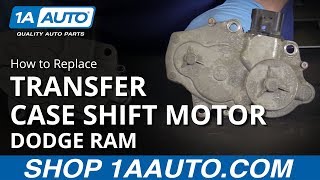
- Failed Transfer Case Actuator / Shift Motor (Very Common) — This electric motor mounts on the transfer case and performs the physical shifting. Its internal components, including the motor, position sensor (encoder ring), and internal brake, wear out and cause a circuit fault. This is the most frequent hardware cause of C0326. 🎬 Watch: How to replace a failed transfer case shift motor.
- Damaged Wiring, Connectors, or Grounds (Common) — The wiring harness and connectors under the vehicle are exposed to water, salt, and road debris. Corrosion, frayed wires, torn connector grommets, or a loose main frame ground interrupt the electrical circuit and trigger the code.
- Low Battery Voltage (Less Common) — A weak battery or failing alternator causes low voltage (below 10.5V) during startup. The TCCM misinterprets this voltage drop as a circuit fault, triggering C0326.
- Faulty Transfer Case Control Module (TCCM) (Rare) — The TCCM computer itself fails occasionally. You must rule out wiring, the actuator motor, and software updates before replacing this expensive module.
- Internal Transfer Case Mechanical Failure (Very Rare) — A seized shift fork or damaged gear inside the transfer case prevents the actuator motor from completing a shift. This resistance overloads the motor's circuit, triggering C0326 alongside severe grinding noises.
Symptoms

- "Service 4WD" or "Service AWD" Light — A warning message appears on your dashboard's information center, disabling the system.
- Inability to Shift Between 2WD and 4WD — The vehicle refuses to switch drive modes (2HI, 4HI, 4LO, Auto) and remains stuck in its current mode.
- Flashing 4WD Selector Lights — The dashboard 4WD switch lights flash continuously instead of staying solid, indicating a failed shift request.
- Drivetrain Binding on Dry Pavement — If stuck in 4HI, tight turns on dry pavement force the vehicle to lurch and the tires to chirp.
- Grinding or Clicking Noises — You hear unusual noises from the transfer case area as the actuator motor tries and fails to engage the gears.
Diagnostic Flowchart
Tap your situation to follow the diagnostic path that matches what you're seeing on this code.
Common Fixes & Costs
- Reprogram Transfer Case Control Module (TCCM) — Parts: $0, Labor: $150-$250, ~1.0 hr book time (Professional)
- Replace Transfer Case Actuator / Shift Motor
— Parts: $150-$400, Labor: $150-$300, ~1.5 hr book time
(Intermediate)
: OEM ACDelco 84718571 (Alt: Dorman 600-909)
: OEM Motorcraft MM-1418 (Alt: Dorman 600-928)
: OEM Mopar 68089746AC (Alt: Dorman 600-935) - Repair Damaged Wiring or Connectors — Parts: $10-$50, Labor: $150-$300, ~2.0 hr book time (Intermediate)
- Clean or Repair Main Ground Connection — Parts: $5, Labor: $50-$150, ~0.8 hr book time (Easy)
- Replace Transfer Case Control Module (TCCM)
— Parts: $200-$600, Labor: $150-$300, ~1.5 hr book time
(Professional)
: OEM ACDelco 23285501 (Alt: Dorman 599-192)
DIY vs Professional
- Reprogram Transfer Case Control Module (TCCM) — Beginner:
Tools: Professional scan tool, J2534 Pass-Thru device, battery maintainer, manufacturer software subscription. - Replace Transfer Case Actuator / Shift Motor — Beginner:
Tools: Socket set, wrenches, torque wrench, penetrating oil, bi-directional scan tool. - Repair Damaged Wiring or Connectors — Beginner:
Tools: Digital multimeter, wire strippers, heat shrink tubing, soldering iron. - Clean or Repair Main Ground Connection — Beginner:
Tools: Socket set, wire brush, sandpaper, dielectric grease.
Used vs. New Parts: Buying Guide
When a used part is worth it: A used OEM actuator from a low-mileage donor vehicle is a reliable, cost-effective alternative to cheap aftermarket parts.
Donor-vehicle mileage cap: roughly under 70000 miles for the part to have meaningful remaining life.
Donor quality checklist:
- Verify the part number matches exactly, including superseded numbers.
- Check the donor vehicle's VIN for a history of 4WD problems.
- Inspect the electrical connector for green corrosion or broken pins.
Decision logic:
- If The vehicle is a 2014-2017 GM model with a cold-weather issue → Do not buy any part until a dealer attempts a TCCM software update.
- If Budget is tight and the vehicle is older → Buy a used OEM actuator rather than a low-tier aftermarket part.
- If You prioritize reliability and warranty → Buy a new OEM (ACDelco, Mopar, Motorcraft) or premium aftermarket part (Dorman).
Warranty tradeoff: Salvage yards offer 30-90 day part-only warranties. New aftermarket parts offer 1-year to lifetime warranties.
Worst-case if a used part fails: $300-$600
What Happens If You Wait — Timeline
- 0-1 month: The 'Service 4WD' light illuminates, disabling the 4WD system. The vehicle operates normally in 2WD. (MPG impact: 0%% · Added cost: $0)
- 1-6 months: If stuck in 4HI, driving on dry pavement causes drivetrain binding, accelerating tire wear and stressing U-joints. (MPG impact: 1-3%% · Added cost: $400-$800)
- Ongoing (2017 GM models): If the code is C0326 58, the vehicle rolls away when parked on an incline, leading to a catastrophic accident. (MPG impact: 0%% · Added cost: $5000+)
- 6+ months: Operating with a binding drivetrain destroys the internal components of the transfer case. (MPG impact: 1-3%% · Added cost: $2000-$4000)
Cost of Not Fixing It
- Immediate: Loss of 4WD/AWD functionality creates a severe safety hazard in snow, ice, or heavy rain. (Added cost: $0)
- 0-3 months: Driving stuck in 4HI on dry pavement causes drivetrain binding, destroying tires and stressing U-joints. (Added cost: $400-$1500)
- Ongoing: For 2017 GM vehicles with code C0326 58, the vehicle rolls away when parked, causing catastrophic damage or injury. (Added cost: $5000+)
- Long-term: Operating with a malfunctioning actuator destroys the internal mechanical components of the transfer case. (Added cost: $2000-$4000)
Diagnosis Steps
- Check for Service Bulletins and Recalls
Search your VIN for TSBs and recalls. GM vehicles have known issues requiring a software update (TSB #PIP5250G), a faulty actuator replacement (Program #17048), or a fix for unexpected shifts to neutral (Recall #14192).
Tools: ['Internet Connection', 'Vehicle VIN'] - Read Fault Codes with a Bi-Directional Scanner
Use a scanner capable of reading Chassis ('C') codes. Note any symptom bytes. On GM vehicles, C0326 58 points directly to a faulty actuator brake, while C0326 5A suggests a software plausibility failure requiring a TCCM update.
Tools: ['Bi-directional Scan Tool'] - Perform a Visual Inspection and Wiggle Test
Inspect the transfer case actuator and wiring harness under the vehicle. Look for corrosion, melted plastic, or frayed wires. With the vehicle on, have an assistant try to shift the 4WD system while you gently wiggle the wiring harness. If the motor suddenly engages, you have a broken wire or loose connector pin.
Tools: ['Flashlight', 'Safety Glasses'] - Command the Actuator with a Scan Tool
Command the TCCM to cycle the actuator using a bi-directional scanner. If the module sends the command but the actuator makes no noise or grinds, the actuator has failed. If the tool cannot communicate with the TCCM, the module or its power/ground is faulty.
Tools: ['Bi-directional Scan Tool'] - Monitor Live Data PIDs During Commanded Shift
Monitor the 'Transfer Case Position Sensor' PID. Command a shift from 2HI to 4HI. The sensor values must change smoothly and lock into the expected range. Erratic or static values confirm a failed internal position sensor.
Tools: ['Bi-directional Scan Tool'] - [ADVANCED] Test Actuator Motor Winding Resistance
Disconnect the actuator and measure the resistance between the two motor control terminals. Typical GM actuators read between 0.5 and 35 ohms. A reading of 'OL' (open circuit) or near zero (short) confirms a failed actuator.
Tools: ['Digital Multimeter'] - [ADVANCED] Check Reference Voltage at Actuator Connector
Probe the actuator connector with the key on. Verify the 5.0V and 8.0V reference signals supplied by the TCCM. A significantly lower reading indicates high resistance from a corroded wire or a failing TCCM.
Tools: ['Digital Multimeter', 'Vehicle-Specific Wiring Diagram'] - Check for Corroded Main Ground Points
Inspect the main body-to-frame ground strap (often under the driver's door on GM trucks) for corrosion. A voltage drop test from the negative battery terminal to the TCCM case must show less than 0.2V.
Tools: ['Wrench Set', 'Wire Brush', 'Digital Multimeter']
When This Code Triggers (Freeze-Frame Conditions)
- Ambient Air Temperature: < 10°F (-12°C) (On GM vehicles, cold weather triggers a known software sensitivity issue.)
- System Voltage: < 11.0V (The fault sets during engine cranking with a weak battery, causing the TCCM to register a circuit error.)
- Shift Attempt: N/A (The code sets the exact moment the driver attempts to shift from one 4WD mode to another.)
- Vehicle State: Key On, Engine Off (KOEO) (The TCCM runs a self-test on its circuits during startup; a fault logs before the vehicle moves.)
Related Codes
- C0398 — Indicates 'Transfer Case Range Actuator Position Sensor Performance'. This is the most common companion to C0326 in cold weather per GM TSBs. A failing motor (C0326) causes an implausible sensor reading (C0398). If C0398 appears alone, a software update is the likely fix.
- C0327 — Indicates 'Transfer Case Lock Circuit Low'. This points directly to a low voltage condition, such as a short to ground in the wiring or a fault within the actuator motor itself.
- U0403 — Indicates 'Invalid Data Received From Transfer Case Control Module'. This is a communication code set by other modules. It means the TCCM has an internal fault (C0326) and broadcasts nonsensical data. Resolving C0326 fixes U0403.
- C0306 — Indicates 'Motor A/B Circuit Malfunction'. This points to an open or short in the actuator motor's control circuits. C0306 04 ('Circuit Open') strongly suggests a broken wire or pushed-out connector pin.
Climate & Environmental Factors

- Cold Temperatures: On 2014-2017 GM vehicles, temperatures below 10°F (-12°C) thicken transfer case fluid, slightly slowing the actuator. The overly sensitive TCCM software misinterprets this delay as a circuit fault. A dealer software update resolves this.
- Road Salt / High Humidity: Salt and moisture attack the wiring harness, connector pins, and ground points. Green crust on connectors and rusted frame grounds directly cause the circuit faults leading to C0326.
How to Talk to a Mechanic About This Code
Say this: "I have a 'Service 4WD' light and my scanner shows code C0326. I know on this model it is often a software issue, a bad actuator, or a wiring problem. Can you check for any TSBs related to the TCCM and see if a software update is available before recommending parts?"
This directs the shop to check for the cheapest fix first (software) and prevents them from immediately quoting an expensive part replacement.
Avoid saying:
- 'My 4-wheel drive is broken, fix it.'
- 'My 'Service 4WD' light is on, can you look at it?'
- 'I think I need a new transfer case.'
Questions to ask before authorizing the repair:
- Did you check for TSBs or recalls for my VIN?
- If you recommend an actuator replacement, did you get a specific symptom byte like '58'?
- Does the repair estimate include the cost of the post-repair 'relearn' procedure?
- What is the warranty on the parts and labor?
Where to Take It: Dealer vs Independent vs Chain
- Dealer:
The best first stop for 2014-2018 GM vehicles due to the high probability of a dealer-only software fix. For all other vehicles, use an independent shop.
Best for: 2014-2018 GM trucks requiring a TCCM software update., Vehicles under powertrain warranty., Cases where symptom codes (C0326 58) point to a recall or customer satisfaction program.
Downsides: Highest labor rates., Quick to replace parts rather than diagnose wiring. (Typical cost: +50% vs. baseline) - Independent Shop:
Excellent choice. Ask if they can perform a 'transfer case motor relearn' before booking.
Best for: Non-GM vehicles or GM vehicles where a software update is ruled out., Confirmed hardware failures like a bad actuator or wiring repair., Out-of-warranty vehicles.
Downsides: Must verify they have a bi-directional scan tool capable of performing a transfer case relearn procedure., Cannot perform TCCM software updates. (Typical cost: +0% vs. baseline) - Chain Shop:
AVOID for this repair. The risk of misdiagnosis is very high.
Best for: Simple maintenance like oil changes.
Downsides: Technicians lack specialized diagnostic tools for complex electronic codes like C0326., High pressure to upsell leads to unnecessary replacement of the entire transfer case. (Typical cost: -10% vs. baseline)
When to Walk Away From the Repair
If the estimated repair cost for the C0326 fault exceeds 40-50% of your vehicle's current private-party value, pause and consider alternatives.
- Car worth $18000, fix is $850: Fix it. This is a common and expected repair cost.
- Car worth $8000, fix is $2500: Borderline. The shop is quoting a full transfer case replacement. Get a second opinion focused on the actuator or wiring.
- Car worth $4000, fix is $900: Walk away. The repair cost is a significant percentage of the vehicle's value.
What Scan Tool You Need for This Code

Minimum: A scanner that reads and clears manufacturer-specific Chassis ('C') trouble codes and symptom bytes (e.g., 58, 5A).
A basic $20 code reader only reads Powertrain ('P') codes and shows 'No Codes Found' for C0326. You need a tool that communicates with the Transfer Case Control Module (TCCM).
Budget: BlueDriver Pro (~$100) — Reads and clears Chassis codes like C0326 from the TCCM. It cannot read GM-specific symptom bytes or perform bi-directional commands.
Mid-range: Foxwell NT510 Elite / Autel MaxiCOM MK808S (~$150-400) — Provides full bi-directional control to command the actuator to shift. It performs the mandatory post-repair 'relearn' procedure. The Autel MK808S reads GM symptom bytes.
Professional: Launch X431 series / Autel MaxiSYS MS906 Pro (~$900-2000) — Offers dealer-level diagnostics, including TCCM programming capability (with a subscription) for fixing software issues.
Rent vs buy: Auto parts store rental tools are basic readers that cannot see 'C' codes. You must buy a budget pick like the BlueDriver to read the code. If you replace the actuator yourself, buying a mid-range bi-directional tool is mandatory for the post-repair relearn procedure.
How to Clear the Code After You Fix It
- Use a bi-directional scan tool to perform the 'Clutch Reset' or 'Motor Learn' procedure.
- Cycle the 4WD selector switch through all positions (2HI, 4HI, 4LO, Auto) with the engine running and transmission in Neutral, waiting for each mode to confirm engagement.
- Disconnect the negative battery terminal for 30 minutes to perform a hard reset of the control modules.
Drive cycle (~20 minutes): Start the engine and idle for 3 minutes. Drive in city traffic for 10 minutes. Perform several shifts between 2HI and 4HI. Drive for 5 minutes at a steady highway speed. The 'Service 4WD' light must remain off.
Readiness monitors affected: This is a chassis code ('C') and does not affect emissions readiness monitors.
Watch out for:
- Clearing the code without performing the manufacturer-specific relearn procedure causes the code to return immediately.
- Replacing the actuator without checking for a TCCM software update wastes money on unnecessary parts.
Will This Fail Emissions / State Inspection?
No — by itself this code doesn't fail OBD inspection (but it can keep readiness monitors from setting, which causes a separate fail).
- California: C0326 illuminates the 'Service 4WD' light but not the Check Engine Light (MIL), so it passes the OBD-II smog check.
- New York: An illuminated 'Service 4WD' light does not fail the annual safety inspection unless it also triggers an ABS fault.
- Texas: Emissions tests scan for codes that command the MIL on. C0326 is a chassis code that does not illuminate the MIL, so it passes.
Most Commonly Affected Vehicles
- Chevrolet Silverado 1500/2500, Tahoe, Suburban (2014-2018) — 2014-2015 models suffer from cold-weather software glitches (TSB #PIP5250G). 2017 models face Customer Satisfaction Program #17048 for faulty actuators causing a rollback risk.
- GMC Sierra 1500/2500, Yukon, Yukon XL (2014-2018) — Shares the Chevrolet platform. 2014-2015 models require TCCM software updates. 2017 models require actuator replacement due to the rollback risk.
- Cadillac Escalade, Escalade ESV (2015-2017) — Suffers identical TCCM software and actuator failures. 2017 models are included in the #17048 program for the rollback risk.
- GMC Canyon (2017) — Included in GM Program #17048 for the sticking actuator motor brake that causes code C0326 58 and vehicle rollback.
- Chevrolet Colorado (2017) — Included in GM Program #17048 for the faulty transfer case actuator leading to a rollback condition.
- Dodge Ram 1500 (2011-2018) — Failure of the transfer case shift motor on BorgWarner transfer cases causes C0326. Diagnosis leads directly to hardware replacement rather than software updates.
- Ford F-150, Explorer (2009-2020) — Failure of the transfer case shift motor is a common repair, leading to similar symptoms and codes. Focus diagnosis on the motor, wiring, and control module.
- Jeep Grand Cherokee (2011-2021) — The transfer case shift motor is a known failure point. Faulty Drivetrain Control Modules (DTCM) also cause this code.
Manufacturer-Specific Notes
- General Motors (Chevrolet, GMC, Cadillac): For 2014-2017 trucks and SUVs, C0326 is frequently caused by a software glitch in cold weather (below 10°F / -12°C). Fix this with a TCCM reprogram per TSB #PIP5250G before replacing parts.
- General Motors (Chevrolet, GMC, Cadillac): C0326 with symptom byte '58' indicates a faulty actuator brake that allows the vehicle to roll when parked. GM Customer Satisfaction Program #17048 mandates an actuator replacement for 2017 models.
- General Motors (Chevrolet, GMC, Cadillac): C0326 with symptom byte '5A' indicates a 'Plausibility Failure'. This points to a software corruption issue requiring a TCCM reprogram as the first step.
Real Owner Stories
2015 GMC Sierra 1500 with 85K miles - The Cold Weather Glitch
'Service 4WD' light appeared on the dashboard only during the first cold snap of winter, with temperatures below 15°F. The 4WD system was inoperative when the light was on.
What they tried:
- Took it to an independent shop that suggested replacing the transfer case actuator for $700.
- Researched online and found GM TSB #PIP5250G regarding cold weather issues.
Outcome: The owner declined the actuator replacement and took the truck to a GM dealership. The dealer confirmed the TSB applied and reprogrammed the TCCM for $160. The code has not returned.
Lesson: On 2014-2017 GM trucks, if C0326 appears only in extreme cold, a TCCM software update is the cheapest fix. Always check for TSBs before replacing hardware.
2017 Chevy Tahoe at 60K miles - A Misdiagnosis Story
'Service 4WD' light came on and stayed on. The 4WD selector switch lights were off, and the system was stuck in 2WD.
What they tried:
- The owner replaced the 4WD selector switch on the dashboard. The code did not change.
- A mechanic without a bi-directional scanner guessed it was the TCCM and quoted $800.
Outcome: A drivetrain specialist used a scan tool to pull code C0326 58, identifying a failed actuator brake per GM program #17048. The actuator was replaced for $650. The old 4WD switch was an unnecessary $80 expense.
Lesson: Do not replace the dashboard switch for this code. Using a scan tool that reads manufacturer-specific symptom bytes (like '58') is crucial for accurate diagnosis.
2014 Chevy Silverado 2500 in the Salt Belt - The Wiring Gremlin
Intermittent 'Service 4WD' light for months. The owner heard a clicking noise from under the truck when it failed to shift.
What they tried:
- The code was C0326. The owner disconnected the battery to clear the codes, which worked temporarily.
Outcome: During a 'wiggle test' of the actuator harness, the motor tried to engage. The main connector was full of green corrosion due to a torn weather grommet. The owner cleaned the connector and applied dielectric grease for under $15, permanently solving the problem.
Lesson: For intermittent issues in high-corrosion areas, always suspect wiring. A visual inspection and 'wiggle test' saves you from replacing a perfectly good part.
How to Prevent This Code From Triggering
- Engage 4WD system periodically (Once a month) — Cycling the 4WD system keeps the actuator motor and internal mechanisms lubricated and prevents them from seizing.
- Inspect and clean undercarriage wiring connectors (Annually) — Disconnecting the actuator connector, checking for corrosion, and applying dielectric grease seals out water and prevents circuit faults.
- Wash the vehicle's underbody regularly (After each snow/salt event) — Rinsing the undercarriage prevents corrosive road salt from accumulating on the wiring harness and ground points.
- Maintain transfer case fluid level (Every 30,000 miles) — Low fluid increases internal friction, forcing the actuator motor to work harder and contributing to premature failure.
Frequently Asked Questions
Can I just ignore code C0326?
No. Your 4WD system is disabled, creating a safety hazard in poor weather. On 2017 GM vehicles, it signals a critical risk of the vehicle rolling away when parked.
Why does my 'Service 4WD' light only come on when it's cold?
Cold weather thickens transfer case fluid, slowing the shift motor. The overly sensitive TCCM software on 2014-2017 GM vehicles misinterprets this slight delay as a circuit fault. A dealer software update permanently corrects this sensitivity.
What is a common misdiagnosis for C0326?
Replacing the 4WD selector switch on the dashboard is a common, ineffective mistake. Another expensive misdiagnosis is replacing the actuator motor when only a TCCM software update is needed.
Can a weak battery cause a C0326 code?
Yes. Control modules require stable voltage. A weak battery causes a voltage drop during engine cranking, leading to false fault codes. Test your battery and charging system first.
Is replacing the transfer case actuator a DIY job?
Yes, if you have a professional scan tool. The physical replacement is straightforward, but you must perform a 'relearn' procedure with the scanner afterward. Skipping this step causes the new part to fail immediately.
The shop wants to replace my whole transfer case. Is that necessary?
Highly unlikely. Code C0326 points to the external bolt-on actuator motor, wiring, or software, not internal mechanical parts. Get a second opinion.
What is the 'symptom byte 58' I've read about?
C0326 58 points directly to a failure of the internal brake inside the transfer case actuator motor. This failure causes a dangerous rollback condition on 2017 GM SUVs and trucks.
How do I clear a C0326 code?
Clear the code with an OBD-II scanner. However, if the underlying fault remains, the code returns the next time you start the vehicle. Disconnecting the battery for 30 minutes offers a temporary reset, not a permanent fix.
Key Takeaways
- Code C0326 disables your 4WD system due to an electrical failure in the transfer case actuator circuit.
- On 2014-2017 GM trucks and SUVs, temperatures below 10°F trigger a false C0326 code requiring a $150-$250 dealer software update.
- The most frequent hardware failure is the transfer case actuator motor, costing $300-$700 to replace and requiring a scan tool relearn.
- Code C0326 with symptom byte '58' on 2017 GM vehicles signals a failed actuator brake that allows the vehicle to roll away in Park; use your parking brake immediately.
Helpful Videos

The information in this article is provided for general reference and educational purposes only. Vehicle specifications, procedures, and part compatibility can vary by production date, trim level, and region. Always consult your vehicle's factory service manual and verify part numbers before purchasing or performing repairs. Safety-critical components such as airbags, seat belts, and braking systems should be installed by a qualified professional.
- 🎬 Helpful Videos
- What Does C0326 Mean?
- Can I Drive With C0326?
- Common Causes
- Symptoms
- Diagnostic Flowchart
- Common Fixes & Costs
- DIY vs Professional
- Used vs. New Parts: Buying Guide
- What Happens If You Wait — Timeline
- Cost of Not Fixing It
- Diagnosis Steps
- When This Code Triggers (Freeze-Frame Conditions)
- Related Codes
- Climate & Environmental Factors
- How to Talk to a Mechanic About This Code
- Where to Take It: Dealer vs Independent vs Chain
- When to Walk Away From the Repair
- What Scan Tool You Need for This Code
- How to Clear the Code After You Fix It
- Will This Fail Emissions / State Inspection?
- Most Commonly Affected Vehicles
- Manufacturer-Specific Notes
- Real Owner Stories
- 2015 GMC Sierra 1500 with 85K miles - The Cold Weather Glitch
- 2017 Chevy Tahoe at 60K miles - A Misdiagnosis Story
- 2014 Chevy Silverado 2500 in the Salt Belt - The Wiring Gremlin
- How to Prevent This Code From Triggering
- Frequently Asked Questions
- Can I just ignore code C0326?
- Why does my 'Service 4WD' light only come on when it's cold?
- What is a common misdiagnosis for C0326?
- Can a weak battery cause a C0326 code?
- Is replacing the transfer case actuator a DIY job?
- The shop wants to replace my whole transfer case. Is that necessary?
- What is the 'symptom byte 58' I've read about?
- How do I clear a C0326 code?
- Key Takeaways
- 🎟️ Get 5% Off