

OBD-II Code C0306: Transfer Case Motor Circuit Malfunction
What C0306 means, why it triggers, and how to fix it
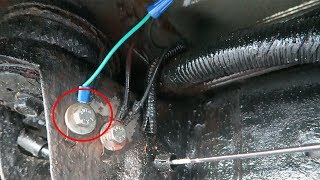
- On GM trucks and SUVs, cleaning the G110 ground wire on the frame under the driver's door fixes this code for $0.
- Read the specific 2-digit symptom code (like C0306-02) with an advanced scan tool to instantly identify whether the circuit has a short or an open wire.
- Never replace the $300 transfer case motor or TCCM without first testing the wiring harness for continuity and voltage drops.
- Verify the first letter of your code: Chassis code C0306 is a 4WD error, while Powertrain code P0306 is a completely unrelated Cylinder 6 engine misfire.
What Does C0306 Mean?

Code C0306 means the Transfer Case Control Module (TCCM) detects an electrical problem with the motor that shifts the transfer case. This motor, often called an encoder motor or actuator, physically changes the vehicle from 2WD to 4WD. The computer has found a short circuit, an open wire, or incorrect voltage in the motor's electrical circuit. The fault must be present for at least four seconds to trigger the code.
Technical definition: The Transfer Case Control Module (TCCM) detects an open, short-to-ground, or short-to-voltage condition in the Motor Control A or Motor Control B circuit for the transfer case range actuator. Modern vehicles specify this with a two-digit symptom code, such as C0306-01 (Short to Battery), C0306-02 (Short to Ground), C0306-04 (Open/High Resistance), or C0306-54 (High Temperature). The TCCM sets C0306-01 if it detects voltage greater than 5.60V, or C0306-02 if it detects voltage less than 1.9V on the motor control circuit.
Can I Drive With C0306?
Yes, But With Caution. Yes, you can usually drive, but your four-wheel drive (4WD) system will be disabled and stuck in its last known state (usually 2WD). While this won't damage other components, there is a small but significant risk of the transfer case failing into a 'false neutral' state, especially if a fuse blows mid-shift. This leaves the vehicle unable to move under its own power, potentially stranding you. The financial risk is not in component damage, but in the potential cost of a tow, which ranges from $100 to $500.
Common Causes

- Corroded or loose ground wire connection (Very Common) — On GM trucks and SUVs, the G110 ground point on the driver's side frame rail corrodes from road salt and moisture. This poor ground interrupts the electrical circuit for the 4WD system and is the most frequent cause.
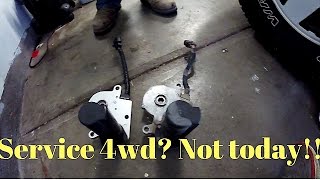
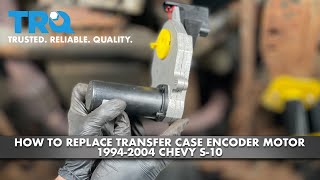
- Failed transfer case shift motor (encoder motor) (Very Common) — The electric motor that physically shifts the transfer case gears fails internally. The windings short out or break, or the motor seizes from internal corrosion due to moisture 🎬 See this walkthrough on replacing a failed encoder motor. and salt intrusion.
- Damaged wiring or corroded connectors (Common) — The wiring harness and connectors leading to the transfer case motor are exposed to weather and road debris. Wires fray or break, and connector pins corrode, bend, or back out, causing a bad connection.
- Faulty Transfer Case Control Module (TCCM) (Less Common) — The control module fails due to internal circuit board problems, software glitches, or internal overheating (setting code C0306-54). This causes it to send incorrect signals or fail to power the shift motor, requiring either a hardware replacement or a software update. 🎬 Watch: How to locate and replace the TCCM.
- Internal Transfer Case Binding (Less Common) — If the internal shift forks or gears bind mechanically, the shift motor draws excessive current when attempting a shift. The TCCM interprets this high current draw as a short circuit, setting the code and stopping the shift.
- Defective 4WD selector switch (Rare) — The dashboard switch uses resistors to tell the TCCM which mode you want. If these resistors fail, the TCCM receives a confusing signal and sets a fault code.
- Low Battery Voltage or Charging System Fault (Rare) — A weak battery or faulty alternator causes system-wide low voltage. The TCCM sets a C0306 code if it receives insufficient power during a shift attempt when the motor's current draw causes a voltage drop.
Symptoms

- Unable to shift between 2WD and 4WD — The vehicle will not respond when you try to change drive modes. It remains stuck in its current range (e.g., 2WD, 4HI, or 4LO).
- Flashing 4WD indicator lights — When you try to shift, the light for the selected mode on the switch blinks for a period (e.g., 30 seconds) and then returns to the original position's light, indicating the shift failed.
- Blown Fuse — A direct short circuit in the transfer case motor or its wiring causes the fuse for the TCCM (often a 20 or 30-amp fuse) to blow repeatedly, especially when a shift is attempted.
- Audible Clicking or Whirring from Transfer Case — You hear a brief clicking, whirring, or buzzing sound from the transfer case motor area when you attempt to shift, but the shift does not complete. This is the sound of the motor trying to engage but failing due to an electrical or mechanical restriction.
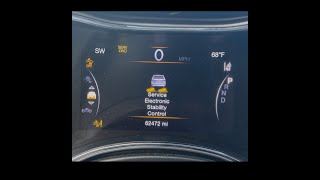
- Service 4WD Light — The most common symptom is the "Service 4WD" or similar warning message appearing on the instrument cluster.
Diagnostic Flowchart
Tap your situation to follow the diagnostic path that matches what you're seeing on this code.
Common Fixes & Costs
- Clean or Repair Ground Connection — Parts: $0-$5, Labor: $50-$150, ~0.8 hr book time (DIY)
- Replace Transfer Case Shift Motor (Encoder Motor) — Parts: $120-$450, Labor: $150-$300, ~1.5 hr book time (Intermediate)
- Repair Wiring Harness or Replace Connector Pigtail — Parts: $15-$50, Labor: $120-$250, ~1.5 hr book time (Intermediate)
- Replace Transfer Case Control Module (TCCM) — Parts: $200-$800, Labor: $100-$220, ~1.2 hr book time (Intermediate)
- Replace 4WD Selector Switch — Parts: $20-$80, Labor: $60-$120, ~0.8 hr book time (DIY)
DIY vs Professional
- Clean or Repair Ground Connection — Beginner:
Tools: Socket set, wire brush, sandpaper, safety glasses. - Replace Transfer Case Shift Motor (Encoder Motor) — Beginner:
Tools: Socket set, wrenches, torque wrench, jack and jack stands, pry bar (for driveshaft), drain pan. - Repair Wiring Harness or Replace Connector Pigtail — Beginner:
Tools: Wire strippers, wire cutters, butt connectors or soldering iron, heat shrink tubing, multimeter. - Replace Transfer Case Control Module (TCCM) — Beginner:
Tools: Socket set or screwdrivers. - Replace 4WD Selector Switch — Beginner:
Tools: Trim removal tools, small screwdriver or socket set.
Used vs. New Parts: Buying Guide
When a used part is worth it: For an older, high-mileage vehicle where budget is the primary concern, a used transfer case shift motor from a low-mileage donor vehicle is a cost-effective option. It is a gamble on reliability.
Donor-vehicle mileage cap: roughly under 80000 miles for the part to have meaningful remaining life.
Donor quality checklist:
- Verify the donor vehicle's mileage and avoid parts from rust-belt regions, as moisture intrusion is a key failure mode.
- Match the part number exactly. For GM, ensure the RPO code (e.g., NP8) matches.
- Visually inspect the electrical connector for any signs of corrosion or damage before purchasing.
Decision logic:
- If You plan to keep the vehicle long-term or rely on 4WD for safety → Buy a new OEM or high-quality aftermarket part for better reliability and warranty.
- If The vehicle is over 150,000 miles and you have a tight budget → A used part is an acceptable risk, but be aware it has a much shorter lifespan.
- If Multiple cheap aftermarket parts have already failed → Invest in a new OEM part or diagnose for a hidden wiring issue that is damaging the motors.
Warranty tradeoff: Used parts typically come with a 30-90 day warranty that covers the part only, not labor. New aftermarket parts often have a 1-year to limited lifetime warranty. New OEM parts offer the best warranty, especially if installed by a dealer.
Worst-case if a used part fails: $200-$400 if a used or cheap part fails shortly after installation, requiring repeat labor costs plus the cost of another part.
What Happens If You Wait — Timeline
- Immediate: Code C0306 sets, 'Service 4WD' light illuminates. The 4WD system is disabled and stuck in its last known state (usually 2WD). No physical damage occurs. (MPG impact: 0%% · Added cost: $0)
- 1-6 weeks: The vehicle continues to operate normally in 2WD. The primary risk is the transfer case failing into a 'false neutral' if a fuse blows during an attempted shift, which would render the vehicle immobile and require a tow. (MPG impact: 0%% · Added cost: $100-$500 (Potential cost of a tow if stranded))
- 2-6 months (If stuck in 4WD): If the failure occurred while in 4WD mode, continued driving on high-traction surfaces like dry pavement causes severe driveline binding. This leads to jerky turning, tire scrubbing, and premature wear on tires, U-joints, and differential gears. (MPG impact: 1-5% (due to drivetrain binding)% · Added cost: $200-$800 (Cost of replacing worn tires or a U-joint))
- 6+ months (If stuck in 4WD): Prolonged driveline binding leads to catastrophic failure of drivetrain components. The immense stress breaks a U-joint, damages the transfer case internally, or strips gears in the front differential. (MPG impact: 5-10%% · Added cost: $1000-$3000+ (Potential cost of transfer case or differential replacement))
Cost of Not Fixing It
- Immediate: Four-wheel drive system is disabled. This is a significant safety and mobility issue in snow, ice, mud, or off-road conditions. (Added cost: Negligible)
- Ongoing: Small but persistent risk of the transfer case becoming stuck in a 'false neutral' state if a fuse blows during a failed shift attempt. This renders the vehicle immobile. (Added cost: $100-$500 (Cost of a tow))
- Long-Term: No direct damage to other major components occurs. However, if stuck in 4WD mode, driving on dry pavement causes severe drivetrain binding and wear. (Added cost: $200-$800 (Cost of replacing worn tires or a U-joint))
Diagnosis Steps

- Inspect the Main Ground Connection (Especially GM)
Locate the primary ground connection for the 4WD system (G110 on the frame rail under the driver's door for GM vehicles). Disassemble, clean all rust and corrosion down to bare metal, and re-secure it. This is the single most common fix.
Tools: Wrench/socket set, wire brush, sandpaper (Beginner) - Check Fuses and Scan for Symptom Codes
Check the fuse box for blown fuses related to the TCCM or 4WD system. Use a professional scan tool to read the code and check for specific symptom digits (e.g., -01, -02, -04) which pinpoint the exact electrical fault type.
Tools: Owner's manual, fuse puller, professional scan tool (Beginner) - Visually Inspect Wiring and Connectors
Inspect the entire wiring harness going to the transfer case shift motor for chafing, melting, or broken wires. Unplug the connector at the motor and check for corrosion, moisture, or bent pins. Pay close attention to known problem connectors like the X109 on GM trucks.
Tools: Flashlight, safety glasses (Beginner) - Test the Shift Motor Internal Resistance
Disconnect the shift motor harness. Use a multimeter set to Ohms to measure the resistance between the motor control pins (often labeled A and B). A good motor typically reads between 0.3 and 40 ohms. An infinite reading (OL) indicates an open circuit, while zero ohms indicates a dead short.
Tools: Multimeter, vehicle service manual (Intermediate) - Test the Shift Motor Circuit for Shorts
Disconnect the TCCM. Using a multimeter set to Ohms, test for continuity between each motor control circuit pin at the TCCM connector and a known good chassis ground. The reading must be infinite (OL). A reading under 10 ohms confirms a short to ground in the wiring or the motor.
Tools: Multimeter, vehicle service manual (Intermediate) - Command Shift with Scan Tool & Monitor Data
Connect a bidirectional scan tool. Command a shift (e.g., 2WD to 4HI) and watch the live data for the motor control circuits. If voltage is present but the code sets, the motor is seized. If voltage reads 0 or drops below 1.9V immediately, it confirms a short circuit.
Tools: Advanced bidirectional scan tool (Advanced) - Perform a Loaded Circuit Voltage Drop Test
Disconnect the TCCM and shift motor. Connect a jumper wire from the battery positive to one motor control wire at the TCCM connector. Connect a headlamp bulb between the two motor control wires at the motor connector. Ground the other wire at the TCCM. A voltage drop over 0.5V across either wire indicates excessive resistance.
Tools: Jumper wires, headlamp bulb, multimeter (Advanced) - Test the Transfer Case Control Module (TCCM)
Check for proper battery power and good grounds directly at the TCCM connector using a multimeter. If all inputs are correct but the module does not send power out on the control circuits during a commanded shift, the TCCM has failed internally and requires replacement.
Tools: Multimeter, vehicle service manual, advanced scan tool (Advanced)
When This Code Triggers (Freeze-Frame Conditions)
- System Voltage: 10.5-18V (The TCCM continuously monitors the motor circuit when the ignition is on and system voltage is stable.)
- Ignition Status: ON / RUN (The diagnostic runs whenever the ignition is on. The fault is checked continuously.)
- Shift Command: Not Active (The code sets even when a shift is not being requested. The TCCM passively monitors the circuit for shorts or opens.)
- Fault Duration: 4+ Seconds (The TCCM must detect the electrical fault (short, open, etc.) for a minimum of four seconds before it sets the DTC and illuminates the warning light.)
Related Codes
- C0321 — C0306 points to a fault in the motor's main power circuit, while C0321 indicates a fault in the separate transfer case lock control circuit. Both trigger from shared wiring issues or a faulty TCCM.
- C0327 — C0306 is for the motor's power circuit, while C0327 is for the motor's position sensor (encoder) circuit. Since both reside in one assembly, one failing part causes both codes. Testing the heavy-gauge motor power wires isolates C0306.
- B0790 — This Body Control Module code for the Transfer Case Neutral Range Indicator circuit sets alongside C0306 when a shared electrical issue, such as a bad ground, affects multiple 4WD components.
- C0398 — C0398 is a logic fault meaning the TCCM sees a mismatch between commanded and actual gear position. If both are present, diagnose the direct electrical fault (C0306) first, which usually resolves C0398.
- C0374 — This 'General Gear System Failure' code sets after the TCCM makes multiple unsuccessful attempts to shift the transfer case. It is a secondary code resulting from the primary C0306 electrical fault.
Climate & Environmental Factors
- Road Salt and Humidity (Rust Belt Regions): This is a primary contributor to C0306 failures. Salt spray and moisture accelerate the corrosion of the G110 frame ground, wiring harness connectors, and the internal components of the transfer case shift motor itself, leading to opens, shorts, and high resistance.
- Moisture Intrusion: Missing or degraded weather seals on electrical connectors allow water to enter, causing corrosion and short circuits. GM issued a technical service bulletin (PIC5993) regarding intermittent 4WD issues caused by missing wire seals in connectors.
How to Talk to a Mechanic About This Code
Say this: "I have a C0306 code on my [Vehicle Make/Model] and the 'Service 4WD' light is on. Please start by inspecting the main frame ground and the related wiring before quoting any part replacements."
This directs the technician to perform the cheapest and most likely fix first, preventing them from immediately quoting an expensive encoder motor or TCCM replacement.
Avoid saying:
- 'My 4-wheel drive is broken, can you fix it?'
- 'The 4WD light is on, just do whatever it takes.'
- 'I think I need a new transfer case.'
Questions to ask before authorizing the repair:
- Did you test the motor circuit for shorts to ground or open wires before condemning the motor?
- Did you load test the power and ground circuits at the TCCM connector?
- If you are recommending a TCCM replacement, have you confirmed it's not a wiring issue and checked for available software updates first?
- Does the quoted price for replacing the TCCM or encoder motor include the necessary 'relearn' procedure?
Where to Take It: Dealer vs Independent vs Chain
- Dealer:
Recommended only if a TCCM replacement and programming is confirmed necessary. Otherwise, an independent shop is more cost-effective.
Best for: Vehicles under warranty., When a TCCM replacement is confirmed and requires manufacturer-specific programming., If a Technical Service Bulletin (TSB) points to a software update as the fix.
Downsides: Highest labor rates., May be less likely to perform a simple wiring repair and more likely to replace a whole component. (Typical cost: +50% vs. baseline) - Independent Shop:
Best fit for most C0306 repairs. An experienced independent technician efficiently diagnoses the common electrical faults that cause this code.
Best for: Out-of-warranty vehicles., Diagnosing and fixing the most common causes like bad grounds, wiring faults, and encoder motor replacement., Shops specializing in 4x4 or drivetrain repair will be highly familiar with this issue.
Downsides: Shop quality and diagnostic skill can vary., May not have the expensive tools to program a new TCCM, but can often install a pre-programmed or remanufactured one. (Typical cost: +0% vs. baseline) - Chain Shop:
AVOID for C0306 diagnosis. The electrical troubleshooting required is beyond the scope of most chain shops and creates a high risk of paying for unnecessary parts.
Best for: Simple, unrelated maintenance like oil changes or tires.
Downsides: Technicians may lack the specific diagnostic experience for chassis electrical codes., High pressure to sell parts can lead to misdiagnosis and unnecessary replacement of the encoder motor or TCCM without proper testing. (Typical cost: -10% vs. baseline)
When to Walk Away From the Repair
If the total estimated repair cost for the C0306 fault exceeds 50% of your vehicle's current private-party value, seriously consider selling the vehicle as-is or trading it in.
- Car worth $8000, fix is $450: Fix it. A $450 repair for a new encoder motor is well below the threshold and restores a critical safety and performance feature.
- Car worth $4000, fix is $1200: Borderline. A $1200 quote for a TCCM replacement is a significant percentage of the vehicle's value. Get a second opinion to confirm the diagnosis before proceeding.
- Car worth $2500, fix is $1500: Walk away. The repair cost is over half the vehicle's value. The money is better put towards a down payment on a more reliable vehicle.
What Scan Tool You Need for This Code
Minimum: A scanner that can read Chassis (C) codes. A basic engine-only code reader will not see C0306.
A simple code reader will only tell you the code exists. For C0306, you need a more advanced tool to see manufacturer-specific symptom codes (like -02 or -04) and ideally, one with bidirectional control to command the TCCM to perform a shift or a 'relearn' procedure. This is crucial for accurate diagnosis and completing the repair.
Budget: BlueDriver Pro Scan Tool (~$100) — Reads and clears Chassis codes like C0306, views live data from the TCCM, and reads freeze-frame data. It is a good starting point for confirming the code and checking basic parameters.
Mid-range: Foxwell NT530 / Innova 5610 (~$180-350) — Offers bidirectional control for many GM, Ford, and Dodge vehicles. This allows you to command the transfer case to shift and run the 'Range Actuator Learn' procedure after replacing a part, which is often required.
Professional: Autel MaxiCOM MK808 / MK900BT or LAUNCH X431 series (~$500-1200) — Provides full bidirectional control, OE-level diagnostics, and performs TCCM programming/flashing if required. These tools have the same capabilities as a dealership scanner for this specific repair.
Rent vs buy: For a one-time diagnosis, AutoZone's Loan-A-Tool program allows you to pay a deposit for a scanner, which is fully refunded upon return. However, these loaner tools may not have the bidirectional capability needed for a full diagnosis or relearn procedure. If you plan to do your own repairs, buying a mid-range scanner is a worthwhile investment.
How to Clear the Code After You Fix It
- Use a compatible OBD-II scan tool to clear the code from the TCCM.
- If the encoder motor or TCCM was replaced, perform the 'Range Actuator Learn' or 'Clutch Reset' procedure using a scan tool.
- A manual relearn is sometimes possible: with the engine running and transmission in Neutral, cycle the 4WD switch through all positions (2H, 4H, 4L, then back to 2H), pausing at each step.
Drive cycle (~10 minutes): A specific drive cycle is not required for this code. The fault is electrical and is detected by the TCCM on the next key cycle if the repair was unsuccessful. A history code self-clears after 40-100 fault-free ignition cycles.
Readiness monitors affected: None
Watch out for:
- Simply clearing the code with a scanner will not fix the problem; the code returns immediately if the electrical fault still exists.
- Replacing the encoder motor or TCCM without performing the manufacturer-specified 'relearn' procedure results in the system not working and the code returning.
- Disconnecting the battery clears the code temporarily but is not a substitute for a proper scan tool relearn procedure.
Will This Fail Emissions / State Inspection?
No — by itself this code doesn't fail OBD inspection (but it can keep readiness monitors from setting, which causes a separate fail).
- California: A Chassis (C) code like C0306 does not fail the OBD emissions test. However, an illuminated 'Service 4WD' light causes a visual safety inspection failure.
- New York: NYS inspection rules state that any malfunction indicator light related to safety systems must be off. The 'Service 4WD' light leads to a safety inspection failure.
- Texas: C0306 triggers the 'Service 4WD' light, not the Check Engine Light. However, an inspector fails a vehicle during the annual safety inspection for any illuminated dashboard warning lamps.
Most Commonly Affected Vehicles

- Chevrolet Silverado, Tahoe, Suburban, Avalanche (2003-2014) — Extremely prone to this code due to the G110 ground wire on the frame under the driver's door corroding. Most use the NP8 (NVG 246) transfer case.
- GMC Sierra, Yukon, Yukon XL (2003-2014) — Shares the same platform and 4WD system as Chevrolet trucks, making it equally susceptible to ground wire and encoder motor issues.
- Cadillac Escalade, Escalade EXT (2003-2007) — Built on the same GMT800/900 truck platform, these models experience the same electrical faults in the 4WD system.
- Ford F-150, Expedition (2004-2012) — These models are known to experience failures of the electronic shift-on-the-fly (ESOF) transfer case motor. Aftermarket motors cost around $150-200, with dealer parts being higher.
- Dodge Ram 1500/2500 (2006-2010) — The electronically shifted transfer cases in these trucks suffer from shift motor failures and wiring issues, leading to motor circuit fault codes.
- Jeep Grand Cherokee (WK2) (2011-2018) — The WK2 generation experiences issues with the transfer case control module and shift motor, which results in this or related circuit codes.
- Chevrolet/GMC Colorado/Canyon (2013-2014) — Models equipped with the American Axle (AAM) transfer case are known to set this code, often due to high resistance in the motor connector. The TCCM is located behind the glovebox on these models.
- Hummer H2 (2003-2007) — Utilizes the GM truck chassis and 4WD components, leading to similar failures of the TCCM, encoder motor, and chassis ground.
Manufacturer-Specific Notes
- General Motors (Chevrolet/GMC/Cadillac): The ground wire G110 located on the driver-side frame rail is notoriously prone to corrosion and is the number one cause of this code. Always check this ground first before replacing any parts.
- General Motors (Chevrolet/GMC/Cadillac): TSB PIP5080A identifies a common issue where poor terminal tension in the X109 inline connector (under the hood) or the TCCM connector causes intermittent faults like C0306. Inspect these connectors for loose pins before replacing parts.
- General Motors (Chevrolet/GMC/Cadillac): TSB PIC5993C notes that intermittent 'Service 4 Wheel Drive' messages are caused by missing wire seals in the transfer case harness connectors, allowing moisture intrusion. Inspect connectors for proper sealing.
- General Motors (All): After replacing the TCCM or encoder motor, a 'Transfer Case High/Low Clutch Reset' or 'Range Actuator Learn' procedure is often required. This must be done with a dealership-level scan tool for the 4WD system to function correctly.
Real Owner Stories
2007 Chevy Silverado, 140K miles - The Classic Ground Fix
Owner reported the 'Service 4WD' light came on and the truck would not shift out of 2WD. The 4HI light would just blink and then go out.
What they tried:
- Initially ignored the problem as it was summer.
- Read online forums about common causes.
- Located the G110 ground on the frame rail under the driver's door, which was heavily corroded.
Outcome: Owner disassembled the ground connection, cleaned the frame and wire terminals to bare metal with a wire brush, and reassembled it. The code cleared and 4WD function was immediately restored. Total cost was $0.
Lesson: On GM trucks, always inspect and clean the G110 frame ground before buying any parts. It is the most common and cheapest fix for C0306.
2005 Chevy Silverado 1500HD - The Misdiagnosis Loop
Owner had a C0306 code and the truck was stuck in 4HI. The 'Service 4WD' light would sometimes only appear when driving in the rain.
What they tried:
- Tested the 30A TCCM fuse, which blew when attempting to shift.
- Replaced the TCCM with a remanufactured unit. The first one was defective and got the truck stuck in 4WD High.
- The second replacement TCCM seemed to fix it, but the C0306 code returned shortly after.
Outcome: After the new TCCM didn't solve the issue, further testing revealed the original problem was a shorted-out transfer case encoder motor, which was likely causing the TCCMs to fail. Replacing the encoder motor finally resolved the issue.
Lesson: A recurring C0306 after a part replacement suggests a misdiagnosis. A shorted motor damages a new control module, and a faulty module damages a bad motor. Test the entire circuit before replacing the TCCM.
2006 GMC Sierra - The 'Internal' Motor Failure
'Service 4WD' light was on. The owner could hear the motor trying to shift, but it would fail and default back to 2WD.
What they tried:
- Thoroughly cleaned the frame ground, but it didn't solve the problem.
- Tested the wiring between the TCCM and the motor for power, ground, and resistance. All tests passed, showing no shorts or opens in the harness.
- Tested the internal resistance of the encoder motor, which was within the specified range of ~3.6 ohms.
Outcome: Despite the wiring and motor resistance testing good, the owner took a chance and replaced the encoder motor. Upon inspection, the old motor showed clear signs of water intrusion which caused the internal mechanism to jam. The new motor fixed the problem.
Lesson: An encoder motor passes a basic resistance test but still be faulty. Internal mechanical binding or water damage won't always show up as an electrical open or short. If all wiring tests good, the motor is still the most likely culprit.
How to Prevent This Code From Triggering
- Exercise the 4WD system monthly. (Once per month) — Shifting through all ranges (2HI, 4HI, 4LO) for a short distance (even a few hundred feet) circulates lubricant and moves the shift motor and actuators, preventing them from seizing due to inactivity.
- Apply dielectric grease to electrical connectors. (During any related maintenance or inspection) — Dielectric grease is a non-conductive, silicone-based sealant that prevents moisture, salt, and dirt from entering electrical connectors, which stops corrosion before it starts. This is especially important for the exposed connector on the transfer case motor.
- Periodically inspect and clean frame grounds. (Every 1-2 years, especially in rust-belt regions) — Frame grounds, like the GM G110, are a primary failure point. Proactively removing them, cleaning away any rust or corrosion down to bare metal, and re-securing them tightly prevents high resistance from developing in the circuit.
- Use weatherproof wiring repairs. (When repairing any under-vehicle wiring) — When repairing damaged wires, using adhesive-lined heat-shrink butt connectors or soldering with heat-shrink tubing creates a waterproof seal. This prevents moisture from wicking into the wire and causing future corrosion and high resistance.
Frequently Asked Questions
Can I fix code C0306 myself?
Yes, many common fixes are DIY-friendly. Cleaning the frame ground connection is the most common solution and requires basic hand tools. Replacing the motor or TCCM is more involved but manageable for an intermediate DIYer with the right tools and awareness of post-repair procedures.
I cleaned the ground and the 'Service 4WD' light is still on. What's next?
The next steps are to check the 4WD system fuse and thoroughly inspect the wiring harness and connectors between the TCCM and the shift motor for damage or corrosion. If the wiring and fuse are good, the next most likely cause is a failed transfer case shift motor (encoder motor), which can be confirmed with a resistance test.
I replaced the shift motor, but the C0306 code came back. What now?
This means the problem was likely never the motor. Re-inspect the ground connection, check fuses, and carefully examine the wiring harness for a hidden short or open. Lastly, ensure a required 'relearn' procedure was performed with a compatible scan tool.
What's the difference between C0306 and P0306?
C0306 is a Chassis code for the transfer case motor circuit. P0306 is a Powertrain code for a Cylinder 6 Misfire. They are completely unrelated problems in different vehicle systems.
Is it safe to drive with code C0306?
Yes, it is generally safe to drive as the vehicle will operate in two-wheel drive. The primary risk is that your 4WD is disabled, which is a problem in hazardous conditions. There is also a small risk the transfer case could get stuck in neutral, leaving you stranded.
Will clearing the code fix the problem?
No. C0306 indicates a hard electrical fault. Even if you clear the code with a scan tool, it will return almost immediately until the underlying electrical issue is repaired.
What are the symptom codes like C0306-02 or C0306-04?
These are manufacturer-specific additions to the main code that pinpoint the fault. For example, C0306-02 means the TCCM has detected a 'Short to Ground' in the motor circuit. This helps a technician diagnose the problem much faster.
How do I perform a TCCM relearn or reset?
A basic reset sometimes works by disconnecting the negative battery terminal for 15-30 minutes. However, after replacing a major component, a specific 'relearn' procedure is often necessary. This requires a professional scan tool to command the module to cycle through the gears and calibrate the new part's position.
Key Takeaways
- On GM trucks and SUVs, cleaning the G110 ground wire on the frame under the driver's door fixes this code for $0.
- Read the specific 2-digit symptom code (like C0306-02) with an advanced scan tool to instantly identify whether the circuit has a short or an open wire.
- Never replace the $300 transfer case motor or TCCM without first testing the wiring harness for continuity and voltage drops.
- Verify the first letter of your code: Chassis code C0306 is a 4WD error, while Powertrain code P0306 is a completely unrelated Cylinder 6 engine misfire.
Helpful Videos



The information in this article is provided for general reference and educational purposes only. Vehicle specifications, procedures, and part compatibility can vary by production date, trim level, and region. Always consult your vehicle's factory service manual and verify part numbers before purchasing or performing repairs. Safety-critical components such as airbags, seat belts, and braking systems should be installed by a qualified professional.
- 🎬 Helpful Videos
- What Does C0306 Mean?
- Can I Drive With C0306?
- Common Causes
- Symptoms
- Diagnostic Flowchart
- Common Fixes & Costs
- DIY vs Professional
- Used vs. New Parts: Buying Guide
- What Happens If You Wait — Timeline
- Cost of Not Fixing It
- Diagnosis Steps
- When This Code Triggers (Freeze-Frame Conditions)
- Related Codes
- Climate & Environmental Factors
- How to Talk to a Mechanic About This Code
- Where to Take It: Dealer vs Independent vs Chain
- When to Walk Away From the Repair
- What Scan Tool You Need for This Code
- How to Clear the Code After You Fix It
- Will This Fail Emissions / State Inspection?
- Most Commonly Affected Vehicles
- Manufacturer-Specific Notes
- Real Owner Stories
- 2007 Chevy Silverado, 140K miles - The Classic Ground Fix
- 2005 Chevy Silverado 1500HD - The Misdiagnosis Loop
- 2006 GMC Sierra - The 'Internal' Motor Failure
- How to Prevent This Code From Triggering
- Frequently Asked Questions
- Can I fix code C0306 myself?
- I cleaned the ground and the 'Service 4WD' light is still on. What's next?
- I replaced the shift motor, but the C0306 code came back. What now?
- What's the difference between C0306 and P0306?
- Is it safe to drive with code C0306?
- Will clearing the code fix the problem?
- What are the symptom codes like C0306-02 or C0306-04?
- How do I perform a TCCM relearn or reset?
- Key Takeaways
- 🎟️ Get 5% Off