

OBD-II Code C0282: Brake System Relay or Switch Fault
What C0282 means, why it triggers, and how to fix it
- Code C0282 disables your Anti-lock Brake System (ABS) and Stability Control due to a high voltage signal in the valve relay circuit.
- Over 70% of C0282 codes stem from a failed internal ABS module relay or corroded wiring harness connectors.
- Your base brakes remain fully functional, but stopping distances increase by up to 20% on wet surfaces without ABS.
- Repair costs range from $20 for a simple DIY relay swap to over $1,500 for a dealership ABS module replacement.
- Save $1,000+ by testing the $20 external ABS relay and inspecting the main wiring harness for green corrosion before replacing the entire module.
What Does C0282 Mean?

Code C0282 indicates the Electronic Brake Control Module (EBCM) detects an abnormally high voltage signal from the ABS valve relay or internal pressure switch. This electrical fault forces the computer to disable the ABS and stability control systems to prevent erratic braking behavior.
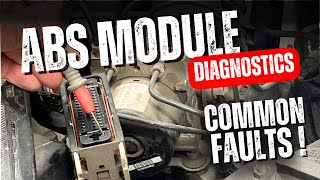
Technical definition: The SAE/ISO definition for C0282 is "ABS Valve Relay Circuit Signal High 🎬 See this diagnostic walkthrough for ABS motor and relay errors.". On General Motors vehicles, it specifically means "Medium Pressure Accumulator Switch Remains Closed". All definitions point to a hard electrical fault within the Anti-lock Brake System control module or its immediate power circuits.
Can I Drive With C0282?
Yes, But With Caution. Yes, but your Anti-lock Braking System (ABS) and stability control are disabled. Your wheels will lock up during hard braking, increasing stopping distances and the risk of losing steering control on wet surfaces. Fix this immediately to restore your vehicle's primary safety systems.
Common Causes

- Faulty Brake Pressure Modulator Valve (BPMV) or ABS Module (Very Common) — The ABS control center suffers internal failures from age, heat, or vibration. The root issue is typically a stuck internal relay, a failed pressure switch, or a burnt circuit board.
- Corroded or Damaged Wiring/Connectors (Common) — Exposed ABS wiring harnesses and connectors degrade from moisture and road salt. Green corrosion or frayed wires create high resistance or a short-to-power, triggering the high signal fault.
- Faulty External ABS Relay (Common) — On vehicles with a separate ABS relay in the main fuse box, the internal switch contacts burn out or fuse together, sending constant or zero power to the ABS pump.
- Low System Voltage or Power Supply Issues (Less Common) — A weak battery or failing alternator creates voltage spikes and drops. The ABS module's sensitive electronics misinterpret these power fluctuations as a hard circuit fault.
- Faulty Wheel Speed Sensor (Less Common) — A failing wheel speed sensor sends erratic data to the ABS module. The computer sometimes misinterprets this corrupted data as an internal relay failure.
- Cracked or Damaged ABS Tone Ring (Less Common) — A cracked or debris-filled toothed ring on the CV axle sends a distorted mechanical signal to the wheel speed sensor, cascading into a false C0282 electrical fault.
- Faulty Electronic Parking Brake (EPB) Actuator or Switch (Rare) — On vehicles with integrated EPB systems (like modern Subarus), a failed parking brake actuator or a broken connector clip triggers this code.
- Contaminated Brake Fluid (Rare) — Moisture-contaminated brake fluid corrodes the delicate internal valves and pressure switches inside the ABS modulator, causing mechanical binding that registers as an electrical fault.
Symptoms

- ABS Warning Light On — The ABS light on your dashboard illuminates immediately and stays on.
- Stability/Traction Control Light On — A 'SERVICE STABILITY SYSTEM' message or traction control warning light appears alongside the ABS light.
- ABS Not Working — Wheels lock up and skid during hard stops. The normal brake pedal pulsation during emergency braking is absent.
- Unusual Noises from ABS Pump — The ABS pump buzzes or runs continuously, even with the ignition off, indicating a stuck relay.
- Brake Pedal Feels Different — The brake pedal feels unusually hard or spongy because the ABS modulator's internal valves are stuck in an abnormal position.
Diagnostic Flowchart

Tap your situation to follow the diagnostic path that matches what you're seeing on this code.
Common Fixes & Costs
- Replace ABS Relay — Parts: $10-$40, Labor: $50-$100, ~0.3 hr book time (DIY)
- Repair Wiring or Connector — Parts: $5-$50, Labor: $100-$250, ~1.5 hr book time (Intermediate)
- Repair/Rebuild ABS Module — Parts: $200-$400 (mail-in service), Labor: $150-$300 (for removal and reinstallation), ~1.5 hr book time (Professional)
- Replace ABS Module/Brake Pressure Modulator Valve — Parts: $900-$1500+, Labor: $150-$300, ~2 hr book time (Professional)
- Replace ABS Tone Ring — Parts: $15-$50, Labor: $150-$250, ~2 hr book time (Intermediate)
Used vs. New Parts: Buying Guide
When a used part is worth it: A used ABS module is a budget-friendly option for older vehicles only if you have access to an independent shop capable of programming a used module to your vehicle's VIN.
Donor-vehicle mileage cap: roughly under 100000 miles for the part to have meaningful remaining life.
Donor quality checklist:
- Verify the exact part number matches yours; superseded numbers are often incompatible.
- Purchase from a reputable seller offering a minimum 30-day warranty.
- Avoid parts from flood or severe-impact vehicles.
Decision logic:
- If The original module is available for repair → Choose a mail-in rebuild service. This balances cost and reliability and requires no programming.
- If Vehicle is newer and part cost is manageable → Buy a new OEM part. This offers the longest lifespan and a solid warranty.
- If Budget is the primary concern and you accept the risks → Buy a used part, but factor in the added cost of finding a shop to program it.
Warranty tradeoff: Used parts typically have a 30-90 day warranty. Rebuilt services offer a one-year or lifetime warranty. New OEM parts carry a 1-2 year manufacturer's warranty.
Worst-case if a used part fails: $300-$600 if a used part is dead on arrival, covering repeat labor and programming attempt fees.
What Happens If You Wait — Timeline
- Immediate: Code C0282 sets, illuminating the ABS/Traction Control warning lights. Base braking remains, but ABS and stability systems are disabled. (MPG impact: 0%% · Added cost: $0)
- 1-7 days (if caused by a stuck relay): A stuck relay forces the ABS pump motor to run continuously, creating a noticeable humming sound from under the hood even with the engine off. (MPG impact: 0%% · Added cost: $150-$350 for a new battery, which will be completely drained by the constant power draw.)
- 1+ week (if caused by a stuck relay): The constantly running ABS pump motor overheats and burns out. The humming noise stops, but the ABS system is permanently damaged. (MPG impact: 0%% · Added cost: $1000-$2000+ to replace the entire ABS pump and module assembly.)
- Months (if fault is intermittent): Corrosion or loose connections cause intermittent ABS activation. Continued degradation of the electrical connector makes eventual repair more difficult and expensive. (MPG impact: 0%% · Added cost: $50-$150 for a complex wiring repair as corrosion spreads further into the harness.)
Cost of Not Fixing It
- Immediate: Loss of Anti-lock Braking (ABS) and Stability Control, increasing the risk of skidding in an emergency stop. (Added cost: N/A)
- 1-7 days: If caused by a stuck relay, the ABS pump runs constantly and ruins the vehicle's battery. (Added cost: $150-$350 for a new battery.)
- 1+ week: A constantly running ABS pump motor overheats and burns out, requiring replacement of the entire ABS pump/module assembly. (Added cost: $1000-$2000+)
Diagnosis Steps
- Check for Other Codes
Use an OBD-II scanner capable of reading ABS codes. Check for related codes, especially for wheel speed sensors. Write down all codes and freeze frame data. Always diagnose wheel speed sensor codes before tackling C0282.
Tools: OBD-II Scanner (with ABS capability) (Beginner) - Inspect the ABS Fuse and Relay
Locate the ABS fuse and relay in the engine bay fuse box. Visually inspect the fuse. Swap the ABS relay with an identical one from a non-essential system (like the horn). If the code clears, replace the relay.
Tools: Owner's Manual, Fuse Puller (Beginner) - Visually Inspect Wiring and Connectors
Locate the ABS module. Disconnect the main electrical connector and inspect the pins. Look for green or white corrosion, frayed wires, or water intrusion. Clean any mild corrosion with electronic contact cleaner.
Tools: Flashlight, Electronic Contact Cleaner (Beginner) - Perform a 'Wiggle Test'
With the vehicle on and the scanner monitoring live data from the ABS module, gently wiggle the wiring harness and connector. If the code status changes or live data jumps, you have a broken wire or loose pin.
Tools: OBD-II Scanner (with live data) (Intermediate) - Test the ABS Relay Circuit
Using a digital multimeter and your vehicle's wiring diagram, check for 12V power and a solid ground at the ABS relay socket. This confirms the relay is receiving the necessary power to operate.
Tools: Digital Multimeter, Vehicle Wiring Diagram (Intermediate) - Test Relay Coil Resistance
Remove the external ABS relay. Set a multimeter to Ohms and measure across the control coil terminals (usually 85 and 86). A healthy 12V relay reads between 50 and 150 Ohms. Infinity (OL) means an open coil; near zero means a shorted coil.
Tools: Digital Multimeter, Relay Pinout Diagram (Intermediate) - Pro Tip: Perform a Voltage Drop Test
Perform a voltage drop test on the ABS module's main power and ground wires while under load (activating the ABS pump via scan tool). A reading above 0.5V on the power side or 0.2V on the ground side indicates excessive hidden resistance.
Tools: Digital Multimeter, Advanced Bi-directional Scan Tool (Advanced) - Pro Tip: Analyze the Relay Control Signal
Back-probe the relay control signal wire at the ABS module with an oscilloscope. When commanded on, you should see a clean square wave dropping to near zero. A signal stuck at battery voltage confirms a 'high signal' fault in the module's driver circuit.
Tools: Oscilloscope, Vehicle Wiring Diagram (Advanced) - Test the Brake Pressure Modulator Valve (BPMV)
Use a high-end scan tool to command the ABS pump and valves to activate. Monitor the sensor data. Failure to respond correctly or build pressure points to an internal mechanical failure of the BPMV.
Tools: Advanced Bi-directional Scan Tool (Advanced) - Advanced Test: GM Medium Pressure Accumulator (MPA) Switch
For GM vehicles, monitor the 'MPA Switch' PID on a scan tool. It should read 'Uncharged' or 'Open' with the key on (engine off). If it reads 'Charged' or 'Closed', the switch is stuck. If the PID remains 'Charged' even when the switch is disconnected, the EBCM is faulty.
Tools: Advanced Bi-directional Scan Tool, Basic Hand Tools (Advanced)
When This Code Triggers (Freeze-Frame Conditions)
- System Voltage: 11.5-12.5V (During key-on, engine-off self-test)
- Vehicle Speed: 0 mph (During key-on, engine-off self-test)
- ABS/TCS Status: Self-Test Active (Immediately after turning the ignition on)
- Relay Command: On/Off Cycle (The fault is detected when the module commands the relay but sees an unexpectedly high voltage.)
Related Codes
- C0281 — The direct opposite of C0282, indicating a 'Signal Low' or open circuit. C0282 shows constant battery voltage (short to power), while C0281 shows 0 volts (open circuit or bad ground).
- C0283 — Indicates a general 'Circuit Malfunction'. On GM vehicles, C0283 points to a problem with the driver-operated traction control switch circuit on the dashboard.
- C0267 / C0268 — These point to the ABS pump motor circuit. A failing pump motor draws excessive current, overheating the control relay and triggering C0282 as a secondary fault.
- C0285 — On GM vehicles, 'MPA Fails to Charge' is a close relative of C0282. C0282 indicates the switch is stuck closed, while C0285 indicates it fails to close.
Climate & Environmental Factors
- Humidity and Moisture: High humidity or direct water intrusion penetrates non-sealed connectors. This moisture promotes rapid copper corrosion, creating high resistance or short circuits that trigger C0282.
- Road Salt (Winter Climates): Saltwater is highly conductive and corrosive. It accelerates the degradation of the ABS module's electrical connector, wiring harnesses, and ground points.
- Extreme Heat: The ABS module sits in the hot engine bay. Years of thermal cycling degrade internal electronic components and crack solder joints on the module's circuit board.
How to Talk to a Mechanic About This Code
Say this: "I have an ABS light on and my scanner shows code C0282. I'd like to book a diagnostic appointment. Please start by checking the external ABS relay, fuses, and the main wiring connector for corrosion before assuming the module itself has failed."
This signals you understand common failure points. It directs the technician to follow a logical diagnostic path rather than jumping to the most expensive conclusion.
Avoid saying:
- 'My ABS light is on, can you fix it?' (Too vague; invites the most expensive fix.)
- 'Just replace whatever is broken.'
- 'I think I need a new ABS module.' (Don't diagnose for them; you might talk yourself into an unnecessary repair.)
Questions to ask before authorizing the repair:
- What was the specific point of failure? Was it the external relay, the wiring, or an internal module fault?
- If the module needs replacement, what is the cost for a new OEM part versus sending my current one for a rebuild?
- Does the replacement module require programming, and is that cost included in your estimate?
- Will you need to perform an 'Automated Bleed' procedure with a scan tool, and is that included?
- What is the warranty on the parts and labor for this specific repair?
Where to Take It: Dealer vs Independent vs Chain
- Dealer:
A safe but expensive choice. Best for when a new module and programming are confirmed necessary.
Best for: Vehicles under warranty., Complex cases requiring a new module and VIN programming., Specific manufacturer quirks that independent shops may be unfamiliar with.
Downsides: Highest cost for parts and labor., May refuse to install used parts or recommend a rebuild service. (Typical cost: +50% vs. baseline) - Independent Shop:
Best fit for most situations, especially for initial diagnosis and exploring cost-effective rebuilds. Ask ahead if they can program a new module.
Best for: Out-of-warranty vehicles where cost is a major factor., Diagnosing common issues like external relays, fuses, and wiring corrosion., Removing the module to be sent for a mail-in rebuild service.
Downsides: Shop quality varies. Ensure they are ASE certified with ABS diagnostic experience., May lack the manufacturer-specific scan tools required for programming a new module. (Typical cost: +0% vs. baseline) - Chain Shop:
AVOID for initial diagnosis. Only use if the problem is confirmed to be a simple external part swap.
Best for: Simple fixes like replacing an external ABS relay if you've already diagnosed it yourself.
Downsides: Technicians often lack advanced diagnostic training for complex electrical faults., High pressure to upsell; may recommend replacing the entire module without proper diagnosis., Unlikely to handle module programming or rebuilds. (Typical cost: -10% vs. baseline)
When to Walk Away From the Repair
If the estimated repair cost exceeds 40-50% of the car's private-party value, seriously consider selling the car as-is or trading it in.
- Car worth $4000, fix is $1800: Walk away. The repair cost is 45% of the car's value. This is a significant investment in an older vehicle.
- Car worth $15000, fix is $1800: Fix it. The repair cost is only 12% of the car's value. This is a reasonable cost to maintain safety and value.
- Car worth $2500, fix is $600: Borderline. The repair is 24% of the car's value. If the car is otherwise reliable, this is a reasonable repair.
What Scan Tool You Need for This Code

Minimum: An OBD-II scanner that can read and clear Anti-lock Braking System (ABS) codes.
A standard $20 engine code reader cannot communicate with the ABS module. It will not see the C0282 code or clear the ABS warning light.
Budget: BlueDriver Pro (~$120) — Reads and clears ABS codes, displays live data from the ABS module, and provides repair reports. Essential for confirming the code and monitoring sensor data during a wiggle test.
Mid-range: Foxwell NT510 Elite / NT630 Plus (~$160) — Offers bi-directional control to command the ABS pump and solenoids. Critical for advanced diagnosis and performing the 'Automated Bleed' procedure after replacing a module.
Professional: Autel MaxiCOM MK808 / MP808 (~$500-800) — Full bi-directional control, advanced ABS bleeding functions, and limited programming/coding capabilities. A professional-level tool that handles any C0282 diagnostic task.
Rent vs buy: Auto parts stores do NOT rent out ABS-capable scanners. For a one-time diagnosis, paying a shop for one hour of diagnostic time is most cost-effective. Buy a scanner only if you plan to perform your own repairs.
How to Clear the Code After You Fix It
- Fix the underlying mechanical or electrical fault.
- Use an ABS-capable OBD-II scan tool to clear the code from the brake control module.
- Perform a short test drive to confirm the ABS light does not return.
Drive cycle (~15 minutes): Drive the vehicle for 10-15 minutes with a mix of steady speeds and normal stops. On many vehicles, the ABS light turns off automatically during this drive if the repair was successful.
Readiness monitors affected: None
Watch out for:
- Using a basic engine code reader that cannot access or clear ABS codes.
- Disconnecting the battery temporarily turns off the light, but the code returns immediately upon driving.
- Clearing the code without performing a repair results in the light coming back on instantly.
Will This Fail Emissions / State Inspection?
No — by itself this code doesn't fail OBD inspection (but it can keep readiness monitors from setting, which causes a separate fail).
- California: An illuminated ABS light will NOT fail the OBD-II emissions (smog) test. The check engine light is the primary cause of failure.
- New York: NYS vehicle safety inspection rules explicitly state that an illuminated ABS warning light is NOT a cause for rejection.
- Texas: Texas vehicle safety inspection rules explicitly state that an illuminated ABS warning light is NOT a cause for rejection.
Most Commonly Affected Vehicles
- Chevrolet Suburban / Tahoe / Silverado (2000-2007) — These models experience frequent issues with the Brake Pressure Modulator Valve (BPMV) and its internal Medium Pressure Accumulator Switch.
- GMC Yukon / Sierra (2000-2007) — Shares the same platform and ABS components as Chevrolet trucks, making them prone to identical BPMV failures.
- Ford F-150 (2010-2015) — Prone to severe corrosion on the ABS module connector due to its location. A thorough connector inspection is mandatory.
- Chevrolet Malibu (2008-2012) — Known for failing ABS control modules. GM safety recall 13036 for the Body Control Module (BCM) also causes related brake system electrical faults.
- Volkswagen Jetta / Golf (2006-2012) — Notorious for internal ABS module failures that manifest as relay circuit codes like C0282.
- Subaru Outback / Legacy (2015-2019) — Sets C0282 due to a faulty electronic parking brake (EPB) actuator or broken connector. TSB 06-71-19R addresses this defect.
- Kia Sorento / Sportage (2011-2017) — Suffer from cracked ABS tone rings which send erratic signals, tricking the ABS module into setting electrical fault codes.
- Hyundai Santa Fe / Tucson (2011-2017) — Shares platforms with Kia and experiences identical issues with cracked ABS tone rings and wheel speed sensor wiring.
- Isuzu Trooper / Rodeo (1996-2004) — C0282 indicates an 'Open or shorted 4x4 input signal'. Diagnosis is often performed by jumping pins on the diagnostic connector to flash codes.
Manufacturer-Specific Notes
- General Motors (Chevrolet/GMC): On GM trucks, this code specifically flags the 'Medium Pressure Accumulator Switch Remains Closed'. If the switch doesn't open during the startup self-test, the code sets.
- Subaru: C0282 is defined as 'Emergency Cancel Status' and relates to the Electronic Parking Brake (EPB) system. TSB 06-71-19R addresses the specific actuator defect.
- Ford: Corrosion in the main ABS module connector is the primary failure point. Diagnosis must start with a thorough inspection for water intrusion.
- Isuzu: On older models, ABS trouble codes are retrieved without a scanner by jumping specific terminals in the OBD-II connector to flash the ABS warning light.
- Toyota: Toyota ABS faults are overwhelmingly caused by faulty wheel speed sensors. Always inspect the wheel speed sensor circuits before focusing on the module or relay.
- General: While no specific recalls exist for C0282, the fault is often covered under broader ABS module extended warranty programs. Always check for active TSBs via the NHTSA website.
Real Owner Stories
2000 Ford Expedition with constantly running ABS pump
The owner heard a pump running continuously, even after removing the ignition key. The sound was traced to the ABS pump.
What they tried:
- Pulled the 30A ABS fuse from the under-hood fuse panel to stop the pump from draining the battery.
- Removed the ABS control module from the pump assembly.
- Opened the module and identified a failed relay on the circuit board.
Outcome: The owner fixed the issue by repairing the ABS control module itself, replacing the stuck internal relay.
Lesson: A constantly running ABS pump is a classic sign of a stuck relay. Pulling the ABS fuse is a critical first step to prevent battery drain and pump motor burnout.
2016 Subaru Outback 3.6R with intermittent Electronic Parking Brake error
Days after a DIY brake pad replacement, an 'Electronic Parking Brake Error' appeared. The brake motor engaged, but the error persisted.
What they tried:
- Reseated the electrical connectors for the electronic parking brake actuators.
- Wiggled the connector for the right-hand actuator while the engine was running, successfully replicating the fault.
- Discovered the plastic locking tab on the connector was brittle and broken.
Outcome: The owner installed a Subaru OEM repair kit (Part # X9904AL110) containing a new connector clip, permanently resolving the intermittent connection.
Lesson: On Subarus, C0282 relates to the Electronic Parking Brake (EPB). Before condemning the actuator, check for a broken connector clip—a known issue with an inexpensive OEM fix.
2002 Chevrolet Trailblazer with multiple ABS codes (C0267 & C0281)
The Service Engine light illuminated. A scan revealed codes C0267 (ABS pump motor circuit) and C0281 (stop lamp switch circuit), though the ABS warning light was off.
What they tried:
- Initial advice suggested replacing the brake light switch and the ABS pump motor.
- Checked the wiring to the brake light switch for damage before replacing parts.
- Tested ABS function on a loose gravel surface to see if C0267 was an old code or an early sign of pump failure.
Outcome: The owner performed further diagnosis before replacing expensive parts, as the lack of an ABS light didn't align with a complete failure.
Lesson: When multiple ABS codes appear simultaneously, suspect a shared issue like a wiring or ground problem before replacing individual components.
How to Prevent This Code From Triggering
- Flush brake fluid every 2-3 years, or as per manufacturer's recommendation. (Every 2-3 years) — Brake fluid absorbs moisture. This moisture corrodes delicate ABS module valves and lowers the fluid's boiling point, reducing braking performance.
- Apply dielectric grease to the ABS module electrical connector seal. (Once, or whenever the connector is disconnected) — Dielectric grease seals out moisture and oxygen, preventing corrosion on connector pins—crucial in winter climates with road salt.
- Periodically clean and inspect wheel speed sensors and wiring. (During every brake job) — Debris and corrosion on wheel speed sensors cause erratic signals that trigger false ABS faults.
- Avoid high-pressure washing directly on the ABS module and connectors. (During every engine bay cleaning) — High-pressure water forces its way past aged connector seals, introducing moisture directly into the electrical system.
- Fabricate or install a heat shield for the ABS module. (Once) — Constant high heat from nearby exhaust manifolds degrades internal electronics. An aluminum shield reflects radiant heat and extends the module's life.
Frequently Asked Questions
Can I just clear the C0282 code?
You can clear the code with a scanner, but it will return immediately. The code indicates a hard electrical fault that requires a physical repair.
Is it safe to drive with the C0282 code?
Your regular brakes will work, but anti-lock braking and stability control are disabled. This increases the risk of skidding in an emergency, so avoid driving extensively before repairing it.
How much does it cost to fix code C0282?
Costs range from $60 for a simple relay swap to over $1,500 for a full ABS module replacement at a dealership. A cost-effective middle ground is a mail-in module rebuild service, averaging $350–$600 including labor.
Can a bad battery cause a C0282 code?
Yes. A weak battery or failing alternator causes voltage spikes that confuse the ABS module's sensitive electronics. Test your battery and charging system first if they are over four years old.
What is the difference between a C0282 and a wheel speed sensor code?
Wheel speed sensor codes (like C0035) isolate a specific wheel's hardware, while C0282 flags the central ABS module's relay circuit. However, erratic sensor data sometimes tricks the module into triggering a false C0282. Always diagnose and fix wheel speed sensor codes first.
My ABS pump runs constantly, is this related to C0282?
Yes, a constantly running pump is a classic C0282 symptom. A stuck relay forces the ABS pump to run continuously, even with the engine off. Pull the main ABS fuse immediately to prevent battery drain and pump motor burnout.
What is a Brake Pressure Modulator Valve (BPMV)?
The BPMV is the hydraulic heart of your ABS system. It contains the pump, valves, and pressure accumulators that rapidly adjust brake pressure to individual wheels to prevent lockup.
Key Takeaways
- Code C0282 disables your Anti-lock Brake System (ABS) and Stability Control due to a high voltage signal in the valve relay circuit.
- Over 70% of C0282 codes stem from a failed internal ABS module relay or corroded wiring harness connectors.
- Your base brakes remain fully functional, but stopping distances increase by up to 20% on wet surfaces without ABS.
- Repair costs range from $20 for a simple DIY relay swap to over $1,500 for a dealership ABS module replacement.
- Save $1,000+ by testing the $20 external ABS relay and inspecting the main wiring harness for green corrosion before replacing the entire module.
Helpful Videos
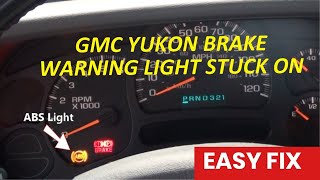
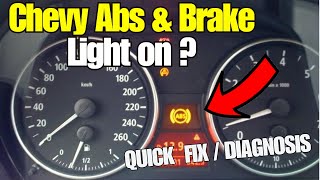

The information in this article is provided for general reference and educational purposes only. Vehicle specifications, procedures, and part compatibility can vary by production date, trim level, and region. Always consult your vehicle's factory service manual and verify part numbers before purchasing or performing repairs. Safety-critical components such as airbags, seat belts, and braking systems should be installed by a qualified professional.
- 🎬 Helpful Videos
- What Does C0282 Mean?
- Can I Drive With C0282?
- Common Causes
- Symptoms
- Diagnostic Flowchart
- Common Fixes & Costs
- Used vs. New Parts: Buying Guide
- What Happens If You Wait — Timeline
- Cost of Not Fixing It
- Diagnosis Steps
- When This Code Triggers (Freeze-Frame Conditions)
- Related Codes
- Climate & Environmental Factors
- How to Talk to a Mechanic About This Code
- Where to Take It: Dealer vs Independent vs Chain
- When to Walk Away From the Repair
- What Scan Tool You Need for This Code
- How to Clear the Code After You Fix It
- Will This Fail Emissions / State Inspection?
- Most Commonly Affected Vehicles
- Manufacturer-Specific Notes
- Real Owner Stories
- 2000 Ford Expedition with constantly running ABS pump
- 2016 Subaru Outback 3.6R with intermittent Electronic Parking Brake error
- 2002 Chevrolet Trailblazer with multiple ABS codes (C0267 & C0281)
- How to Prevent This Code From Triggering
- Frequently Asked Questions
- Can I just clear the C0282 code?
- Is it safe to drive with the C0282 code?
- How much does it cost to fix code C0282?
- Can a bad battery cause a C0282 code?
- What is the difference between a C0282 and a wheel speed sensor code?
- My ABS pump runs constantly, is this related to C0282?
- What is a Brake Pressure Modulator Valve (BPMV)?
- Key Takeaways
- 🎟️ Get 5% Off