

OBD-II Code C0281: Brake Switch Circuit Malfunction
The Ultimate 2026 Guide: What C0281 means, why it triggers, and how to fix it for good.
- Code C0281 indicates a brake switch circuit failure, which immediately disables your ABS and traction control systems.
- A faulty $15 to $60 brake light switch causes over 70% of C0281 codes and takes less than an hour to replace.
- Diagnose the issue in 60 seconds by having a friend check if your brake lights are stuck on or completely dead.
- Never replace the expensive ABS module without first verifying the switch adjustment, checking the stop lamp fuse, and testing the circuit for 12V power.
What Does C0281 Mean?

C0281 means the Electronic Brake Control Module (EBCM) detects a circuit failure at the brake pedal switch. The computer cannot verify if you are braking, so it disables ABS and traction control to prevent erratic or unsafe automated braking behavior.
Technical definition: The SAE/ISO definition for C0281 is "Brake Switch Circuit Malfunction." The EBCM sets this code when it detects an open, short, or invalid voltage signal in the brake pedal position switch circuit. On some GM and Toyota vehicles, it sets as an informational code indicating Dynamic Rear Proportioning (DRP) is disabled due to a primary wheel speed sensor fault.
Can I Drive With C0281?
Yes, But With Caution. Yes, you can drive the vehicle, as your normal hydraulic brakes still work. However, your Anti-lock Braking System (ABS) and Traction/Stability Control are disabled. In a panic stop, your wheels will lock up, increasing stopping distances and causing a loss of steering control. Fix this promptly to restore emergency braking safety.
Common Causes

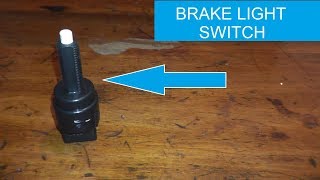
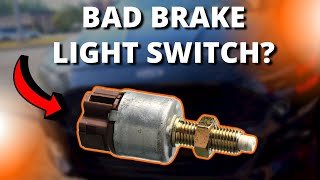
- Faulty Brake Light Switch (Very Common) — This accounts for over 70% of C0281 cases. The switch is a small plastic sensor on the brake pedal arm that wears out internally from millions of mechanical cycles.
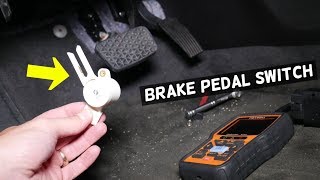
- Misadjusted Brake Light Switch (Common) — The switch often gets knocked out of alignment or is installed incorrectly during a previous repair. If the plunger does not fully extend or compress, it sends an illogical signal to the EBCM.
- Damaged Wiring or Corroded Connector (Common) — Wires leading to the brake switch sustain physical damage, or connector pins corrode from moisture and winter road salt. Rear-end collisions also sever tail light wiring, creating an open circuit the EBCM detects.
- Blown Stop Lamp Fuse (Less Common) — A blown fuse in the 'Stop Lamp' or ABS circuit cuts 12V power to the switch, immediately triggering the code.
- Aftermarket LED Brake Lights (Less Common) — The EBCM monitors the brake circuit by expecting the specific electrical resistance of incandescent bulbs. Installing low-resistance LED bulbs tricks the module into detecting an open circuit.
- Poor EBCM Ground Connection (Uncommon) — The EBCM requires a solid chassis ground. A corroded ground wire causes voltage drops and phantom electrical faults, including C0281.
- Faulty Electronic Brake Control Module (EBCM) (Rare) — The control module itself fails in under 1% of cases. Replace this expensive component only after exhaustively ruling out the switch, wiring, and grounds.
Symptoms

- ABS and Traction Control Lights On — The EBCM illuminates the ABS and StabiliTrak/ESC warning lights on the dashboard because these systems are disabled.
- Brake Lights Inoperative or Stuck On — Brake lights either fail to illuminate when braking, or stay stuck on permanently, draining the battery overnight.
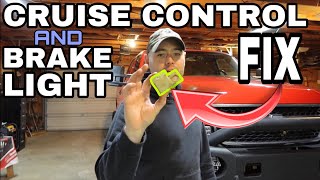
- Cruise Control Disabled — Cruise control requires a reliable brake signal to disengage. The system locks out entirely when C0281 is active.
- Shifter Stuck in Park — Automatic transmissions require a brake pedal signal to release the shift interlock. A failed switch traps the shifter in Park. 🎬 Watch: Common symptoms of a failing brake light switch
Diagnostic Flowchart

Tap your situation to follow the diagnostic path that matches what you're seeing on this code.
Common Fixes & Costs
- Replace Brake Light Switch — Parts: $15-$60, Labor: $80-$150, ~0.8 hr book time (DIY)
- Adjust Brake Light Switch — Parts: $0, Labor: $50-$100, ~0.5 hr book time (DIY)
- Replace Blown Fuse — Parts: $1-$5, Labor: $0, ~0.1 hr book time (DIY)
- Repair Wiring or Replace Connector — Parts: $5-$20, Labor: $100-$200, ~1.5 hr book time (Intermediate)
- Replace ABS/EBCM Module — Parts: $200-$800, Labor: $100-$300, ~2.0 hr book time (Professional)
Used vs. New Parts: Buying Guide
When a used part is worth it: Never buy a used brake light switch. It is a $15-$60 wear item. Used EBCM modules are viable only if professionally rebuilt with a warranty.
Donor-vehicle mileage cap: roughly under 50000 miles for the part to have meaningful remaining life.
Donor quality checklist:
- For EBCMs, ensure the donor vehicle was not in a flood or severe front-end collision.
Decision logic:
- If The failed part is the brake light switch. → Buy new. The $10 savings is not worth the labor of installing a worn-out part.
- If The failed part is the EBCM. → Purchase a professionally remanufactured unit to save 50% over dealer prices while retaining a warranty.
Warranty tradeoff: New aftermarket switches carry 1-year to lifetime warranties. Used switches offer 30 days at best.
Worst-case if a used part fails: $150. A failed used switch requires paying the diagnostic and labor fees a second time.
What Happens If You Wait — Timeline
- 0-1 month: ABS and Traction Control disable. Cruise control locks out. Brake lights operate erratically. (MPG impact: 0%% · Added cost: $0)
- 1-3 months: Stuck brake lights destroy the battery through deep discharging. Dead brake lights invite rear-end collisions and police citations. (MPG impact: 0%% · Added cost: $50-$200 (Battery replacement or traffic ticket))
- 3+ months: Driving without ABS normalizes a dangerous state. In a panic stop, wheels lock up, causing a severe accident. (MPG impact: 0%% · Added cost: $500+ (Insurance deductibles and premium hikes))
Cost of Not Fixing It
- Immediate: ABS and Traction Control disable entirely. The shifter locks in Park, and cruise control deactivates. (Added cost: $0)
- 0-3 months: Stuck brake lights drain the battery overnight. Inoperative brake lights result in traffic citations and extreme rear-end collision risk. (Added cost: $50-$200 (Battery replacement or traffic ticket))
- 3+ months: Driving without ABS normalizes a reduced-safety state, drastically increasing the likelihood of an accident during emergency braking. (Added cost: $500+ (Accident deductibles and premium hikes))
Diagnosis Steps
- Check Brake Light Function
Have a friend stand behind the car while you press the brake pedal. Note if the lights work correctly, stay stuck on, or remain dark. This instantly confirms a switch or fuse problem.
Tools: A friend or a reflective surface (Beginner) - Inspect the Stop Lamp Fuses
Locate the fuse box using your owner's manual. Pull the fuses labeled 'Stop Lamps', 'Brakes', or 'ABS' and verify the internal metal wire is intact.
Tools: Owner's manual, fuse puller (Beginner) - Monitor Live Data with a Scan Tool
Connect a scan tool and view the EBCM Live Data for the 'Brake Switch' PID. Press the pedal. The status must change from 'Off' to 'On'. If it doesn't, the switch or wiring is bad.
Tools: OBD-II Scan Tool with Live Data (Intermediate) - Test for Power at the Connector
Unplug the brake switch. Set a multimeter to DC Volts. Probe the power terminal on the wiring harness with the ignition on. It must show battery voltage (approx. 12V).
Tools: Multimeter (Intermediate) - Test Brake Switch Continuity
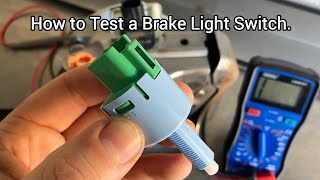
Set the multimeter to continuity mode. Probe the switch pins while pressing the plunger. The meter must beep (0 ohms) only when the plunger is in the correct state (usually extended for brake lights). Infinite resistance in both states means the switch is dead.
Tools: Multimeter (Intermediate) - [PRO TIP] Perform a Voltage Drop Test
Connect the positive multimeter lead to the battery positive and the negative lead to the power wire at the switch connector. With the pedal pressed, the reading must be under 0.5V. Higher readings indicate severe wire corrosion.
Tools: Multimeter, long test leads (Advanced) - [PRO TIP] Check Signal Voltage at the EBCM
Back-probe the brake switch signal input pin at the EBCM connector. The voltage must toggle between 0V and 12V as the pedal is pressed. If the signal arrives perfectly but the code persists, the EBCM is faulty.
Tools: Multimeter with back-probe pins, wiring diagram (Advanced)
When This Code Triggers (Freeze-Frame Conditions)
- Vehicle Speed: Above 15 mph (24 km/h) (The code sets when the EBCM fails to see the brake switch signal change state while the vehicle is in motion.)
- Brake Pedal Switch Status: Stuck 'On' or 'Off' (Data shows the brake switch status as continuously 'Applied' or 'Released' regardless of vehicle speed.)
Related Codes
- C0283 — Indicates a 'Rationality Fault' where the brake switch signal is illogical. Seeing C0281 and C0283 together guarantees a faulty brake light switch.
- C0561 — An informational code meaning 'ABS System Disabled'. C0281 is the root cause; fixing it automatically resolves C0561.
- C0035 - C0050 — Wheel speed sensor codes. On GM trucks, C0281 sets as a secondary symptom when multiple wheel speed sensors fail. Diagnose the sensors first.
- P0504 — A Powertrain code for 'Brake Switch A/B Correlation'. The engine computer and ABS module see conflicting signals from the switch's two internal circuits.
Climate & Environmental Factors
- High Humidity and Road Salt: Moisture and winter salt corrode the EBCM ground points on the frame rail and the brake switch connector pins, adding circuit resistance that triggers C0281.
- Extreme Cold: Freezing temperatures turn the plastic brake switch housing and wiring insulation brittle, causing them to snap under normal pedal pressure.
How to Talk to a Mechanic About This Code
Say this: "I have an ABS light and a C0281 code. Please test the brake light switch and verify the circuit has 12V power and a solid ground before diagnosing the ABS module."
This directs the technician to the $15 fix first, preventing them from immediately quoting a $1,000 ABS module replacement.
Avoid saying:
- 'My ABS light is on, can you just fix it?'
- 'Do whatever you think is necessary.'
- 'I have no idea what's wrong, just tell me the cost.'
Questions to ask before authorizing the repair:
- Did the brake switch pass a continuity test?
- Did you confirm 12V power and a good ground at the switch connector?
- What does the live data scan show for the brake pedal position PID?
- If you recommend an ABS module, how did you rule out wiring faults?
Where to Take It: Dealer vs Independent vs Chain
- Dealer:
Best for: Vehicles under warranty., Hyundai/Kia models covered under the brake stopper recall.
Downsides: Highest labor rates., Tendency to replace expensive modules rather than repair wiring. (Typical cost: +50% vs. baseline) - Independent Shop:
Best choice. An independent technician diagnoses and replaces a brake switch quickly and affordably.
Best for: Out-of-warranty vehicles., Cost-effective switch replacement and wiring diagnostics.
Downsides: Quality varies; verify ASE certifications. (Typical cost: +0% vs. baseline) - Chain Shop:
Avoid. They struggle to diagnose complex ABS circuit faults beyond throwing a new switch at the problem.
Best for: Simple fluid changes and brake pads.
Downsides: High pressure to upsell., Technicians lack the advanced diagnostic tools for electrical circuit testing. (Typical cost: -10% vs. baseline)
When to Walk Away From the Repair
Since the most common fix costs under $150, this is rarely a 'walk away' code. Pause only if a shop quotes an ABS module replacement exceeding 40% of the car's value.
- Car worth $3000, fix is $150: Fix it. This is a cheap and critical safety repair.
- Car worth $3000, fix is $1200: Walk away. The shop is quoting an ABS module replacement. Get a second opinion or sell the car as-is.
What Scan Tool You Need for This Code

Minimum: An OBD-II scanner that reads and clears ABS (Chassis) codes. Basic $20 engine-only readers cannot see C0281.
Standard readers only communicate with the engine computer. C0281 is stored in the Electronic Brake Control Module (EBCM).
Budget: FOXWELL NT604 Elite (~$90) — Reads and clears ABS codes. This is the minimum required to confirm C0281 and clear it after the repair.
Mid-range: BlueDriver Pro (~$120) — Provides Live Data. You view the brake switch status ('On'/'Off') in real-time on your phone, definitively confirming if the switch works before buying parts.
Professional: Autel MaxiCOM MK808 (~$450) — Offers full bidirectional control and OE-level diagnostics for all vehicle modules. Overkill for C0281, but essential for advanced DIYers.
Rent vs buy: Auto parts stores lend scanners for free, but many loaner tools lack ABS capability. Buying a $90 budget scanner is cheaper than paying a shop $150 for a diagnostic fee.
How to Clear the Code After You Fix It
- Use an OBD-II scan tool capable of reading ABS codes to erase the C0281 fault.
- Perform a test drive to confirm the repair.
- Verify the ABS and Traction Control warning lights remain off.
Drive cycle (~15 minutes): Start the vehicle and drive for 15 minutes, exceeding 20 mph. Perform 5 to 10 normal stops. This forces the EBCM to verify the brake switch operates correctly during deceleration. Park and cycle the ignition. The procedure is complete if lights stay off.
Readiness monitors affected: None
Watch out for:
- Basic $20 code readers cannot clear Chassis (C-prefix) codes from the EBCM.
- Disconnecting the battery does not clear hard codes from the EBCM memory.
- An immediate warning light return indicates the new switch is misadjusted.
Will This Fail Emissions / State Inspection?
No — by itself this code doesn't fail OBD inspection (but it can keep readiness monitors from setting, which causes a separate fail).
- California: An ABS light passes the standard smog check but fails the 'Brake and Lamp Inspection' required for revived salvage vehicles.
- New York: Fails inspection. An illuminated ABS warning light is an automatic failure for the annual NYS safety inspection.
- Texas: Passes inspection. Texas checks base hydraulic brakes but ignores the ABS warning light.
Most Commonly Affected Vehicles
- Chevrolet Aveo / Cobalt / HHR (2004-2011) — These models share an electronics platform notorious for premature brake switch failures, often appearing alongside code C0283.
- GMC / Chevrolet Silverado / Tahoe / Trailblazer (2002-2008) — C0281 frequently sets as an informational code triggered by broken wheel speed sensor wires inside the front harness.
- Ford F-150 (2004-2014) — The brake pedal position switch fails frequently, causing an intermittent 'Check Brake System' warning. Dashboard disassembly increases labor costs.
- Hyundai / Kia Elantra / Sonata / Sorento / Optima (2006-2014) — Over 1 million vehicles were recalled (NHTSA 13V114) for faulty stop lamp switches and disintegrating brake pedal stopper pads.
- Subaru Legacy / Outback (2000-2009) — The dual-function stop lamp switch fails regularly. Always verify the ABS fuse in the engine bay before replacing parts.
- Pontiac G6 / Torrent (2005-2010) — Shares the Cobalt's GM electronics platform, making it highly susceptible to brake light switch failure.
Manufacturer-Specific Notes
- General Motors (Chevrolet/GMC/Pontiac): A dying battery causes a severe voltage drop during cranking, which the EBCM misinterprets as a C0281 circuit fault. Clear the code after a battery replacement to verify.
- Ford: Instrument cluster circuit board failures present the exact same symptoms as a failed brake switch. Test the switch thoroughly before replacing it.
- Subaru: The switch is a dual-function unit. One half controls the lights; the other signals the ABS. The lights work perfectly even when the ABS half fails.
- Toyota: C0281 defines as 'Dynamic Rear Proportioning Performance'. It never sets alone; it only appears to announce DRP suspension due to a primary ABS fault.
Real Owner Stories
2007 Chevy Cobalt - The Classic $15 Fix
An owner experienced intermittent ABS lights, Traction Control warnings, and a disabled cruise control.
What they tried:
- Scanned the vehicle and found codes C0281 and C0283.
- Researched forums and identified the brake light switch as the primary suspect.
Outcome: Replaced the ACDelco brake light switch for $15 in 20 minutes. Cleared the codes, and the warning lights never returned.
Lesson: For GM compacts, C0281 and C0283 together guarantee a bad brake light switch. Replace it before attempting any other diagnostics.
2008 GMC Sierra - A Misleading Code
The ABS and Stabilitrak lights illuminated with a C0281 code, but the brake lights and cruise control worked perfectly.
What they tried:
- Questioned the brake switch diagnosis due to normal light operation.
- Scanned all modules and found C0035 (Front Left Wheel Speed Sensor).
Outcome: A mechanic found a broken wire inside the wheel speed sensor harness. Repairing the wire cleared the C0035 and the secondary C0281 code.
Lesson: On GM trucks, C0281 is often a secondary symptom. Always fix wheel speed sensor codes first.
2013 Hyundai Elantra - The Recall Fix
The brake lights stayed on permanently, draining the battery. The ESC light illuminated, and the shifter moved out of Park without pressing the brake.
What they tried:
- Found crumbled plastic on the driver-side floor mat.
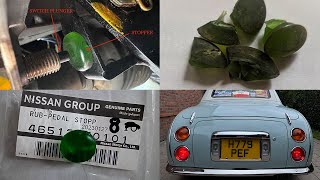
- Discovered NHTSA Recall 13V114 for deteriorating brake pedal stopper pads.
Outcome: The dealership replaced the $3 rubber stopper pad for free under the recall, resolving all symptoms instantly.
Lesson: If you own a 2006-2014 Hyundai or Kia and find broken plastic on your floor mat, your brake pedal stopper pad failed.
How to Prevent This Code From Triggering
- Inspect Brake Pedal Stopper Pad (Every 50,000 miles) — The plastic pad that contacts the switch turns brittle and shatters. Replacing it before it breaks prevents stuck brake lights and dead batteries.
- Clean EBCM Ground Connections (Every 5 years in rust-belt states) — Removing rust from the frame rail ground point prevents the voltage drops that trigger phantom ABS codes.
Frequently Asked Questions
Can I drive my car with a C0281 code?
Yes, your standard hydraulic brakes function normally. However, ABS and traction control are disabled, increasing your risk of skidding in an emergency.
What is the most common fix for C0281?
Replacing the brake light switch resolves 70% to 80% of all C0281 codes. It is a cheap, fast repair.
How much does it cost to fix code C0281?
A new brake light switch costs $15 to $60. A repair shop charges $80 to $150 for parts and labor.
Can a bad battery cause a C0281 code?
Yes. On GM vehicles, a weak battery causes a voltage drop that confuses the brake control module. Clear the code after installing a new battery.
I replaced the brake switch, but the light is still on. What now?
Verify the new switch is adjusted correctly so the plunger fully compresses. If adjustment is correct, check the stop lamp fuse and inspect the wiring for breaks.
Can I pass inspection with a C0281 code?
It depends on your state. In strict safety inspection states like New York, an active ABS light is an automatic failure.
Why did C0281 appear after I installed LED brake lights?
LED bulbs have lower electrical resistance than standard bulbs, which tricks the computer into detecting an open circuit. Install a 50W load resistor to fix this.
Can a broken tail light cause C0281?
Yes. Physical damage to the tail light assembly shorts the internal wiring to ground. The EBCM detects this electrical fault and sets the code.
What is a common misdiagnosis for C0281?
Mechanics often condemn the expensive ABS module without testing the $15 brake switch or checking for corroded ground wires.
Key Takeaways
- Code C0281 indicates a brake switch circuit failure, which immediately disables your ABS and traction control systems.
- A faulty $15 to $60 brake light switch causes over 70% of C0281 codes and takes less than an hour to replace.
- Diagnose the issue in 60 seconds by having a friend check if your brake lights are stuck on or completely dead.
- Never replace the expensive ABS module without first verifying the switch adjustment, checking the stop lamp fuse, and testing the circuit for 12V power.
Helpful Videos
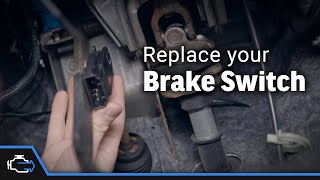
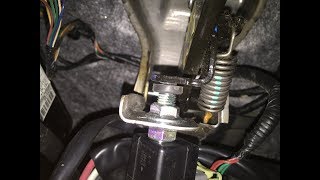

The information in this article is provided for general reference and educational purposes only. Vehicle specifications, procedures, and part compatibility can vary by production date, trim level, and region. Always consult your vehicle's factory service manual and verify part numbers before purchasing or performing repairs. Safety-critical components such as airbags, seat belts, and braking systems should be installed by a qualified professional.
- 🎬 Helpful Videos
- What Does C0281 Mean?
- Can I Drive With C0281?
- Common Causes
- Symptoms
- Diagnostic Flowchart
- Common Fixes & Costs
- Used vs. New Parts: Buying Guide
- What Happens If You Wait — Timeline
- Cost of Not Fixing It
- Diagnosis Steps
- When This Code Triggers (Freeze-Frame Conditions)
- Related Codes
- Climate & Environmental Factors
- How to Talk to a Mechanic About This Code
- Where to Take It: Dealer vs Independent vs Chain
- When to Walk Away From the Repair
- What Scan Tool You Need for This Code
- How to Clear the Code After You Fix It
- Will This Fail Emissions / State Inspection?
- Most Commonly Affected Vehicles
- Manufacturer-Specific Notes
- Real Owner Stories
- 2007 Chevy Cobalt - The Classic $15 Fix
- 2008 GMC Sierra - A Misleading Code
- 2013 Hyundai Elantra - The Recall Fix
- How to Prevent This Code From Triggering
- Frequently Asked Questions
- Can I drive my car with a C0281 code?
- What is the most common fix for C0281?
- How much does it cost to fix code C0281?
- Can a bad battery cause a C0281 code?
- I replaced the brake switch, but the light is still on. What now?
- Can I pass inspection with a C0281 code?
- Why did C0281 appear after I installed LED brake lights?
- Can a broken tail light cause C0281?
- What is a common misdiagnosis for C0281?
- Key Takeaways
- 🎟️ Get 5% Off