

C0256 on 2014-2020 Toyota 4Runner: ABS Fault, Causes, and Fixes
If your 4Runner has an ABS light on with code C0256 (often with C0226, C0236, C0246), check your headlight bulbs before anything else. A Toyota Technical Service Bulletin (TSB) states that aftermarket LED or HID bulbs can cause these codes due to radio frequency interference. Reverting to standard halogen bulbs is a simple, inexpensive fix that resolves the issue for many owners.
- For code C0256 on a 2014-2020 4Runner, always check for aftermarket LED/HID headlights first.
- Replacing aftermarket headlights with standard halogen bulbs is a low-cost diagnostic step that can prevent a very expensive, unnecessary repair.
- This code disables important safety features like ABS and Vehicle Stability Control (VSC), so it should be addressed promptly.
- If you do not have aftermarket lights, the issue is likely the ABS module itself, which is a costly repair.
- This code is almost always accompanied by C0226, C0236, and C0246, all pointing to the same root cause.
What's Unique About the 2014-2020 Toyota 4RUNNER
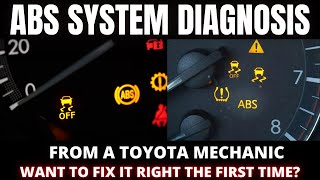
For the 2014-2020 4Runner, this code has a very specific and unusual trigger documented by Toyota. While the code definition points to an internal module failure, Toyota issued a Technical Service Bulletin (T-TT-0597-20) advising technicians to first inspect the vehicle for aftermarket LED or HID headlight bulbs. The radio frequency interference (RFI) from the ballasts or drivers in these bulbs can create electrical 'noise' on the ABS module's ground circuit, tricking the computer into thinking it has an internal failure. The TSB even outlines a diagnostic procedure using a Picoscope to monitor the ground circuit voltage and see it fluctuate when the aftermarket headlights are turned on. This makes checking the headlights the most important first step, potentially saving the owner from a very expensive 🎬 Watch: A Toyota mechanic's tips for diagnosing ABS issues correctly. and unnecessary ABS module replacement.
Diagnostic Flowchart
Tap your situation to follow the diagnostic path that matches what you're seeing on this vehicle.
Symptoms You May Notice
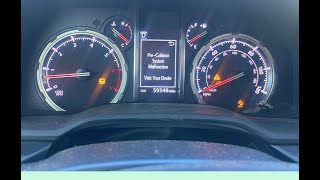
- ABS warning light is on
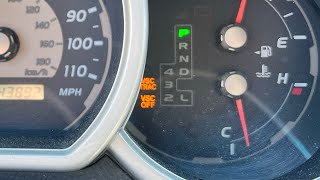
- Traction control or VSC (Vehicle Stability Control) light may be on
- A buzzing or groaning noise from the engine bay during the ABS self-check on startup may be absent
- Loss of ABS and traction/stability control functionality
- Replacing the ABS module without first checking for aftermarket headlight bulbs. This is a very expensive mistake, as the new module will likely exhibit the same problem if the RFI-generating bulbs are still installed.
Most Likely Causes
- Aftermarket LED or HID Headlight Bulbs 🔴 High Probability As documented in Toyota TSB T-TT-0597-20, the electronic ballasts or drivers in many aftermarket bulbs generate radio frequency interference (RFI) that disrupts the ground signal for the Skid Control ECU. This electrical noise is misinterpreted by the sensitive module as an internal solenoid fault.
How to confirm: Visually inspect the headlight bulbs. If they are not standard halogen bulbs, turn the headlights completely off, clear the codes, and drive the vehicle. If the codes do not return with the lights off, the aftermarket bulbs are the cause. Reinstalling the original halogen bulbs should make the codes disappear permanently after clearing.
Typical fix: Replace the aftermarket LED/HID bulbs with standard OEM-spec halogen bulbs (typically H11 for low beams and 9005 for high beams).
Est. part cost: $20-$50 - Failed ABS Actuator / Skid Control ECU 🟡 Medium Probability The ABS module is a complex electro-hydraulic unit. Internal electronic components, including the solenoid circuits, can fail over time, leading to these codes. This is the default diagnosis if the headlight issue is ruled out. Forum discussions confirm that this is a legitimate, though expensive, failure mode.
How to confirm: After confirming OEM bulbs are installed (or the issue persists with headlights off), a technician will verify power and ground connections to the ABS module. If all wiring is intact, the module itself is condemned via a process of elimination. A professional scan tool may also be able to communicate directly with the module and identify it as non-responsive or failed.
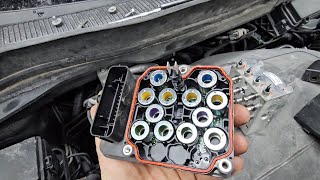
Typical fix: Replace the entire ABS actuator and ECU assembly. This must be followed by a brake fluid bleed and a 🎬 See this pro tip for replacing the module more efficiently. 'Zero Point Calibration' with a capable scan tool. Owners on forums have reported dealer quotes in the $3,000 range for this repair.
Est. part cost: $400-$2800
Rare But Worth Checking
- Damaged Wiring or Connector: While less common than the two main causes, physical damage to the wiring harness or corrosion in the main connector to the ABS module can cause an open or short, triggering this code. Always inspect the harness before replacing the module.
Diagnosis Steps
- Read the trouble codes from the ABS system using an OBD-II scanner capable of reading 'C' (Chassis) codes.
- Crucial First Step: Visually inspect the low and high beam headlight bulbs. Determine if they are standard halogen bulbs or aftermarket LED/HID retrofits. Many owners on forums confirm this is the first thing to check.
- If aftermarket bulbs are found, turn the headlight switch to the 'OFF' position.
- Clear all ABS codes with the scanner.
- Drive the vehicle to see if the codes return. If the ABS light stays off, the aftermarket bulbs are confirmed as the cause. Replace them with OEM-spec halogen bulbs.
- If the codes return with the headlights off, or if only OEM bulbs were installed from the start, proceed to the next step.
- Inspect the main electrical connector and wiring harness going to the ABS module for any signs of corrosion, damage, or loose pins.
- If the wiring is confirmed to be good, the failure is highly likely to be internal to the ABS actuator/ECU assembly.
- Replacement of the ABS module is the final step. This should be followed by a full brake system bleed and Zero Point Calibration using a compatible diagnostic tool. 🎬 Watch: How to perform a Zero Point calibration with Techstream.
Parts You'll Likely Need
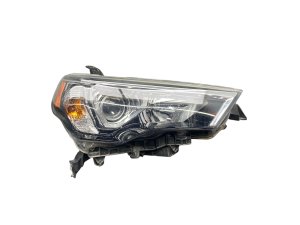
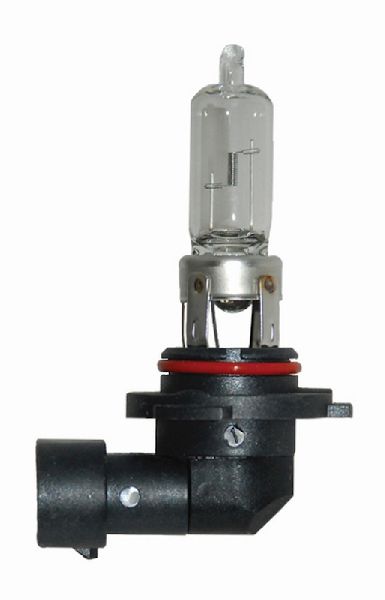
- Halogen Headlight Bulbs
(OEM #Low Beam: H11 (e.g., Philips H11, Sylvania H11), High Beam: 9005 (e.g., Philips 9005, Sylvania 9005). Specific Toyota part numbers can include 90981-13047.)— This is the most likely fix according to Toyota TSB T-TT-0597-20, which identifies aftermarket LED/HID bulbs as a primary cause of RFI that triggers code C0256.
Trusted brands: Philips, Sylvania, GE
OEM price range: $20-$40
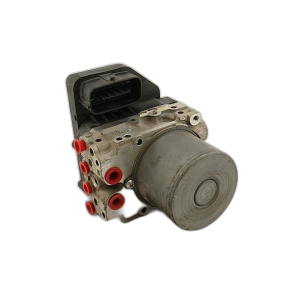
Aftermarket price range: $15-$30 - ABS Actuator and ECU Assembly
(OEM #Varies by year and options. Examples include 47050-35230 (for 2016+ without sport suspension) and 44050-35030. It is critical to verify the correct part number for your specific vehicle VIN.)— If the headlight bulb issue is ruled out, the code indicates an internal failure of the ABS module itself, requiring replacement of the entire assembly.
Trusted brands: Aisin (OEM supplier), Toyota (OEM)
OEM price range: $1300-$2800
Aftermarket price range: $400-$900 (Remanufactured or Used from sources like eBay).
Related Codes That Often Appear With This One
- C0226 — This code, along with C0236 and C0246, is also listed in TSB T-TT-0597-20 as being caused by the same aftermarket headlight issue or internal module fault.
- C0236 — This code, along with C0226 and C0246, is also listed in TSB T-TT-0597-20 as being caused by the same aftermarket headlight issue or internal module fault.
- C0246 — This code, along with C0226 and C0236, is also listed in TSB T-TT-0597-20 as being caused by the same aftermarket headlight issue or internal module fault.
Technical Service Bulletins (TSBs) & Recalls
- T-TT-0597-20: States that some 2014-2020 4Runner vehicles may experience the ABS Light ON with DTCs C0226, C0236, C0246, and C0256. It recommends inspecting for aftermarket headlight bulbs as a potential cause of electrical interference and provides a detailed diagnostic procedure.
Platform-Specific Known Issues
- A Technical Service Bulletin (T-TT-0597-20) was issued by Toyota specifically for 2014-2020 4Runners, linking codes C0226, C0236, C0246, and C0256 to the installation of aftermarket LED or HID headlights.
- The TSB details that RFI from the aftermarket bulbs interferes with the Skid Control ECU's ground circuit, and suggests using an oscilloscope to confirm voltage fluctuations on the ground wires when the headlights are on.
Mechanic-Grade Diagnostic Values
- Skid Control ECU Ground Circuit Voltage Fluctuation — expected: Stable voltage trace with headlights OFF.. Failure: Visible voltage fluctuations or 'noise' on the ground circuit trace when aftermarket LED/HID headlights are turned ON.
Scan Tool Commands That Help
- Toyota Techstream: Air Bleeding Utility — This utility must be used after replacing the ABS actuator to properly bleed air from the new unit. Standard bleeding methods will not open all internal valves.
- Toyota Techstream: Reset Memory — Used to clear stored calibration data before performing a new Zero Point Calibration.
- Toyota Techstream: Test Mode (for Zero Point Calibration) — This function puts the VSC/ABS system into a learning mode to allow the Zero Point Calibration of the yaw rate and deceleration sensors to be performed.
Wiring & Ground Locations
- Skid Control ECU Connector A, Pin 1 (GND1) — At the main connector for the ABS Actuator / Skid Control ECU assembly in the engine compartment.. This is one of the two ground pins specified in TSB T-TT-0597-20 to test for voltage interference from aftermarket headlights.
- Skid Control ECU Connector A, Pin 32 (GND2 - Hydraulic Booster) — At the main connector for the ABS Actuator / Skid Control ECU assembly in the engine compartment.. This is the second ground pin for vehicles with a hydraulic booster system, as specified in TSB T-TT-0597-20, for testing voltage interference.
- Skid Control ECU Connector, Pin 13 (GND2 - Vacuum Booster) — At the main connector for the ABS Actuator / Skid Control ECU assembly in the engine compartment.. This is the second ground pin for vehicles with a vacuum booster system, as specified in TSB T-TT-0597-20, for testing voltage interference.
- General Power & Ground Wires — In the harness connecting to the ABS module.. In Toyota wiring diagrams, power connections are typically a black wire with a white stripe, and ground connections are a white wire with a black stripe. This is useful for basic power/ground verification at the module connector.
Real Owner Repair Stories
- ScannerDanner Forum (2006 Toyota Sienna (similar ABS system)) — ABS and Brake lights were on. Initially intermittent, then became constant. Codes C0256 and C0226 were present.
❌ Tried (didn't work) Initial diagnosis considered wiring harness issues, but logic dictated that a harness fault would likely affect all solenoids, not just specific ones.
✅ What actually fixed it The issue was resolved by replacing the ABS module with a used unit from eBay. After installation and several drive cycles, the ABS light did not return and no codes were stored. A Zero Point Calibration was required after the replacement.
OEM Part Supersession History
44510-35090→44050-35030— Part number update by manufacturer.
Heads up: The part number 44050-35030 is listed for 1996-2001 4Runners and is not compatible with the 2014-2020 generation. This highlights the critical importance of verifying the correct part number by VIN for the specific vehicle being repaired.
Model Year Variations Within This Range
- 2020: For the 2020 model year, Toyota added Safety Sense (TSS) which includes adaptive cruise control and automatic braking, a new head unit with a larger screen supporting Apple CarPlay/Android Auto, and push-button start on more trims. While these changes don't directly affect the C0256 fault, the updated electronics and wiring could introduce different diagnostic considerations compared to earlier years in the range.
- 2014-2019: These earlier models in the range have a different head unit and instrument cluster display, and do not have the Toyota Safety Sense (TSS) suite of features. The fundamental ABS system and its vulnerability to RFI from aftermarket headlights remains the same as documented in the TSB.
Helpful Videos
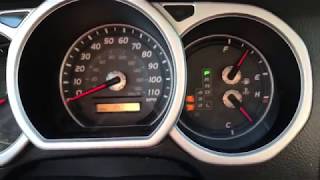
Used OEM Parts in Stock



New Aftermarket Parts Available



The information in this article is provided for general reference and educational purposes only. Vehicle specifications, procedures, and part compatibility can vary by production date, trim level, and region. Always consult your vehicle's factory service manual and verify part numbers before purchasing or performing repairs. Safety-critical components such as airbags, seat belts, and braking systems should be installed by a qualified professional.
- Toyota 4RUNNER:
- 🎬 Helpful Videos
- 🛍️ Shop This Part
- What's Unique About the 2014-2020 Toyota 4RUNNER
- Diagnostic Flowchart
- Symptoms You May Notice
- Most Likely Causes
- Rare But Worth Checking
- Diagnosis Steps
- Parts You'll Likely Need
- Related Codes That Often Appear With This One
- Technical Service Bulletins (TSBs) & Recalls
- Platform-Specific Known Issues
- Mechanic-Grade Diagnostic Values
- Scan Tool Commands That Help
- Wiring & Ground Locations
- Real Owner Repair Stories
- OEM Part Supersession History
- Model Year Variations Within This Range
- 🎟️ Get 5% Off