

OBD-II Code C0253: Steering Angle Sensor Centering Error
What C0253 means, why it triggers, and how to fix it
- Code C0253 disables your vehicle's stability and traction control systems because the Electronic Brake Control Module (EBCM) cannot verify the steering wheel's center position.
- Over 70% of C0253 codes trigger immediately after a wheel alignment or battery replacement because the technician failed to perform the mandatory electronic sensor recalibration.
- For 2007-2014 GM trucks and SUVs, inspect the steering angle sensor connector for fretting corrosion and apply dielectric grease per TSB PI0639C before replacing any parts.
- Verify your manufacturer's specific code definition; on 2010-2014 Subaru models, C0253 indicates an Electronic Parking Brake failure rather than a steering system fault.
- Limit driving to a direct trip to a repair shop; operating without Anti-lock Brakes (ABS) and Electronic Stability Control (ESC) drastically increases stopping distances and skid risks on wet or icy roads.
What Does C0253 Mean?

Code C0253 means the Electronic Brake Control Module (EBCM) has lost or rejected the steering angle sensor's 'center' position. The computer constantly compares the steering angle with yaw rate and wheel speed data. When the reported center is implausible, the computer disables stability control, traction control, and ABS because it cannot trust the steering input.
Technical definition: The SAE/ISO definition for C0253 is "Centering Error." This indicates the calculated steering angle from the steering wheel position sensor does not correlate with the expected value calculated from other vehicle sensors, or the sensor has lost its zero-point (straight-ahead) calibration. On some GM vehicles, this code sets when the sensor's analog voltage falls outside the valid 2.0-3.0 volt range.
Can I Drive With C0253?
Yes, But With Caution. Yes, but with extreme caution. Active safety systems (Stability Control, Traction Control, and ABS) are disabled, making the vehicle highly susceptible to skidding during emergency maneuvers or on slippery surfaces. Short-term driving on dry roads is possible, but the risk of an accident increases substantially. Drive cautiously directly to a repair shop.
Common Causes

- Improper Wheel Alignment or Suspension Modifications (Very Common) — Altering the suspension geometry (via lift kits, tie rod replacement, or standard alignments) changes the physical 'straight' position of the wheels. The steering angle sensor must be electronically recalibrated to learn this new center point; failure to do so is the top cause of this code.
- Loss of Calibration due to Power Loss (Very Common) — Disconnecting or replacing the vehicle's battery erases the steering angle sensor's memory of its calibrated center position. When power is restored, the module no longer knows where 'straight ahead' is and sets this code until recalibrated.
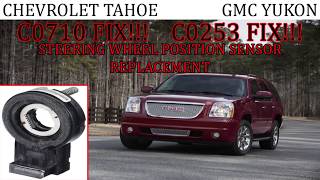
- Wiring or Connector Issues (Fretting Corrosion) (Common) — The wiring harness or connector to the steering angle sensor becomes loose, corroded, or damaged. On 2007-2014 GM trucks, 'fretting corrosion' on the connector pins interrupts the signal and triggers this code (TSB PI0639C). 🎬 Watch: How to fix C0710 and C0253 on GM trucks.
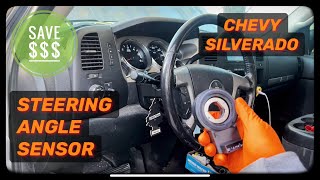
- Faulty Steering Angle Sensor (SAS) (Common) — The sensor fails internally due to mechanical wear of its moving parts, sending erratic, incorrect, or blank data 🎬 See this steering angle sensor replacement walkthrough for Chevy Silverados. to the EBCM.
- Faulty Clock Spring (Less Common) — The clock spring is a coiled wire assembly allowing the steering wheel to turn while maintaining electrical connections. A break in its internal wiring interrupts the integrated steering angle sensor's signal, often accompanied by an airbag light or dead steering wheel buttons.
- Underlying ABS or Wheel Speed Sensor Fault (Less Common) — On vehicles like Volkswagen, the steering angle sensor calibration cannot complete if an active ABS fault exists. A bad wheel speed sensor or corroded reluctor ring provides conflicting data, preventing C0253 from clearing.
- Low Battery Voltage (Less Common) — Electronic stability systems require precise voltage. A weak battery or failing alternator starves modules of power, causing communication errors and triggering this code during startup.
- Faulty Electronic Brake Control Module (EBCM) (Rare) — The EBCM (ABS module) fails internally, misinterpreting valid sensor data. Diagnose this only after ruling out the sensor, wiring, and calibration issues.
Symptoms

- Stability Control (StabiliTrak) Warning Light — A message like 'Service StabiliTrak' or 'ESC Off' appears, and the stability control warning light illuminates.
- ABS and Traction Control Lights On — The 'ABS' and 'TCS' warning lights illuminate, indicating both systems are disabled.
- Cruise Control Disabled — The EBCM disables the cruise control function as a safety precaution when stability systems are offline.
- Steering Feels Normal — The mechanical steering feels perfectly fine. The issue isolates to the electronic safety systems, not the physical ability to steer.
Diagnostic Flowchart
Tap your situation to follow the diagnostic path that matches what you're seeing on this code.
Common Fixes & Costs
- Steering Angle Sensor Calibration — Parts: $0, Labor: $80-$150, ~0.5 hr book time (Professional)
- Four-Wheel Alignment & SAS Calibration — Parts: $0, Labor: $150-$250, ~1.5 hr book time (Professional)
- Repair Wiring/Connector (Fretting Corrosion Fix)
— Parts: $10-$30, Labor: $100-$200, ~1.0 hr book time
(Intermediate)
GM Trucks/SUVs (per TSB PI0639C): OEM Dielectric Lubricant: GM 12377900 (Alt: Permatex Dielectric Tune-Up Grease) - Replace Steering Angle Sensor (SAS)
— Parts: $100-$250, Labor: $150-$400, ~2.0 hr book time
(Intermediate)
Chevrolet Silverado / GMC Sierra (2007-2014): OEM GM: 19418403 (Alt: Dorman: 601-220)
Ford Focus (2012-2018): OEM Ford: F1FZ-3F791-A (Alt: Standard Ignition: SWS92)
Volkswagen Jetta / Golf (2006-2015): OEM VW/Audi: 1K0959654 (Alt: Febi: 33537) - Replace Clock Spring Assembly — Parts: $150-$300, Labor: $150-$300, ~1.5 hr book time (Intermediate)
- Replace Electronic Brake Control Module (EBCM) — Parts: $500-$1000, Labor: $150-$300, ~1.5 hr book time (Professional)
DIY vs Professional
- Steering Angle Sensor Calibration — Beginner: No
Tools: Professional-grade bidirectional scan tool (e.g., Autel, Launch). - Four-Wheel Alignment & SAS Calibration — Beginner: No
Tools: Professional alignment rack, professional scan tool. - Repair Wiring/Connector (GM Fretting Corrosion) — Beginner: Yes, with caution.
Tools: Socket set, trim removal tools, electronic contact cleaner, dielectric grease. - Replace Steering Angle Sensor (SAS) — Beginner: No
Tools: Steering wheel puller, trim removal tools, torque wrench, socket set, professional scan tool.
Used vs. New Parts: Buying Guide
When a used part is worth it: A used OEM steering angle sensor or clock spring assembly is a budget-conscious choice for an older vehicle if the new OEM part is prohibitively expensive. It is generally not recommended due to the high risk of premature failure.
Donor-vehicle mileage cap: roughly under 60000 miles for the part to have meaningful remaining life.
Donor quality checklist:
- Verify the exact part number matches; superseded numbers may not be compatible.
- Source from a reputable salvage yard with a return policy.
- Avoid parts from vehicles with front-end collision, flood, or fire damage.
- Inquire about the donor vehicle's mileage.
Decision logic:
- If The part is an electronic sensor with a known wear-out pattern → Strongly favor a new OEM or high-quality aftermarket part with a warranty.
- If Vehicle is over 10 years old and budget is the top priority → A low-mileage used part is a viable risk, but understand it may not last.
- If A new aftermarket part is available with a lifetime warranty for a reasonable price → This provides the best balance of cost and reliability over a used part.
Warranty tradeoff: Used parts typically offer a 30-90 day functional warranty. New aftermarket parts usually come with a 1-year to limited lifetime warranty. New OEM parts carry a 1-2 year warranty.
Worst-case if a used part fails: $300-$700 for repeat labor and a replacement part if the used sensor fails.
What Happens If You Wait — Timeline
- Immediate: Code C0253 sets. 'Service StabiliTrak/ESC', 'ABS', and 'Traction Control Off' lights illuminate on the dashboard. Cruise control is disabled. (MPG impact: 0%% · Added cost: $0)
- Ongoing: Vehicle's primary active safety systems are disabled. The risk of skidding or loss of control in slippery conditions or during an emergency maneuver is significantly higher than normal. (MPG impact: 0%% · Added cost: Potential cost of an accident, which could be thousands of dollars.)
- At next state inspection: Vehicle fails state safety inspection in jurisdictions where an illuminated ABS light is an automatic failure (e.g., New York). This prevents legal registration renewal. (MPG impact: 0%% · Added cost: $50-$200 in re-inspection fees, plus the eventual cost of the required repair.)
- Long Term (6+ months): No direct mechanical damage occurs. The 'cost' is the indefinite and significant safety risk from having no stability or traction control, plus the inability to legally operate the vehicle in some states.
Cost of Not Fixing It
- Immediate: Active safety systems (ABS, Traction Control, Stability Control) are disabled. The risk of losing control in an emergency maneuver or on slippery surfaces increases significantly. (Added cost: Potentially $5,000-$50,000+ in costs related to an accident, including vehicle repairs, insurance surcharges, and medical bills.)
- 0-3 months: Failure of state safety inspection. In states checking for ABS or malfunction indicator lights (e.g., New York), the vehicle fails inspection, preventing legal registration renewal. (Added cost: $50-$200 in re-inspection fees and fines.)
- 3+ months: No direct mechanical damage occurs. The primary cost remains the ongoing safety risk and inability to pass state inspections. The base hydraulic braking system functions, but without anti-lock capabilities.
Diagnosis Steps
- Read Codes and Review Recent History
Use an OBD-II scanner capable of reading chassis codes to confirm C0253. Note any other codes, especially C0710 or ABS codes. If a wheel alignment, battery replacement, or suspension repair was just performed, a missed recalibration is the prime suspect.
Tools: OBD-II Scanner (with Chassis/ABS capability) (Beginner) - Attempt Scan Tool Recalibration
First, try a manual reset: start the engine, turn the steering wheel fully left, fully right, then center. If the light remains, use a professional scan tool to perform the 'Steering Angle Sensor Learn' procedure.
Tools: Professional Scan Tool (Intermediate) - Inspect the Steering Angle Sensor Connector
Locate the sensor on the steering column. Disconnect the electrical connector and inspect the pins for damage or corrosion. On GM vehicles, look for dark smudges of fretting corrosion. Clean the pins and apply dielectric grease before reconnecting.
Tools: Flashlight, Trim Removal Tools, Dielectric Grease (Intermediate) - Analyze Sensor Live Data (PID Check)
Using a scan tool, view the 'Steering Angle Sensor' PID. With wheels straight, it should read 0° ± 5°. As you turn the wheel, the reading must change smoothly without jumping. If the value is stuck, erratic, or blank, the sensor or circuit is faulty.
Tools: Professional Scan Tool (Advanced) - Inspect Battery and Charging System
Test battery voltage with a multimeter. A healthy battery reads ~12.6V (engine off) and ~13.7-14.7V (engine running). Low voltage causes faults in sensitive electronic modules.
Tools: Multimeter (Beginner) - Advanced Signal Voltage Analysis
Back-probe the sensor's connector. Verify the 5-Volt reference from the EBCM (4.8V-5.2V) and check the ground circuit for continuity. Probe the primary analog signal wire; voltage should sweep smoothly as the wheel turns. Missing reference voltage indicates a wiring issue; an erratic signal with good power indicates a failed sensor.
Tools: Multimeter, Vehicle-Specific Wiring Diagram, Back-probe Kit (Advanced) - Test the Clock Spring Circuit
If the sensor integrates with the clock spring and you have an airbag light or dead steering wheel buttons, test for continuity through the clock spring's ribbon cable for the SAS signal wires.
Tools: Multimeter, Vehicle-Specific Wiring Diagram, Steering Wheel Puller (Advanced)
When This Code Triggers (Freeze-Frame Conditions)
- Ignition Status: ON (The code sets when the ignition turns on as the system performs a self-check.)
- System State: Self-Test or Calibration (Triggers when the EBCM cannot verify the sensor's center position during its initial check or a wheel alignment.)
- Vehicle Speed: 0 mph (Frequently sets while the vehicle is stationary, immediately after startup.)
- Steering Angle Sensor Signal: Implausible or Out of Range (The module sees a signal that is illogical or does not match other vehicle sensors.)
Related Codes
- C0710 — Indicates a general fault in the sensor's signal (lost or erratic). C0253 is the result: the EBCM cannot determine the center point from that faulty signal. Troubleshoot C0710 first by checking wiring and live data.
- C0252 — Means 'Vehicle Stability Enhancement System Sensors Uncorrelated.' Sets when steering angle data doesn't match yaw rate or lateral accelerometer sensors. Points strongly toward a calibration error or faulty yaw sensor.
- C0460 — Translates to 'Steering Position Sensor Circuit Malfunction.' Points to a fundamental electrical fault (open, short, or invalid data) within the sensor's circuit. Perform a full circuit test before condemning the sensor.
- U0126 — A communication code meaning 'Lost Communication With Steering Angle Sensor Module'. Points to a severe wiring issue, blown fuse, or completely failed sensor preventing the EBCM from receiving data.
Climate & Environmental Factors
- Humidity and Road Salt (Salt Belt Regions): Significantly increases the likelihood of fretting corrosion on the GM steering angle sensor connector. Moisture and salt accelerate terminal plating degradation, causing high resistance.
How to Talk to a Mechanic About This Code
Say this: "I have a C0253 code and the StabiliTrak/ABS lights are on. I'd like to book a diagnostic. The code appeared right after [I had an alignment / I changed the battery], so I suspect it just needs a steering angle sensor recalibration. Can you please check the calibration status and look at the live sensor data before recommending a part replacement?"
This signals you've done research and points the technician directly to the most likely, and cheapest, fixes. It establishes a collaborative tone and requests specific, verifiable diagnostic steps rather than just asking them to 'fix the light,' which can lead to unnecessary part replacements.
Avoid saying:
- 'My traction control light is on, can you fix it?' (Too vague, invites a wide-ranging and expensive diagnostic process).
- 'Just replace the steering angle sensor.' (Don't diagnose for the mechanic; the issue could be wiring or calibration, and you'll pay for a part you didn't need).
- 'Do whatever it takes to get the light off.' (This is a blank check for the shop to run up the bill).
Questions to ask before authorizing the repair:
- Did you confirm if the sensor just needs recalibration? If so, what is the cost for that procedure alone?
- If you are recommending a sensor replacement, what did you see in the live data (e.g., no signal, erratic signal) that proves the sensor is bad?
- If it's a GM vehicle, did you check the connector for fretting corrosion per the TSB before condemning the sensor?
- Will the quoted price for the repair include the mandatory post-installation calibration?
- What is the warranty on the parts and labor for this specific repair?
Where to Take It: Dealer vs Independent vs Chain
- Dealer:
Best for: Vehicles under warranty., Complex manufacturer-specific issues (e.g., on German brands like VW/Audi where it links to other module faults)., When you want a guaranteed fix with OEM parts and are less sensitive to cost.
Downsides: Highest labor rates, often 1.5-2x an independent shop., May default to replacing an entire assembly when a smaller component or wiring fix suffices. (Typical cost: +50% vs. baseline) - Independent Shop:
Best fit for most situations. An independent shop with good reviews and the right diagnostic equipment offers the best balance of expertise and value. Ask them specifically if they can perform a 'Steering Angle Sensor Calibration' before you bring the car in.
Best for: Out-of-warranty vehicles where cost is a factor., Common C0253 causes like post-alignment calibration or battery-related memory loss., Shops that specialize in electronics or your specific vehicle brand.
Downsides: Shop quality and equipment vary greatly. You must verify they have a modern, bidirectional scan tool capable of performing SAS calibration., May be less familiar with very recent models or brand-specific TSBs. (Typical cost: +0% vs. baseline) - Chain Shop:
Use with caution. Acceptable for a straightforward wheel alignment, but AVOID for diagnosing an existing C0253 code. If they caused the code with a recent alignment, you must go back to them to fix it, but be prepared to escalate if they claim it's a new, unrelated problem.
Best for: Simple services like oil changes or tires., Potentially performing a wheel alignment that may have caused the issue (in which case, return to them to complete the job correctly at no extra charge).
Downsides: Technician skill with complex electronic diagnostics is highly variable., Often lack the advanced, manufacturer-specific scan tools required for calibration., High pressure to upsell parts leads to recommendations for a new sensor when only calibration is needed. (Typical cost: -10% vs. baseline)
When to Walk Away From the Repair
If the total estimated repair cost for the C0253 code exceeds 40-50% of your car's private-party value, you should pause and consider your options.
- Car worth $5000, fix is $600: Fix it. This repair is well below the threshold and restores critical safety systems.
- Car worth $3500, fix is $1800: Borderline. This repair is over 50% of the car's value. Get a second opinion to see if a cheaper fix (like a wiring repair) is possible before proceeding.
- Car worth $2000, fix is $1500: Walk away. The repair cost is 75% of the car's value. It is not financially sound to invest this much into an older vehicle for a single repair.
What Scan Tool You Need for This Code

Minimum: A scan tool that can read ABS/Chassis codes (C-codes) AND perform the 'Steering Angle Sensor (SAS) Reset/Calibration' special function for your specific vehicle.
A basic $20 code reader will not see Chassis codes like C0253. A slightly better one might show you the code but lacks the essential calibration function needed for the most common fix. You cannot solve the problem without the ability to perform the SAS relearn procedure.
Budget: LAUNCH CRP123X / Kingbolen Ediag Elite (~$95) — Reads engine, transmission, ABS, and SRS codes. Crucially, includes special reset functions like SAS calibration for many models. This is the minimum viable tool for a DIY fix.
Mid-range: Foxwell NT510 Elite / Autel MaxiCOM MK808S (~$180) — Offers full system diagnostics, bidirectional control, and extensive service functions including SAS calibration. Displays live data streams from the steering angle sensor, critical for diagnosing a bad sensor vs. a simple calibration or wiring issue.
Professional: Autel MaxiSys Series (e.g., MS908S) / LAUNCH X431 Series (~$800-1500) — Provides full, OEM-level bidirectional diagnostic functions. Performs advanced coding and programming if a module (like the EBCM) needs replacement. Offers the most comprehensive vehicle coverage and data analysis capabilities.
Rent vs buy: Most auto parts stores only rent basic code readers that CANNOT perform SAS calibration. For this specific code, if you intend to DIY the fix, you must buy a capable scanner. If the fix is a one-time calibration, paying a shop the ~$150 diagnostic/calibration fee is more economical than buying a mid-range tool.
How to Clear the Code After You Fix It
- Perform required repair (e.g., SAS calibration, sensor replacement, wiring fix).
- Use a compatible OBD-II scan tool to command the module to clear the active and history codes.
- Perform the 'Steering Angle Sensor Learn' procedure again with the scan tool to confirm the fix.
- If the battery was disconnected, perform a full drive cycle to allow emissions readiness monitors to become 'Ready'.
Drive cycle (~20 minutes): A drive cycle does NOT clear the C0253 code, but is necessary if the battery was disconnected. Cold start (sit for 8+ hours). Idle for 2-3 minutes with loads on. Accelerate to 55 mph and hold steady for 3-5 minutes. Coast down to 20 mph without braking. Accelerate again to 55-60 mph and hold for 5 minutes. Coast down again.
Readiness monitors affected: EVAP System Monitor, Catalyst Monitor, O2 Sensor Monitor
Before emissions retest: drive at least 50 miles to fully set monitors.
Watch out for:
- Attempting to clear the code without performing a repair or calibration; the code returns immediately.
- Assuming a manual lock-to-lock reset works on modern vehicles; most require a scan tool.
- Taking the vehicle for an emissions test immediately after a battery disconnect, before readiness monitors set.
Will This Fail Emissions / State Inspection?
Yes — this code typically fails an OBD-II emissions inspection.
- California: An illuminated ABS or Stability Control light alone will NOT fail the smog check; only an illuminated Check Engine Light causes an automatic failure. However, if the repair involved disconnecting the battery, the vehicle fails if OBD-II readiness monitors are not 'Ready'.
- New York: Yes, this code causes a failure. The NYS safety inspection includes a check for illuminated ABS and malfunction lights. An active ABS light is grounds for inspection failure.
- Texas: No, this code will not cause a failure. The Texas vehicle safety inspection explicitly states that an illuminated ABS warning light is NOT a reason for rejection.
Most Commonly Affected Vehicles
- Chevrolet Silverado, Tahoe, Suburban, Avalanche, Traverse (2007-2014) — Extremely common on the GMT900 platform. The primary cause is fretting corrosion on the sensor connector. GM TSB PI0639C details cleaning the connector and applying dielectric grease.
- GMC Sierra, Yukon, Acadia (2007-2014) — Shares the same platform and steering components as affected Chevrolet models, making it equally prone to C0253 from connector issues addressed in TSB PI0639C.
- Cadillac Escalade, CTS (2007-2014) — Experiences the same high rate of steering angle sensor circuit faults. On some CTS models, the code sets after driving over 25 mph for 10 minutes without the sensor completing its centering process.
- Ford Focus, Fusion, C-MAX, Escape, F-150 (2010-2019) — Appears after a battery replacement, alignment, or steering repair. Requires a specific calibration procedure using a compatible scan tool.
- Volkswagen Golf, Jetta, Passat (2006-2015) — Commonly appears after battery replacement or if an underlying ABS issue exists. A faulty wheel speed sensor prevents the steering angle sensor from calibrating.
- Subaru Outback, Legacy (2010-2014) — C0253 means 'Actuator Stroke Excess' on these models. It relates to a problem with the Electronic Parking Brake (EPB) system, not the steering angle sensor.
- Saab 9-3 (2003-2012) — Defined as 'Steering Angle Sensor, Not Calibrated.' Often appears after a battery replacement or steering component repair, requiring calibration with a Tech 2 scan tool.
Manufacturer-Specific Notes
- General Motors (Chevrolet, GMC, Cadillac): A very common cause is 'fretting corrosion' on the steering angle sensor connector pins. TSB PI0639C advises cleaning the connector and applying dielectric grease before considering sensor replacement.
- Subaru: On 2010-2014 Outback and Legacy models, C0253 means 'Actuator Stroke Excess' and indicates a fault in the Electronic Parking Brake (EPB) system, completely unrelated to steering.
- Volkswagen: The steering angle sensor calibration routine fails to complete if there is an underlying fault in the ABS system. A bad wheel speed sensor prevents the EBCM from accepting the steering sensor's zero point.
- Saab: Code C0253 is explicitly defined as 'Steering Angle Sensor, Not Calibrated.' It is a very common code after battery disconnection, requiring calibration with a Tech 2 scan tool.
Real Owner Stories
2008 GMC Sierra with C0253 & C0710
Owner experienced 'Service StabiliTrak' and 'Service Traction Control' messages on the dash.
What they tried:
- Identified the steering wheel position sensor as the culprit.
Outcome: Replaced the steering wheel position sensor (GM Part Number 15886733). The repair involved removing a crossbar, lowering the steering shaft, and replacing the sensor on the steering column. The owner estimated this DIY repair saved $300-$350.
Lesson: On GMT900 trucks, the steering angle sensor is a very common failure point, but replacing it is a manageable DIY job that doesn't require full steering column removal, saving significant labor costs.
2009 C6 Corvette after battery replacement
After replacing the battery, the steering column automatically fully extended and retracted, causing a bearing to seize and dislodge the steering wheel position sensor (SWPS), triggering code C0710. After replacing the entire steering column, code C0253 appeared.
What they tried:
- Replaced the entire steering column assembly to fix the initial C0710 code.
- Performed a four-wheel alignment to fix the subsequent C0253 code, but the code remained.
- Diagnosed the new SWPS that came with the new column and found it was dead.
Outcome: The mechanic replaced the faulty new sensor with the original sensor from the old column. This cleared all codes and restored Active Handling functionality.
Lesson: Even brand new parts can be faulty out of the box. Verify function (like checking for live data) after installation if the problem persists.
2013 Subaru Outback with C0253
The vehicle displayed code C0253, and the red 'BRAKE' light flashed when trying to engage the electronic parking brake (EPB).
What they tried:
- Identified that on this Subaru, C0253 relates to the EPB, not steering.
- Performed an adjustment of the emergency brake system.
Outcome: After adjusting the emergency brake, the code cleared and did not return. The EPB system functioned correctly.
Lesson: Always verify the code definition for your specific vehicle. On many Subarus, C0253 points to the Electronic Parking Brake system.
2011 VW Jetta with ESP light on
After suspension work, the ESP (stability control) light came on. A scan showed the steering angle sensor reading 360.0 degrees when the wheel was straight ahead.
What they tried:
- Used VCDS (VW/Audi specific software) to check live data and found the incorrect steering angle reading.
Outcome: The owner used the 'Steering Angle Sensor Alignment' function in the Basic Settings of the ABS module to reset the straight-ahead angle to 0.0 degrees. This immediately cleared the fault codes.
Lesson: After any alignment or suspension work, a steering angle sensor calibration is almost always required. A wildly incorrect reading is a dead giveaway that the sensor's center point is lost.
How to Prevent This Code From Triggering
- Insist on SAS Calibration after every wheel alignment (Every wheel alignment) — Physically changing the wheel angles without electronically resetting the sensor's 'center' is the #1 cause of C0253. Making it part of the service prevents the code from appearing.
- Apply dielectric grease to the SAS connector on susceptible GM vehicles (Once, as a preventative measure) — On GMT900 platform vehicles, applying dielectric lubricant seals connector pins from moisture and prevents the micro-arcing (fretting corrosion) that causes signal loss.
- Maintain a healthy battery and clean terminals (Check annually) — The EBCM and SAS are sensitive to low or fluctuating voltage. A weak battery causes communication glitches and triggers codes, including C0253, during startup.
- Use a memory saver when changing the battery (Every battery replacement) — Plugging a memory saver into the OBD-II port provides power to the vehicle's modules while the main battery is disconnected, preventing the SAS from losing its calibration memory.
Frequently Asked Questions
Can I fix code C0253 myself?
Partially. You can check your battery, inspect the sensor connector for damage, and try a manual lock-to-lock steering reset. However, the most common fixes require a professional bidirectional scan tool to recalibrate the sensor. If a manual reset fails, take the vehicle to a properly equipped shop.
Will clearing the code fix the problem?
No. C0253 is a 'hard code' related to a critical safety system. The code returns immediately or after a short drive until the underlying electrical fault or calibration issue is properly repaired.
Why did this code appear right after a wheel alignment?
The shop that performed the alignment failed to perform the required steering angle sensor recalibration. This is a mandatory final step on all modern vehicles with stability control. Return to the shop and request they complete the calibration at no additional charge.
What if I replaced the sensor and the code came back?
First, ensure the new sensor was electronically calibrated with a scan tool, as this is a mandatory step. Second, inspect the wiring and connector for damage or fretting corrosion, which frequently mimics a bad sensor. Finally, verify the replacement sensor is not defective out of the box.
Can a bad clock spring cause code C0253?
Yes. The steering angle sensor is often integrated into the clock spring assembly. A break in the clock spring's internal ribbon cable interrupts the sensor's signal. You will typically also see an airbag warning light or experience dead steering wheel buttons.
How do you reset the steering angle sensor after replacing the battery?
Start the engine, turn the steering wheel fully to the left lock, then fully to the right lock, and return to center. If the warning lights remain illuminated, this manual reset failed. You must use a compatible OBD-II scan tool to perform the specific 'Steering Angle Sensor Learn' procedure.
Is it safe to drive with the ABS and Traction Control lights on?
Your standard hydraulic brakes will still function, but you will lack anti-lock braking (ABS), traction control, and stability control. This drastically increases your vehicle's likelihood of skidding or losing control during an emergency swerve or on wet roads. Drive cautiously directly to a repair facility.
Does a new steering angle sensor need to be calibrated?
Yes, absolutely. After installing a new sensor, you must calibrate it using a compatible bidirectional scan tool. This programs the vehicle's computer to recognize the new physical 'straight ahead' center position.
Key Takeaways
- Code C0253 disables your vehicle's stability and traction control systems because the Electronic Brake Control Module (EBCM) cannot verify the steering wheel's center position.
- Over 70% of C0253 codes trigger immediately after a wheel alignment or battery replacement because the technician failed to perform the mandatory electronic sensor recalibration.
- For 2007-2014 GM trucks and SUVs, inspect the steering angle sensor connector for fretting corrosion and apply dielectric grease per TSB PI0639C before replacing any parts.
- Verify your manufacturer's specific code definition; on 2010-2014 Subaru models, C0253 indicates an Electronic Parking Brake failure rather than a steering system fault.
- Limit driving to a direct trip to a repair shop; operating without Anti-lock Brakes (ABS) and Electronic Stability Control (ESC) drastically increases stopping distances and skid risks on wet or icy roads.
Helpful Videos


The information in this article is provided for general reference and educational purposes only. Vehicle specifications, procedures, and part compatibility can vary by production date, trim level, and region. Always consult your vehicle's factory service manual and verify part numbers before purchasing or performing repairs. Safety-critical components such as airbags, seat belts, and braking systems should be installed by a qualified professional.
- 🎬 Helpful Videos
- What Does C0253 Mean?
- Can I Drive With C0253?
- Common Causes
- Symptoms
- Diagnostic Flowchart
- Common Fixes & Costs
- DIY vs Professional
- Used vs. New Parts: Buying Guide
- What Happens If You Wait — Timeline
- Cost of Not Fixing It
- Diagnosis Steps
- When This Code Triggers (Freeze-Frame Conditions)
- Related Codes
- Climate & Environmental Factors
- How to Talk to a Mechanic About This Code
- Where to Take It: Dealer vs Independent vs Chain
- When to Walk Away From the Repair
- What Scan Tool You Need for This Code
- How to Clear the Code After You Fix It
- Will This Fail Emissions / State Inspection?
- Most Commonly Affected Vehicles
- Manufacturer-Specific Notes
- Real Owner Stories
- 2008 GMC Sierra with C0253 & C0710
- 2009 C6 Corvette after battery replacement
- 2013 Subaru Outback with C0253
- 2011 VW Jetta with ESP light on
- How to Prevent This Code From Triggering
- Frequently Asked Questions
- Can I fix code C0253 myself?
- Will clearing the code fix the problem?
- Why did this code appear right after a wheel alignment?
- What if I replaced the sensor and the code came back?
- Can a bad clock spring cause code C0253?
- How do you reset the steering angle sensor after replacing the battery?
- Is it safe to drive with the ABS and Traction Control lights on?
- Does a new steering angle sensor need to be calibrated?
- Key Takeaways
- 🎟️ Get 5% Off