

OBD-II Code C0252: VSES Sensor Fault / ABS Motor Fault / EPB Malfunction
What C0252 means, why it triggers, and how to fix it — The definitive guide.
- C0252 has three distinct meanings based on your manufacturer: a stability sensor conflict (GM), an ABS pump motor fault (Ford/Toyota), or an Electronic Parking Brake failure (Subaru).
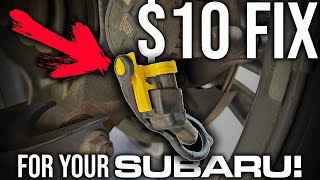
- Before buying a $500 replacement module, clean the main EBCM ground wire on the frame rail (for GM) or check the EPB connector clip (for Subaru) to fix the issue for under $10.
- Never replace a GM Electronic Brake Control Module (EBCM) without first verifying the yaw rate sensor reads exactly 0.0 degrees/second on a scan tool while parked.
- Driving with C0252 disables your Anti-lock Braking System (ABS) and stability control, increasing stopping distances by up to 30% on wet or icy roads.
- If the EBCM has internally failed, use a mail-in rebuild service for $150-$250 instead of paying a dealer $1,000+ for a new module and programming.
What Does C0252 Mean?

Code C0252 is a complex chassis code with three distinct meanings depending on your vehicle's manufacturer. For General Motors (GM) vehicles, it indicates the stability system sensors are providing conflicting data. For Ford and Toyota, it points to a fault in the electric motor for the anti-lock brake pump. For Subaru models, it signals a malfunction in the Electronic Parking Brake (EPB) motor.
Technical definition: The formal SAE/OBD-II definition varies by manufacturer. On GM vehicles, it is 'VSES (Vehicle Stability Enhancement System) Sensors Uncorrelated'. The generic definition used by Ford and others is 'ABS Hydraulic Pump Motor Control Fault'. On Subaru models, it is defined as 'Motor Malfunction' specifically relating to the Electronic Parking Brake (EPB) system.
Can I Drive With C0252?
Yes, But With Caution. Yes, but with extreme caution and for short distances only. Your standard hydraulic brakes function, but the Anti-lock Braking System (ABS) and Vehicle Stability Control (VSC/ESC) are disabled. Your wheels will lock up during a panic stop, significantly increasing stopping distances on slippery surfaces and eliminating steering control while braking hard.
Common Causes

- Faulty Electronic Brake Control Module (EBCM) (Very Common) — The EBCM is the brain controlling the ABS and stability systems. Internal failures, primarily cracked solder joints on the circuit board or faulty internal relays, are the leading cause of this code across most makes. This is exceptionally common on Kelsey-Hayes modules used in 1999-2007 GM trucks.
- Faulty or Improperly Mounted Yaw Rate Sensor (Primarily GM) (Common) — On GM vehicles, this sensor measures vehicle rotation and sideways movement. If it provides incorrect data, fails internally, or is not mounted perfectly flat, it triggers a C0252 'Sensors Uncorrelated' fault.
- Failed Electronic Parking Brake (EPB) Motor (Primarily Subaru) (Common) — On 2010-2014 Subaru Outback and Legacy models, C0252 points directly to a failure within the Electronic Parking Brake actuator assembly. This issue is so prevalent that Subaru issued a warranty extension for this specific component.
- Failed ABS Pump Motor (Non-GM) (Common) — The electric motor driving the ABS hydraulic pump wears out, seizes, or suffers an internal electrical failure, preventing ABS function. This is the primary cause on vehicles using the 'ABS Hydraulic Pump Motor Control Fault' definition.
- Corroded Wiring Harness or Ground Connection (Less Common) — Corroded, loose, or damaged wiring leading to the EBCM, ABS pump, or yaw rate sensor interrupts power and data signals. The main EBCM ground wire on the frame rail of GM trucks is a notorious failure point. 🎬 Watch: How to diagnose and fix GM truck ground issues.
- Low or Unstable System Voltage (Less Common) — A weak battery or failing alternator causes voltage drops that the highly sensitive EBCM interprets as an internal fault. This triggers a C0252 code before other charging system problems become obvious.
- Blown ABS Fuse or Faulty Relay (Less Common) — A blown fuse or a bad relay for the ABS pump motor cuts power to the circuit and triggers the code immediately.
- Improper Steering Alignment (Primarily GM) (Rare) — If the vehicle's wheels are severely out of alignment, the steering angle sensor sends data that conflicts with the yaw rate sensor, leading the EBCM to register a sensor correlation fault.
Symptoms

- ABS Warning Light On — The dashboard warning light for the Anti-lock Braking System illuminates continuously.
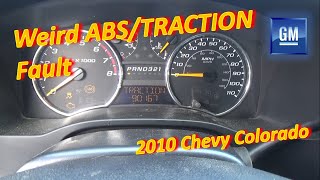
- Traction Control / Stability Control Light On — The warning light for the Traction Control System (TCS) or Electronic Stability Control (ESC/StabiliTrak) illuminates alongside the ABS light.
- 'Service StabiliTrak' Message — On GM vehicles, a specific service message appears on the Driver Information Center (DIC).
- Flashing Electronic Parking Brake Light (Subaru) — On affected Subaru models, the parking brake warning light flashes, and the EPB becomes stuck, either refusing to engage or release.
- Brakes Lock Up During Hard Braking — Without a functioning ABS, the wheels lock and cause the vehicle to skid during a panic stop on wet or icy surfaces.
Diagnostic Flowchart
Tap your situation to follow the diagnostic path that matches what you're seeing on this code.
Common Fixes & Costs
- Clean EBCM Ground Connection / Repair Wiring — Parts: $5-$10, Labor: $50-$100, ~0.8 hr book time (DIY)
- Repair or Replace Electronic Brake Control Module (EBCM) — Parts: $150-$250 (mail-in repair) or $400-$800 (new OEM), Labor: $100-$250, ~1.5 hr book time (Professional)
- Replace Yaw Rate / Lateral Accelerometer Sensor — Parts: $150-$400, Labor: $100-$150, ~1.0 hr book time (Intermediate)
- Replace Electronic Parking Brake (EPB) Actuator — Parts: $500-$800, Labor: $150-$250, ~1.5 hr book time (Intermediate)
- Replace ABS Pump and Motor Assembly — Parts: $800-$1500, Labor: $250-$400, ~2.5 hr book time (Professional)
Used vs. New Parts: Buying Guide
When a used part is worth it: For expensive components like the EBCM, Yaw Rate Sensor, or EPB Actuator, a used part from a reputable salvage yard saves hundreds of dollars. This is ideal for older vehicles where new part costs are prohibitive.
Donor-vehicle mileage cap: roughly under 100000 miles for the part to have meaningful remaining life.
Donor quality checklist:
- Match the part number exactly. Superseded numbers are often incompatible.
- Verify the donor vehicle's VIN to ensure compatibility, especially for modules requiring programming.
- Avoid parts from vehicles in salt-belt regions due to internal corrosion.
Decision logic:
- If The fix is a mail-in repair of your original EBCM → Choose repair. It is cost-effective and requires no dealer programming.
- If The vehicle is newer (under 8 years) and the part is an EBCM → Favor a new or professionally rebuilt part, as used modules require dealer programming which adds cost and complexity.
- If The part is a Yaw Rate Sensor or EPB Actuator and the budget is tight → A used part is a reasonable choice, as they are plug-and-play or require a simple scan tool calibration.
Warranty tradeoff: Used parts typically include a 30-90 day warranty. Aftermarket new parts offer 1-year warranties. Mail-in repair services usually provide a lifetime warranty on their specific repair.
Worst-case if a used part fails: $200-$500 if a used module fails, including repeat labor and non-refundable programming fees.
What Happens If You Wait — Timeline
- Immediate: Code is set. ABS, Traction Control, and Stability Control warning lights illuminate. These safety systems are disabled. Normal hydraulic braking still functions. (MPG impact: 0%% · Added cost: $0)
- First Drive Cycle: The vehicle is significantly less safe in emergency situations. Stopping distances on slippery surfaces are increased, and the ability to steer during a panic brake is lost. Risk of an accident is elevated. (MPG impact: 0%% · Added cost: Potential for full cost of an at-fault accident.)
- 1-6 Months: The vehicle automatically fails state safety inspections, preventing registration renewal. On some vehicles, a parasitic battery drain develops, leading to a dead battery. (MPG impact: 0%% · Added cost: $50-$150 for failed inspection fees, plus a potential $150-$300 for a new battery.)
- 6+ Months: On Subaru models with an EPB fault, the parking brake actuator seizes, either refusing to release (stranding the vehicle) or failing to engage (roll-away risk). Continued parasitic drain shortens alternator life. (MPG impact: 0%% · Added cost: $150-$400 for towing fees or alternator replacement.)
Cost of Not Fixing It
- Immediate: Loss of Anti-lock Braking (ABS) and Electronic Stability Control (ESC). This significantly increases stopping distances on slippery surfaces and raises the risk of skidding in an emergency maneuver. (Added cost: Potential cost of an accident.)
- 0-6 months: Guaranteed failure of state safety inspections. Continued driving poses an ongoing safety risk. (Added cost: Cost of failed inspection and re-test fees.)
- 6+ months: A faulty EBCM causes parasitic battery drain. On Subarus with an EPB fault, the parking brake fails to engage or release, stranding the vehicle or causing a roll-away incident. (Added cost: $100-$300 for a new battery or towing fees.)
Diagnosis Steps

- Read the Trouble Codes
Use an OBD-II scanner capable of reading Chassis (C-prefix) codes to confirm C0252. Note the exact definition provided by the scanner and any accompanying codes (like C0265), as they dictate your diagnostic path.
Tools: OBD-II Scanner (with ABS/Chassis capability) (Beginner) - Test Battery and Charging System
Test your battery and alternator. A stable voltage above 12.4V (engine off) and between 13.7V and 14.7V (engine running) is mandatory. The EBCM is extremely sensitive to voltage drops, and a weak battery guarantees false codes.
Tools: Digital Multimeter (Beginner) - Inspect Fuses and Relays
Locate the fuse box using your owner's manual. Inspect all fuses and relays related to the ABS, VSC, and EPB systems. Replace any blown fuses with the exact same amperage.
Tools: Owner's Manual, Fuse Puller (Beginner) - Perform a Visual Inspection & Ground Check
Visually inspect the EBCM, ABS pump, and wiring. On GM trucks, locate the main EBCM ground wire on the frame rail below the driver's door. Remove the bolt, clean the terminal and frame to bare metal with a wire brush, and reinstall. This fixes a large percentage of GM C0252 codes.
Tools: Flashlight, Wire Brush, Socket Set (Beginner) - Check Yaw Rate Sensor Data (GM)
Use an advanced scan tool to view live data from the yaw rate and lateral accelerometer sensors. With the vehicle parked on level ground, the Yaw Rate PID must read exactly 0.0 degrees/second. If the reading fluctuates or is stuck above zero, the sensor has failed.
Tools: Advanced Scan Tool (Intermediate) - Test EBCM Power and Ground Circuits
Disconnect the EBCM harness. Use a multimeter and a wiring diagram to verify the module receives proper battery voltage and has a solid ground. Perform a voltage drop test on the ground circuit; anything over 0.2 volts indicates a poor connection requiring repair.
Tools: Multimeter, Vehicle-Specific Wiring Diagram (Advanced) - Verify Sensor Reference Voltage (GM)
Disconnect the yaw rate and steering angle sensor connectors. With the ignition on, use a multimeter to check the 5-volt reference circuit at the sensor harness. The reading must be between 4.8 and 5.2 volts. A reading outside this range points to a wiring short or an internal EBCM failure.
Tools: Multimeter, Vehicle-Specific Wiring Diagram (Advanced) - Bench Test and Measure ABS Pump (Non-GM)
Disconnect the ABS motor's electrical connector. First, measure resistance across the motor terminals; it should be very low (0.1 to 3.0 ohms). A reading of OL indicates a failed motor. Next, use a fused jumper wire to apply battery voltage and ground directly to the motor terminals. If it does not run, the motor is dead.
Tools: Multimeter, Fused Jumper Wires (Advanced)
When This Code Triggers (Freeze-Frame Conditions)
- Vehicle Speed: 5-15 mph (The EBCM performs a self-test at low speeds after startup. Most C0252 faults are detected during this initial check.)
- System Voltage: < 12.0V or > 15.0V (The code sets during engine cranking with a weak battery or if the alternator has voltage regulation issues.)
- Yaw Rate vs. Steering Angle: Mismatch (During a turn, if the steering angle sensor's reading contradicts the vehicle rotation measured by the yaw rate sensor, the code triggers.)
- ABS Pump Motor Command: On (For non-GM vehicles, the code sets when the EBCM commands the ABS pump motor to run but detects no electrical response.)
Related Codes
- C0265 — 'EBCM Relay Circuit Malfunction'. This code confirms the EBCM has an internal fault. If you have C0265 alongside C0252, the EBCM is the problem, not an external sensor.
- C0110 — 'ABS Pump Motor Circuit Failure'. This is the generic equivalent for C0252 on non-GM vehicles. C0110 always points to the pump motor circuit, whereas C0252 on a GM points to stability sensors.
- C0281 — 'Brake Switch Circuit'. A faulty brake light switch provides irrational data to the ABS module, triggering C0252 as a secondary code. Always fix brake switch codes first.
- U0121 — 'Lost Communication with ABS Module'. This indicates the EBCM is completely offline due to a total power/ground failure. C0252 means the module is online but detects a specific performance fault.
Climate & Environmental Factors
- High Humidity / Road Salt: Moisture and salt accelerate the corrosion of the EBCM's external connectors and the main EBCM ground wire on the vehicle frame, causing intermittent electrical faults.
- Extreme Cold/Heat Cycles: Repeated temperature swings cause microscopic cracks in the solder joints on the EBCM's internal circuit board. The failure appears when the vehicle is cold and disappears as it warms up, or vice-versa.
How to Talk to a Mechanic About This Code
Say this: "I have an ABS and traction control light on, and my scanner shows code C0252. I have a [Your Vehicle Make]. Before quoting a full module replacement, I'd like you to specifically check the most common failure points: for a GM, that's the EBCM ground on the frame and the live data from the yaw rate sensor. For a Subaru, please check the EPB actuator and its connector."
This signals you've researched your specific vehicle's common problems. It directs the technician to perform targeted, low-cost diagnostic steps first, preventing them from immediately quoting an expensive replacement of the entire ABS module.
Avoid saying:
- 'My ABS light is on, can you fix it?'
- 'Just replace whatever is broken.'
- 'I think I need a new ABS module.'
Questions to ask before authorizing the repair:
- For a GM vehicle: Did you inspect the EBCM ground on the frame rail and check the live data from the yaw rate sensor to see if it's zeroed out at rest?
- For a Subaru: Did you confirm the EPB actuator motor has failed and that the connector clip isn't just broken? Have you checked if my VIN is covered by the warranty extension?
- For other makes: Did you test the ABS pump motor directly to confirm it has failed, or are you assuming it's bad based on the code?
- If you are recommending an EBCM replacement, can my original module be sent out for repair instead, and does the replacement require VIN programming?
Where to Take It: Dealer vs Independent vs Chain
- Dealer:
Best for warranty claims. A good choice for newer vehicles requiring complex programming, but the most expensive option for an out-of-warranty repair.
Best for: Vehicles under warranty or covered by a specific recall/warranty extension (e.g., Subaru EPB, Toyota ABS actuator)., Complex diagnostics on newer vehicles requiring proprietary software or module programming., Confirming manufacturer-specific quirks.
Downsides: Highest labor rates, often 1.5-2x more than an independent shop., More likely to recommend replacing a full assembly rather than a smaller component or a repair service. (Typical cost: +50% vs. baseline) - Independent Shop:
Best fit for most C0252 repairs. An experienced independent mechanic is familiar with the common, cost-effective fixes for this code on prevalent vehicles like GM trucks and Subarus.
Best for: Out-of-warranty vehicles where cost is a major factor., Diagnosing well-known pattern failures (like the GM EBCM ground or yaw sensor)., More flexibility with parts (OEM, aftermarket, or sending a module for repair).
Downsides: Quality and expertise vary widely; vet the shop based on reviews and ASE certifications., May lack the expensive, dealer-level tools required for programming modules on the latest models. (Typical cost: +0% vs. baseline) - Chain Shop:
AVOID for diagnosing C0252. The complexity and manufacturer-specific nature of this code are a poor match for the chain shop model.
Best for: Simple, unrelated maintenance like oil changes or tires.
Downsides: Technician skill varies dramatically., Often lack the advanced diagnostic scanners needed for deep ABS/Chassis system analysis., High pressure to upsell leads to incorrect diagnosis and unnecessary parts replacement. (Typical cost: -10% vs. baseline)
When to Walk Away From the Repair
If the estimated repair cost for the C0252 fault exceeds 40-50% of the car's private-party value, pause and consider alternatives to a full-cost repair.
- Car worth $5000, fix is $2200: Walk away. The repair cost is too high relative to the vehicle's value. Consider selling as-is or scrapping.
- Car worth $15000, fix is $1200: Fix it. This repair cost is well within a reasonable threshold and restores a critical safety system.
- Car worth $4000, fix is $250: Fix it. If the fix is a mail-in module repair or a DIY ground wire cleaning, the low cost makes it an easy decision.
What Scan Tool You Need for This Code
Minimum: A scanner that reads and clears Chassis (C-prefix) codes for the ABS system. It must also display live data from the ABS module sensors (e.g., yaw rate, lateral acceleration).
A basic $20 code reader only checks for engine (P-prefix) codes and will not see the C0252 code. Without reading ABS codes and live sensor data, you cannot distinguish between a bad sensor, a bad module, or a wiring issue.
Budget: BlueDriver Pro (~$100) — Connects to a smartphone app and reads/clears ABS codes and displays live data for many vehicle systems, including yaw rate. Sufficient for a DIYer to confirm a faulty yaw rate sensor on a GM vehicle.
Mid-range: Foxwell NT510 Elite / NT630 Plus (~$150) — Offers robust ABS/SRS diagnostics and live data. Crucially, includes bidirectional controls, such as the ability to put a Subaru's Electronic Parking Brake (EPB) into service mode or perform an automated ABS bleed procedure.
Professional: Autel MaxiCOM MK808 / MK808BT (~$450-600) — Offers extensive bidirectional controls, including ABS automated bleeding for many makes, EPB service functions, and sensor calibrations. A professional-level tool providing dealer-like capabilities.
Rent vs buy: You can borrow a scanner from an auto parts store for free, but these are typically basic models that do not read ABS codes or live data. If diagnosing the issue yourself, buying at least a budget pick like the BlueDriver is mandatory.
How to Clear the Code After You Fix It
- Use an ABS-capable OBD-II scan tool to erase the fault codes.
- Turn the ignition off, then start the vehicle.
- Drive the vehicle above 15 mph to allow the ABS system to perform its self-test and realign.
Drive cycle (~15 minutes): Drive the vehicle for 10-15 minutes, including a mix of city driving with several stops and turns. The light remains off if the repair was successful.
Readiness monitors affected: Not applicable. ABS/Chassis codes do not affect emissions readiness monitors.
Watch out for:
- Disconnecting the battery does not clear the code from the ABS module's permanent memory.
- If the root cause is unfixed, the code returns immediately during the next self-test when the vehicle exceeds 10 mph.
Will This Fail Emissions / State Inspection?
Yes — this code typically fails an OBD-II emissions inspection.
- California: An illuminated ABS warning light is an automatic failure of the safety portion of the inspection. You cannot complete registration without passing.
- New York: The NYS DMV safety inspection explicitly checks for an illuminated ABS light. If the light is on, the vehicle fails.
- Texas: All dashboard warning lights must turn on during the bulb check and then turn off. An ABS light that remains illuminated causes an inspection failure.
Most Commonly Affected Vehicles
- Chevrolet Silverado 1500/2500/3500 (1999-2018) — Extremely prone to C0252. Models from 1999-2007 with Kelsey-Hayes ABS units commonly suffer EBCM failure due to bad internal solder joints. Later models suffer from yaw rate sensor faults.
- GMC Sierra 1500/2500/3500 (1999-2018) — Mechanically identical to the Silverado, it shares the exact same EBCM and stability system components and suffers from the same common failures.
- Chevrolet Colorado / GMC Canyon (2004-2012) — These models set C0252 with the definition 'Active Brake Control Sensors Uncorrelated' due to faulty yaw rate sensors or EBCM internal failures.
- Subaru Outback / Legacy (2010-2014) — C0252 specifically indicates a 'Motor Malfunction' within the Electronic Parking Brake (EPB) actuator. Subaru issued a 15-year unlimited mileage warranty extension (WTK-89) for this part.
- Toyota Camry (2007-2011) — C0252 points to a failure of the ABS module's electronic controller. Toyota issued a Warranty Enhancement Program (ZE7) for the Brake Actuator Assembly on Camry Hybrid models.
- Ford Escape / Mercury Mariner (2008-2012) — Frequently suffers from internal failures of the ABS control module, triggering pump motor circuit codes like C0252.
- BMW 3-Series (E90, E92) (2006-2013) — C0252 is part of the infamous ABS/DSC 'trifecta' of warning lights. The cause is a failure of the DSC module itself due to internal broken wire bonds.
- Chevrolet Tahoe / Suburban / Avalanche (2000-2014) — Shares the same ABS and stability control systems as the Silverado/Sierra trucks and is equally susceptible to EBCM and yaw sensor failures.
Manufacturer-Specific Notes

- General Motors (Chevrolet, GMC, Cadillac, Buick): GM exclusively uses the definition 'VSES Sensors Uncorrelated' for C0252, pointing to a stability system issue. The mandatory first diagnostic step is inspecting and cleaning the main EBCM ground connection on the frame rail.
- Subaru: C0252 is associated with a 'Motor Malfunction' in the Electronic Parking Brake (EPB) system, not the primary ABS. Diagnosis focuses on the EPB actuator and checking eligibility under Subaru's extended warranty program (WTK-89).
- Ford: C0252 aligns with the generic 'ABS Hydraulic Pump Motor Control Fault' definition, pointing directly to issues with the ABS pump, its wiring, or the control module.
- Toyota: C0252 indicates a fault within the ABS/VSC actuator assembly. A common and cost-effective fix involves replacing only the electronic control unit from the assembly, avoiding the need to open hydraulic brake lines.
Real Owner Stories
2004 Chevy Silverado 1500 at 175K miles
ABS and Brake warning lights came on intermittently, especially after hitting bumps. Codes C0252 and C0265 were present.
What they tried:
- Initially suspected the expensive EBCM was failing.
- Read forums suggesting to check the ground wire first.
- Located the EBCM ground on the frame rail under the driver's door.
Outcome: The ground bolt and terminal were heavily corroded. The owner removed the bolt, cleaned the frame and terminal to bare metal with a wire brush, and reinstalled with a new bolt. The total cost was under $5. The codes cleared and did not return.
Lesson: On GM trucks, always check and clean the EBCM ground on the frame before replacing any parts. It is a well-documented failure point that saves hundreds of dollars.
2013 Subaru Outback at 110K miles
Flashing 'BRAKE' light on the dash, along with EyeSight and traction control being disabled. Code C0252 was stored, pointing to an EPB malfunction.
What they tried:
- Dealer quoted over $800 to replace the entire EPB actuator assembly.
- Owner researched the issue and found a Technical Service Bulletin (TSB 06-87-22R) for a faulty connector clip.
- Wiggling the connector to the EPB actuator caused the error to appear on the dash, confirming a connection issue.
Outcome: Owner purchased a connector repair kit (Part No. X9904AL110) for $10. The DIY repair involved snapping a new reinforced clip over the existing connector, taking 15 minutes. The fault was resolved permanently.
Lesson: For Subaru EPB faults, do not immediately replace the actuator. A broken connector clip is a common, inexpensive DIY fix.
2008 GMC Yukon at 140K miles
'Service StabiliTrak' and ABS lights appeared. Code C0252 'VSES Sensors Uncorrelated' was present.
What they tried:
- A local shop immediately recommended replacing the EBCM for $1,200.
- Owner sought a second opinion from a different mechanic.
- The second mechanic used a scan tool to view live data from the stability sensors.
Outcome: Live data showed the yaw rate sensor was not reading 0.0 degrees/second when parked on level ground. The sensor was faulty. Replacing the yaw rate sensor ($150 for a used part, 1 hour labor) fixed the problem. The original EBCM was fine.
Lesson: For GM 'Sensors Uncorrelated' codes, insist on checking live sensor data before agreeing to replace the EBCM. A faulty yaw rate sensor is a common cause and a much cheaper repair.
How to Prevent This Code From Triggering
- Flush brake fluid every 2-3 years. (Every 2-3 years or 30,000 miles) — Brake fluid absorbs moisture. This moisture corrodes the sensitive solenoid valves and passages inside the ABS hydraulic unit and EBCM, leading to expensive failures.
- Periodically clean and protect main electrical grounds. (Once every few years, or annually in salt-belt regions.) — On GM trucks, the EBCM relies on a single ground point on the frame exposed to the elements. Cleaning this connection and applying a corrosion inhibitor prevents intermittent faults.
- Use a battery tender for stored vehicles. (Whenever the vehicle is stored for more than a few weeks.) — Low system voltage is a common trigger for EBCM fault codes. A battery tender prevents the voltage from dropping to a level where the module logs an erroneous fault during startup.
- Apply dielectric grease to exposed connectors. (During any related service or repair.) — For components mounted in vulnerable areas, like the Subaru EPB actuator or GM frame-mounted EBCMs, applying dielectric grease seals out moisture and salt, preventing pin corrosion.
- Activate the ABS system intentionally a few times a year. (2-3 times per year) — In a safe, open area, braking hard enough to activate the ABS exercises the pump motor and valves, preventing them from seizing due to inactivity.
Frequently Asked Questions
Can I drive my car with a C0252 code?
Yes, but it is strongly discouraged. Your normal hydraulic brakes function, but your anti-lock brakes (ABS) and stability control are disabled. This makes it much easier to lose control and skid in an emergency stop, significantly increasing accident risk.
What does C0252 mean on a Subaru?
On Subaru Outback and Legacy models, C0252 indicates a 'Motor Malfunction' in the Electronic Parking Brake (EPB) system. The vehicle gets stuck with the parking brake on or off. Subaru issued a warranty extension (WTK-89) for this exact issue.
What is a 'VSES Sensors Uncorrelated' fault on a Chevy or GMC?
This is the GM-specific term for code C0252. It means the Electronic Brake Control Module (EBCM) sees conflicting information from the sensors managing the StabiliTrak system, usually the yaw rate sensor.
What are the most common misdiagnosis mistakes for C0252?
On GM vehicles, the biggest mistake is replacing the expensive EBCM when the actual cause was a faulty yaw rate sensor or a corroded ground wire on the frame. Across all makes, failing to test the battery first leads to unnecessary module replacements.
Can I just replace the electronic part of my ABS module?
Yes, on many Toyota, GM, and Ford models, the electronic control module (EBCM) unbolts from the hydraulic pump assembly. This allows you to send yours for repair or swap it without opening the brake lines and performing a complicated bleeding procedure.
Will a C0252 code fail an inspection?
Yes, an illuminated ABS or stability control warning light results in an automatic failure in all regions with vehicle safety inspections.
Is it expensive to fix code C0252?
The cost varies dramatically. Cleaning a corroded ground wire costs under $10, while a mail-in EBCM repair costs $150-$250. However, replacing a full ABS pump assembly or an OEM yaw rate sensor easily exceeds $1,000.
Can a bad wheel alignment cause a C0252 code?
Yes, on vehicles relying on a steering angle sensor for stability control. If the steering wheel is not centered when driving straight, the sensor's data conflicts with the yaw rate sensor, triggering the code.
Key Takeaways
- C0252 has three distinct meanings based on your manufacturer: a stability sensor conflict (GM), an ABS pump motor fault (Ford/Toyota), or an Electronic Parking Brake failure (Subaru).
- Before buying a $500 replacement module, clean the main EBCM ground wire on the frame rail (for GM) or check the EPB connector clip (for Subaru) to fix the issue for under $10.
- Never replace a GM Electronic Brake Control Module (EBCM) without first verifying the yaw rate sensor reads exactly 0.0 degrees/second on a scan tool while parked.
- Driving with C0252 disables your Anti-lock Braking System (ABS) and stability control, increasing stopping distances by up to 30% on wet or icy roads.
- If the EBCM has internally failed, use a mail-in rebuild service for $150-$250 instead of paying a dealer $1,000+ for a new module and programming.
Helpful Videos


The information in this article is provided for general reference and educational purposes only. Vehicle specifications, procedures, and part compatibility can vary by production date, trim level, and region. Always consult your vehicle's factory service manual and verify part numbers before purchasing or performing repairs. Safety-critical components such as airbags, seat belts, and braking systems should be installed by a qualified professional.
- 🎬 Helpful Videos
- What Does C0252 Mean?
- Can I Drive With C0252?
- Common Causes
- Symptoms
- Diagnostic Flowchart
- Common Fixes & Costs
- Used vs. New Parts: Buying Guide
- What Happens If You Wait — Timeline
- Cost of Not Fixing It
- Diagnosis Steps
- When This Code Triggers (Freeze-Frame Conditions)
- Related Codes
- Climate & Environmental Factors
- How to Talk to a Mechanic About This Code
- Where to Take It: Dealer vs Independent vs Chain
- When to Walk Away From the Repair
- What Scan Tool You Need for This Code
- How to Clear the Code After You Fix It
- Will This Fail Emissions / State Inspection?
- Most Commonly Affected Vehicles
- Manufacturer-Specific Notes
- Real Owner Stories
- 2004 Chevy Silverado 1500 at 175K miles
- 2013 Subaru Outback at 110K miles
- 2008 GMC Yukon at 140K miles
- How to Prevent This Code From Triggering
- Frequently Asked Questions
- Can I drive my car with a C0252 code?
- What does C0252 mean on a Subaru?
- What is a 'VSES Sensors Uncorrelated' fault on a Chevy or GMC?
- What are the most common misdiagnosis mistakes for C0252?
- Can I just replace the electronic part of my ABS module?
- Will a C0252 code fail an inspection?
- Is it expensive to fix code C0252?
- Can a bad wheel alignment cause a C0252 code?
- Key Takeaways
- 🎟️ Get 5% Off