

C0246 on 2014-2020 Toyota 4Runner: Causes and Fixes for the ABS Light
On a 2014-2020 4Runner, code C0246, especially with C0226, C0236, and C0256, is very likely caused by electrical interference from aftermarket LED or HID headlights. Before buying any parts, remove these bulbs and replace them with standard halogen bulbs to see if the issue resolves. This is a well-documented issue covered by Toyota's Technical Service Bulletin T-TT-0597-20.
- For a 2014-2020 4Runner, C0246 is almost always accompanied by C0226, C0236, and C0256.
- The number one cause for this set of codes is electrical interference from aftermarket LED or HID headlights.
- The cheapest and easiest first step is to remove any non-standard headlight bulbs and replace them with OEM-style halogen bulbs.
- Do not replace the expensive ABS actuator or any wheel speed sensors until you have ruled out the headlight interference issue.
- Driving with this fault is possible, but your vehicle's primary safety systems (ABS, VSC, TRAC) will not function.
What's Unique About the 2014-2020 Toyota 4RUNNER
The 5th generation 4Runner's Skid Control ECU (the computer for the ABS and traction control systems) is known to be sensitive to electrical noise. Toyota issued a Technical Service Bulletin (T-TT-0597-20) because aftermarket LED and HID headlight bulbs can produce enough radio frequency interference (RFI) to disrupt the ECU's ground circuit. This interference introduces voltage fluctuations on the ground wires, which the ECU misinterprets as a malfunction in the ABS actuator solenoid circuits for all four wheels, even when the brake components are perfectly fine.
Diagnostic Flowchart
Tap your situation to follow the diagnostic path that matches what you're seeing on this vehicle.
Symptoms You May Notice
- ABS warning light is on
- Brake warning light may be on
- VSC (Vehicle Stability Control) warning light is on
- TRAC OFF light is on
- A pulling sensation during braking
- Cruise control may be disabled
- Replacing the ABS actuator assembly before checking for aftermarket headlights. This is a very expensive and unnecessary repair if RFI is the root cause.
- Replacing individual wheel speed sensors, which are not directly related to this specific group of solenoid circuit codes.
- Replacing the Skid Control ECU without first performing the TSB-recommended ground circuit diagnostics.
Most Likely Causes
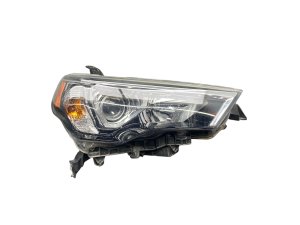
- Aftermarket LED or HID Headlight Bulbs 🔴 High Probability Per Toyota TSB T-TT-0597-20, the ballasts and drivers in many aftermarket bulbs create radio frequency interference (RFI) that introduces electrical noise into the Skid Control ECU's ground circuit. The ECU is particularly sensitive to this noise.
How to confirm: Inspect the high and low beam headlight bulbs. If they are not standard halogen bulbs, the easiest test is to turn the headlights completely OFF, clear the codes, and drive the vehicle. If the codes do not return with the headlights off but reappear when they are turned on, the aftermarket bulbs are confirmed as the cause.
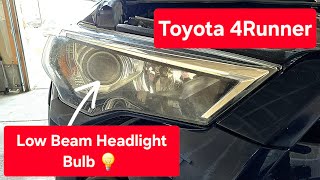
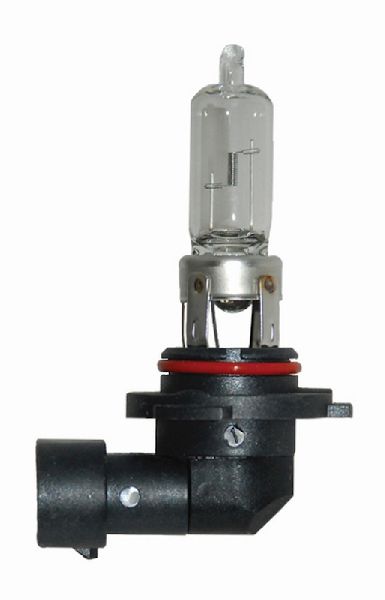
Typical fix: Replace the aftermarket LED/HID bulbs with standard OEM-style halogen headlight bulbs (H11 low beam, 9005 high beam). Ensure dust covers are properly installed. 🎬 Watch: How to change your low beam headlight bulbs.
Est. part cost: $30-$60 - Damaged Wiring or Connectors 🟡 Medium Probability The wiring harness for the ABS system, particularly the main connector to the ABS actuator or the ground wires for the Skid Control ECU, can be damaged by road debris, corrosion, or improper repairs.
How to confirm: Visually inspect the wiring harness leading to the ABS actuator/Skid Control ECU for any signs of fraying, corrosion, or loose connections. The TSB specifically recommends inspecting the ABS connector first. A continuity test on ground wires may be necessary if visual inspection is inconclusive.
Typical fix: Repair the damaged section of the wiring harness or replace the affected connector. Ensure all ground connections are clean and secure.
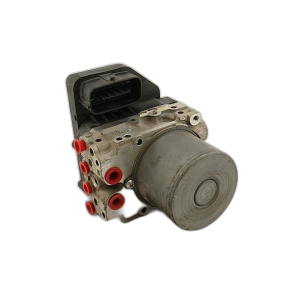
Est. part cost: $20-$200 - Faulty ABS Actuator Assembly ⚪ Low Probability While far less common than the RFI issue for this set of codes, the ABS actuator itself can fail internally due to wear or an internal fluid leak, causing a genuine solenoid circuit fault.
How to confirm: This should only be considered after definitively ruling out RFI and wiring issues. A technician would use a specialized scan tool (like Toyota Techstream) to command the actuator solenoids and check for proper resistance and voltage at the actuator connector, comparing values to specifications.
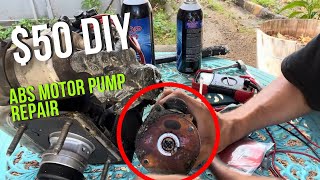
Typical fix: Replace the entire ABS actuator assembly. This procedure is complex, expensive, and requires bleeding the entire brake system 🎬 Watch: Step-by-step guide to replacing the ABS pump module. using a specific scan tool-guided procedure.
Est. part cost: $800-$2500
Rare But Worth Checking
- Faulty Skid Control ECU: If the actuator and wiring are confirmed to be good, the ECU itself could have an internal fault. This is extremely rare and should be the last item to be considered. Replacement is very expensive.
- Failing Wheel Bearing: On some models, a failing wheel bearing can shed metallic debris that interferes with the wheel speed sensor's magnetic pickup, causing erratic ABS behavior. While this typically sets a speed sensor code, it can sometimes lead to other system faults.
Diagnosis Steps
- Read all codes from the ABS/Skid Control module. Confirm if C0226, C0236, and C0256 are present along with C0246.
- Inspect the high and low beam headlight bulbs. Determine if they are standard halogen or aftermarket LED/HID bulbs.
- If aftermarket bulbs are installed, replace them with standard halogen bulbs. Clear the DTCs and test drive the vehicle with the headlights on to see if the codes return. This is the most likely fix.
- If codes return or no aftermarket bulbs were found, perform a visual inspection of the wiring harness and connectors going to the ABS actuator and Skid Control ECU. Look for damage, corrosion, or loose pins.
- If wiring appears intact, the official TSB procedure involves using an oscilloscope (Picoscope) to monitor the ground circuit voltage at the Skid Control ECU with the engine running. Compare the voltage signature with the headlights ON versus OFF. A significant fluctuation when the headlights are on points to RFI that even halogen bulbs might be causing if there's a separate wiring issue.
- Per TSB T-TT-0597-20, the specific pins to check for the ground wires at the Skid Control ECU are: For Hydraulic Booster systems, Connector A, Pin 1 (GND1) and Pin 32 (GND2). For Vacuum Booster systems, Pin 1 (GND1) and Pin 13 (GND2).
- If all the above steps do not identify the issue, the problem may lie with the ABS actuator assembly itself, requiring professional diagnosis and testing of the internal solenoid circuits.
Parts You'll Likely Need
- Halogen Headlight Bulbs (H11 Low Beam, 9005 High Beam)
(OEM #H11 (Low), 9005 (High))— This is the most likely fix, needed to remove the source of radio frequency interference causing the fault codes per TSB T-TT-0597-20.
Trusted brands: Philips, Sylvania, Osram
OEM price range: $30-$60
Aftermarket price range: $20-$40 - ABS Actuator and Pump Assembly
(OEM #44050-35270 (Note: Part number can vary by specific model year and configuration, e.g., 2WD/4WD, with/without Crawl Control. Always verify with VIN.))— This part is replaced only if the actuator is confirmed to have an internal failure after ruling out all other causes.
Trusted brands: Toyota (OEM), Aisin
OEM price range: $2000-$2500
Aftermarket price range: $800-$1500 (Remanufactured)
Related Codes That Often Appear With This One
- C0226 — This code for the Right Front ABS Actuator Solenoid Circuit is part of the group of codes triggered by the RFI issue described in TSB T-TT-0597-20.
- C0236 — This code for the Left Front ABS Actuator Solenoid Circuit is part of the group of codes triggered by the RFI issue described in TSB T-TT-0597-20.
- C0256 — This code for the Left Rear ABS Actuator Solenoid Circuit is part of the group of codes triggered by the RFI issue described in TSB T-TT-0597-20.
Technical Service Bulletins (TSBs) & Recalls
- T-TT-0597-20: States that some 2014-2020 4Runners may show an ABS light with codes C0226, C0236, C0246, and C0256, and recommends checking for aftermarket headlight bulbs as a primary diagnostic step. It provides specific ECU ground pins to test with an oscilloscope.
Platform-Specific Known Issues
- TSB T-TT-0597-20 documents that aftermarket LED/HID headlights can cause electrical noise, leading to codes C0226, C0236, C0246, and C0256 being stored in the ABS system.
- Real Owner Experience (Forum): A user on the Toyota 4Runner Community forum (T4R.org) described the exact scenario: after installing LED headlights, their dash lit up with ABS, TRAC, and other warning lights. The issue was resolved by removing the LED bulbs and reinstalling the factory halogen bulbs, directly corroborating the TSB.
Mechanic-Grade Diagnostic Values
- ABS Actuator Solenoid Resistance (SRRH, SRLH) — expected: 7.0 - 7.4 Ω at 68°F (20°C). Failure: A reading outside this range indicates a faulty solenoid within the actuator assembly.
- ABS Actuator Solenoid Resistance (SRRR, SRLR) — expected: 2.00 - 2.40 Ω at 68°F (20°C). Failure: A reading outside this range indicates a faulty solenoid within the actuator assembly.
- Skid Control ECU Ground Circuit Resistance — expected: Below 1 Ω. Failure: A reading above 1 Ω indicates a poor ground connection, which could be the cause of the fault codes.
- Skid Control ECU Power Supply Voltage — expected: 11 to 14 V. Failure: Voltage below 11V indicates a power supply issue to the ECU.
Scan Tool Commands That Help
- Toyota Techstream: Active Test for ABS/VSC System — After ruling out the RFI issue from headlights, a technician can use the Active Test function to individually command the ABS solenoids to check for response. This helps confirm if a specific solenoid in the actuator is mechanically stuck or electrically unresponsive, though resistance checks are often performed first.
Wiring & Ground Locations
- Skid Control ECU — Located inside the vehicle cabin, behind the dashboard assembly, typically on the passenger (RH) side. Access requires removing the glove box, scuff plate, and lower instrument panel trim.. This is the computer that sets the code. Accessing its connectors is necessary for performing the ground circuit tests outlined in TSB T-TT-0597-20.
- GND1 / GND2 (ECU Ground Wires) — These are specific pins on the Skid Control ECU connector. Per TSB T-TT-0597-20, for Hydraulic Booster systems, check Pin 1 (GND1) and Pin 32 (GND2) on Connector A. For Vacuum Booster systems, check Pin 1 (GND1) and Pin 13 (GND2).. These are the exact ground circuits that are susceptible to RFI from aftermarket headlights. Testing voltage fluctuation at these pins with an oscilloscope is the definitive diagnostic step recommended by Toyota.
Real Owner Repair Stories
- Reddit user on r/4Runner (Toyota 4Runner (year not specified, but within 5th Gen)) — Dashboard lit up with multiple warning lights (ABS, traction control, etc.).
❌ Tried (didn't work) Visual inspection of wires and connectors for damage or pests., Disconnecting the battery to reset the system.
✅ What actually fixed it The dealership diagnosed a failed Skid Control ECU. The problem was not the common headlight RFI issue. The required fix was the replacement of the entire Skid Control ECU, with a quoted part cost of over $5,100 CAD.
When the Usual Fixes Don't Work
- While the vast majority of cases involving the C0226/C0236/C0246/C0256 code cluster on 2014-2020 4Runners are caused by RFI from aftermarket headlights, it is not the only possibility. In one documented case, a vehicle owner had the same symptoms, but the cause was a confirmed internal failure of the Skid Control ECU itself. The dealership quoted over $5,000 for the part, highlighting that if the simple headlight swap doesn't work, the true cause can be exceptionally expensive to repair.
Model Year Variations Within This Range
- 2014-2020: The 2014-2020 4Runner was available with two different types of brake boosters: a traditional vacuum booster and a hydraulic brake booster. This difference is critical for diagnosis, as Toyota TSB T-TT-0597-20 specifies different ground pins to test on the Skid Control ECU depending on the booster type. For Hydraulic systems, test pins 1 and 32; for Vacuum systems, test pins 1 and 13. A technician must correctly identify the booster type before performing the oscilloscope test.
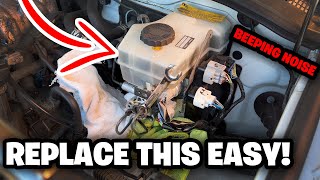
Helpful Videos
Used OEM Parts in Stock



New Aftermarket Parts Available



The information in this article is provided for general reference and educational purposes only. Vehicle specifications, procedures, and part compatibility can vary by production date, trim level, and region. Always consult your vehicle's factory service manual and verify part numbers before purchasing or performing repairs. Safety-critical components such as airbags, seat belts, and braking systems should be installed by a qualified professional.
- Toyota 4RUNNER:
- 🎬 Helpful Videos
- 🛍️ Shop This Part
- What's Unique About the 2014-2020 Toyota 4RUNNER
- Diagnostic Flowchart
- Symptoms You May Notice
- Most Likely Causes
- Rare But Worth Checking
- Diagnosis Steps
- Parts You'll Likely Need
- Related Codes That Often Appear With This One
- Technical Service Bulletins (TSBs) & Recalls
- Platform-Specific Known Issues
- Mechanic-Grade Diagnostic Values
- Scan Tool Commands That Help
- Wiring & Ground Locations
- Real Owner Repair Stories
- When the Usual Fixes Don't Work
- Model Year Variations Within This Range
- 🎟️ Get 5% Off