

OBD-II Code C0240: Powertrain Control Module (PCM) Traction Control Disabled
What C0240 means, why it triggers, and how to fix it
- Code C0240 is a secondary alert indicating the Electronic Brake Control Module (EBCM) disabled traction control due to a primary engine or ABS fault.
- Always scan for primary 'P', 'C', or 'U' codes first, as C0240 never occurs in isolation and the primary code dictates the actual repair.
- On GM vehicles (2006-2011), C0240 paired with 'Reduced Engine Power' and code P2135 almost always requires a $250-$600 electronic throttle body replacement.
- Never replace the $500+ EBCM or ABS module based solely on a C0240 code, as this code simply confirms the module is doing its job by shutting down an unsafe system.
What Does C0240 Mean?

The C0240 code is a generic chassis code signifying the Electronic Brake Control Module (EBCM) disabled the traction control system. It acts as a secondary flag indicating the EBCM received a message from the Powertrain Control Module (PCM) that it can no longer manage engine torque effectively. The PCM disables this due to a primary fault in a critical engine or sensor system, meaning you must pull other stored trouble codes to find the root cause.
Technical definition: The SAE/ISO definition for C0240 varies by manufacturer. For General Motors, it is 'PCM Traction Control Not Allowed,' meaning the PCM instructed the EBCM to stand down due to an engine fault. For Ford or Dodge, it often means 'Wheel Speed Sensor Range/Performance,' pointing to an ABS wheel speed sensor circuit fault. Regardless of the manufacturer, it confirms the traction and stability systems are offline.
Can I Drive With C0240?
Yes, But With Caution. Yes, but with significant limitations and risks. If your engine is in 'Reduced Power' mode, acceleration is dangerously slow, making highway driving unsafe. If an ABS fault triggered the code, your anti-lock braking system is offline, significantly increasing emergency stopping distances. Diagnose and repair the issue immediately to restore critical safety systems.
Common Causes


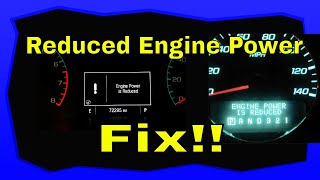
- Faulty Electronic Throttle Body Assembly (Very Common) — This is the most frequent cause on General Motors (GM) vehicles. 🎬 Watch: How to fix Reduced Engine Power and Service Traction Control on GM vehicles. Internal position sensors within the throttle body wear out or the throttle plate sticks from carbon buildup, sending erratic signals to the PCM and triggering 'Reduced Engine Power' mode.
- Failed Accelerator Pedal Position (APP) Sensor (Common) — Attached to the gas pedal, this sensor tells the PCM how much power you request. If it fails, the computer receives conflicting data about driver intent versus engine output, forcing it to disable traction control and enter limp mode.
- Damaged Wiring Harness or Connectors (Common) — Wires leading to the throttle body, wheel speed sensors, or accelerator pedal fray, melt from engine heat, or corrode from moisture. This interrupts the signal and forces the computer to disable the traction system.
- Defective Wheel Speed Sensor or Circuit (Common) — The traction control system relies on sensors at each wheel to monitor speed. If a sensor fails, its wiring breaks, or the magnetic reluctor ring on the hub cracks, the system logs a fault and triggers the C0240 code.
- Low System Voltage (Common) — A failing battery, faulty alternator, or corroded battery terminals cause unstable voltage. Sensitive modules like the PCM and EBCM require steady voltage to communicate; fluctuations lead to a cascade of communication errors, including C0240.
- Engine Overheating Condition (Less Common) — If the PCM detects the engine overheating, it enters a self-protection mode. This disables non-essential systems that add engine load or require precise torque management, such as traction control.
- Faulty or Misaligned Steering Angle Sensor (Less Common) — The stability control system uses this sensor to determine intended direction. If it fails, or if a wheel alignment is performed without recalibrating the sensor, the EBCM detects a steering conflict and disables the system.
- Failing Electronic Brake Control Module (EBCM) (Rare) — The EBCM is the brain of the ABS and traction control. The module itself occasionally fails internally due to cold solder joints or electronic degradation, causing communication errors with the PCM.
- Faulty Body Control Module (BCM) (Rare) — In vehicles prone to water leaks from clogged sunroof drains (like the Hummer H3), the BCM sustains water damage. This disrupts the stability system network and triggers a C0240 code.
Symptoms
- Traction Control, Stabilitrak, or ABS Warning Light is On — A dashboard light for 'TCS,' 'ESC,' 'Stabilitrak,' or a car with squiggly lines illuminates, often accompanied by a 'Service Stability System' message.
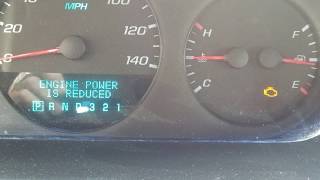
- 'Reduced Engine Power' or 'Limp Mode' — The dashboard displays 'Reduced Engine Power,' and the vehicle refuses to accelerate past 35-40 mph. Acceleration feels hesitant, weak, or completely unresponsive.
- Check Engine Light is On — Because C0240 is a secondary code caused by an engine-related issue (like the throttle body or APP sensor), the Check Engine Light illuminates alongside stored 'P' (Powertrain) codes.
- Erratic Idle or Stalling — When the throttle body is the root cause, the engine idles very high, drops low, fluctuates wildly, or stalls completely when coming to a stop.
- ABS Light Flashing or Activating at Low Speeds — If a faulty wheel speed sensor is to blame, the ABS system incorrectly activates at low speeds (e.g., parking), resulting in a grinding or pulsating brake pedal. 🎬 See this guide on fixing ABS, Traction Control, and Stabilitrak lights.
Diagnostic Flowchart
Tap your situation to follow the diagnostic path that matches what you're seeing on this code.
Common Fixes & Costs
- Replacing the Electronic Throttle Body Assembly
— Parts: $150-$400, Labor: $100-$200, ~1.5 hr book time
(Intermediate)
Chevrolet Impala (2006-2011): OEM GM 12609500 (Alt: Bosch F00H600076, Dorman 977-008) - Replacing the Accelerator Pedal Position Sensor
— Parts: $70-$250, Labor: $50-$150, ~0.8 hr book time
(DIY)
Chevrolet Impala (2009-2013): OEM GM 22742315 (Alt: Dorman 699-107) - Replacing a Faulty Wheel Speed Sensor
— Parts: $50-$200, Labor: $100-$300, ~1.0 hr book time
(DIY)
GMC/Chevrolet Trucks & SUVs (2003-2008, Hub Assembly): OEM GM 15112381 (Alt: Timken 513188, MOOG 513188) - Replacing a Faulty Battery — Parts: $150-$350, Labor: $50-$100, ~0.5 hr book time (DIY)
- Repairing Damaged Wiring or Connectors — Parts: $10-$50, Labor: $150-$500+, ~2.5 hr book time (Professional)
- Steering Angle Sensor Calibration — Parts: $0, Labor: $100-$200, ~1.0 hr book time (Professional)
- Replacing EBCM/ABS Module — Parts: $200-$800, Labor: $150-$300, ~1.5 hr book time (Professional)
Used vs. New Parts: Buying Guide
When a used part is worth it: A used OEM throttle body from a low-mileage donor vehicle is a cost-effective alternative to a new aftermarket part, providing better compatibility than unbranded cheap parts.
Donor-vehicle mileage cap: roughly under 75000 miles for the part to have meaningful remaining life.
Donor quality checklist:
- Verify the part number matches your original exactly.
- Source from a reputable salvage yard providing the donor vehicle's VIN and mileage.
- Visually inspect the connector for corrosion and the throttle bore for excessive scoring.
Decision logic:
- If The vehicle is newer and the budget allows → Buy a new OEM part for the highest reliability and guaranteed compatibility.
- If Budget is a primary concern and the OEM part is excessively expensive → A new part from a reputable aftermarket brand (e.g., Dorman, Hitachi, Bosch) balances cost and quality.
- If The vehicle is older (>150k miles) and you need the cheapest functional option → A used OEM part is better than a no-name aftermarket part, but carries the risk of a shorter lifespan.
Warranty tradeoff: Used parts typically have a 30-90 day warranty. New aftermarket parts offer a 1-year to limited lifetime warranty. New OEM parts carry a 1-2 year warranty.
Worst-case if a used part fails: $200-$400 (for repeat labor and a second replacement part if the used part fails prematurely)
What Happens If You Wait — Timeline
- 0-1 month: Initial fault occurs. 'Service Stability System' or ABS/TCS light illuminates. C0240 is stored. If throttle-related, 'Reduced Engine Power' appears intermittently. Driving is possible but safety systems are disabled. (MPG impact: 0-5%% · Added cost: $0)
- 1-4 months: If caused by a bad throttle body, rough idle becomes constant and stalling occurs. Fuel economy drops. If caused by a wheel speed sensor, incorrect ABS activation at low speeds becomes frequent. (MPG impact: 5-15%% · Added cost: $50-$250 (in wasted fuel))
- 4-8 months: Continued driving with a throttle body fault forces a consistently rich or lean air-fuel mixture, straining the engine and overheating the catalytic converter. 'Reduced Engine Power' mode becomes permanent. (MPG impact: 15-25%% · Added cost: $200-$500 (wasted fuel + O2 sensor strain))
- 8+ months: Ignoring a severe throttle body issue leads to catalytic converter meltdown from raw fuel exposure. Ignoring a bad wheel speed sensor normalizes driving without ABS, drastically increasing accident risk. (MPG impact: 25%+% · Added cost: $1000-$3000 (catalytic converter replacement))
Cost of Not Fixing It
- Immediate: Loss of traction control and ABS increases accident risk. The vehicle remains stuck in 'Reduced Engine Power' mode, making it dangerously slow for traffic. (Added cost: 0)
- 1-3 months: Continued driving with a bad throttle body causes a 5-15% drop in fuel economy, rough idling, and stalling. A bad wheel speed sensor causes incorrect ABS activation and increased braking distances. (Added cost: $50-$200 (in wasted fuel))
- 3+ months: Ignoring a throttle body issue forces an incorrect air-fuel ratio, straining the engine and destroying the catalytic converter from running too rich. (Added cost: $1000-$2500 (for catalytic converter replacement))
Diagnosis Steps

- Scan for All Trouble Codes (The Golden Rule)
Use an OBD-II scanner capable of reading Engine (P-codes), Chassis (C-codes), Body (B-codes), and Network (U-codes). C0240 is a symptom of another code. Do not proceed without identifying the primary code.
Tools: OBD-II Scanner (capable of reading ABS/Chassis codes) (Beginner) - Test Battery and Charging System
Check battery voltage with the car off (should be >12.4V). Start the engine and check voltage again (should be 13.5-14.8V). Low or fluctuating readings suggest a weak battery or failing alternator, a primary cause of module communication errors.
Tools: Multimeter, Battery Load Tester (Beginner) - Check for Technical Service Bulletins (TSBs)
Search online for manufacturer TSBs related to code C0240 or your primary codes. Manufacturers release updated repair procedures for known problems (like water intrusion on GM models), saving significant diagnostic time.
Tools: Smartphone or Computer with Internet access (Beginner) - Perform a Full Visual Inspection
Inspect wiring harnesses going to the electronic throttle body, all four wheel speed sensors, and the accelerator pedal. Look for frayed wires, melted conduit, or green corrosion on connector pins.
Tools: Flashlight (Beginner) - Analyze Live Sensor Data
Use an advanced scanner to view live data for wheel speed sensors and the accelerator pedal. While driving slowly, all wheel speed sensors must read the same speed. The APP sensor must show a smooth percentage increase as you press the pedal.
Tools: Advanced OBD-II Scanner (Intermediate) - Inspect and Clean the Throttle Body
If primary codes are throttle-related (e.g., P2135), remove the air intake hose. Look for a thick, black ring of carbon buildup around the throttle plate. Clean it to ensure the plate is not physically sticking.
Tools: Screwdriver/socket set, Throttle Body Cleaner, Rag (Intermediate) - Test 5-Volt Reference and Ground at the Sensor
Unplug the suspect sensor (APP or TPS) and probe the connector terminals with the key on, engine off. You must find one pin with ~5V, one with near 0V (ground), and signal wires. Missing 5V or ground indicates a wiring or PCM fault.
Tools: Multimeter, Vehicle-specific wiring diagram (Professional) - Test Passive (2-Wire) Wheel Speed Sensor Output
Disconnect the sensor and measure resistance (typically 800-1,200 Ohms). Next, set the multimeter to AC Volts, reconnect the sensor, backprobe the wires, and spin the wheel. You must see at least 0.5V AC that increases with speed.
Tools: Multimeter, Jack and Jack Stands, Vehicle-specific resistance specs (Advanced) - Test Active (3-Wire) Wheel Speed Sensor Output
Backprobe the power and ground wires at the connected sensor to verify a 5V-12V reference voltage. Backprobe the signal wire with an oscilloscope while spinning the wheel to verify a clean digital square wave.
Tools: Multimeter, Oscilloscope (recommended), Backprobe kit, Jack and Jack Stands (Advanced) - Test Sensor Circuits for Continuity
Test for continuity between the sensor connector and the corresponding module (PCM or EBCM) to identify hidden wire breaks. Test for shorts to ground by checking continuity between each wire and a known good chassis ground.
Tools: Multimeter, Vehicle-specific wiring diagram (Professional)
When This Code Triggers (Freeze-Frame Conditions)
- Engine Coolant Temp: 180-210°F (Fully warmed up)
- RPM: 1200-2500 (Light acceleration or steady cruise)
- Engine Load: 25-50% (Maintaining speed on a level road or slight incline)
- Vehicle Speed: 30-60 mph (City or highway driving)
Related Codes
- P2135 — This code for 'Throttle/Pedal Position Sensor Voltage Correlation' is the most common partner to C0240 on GM vehicles, indicating a problem with the throttle body's internal sensors.
- C0040 — Indicates a fault in the 'Right Front Wheel Speed Sensor Circuit'. A C0040 fault forces the system to shut down and log C0240 as a secondary status code.
- C0242 — This code, 'PCM Indicated TCS Malfunction,' is functionally identical to C0240 and signifies the PCM told the EBCM to disable traction control.
- P1516 — A GM-specific code meaning the computer's command to the throttle body doesn't match actual position, triggering reduced power and C0240.
- U0100 — Means 'Lost Communication With ECM/PCM'. If the EBCM cannot communicate with the engine computer, it sets a fault code like C0240.
Climate & Environmental Factors
- Road Salt (Winter Climates): Saltwater penetrates connectors and eats away at copper wiring, causing open circuits or shorts that trigger ABS and traction control faults.
- High Humidity / Heavy Rain: Water leaks past windshield seals and drips onto harness connectors in the kick panel. This corrodes accelerator pedal sensor pins, triggering limp mode and C0240.
- Extreme Cold: Freezing temperatures cause moisture inside the throttle body to freeze, jamming the throttle plate. It also makes old plastic wiring insulation brittle and prone to cracking.
How to Talk to a Mechanic About This Code
Say this: "I have a C0240 code, and the traction control light is on. I know this is a secondary code, so I need a diagnostic to find the primary fault. Please start by doing a full system scan to capture any P, C, or U codes. Based on the primary code, please check live data for wheel speed sensors and throttle position sensors before recommending part replacements."
This signals you understand C0240 is a symptom, not the cause. It directs the mechanic to follow a logical diagnostic process rather than just replacing the most common part, preventing unnecessary repairs.
Avoid saying:
- 'My traction control light is on, can you fix it?' (Too vague, invites part-swapping).
- 'I think I need a new ABS module.' (Don't diagnose it for them; this leads to expensive, unnecessary replacements).
- 'Just do whatever it takes to fix it.' (This is a blank check for unnecessary repairs and upsells).
Questions to ask before authorizing the repair:
- What was the primary fault code that caused the C0240?
- Can you show me the live data confirming the sensor has failed?
- Did you inspect the wiring and connector for damage or corrosion before concluding the part itself is bad?
- If a module is being recommended, how did you rule out a wiring or power/ground issue?
- What is the warranty on the recommended parts and labor?
Where to Take It: Dealer vs Independent vs Chain
- Dealer:
A strong choice if the issue is a complex communication fault or requires a software update, but the most expensive option for common sensor issues.
Best for: Vehicles under warranty., Complex electrical or communication (U-code) issues., Known manufacturer-specific quirks or TSBs requiring proprietary software.
Downsides: Highest labor rates and part costs., Less flexible with using aftermarket parts or performing smaller-scale wiring repairs. (Typical cost: +50% vs. baseline) - Independent Shop:
Best fit for most scenarios. A reputable independent shop handles the vast majority of C0240 causes effectively and more affordably than a dealer.
Best for: Out-of-warranty vehicles., Common causes like wheel speed sensors or throttle bodies., Building a long-term relationship with a trusted technician.
Downsides: Diagnostic capabilities vary; ensure they have advanced scanners that read ABS codes and live data., May lack access to the latest manufacturer-specific tools for brand-new models. (Typical cost: +0% vs. baseline) - Chain Shop:
Acceptable for a free battery test, but avoid for the primary diagnosis of a C0240 code.
Best for: Simple, clear-cut repairs like a battery replacement if low voltage is the confirmed cause.
Downsides: Technician skill and diagnostic equipment are highly variable., Not equipped for in-depth electrical diagnosis required for C0240., Higher potential for upselling unnecessary services. (Typical cost: -10% vs. baseline)
When to Walk Away From the Repair
If the estimated repair cost exceeds 50% of the car's private-party value, seriously consider selling or trading in the vehicle. For older cars over 150,000 miles, lower this threshold to 40%.
- Car worth $5000, fix is $2800: Walk away. The repair cost is over 50% of the car's value. Put that money toward a replacement vehicle.
- Car worth $10000, fix is $1200: Fix it. The repair cost is well below the threshold and restores critical safety systems.
- Car worth $3000, fix is $1500: Borderline. Get a second opinion on the repair cost. If the car has other pending issues, it is time to walk away.
What Scan Tool You Need for This Code

Minimum: A scanner that reads and clears codes from the ABS/TCS/Chassis module and views live data streams for wheel speed sensors.
A basic $20 engine code reader cannot see the C0240 code or view live wheel speed data, leaving you flying blind during diagnosis.
Budget: XTOOL A30M / MUCAR BT200 (~$70) — Bluetooth dongles offering full system diagnostics, reading ABS codes, and viewing live data to pinpoint the primary fault.
Mid-range: XTOOL D7 / Innova 5610 (~$350) — Offers full system diagnostics, live data graphing, and bidirectional controls to execute special functions like 'throttle relearn' required after replacing a throttle body.
Professional: Autel MaxiCOM MK808 / Launch X431 Series (~$500-1200) — Provides wider vehicle coverage, advanced coding functions, and faster processing for professional-grade diagnostics.
Rent vs buy: If this is a one-time diagnosis, auto parts stores offer loaner tools capable of reading ABS codes. If you do your own maintenance, buying a mid-range scanner is a worthwhile investment.
How to Clear the Code After You Fix It
- Fix the underlying problem (e.g., replace the faulty sensor or wiring).
- Use an OBD-II scan tool to clear all codes from the EBCM and PCM.
- Perform the specific relearn procedure if required (e.g., throttle body relearn).
- Complete a full drive cycle to allow all readiness monitors to run.
Drive cycle (~20 minutes): Cold start (sit for 8+ hours). Idle for 2-3 minutes with A/C on. Accelerate to 55 mph and hold steady for 3-5 minutes. Coast down to 20 mph without braking. Accelerate again to 55 mph and hold for 5 minutes. Coast down again.
Readiness monitors affected: Catalyst (CAT) monitor, Oxygen (O2) Sensor monitor, Evaporative System (EVAP) monitor, EGR System monitor
Before emissions retest: drive at least 50 miles to fully set monitors.
Watch out for:
- Disconnecting the battery clears the code but resets all readiness monitors, causing an automatic emissions test failure.
- The code returns immediately if the root cause of the fault is not repaired.
- Forgetting to perform a required relearn procedure for a new throttle body causes the code to reappear.
Will This Fail Emissions / State Inspection?
Yes — this code typically fails an OBD-II emissions inspection.
- California: An illuminated Check Engine Light results in an automatic smog check failure. If C0240 is present due to a primary powertrain fault that turns on the CEL, the vehicle fails.
- New York: The NYS vehicle inspection checks for illuminated ABS and Check Engine lights. An active C0240 with its associated warning lights causes an inspection failure.
- Texas: An illuminated Check Engine Light is an automatic emissions failure. Even if only the ABS/TCS light is on, it fails the safety portion of the inspection which checks the braking system.
Most Commonly Affected Vehicles
- Chevrolet Impala (2006-2011) — Extremely common for C0240 with 'Reduced Engine Power' due to a failing throttle body assembly. GM issued special coverage program 14582 for this.
- Pontiac G6 (2006-2010) — Prone to C0240 along with code P2135, caused by internal throttle body failure. TSB #07-06-04-019 advises checking for water intrusion in the kick panel harness.
- GMC / Chevrolet Yukon, Tahoe, Silverado (2003-2008) — C0240 often appears with a 'Service Stability System' message. Common causes include faulty wheel speed sensors or bad ground connections for the EBCM.
- Hummer H3 (2006-2009) — Frequently experiences C0240 due to faulty OEM battery terminal connectors or water leaks from clogged sunroof drains damaging the BCM.
- Saturn VUE (2004-2008) — Known for electrical issues triggering limp mode and C0240. The root cause is often a failing accelerator pedal position (APP) sensor.
- Volkswagen Golf, Jetta, Tiguan (2009-2014) — ABS and ESC lights are commonly triggered by a failed rear wheel speed sensor or a break in the sensor's wiring harness.
- Ford Escape, Focus (2013-2020) — TSB 20-2323 addresses front ABS wheel speed sensor harnesses rubbing through and causing chassis DTCs on 2020 models.
- Dodge / Chrysler / Ram Various (Ram 1500, Grand Caravan) (2008-2023) — C0240 is often related to an ABS fault. A common failure point is the rear wheel speed sensor wiring harness getting damaged or corroded.
Manufacturer-Specific Notes
- General Motors (Chevrolet, Buick, Pontiac, GMC): C0240 is almost always paired with 'Reduced Engine Power' and a primary powertrain code like P2135. Before replacing the throttle body, inspect for water intrusion at the IP-to-body harness connector per TSB 07-06-04-019F.
- Ford: C0240 is less about the throttle system and points directly to a fault in a specific wheel speed sensor circuit. Diagnosis must focus on checking ABS wiring harnesses for chafing near the wheels.
- Dodge / Chrysler / Ram: This code almost exclusively points to a problem within the ABS system, not the powertrain. The most common cause is a damaged or corroded rear wheel speed sensor harness.
- Volkswagen / Audi: VAG cars rarely log 'C0240'. Instead, they use manufacturer-specific codes for wheel speed sensors (e.g., 00287). The symptoms are identical, but the scanner output differs.
Real Owner Stories
2008 Pontiac G6 with 110K miles - The Classic Throttle Body Failure
While driving, the 'Reduced Engine Power' message appeared, limiting speed to 30 MPH. The TCS and Check Engine lights illuminated. Codes pulled were P2135 and C0240.
Outcome: Replaced the entire electronic throttle body assembly with a new aftermarket part for $180. Performed a manual throttle relearn procedure. This permanently fixed the issue.
Lesson: On GM vehicles, C0240 paired with P2135 and 'Reduced Engine Power' almost guarantees internal throttle body failure. Cleaning is only a temporary fix.
2007 GMC Sierra 1500 at 155K miles - A Misleading Wheel Speed Sensor Fault
'Service Stabilitrak' and ABS lights were on, with code C0240 stored. The brakes occasionally ground at low speeds when parking.
Outcome: Traced the wiring and found the sensor harness rubbed through on the inner fender liner, causing an intermittent short. A $10 wiring repair using a weatherproof butt connector solved it.
Lesson: Never assume the sensor is bad. Perform a thorough visual inspection of the wiring harness for chafing or melting before replacing expensive hub assemblies.
2008 Hummer H3 with 95K miles - The Water Leak Gremlin
After a heavy rainstorm, the vehicle entered 'Reduced Power' mode with 'Stability System Failed' on the dash. Codes C0240 and U1017 were present. The passenger floor mat was damp.
Outcome: Disconnected the battery, removed the BCM, and dried it indoors for two days. Cleared the clogged sunroof drain tube causing the leak. Reinstalled the dry BCM, and all codes cleared permanently.
Lesson: On vehicles known for water leaks, check for moisture near critical electronic modules if gremlins appear after rain. A clogged drain causes C0240 and leads to unnecessary BCM replacements.
2013 Chevy Equinox at 120K miles - The Low Voltage Surprise
Stabilitrak and ABS lights illuminated intermittently, accompanied by flickering headlights and a slow-cranking engine on cold mornings. Only code C0240 was stored.
Outcome: A free auto parts store battery test revealed a bad cell failing under load. Replacing the 5-year-old battery for $180 immediately solved the problem and cleared the C0240 code.
Lesson: Unstable system voltage causes communication errors between modules, triggering C0240. Always test the battery and charging system first; it is a free, common, and overlooked fix.
How to Prevent This Code From Triggering
- Clean the throttle body periodically (Every 30,000-50,000 miles) — Removes carbon buildup that causes the throttle plate to stick, preventing rough idle, stalling, and erratic sensor readings that trigger C0240.
- Inspect and clean battery terminals (Every oil change) — Prevents corrosion that causes voltage drops. Sensitive modules require steady voltage to communicate; poor connections trigger communication faults like C0240.
- Inspect exposed wiring harnesses (Annually or when changing tires) — Detects chafing or corrosion on wheel speed sensor and throttle body wiring before the wire breaks completely, preventing sudden breakdowns.
- Use dielectric grease on critical connectors (When replacing a sensor or exposing a connector) — Creates a moisture-proof barrier on connector pins for wheel speed sensors and main harnesses, preventing corrosion and signal loss.
- Keep sunroof drains clear (Annually, especially if parked under trees) — Prevents water from overflowing into the cabin and damaging the BCM, which causes a cascade of electrical issues including C0240.
Frequently Asked Questions
Can I just clear the C0240 code to fix it?
No. Clearing the code only removes the warning lights temporarily. Because C0240 is caused by an underlying hard fault, the code returns immediately when the computer runs its self-test.
Why does my car go into 'Reduced Engine Power' mode?
This is a critical safety feature called 'limp mode'. When the computer loses reliable control over the throttle, it limits engine power to prevent unintended acceleration.
What are the most common misdiagnosis mistakes for C0240?
The biggest mistake is replacing the EBCM or ABS module. C0240 is a message from the module, not a sign it failed. Always confirm the primary code before replacing parts.
I replaced the throttle body, but the code came back. What now?
Ensure you performed the mandatory 'throttle relearn' procedure. If the relearn was done, the issue is likely in the wiring harness, the connector, or water intrusion at major harness connectors.
Can a bad battery cause a C0240 code?
Yes. A failing battery or bad alternator causes unstable voltage. This confuses sensitive electronics like the PCM and EBCM, triggering communication errors and the C0240 code.
Can a water leak cause a C0240 code?
Yes, especially on GM vehicles. Clogged sunroof drains or leaking windshield seals allow water to damage the Body Control Module (BCM) or harness connectors, leading to stability system faults.
Can a bad alignment cause the Stabilitrak light and C0240?
Yes. If the steering wheel is off-center while driving straight, the steering angle sensor reports a conflict to the EBCM. The system disables itself and sets a fault.
Key Takeaways
- Code C0240 is a secondary alert indicating the Electronic Brake Control Module (EBCM) disabled traction control due to a primary engine or ABS fault.
- Always scan for primary 'P', 'C', or 'U' codes first, as C0240 never occurs in isolation and the primary code dictates the actual repair.
- On GM vehicles (2006-2011), C0240 paired with 'Reduced Engine Power' and code P2135 almost always requires a $250-$600 electronic throttle body replacement.
- Never replace the $500+ EBCM or ABS module based solely on a C0240 code, as this code simply confirms the module is doing its job by shutting down an unsafe system.
Helpful Videos



The information in this article is provided for general reference and educational purposes only. Vehicle specifications, procedures, and part compatibility can vary by production date, trim level, and region. Always consult your vehicle's factory service manual and verify part numbers before purchasing or performing repairs. Safety-critical components such as airbags, seat belts, and braking systems should be installed by a qualified professional.
- 🎬 Helpful Videos
- What Does C0240 Mean?
- Can I Drive With C0240?
- Common Causes
- Symptoms
- Diagnostic Flowchart
- Common Fixes & Costs
- Used vs. New Parts: Buying Guide
- What Happens If You Wait — Timeline
- Cost of Not Fixing It
- Diagnosis Steps
- When This Code Triggers (Freeze-Frame Conditions)
- Related Codes
- Climate & Environmental Factors
- How to Talk to a Mechanic About This Code
- Where to Take It: Dealer vs Independent vs Chain
- When to Walk Away From the Repair
- What Scan Tool You Need for This Code
- How to Clear the Code After You Fix It
- Will This Fail Emissions / State Inspection?
- Most Commonly Affected Vehicles
- Manufacturer-Specific Notes
- Real Owner Stories
- 2008 Pontiac G6 with 110K miles - The Classic Throttle Body Failure
- 2007 GMC Sierra 1500 at 155K miles - A Misleading Wheel Speed Sensor Fault
- 2008 Hummer H3 with 95K miles - The Water Leak Gremlin
- 2013 Chevy Equinox at 120K miles - The Low Voltage Surprise
- How to Prevent This Code From Triggering
- Frequently Asked Questions
- Can I just clear the C0240 code to fix it?
- Why does my car go into 'Reduced Engine Power' mode?
- What are the most common misdiagnosis mistakes for C0240?
- I replaced the throttle body, but the code came back. What now?
- Can a bad battery cause a C0240 code?
- Can a water leak cause a C0240 code?
- Can a bad alignment cause the Stabilitrak light and C0240?
- Key Takeaways
- 🎟️ Get 5% Off