

OBD-II Code C0237: Rear Speed Signal Erratic
What C0237 means, why it triggers, and how to fix it
- Code C0237 indicates an erratic rear wheel speed signal, immediately disabling your ABS and traction control systems.
- Damaged wiring, corroded connectors, and cracked tone rings cause over 70% of C0237 codes, rather than a failed sensor.
- On 1999-2007 GM trucks, this code usually points to a single Vehicle Speed Sensor (VSS) on the transmission, causing harsh shifting and speedometer failures.
- You can drive with a C0237 code, but expect increased braking distances and a total loss of steering control during panic stops on wet surfaces.
- Always monitor live wheel speed data with an ABS-capable scanner and perform a wiring 'wiggle test' before spending $150+ on replacement parts.
What Does C0237 Mean?

Code C0237 means the Electronic Brake Control Module (EBCM) is receiving an inconsistent, jumpy, or illogical signal from a rear wheel speed sensor. This sensor reports the rotational speed of the rear wheels. If the EBCM detects an erratic signal for even a fraction of a second (often as little as 15 to 105 milliseconds), it logs this code, disables the ABS, and illuminates dashboard warning lights to prevent the system from activating unpredictably.
Technical definition: The official SAE/OBD-II definition for code C0237 is "Rear Wheel Speed Signal Erratic." The Electronic Brake Control Module (EBCM) sets this code when it detects that the signal from a rear wheel speed sensor is irregular, fluctuating, or dropping out, but not completely lost. On many GM models, this code sets if the rear speed signal drops out for more than 15 milliseconds while the vehicle is moving above 12 mph (20 km/h).
Can I Drive With C0237?
Yes, But With Caution. Yes, you can drive, but do so with extreme caution. Your Anti-lock Braking System (ABS) and Traction/Stability Control systems are disabled. During hard braking on wet or slippery surfaces, your wheels will lock up, increasing stopping distances and causing a total loss of steering control. If the red 'BRAKE' warning light is also illuminated, stop driving and tow the vehicle, as this indicates a critical failure in the base hydraulic braking system.
Common Causes

- Damaged or Corroded Wiring/Connectors (Very Common) — The wiring harness to the speed sensor is exposed to harsh undercarriage conditions. Wires chafe, pinch, stretch, or corrode at the connector, causing intermittent signal dropouts. Hitting bumps or making sharp turns frequently triggers this fault.
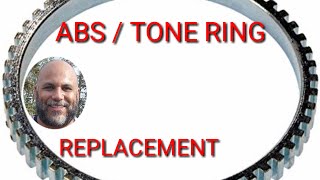
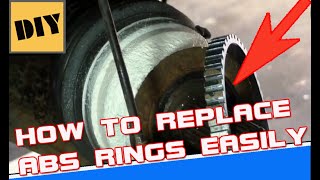
- Damaged, Rusted, or Debris-Covered Tone Ring (Common) — The sensor reads a toothed ring (reluctor ring) spinning with the axle. If this ring cracks, loses teeth, or accumulates heavy rust and metallic debris, the sensor cannot generate a clean reading. This is a notorious failure point on 2006-2010 Ford Explorers. 🎬 See why tone rings frequently fail on these Ford Explorer models.
- Faulty Rear Wheel Speed Sensor (Common) — The sensor fails internally due to age, heat stress, or moisture intrusion. On 1999-2007 GM trucks, a single Vehicle Speed Sensor (VSS) on the transmission or transfer case provides the rear speed signal and is a frequent culprit.
- Failing Wheel Hub Bearing (Common) — A loose or worn-out wheel bearing causes excessive wheel wobble. This movement constantly changes the critical air gap between the sensor and the tone ring, leading to an erratic signal during turns or over uneven pavement.
- Incorrect Sensor Air Gap due to Rust Jacking (Common) — In regions using heavy road salt, rust builds up on the steering knuckle or hub directly underneath the sensor's mounting flange. This corrosion physically lifts the sensor, increasing the air gap beyond the 0.5-1.0mm tolerance and weakening the signal.
- Internal Transfer Case Wear (4WD Models) (Less Common) — On some 4WD trucks, a missing or improperly seated snap ring inside the transfer case allows the output shaft or the VSS tone wheel to shift. This alters the air gap to the sensor, causing an erratic signal accompanied by drivetrain noises.
- Incorrect Tire Size (Less Common) — Using mismatched tire sizes forces the wheels to rotate at different speeds. The ABS module interprets this significant speed variance as an erratic signal or a sensor mismatch, triggering C0237.
- Faulty Electronic Brake Control Module (EBCM) or Ground (Rare) — A poor ground connection or an internal failure within the ABS computer itself (such as a cracked solder joint) prevents it from correctly processing the sensor signal. This often sets a C0265 code alongside C0237.
Symptoms
- ABS Warning Light On — The most immediate symptom. The ABS light illuminates and stays on, disabling the anti-lock braking system.
- Traction/Stability Control Light On — Because traction and stability control rely on accurate wheel speed data, their warning lights illuminate and the systems disable simultaneously.
- False ABS or Traction Control Activation — The EBCM misinterprets the erratic signal as a wheel slipping. This causes the ABS to pulse the brakes or the traction control to cut engine power unexpectedly, usually at low speeds.
- Erratic Automatic Transmission Shifting — In vehicles where the transmission uses the rear speed signal (like GM trucks), a bad signal causes harsh shifts, delayed shifting, or the transmission unexpectedly dropping into neutral. 🎬 Watch: How a faulty VSS causes erratic shifting and speedometer issues.
- Inaccurate or Inoperative Speedometer — If the vehicle uses the rear speed sensor (VSS) for the speedometer, the needle jumps erratically, drops to zero, or stops working entirely.
- Cruise Control Inoperative — Cruise control requires a steady speed signal. An erratic signal instantly disables the system.
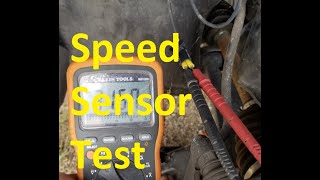
- Erratic Wheel Speed Readings on Scan Tool (scan-tool only — no driver-felt sign) — When viewing live data, the affected sensor's reading jumps, lags, or drops to zero compared to the other wheels. 🎬 Learn how to test wheel speed sensors using a multimeter.
Diagnostic Flowchart
Tap your situation to follow the diagnostic path that matches what you're seeing on this code.
Common Fixes & Costs
- Repairing Damaged Wiring or Connector — Parts: $15-$40, Labor: $120-$250, ~1.5 hr book time (Intermediate)
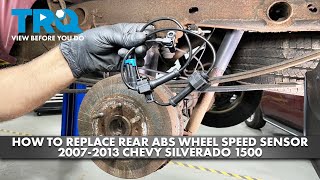
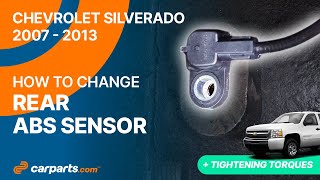
- Replacing the Rear Wheel/Vehicle Speed Sensor — Parts: $40-$100, Labor: $100-$200, ~1.0 hr book time (DIY)
- Replacing a Cracked or Damaged Tone Ring — Parts: $20-$50, Labor: $250-$450, ~2.5 hr book time (Professional)
- Cleaning Sensor Mounting Surface or Debris — Parts: $5-$15, Labor: $75-$150, ~0.8 hr book time (DIY)
- Replacing Wheel Hub Bearing Assembly — Parts: $150-$350, Labor: $200-$400, ~2.0 hr book time (Professional)
Used vs. New Parts: Buying Guide
When a used part is worth it: For a wheel hub assembly, a used OEM part from a low-mileage vehicle is a budget-friendly option. For electronic sensors or wiring pigtails, new is mandatory due to low cost and high failure rates of old electronics.
Donor-vehicle mileage cap: roughly under 50000 miles for the part to have meaningful remaining life.
Donor quality checklist:
- Verify the part is from a vehicle without collision damage to the axle/suspension.
- Avoid parts from rust-belt regions to minimize corrosion and bearing wear.
- Match the part number exactly; integrated ABS sensors vary by trim level.
Decision logic:
- If The part is a sensor or wiring pigtail → Always buy new. The cost savings of a used part are negligible compared to the risk of early failure.
- If The part is a complete wheel hub assembly and your budget is very tight → A used OEM hub from a donor with under 50k miles is viable, but carries no meaningful warranty.
- If The vehicle is a daily driver or you want maximum reliability → Buy a new, high-quality aftermarket or OEM hub assembly. The warranty is worth the extra cost.
Warranty tradeoff: Used parts offer a 30-90 day warranty that excludes labor. New aftermarket parts include 1-year to limited lifetime warranties.
Worst-case if a used part fails: $300-$600 if a used hub assembly fails prematurely, requiring repeat labor and a second part.
What Happens If You Wait — Timeline
- 0-1 month: ABS and Traction Control lights are on constantly. Systems are disabled. No other symptoms are present. (MPG impact: 0%% · Added cost: $0)
- 1-4 months: On VSS-dependent vehicles (GM trucks), intermittent harsh shifting or gear flare-ups begin. Cruise control is inoperative. (MPG impact: 0-2%% · Added cost: $0-$50 in wasted fuel)
- 4-12 months: Erratic shifting becomes severe, causing drivetrain stress and premature wear on transmission clutch packs. The vehicle is a safety hazard in emergency braking. (MPG impact: 2-5%% · Added cost: $200-$800)
- 12+ months: Continued severe shifting leads to major internal transmission damage, requiring a full rebuild. The lack of ABS becomes a long-term liability. (MPG impact: 5-10%% · Added cost: $1800-$5000+)
Cost of Not Fixing It
- Immediate: Loss of ABS, traction control, and stability control, increasing the risk of wheel lock-up and loss of control in panic stops. (Added cost: Negligible)
- 1-6 months: On VSS-dependent vehicles (GM trucks), continued driving causes harsh, erratic shifting, prematurely wearing out transmission clutches and solenoids. (Added cost: $200-$800)
- 6+ months: Catastrophic transmission failure in VSS-dependent vehicles. Increased safety risk from disabled ABS becomes a long-term liability in an accident. (Added cost: $2500-$5000+)
Diagnosis Steps

- Read Codes and Monitor Live Data
Use an ABS-capable OBD-II scanner to read all codes. Switch to the live data stream for all wheel speed sensors. Drive the vehicle slowly or have a helper spin the wheels. Identify which sensor's reading is jumpy, lagging, or dropping to zero. All sensors should read identically.
Tools: ABS-capable OBD-II Scanner (Beginner) - Perform a Wiring Wiggle Test
While monitoring the live speed data on your scanner, aggressively wiggle the wiring harness and connector for the suspect sensor. If the speed reading drops out or fluctuates when you move the wires, you have found a broken wire or loose connection.
Tools: ABS-capable OBD-II Scanner (Beginner) - Perform a Detailed Visual Inspection
Safely raise the vehicle. Inspect the sensor, its connector, and the full length of the wiring harness for frayed wires, pinch points, or heat damage from the exhaust. Disconnect the sensor and check for green corrosion or water inside the plug.
Tools: Flashlight, Jack and Jack Stands (Beginner) - Inspect and Clean the Tone Ring
Locate the tone ring on the axle or inside the hub. Look for cracks, missing teeth, or heavy rust buildup. Spray it with brake cleaner and use a wire brush to remove metallic debris that obstructs the magnetic signal.
Tools: Flashlight, Jack and Jack Stands, Brake Cleaner, Wire Brush (Intermediate) - Check for Wheel Bearing Play
Grasp the tire at the 12 and 6 o'clock positions and rock it back and forth. Repeat at the 9 and 3 o'clock positions. Any clunking or significant movement indicates a worn wheel bearing, which alters the sensor air gap and causes erratic readings.
Tools: Jack and Jack Stands (Intermediate) - Measure Sensor Air Gap
Use a non-magnetic feeler gauge to measure the distance between the sensor tip and the tone ring. The typical specification is 0.5mm to 1.0mm. If the gap is too large, remove the sensor and file away any rust buildup on the mounting surface.
Tools: Non-Magnetic Feeler Gauge, Jack and Jack Stands (Advanced) - Test Sensor with a Multimeter
For a 2-wire passive sensor, measure resistance (typically 800-2000 ohms) and check for a small AC voltage while spinning the wheel. For an active sensor, back-probe the connected sensor with the ignition on to verify a steady supply voltage and a toggling DC signal voltage as the wheel turns.
Tools: Digital Multimeter, Back-Probes, Jack and Jack Stands (Advanced) - Analyze the Signal with an Oscilloscope
Back-probe the sensor's signal wire. A passive sensor produces an AC sine wave; an active sensor produces a DC square wave. Dropouts, noise, or misshapen patterns in the waveform definitively point to a damaged tone ring, bearing play, or a failing sensor.
Tools: Oscilloscope, Wiring Diagram (Professional)
When This Code Triggers (Freeze-Frame Conditions)
- Vehicle Speed: 15-55 mph (The code sets during steady driving or when hitting a bump, with GM models specifically noting triggers above 12 mph.)
- Brake Pedal Status: Not Applied (The fault frequently triggers from wiring or bearing issues during normal driving, independent of brake application.)
- System Voltage: 13.5-14.5V (Normal operating voltage; however, intermittent voltage drops from a bad ground contribute to erratic module behavior.)
- Engine RPM: 1200-2500 RPM (Typical for cruising speeds where the fault is most likely detected by the EBCM's continuous monitoring.)
Related Codes
- C0236 — Means 'Rear Speed Signal Missing.' C0237 (Erratic) points to a mechanical issue or intermittent short. C0236 points to a complete signal loss, typical of a dead sensor or severed wire. They appear together if a connection is failing completely.
- C0238 — Means 'Wheel Speed Mismatch.' Sets when the EBCM compares all wheel speeds and finds one significantly different. C0237 identifies the faulty erratic signal; C0238 is the result of that bad data.
- C0281 — Means 'Stop Lamp Switch Circuit.' If this appears with C0237, it strongly suggests a shared wiring harness problem. The circuits may be routed together and share a common chafe point or loose ground.
- C0265 — Means 'EBCM Relay Circuit.' Points to an internal fault within the ABS module itself. If you have definitively ruled out the sensor, wiring, and tone ring, C0265 confirms the EBCM requires repair or replacement.
Climate & Environmental Factors
- Road Salt / Rust Belt Regions: Road salt accelerates corrosion of the tone ring, causing it to crack or swell. It also causes rust jacking under the sensor mount, physically increasing the air gap and weakening the signal.
- Humidity and Moisture: Water intrusion leads to green corrosion inside the sensor's electrical connector, causing intermittent signal dropouts and flickering ABS lights.
- Cold Weather: Extreme cold makes aging wire insulation brittle. The harness section that flexes with the suspension cracks, creating an intermittent open circuit when hitting bumps.
- Debris: Mud, snow, or metallic brake dust packs into the space between the sensor and the tone ring, obstructing the magnetic signal.
How to Talk to a Mechanic About This Code
Say this: "I have an ABS light on and my scanner shows code C0237, 'Rear Speed Signal Erratic.' I'd like to schedule a diagnostic. Please check the live wheel speed data, perform a wiring wiggle test, and inspect the tone ring and bearing play before recommending a sensor replacement."
This signals you know that simply replacing the sensor rarely fixes the problem. It forces the mechanic to diagnose the true root causes (wiring, tone ring, bearing) instead of firing the parts cannon.
Avoid saying:
- 'My ABS light is on, can you fix it?'
- 'Just replace the rear speed sensor.'
- 'I think it's a sensor, just do whatever is cheapest.'
Questions to ask before authorizing the repair:
- What did the live data from the rear speed sensor look like compared to the others?
- Did you find any damage to the wiring, connector, or tone ring?
- Is there any play in the wheel bearing assembly?
- What is the warranty on the recommended parts and labor?
Where to Take It: Dealer vs Independent vs Chain
- Dealer:
Recommended only if the vehicle is under warranty. Otherwise, it is not cost-effective for this common fault.
Best for: Vehicles still under warranty, Complex module programming if the EBCM requires replacement
Downsides: Highest labor rates, often 1.5x to 2x more than independent shops., Dealers frequently recommend replacing an entire hub assembly when only a sensor or tone ring is needed. (Typical cost: +50% vs. baseline) - Independent Shop:
Best fit. A reputable independent shop is perfectly equipped to diagnose and repair wiring, sensors, bearings, and tone rings at a reasonable cost.
Best for: Out-of-warranty vehicles where cost is a factor., Common, well-documented problems like C0237 on domestic trucks and SUVs.
Downsides: Diagnostic skill varies. Vet the shop by checking for ASE certifications and reviews mentioning electrical or ABS work. (Typical cost: +0% vs. baseline) - Chain Shop:
Acceptable only if you have already diagnosed the problem yourself and just need a simple sensor bolted on. Avoid for initial diagnosis.
Best for: Simple, straightforward repairs like a bolt-on sensor replacement.
Downsides: Technicians often lack the diagnostic experience for intermittent electrical faults., High likelihood of defaulting to a sensor replacement without checking for the true root cause. (Typical cost: -10% vs. baseline)
When to Walk Away From the Repair
If the estimated repair cost exceeds 50% of the car's private-party value, seriously consider selling the car as-is or trading it in.
- Car worth $4000, fix is $2200: Walk away. The repair cost is over half the car's value, and for a safety system fault, more issues are likely lurking.
- Car worth $12000, fix is $700: Fix it. This repair is well below the threshold and restores a critical safety feature, preserving the vehicle's value.
- Car worth $2500, fix is $450: Borderline. If the car needs other work soon, sell it. If the car is otherwise highly reliable, the repair is reasonable.
What Scan Tool You Need for This Code

Minimum: An OBD-II scanner that reads/clears Anti-lock Braking System (ABS) codes AND displays live data for wheel speed sensors.
A basic $20 engine code reader cannot communicate with the ABS module. To diagnose C0237, you MUST see the live speed readings from all four wheels simultaneously to identify the erratic signal.
Budget: BlueDriver Pro (~$100) — Connects to your smartphone via Bluetooth. Reads ABS fault codes and graphs live wheel speed sensor data to pinpoint the faulty wheel.
Mid-range: Foxwell NT630 Plus (~$150) — A dedicated handheld unit that reads/clears ABS codes and shows live data. Includes automated brake bleeding functions useful for advanced brake work.
Professional: Autel MaxiCOM MK808S (~$450) — A professional tablet scanner providing full-system diagnostics, live data graphing, and bi-directional control to actively test components.
Rent vs buy: Auto parts stores scan codes for free, but their scanners rarely display live ABS data. Buying a tool with live ABS data capability is essential for DIY diagnosis. The cost of a budget scanner is less than a single diagnostic fee at a shop.
How to Clear the Code After You Fix It
- Use an ABS-capable OBD-II scan tool to erase the fault codes from the EBCM.
- Turn the ignition off, then back on.
- Perform the ABS self-test drive cycle.
Drive cycle (~5 minutes): After clearing the code, the ABS light remains on until the system completes a power-up self-test. Drive the vehicle above 10 mph (16 km/h). The EBCM verifies the signals from all sensors, and if the repair was successful, the light turns off.
Readiness monitors affected: Not applicable to emissions readiness monitors.
Watch out for:
- Using a basic scanner that only clears powertrain (P-codes) but cannot access chassis (C-codes) in the ABS module.
- Failing to drive the vehicle after clearing the code; the light will not go out while parked.
- The code returning immediately, indicating the root cause (e.g., wiring, tone ring) was ignored in favor of a parts-cannon sensor swap.
Will This Fail Emissions / State Inspection?
No — by itself this code doesn't fail OBD inspection (but it can keep readiness monitors from setting, which causes a separate fail).
- California: An illuminated ABS light does NOT cause a smog check failure. The test only monitors the Check Engine Light and emissions systems.
- New York: An illuminated ABS light is an advisory item and does NOT cause a rejection during the annual safety inspection.
- Texas: An illuminated ABS light passes the state safety inspection. However, an illuminated red 'BRAKE' warning light causes an immediate failure.
Most Commonly Affected Vehicles

- Chevrolet / GMC Silverado / Sierra 1500 & 2500 (1999-2007) — Extremely common. The fault is almost always the single Vehicle Speed Sensor (VSS) on the transmission/transfer case or its wiring harness connector. Hitting bumps triggering the light is a classic symptom.
- Chevrolet / GMC Tahoe, Suburban, Yukon, Avalanche (2000-2006) — Shares the Silverado platform and VSS vulnerabilities. Symptoms include disabled ABS, no cruise control, and harsh transmission shifting.
- Ford Explorer (2006-2010) — A cracked or heavily rusted rear tone ring is the most frequent cause, often more common than a failed sensor. This causes unwanted ABS grinding at low speeds.
- Subaru Outback / Forester (2010-2014) — A failed rear ABS sensor is a common repair. Symptoms frequently include an inoperative speedometer along with the ABS and traction control lights.
- Honda CR-V (2002-2006) — Erratic signals are frequently caused by rust buildup on the steering knuckle where the sensor mounts. Removing the sensor and filing the surface flat restores the correct air gap.
Manufacturer-Specific Notes
- General Motors (Chevrolet/GMC): On 1999-2007 trucks and SUVs, the 'rear speed signal' comes from a single Vehicle Speed Sensor (VSS) on the transmission or transfer case, not from individual wheel sensors. The wiring pigtail to this sensor is the primary failure point.
- Toyota: A similar code (C1237) triggers from mismatched tire sizes, severe battery voltage drops during hard turns, or electrical interference from poorly shielded aftermarket accessories.
- Ford: On 2006-2010 Explorers, always inspect the rear tone rings for cracks before replacing a sensor. The ring is a separate press-on part and fails far more frequently than the electronic sensor.
Real Owner Stories
2004 Chevy Silverado 1500 with intermittent ABS light
ABS and Brake lights illuminated intermittently, specifically triggered by hitting bumps. No other symptoms were present.
What they tried:
- Owner initially suspected a faulty sensor.
- Inspected the wiring harness leading to the Vehicle Speed Sensor (VSS) on the transfer case.
- Found the wiring harness connector was loose and the wires were chafed.
Outcome: Replaced the VSS pigtail connector (ACDelco PT2386). The total cost was under $30 for the part and an hour of DIY labor. The lights permanently turned off.
Lesson: On GM trucks, intermittent ABS lights triggered by bumps almost always point to a wiring or connector issue at the VSS. Inspect the harness before buying a sensor.
2008 Ford Explorer with ABS light and low-speed grinding
ABS light was on, and the ABS falsely activated (grinding/pulsing) when braking at very low speeds while parking.
What they tried:
- A shop diagnosed a bad rear ABS sensor and replaced it, but the problem persisted.
- A second mechanic lifted the vehicle and inspected the rear tone rings.
Outcome: The rear axle tone ring was cracked and rusted. Replacing the tone ring (Dorman 917-530) for $25 in parts and $250 in labor permanently fixed the issue.
Lesson: For 2006-2010 Ford Explorers, a cracked rear tone ring is the primary cause of C0237. Visually inspect the tone ring for cracks before replacing electronic parts.
2005 Chevy Avalanche with erratic shifting and no cruise control
The vehicle randomly revved without accelerating, followed by a harsh shift. Cruise control failed, and ABS/brake lights were on.
What they tried:
- A shop diagnosed an internal transfer case failure and quoted over $2,000.
- The owner researched C0237 and inspected the VSS on the transfer case.
- Found the sensor was fine, but the wiring connection was heavily corroded.
Outcome: The owner disconnected, cleaned, and firmly reconnected the VSS wiring harness. This resolved all shifting and cruise control symptoms for $0.
Lesson: On GM trucks, the VSS signal dictates transmission function. A C0237 code accompanied by shifting problems is a VSS circuit fault. Never accept a transmission rebuild quote without checking the VSS wiring.
How to Prevent This Code From Triggering
- Periodically clean ABS tone rings and sensor tips (During every brake job or tire rotation) — Metallic brake dust and road grime accumulate on the magnetic sensor tip and tone ring teeth, obstructing the signal. Cleaning prevents false erratic readings.
- Apply a corrosion inhibitor to the hub mounting surface (When replacing a sensor or hub) — Applying a thin layer of Fluid Film or weld-through primer to the bare metal surface prevents rust jacking, maintaining the correct air gap.
- Protect exposed ABS sensor wiring (Once, especially for off-road vehicles) — Adding protective split-loom tubing or spiral wrap prevents chafing and wire breaks from rocks and road debris.
- Use dielectric grease on connectors (Anytime a sensor connector is disconnected) — Dielectric grease blocks moisture and prevents green corrosion on electrical pins, ensuring a reliable connection.
Frequently Asked Questions
Can I fix code C0237 myself?
Yes, visual inspections, cleaning connectors, and replacing bolt-on sensors are DIY-friendly tasks. However, replacing a wheel bearing or press-on tone ring requires specialized tools like a shop press. Take the vehicle to a professional if the repair involves axle removal.
Will clearing the code fix the problem?
No. Clearing the code only turns the warning lights off temporarily. The EBCM detects the erratic signal again within minutes of driving, and the lights return.
Why did my ABS light come on after hitting a bump?
Hitting a bump momentarily jars the vehicle's components. This causes a loose wire to briefly lose connection or a worn wheel bearing to wobble excessively. This momentary fluctuation triggers the C0237 code.
What is a tone ring and where is it?
A tone ring is a metal gear-like ring. The speed sensor's magnetic tip reads its teeth as they pass by to measure wheel rotation. It is typically pressed onto the axle shaft or integrated into the wheel hub bearing assembly.
I replaced the sensor but the code came back. What did I miss?
The sensor is rarely the root cause. If a new sensor fails to fix it, the issue is almost certainly damaged wiring, a cracked tone ring, excessive wheel bearing play, or rust buildup under the sensor mount.
Can a bad wheel alignment cause a C0237 code?
A bad alignment does not directly cause C0237. However, severe misalignment is often a symptom of a worn wheel bearing, which does cause the code. Additionally, sensors or wiring are sometimes damaged during suspension work.
What happens if I don't fix a C0237 code?
You drive without ABS, traction control, and stability control, increasing your risk of losing control in an emergency. In GM trucks, it causes erratic shifting that eventually destroys the transmission. You will also fail state safety inspections.
How much does it cost to fix code C0237?
A simple wiring pigtail repair costs $150-$250 at a shop. Replacing a wheel speed sensor professionally ranges from $150-$300. If the sensor is integrated into a wheel hub assembly, expect costs between $350 and $700.
Key Takeaways
- Code C0237 indicates an erratic rear wheel speed signal, immediately disabling your ABS and traction control systems.
- Damaged wiring, corroded connectors, and cracked tone rings cause over 70% of C0237 codes, rather than a failed sensor.
- On 1999-2007 GM trucks, this code usually points to a single Vehicle Speed Sensor (VSS) on the transmission, causing harsh shifting and speedometer failures.
- You can drive with a C0237 code, but expect increased braking distances and a total loss of steering control during panic stops on wet surfaces.
- Always monitor live wheel speed data with an ABS-capable scanner and perform a wiring 'wiggle test' before spending $150+ on replacement parts.
Helpful Videos


The information in this article is provided for general reference and educational purposes only. Vehicle specifications, procedures, and part compatibility can vary by production date, trim level, and region. Always consult your vehicle's factory service manual and verify part numbers before purchasing or performing repairs. Safety-critical components such as airbags, seat belts, and braking systems should be installed by a qualified professional.
- 🎬 Helpful Videos
- What Does C0237 Mean?
- Can I Drive With C0237?
- Common Causes
- Symptoms
- Diagnostic Flowchart
- Common Fixes & Costs
- Used vs. New Parts: Buying Guide
- What Happens If You Wait — Timeline
- Cost of Not Fixing It
- Diagnosis Steps
- When This Code Triggers (Freeze-Frame Conditions)
- Related Codes
- Climate & Environmental Factors
- How to Talk to a Mechanic About This Code
- Where to Take It: Dealer vs Independent vs Chain
- When to Walk Away From the Repair
- What Scan Tool You Need for This Code
- How to Clear the Code After You Fix It
- Will This Fail Emissions / State Inspection?
- Most Commonly Affected Vehicles
- Manufacturer-Specific Notes
- Real Owner Stories
- 2004 Chevy Silverado 1500 with intermittent ABS light
- 2008 Ford Explorer with ABS light and low-speed grinding
- 2005 Chevy Avalanche with erratic shifting and no cruise control
- How to Prevent This Code From Triggering
- Frequently Asked Questions
- Can I fix code C0237 myself?
- Will clearing the code fix the problem?
- Why did my ABS light come on after hitting a bump?
- What is a tone ring and where is it?
- I replaced the sensor but the code came back. What did I miss?
- Can a bad wheel alignment cause a C0237 code?
- What happens if I don't fix a C0237 code?
- How much does it cost to fix code C0237?
- Key Takeaways
- 🎟️ Get 5% Off