

OBD-II Code C0228: Left Rear ABS Wheel Channel in Release Too Long
What C0228 means, why it triggers, and how to fix it for good
- Code C0228 disables your ABS and traction control because the left rear wheel channel is stuck in the release position.
- Inspect the left rear brake caliper and wheel bearing first; mechanical binding causes over 80% of these codes, not electronic failures.
- Use a multimeter to test the passive wheel speed sensor resistance; a healthy sensor reads between 1,200 and 2,700 Ohms.
- Do not replace the $800+ ABS module until you verify the $40 tone ring is free of cracks and rust swelling.
What Does C0228 Mean?
Code C0228 means the Electronic Brake Control Module (EBCM) detected a critical fault at the left rear wheel. During an ABS event, the module attempted to release brake pressure but held the release valve open for too long. This indicates the system is not responding as commanded, usually because the wheel is mechanically stuck or a sensor is providing false data. The EBCM disables the ABS and traction control systems to prevent unpredictable braking.
Technical definition: Left Rear Antilock Brake System (ABS) Channel in Release Too Long. The Electronic Brake Control Module (EBCM) logs this fault when it energizes the left rear dump/release solenoid valve for a duration exceeding a pre-programmed time (typically over 9 seconds) while attempting to correct a perceived wheel lock-up.
Can I Drive With C0228?
Yes, But With Caution. Yes, but with significant caution. Standard hydraulic brakes function normally, but the ABS and traction control are disabled. This increases the risk of wheel lock-up and skidding during hard braking or on slippery surfaces. Ignoring the underlying cause, such as a seized caliper, leads to expensive brake and rotor damage.
Common Causes
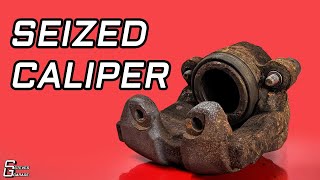
- Mechanical Brake Failure (Very Common) — A seized brake caliper, stuck caliper piston, collapsed rubber brake hose, or binding caliper slide pins physically prevent the left rear brake from releasing. 🎬 Watch: How to diagnose a seized brake caliper The ABS module correctly sees the wheel is not spinning, tries to release pressure, holds the valve open, and triggers the code when the wheel remains locked.
- Faulty Wheel Bearing / Hub Assembly (Very Common) — A worn wheel bearing introduces excessive wobble in the wheel hub. This movement alters the precise air gap between the wheel speed sensor and its tone ring, leading to an erratic or lost signal that the EBCM misinterprets as a locked wheel.
- Cracked or Damaged Tone Ring (Common) — The tone ring is a toothed metal ring read by the wheel speed sensor. If this ring cracks, loses teeth, or swells with rust, the sensor generates an erratic signal. This bad data fools the ABS module into setting a C0228.
- Faulty Wheel Speed Sensor (Common) — The left rear wheel speed sensor fails internally, sending incorrect data (or no data) to the computer. This makes the EBCM think the wheel is locked up, prompting a prolonged release command.
- Damaged Wiring or Corroded Connector (Less Common) — The wiring harness leading to the left rear wheel speed sensor is exposed to the elements. Frayed wires or green corrosion at the connector create a poor connection, sending an invalid signal to the EBCM.
- Failing ABS Control Module (EBCM) (Less Common) — The electronic brain of the ABS system fails internally. Failed solder joints on the circuit board cause it to misinterpret sensor signals or fail to control the hydraulic valves correctly.
- Faulty ABS Modulator (Sticking Solenoid) (Less Common) — Inside the ABS hydraulic unit are small electronic valves. The release valve for the left rear channel becomes contaminated with debris or fails electronically, causing it to stick open.
- Contaminated Rear Differential Fluid (Trucks/SUVs) (Uncommon) — On trucks with a single speed sensor mounted on the rear differential, failing bearings shed fine metal particles. These magnetic particles stick to the tip of the sensor, disrupting its reading.
Symptoms
- ABS Warning Light is On — The amber ABS light illuminates and stays on your dashboard immediately after the fault is detected.
- Traction Control/Stability Control Light is On — Because the ABS system is integral to traction and stability control, these systems are disabled, and their warning lights turn on.
- Brake Warning Light is On — The main red 'BRAKE' warning light illuminates to indicate a significant fault in the overall braking system.
- Wheels Lock Up and Skid During Hard Braking — With the ABS disabled, the wheels lock and cause the vehicle to skid during a panic stop or on a slippery surface.
- Brake Pedal Pulsates at Low Speeds — An erratic signal from a failing sensor or damaged tone ring tricks the ABS into activating unnecessarily under 5 mph, causing a pulsating sensation in the brake pedal.
Diagnostic Flowchart
Tap your situation to follow the diagnostic path that matches what you're seeing on this code.
Common Fixes & Costs
- Repair/Replace Left Rear Brake Caliper, Hose, or Slides
— Parts: $50-$250, Labor: $150-$300, ~1.5 hr book time
(Intermediate)
Ford F-150 (2011-2014): OEM - Replace Left Rear Wheel Bearing/Hub Assembly
— Parts: $100-$350, Labor: $150-$400, ~2.0 hr book time
(Intermediate)
Chevrolet Silverado 1500 (2007-2013): OEM
Dodge Ram 1500 (2006-2018): OEM - Replace Left Rear Tone Ring
— Parts: $15-$60, Labor: $150-$350, ~2.5 hr book time
(Professional)
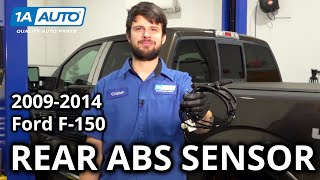
Ford F-150 (2004-2014): OEM - Replace Left Rear Wheel Speed Sensor
— Parts: $30-$150, Labor: $100-$200, ~0.8 hr book time
(DIY)
Chevrolet Silverado 1500 (2007-2013): OEM
Ford F-150 (2009-2014): OEM - Repair/Remanufacture ABS Control Module
— Parts: $100-$350, Labor: $150-$250, ~1.5 hr book time
(Intermediate)
General Motors (Various): OEM - Replace ABS Modulator Assembly — Parts: $800-$1500, Labor: $200-$400, ~2.5 hr book time (Professional)
DIY vs Professional
- Replace Left Rear Wheel Speed Sensor — Beginner:
- Repair/Replace Left Rear Brake Caliper — Beginner:
- Replace Left Rear Wheel Bearing/Hub Assembly — Beginner:
- Replace Left Rear Tone Ring — Beginner:
- Repair/Remanufacture ABS Control Module — Beginner:
Used vs. New Parts: Buying Guide
When a used part is worth it: A remanufactured ABS control module is a cost-effective option for older vehicles where a new OEM part is prohibitively expensive.
Donor-vehicle mileage cap: roughly under 120000 miles for the part to have meaningful remaining life.
Donor quality checklist:
- Verify the ABS module part number matches exactly.
- Ensure the seller offers a warranty and return policy.
- Used ABS modules are VIN-locked and require professional reprogramming.
Decision logic:
- If The fix is a wheel speed sensor, caliper, or wheel hub assembly → Buy new. These are wear items and the safety risk outweighs the savings.
- If The fix is a failed ABS control module and a new OEM part costs over $800 → A remanufactured module with a warranty is the best value.
- If Your vehicle is over 10 years old and the ABS module is a known failure item → A mail-in repair service for your original module requires no reprogramming.
Warranty tradeoff: Used parts have a 30-90 day warranty. Remanufactured ABS modules typically come with a 1-year to lifetime warranty. New aftermarket parts have a 1-3 year warranty.
Worst-case if a used part fails: $300-600 if a used ABS module is dead on arrival or cannot be programmed.
What Happens If You Wait — Timeline
- 0-2 weeks: A seized caliper causes slight drag and a hot smell. A bad bearing produces a faint hum at highway speeds. (MPG impact: 3-5%% · Added cost: $0-$50 in wasted fuel)
- 2 weeks - 2 months: Noticeable drag destroys brake pads and warps the rotor. The bearing hum becomes a loud growl at lower speeds. (MPG impact: 5-15%% · Added cost: $250-$600 (new pads and rotor required))
- 2-6 months: Extreme heat damages the wheel bearing. A failing bearing develops significant wobble, causing uneven tire wear. (MPG impact: 15-25%% · Added cost: $400-$1000 (caliper, rotor, pads, and hub assembly needed))
- 6+ months: Catastrophic failure of the wheel bearing occurs. The wheel locks up or separates from the vehicle. (MPG impact: N/A% · Added cost: $1500+ (spindle, knuckle, axle damage, and a tow))
Cost of Not Fixing It
- 0-1 month: A seized caliper drags constantly, destroying brake pads and rotors, causing a burning smell, and reducing fuel economy. (Added cost: $200-$500)
- 1-6 months: Extreme heat from a seized caliper or bad bearing damages the wheel hub assembly. A bad bearing causes uneven tire wear. (Added cost: $400-$1000)
- 6+ months: Catastrophic failure of the wheel bearing occurs, causing the wheel to wobble uncontrollably or detach from the vehicle. (Added cost: $1500+)
Diagnosis Steps
- Read Fault Codes and Live Data
Use an ABS-capable OBD-II scanner to confirm C0228. View the live data stream for all four wheel speed sensors while driving slowly in a straight line. A sensor that reads 0 mph, drops out, or shows a wildly different value isolates the fault to that specific wheel's signal.
Tools: ABS-capable OBD-II Scanner (Beginner) - Inspect Left Rear Mechanical Brakes
Raise the vehicle and remove the left rear wheel. Verify the brake caliper, pads, and rotor are not seized or binding. Ensure the caliper slide pins move freely. A mechanically stuck brake is the primary cause of this code.
Tools: Jack, Jack Stands, Lug Wrench, Basic Hand Tools (Intermediate) - Check for Wheel Bearing Play
Grasp the raised wheel at the 12 and 6 o'clock positions and forcefully rock it back and forth. Any perceptible play, clicking, or wobble confirms a bad wheel bearing, which alters the sensor gap and triggers the code.
Tools: Jack, Jack Stands (Intermediate) - Inspect the Tone Ring
Carefully inspect the toothed tone ring on the axle shaft or hub. Look for hairline fractures near the base of the teeth, missing teeth, and rust swelling underneath the ring that deforms it.
Tools: Flashlight, Inspection Mirror (Intermediate) - Test Passive Wheel Speed Sensor Resistance
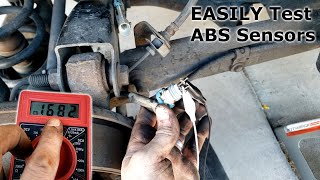
Disconnect the left rear wheel speed sensor. Set a multimeter to Ohms (Ω). Probe the two pins on the sensor side. A typical passive sensor reads between 1,200 and 2,700 Ohms. A reading of 'OL' or near zero confirms a failed sensor.
Tools: Multimeter (Advanced) - Test Passive Wheel Speed Sensor AC Voltage Output
Reconnect the sensor and back-probe the two wires. Set the multimeter to AC Volts (V~). Spin the wheel by hand at one revolution per second. It must generate at least 250mV (0.25V) AC. No voltage points to a bad sensor or tone ring issue.
Tools: Multimeter with back-probe pins (Advanced) - Test Active Wheel Speed Sensor
Active sensors (often 3-wire) require vehicle power. Check for 5V or 12V reference voltage at the harness connector. The signal is a digital square wave switching between 7mA and 14mA, requiring an oscilloscope or high-end scan tool to verify.
Tools: Multimeter, Oscilloscope or High-End Scan Tool (Professional) - Check ABS Module Communication and Power
If external components pass inspection, check the dedicated ABS fuses. Use a multimeter to verify the EBCM receives proper power and ground at its main connector. If power is good but communication fails, the module is dead.
Tools: Multimeter, Vehicle Wiring Diagram (Advanced) - Perform an ABS Solenoid Test
Use a bidirectional scan tool to command the ABS module to cycle its internal solenoids. If commanding the left rear release valve produces no audible click from the modulator, the hydraulic unit has failed internally.
Tools: Bidirectional Scan Tool (Professional)
When This Code Triggers (Freeze-Frame Conditions)
- Vehicle Speed: 5-15 mph (System self-test after startup or during low-speed braking.)
- Brake Pedal: Applied (During a braking event where wheel lock-up was detected or anticipated.)
- Left Rear Wheel Speed: 0 mph (The sensor reports the wheel is locked or not spinning, while other wheels show motion.)
- System Voltage: 12.0-14.8V (Normal operating voltage; a low voltage condition sets other codes.)
Related Codes
- C0229 — Identical fault ('Right Rear ABS Channel in Release Too Long') on the opposite side of the vehicle.
- C0045 — Indicates a fault with the 'Left Rear Wheel Speed Sensor Circuit.' Bad sensor data tricks the module into thinking a wheel is locked.
- C2200 — Means 'ABS Module Internal Failure'. Common on GM and Chrysler vehicles.
- C0281 — Points to a problem with the brake switch circuit, sending conflicting signals to the ABS module.
Climate & Environmental Factors
- Road Salt and Humidity (Rust Belt): Salt accelerates corrosion, causing tone rings to swell and crack, wiring connectors to fail, and brake caliper slide pins to seize.
- Snow and Ice Buildup: Deep snow packs into the wheel hub, physically blocking the wheel speed sensor from reading the tone ring. This sets a temporary code that clears after the ice melts.
- Extreme Cold Temperatures: Cold weather causes wiring insulation to become brittle and crack, exposing wires to moisture and causing intermittent signal loss.
How to Talk to a Mechanic About This Code
Say this: "I have an ABS light on and my scanner shows a C0228 code. I'd like to schedule a diagnostic that starts with a physical inspection of the left rear wheel for a seized caliper or a bad wheel bearing before testing the electronic sensors."
This signals that you understand the most common causes are mechanical. It steers the technician away from immediately replacing the wheel speed sensor.
Avoid saying:
- 'My ABS light is on, can you just fix it?'
- 'I think I need a new ABS sensor.'
- 'Just do whatever you think is best.'
Questions to ask before authorizing the repair:
- Did you check for play in the wheel bearing and confirm the caliper slide pins move freely?
- What did the live data from the left rear wheel speed sensor show during a test drive?
- Can you show me the failed part and explain exactly how it failed?
- If recommending an ABS module, how did you rule out a wiring issue?
Where to Take It: Dealer vs Independent vs Chain
- Dealer:
Best for: Vehicles under warranty, Complex ABS module programming, Vehicles with known manufacturer special coverage programs
Downsides: Highest labor rates., May recommend replacing an entire expensive assembly instead of a smaller component. (Typical cost: +50% vs. baseline) - Independent Shop:
Best fit. A reputable independent shop has the scan tools and experience to diagnose both mechanical and electrical causes of C0228 at a reasonable cost.
Best for: Out-of-warranty vehicles., Diagnosing and repairing common mechanical and electrical ABS faults.
Downsides: Quality varies; check for ASE certification., May lack the latest programming tools for brand new models. (Typical cost: +0% vs. baseline) - Chain Shop:
Use with caution. Acceptable if the diagnosis is confirmed to be a simple mechanical fix like a seized caliper. Avoid for initial diagnosis.
Best for: Simple brake jobs AFTER a proper diagnosis has been made elsewhere.
Downsides: Technician skill varies greatly., High pressure to upsell services; may misdiagnose complex ABS issues. (Typical cost: -10% vs. baseline)
When to Walk Away From the Repair
If the estimated repair cost exceeds 50% of the car's private-party value, consider your options. This is most relevant if the diagnosis points to a failed ABS modulator assembly.
- Car worth $3500, fix is $1800: Walk away. The repair cost is over 50% of the car's value. Consider selling the car as-is.
- Car worth $12000, fix is $700: Fix it. The repair for a wheel hub assembly is well below the threshold and restores a critical safety system.
- Car worth $5000, fix is $450: Fix it. A seized caliper repair is a critical safety fix and represents a small percentage of the vehicle's value.
What Scan Tool You Need for This Code
Minimum: A scanner that reads ABS/Chassis (C-prefix) codes and displays live data for all four wheel speed sensors.
A basic $20 engine code reader CANNOT see chassis codes like C0228. It will show 'no codes found'.
Budget: BlueDriver Pro or Autel AutoLink AL619 (~$120) — Reads ABS codes and displays live data graphs for all four wheel speed sensors to confirm if the left rear signal drops out.
Mid-range: Foxwell NT630 Plus or Innova 5610 (~$350) — Includes bidirectional controls to command the ABS modulator's individual solenoids, determining if the hydraulic unit has failed internally.
Professional: Autel MaxiCOM MK808 / MaxiSys MS906 (~$500-1200) — Full bidirectional control, ABS auto-bleed functions, module programming, and advanced data graphing.
Rent vs buy: For a one-time fix, auto parts stores loan free scanners. Verify their loaner reads ABS codes. Buy a scanner only if you perform regular diagnostics.
How to Clear the Code After You Fix It
- Use an ABS-capable OBD-II scan tool to clear the C0228 code.
- Perform the ABS self-test drive cycle.
- Re-scan to ensure the code does not return.
Drive cycle (~10 minutes): Start the vehicle and accelerate to at least 15-20 mph. The ABS module performs a self-test at this speed (you may hear a normal clunk or buzz). Drive for 5-10 minutes with moderate stops to confirm the repair.
Readiness monitors affected: This is a chassis code and does not directly affect emissions readiness monitors.
Watch out for:
- Using a basic OBD-II scanner that cannot read or clear ABS (Chassis) codes.
- Not performing the drive cycle self-test; the light stays off at idle but returns at 15 mph.
- Clearing the code without fixing the underlying fault results in immediate return.
Will This Fail Emissions / State Inspection?
No — by itself this code doesn't fail OBD inspection (but it can keep readiness monitors from setting, which causes a separate fail).
- California: An ABS light will not fail the smog inspection. However, for salvaged vehicles requiring a Brake and Lamp Inspection, an active ABS light is an automatic failure.
- New York: An illuminated ABS warning light is a safety defect and fails the annual safety inspection.
- Texas: An illuminated ABS light does NOT fail the safety inspection, but an illuminated red 'BRAKE' warning light does.
Most Commonly Affected Vehicles
- Chevrolet / GMC Silverado / Sierra 1500 (2007-2014) — Notorious for ABS control module (EBCM) failure, often causing this code alongside a 'no communication' status on a scan tool.
- Dodge / Ram Ram 1500 / 2500 (2006-2018) — Suffer from failure of the single rear wheel speed sensor mounted on the differential. Debris in the fluid triggers rear-wheel ABS codes and kills the speedometer.
- Ford F-150 (2004-2014) — ABS control modules are a known failure point. The 2004-2008 models are highly susceptible to cracked rear tone rings.
- Ford Explorer / Edge / Lincoln MKX (2007-2015) — Highly prone to rear ABS tone rings cracking or swelling with rust, separating them from the axle shaft and creating an erratic sensor signal.
- Toyota Tundra / 4Runner / Sequoia (2005-2014) — Failure of the expensive ABS actuator assembly is common, causing the ABS, VSC, and TRAC lights to illuminate simultaneously.
- Chevrolet / GMC Equinox / Terrain (2010-2017) — Commonly experience failing wheel hub bearings and corrosion in the wheel speed sensor wiring connectors.
- Subaru Outback / Forester (2010-2017) — Corroded or loose connectors at the rear brake calipers are a frequent cause of ABS-related faults on these models.
- Honda Civic / CR-V / Accord (2016-2021) — The rear ABS sensor is integrated with the electronic parking brake wiring. Failure requires replacing the entire harness assembly.
Manufacturer-Specific Notes
- General Motors (Chevrolet, GMC, Cadillac): GM service manuals note this code sets when driving on extremely slippery surfaces (ice, deep mud) where a wheel struggles for traction for an extended period. If the code clears and doesn't return, diagnosis is unnecessary.
- Toyota / Lexus: A failing ABS module/actuator typically disables the Vehicle Stability Control (VSC) and Traction Control (TRAC) systems, resulting in a loud, continuous beeping alarm inside the cabin.
- Dodge / Ram: Ram trucks use a single wheel speed sensor on the rear differential. Failure of this sensor triggers codes for either rear wheel and causes the speedometer to stop working.
- Ford: On the Edge, Explorer, and Flex, rear tone rings fail frequently. Rust builds up on the CV axle shaft underneath the ring, causing it to expand and crack.
- General Motors (Chevrolet, GMC, Cadillac): GM has issued special coverage programs (e.g., SCA 14332) for failing EBCMs on various trucks. Owners may be eligible for free repair even if out of warranty.
Real Owner Stories
2011 Ford F-150 at 135K miles
ABS and Traction Control lights came on intermittently. Code C0228 was present. No other symptoms were felt.
What they tried:
- Replaced the left rear wheel speed sensor ($50), but the code returned.
- Took it to a shop that diagnosed a cracked rear ABS tone ring.
Outcome: Shop replaced the rear tone ring. The part was $40, but labor totaled $350 due to axle disassembly. The code cleared permanently.
Lesson: Don't assume the sensor is bad. A cracked tone ring is a common failure on Ford trucks and produces the exact same code.
2010 Chevy Equinox at 110K miles
ABS, Stabilitrak, and Brake lights illuminated. Owner noticed a humming noise from the rear that got louder with speed.
What they tried:
- Scanned codes and found C0228.
- Jacked up the rear and checked the left rear wheel for play, confirming a noticeable wobble.
Outcome: Owner replaced the left rear wheel hub assembly ($150). The noise disappeared and the ABS lights cleared after a short drive.
Lesson: Listen for secondary symptoms. A humming noise changing with speed is a classic sign of a bad wheel bearing. Always check for physical wheel play.
2008 GMC Sierra 1500 at 160K miles
ABS light on, code C0228. Owner noticed a burning smell from the left rear wheel and a drop in fuel economy.
What they tried:
- Shop quoted a replacement wheel speed sensor.
- Owner felt the wheel hub and found the left rear was extremely hot.
Outcome: Owner diagnosed a seized rear brake caliper. Replaced the caliper, pads, and warped rotor for $250. The repair solved the code and restored MPG.
Lesson: A hot wheel or burning smell indicates a seized mechanical brake component. The ABS sensor correctly reports a locked wheel, but the root cause is mechanical.
How to Prevent This Code From Triggering
- Perform a brake fluid flush every 2-3 years. (Every 2-3 years or 30,000 miles) — Brake fluid absorbs moisture. This moisture causes internal corrosion of the ABS modulator valves and caliper pistons, leading to seizure.
- Clean and lubricate brake caliper slide pins. (Every 30,000-50,000 miles (with brake service)) — Slide pins allow the caliper to move freely. Seized pins cause the brake to drag and overheat, a primary mechanical trigger for C0228.
- Clean the ABS tone rings and sensor mounting surfaces. (Once a year, especially in the Rust Belt) — Rust and metallic debris alter the air gap and cause an erratic signal. Cleaning prevents false readings.
- Inspect and protect wheel speed sensor wiring. (During tire rotations or brake inspections) — Ensure wiring is secured and not rubbing on suspension components to prevent physical damage.
Frequently Asked Questions
What is the most common misdiagnosis for code C0228?
Replacing the wheel speed sensor before checking for mechanical brake issues is the most common mistake. A seized caliper causes the wheel to drag, which the sensor correctly reports as a locked wheel. Inspect mechanicals and wheel bearing play before buying electronic parts.
Can I just clear the C0228 code and keep driving?
You can clear the code, but it returns as soon as the ABS performs its next self-test at 15 mph. Clearing the code does not fix the underlying problem. It provides a false sense of security.
Will code C0228 cause me to fail a vehicle inspection?
Yes. In jurisdictions with safety inspections, an illuminated ABS warning light is an automatic failure.
Why did my traction control and stability control lights also come on?
Traction Control and Stability Control rely on the same wheel speed sensors and ABS hydraulic modulator. When the ABS detects a critical fault like C0228, it shuts down related systems as a fail-safe. This illuminates their respective warning lights.
Could a bad wheel alignment cause code C0228?
No, a bad wheel alignment does not directly cause a C0228 code. This code relates to wheel rotational speed, not the steering angle. However, severely worn suspension components can contribute to wheel bearing failure, which triggers the code.
What is a 'tone ring' and can it cause this code?
The tone ring is a toothed metal ring on the axle that spins with the wheel. The wheel speed sensor uses these teeth to measure speed. If the ring cracks or rusts, the sensor gets an erratic signal, triggering the C0228 code.
How do you test an ABS sensor for C0228?
Disconnect the sensor and use a multimeter to check its internal resistance, which should read between 1,200 and 2,700 ohms. Next, reconnect it and measure the AC voltage while spinning the wheel by hand; it must generate at least 0.25V AC. Out-of-spec readings indicate a bad sensor.
What's the difference between an active and a passive ABS sensor?
A passive sensor is a two-wire magnetic pickup that generates its own AC voltage as the tone ring passes. An active sensor requires vehicle power, has two or three wires, and produces a digital square-wave signal. Most vehicles affected by C0228 use passive sensors.
Can low brake fluid cause a C0228 code?
Low brake fluid turns on the red BRAKE warning light but does not cause a specific channel fault like C0228. This code triggers from a wheel speed logic fault, not a system-wide hydraulic pressure issue.
Is it safe to drive with the ABS light on?
Standard brakes still function, but the anti-lock safety feature is disabled. Wheels will lock up and skid in a panic stop, significantly increasing stopping distance. Drive with extra caution and avoid hard braking until repaired.
Key Takeaways
- Code C0228 disables your ABS and traction control because the left rear wheel channel is stuck in the release position.
- Inspect the left rear brake caliper and wheel bearing first; mechanical binding causes over 80% of these codes, not electronic failures.
- Use a multimeter to test the passive wheel speed sensor resistance; a healthy sensor reads between 1,200 and 2,700 Ohms.
- Do not replace the $800+ ABS module until you verify the $40 tone ring is free of cracks and rust swelling.
Helpful Videos

The information in this article is provided for general reference and educational purposes only. Vehicle specifications, procedures, and part compatibility can vary by production date, trim level, and region. Always consult your vehicle's factory service manual and verify part numbers before purchasing or performing repairs. Safety-critical components such as airbags, seat belts, and braking systems should be installed by a qualified professional.
- 🎬 Helpful Videos
- What Does C0228 Mean?
- Can I Drive With C0228?
- Common Causes
- Symptoms
- Diagnostic Flowchart
- Common Fixes & Costs
- DIY vs Professional
- Used vs. New Parts: Buying Guide
- What Happens If You Wait — Timeline
- Cost of Not Fixing It
- Diagnosis Steps
- When This Code Triggers (Freeze-Frame Conditions)
- Related Codes
- Climate & Environmental Factors
- How to Talk to a Mechanic About This Code
- Where to Take It: Dealer vs Independent vs Chain
- When to Walk Away From the Repair
- What Scan Tool You Need for This Code
- How to Clear the Code After You Fix It
- Will This Fail Emissions / State Inspection?
- Most Commonly Affected Vehicles
- Manufacturer-Specific Notes
- Real Owner Stories
- 2011 Ford F-150 at 135K miles
- 2010 Chevy Equinox at 110K miles
- 2008 GMC Sierra 1500 at 160K miles
- How to Prevent This Code From Triggering
- Frequently Asked Questions
- What is the most common misdiagnosis for code C0228?
- Can I just clear the C0228 code and keep driving?
- Will code C0228 cause me to fail a vehicle inspection?
- Why did my traction control and stability control lights also come on?
- Could a bad wheel alignment cause code C0228?
- What is a 'tone ring' and can it cause this code?
- How do you test an ABS sensor for C0228?
- What's the difference between an active and a passive ABS sensor?
- Can low brake fluid cause a C0228 code?
- Is it safe to drive with the ABS light on?
- Key Takeaways
- 🎟️ Get 5% Off