

OBD-II Code C0176: Electric Power Steering System Thermal Error
What C0176 means, why it triggers, and how to fix it for good
- Code C0176 indicates the electric power steering motor exceeds its 221°F (105°C) thermal limit, causing the system to disable steering assist to prevent fire or permanent damage.
- On 2017-2018 GM trucks and SUVs, a known software glitch (TSB 20-NA-113) triggers this code permanently after a battery change, requiring a $150-$250 dealer reprogramming.
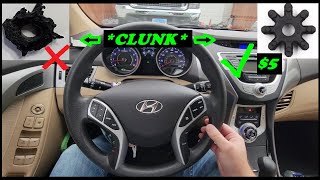
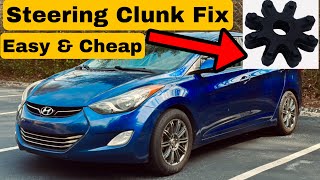
- A disintegrated $10 flexible steering coupler on 2011-2020 Hyundai/Kia models creates a clunking noise and overworks the motor, frequently triggering this thermal error.
- Never replace a $1,500+ steering rack for this code without first testing the battery, cleaning the main chassis grounds, and inspecting the lower ball joints for mechanical binding.
What Does C0176 Mean?

Code C0176 indicates the Power Steering Control Module (PSCM) detects the electric power steering motor is overheating. To prevent permanent thermal damage or fire, the module intentionally disables power steering assist. This protective shutdown instantly makes the steering wheel extremely heavy and difficult to turn.
Technical definition: The SAE/ISO definition for C0176 is "System Thermal Error". The Power Steering Control Module (PSCM) calculates a system temperature above the normal operating threshold (typically >105°C/221°F) using an internal temperature sensor and by monitoring motor voltage and current. It limits current to the steering motor to prevent damage. On GM vehicles, this code often includes a symptom byte, such as C0176-54, meaning 'Temperature High'.
Can I Drive With C0176?
Yes, But With Caution. Yes, but only to reach a safe location. Steering requires 5 to 10 times the normal physical effort, making emergency maneuvers nearly impossible. While driving in this protective shutdown mode will not damage the steering rack further, the heavy steering poses a severe crash risk.
Common Causes

- Power Steering Control Module (PSCM) Software Glitch (Very Common) — On 2017-2018 General Motors trucks and SUVs, a known software error causes this code to appear at every startup. The module fails to move an old fault code to 'history' after a battery replacement or temporary communication loss, creating a permanent false alarm.
- Excessive Steering Input (Very Common) — Turning the steering wheel back and forth repeatedly from lock-to-lock while stationary overworks the electric motor. This triggers normal system protection and resolves automatically once the motor cools down.
- Low Voltage or High Electrical Resistance (Common) — The EPS system requires a stable 9-16 volts. A weak battery, failing alternator, or corroded main ground points (like G218 on GM trucks) forces the motor to draw higher amperage to produce steering force, generating excess heat.
- Binding Steering or Suspension Components (Common) — Seized ball joints, worn tie rod ends, or a damaged steering gear force the electric motor to work harder to turn the wheels. This mechanical resistance creates excess heat and triggers the thermal error.
- Faulty Wheel Speed Sensor or ABS Module (Less Common) — The power steering system relies on wheel speed data from the Anti-lock Brake System (ABS) to calculate assist levels. Erratic data from a faulty wheel speed sensor confuses the PSCM, causing erratic motor commands and overheating.
- Failing Electric Power Steering Motor or Module (Rare) — An internal short, bearing failure, or degraded circuit board inside the electric steering motor or its control module causes the unit to overheat during normal operation.
- Rodent Damage to Wiring (Rare) — Soy-based wiring insulation, particularly on Honda models, attracts rodents. Chewed wires leading to the EPS motor or sensors cause shorts, communication loss, and thermal faults.
- Missing Heat Shielding or Obstruction (Rare) — Missing factory heat shields near the exhaust manifold, or debris packed against the electric steering motor, prevents proper cooling and triggers the thermal limit.
Symptoms

- Steering Assist is Reduced / Service Power Steering Message — A direct warning message appears on the dashboard information center.
- Increased Steering Effort — The steering wheel becomes extremely difficult to turn, especially at low speeds or when stopped.
- Power Steering Warning Light — An icon shaped like a steering wheel with an exclamation mark illuminates on the instrument cluster.
- Whining, Grinding, or Clunking Noise — Mechanical grinding or clunking sounds when turning indicate binding suspension components or a shattered flexible steering coupler.
- Intermittent Loss of Power Steering — Steering works normally but suddenly becomes heavy, returning to normal only after the vehicle is turned off and cools down.
Diagnostic Flowchart
Tap your situation to follow the diagnostic path that matches what you're seeing on this code.
Common Fixes & Costs
- Reprogram Power Steering Control Module (PSCM) — Parts: $0, Labor: $150-$250, ~1.0 hr book time (Professional)
- Replace Flexible Steering Coupler (Hyundai/Kia) — Parts: $5-$15, Labor: $200-$350, ~2.1 hr book time (Intermediate)
- Replace Binding Ball Joints or Tie Rod Ends — Parts: $50-$150, Labor: $200-$400 (plus $100 alignment), ~2.2 hr book time (Intermediate)
- Repair Damaged Wiring or Clean Grounds — Parts: $10-$30, Labor: $150-$300, ~1.5 hr book time (Intermediate)
- Replace Electric Power Steering Rack Assembly — Parts: $800-$2,200, Labor: $400-$650 (plus $150 alignment/calibration), ~4.5 hr book time (Professional)
- Replace Electric Power Steering Column Assembly — Parts: $400-$1,200, Labor: $250-$450 (plus $150 calibration), ~2.5 hr book time (Professional)
Used vs. New Parts: Buying Guide

When a used part is worth it: A used steering rack from a low-mileage, accident-free donor vehicle is cost-effective for older, out-of-warranty vehicles where a new OEM part exceeds the vehicle's value.
Donor-vehicle mileage cap: roughly under 70000 miles for the part to have meaningful remaining life.
Donor quality checklist:
- Verify the exact part number matches.
- Ensure the donor vehicle was not salvaged due to a front-end collision.
- Inspect connectors for corrosion and boots for tears.
- Purchase from sellers offering a 30-90 day warranty.
Decision logic:
- If Vehicle is under 8 years old or has low mileage (<80k) → Install a new OEM or high-quality remanufactured part to maintain reliability.
- If The repair is covered by a recall or warranty extension → Always use the OEM-specified new part installed by a dealer.
- If Vehicle is over 10 years old and budget is the primary concern → A tested used part is acceptable, but carries a higher risk of premature failure.
Warranty tradeoff: Used parts offer a 30-90 day warranty. Remanufactured parts offer 1-3 years. New OEM parts carry a 1-year warranty, longer if installed by a dealer.
Worst-case if a used part fails: $600 - $1200 if a used part fails prematurely, representing repeat labor, alignment, and a second replacement part.
What Happens If You Wait — Timeline
- 0-1 month: An underlying issue (binding ball joint, low voltage) causes the EPS motor to work harder. C0176 sets intermittently during parking, but steering returns to normal after cooling. (MPG impact: 0%% · Added cost: $0)
- 1-4 months: The mechanical or electrical issue worsens. The 'Service Power Steering' message appears frequently. Binding ball joints cause accelerated wear on tie rods and rack seals. (MPG impact: 0%% · Added cost: $250 - $700)
- 4-9 months: Continued operation against high resistance damages the EPS motor or internal rack gears. C0176 becomes permanent, and steering assist is lost entirely. (MPG impact: 0%% · Added cost: $1,500 - $3,000)
- 9+ months: Catastrophic failure. A completely failed ball joint separates the wheel from the vehicle, or a burned-out EPS motor fails during a critical maneuver, causing a crash. (MPG impact: 0%% · Added cost: $2,500 - $5,000+)
Cost of Not Fixing It
- Immediate: Severe safety risk due to extremely high steering effort, increasing the chance of an accident. (Added cost: N/A)
- 0-3 months: Continued driving with binding mechanical parts puts extreme stress on the steering rack, tie rods, and EPS motor, turning a single-part failure into a multi-part failure. (Added cost: $500 - $2,500)
- 3+ months: Operating an EPS motor against high resistance leads to permanent failure of the motor or control module, guaranteeing a full rack or column replacement. (Added cost: $1,500 - $3,000)
Diagnosis Steps

- Consider Recent Driving Conditions
If you were turning the wheel back and forth repeatedly while parked or stuck in snow, the system overheated from overuse. Let the vehicle cool down for 30 minutes. If steering returns to normal and the code clears, no repair is needed.
Tools: None (Beginner) - Read and Document All Trouble Codes
Use an OBD-II scanner to read codes from ALL modules (PSCM, ABS, BCM, ECM). Note if C0176 is current or history. Pay close attention to accompanying communication (U-codes) or ABS (C-codes) faults, as they usually point to the root cause.
Tools: OBD-II Scanner (Beginner) - Verify Battery and Charging System Voltage
With the engine running, measure voltage across the battery terminals. It must read between 13.2 and 14.8 volts. Turn on the headlights and blower motor, then turn the steering wheel. If voltage drops below 12.5 volts, a weak alternator or battery is forcing the EPS motor to pull excessive amperage and overheat.
Tools: Digital Multimeter (Beginner) - Check for GM Service Bulletin (GM Vehicles Only)
If diagnosing a 2017-2018 GM truck or SUV and the warning appears at every startup, the cause is a known software glitch covered by TSB 20-NA-113. Stop diagnosis here. The only fix is a software update performed by a dealer or shop with GM TIS2WEB access.
Tools: Vehicle ownership information (Intermediate) - Inspect Steering and Suspension Components
Safely raise the front of the vehicle on jack stands. With the engine off, turn the steering wheel lock-to-lock. Feel for binding, popping, or heavy resistance. Manually check for seized ball joints or tie rod ends that force the motor to overwork.
Tools: Jack, jack stands, flashlight (Intermediate) - Inspect Wiring, Grounds, and Heat Shields
Visually inspect wiring at the EPS motor and PSCM for rodent damage or chafing. Locate the main chassis ground for the EPS system (e.g., G218 on GM trucks). Remove the ground bolt, sand the contact point to bare metal, and retighten to eliminate electrical resistance.
Tools: Flashlight, wire brush, sandpaper, socket set (Intermediate) - Monitor Live PSCM Data
Access the live data stream for the PSCM. Monitor 'Calculated System Temperature' and 'Motor Current'. Normal current is under 15 amps when driving straight. A sustained draw over 40 amps without extreme steering input confirms high mechanical resistance or a failing motor.
Tools: Advanced diagnostic scan tool (Advanced) - Perform Voltage Drop Test on EPS Motor Circuit
Connect a multimeter set to DC volts. Place the positive lead on the battery positive post and the negative lead on the EPS motor's main power input. Have a helper turn the wheel. A reading above 0.5 volts indicates a corroded power cable. Repeat on the ground side; a reading above 0.2 volts confirms a bad ground.
Tools: Digital Multimeter with long leads (Advanced) - Condemn the Electric Power Steering Assembly
If voltage, grounds, suspension components, and software are all verified good, the fault is internal to the EPS motor or module. Replace the entire steering column or rack-and-pinion assembly, as internal components are rarely serviced separately.
Tools: Advanced diagnostic scan tool (Professional)
When This Code Triggers (Freeze-Frame Conditions)
- Module Supply Voltage: 11.5 - 14.5 V (The code sets if voltage drops too low, forcing the motor to draw high current to compensate.)
- EPAS Motor Current: 40 - 65 A (Sets when motor current remains high for a sustained period, indicating high mechanical effort and heat generation.)
- PSCM Internal Temperature: > 105°C (221°F) (The code triggers immediately when the internal sensor exceeds the manufacturer's programmed thermal limit.)
- Vehicle Speed: 0 - 5 mph (Faults occur almost exclusively at very low speeds when steering effort is highest and cooling airflow is lowest.)
Related Codes
- C0476 — Electric Steering Motor Circuit Range/Performance. When the PSCM detects overheating (C0176), it reduces current to the motor. This intentional power reduction causes performance to fall outside the expected range, logging C0476 as a direct effect.
- U0121 — Lost Communication With ABS Module. On GM vehicles, a weak battery causes a temporary U0121. Due to a software glitch, the PSCM fails to clear this history code, triggering a permanent C0176 warning on every startup.
- U0415 — Invalid Data Received From ABS Module. Similar to U0121, erratic wheel speed signals trigger this code, which in turn triggers the GM software glitch that causes a persistent C0176.
- C0550 — ECU Malfunction. Points directly to an internal failure of the PSCM. If C0176 and C0550 are present together and all circuits test good, the entire EPS assembly requires replacement.
Climate & Environmental Factors
- High Ambient Temperature: In hot climates, high ambient temperatures reduce the EPS system's ability to cool itself, making it reach the thermal limit faster during low-speed maneuvers.
- Extreme Cold Temperature: Extreme cold (below 0°F) causes water intrusion in the steering gear to freeze, creating mechanical binding. It also places extra strain on weak batteries, leading to low voltage faults.
How to Talk to a Mechanic About This Code
Say this: "I have a C0176 code and a 'Service Power Steering' message. If it's a GM vehicle, please check if TSB 20-NA-113 applies before quoting parts. Otherwise, please inspect for binding suspension parts, check for bad grounds, and test the charging system under load before recommending a steering rack replacement."
This proves you know the cheaper root causes for C0176. It forces the technician to perform a thorough diagnosis instead of immediately quoting a $2,000 steering rack.
Avoid saying:
- 'My steering feels heavy, fix it.'
- 'My power steering light is on, can you look at it?'
- 'Just replace the power steering.'
Questions to ask before authorizing the repair:
- For my GM vehicle, did you confirm if the TSB 20-NA-113 software update has already been performed?
- Did you physically inspect the ball joints and tie rods for binding with the wheels off the ground?
- What were the results of the voltage and ground tests at the power steering motor connector?
- If you recommend a steering rack, why have you ruled out a software, electrical, or mechanical binding issue?
Where to Take It: Dealer vs Independent vs Chain
- Dealer:
Best for: GM vehicles (2017-2018 trucks/SUVs) requiring the PSCM software update per TSB 20-NA-113., Vehicles under warranty or covered by a recall (Honda sticky steering, Hyundai coupler)., Complex jobs requiring module replacement and programming.
Downsides: Highest labor rates., May default to replacing a full assembly when a ground repair is the true cause. (Typical cost: +50% vs. baseline) - Independent Shop:
Best overall choice for most C0176 scenarios. However, if you have an affected GM vehicle, go directly to the dealer to avoid paying for a diagnosis an independent shop cannot fix.
Best for: Out-of-warranty vehicles where the cause is mechanical (binding parts) or electrical (bad ground, alternator)., Diagnosing the root cause when it's not a clear-cut software issue.
Downsides: May lack the specific equipment to perform GM PSCM reprogramming. (Typical cost: +0% vs. baseline) - Chain Shop:
AVOID for diagnosing C0176. Their business model is not suited for nuanced electronic troubleshooting.
Best for: Simple repairs like a battery replacement or wheel alignment AFTER a proper diagnosis has been made elsewhere.
Downsides: Technicians lack equipment for complex electrical diagnosis or module programming., High risk of being sold an unnecessary steering rack replacement. (Typical cost: -10% vs. baseline)
When to Walk Away From the Repair
If the estimated repair cost for the C0176 fault exceeds 50% of your car's private-party value, seriously consider selling the vehicle as-is.
- Car worth $15000, fix is $250: Fix it. A software update on a valuable truck is a minor cost.
- Car worth $5000, fix is $2200: Borderline. The repair is 44% of the car's value. Get a second opinion to confirm a full rack is needed.
- Car worth $3000, fix is $2500: Walk away. The repair cost is over 80% of the car's value. It is not economical to repair.
What Scan Tool You Need for This Code
Minimum: A scanner that reads manufacturer-specific Chassis (C-codes) and Body (B-codes) from all vehicle modules, not just engine codes.
A basic $20 engine code reader cannot see the C0176 code in the PSCM or the related communication (U-codes) and ABS (C-codes) critical for diagnosis.
Budget: BlueDriver Pro (~$100) — Reads and clears codes from all modules, including the PSCM. It allows you to see C0176 and related ABS faults, the essential first step of diagnosis.
Mid-range: Foxwell NT510 Elite / Autel MaxiCOM MK808S (~$150) — Provides live data streams from the PSCM, allowing you to monitor motor current and module temperature in real-time to spot electrical resistance.
Professional: Autel MaxiSys MS906 / Launch X431 Series (~$500-1200) — Offers full bidirectional control to perform active tests on the EPS motor, and has the programming/calibration functions required after replacing a steering rack.
Rent vs buy: Auto parts stores offer free scanning, but their tools often only read basic engine codes. Buying a budget pick like BlueDriver is a wise investment for multi-system issues.
How to Clear the Code After You Fix It
- Use a professional-grade OBD-II scanner to clear codes from the Power Steering Control Module (PSCM).
- For GM vehicles with the TSB 20-NA-113 glitch, the PSCM must be reprogrammed by a dealer; clearing the code with a scanner will not work.
- Perform steering angle sensor calibration after replacing racks or columns.
- Complete a full drive cycle to ensure the fault does not return.
Drive cycle (~20 minutes): Start the engine and idle for 2 minutes. Drive straight above 25 mph for 2 minutes. Perform several slow, full lock-to-lock turns in a parking lot. Drive for 15 minutes at mixed speeds to stabilize system temperature.
Readiness monitors affected: This is a Chassis (C-code) fault and does not affect emissions readiness monitors.
Watch out for:
- On GM vehicles, the code returns on the next startup regardless of clearing it if the PSCM has not been reprogrammed per TSB 20-NA-113.
- Disconnecting the battery will not clear this code and triggers the persistent fault on affected GM models.
- Failing to calibrate the steering angle sensor after replacement causes the new part to function incorrectly.
Will This Fail Emissions / State Inspection?
No — by itself this code doesn't fail OBD inspection (but it can keep readiness monitors from setting, which causes a separate fail).
- California: This code will not fail the emissions portion of the smog check. However, an illuminated power steering warning light allows the inspector to refuse the test on a safety basis.
- New York: A power steering warning light illuminated on the dashboard causes an automatic failure of the annual safety inspection.
- Texas: An illuminated power steering warning light or malfunctioning power steering causes the vehicle to fail the safety inspection.
Most Commonly Affected Vehicles
- Chevrolet / GMC Silverado 1500 / Sierra 1500 / Tahoe / Yukon (2017-2018) — Prone to a PSCM software glitch (TSB 20-NA-113) causing the code to stay active permanently after a minor voltage drop. A dealer software update is the required fix.
- Hyundai Elantra (2011-2020) — Known for the disintegration of a flexible steering coupler inside the column motor. This causes a clunking noise, excessive play, and forces the motor to overheat, triggering C0176.
- Ford Fusion (2010-2014) — Known to suffer internal friction and motor failures in the electric power steering rack (EPAS), leading to overheating and a C0176 code before total failure.
- Honda Civic (2016-2022) — Experiences power steering warnings due to rodent damage to soy-based wiring. Additionally, 2022-2024 models were recalled for improperly assembled steering racks that bind and overheat.
- Chevrolet Cobalt (2005-2010) — Uses a column-mounted EPS motor known to fail. A poor ground on the Transmission Control Module (TCM) also sends erratic speed signals, causing EPS thermal faults.
Manufacturer-Specific Notes
- General Motors (Chevrolet, GMC): A software bug in the PSCM on 2017-2018 trucks/SUVs prevents this code from clearing (TSB 20-NA-113). It reappears on every startup after an initial trigger (like a weak battery). The only fix is dealer reprogramming.
- Hyundai / Kia: The flexible steering coupler (P/N 56315-2K000-FFF) degrades, causing a clunking sound. This hammering effect overworks the motor and leads to a C0176 thermal error. Hyundai extended the warranty on this part to 10 years/100,000 miles for many models.
- Honda: Soy-based wire insulation attracts rodents. A C0176 code accompanied by multiple warning lights is usually a chewed EPS wiring harness. Additionally, 2022-2025 models face recalls for 'sticky steering' caused by an improperly manufactured worm gear that increases friction and heat.
Real Owner Stories
2017 Chevy Silverado with 30k miles
Owner reported a 'Steering Assist is Reduced' message appearing at every startup several months after replacing the battery. Steering felt normal otherwise.
What they tried:
- A mechanic scanned the codes and found a current C0176-54 (Temperature High).
- The mechanic stress-tested the system by turning the wheel lock-to-lock but found no binding components.
Outcome: This is the classic GM software glitch (TSB 20-NA-113). The battery replacement caused a temporary communication code, triggering the C0176. Due to the bug, the code never moved to 'history'. Reprogramming the PSCM at a dealership for $150 fixed it permanently.
Lesson: On 2017-2018 GM trucks, if C0176 appears at every startup with no actual steering issues, the cause is software. Do not replace the steering rack; insist on the TSB 20-NA-113 update.
2014 Hyundai Elantra with ~148k miles
Owner heard a loud clunking noise when turning. A tire shop refused an alignment and said the car was 'safe to drive'.
What they tried:
- Took the car to an independent mechanic.
- The clunking was immediately identified as a disintegrated flexible steering coupler inside the column motor.
Outcome: The flexible coupler (P/N 56315-2K000-FFF) was replaced. The part costs $10, and labor was $300. This resolved the clunking and removed the mechanical stress on the EPS motor.
Lesson: A clunking noise from the steering on Hyundai/Kia models is almost always the cheap flexible coupler. Ignoring it forces the motor to overheat and set a C0176 code, leading to a misdiagnosis of a failed steering column.
2017 Honda Civic with 8k miles
The dash lit up with multiple warnings for power steering, transmission, and adaptive cruise control. The car entered limp mode.
What they tried:
- Inspected the engine bay and discovered two chewed-through wires on a main harness plug.
- Spliced, soldered, and heat-shrank the broken wires.
- Cleared the codes with a professional scan tool.
Outcome: A 15-minute wiring repair saved the owner from a $7,000 wiring harness replacement at the dealership, as rodent damage is not covered by warranty.
Lesson: If multiple unrelated warning lights appear simultaneously on a modern Honda, inspect for rodent damage to wiring harnesses immediately. A simple wire repair solves catastrophic-looking electronic failures.
2015 Chevy Silverado with electrical issues
Owner experienced intermittent 'Service Stabilitrak' messages, and the radio and dash flickered when turning.
What they tried:
- Forum research pointed to a known bad ground point, G218, located on the passenger side A-pillar frame.
Outcome: The owner found factory sound-deadening material trapped under the G218 ground lug. After cutting it away, sanding to bare metal, and re-tightening, all electrical and steering issues vanished.
Lesson: A cascade of electrical faults and communication codes on GM trucks is frequently caused by a single poor ground at G218. Always check and clean this ground before replacing modules.
How to Prevent This Code From Triggering
- Avoid Turning the Steering Wheel When Stationary (Daily habit) — Turning wheels without the vehicle moving requires maximum effort from the EPS motor, generating massive heat. Minimizing this prevents thermal overload.
- Maintain a Healthy Battery and Charging System (Annually) — A weak battery or failing alternator causes low voltage, forcing the EPS motor to draw higher current to compensate, creating excess heat.
- Periodically Inspect Suspension Components (Every 15,000 miles) — Worn or seized ball joints create mechanical resistance. Replacing a worn $50 ball joint prevents the failure of a $2,000 steering rack.
- Keep Steering Rack Boots Intact (During under-vehicle service) — Torn rubber boots allow dirt and moisture into the steering rack, causing corrosion and mechanical binding that overworks the motor.
Frequently Asked Questions
Can I just ignore code C0176 if it's from turning the wheel too much?
If steering returns to normal after cooling down and the code doesn't return during normal driving, no repair is needed. The system operated as designed.
Is it safe to drive with the C0176 code active?
No. The steering requires massive physical effort, making it nearly impossible to react quickly in an emergency or navigate parking lots safely.
Why does my dash say 'Steering Assist is Reduced' every time I start my Chevy Silverado?
This is a known software glitch in 2017-2018 GM trucks detailed in TSB 20-NA-113. The power steering module requires a software update from a dealer to fix the false alarm.
I just replaced my battery and now I have a C0176 code. What happened?
Disconnecting a weak battery on affected GM vehicles causes temporary communication faults (like U0121). Due to a software bug, the PSCM fails to clear these history codes, triggering a permanent C0176 warning on every startup. The only fix is a dealer software update.
My ABS and traction control lights are also on with the C0176 code. Are they related?
Yes. The electric power steering system relies on data from the ABS wheel speed sensors. A single faulty sensor disables ABS, traction control, and causes the power steering system to fault.
What does the '54' mean in code C0176-54?
The '-54' is a GM-specific symptom byte providing more detail. It translates to 'System Thermal Error - Temperature High,' directly confirming the overheating condition.
How much does it cost to fix code C0176?
Costs range from $150 for a GM software update to $350 for a Hyundai steering coupler. If the entire electric steering rack has failed, expect to pay between $1,500 and $3,000.
Can a bad thermostat cause a C0176 code?
Indirectly, yes. On some GM vehicles, a faulty thermostat sets a P0128 code, which commands the vehicle to reduce power to various systems, occasionally triggering a power steering message.
Key Takeaways
- Code C0176 indicates the electric power steering motor exceeds its 221°F (105°C) thermal limit, causing the system to disable steering assist to prevent fire or permanent damage.
- On 2017-2018 GM trucks and SUVs, a known software glitch (TSB 20-NA-113) triggers this code permanently after a battery change, requiring a $150-$250 dealer reprogramming.
- A disintegrated $10 flexible steering coupler on 2011-2020 Hyundai/Kia models creates a clunking noise and overworks the motor, frequently triggering this thermal error.
- Never replace a $1,500+ steering rack for this code without first testing the battery, cleaning the main chassis grounds, and inspecting the lower ball joints for mechanical binding.
Helpful Videos

The information in this article is provided for general reference and educational purposes only. Vehicle specifications, procedures, and part compatibility can vary by production date, trim level, and region. Always consult your vehicle's factory service manual and verify part numbers before purchasing or performing repairs. Safety-critical components such as airbags, seat belts, and braking systems should be installed by a qualified professional.
- 🎬 Helpful Videos
- What Does C0176 Mean?
- Can I Drive With C0176?
- Common Causes
- Symptoms
- Diagnostic Flowchart
- Common Fixes & Costs
- Used vs. New Parts: Buying Guide
- What Happens If You Wait — Timeline
- Cost of Not Fixing It
- Diagnosis Steps
- When This Code Triggers (Freeze-Frame Conditions)
- Related Codes
- Climate & Environmental Factors
- How to Talk to a Mechanic About This Code
- Where to Take It: Dealer vs Independent vs Chain
- When to Walk Away From the Repair
- What Scan Tool You Need for This Code
- How to Clear the Code After You Fix It
- Will This Fail Emissions / State Inspection?
- Most Commonly Affected Vehicles
- Manufacturer-Specific Notes
- Real Owner Stories
- 2017 Chevy Silverado with 30k miles
- 2014 Hyundai Elantra with ~148k miles
- 2017 Honda Civic with 8k miles
- 2015 Chevy Silverado with electrical issues
- How to Prevent This Code From Triggering
- Frequently Asked Questions
- Can I just ignore code C0176 if it's from turning the wheel too much?
- Is it safe to drive with the C0176 code active?
- Why does my dash say 'Steering Assist is Reduced' every time I start my Chevy Silverado?
- I just replaced my battery and now I have a C0176 code. What happened?
- My ABS and traction control lights are also on with the C0176 code. Are they related?
- What does the '54' mean in code C0176-54?
- How much does it cost to fix code C0176?
- Can a bad thermostat cause a C0176 code?
- Key Takeaways
- 🎟️ Get 5% Off