

OBD-II Code C0161: ABS Brake Switch Circuit Malfunction
What C0161 means, why it triggers, and how to fix it
- Code C0161 indicates a failure in the Brake Pedal Position (BPP) sensor circuit, causing the ABS module to receive illogical braking data.
- Immediate symptoms include disabled ABS and traction control, brake lights stuck on or off, and an inability to shift the vehicle out of Park.
- Replacing the faulty brake light switch resolves the issue in 80% of cases and typically costs between $90 and $220 for parts and labor.
- Modern GM vehicles require a mandatory BPP Sensor Calibration using a bi-directional scan tool after replacing the switch to permanently clear the code.
- Inspect the metal brake pedal post for physical wear before buying parts; a worn groove causes false sensor readings and can be fixed with a 50-cent piece of heat shrink tubing.
What Does C0161 Mean?

Code C0161 indicates the Anti-lock Braking System (ABS) module detected an illogical or missing signal from the brake light switch (Brake Pedal Position sensor). The computer triggers a warning light because it cannot reliably determine if you are pressing the brake pedal.
Technical definition: The official SAE/ISO definition is 'Antilock Brake System (ABS) Brake Switch/Sensor Circuit not Plausible' or 'ABS Brake Switch Circuit Malfunction'. This indicates the Electronic Brake Control Module (EBCM) received a brake switch signal that contradicts other vehicle data. For example, the computer sees a 'brake applied' signal while the vehicle accelerates, or a 'brake not applied' signal when brake line pressure is high. On some GM vehicles, the code sets if the EBCM sees the brake pedal continuously active for over 4 minutes above 13 mph.
Can I Drive With C0161?
Yes, But With Caution. You can drive, but it poses a significant safety risk. Your ABS and traction control are disabled, increasing stopping distances in emergencies. More critically, your brake lights may stick on (confusing other drivers) or fail completely, creating a high risk of a rear-end collision. Being unable to shift out of Park can also leave you stranded. Inspect this immediately.
Common Causes

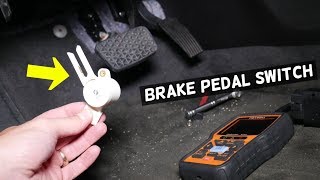
- Faulty Brake Light Switch (Brake Pedal Position Sensor) (Very Common) — This is the primary cause. The switch, located above the brake pedal, wears out internally over time, sending incorrect, intermittent, or dead signals to the vehicle's computers.
- Worn Mechanical Linkage (Pedal Post, Bushings, or Booster Rod) (Common) — Excessive play in the brake pedal assembly prevents the pedal from fully contacting or releasing the switch plunger. On many GM vehicles, the metal post on the pedal that the sensor fork rides on wears down, creating a groove that causes a false 'brake applied' reading.
- Misadjusted Brake Light Switch (Common) — The switch is physically misaligned. If adjusted incorrectly during a previous repair, it sends a signal stating the brake is pressed when it isn't, or vice-versa.
- Damaged Wiring, Connectors, or Water Intrusion (Less Common) — Wiring leading to the brake light switch frays, corrodes, or shorts under the dash. Heavy rain or cabin leaks can also introduce water into the connector, causing sudden corrosion and erratic voltage signals.
- Faulty Brake Booster (Rare) — A failing internal brake booster component causes a 'kick' or inconsistent feel in the pedal. This slight movement sends an implausible signal from the BPP sensor, triggering the code even if the sensor is perfectly functional.
- Faulty Electronic Brake Control Module (EBCM) or Body Control Module (BCM) (Rare) — Rarely, the computer module that receives or processes the signal from the brake switch fails. Suspect this only after ruling out the switch, wiring, and mechanical linkage.
Symptoms

- Brake Lights Malfunction (Stuck On or Off) — Your brake lights fail to illuminate when you press the pedal, or they stay on continuously after removing your foot.
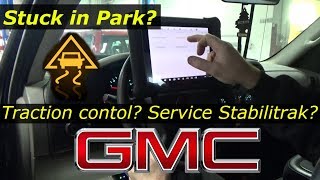
- Cannot Shift Out of Park — The gear shifter locks in Park because the vehicle does not receive the required brake pedal signal to release the shift interlock. 🎬 Watch: How to test and repair a shifter stuck in park.
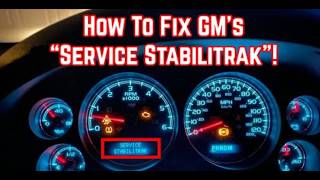
- ABS and Traction Control Lights Illuminated — The Anti-lock Braking System (ABS) and traction/stability control (like GM's Stabilitrak) warning lights turn on, and a 'Service Stabilitrak' message appears.
- Cruise Control Disabled — Cruise control refuses to engage because the system believes the brakes are applied, triggering a safety override.
- Reduced Engine Power — On newer GM vehicles, a faulty brake signal triggers an 'Electronic Brake Pedal Override,' reducing engine power because the computer thinks you are braking and accelerating simultaneously.
- Slight Pedal Kick or Noise After Starting — A brief 'brrm' noise or a slight kick from the brake pedal within 30 seconds of driving indicates the ABS system failing its self-test due to the implausible signal.
Diagnostic Flowchart
Tap your situation to follow the diagnostic path that matches what you're seeing on this code.
Common Fixes & Costs
- Replace Brake Light Switch / Brake Pedal Position Sensor — Parts: $15-$70, Labor: $75-$150, ~0.8 hr book time (DIY)
- Repair Worn Pedal Post or Adjust Linkage — Parts: $0-$10, Labor: $0-$50, ~0.5 hr book time (DIY)
- Repair Damaged Wiring or Connector — Parts: $5-$25, Labor: $150-$300, ~1.5 hr book time (Intermediate)
- Replace ABS/EBCM Module — Parts: $600-$1100, Labor: $150-$250, ~2.0 hr book time (Professional)
Used vs. New Parts: Buying Guide
When a used part is worth it: Buying a used brake light switch rarely makes sense. It is a low-cost wear item, and the minimal savings do not justify the risk of premature failure.
Donor-vehicle mileage cap: roughly under 20000 miles for the part to have meaningful remaining life.
Donor quality checklist:
- Match the part number exactly; OEM manufacturers update designs, requiring new wiring pigtails.
- Avoid parts with visible corrosion, cracked plastic housings, or bent plungers.
Decision logic:
- If The new part costs less than $100. → Always buy new. The labor to replace a failed used part negates any savings.
- If The vehicle is very old and a new part is unavailable. → A used part from a low-mileage donor is a last resort. Test it with a multimeter before installation.
Warranty tradeoff: Used salvage parts offer a 30-90 day warranty. Quality new aftermarket parts carry a 1-year to limited lifetime warranty. The peace of mind is worth the price difference.
Worst-case if a used part fails: $100-$200. If a used switch fails, you pay labor to replace it again, plus the cost of another switch.
What Happens If You Wait — Timeline
- 0-1 month: Intermittent 'Service ABS/Traction Control' lights appear, often resetting after a restart. Cruise control fails to engage. (MPG impact: 0%% · Added cost: $0)
- 1-3 months: Warning lights stay on constantly. Brake lights malfunction, either failing to illuminate or staying on after the car is off. Shifting out of Park becomes difficult. (MPG impact: 0%% · Added cost: $0-$150 (Potential traffic ticket for faulty brake lights or a drained battery).)
- 3-6 months: Symptoms are persistent. The gear shifter locks in Park, requiring manual override. Unreliable brake lights create a constant safety hazard, and the battery drains repeatedly. (MPG impact: 0%% · Added cost: $150-$350 (Battery replacement and potential tow truck fees).)
- 6+ months: The vehicle becomes unsafe to operate due to disabled ABS, disabled traction control, and missing brake signals. The shifter lock renders the vehicle unusable for daily transport. (MPG impact: 0%% · Added cost: Incalculable cost of an accident resulting from brake light failure or increased stopping distances.)
Cost of Not Fixing It
- Immediate: Safety systems like ABS and traction control are disabled. Brake lights stick on or fail, creating a high risk of a rear-end collision. (Added cost: Potential traffic ticket for faulty equipment or the incalculable cost of an accident.)
- 0-1 Month: Continued risk of being stranded due to a dead battery (from stuck lights) or the inability to shift out of Park. (Added cost: $75-$200 for a tow or battery replacement.)
- 1-6+ Months: The primary cost remains the significant safety hazard and inconvenience. The vehicle is unsafe for daily transport. (Added cost: The cost of the eventual repair, plus any costs incurred from being stranded or involved in an accident.)
Diagnosis Steps

- Check Brake Light Function
Have an assistant stand behind the car while you press and release the brake pedal. If the brake lights stick on, flicker, or fail to light up, you have a confirmed brake switch or linkage issue.
Tools: A friend (Beginner) - Read All Trouble Codes
Use an OBD-II scanner to read codes from all modules. Code C0161 stores in the ABS or chassis module (EBCM). Look for related codes like P0573, C0277, or C0278, which confirm a hard electrical fault in the brake switch circuit.
Tools: OBD-II Scanner (with ABS capability) (Beginner) - Inspect Brake Pedal Play and Switch Mounting
Locate the switch at the top of the brake pedal arm. Wiggle the brake pedal side-to-side and up-and-down. Excessive play indicates worn bushings. Pull up on the pedal; if the brake lights turn off, excessive slack or a worn pedal post is the culprit.
Tools: Flashlight (Beginner) - Scan Live Sensor Data
Monitor the Brake Pedal Position (BPP) parameter in the BCM or EBCM using a scan tool. The reading must instantly change from 'Released' to 'Applied' when you press the pedal. Any lag, flickering, or incorrect state proves the sensor is failing.
Tools: Advanced Scan Tool (Intermediate) - Test Sensor and Signal Voltages
Unplug the sensor and verify the 5V reference and ground wires using a multimeter. Then, back-probe the signal wire with the sensor plugged in. The voltage must sweep smoothly (e.g., 0V to 2.3V) as you press the pedal. Sudden jumps indicate a bad sensor.
Tools: Multimeter, back-probe pins (Advanced) - Scope Test the Switch
For intermittent issues, back-probe the switch's signal wires with an oscilloscope. Press the brake and look for a clean, sharp voltage transition. Glitches, dropouts, or a noisy waveform confirm internal switch failure.
Tools: Oscilloscope, back-probe pins (Advanced) - Perform a Brake Pedal Position Relearn
If replacing the sensor on a modern vehicle (especially GM), you must perform a calibration procedure using a bi-directional scan tool. This teaches the computer the 'home' and 'fully applied' positions. On some 2012+ GM models, perform this in both the BCM and ECM.
Tools: Advanced Bi-Directional Scan Tool (Advanced)
When This Code Triggers (Freeze-Frame Conditions)
- Vehicle Speed: 15-55 mph (Driving at a steady speed or accelerating. The code sets when the computer sees a conflict between braking and acceleration.)
- Brake Pedal Status (BPP): Applied / Released (The fault logs when the reported status is implausible, e.g., 'Applied' during acceleration or 'Released' when brake pressure is high.)
- Ignition Voltage: > 9.5 Volts (The system requires adequate voltage to run self-checks and validate sensor inputs.)
- RPM: 1200-2500 (Typical engine speed during city or highway cruising when the fault logic is active.)
Related Codes
- P0573 — This code for 'Brake Switch A Circuit High' commonly accompanies C0161. P0573 is reported by the Engine Control Module (ECM), while C0161 is reported by the Electronic Brake Control Module (EBCM). Seeing both confirms a hard fault in the switch or wiring.
- C0277 — Indicates a direct electrical fault (open, short, or out of range) in the sensor's primary circuit. Fix C0277 first, as resolving the electrical fault almost always clears the C0161 plausibility code.
- C0278 — Indicates a fault in the secondary circuit ('B') of a dual-circuit BPP sensor. Like C0277, this electrical fault must be diagnosed and repaired before addressing C0161.
- U0422 — Means 'Invalid Data Received From Body Control Module.' If the BCM is faulty and sends corrupt brake data to the EBCM, it triggers C0161. Diagnose the BCM if sensor replacement fails.
Climate & Environmental Factors
- Cold Weather: Extreme cold makes the plastic components of the brake light switch brittle, increasing the likelihood of internal mechanical failure when pressed.
- High Humidity / Water Ingress: Moisture causes corrosion on the electrical connector pins for the brake pedal position sensor. This increases circuit resistance, causing implausible voltage signals.
How to Talk to a Mechanic About This Code
Say this: "I have an ABS and Stabilitrak light on, and my scanner shows code C0161. I suspect it's the brake pedal position sensor, the pedal linkage, or the wiring. Can you please check the live data from the BPP sensor and inspect the pedal for mechanical play before recommending a part?"
This guides the technician toward a logical diagnostic process, focusing on the most likely and cheapest failures first. Mentioning 'live data' and 'mechanical play' shows you understand the common failure modes.
Avoid saying:
- 'My ABS light is on, can you fix it?'
- 'Just replace the brake switch.'
- 'I'm not sure what's wrong, just do whatever it takes.'
Questions to ask before authorizing the repair:
- Did you see the BPP sensor signal drop out or lag on the scan tool's live data?
- Is there any excessive play or wear in the brake pedal assembly or post?
- If replacing the sensor, does my vehicle require a BPP sensor calibration, and is that included in the quote?
- What is the warranty on the new part and the labor?
Where to Take It: Dealer vs Independent vs Chain
- Dealer:
Recommended if your car requires the dual-module (BCM and ECM) BPP sensor relearn, as they possess the correct tools and procedures.
Best for: Vehicles under warranty., Newer GM vehicles (2012+) requiring BCM and ECM calibration after sensor replacement., Complex cases where a new sensor and calibration failed to fix the issue.
Downsides: Highest labor rates., May default to replacing the entire pedal assembly instead of attempting a simpler mechanical fix for pedal post wear. (Typical cost: +50% vs. baseline) - Independent Shop:
Best fit for most situations. An experienced independent mechanic diagnoses this common GM fault efficiently. Ask if they can perform a 'Brake Pedal Position Sensor Relearn' before committing.
Best for: Most out-of-warranty vehicles, especially common Chevy/GMC trucks and SUVs., Straightforward brake switch replacement and single-module calibration.
Downsides: Quality varies; ensure the shop has a modern, bi-directional scan tool capable of performing ABS/BCM functions. (Typical cost: +0% vs. baseline) - Chain Shop:
Use with caution. Acceptable if you confirmed a bad switch and know no calibration is needed. AVOID for diagnosis or on any modern car requiring a relearn procedure.
Best for: Simple part replacement if you have already diagnosed the issue yourself.
Downsides: May lack the advanced diagnostic tools to perform the required calibration, leading to the code returning., Higher risk of misdiagnosis or upselling unnecessary services. (Typical cost: -10% vs. baseline)
When to Walk Away From the Repair
If the estimated repair cost exceeds 40-50% of the car's private-party value, evaluate your options. However, for code C0161, the repair is almost always very inexpensive.
- Car worth $5000, fix is $180: Fix it. This is a very common and low-cost repair that resolves a major safety issue.
- Car worth $8000, fix is $1850: Get a second opinion immediately. A quote this high likely means a misdiagnosis pointing to an expensive module (BCM/EBCM). The actual fault is probably the cheap switch or wiring.
- Car worth $2000, fix is $180: Fix it. Even on a low-value car, this repair is cheap and essential for safety and operation.
What Scan Tool You Need for This Code
Minimum: A scanner that reads and clears Anti-Lock Brake System (ABS) / Chassis (C-codes) and views live data from the Body Control Module (BCM).
A basic $20 engine code reader cannot see the C0161 code stored in the ABS module. It also cannot view the live brake pedal position data essential for confirming a faulty switch.
Budget: Autel AutoLink AL619 (~$80) — Reads and clears engine and ABS codes. Displays live data, allowing you to watch the brake switch status change to confirm a fault. Cannot perform the BPP relearn procedure.
Mid-range: Foxwell NT630 Plus / KINGBOLEN K7 (~$150-350) — Provides full system diagnostics including ABS/BCM live data. Crucially, these tools feature bi-directional control to perform the 'Brake Pedal Position Sensor Calibration' required on GM vehicles.
Professional: Autel MaxiCOM MK808S / Launch X431 Series (~$450-1000) — Offers full bi-directional control for BPP relearn in both the BCM and ECM. Provides faster processing, better data graphing, and access to manufacturer-specific troubleshooting information.
How to Clear the Code After You Fix It
- Use an OBD-II scan tool with ABS/Chassis functions to clear the C0161 code.
- If the BPP sensor was replaced on a modern GM vehicle, perform the 'BPP Sensor Calibration' procedure using a bi-directional scan tool.
- Perform the calibration in both the Body Control Module (BCM) and the Engine Control Module (ECM) if required.
- Complete a full drive cycle to allow the system to self-test.
Drive cycle (~20 minutes): Start the engine and idle for 2 minutes. Drive in mixed city/highway conditions, exceeding 25 mph. Perform several normal stops to engage the brake switch. The system self-tests and keeps the code clear if the repair succeeded.
Readiness monitors affected: Catalyst Monitor, Evaporative System Monitor, O2 Sensor Monitor
Before emissions retest: drive at least 50 miles to fully set monitors.
Watch out for:
- Clearing the code without performing the mandatory BPP sensor calibration causes the code to return immediately.
- Using a basic code reader that only clears Powertrain (P-codes) fails to clear the Chassis (C-code) from the EBCM.
- Clearing codes resets all emissions readiness monitors, causing an automatic emissions test failure until driven sufficiently.
Will This Fail Emissions / State Inspection?
Yes — this code typically fails an OBD-II emissions inspection.
- California: An illuminated ABS light fails a safety inspection. Clearing the C0161 code resets emissions readiness monitors, causing a smog check failure until a full drive cycle is completed.
- New York: An illuminated ABS warning light is an automatic failure during the annual safety inspection.
- Texas: The annual safety inspection requires the ABS warning light to be off. This code causes an inspection failure.
Most Commonly Affected Vehicles
- Chevrolet Silverado, Tahoe, Suburban (2007-2014) — Extremely common issue, often appearing with code P0573. Verify the GM Genuine Part number with your VIN, as adjustable pedals require a different part.
- GMC Sierra, Yukon, Acadia (2007-2016) — Identical to Chevrolet models, these utilize the same faulty brake pedal position sensor. A BPP sensor calibration is mandatory after replacement.
- Chevrolet Traverse (2009-2017) — Frequently caused by a worn metal post on the brake pedal assembly. Fix this with heat shrink tubing as a cheap alternative to pedal replacement.
- Buick Enclave (2009-2017) — Shares the Traverse/Acadia design and is highly prone to the same C0161 fault from a worn pedal post or faulty sensor.
- Cadillac Escalade (2007-2014) — Subject of GM bulletin PIT5122D for 2012-2013 models. These use a dual BPP sensor requiring a specific relearn procedure in both the BCM and ECM.
- Chevrolet Avalanche (2007-2013) — Covered under GM bulletin PIT5122D for 2012-2013, utilizing the newer dual-circuit brake pedal position sensor that requires calibration.
- Chevrolet Corvette (2005-2013) — Triggers a 'Service Active Handling' message. The cause is a mismatch between the brake pedal position sensor and the brake pressure sensor.
- SAAB 9-5, 9-7x (2005-2011) — Based on GM platforms, sharing identical system logic. The manual notes the code sets if the brake is applied while accelerating.
Manufacturer-Specific Notes
- General Motors (Chevrolet, GMC, Buick, Cadillac): Replacing the brake pedal position sensor requires a 'Brake Pedal Position Sensor Calibration' using a scan tool. Per TSB 16-NA-155, many 2012+ models require this calibration in BOTH the Body Control Module (BCM) and the Engine Control Module (ECM).
- General Motors (Chevrolet, GMC, Buick, Cadillac): Driving with one foot on the brake and one on the gas triggers this code, as the computer sees conflicting signals. This activates the 'Electronic Brake Pedal Override' feature, causing a low power condition.
- General Motors (Chevrolet Traverse, GMC Acadia, Buick Enclave): The metal post on the brake pedal assembly wears down over time, creating a groove. This causes the sensor to read a constant 'brake applied' state. Build the post back up with heat shrink tubing to fix it.
- General Motors (General): GM has issued recalls (e.g., N192261050) for unintended braking involving EBCM reprogramming. Always check for active recalls or special coverage by VIN on the manufacturer's website.
Real Owner Stories
2012 Chevrolet Traverse with 170k miles - Easy DIY Fix
The 'Service Stabilitrak' message appeared alongside code C0161. The owner replaced the brake light switch for $13, but the problem persisted.
What they tried:
- Replaced the brake light switch (BPP sensor), which failed to solve the issue.
Outcome: The owner discovered the metal post on the brake pedal assembly had worn down, creating a groove that made the computer think the brake was slightly pressed. They slid a piece of heat shrink tubing over the worn post and lubricated it. This 50-cent fix permanently resolved the code.
Lesson: On high-mileage GM SUVs, inspect the brake pedal post for physical wear before replacing the sensor. A cheap mechanical fix often solves the electronic fault code.
Chevrolet Corvette with C0161 - A Costly Misdiagnosis
The 'Service Active Handling' light illuminated with code C0161, and brake lights malfunctioned.
What they tried:
- Replaced the Brake Pedal Position Sensor (BPPS), but symptoms returned.
- A shop replaced the Body Control Module (BCM) for $680, fixing the problem for five months.
- When C0161 returned, the dealer recommended replacing the Electronic Brake Control Module (EBCM) for $2,000.
Outcome: The owner faced an expensive repair loop, highlighting how the fault can lie within the control modules interpreting the signal, not just the sensor itself.
Lesson: If a new sensor fails to fix the issue, the problem lies further down the circuit in the BCM or EBCM. Clean module connectors thoroughly before authorizing expensive module replacements.
2011 GMC Sierra with Intermittent Electrical Fault
The truck intermittently showed ABS warnings, set code C0161, and occasionally locked the shifter in Park.
What they tried:
- Monitored live data for the Brake Pedal Position using a scan tool.
- Observed the status flickering to 'Released' while holding the brake pedal down firmly.
- Back-probed the switch's signal wires with an oscilloscope, revealing a glitching voltage signal.
Outcome: Replacing the faulty brake light switch completely resolved all symptoms, including the warning lights and the locked shifter.
Lesson: For intermittent electrical issues, a scan tool with live data is invaluable. An oscilloscope provides definitive proof of a bad switch before spending money on parts.
How to Prevent This Code From Triggering
- Periodically lubricate brake pedal pivot points (Every 15,000-20,000 miles or annually) — Reduces wear on pedal bushings, preventing excessive play that misaligns the switch plunger and sends implausible signals. Use white lithium grease on all moving parts.
- Avoid 'two-footed' driving habits (Daily driving habit) — Resting a foot on the brake while accelerating sends conflicting signals to vehicle computers. This triggers a C0161 plausibility fault and activates the 'Electronic Brake Pedal Override' feature, reducing engine power.
- Ensure cabin floor and driver's footwell remain dry (As needed, especially during winter or heavy rain) — Prevents moisture from wicking into the brake switch's electrical connector. Water ingress causes pin corrosion, creating high resistance and erratic voltage signals.
- Check for and address excessive brake pedal play (During every oil change) — Wiggling the pedal reveals worn bushings or linkage. Addressing this play early prevents the switch activation from becoming unreliable, a direct cause of code C0161.
Frequently Asked Questions
Can I fix code C0161 myself?
Yes, in many cases. The most common cause is a bad brake light switch, an inexpensive part accessible under the dashboard. However, be aware that a scan tool calibration is required after replacement on many modern vehicles.
Why is my traction control light on with a brake code?
Traction and stability control systems require accurate braking data to function safely. If the brake signal is unreliable, the computer disables these safety systems as a precaution and illuminates the warning light.
My brake lights work fine, so why do I have code C0161?
Modern brake light switches contain multiple internal circuits. One circuit controls the physical brake lights, while a separate, more sensitive circuit sends variable position data to the ABS module. The computer circuit can fail even if the light circuit still works.
I replaced the brake switch, but the code came back. What did I miss?
First, verify if your vehicle requires a 'Brake Pedal Position Sensor Calibration' using a scan tool. Second, inspect the brake pedal for excessive looseness or a worn post that prevents the new switch from reading correctly. Finally, check the wiring connector for hidden corrosion.
What is a 'BPP Sensor Calibration' and why is it necessary?
A BPP Sensor Calibration uses a scan tool to teach the vehicle's computers the new sensor's exact voltage readings for the 'released' and 'fully applied' positions. Systems like ABS and stability control rely on this precise data to function safely. Without calibration, the computer rejects the new sensor's signal.
What's the difference between code C0161 and P0573?
Both codes point to a brake switch circuit problem, but they are reported by different computers. C0161 is a Chassis code from the Electronic Brake Control Module (EBCM), while P0573 is a Powertrain code from the Engine Control Module (ECM). Seeing both confirms a hard fault in the switch or wiring.
Can I just disconnect the battery to fix the C0161 code?
Disconnecting the battery temporarily clears the warning lights, but the code returns immediately once the computer detects the fault again. Furthermore, a battery disconnect cannot perform the mandatory BPP sensor calibration required after a sensor replacement.
Can bad weather cause a C0161 code?
Yes, heavy rain or high humidity can introduce moisture into the brake light switch's electrical connector under the dashboard. This causes a short circuit or corrosion that creates a faulty voltage signal.
Key Takeaways
- Code C0161 indicates a failure in the Brake Pedal Position (BPP) sensor circuit, causing the ABS module to receive illogical braking data.
- Immediate symptoms include disabled ABS and traction control, brake lights stuck on or off, and an inability to shift the vehicle out of Park.
- Replacing the faulty brake light switch resolves the issue in 80% of cases and typically costs between $90 and $220 for parts and labor.
- Modern GM vehicles require a mandatory BPP Sensor Calibration using a bi-directional scan tool after replacing the switch to permanently clear the code.
- Inspect the metal brake pedal post for physical wear before buying parts; a worn groove causes false sensor readings and can be fixed with a 50-cent piece of heat shrink tubing.
Helpful Videos



The information in this article is provided for general reference and educational purposes only. Vehicle specifications, procedures, and part compatibility can vary by production date, trim level, and region. Always consult your vehicle's factory service manual and verify part numbers before purchasing or performing repairs. Safety-critical components such as airbags, seat belts, and braking systems should be installed by a qualified professional.
- 🎬 Helpful Videos
- What Does C0161 Mean?
- Can I Drive With C0161?
- Common Causes
- Symptoms
- Diagnostic Flowchart
- Common Fixes & Costs
- Used vs. New Parts: Buying Guide
- What Happens If You Wait — Timeline
- Cost of Not Fixing It
- Diagnosis Steps
- When This Code Triggers (Freeze-Frame Conditions)
- Related Codes
- Climate & Environmental Factors
- How to Talk to a Mechanic About This Code
- Where to Take It: Dealer vs Independent vs Chain
- When to Walk Away From the Repair
- What Scan Tool You Need for This Code
- How to Clear the Code After You Fix It
- Will This Fail Emissions / State Inspection?
- Most Commonly Affected Vehicles
- Manufacturer-Specific Notes
- Real Owner Stories
- 2012 Chevrolet Traverse with 170k miles - Easy DIY Fix
- Chevrolet Corvette with C0161 - A Costly Misdiagnosis
- 2011 GMC Sierra with Intermittent Electrical Fault
- How to Prevent This Code From Triggering
- Frequently Asked Questions
- Can I fix code C0161 myself?
- Why is my traction control light on with a brake code?
- My brake lights work fine, so why do I have code C0161?
- I replaced the brake switch, but the code came back. What did I miss?
- What is a 'BPP Sensor Calibration' and why is it necessary?
- What's the difference between code C0161 and P0573?
- Can I just disconnect the battery to fix the C0161 code?
- Can bad weather cause a C0161 code?
- Key Takeaways
- 🎟️ Get 5% Off