

C0131 on 2021-2022 Chevrolet Trax: Brake Pressure Circuit Malfunction Explained
On a 2021-2022 Chevy Trax, code C0131 almost always means the internal brake pressure sensor has failed. This sensor is part of the Brake Pressure Modulator Valve (BPMV) assembly, which must be replaced as a unit. This is a safety-critical repair that requires professional service, including special bleeding and programming procedures, and costs between $950 and $1700. The issue is well-documented in GM TSB PIC5704H.
- C0131 on a 2021-2022 Trax points directly to a problem with the brake pressure sensor circuit.
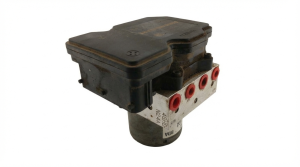
- The most common cause is the failure of the sensor itself, which is permanently integrated into the Brake Pressure Modulator Valve (BPMV) and requires replacement of the entire assembly.
- This is a critical safety repair that disables ABS and StabiliTrak; driving is not recommended.
- A common and costly mistake during repair is failing to remove shipping caps from the new BPMV, which will immediately trigger the same C0131 code, as documented in TSB PIC5704H.
- The repair must be completed by a professional with a scan tool capable of programming the new module, performing a sensor calibration, and running an automated brake bleed procedure.
What's Unique About the 2021-2022 Chevrolet TRAX
The Chevrolet Trax, along with its platform-mates the Buick Encore, Chevy Sonic, and Chevy Spark, commonly experiences this issue. The key design aspect is that the brake pressure sensor is not sold as a separate part. Instead, it is integrated directly into the Brake Pressure Modulator Valve (BPMV), also known as the ABS hydraulic unit. This means a simple sensor failure requires the replacement of the entire, expensive hydraulic assembly. GM has issued multiple versions of Technical Service Bulletin PIC5704 over many years (the latest being PIC5704H), indicating a long-standing, well-documented issue with this component and its installation across these models.
Diagnostic Flowchart
Tap your situation to follow the diagnostic path that matches what you're seeing on this vehicle.
Symptoms You May Notice
- ABS warning light illuminated
- Traction Control or StabiliTrak warning light illuminated
- "Service StabiliTrak" or "Service Traction Control" message on the instrument cluster
- "Service Trailer Brake System" message may appear on some equipped models.
- Replacing individual wheel speed sensors. These will set different trouble codes (C0035-C0050 range) and are not related to the C0131 pressure circuit fault.
- Replacing only the electronic part (EBCM) without the hydraulic part (BPMV). The sensor is in the hydraulic unit (BPMV), so replacing only the computer module will not fix the code unless the EBCM itself is the confirmed point of failure.
- Replacing the Brake Pedal Position Sensor. While a faulty brake switch can cause other brake-related issues, C0131 specifically points to the hydraulic pressure sensor in the ABS module, not the switch at the pedal.
Most Likely Causes
- Internal Failure of the Brake Pressure Sensor / BPMV 🔴 High Probability The brake pressure sensor is integrated into the Brake Pressure Modulator Valve (BPMV) and is not serviceable separately. This component is a known failure point across several GM models that use it, including the Trax, Encore, Sonic, and Spark.
How to confirm: A professional scan tool (like the GM GDS2) can read the live data from the brake pressure sensor. If the voltage is stuck, out of range (e.g., less than 0.12V or greater than 3.2V), or doesn't change when the brake pedal is pressed, the sensor has failed. A symptom byte of 5A for 'Signal Plausibility Failure' often points to this internal fault.
Typical fix: Replace the entire Brake Pressure Modulator Valve (BPMV) assembly. The new module will require programming and a mandatory brake pressure sensor calibration using a scan tool.
Est. part cost: $650-$1100 - Incorrect Installation of a Replacement BPMV 🟡 Medium Probability This is a specific scenario that occurs after a repair. GM TSB #PIC5704H explicitly warns that new BPMV units are shipped with protective plastic caps/plugs that must be removed before installation. This is a very common and well-documented mistake.
How to confirm: This issue occurs immediately after a BPMV replacement. A scan tool will show the brake pressure sensor voltage stuck at 5 volts regardless of pedal pressure. The only way to confirm is to remove the newly installed BPMV and inspect for leftover shipping materials.
Typical fix: Remove the BPMV, remove the forgotten shipping materials (caps/plugs) from the brake pressure sensor assembly, and reinstall the unit. If the materials caused damage, the new BPMV and/or EBCM may also need to be replaced.
Est. part cost: $0 if caught early, otherwise cost of new BPMV/EBCM. - Wiring or Connector Issue ⚪ Low Probability
How to confirm: Visually inspect the wiring harness and connector at the Electronic Brake Control Module (EBCM) for any signs of damage, corrosion, or loose pins. Test for continuity and proper voltage at the connector. A known chafe point on some GM vehicles is the engine harness rubbing against the G100 ground stud, which can cause various communication and sensor codes.
Typical fix: Repair the damaged section of the wiring harness or clean/replace the connector.
Est. part cost: $20-$100
Rare But Worth Checking
- Faulty Electronic Brake Control Module (EBCM): The EBCM is the computer that controls the BPMV. While less common, an internal fault in the EBCM can misinterpret the sensor signal and set a C0131. It's usually diagnosed after a new BPMV fails to resolve the code. In some cases, incorrect installation of the BPMV can damage the EBCM, necessitating replacement of both.
- Calibration Not Performed After Replacement: If the BPMV or EBCM is replaced, a 'Brake Pressure Sensor Calibration' must be performed with a scan tool. Failure to do so will set a C0131 with a specific symptom byte like 3A or 4B, indicating 'Incorrect Component Installed' or 'Calibration Not Learned'.
Diagnosis Steps
- Connect a professional-grade OBD-II scanner capable of reading Chassis (C-codes) and their symptom bytes to the vehicle.
- Confirm that C0131 is the primary code. Note any symptom bytes (e.g., 5A, 3A, 4B) as they provide critical diagnostic information.
- Access the live data stream for the Electronic Brake Control Module (EBCM).
- Observe the 'Brake Pressure Sensor' voltage reading. With the brake pedal released, it should be near 0V. It should increase smoothly with pedal application.
- If the voltage is stuck at a high value (e.g., 5 volts), this strongly suggests either an installation error (shipping caps left on per TSB PIC5704H) or an internal short.
- If the voltage is out of the specified range (typically <0.12V or >3.2V) or does not change with pedal pressure, this confirms a fault in the sensor circuit.
- If the code appeared immediately after a BPMV replacement, the cause is almost certainly retained shipping materials as described in TSB #PIC5704H.
- If the sensor signal is faulty and it's the original BPMV, inspect the wiring and connector to the EBCM for damage, corrosion, or moisture. Also check for a loose connection between the EBCM and the BPMV.
- If the wiring is intact, the failure is internal to the Brake Pressure Modulator Valve (BPMV), which requires replacement.
- After replacement, the new module must be programmed, a 'Brake Pressure Sensor Calibration' procedure must be performed, and an automated brake bleed procedure must be run using a compatible scan tool.
Parts You'll Likely Need
- Brake Pressure Modulator Valve (BPMV)
(OEM #42713919 (Supersedes 42713918, 42575993 - verify with VIN))— This is the most common cause of code C0131, as the faulty brake pressure sensor is integrated into this assembly and is not sold separately.
Trusted brands: ACDelco (GM Genuine)
OEM price range: $700-$1100
Aftermarket price range: $650-$900
Related Codes That Often Appear With This One
- C0131 5A: Indicates a 'Plausibility Failure' where the sensor's signal is illogical compared to other vehicle data.
- C0131 3A or C0131 4B: Indicates a calibration issue after replacing the EBCM/BPMV.
- If DTC C0870 is also present, it should be diagnosed first as it relates to the sensor's 5-volt reference circuit.
Technical Service Bulletins (TSBs) & Recalls
- PIC5704H: Diagnostic Tip - Traction and Stability Control Indicator on with Code C0131 Set After BPMV Replacement.
- PIC5704G / F / C: Earlier revisions of the same TSB, showing this has been a known issue since at least 2016.
Platform-Specific Known Issues
- TSB #PIC5704H: This bulletin is the most critical document for this issue. It warns technicians that if shipping materials (plastic caps/plugs) are not removed from a new Brake Pressure Modulator Valve before installation, it will cause a C0131 code to set immediately with a sensor reading stuck at 5 volts. This error can potentially damage the new BPMV and the EBCM.
Mechanic-Grade Diagnostic Values
- Brake Pressure Sensor Signal Voltage — expected: 0.12V to 3.2V. Failure: A reading less than 0.12V or greater than 3.2V for more than 1 second. A reading stuck at 5V indicates a post-replacement installation error per TSB PIC5704H.
- Brake Pressure Sensor Supply Voltage — expected: 4.5V to 5.3V. Failure: A supply voltage reading outside of this range for more than 1 second.
- Live Scan Tool Data - Brake Pressure Sensor — expected: Approx. 0V with pedal released, smoothly increasing with pedal application.. Failure: Voltage is stuck, does not change with pedal input, or is grossly out of range.
Hidden / Shadow Codes Worth Checking
- C0131 00: General ABS Pressure Circuit fault. This is the symptom code often set when shipping materials are left on a new BPMV. (see via Professional scan tool (e.g., GM GDS2))
- C0131 5A: Pressure Circuit Plausibility Failure. The EBCM detects that the pressure sensor's reading is illogical compared to other inputs, like the brake pedal being applied or vehicle deceleration. (see via Professional scan tool (e.g., GM GDS2))
- C0131 3A: ABS Pressure Circuit Incorrect Component Installed. This sets after an EBCM has been replaced and the calibration value is outside the expected range. (see via Professional scan tool (e.g., GM GDS2))
- C0131 4B: ABS Pressure Circuit Calibration Not Learned. This sets when the mandatory calibration has not been performed after replacing the EBCM or BPMV. (see via Professional scan tool (e.g., GM GDS2))
Scan Tool Commands That Help
- GM GDS2 (or equivalent professional scan tool): Brake Pressure Sensor Calibration — This function is mandatory after replacing the EBCM or the BPMV assembly. It learns the zero-offset of the new pressure sensor. Failure to perform this will result in a C0131 3A or 4B code.
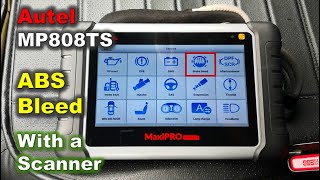
- GM GDS2 (or equivalent professional scan tool): Automated Bleed / Antilock Brake System Bleed — This function is required after replacing the BPMV or opening any hydraulic lines connected to it. The command cycles the internal solenoids and pump motor to purge trapped air from the hydraulic unit, which cannot be done with a manual bleed.
Wiring & Ground Locations
- Engine Compartment Fuse Block — Located in the engine compartment, typically on the driver's side.. This fuse block contains the main fuse for the Electronic Brake Control Module pump, often labeled JCF1. A blown fuse here will disable the system.
- G100 Ground Stud (Potential Chafe Point) — Engine compartment ground stud.. On some GM platforms, the engine wiring harness can rub against this stud, causing shorts or open circuits. While TSB 18-NA-114 primarily lists communication codes (U-codes) as a result, damage to the 5V reference or sensor signal wire within this harness could theoretically cause a C0131.
Real Owner Repair Stories
- 2CarPros Forum User (2007 Pontiac Torrent (Similar GM Platform)) — C0131 code and front left brake caliper locking up during normal driving.
❌ Tried (didn't work) Replacing the front left brake caliper and hose., Replacing ONLY the Electronic Brake Control Module (EBCM) and having it programmed.
✅ What actually fixed it The story highlights a common misdiagnosis. Even after replacing the EBCM, the mechanical problem persisted. Another mechanic immediately suggested the Brake Pressure Modulator Valve (BPMV) itself was the likely culprit, as the sensor is located in the hydraulic unit, not the electronic module that was replaced. - YouTube Channel 'ADAN CARS' (2008 GMC Acadia (Similar GM Platform)) — C0131 code present.
❌ Tried (didn't work) Attempting to replace only the electronic portion (EBCM) of the ABS module assembly.
✅ What actually fixed it The mechanic states the internal pressure sensor is extremely sensitive and was damaged during the attempted partial repair. His strong recommendation, based on experience, is that C0131 indicates an internal fault that requires the replacement of the entire, complete ABS module assembly (BPMV and EBCM together).
OEM Part Supersession History
42575993→42713918, then 42713919— Standard part evolution and revision by the manufacturer.
Heads up: No known incompatibilities; the latest part number should be used. Always verify the correct part number with the vehicle's VIN before ordering.
Helpful Videos
We Have This Part in Stock

The information in this article is provided for general reference and educational purposes only. Vehicle specifications, procedures, and part compatibility can vary by production date, trim level, and region. Always consult your vehicle's factory service manual and verify part numbers before purchasing or performing repairs. Safety-critical components such as airbags, seat belts, and braking systems should be installed by a qualified professional.
- Chevrolet TRAX:
- 🎬 Helpful Videos
- 🛍️ Shop This Part
- What's Unique About the 2021-2022 Chevrolet TRAX
- Diagnostic Flowchart
- Symptoms You May Notice
- Most Likely Causes
- Rare But Worth Checking
- Diagnosis Steps
- Parts You'll Likely Need
- Related Codes That Often Appear With This One
- Technical Service Bulletins (TSBs) & Recalls
- Platform-Specific Known Issues
- Mechanic-Grade Diagnostic Values
- Hidden / Shadow Codes Worth Checking
- Scan Tool Commands That Help
- Wiring & Ground Locations
- Real Owner Repair Stories
- OEM Part Supersession History
- 🎟️ Get 5% Off