

OBD-II Code C0095: All-Wheel Drive Actuator Circuit Malfunction
What C0095 means, why it triggers, and how to fix it
- Code C0095 disables your All-Wheel Drive system due to a rear differential actuator circuit fault, forcing the vehicle into two-wheel drive.
- The two most common fixes are replacing a burnt-out actuator motor ($350-$600) or updating the AWD module software ($150-$250).
- Always check for Technical Service Bulletins (TSBs) before replacing parts, as GM (TSB 23-NA-104) and Ford (SSM 48045) have specific, documented fixes.
- Do not clear the code without fixing the root cause; the AWD system runs a self-test on startup and will immediately trigger the C0095 code again.
What Does C0095 Mean?

Code C0095 means the All-Wheel Drive Control Module detected an electrical fault in the rear differential actuator. This small motor engages and disengages the AWD system via a clutch pack. When it fails, the computer shuts down the AWD system to prevent drivetrain damage and illuminates a dashboard warning light.
Technical definition: The SAE/ISO definition is "4WD/AWD Rear Differential Unit Actuator 'A' Circuit Malfunction". This indicates a fault in the electrical circuit controlling the rear differential lock or clutch engagement. On modern AWD platforms, it specifically targets the drivetrain's rear drive unit (RDU).
Can I Drive With C0095?
Yes, But With Caution. You can drive, but the All-Wheel Drive (AWD) or 4-Wheel Drive (4WD) system is disabled, forcing the car into two-wheel drive. This reduces traction on slippery surfaces like rain, snow, or gravel. Short-term driving won't cause mechanical damage, but prolonged use causes uneven tire wear. Drive with extra caution in poor weather and schedule a diagnosis promptly.
Common Causes

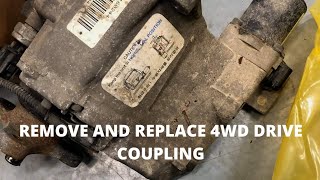
- Faulty Rear Differential Actuator (Very Common) — The small electric motor or solenoid inside the actuator burns out or fails mechanically, preventing AWD engagement. This is a known, documented failure point on many GM and Ford vehicles.
- Control Module Software/Calibration Issue (Common) — The control module's software misinterprets a normal signal from the actuator, triggering a false code. Manufacturers like Ford issue software updates (TSBs) to fix these glitches, specifically for the C0095:99 variant.
- Wiring or Connector Damage (Common) — The wiring harness and connector under the vehicle are exposed to moisture, road salt, and debris. A broken wire, loose connection, or corroded pin interrupts the signal from the control module.
- Poor AWD Module Ground (Common) — A documented issue on 2020+ Ford Escape models involves a poor ground connection for the AWD module itself. 🎬 Watch: Troubleshooting AWD module ground and voltage issues on Ford Escapes. This creates high resistance and voltage drops, triggering C0095 even if the actuator is perfectly functional.
- Blown Fuse or Faulty Relay (Less Common) — A blown fuse or a faulty relay in the 4WD/AWD circuit cuts power to the system entirely. This is the easiest and cheapest failure point to verify.
- Contaminated Fluid or Mechanical Binding (Less Common) — Low or contaminated differential fluid increases friction, causing internal gears to bind. This forces the actuator motor to work harder, draw excessive current, and eventually burn out.
- Failed AWD Control Module (Rare) — The computer responsible for sending commands to the actuator fails internally. This prevents the system from operating regardless of actuator or wiring health.
Symptoms

- AWD/4WD Service Warning Light — A "Service All-Wheel Drive" message or an illuminated AWD/4WD warning light appears on the dashboard.
- AWD System Disabled — The vehicle operates exclusively in two-wheel drive (usually front-wheel drive), and manual AWD/4WD engagement is locked out.
- Reduced Traction — During acceleration on wet, snowy, or loose surfaces, the rear wheels fail to provide power, causing front-wheel slip and reduced cornering stability.
- Drivetrain Noises — A whining, grinding, or clunking sound emanates from the rear differential as the system unsuccessfully attempts to engage.
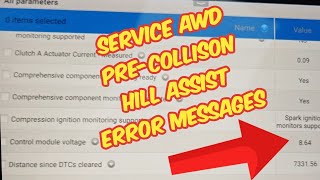
- Secondary Safety System Warnings — Related safety systems relying on drivetrain data disable themselves, triggering secondary warnings like "Pre-Collision Assist Not Available".
Diagnostic Flowchart

Tap your situation to follow the diagnostic path that matches what you're seeing on this code.
Common Fixes & Costs
- Replace Rear Differential Actuator — Parts: $200-$350, Labor: $150-$300, ~1.5 hr book time (Intermediate)
- Reprogram AWD Control Module — Parts: $0, Labor: $150-$250, ~1 hr book time (Professional)
- Repair Wiring or Connector — Parts: $20-$75, Labor: $150-$300, ~2 hr book time (Intermediate)
- Add Dedicated Ground to AWD Module — Parts: $10-$20, Labor: $100-$200, ~1.5 hr book time (Intermediate)
- Replace AWD Control Module — Parts: $600-$1100, Labor: $200-$350, ~1.5 hr book time (Professional)
Used vs. New Parts: Buying Guide
When a used part is worth it: A used actuator makes sense only for older vehicles (150k+ miles) on a strict budget. Because this is an electro-mechanical part prone to burnout, used parts carry a high risk of premature failure.
Donor-vehicle mileage cap: roughly under 80000 miles for the part to have meaningful remaining life.
Donor quality checklist:
- Verify the part number matches exactly.
- Source from a low-mileage vehicle.
- Avoid parts from the 'Salt Belt' to minimize pre-existing corrosion.
- Ensure the donor vehicle was scrapped for non-drivetrain reasons.
Decision logic:
- If The vehicle is under 100K miles or the part is for a known TSB-related failure → Buy a new OEM part. The reliability gain outweighs the cost savings.
- If The vehicle is over 150K miles and the budget is extremely tight → Buy a used part, but accept its unknown lifespan.
- If The cause of failure is a software glitch or wiring → Do not buy an actuator; focus on the correct repair.
Warranty tradeoff: Salvage yard parts offer 30-90 day warranties. New aftermarket parts offer 1-year to lifetime warranties. New OEM parts carry 1-2 year warranties.
Worst-case if a used part fails: $250-$500. If a used actuator fails, you pay for the part and labor a second time.
What Happens If You Wait — Timeline
- 0-1 month: Code C0095 sets, disabling AWD. The vehicle operates safely in 2WD, but lacks traction in adverse conditions. (MPG impact: 0-1%% · Added cost: $0)
- 1-6 months: The front tires handle 100% of the power, showing slightly accelerated wear compared to the rears. (MPG impact: 1-2%% · Added cost: $50-$100)
- 6-12 months: Uneven tire wear becomes pronounced, requiring premature replacement of the front tires. (MPG impact: 1-3%% · Added cost: $200-$800)
- 12+ months: If caused by mechanical binding or low fluid, continued operation destroys the differential, resulting in loud grinding and a locked rear axle. (MPG impact: N/A% · Added cost: $2500-$6000)
Cost of Not Fixing It
- 0-3 months: The vehicle operates in 2WD only, causing a significant loss of traction and stability in adverse weather. (Added cost: $0)
- 3-12 months: The front tires handle 100% of the drivetrain torque, leading to accelerated and uneven wear requiring premature replacement. (Added cost: $200-$800)
- 12+ months: If the root cause is mechanical binding or low fluid, ignoring it destroys the rear differential assembly. (Added cost: $2500-$6000)
Diagnosis Steps
- Check for Technical Service Bulletins (TSBs)
Search for TSBs related to C0095 for your specific VIN. GM (23-NA-104) and Ford (SSM 48045) have bulletins that point directly to the fix, bypassing hours of manual diagnosis.
Tools: ['Internet Access', 'Vehicle VIN'] (Beginner) - Perform a Comprehensive Scan
Use an advanced scanner to read chassis (C-codes) and network (U-codes). Look for symptom bytes like C0095:71 (Actuator Stuck) or C0095:99 (Software Update Required). Address any U-code communication faults first.
Tools: ['Advanced OBD-II Scanner'] (Intermediate) - Inspect Fuses and Relays
Check the cabin and under-hood fuse boxes for blown fuses related to the AWD, 4WD, or Drivetrain Control Module.
Tools: ['Test Light or Multimeter'] (Beginner) - Visually Inspect Wiring and Connector
Safely raise the vehicle. Inspect the rear differential actuator's electrical connector and harness for corrosion, frayed wires, or melted plastic.
Tools: ['Flashlight', 'Jack and Jack Stands'] (Beginner) - Check AWD Module Ground
If live data shows low module voltage (under 11V) despite a healthy battery, inspect the AWD module's ground connection. High resistance here triggers C0095.
Tools: ['Digital Multimeter', 'Wire Brush'] (Intermediate) - Test Actuator Circuit Voltage
Disconnect the actuator harness. With the ignition on, use a multimeter to verify ~12 volts at the connector when the system is active. Verify the ground pin has less than 0.5 ohms resistance to the chassis.
Tools: ['Digital Multimeter'] (Intermediate) - Measure Actuator Coil Resistance
Measure resistance between the power and ground pins on the actuator. Expected resistance is 1.5 to 5.0 Ohms. 'OL' indicates an open circuit; zero indicates a short.
Tools: ['Digital Multimeter'] (Intermediate) - Perform Bidirectional Actuator Test
Use a scan tool to command the actuator on and off. Listen for a click. Monitor live data for current draw (normal is 1-5 amps). High current (>8A) means the actuator is seized.
Tools: ['Bidirectional Scan Tool'] (Advanced)
When This Code Triggers (Freeze-Frame Conditions)
- Vehicle Speed: 25-55 mph (The fault logs during steady-state driving when the AWD module performs continuous self-tests.)
- Engine RPM: 1200-2500 RPM (Occurs under normal driving conditions, not during high-RPM maneuvers.)
- AWD System Status: Monitoring or Commanded ON (Sets when the system actively tries to engage the rear differential or during a routine circuit check.)
- Module Voltage: 11.5V - 14.5V (Sets when the vehicle is fully warmed up with normal operating voltage.)
Related Codes
- C0095 Suffixes (:71, :19, :99) — Advanced scanners show suffixes. C0095:71 means 'Actuator Stuck', C0095:19 means 'Circuit Current Out of Range', and C0095:99 means a software update is required.
- C0096 / C0097 — These indicate specific electrical faults within the actuator circuit ('Circuit Low' or 'Circuit High'). Diagnosis requires multimeter testing for shorts or opens.
- U-codes (e.g., U0121, U0415) — Communication codes. If present alongside C0095, the AWD module is losing network communication. Fix the U-code first; C0095 is just a symptom.
- C0035 / C0040 — Wheel speed sensor codes. A faulty sensor provides bad data, forcing the AWD module to disable the system and set C0095 as a secondary fault.
Climate & Environmental Factors
- Cold Weather: Extreme cold thickens differential fluid, increasing strain on the actuator motor and causing it to draw excessive current. Low battery voltage in cold weather also triggers transient electronic faults.
- High Humidity / Salt Belt Regions: Road salt and moisture cause severe corrosion at the actuator's electrical connector, leading to short circuits and high resistance.
How to Talk to a Mechanic About This Code
Say this: "I have an AWD warning light and my scanner shows code C0095. I'd like to schedule a diagnostic. Please check for any relevant TSBs, especially for software updates or known wiring issues, before recommending a new actuator. If you have an advanced scanner, please note any symptom bytes like :99, :71, or :19."
This signals you understand C0095 has multiple causes. It directs the technician to check for cheaper fixes (software, wiring) and prevents them from immediately quoting an expensive actuator replacement. Mentioning symptom bytes shows you require advanced diagnostics.
Avoid saying:
- 'My all-wheel drive isn't working.'
- 'The AWD light is on, can you just fix it?'
- 'My friend said I need a new differential actuator.'
Questions to ask before authorizing the repair:
- Did you find a specific TSB for my vehicle's VIN related to code C0095?
- What electrical tests (voltage, ground, resistance) did you perform to condemn the actuator?
- If the cause is wiring, can you show me the damaged section?
- Does this repair require a module reprogram or calibration, and is that included in the quote?
- What is the warranty on the parts and labor?
Where to Take It: Dealer vs Independent vs Chain
- Dealer:
Recommended. Given the high likelihood of software-related fixes and brand-specific TSBs, a dealer provides the most efficient diagnosis, potentially saving money on unneeded parts.
Best for: Vehicles under warranty., Repairs involving manufacturer-specific TSBs, especially software reprogramming., Complex electrical issues requiring proprietary diagnostic tools.
Downsides: Highest labor rates., Less willing to perform component-level wiring repairs. (Typical cost: +50% vs. baseline) - Independent Shop:
Good Fit. An independent shop is a great choice if you confirm the issue isn't a dealer-only software update. Ensure they have a bidirectional scan tool.
Best for: Out-of-warranty vehicles with known mechanical or wiring issues., Shops specializing in your vehicle's brand., Unofficial fixes, like the Ford Escape ground wire issue.
Downsides: May lack OEM software for reprogramming modules., Diagnostic skill varies; ensure they have advanced tools for chassis codes. (Typical cost: +0% vs. baseline) - Chain Shop:
AVOID. The complexity of C0095 is beyond the scope of chain shops. There is a high risk of paying for unneeded parts.
Best for: Simple maintenance like oil changes or tires.
Downsides: Technicians lack specialized training for complex AWD diagnostics., High pressure to sell parts leads to misdiagnosis., Not equipped for module programming. (Typical cost: -10% vs. baseline)
When to Walk Away From the Repair
If the estimated repair cost exceeds 40-50% of your car's private-party value, consider alternatives to repair.
- Car worth $5000, fix is $2500: Walk away. The repair cost is 50% of the car's value. It's not economically sensible to invest this much into an older vehicle.
- Car worth $15000, fix is $1200: Fix it. The repair is less than 10% of the vehicle's value and restores a key safety feature, preserving resale value.
- Car worth $8000, fix is $3000: Borderline. The cost is nearly 40% of the car's value. Get a second opinion. If the quote is firm, consider selling.
What Scan Tool You Need for This Code

Minimum: A scanner that reads manufacturer-specific Chassis (C-codes) and symptom bytes (e.g., :71, :99).
A basic $20 reader ignores Chassis codes or shows a generic 'C' code. The symptom byte is critical: :99 points to software, while :71 points to hardware. Without this detail, you are guessing.
Budget: BlueDriver Pro (~$100) — Reads and clears chassis codes and displays live data from the AWD module. Its 'Confirmed Fix' database provides insight from other owners.
Mid-range: Foxwell NT510 Elite / Innova 5610 (~$180) — Provides brand-specific diagnostics, reads symptom bytes, and offers bidirectional control to command the actuator on and off.
Professional: Autel MaxiCOM MK808 (~$450) — Provides full bidirectional control, deep live data analysis, and performs advanced module coding and calibrations needed after replacing parts.
Rent vs buy: Buy. Auto parts stores only rent basic code readers. Buying a mid-range tool is a good investment for modern car diagnostics.
How to Clear the Code After You Fix It
- Use a professional OBD-II scan tool to clear the C0095 code from the AWD module.
- Perform the specific relearn or calibration procedure for the new part if required by the manufacturer.
- Perform a complete drive cycle to allow the system to self-test and confirm the repair.
Drive cycle (~20 minutes): Start the engine cold and idle for 3 minutes. Perform mixed city driving (25-40 mph) with frequent stops for 10 minutes. Conclude with steady highway driving (55-65 mph) for 5-10 minutes.
Readiness monitors affected: This chassis code does not directly affect emissions readiness monitors., Clearing any codes resets all monitors, requiring a full drive cycle before an emissions test.
Before emissions retest: drive at least 50 miles to fully set monitors.
Watch out for:
- Clearing the code without fixing the fault causes the code to return immediately upon startup.
- Disconnecting the battery fails to clear the code from the AWD module's non-volatile memory.
- Skipping the manufacturer-specific calibration after replacing a module prevents the new part from functioning.
Will This Fail Emissions / State Inspection?
No — by itself this code doesn't fail OBD inspection (but it can keep readiness monitors from setting, which causes a separate fail).
- General Note: Code C0095 is a chassis code that illuminates a 'Service AWD' light, not the Check Engine Light (MIL). It does not cause an OBD-II emissions test failure.
- California: This code will not fail the smog check. However, clearing the code resets emissions readiness monitors, requiring a drive cycle before testing.
- New York: The OBD-II emissions inspection passes. However, New York safety inspectors can fail a vehicle for any illuminated dashboard warning light at their discretion.
- Texas: This code does not cause a failure. Texas testing focuses on powertrain codes (P-codes) and MIL status.
Most Commonly Affected Vehicles
- Buick Encore GX (2020-2023) — Covered by GM TSB 23-NA-104 for a faulty rear axle differential lock control actuator. Repair involves verifying software, checking wiring, and replacing the actuator (Part 42839345).
- Chevrolet Trailblazer (2021-2023) — Covered under GM TSB 23-NA-104 for the same faulty actuator issue as the Encore GX. Dealer repairs range from $600-$1100.
- Ford Edge (2019-2022) — Subject to Ford TSB SSM 48045 (module reprogram for C0095:99) and SSM 51117 (RDU motor replacement for C0095:71/:19).
- Ford Escape (2020-2022) — A widely reported issue on 2020 models involves a poor ground for the AWD module under the passenger seat, causing voltage drops. Also included in RDU motor TSBs.
- Hyundai Santa Fe / Tucson (2018-2022) — Commonly traced to wiring damage near the rear differential. The wiring harness pigtail (Part 47891-3B520) is a known failure point.
- Kia Sorento / Sportage (2018-2022) — Shares the Hyundai platform and experiences identical wiring harness failures at the electronic coupling.
- Lincoln Nautilus / Corsair (2019-2022) — Listed in Ford TSBs (SSM 48045, SSM 51117) for AWD module software issues and RDU motor failures.
- Volkswagen Golf / Tiguan (4MOTION) (2015-2021) — C0095 is often triggered secondarily by a faulty wheel speed sensor or failing Haldex pump confusing the AWD module.
Manufacturer-Specific Notes
- General Motors (Buick, Chevrolet): GM TSB 23-NA-104 dictates checking software and wiring before replacing the rear differential actuator. There are no recalls for this widespread issue.
- Ford (Lincoln): Ford has multiple TSBs. SSM 48045 requires a module reprogram for C0095:99. For 2020 Escapes, a common non-TSB fix is adding a supplemental ground wire to the AWD module. CSP 21B19 replaces the module entirely on some 2020-2021 models.
- Hyundai / Kia: The wiring harness connector at the rear differential electronic coupling frequently corrodes or breaks. Inspect this harness (Part 47891-3B520) before condemning the actuator.
- Older Vehicles (Pre-2010): On older platforms, C0095 refers to an ABS wheel speed sensor circuit or ABS solenoid, not a differential actuator. Use a vehicle-specific scan tool.
Real Owner Stories
2021 Chevy Trailblazer at 45K miles
The 'Service All-Wheel Drive' light illuminated during a commute. The vehicle drove fine, but AWD failed to engage in the rain.
What they tried:
- The owner took the vehicle to the dealership.
Outcome: The dealer referenced GM TSB 23-NA-104, confirmed the rear differential actuator failed, and replaced it (Part 42839345). The $900 repair resolved the issue.
Lesson: For newer GM vehicles, this is a known issue. Mentioning the TSB to your service advisor speeds up diagnosis and ensures the correct fix.
2019 Ford Edge at 61K miles
An 'AWD Malfunction' error appeared alongside 'Pre-Collision Assist Not Available'.
What they tried:
- The owner scanned the code at an auto parts store, confirming C0095.
- They took it to a dealer, who read the specific symptom byte C0095:99.
Outcome: The dealership performed a software update on the AWD module per Ford TSB SSM 48045. The $200 repair cleared the code permanently.
Lesson: Don't assume C0095 requires expensive hardware. On Fords, suffix :99 points directly to a cheaper software fix requiring an advanced scanner.
2020 Ford Escape at 30K miles
The 'AWD Disabled' light appeared intermittently in damp weather. The dealer could not replicate the issue.
What they tried:
- The dealer found C0095 but the actuator and wiring tested fine.
- The owner researched forum posts describing a poor ground connection.
Outcome: An independent mechanic inspected the AWD module's ground under the passenger seat, found high resistance, and added a dedicated ground wire to the chassis. This $150 fix solved the intermittent code.
Lesson: For intermittent electrical issues, check owner forums. A well-documented poor ground was the root cause, not the actuator.
2018 Hyundai Santa Fe at 80K miles
The AWD warning light illuminated. A visual inspection revealed damaged wiring leading to the rear differential.
What they tried:
- The owner identified the damaged connector and harness pigtail.
Outcome: The owner purchased the specific wiring harness pigtail (Part 47891-3B520) for $50 and spliced it in using weatherproof connectors. This cleared the code.
Lesson: Perform a thorough visual inspection before ordering parts. On Hyundai/Kia models, exposed wiring is a common failure point repaired for a fraction of the cost of an actuator.
How to Prevent This Code From Triggering
- Change Rear Differential Fluid (Every 30,000 to 60,000 miles) — Clean fluid lubricates gears and clutch packs. Contaminated fluid increases friction, forcing the actuator motor to work harder and eventually fail.
- Apply Corrosion Inhibitor to Connectors (Annually in Salt Belt regions) — Applying dielectric grease to the actuator's electrical connector prevents moisture intrusion and corrosion, a primary cause of circuit faults.
- Perform Regular Tire Rotations (Every 5,000 to 8,000 miles) — AWD systems are sensitive to tire circumference differences. Uneven wear forces the system to constantly adjust, stressing the clutches and actuators.
- Avoid Improper Towing (Whenever towed) — AWD vehicles must be towed on a flatbed. Towing with two wheels on the ground causes catastrophic damage to the center differential and rear differential assembly.
Frequently Asked Questions
What is the most common misdiagnosis for C0095?
A common mistake is replacing the expensive rear differential actuator without performing electrical tests. Technicians often find that checking for TSBs, inspecting for damaged wiring, or fixing bad grounds reveals a much cheaper fix. Always test the circuit with a multimeter before condemning the actuator.
Can I fix code C0095 myself?
Replacing a blown fuse or repairing a visible wire break are accessible DIY fixes. However, replacing the actuator requires intermediate skills, and module programming requires professional OEM software. If the issue requires software updates or module replacement, take the vehicle to a qualified shop.
Will clearing the code fix the problem?
No, clearing the code only turns off the warning light temporarily. Because C0095 indicates a hard electrical fault, the code returns as soon as the AWD module runs its self-test. You must fix the underlying hardware or software issue.
Is the actuator the same as the rear differential?
No, the actuator is a small, separate electric motor bolted to the outside of the rear differential housing. While internal differential problems can cause the actuator to fail, the actuator itself is a distinct, replaceable component.
What does the C0095 suffix :71 or :19 mean?
These two-digit symptom bytes on advanced scan tools pinpoint the exact failure type. Suffix ':71' means 'Actuator Stuck' (mechanical bind), while ':19' means 'Circuit Current Out of Range' (electrical fault). These suffixes dictate whether you need a mechanical repair or an electrical diagnosis.
How much does it cost to diagnose code C0095?
Most repair shops charge a diagnostic fee ranging from $120 to $200. This covers the technician's time to scan the vehicle, check for TSBs, and perform electrical tests. Shops often apply this fee to the final repair cost if you authorize the work.
Why did my AWD system turn off in cold weather?
Extreme cold thickens differential fluid, increasing mechanical resistance and causing the actuator motor to draw excessive current. Low battery voltage in freezing temperatures also triggers transient electronic faults across the AWD module. If the light persists after the vehicle warms up, you have a hard fault requiring repair.
Key Takeaways
- Code C0095 disables your All-Wheel Drive system due to a rear differential actuator circuit fault, forcing the vehicle into two-wheel drive.
- The two most common fixes are replacing a burnt-out actuator motor ($350-$600) or updating the AWD module software ($150-$250).
- Always check for Technical Service Bulletins (TSBs) before replacing parts, as GM (TSB 23-NA-104) and Ford (SSM 48045) have specific, documented fixes.
- Do not clear the code without fixing the root cause; the AWD system runs a self-test on startup and will immediately trigger the C0095 code again.
Helpful Videos

The information in this article is provided for general reference and educational purposes only. Vehicle specifications, procedures, and part compatibility can vary by production date, trim level, and region. Always consult your vehicle's factory service manual and verify part numbers before purchasing or performing repairs. Safety-critical components such as airbags, seat belts, and braking systems should be installed by a qualified professional.
- 🎬 Helpful Videos
- What Does C0095 Mean?
- Can I Drive With C0095?
- Common Causes
- Symptoms
- Diagnostic Flowchart
- Common Fixes & Costs
- Used vs. New Parts: Buying Guide
- What Happens If You Wait — Timeline
- Cost of Not Fixing It
- Diagnosis Steps
- When This Code Triggers (Freeze-Frame Conditions)
- Related Codes
- Climate & Environmental Factors
- How to Talk to a Mechanic About This Code
- Where to Take It: Dealer vs Independent vs Chain
- When to Walk Away From the Repair
- What Scan Tool You Need for This Code
- How to Clear the Code After You Fix It
- Will This Fail Emissions / State Inspection?
- Most Commonly Affected Vehicles
- Manufacturer-Specific Notes
- Real Owner Stories
- 2021 Chevy Trailblazer at 45K miles
- 2019 Ford Edge at 61K miles
- 2020 Ford Escape at 30K miles
- 2018 Hyundai Santa Fe at 80K miles
- How to Prevent This Code From Triggering
- Frequently Asked Questions
- What is the most common misdiagnosis for C0095?
- Can I fix code C0095 myself?
- Will clearing the code fix the problem?
- Is the actuator the same as the rear differential?
- What does the C0095 suffix :71 or :19 mean?
- How much does it cost to diagnose code C0095?
- Why did my AWD system turn off in cold weather?
- Key Takeaways
- 🎟️ Get 5% Off