

C0055 on 2008-2012 Chevrolet Express: Rear Speed Sensor Circuit Fault Causes and Fixes
On a 2008-2012 Chevy Express, code C0055 usually means there's a problem with the Vehicle Speed Sensor (VSS) on the transmission or its wiring. The sensor itself is the most common fix and is relatively inexpensive. However, a damaged wiring harness, a faulty ABS module (EBCM), or even a failing Transmission Control Module (TCM) are also frequent causes.
- C0055 on a Chevy Express refers to the Vehicle Speed Sensor (VSS) circuit, not sensors on the rear wheels.
- The most likely causes are a bad VSS on the transmission, or damaged wiring running over the transmission.
- Symptoms are not just an ABS light; expect speedometer issues and harsh transmission shifting.
- If a new sensor and wiring check don't solve it, the ABS module (EBCM) is a likely culprit, as noted in a GM Technical Service Bulletin.
- Because this involves the ABS, professional diagnosis is recommended if the initial, simple fixes don't work.
What's Unique About the 2008-2012 Chevrolet EXPRESS

The key challenge on the Chevy Express is that C0055 points to a 'rear wheel speed sensor' circuit, yet these vans don't have individual sensors on the rear wheels. The signal actually originates from the Vehicle Speed Sensor (VSS) on the transmission. This signal takes a long path: the VSS creates an analog AC signal, which goes to the Transmission Control Module (TCM), which converts it to a digital square wave signal, which then goes to the Engine Control Module (ECM), and is finally relayed to the Electronic Brake Control Module (EBCM). This complex path creates multiple potential failure points beyond just the sensor. A manufacturer TSB (PIT4815C) highlights that a working speedometer is not a reliable indicator of a good VSS circuit, as the instrument panel can receive speed data over the CAN bus from other modules, masking the underlying hard-wired circuit fault.
Diagnostic Flowchart
Tap your situation to follow the diagnostic path that matches what you're seeing on this vehicle.
Symptoms You May Notice 🎬 Watch: See these dashboard warning lights and symptoms in action
- ABS warning light is on
- Brake warning light is on
- Traction Control or StabiliTrak warning light is on
- Speedometer is erratic, twitching, or shows zero
- Transmission shifts harshly, late, or incorrectly
- Vehicle feels sluggish or lacks power
- Cruise control is inoperative
- Replacing the front wheel speed sensors. This code is specific to the rear speed signal, which comes from the VSS on the transmission, not the front wheels.
- Assuming the vehicle needs a new transmission. The erratic shifting is often a symptom of the missing speed signal, not a mechanical failure of the transmission itself.
- Trusting the speedometer reading. TSB PIT4815C explicitly warns that the speedometer can work correctly even when the hard-wired VSS circuit has failed, as it may receive speed data over the vehicle's data bus from another module.
Most Likely Causes

- Damaged Vehicle Speed Sensor (VSS) Wiring or Connector 🔴 High Probability The VSS wiring harness is notoriously prone to damage where it runs over the top of the transmission and bellhousing. It can rub against the chassis, firewall, or transmission case itself, leading to chafed, shorted, or broken wires. The connector pigtail is also exposed to heat and road debris, causing corrosion or broken locking tabs.
How to confirm: Visually inspect the entire harness from the VSS on the transmission to where it enters the main loom. Pay close attention to the connector for corrosion and the section of harness that goes over the transmission housing. A continuity test from the sensor connector to the TCM/ECM can confirm a broken wire.
Typical fix: Repair the damaged section of wire or replace the VSS connector pigtail. In some cases of extensive chafing, a new harness section may need to be spliced in.
Est. part cost: $15-$40 - Failed Vehicle Speed Sensor (VSS) 🔴 High Probability The VSS is an electronic sensor located on the transmission that can fail with age and heat cycles. It's a very common failure point for this code.
How to confirm: After ruling out wiring, replacing the sensor is a common and relatively inexpensive diagnostic step. A multimeter can be used to check the sensor's resistance; a reading between 1,300 and 1,400 ohms is a common value for this application, though some sources cite a wider range. A definitive test involves watching the AC voltage or frequency output with a multimeter or lab scope while spinning the driveshaft.
Typical fix: Replace the Vehicle Speed Sensor on the transmission tail shaft or transfer case. It is typically held in by a single bolt or is threaded in.
Est. part cost: $20-$60 - Failed Electronic Brake Control Module (EBCM) 🟡 Medium Probability TSB PIT4815C specifically calls out that the EBCM can be the cause of C0055 when no other codes are present. The module's internal circuitry can fail, preventing it from correctly interpreting a good speed signal that is confirmed to be arriving at its connector.
How to confirm: This requires advanced diagnosis. A technician would use a lab scope or a multimeter with a frequency (Hz) function to confirm a clean square-wave signal is reaching the EBCM connector on circuit 817 (Yellow/Black wire). If the signal is good (approx. 1.1 Hz per MPH) but the code persists, the EBCM is faulty.
Typical fix: Replace the electronic portion of the ABS module. 🎬 Watch this walkthrough on replacing the ABS control module This often requires programming to the vehicle's VIN, though some used modules may be plug-and-play.
Est. part cost: $200-$500 for a remanufactured unit, higher for new OEM.
Rare But Worth Checking
- Worn Transfer Case / Transmission Bushing or Bearing: A worn output shaft bushing or bearing can cause excessive play in the driveshaft yoke. This allows the internal reluctor ring (tone ring) to wobble and make physical contact with the VSS, damaging the sensor tip. If you replace the VSS and it fails again quickly with physical damage, inspect the output shaft for excessive up-and-down movement.
- Faulty Transmission Control Module (TCM): The TCM is a critical link in the signal path, converting the VSS's analog signal to a digital one for the other modules. In a documented case on 2CarPros.com, after replacing the VSS, ECM, and EBCM to no avail, a new OEM TCM finally resolved the C0055 code. This is a last-resort diagnosis after all wiring and other components test good.
- Faulty Engine Control Module (ECM): While rare, the ECM, which processes and relays the speed signal from the TCM to the EBCM, can fail. This is usually diagnosed after all other possibilities, including the complex wiring harness, have been exhaustively checked.
Diagnosis Steps

- Scan the EBCM for codes and confirm C0055 is present. Check for specific symptom bytes like '00' or '5A'. Check the ECM/TCM for related codes like P0502.
- Use a scan tool to monitor the rear wheel speed data while driving. Watch for erratic readings, dropouts, or a constant zero value. Note if the signal drops out specifically during acceleration from a stop, which can indicate a C0055 5A fault.
- Locate the Vehicle Speed Sensor (VSS) on the tail shaft of the transmission (2WD) or transfer case (4WD). It is typically on the driver's or passenger's side of the rear housing.
- Thoroughly inspect the VSS connector and wiring harness for any signs of damage, corrosion, or chafing, especially where the harness routes over the top of the transmission.
- If wiring looks good, test the VSS. With a multimeter set to Ohms, check for resistance between 1,300-1,400 Ohms. For a dynamic test, set the meter to AC Hz, and spin the rear wheels; you should see a frequency that increases with speed (approx. 25 Hz per 1 MPH).
- If the VSS and its immediate wiring are good, the next step is to test the signal path. This requires advanced tools.
- Using an oscilloscope or multimeter with Hz, check for a clean square wave signal at the EBCM connector on Circuit 817 (Yellow/Black wire). The expected signal is approximately 1.1 Hz per 1 MPH. If the signal is present and clean, the EBCM is the likely culprit.
- If the signal is absent or noisy at the EBCM, trace it back to the ECM and then the TCM to find where the signal is lost or corrupted. This can isolate a wiring fault between modules or a faulty module (TCM/ECM).
- If the EBCM is replaced, it may require programming by a dealer or a properly equipped independent shop to match the vehicle's VIN and options.
Parts You'll Likely Need

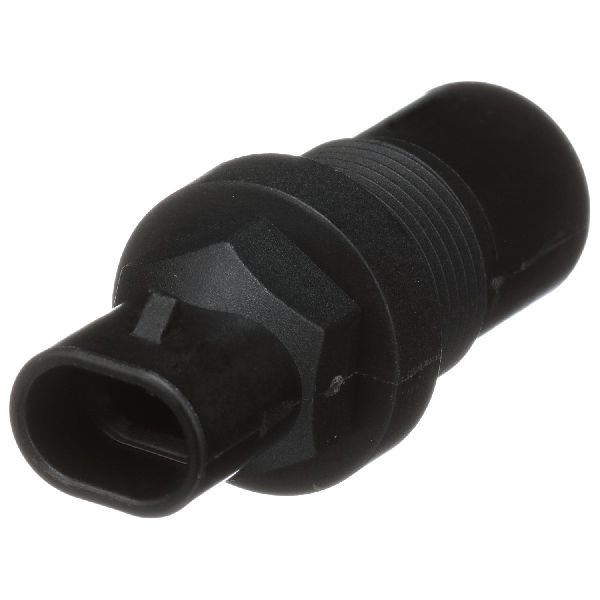
- Vehicle Speed Sensor (VSS)
(OEM #ACDelco 213-196 (GM 24244403))— This sensor is the source of the rear wheel speed signal and is the most common part to fail, triggering code C0055.
Trusted brands: ACDelco, Delphi, Standard Motor Products (SMP), Dorman
OEM price range: $40-$70
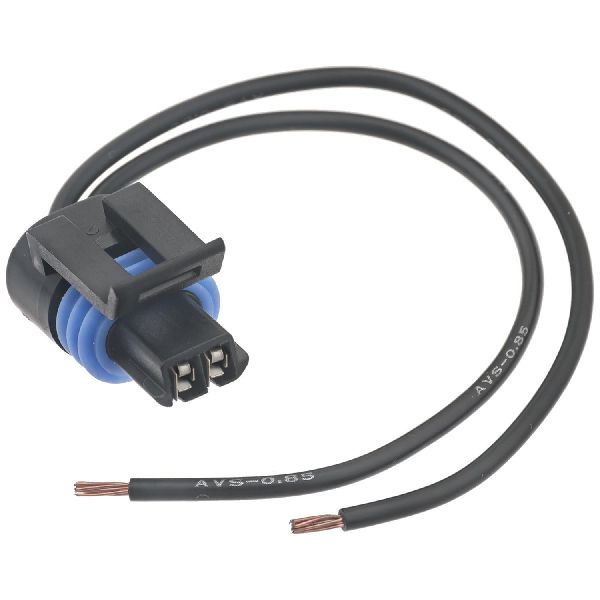
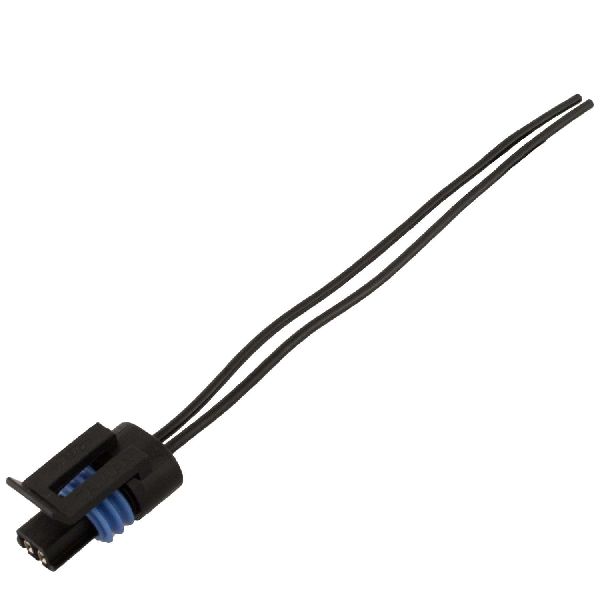
Aftermarket price range: $20-$50 - Vehicle Speed Sensor Connector Pigtail — The connector itself often breaks or corrodes, or the wires break right at the connector due to heat and vibration. Replacing the pigtail is often necessary when repairing the harness.
Trusted brands: ACDelco, Dorman, Standard Motor Products (SMP)
OEM price range: $25-$45
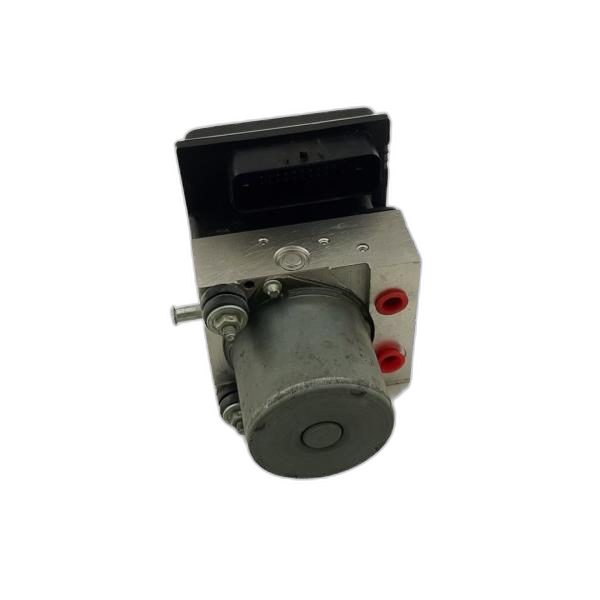
Aftermarket price range: $15-$30 - Electronic Brake Control Module (EBCM) — If the sensor and wiring are confirmed to be good, the EBCM itself is the next likely cause, as noted in TSB PIT4815C and confirmed in owner forums.
Trusted brands: ACDelco (New or Reman), Dorman (remanufactured), Module repair services on eBay
OEM price range: $300-$500+
Aftermarket price range: $200-$400
Related Codes That Often Appear With This One
- P0502 — P0502 stands for 'Vehicle Speed Sensor Circuit Low Input'. Since the C0055 code relies on the VSS signal, a fault in this sensor or its circuit will often trigger both the powertrain (P-code) and chassis (C-code) control modules.
- C0055 0F — This is a more specific version of the code indicating 'Rear Speed Sensor Erratic Operation'. It points to a signal that is present but unstable or dropping out, often seen when testing with a professional scan tool.
Technical Service Bulletins (TSBs) & Recalls

- PIT4815C: Addresses diagnostics for a C0055 code appearing without other complaints, pointing towards specific circuit tests using a multimeter and warning against being misled by a working speedometer.
Platform-Specific Known Issues
- TSB PIT4815C is critical for this code. It warns technicians not to trust a working speedometer as proof the VSS circuit is good, as speed data can be sent over GMLAN, bypassing a hardwired fault. It advises using a multimeter to directly test the VSS signal frequency.
- Wiring harness chafing over the transmission bellhousing is a very common point of failure for the VSS circuit on these vans and related GM trucks.
Mechanic-Grade Diagnostic Values
- Processed Speed Signal Frequency at EBCM — expected: Approximately 1.1 Hz per 1 MPH. Failure: Signal is absent, erratic, or does not match vehicle speed.
- Raw VSS Signal Frequency at Sensor — expected: Approximately 25 Hz per 1 MPH. Failure: Signal is absent, erratic, or does not increase with driveshaft speed.
- VSS Resistance — expected: 1,300 - 1,400 Ohms. Failure: Reading is open (infinite resistance) or outside the specified range.
Hidden / Shadow Codes Worth Checking
- C0055 00: Indicates the EBCM has detected a hard circuit fault: an open circuit, a short to ground, or a short to voltage. This points directly to a wiring problem or a completely dead sensor. (see via A professional scan tool capable of reading manufacturer-specific symptom bytes from the EBCM (e.g., GM Tech2, high-end Autel/Snap-on).)
- C0055 5A: Indicates the EBCM has detected an erratic or implausible signal. The signal is present but unstable, dropping out, or not logical compared to other inputs. This often points to a failing sensor, a loose connection, or internal module faults. One documented case showed the rear speed signal dropping to zero only during initial acceleration from a stop. (see via A professional scan tool capable of reading manufacturer-specific symptom bytes from the EBCM (e.g., GM Tech2, high-end Autel/Snap-on).)
Scan Tool Commands That Help
- GM Tech2 / GDS2: EBCM Live Data Monitoring (Rear Wheel Speed) — Use while driving or with wheels spinning on a lift to observe the rear speed signal as seen by the EBCM. This is the most effective way to see if the signal is dropping out, erratic, or completely absent, which helps differentiate a hard fault (C0055 00) from an intermittent one (C0055 5A).
- GM Tech2 / GDS2: Automated Test / System Test — After a repair, this function cycles the ABS pump and solenoids to verify system integrity and can help confirm if a fault is still present without a full test drive.
Wiring & Ground Locations
- Circuit 817 — Yellow wire with a black stripe running between the Engine Control Module (ECM) and the Electronic Brake Control Module (EBCM).. This is the specific wire that carries the final, processed rear wheel speed signal to the EBCM. TSB PIT4815C directs technicians to test the signal frequency on this wire at the EBCM to confirm if the fault is with the EBCM or upstream (wiring, ECM, TCM, VSS).
- G300 — On the left (driver's side) frame rail, near the EBCM.. This is a primary ground point for the Electronic Brake Control Module (EBCM). A corroded or loose G300 can cause a variety of ABS faults, including communication errors or incorrect sensor readings, potentially leading to a C0055 code.
- Harness Chafe Point — The section of the wiring harness that runs over the top of the transmission, between the transmission case and the vehicle's firewall/body.. This is a notorious location for the VSS wiring to rub through due to engine and transmission movement, causing the wires to short out or break. This is a very common root cause of C0055 and P0502 codes.
Real Owner Repair Stories
- 2CarPros.com Forum User 'KEVBOAC' (2008 Chevrolet Express 6.0L V8 2WD, 121,000 miles) — ABS and brake lights on, vehicle was sluggish. Scan tool showed erratic rear wheel speed.
❌ Tried (didn't work) Replaced Electronic Brake Control Module (EBCM), Replaced Vehicle Speed Sensor (VSS), Replaced Engine Control Module (ECM), Created an overlay harness (new wires) from the EBCM to the ECM
✅ What actually fixed it Replacing the Transmission Control Module (TCM) with a new OEM part and programming it resolved all issues. The TCM was corrupting the signal before sending it to the ECM. - YouTube channel 'Speedometer Erratic/Twitching Won't Shift' video (Chevy/GMC Truck (GMT800 platform, but identical issue)) — Speedometer twitching and erratic, transmission not shifting correctly, code C0055.
❌ Tried (didn't work) Replacing the Vehicle Speed Sensor (VSS)
✅ What actually fixed it The wiring harness that runs over the top of the transmission, between the firewall and the back of the engine, had rubbed through. Repairing the damaged wires in this harness fixed the problem.
"I Checked Everything" — The Actual Cause
- In a documented case, all standard diagnostic procedures, including replacing the sensor (VSS), the final control module (EBCM), the relaying module (ECM), and even running new wires between them, failed to resolve the C0055 code. The actual cause was a faulty Transmission Control Module (TCM). The TCM, which is an intermediate step in the signal path, was internally corrupting the good signal from the VSS before passing it on to the ECM and EBCM. This is a classic example of a fault that standard end-to-end circuit testing can miss.
Helpful Videos

Used OEM Parts in Stock


New Aftermarket Parts Available


The information in this article is provided for general reference and educational purposes only. Vehicle specifications, procedures, and part compatibility can vary by production date, trim level, and region. Always consult your vehicle's factory service manual and verify part numbers before purchasing or performing repairs. Safety-critical components such as airbags, seat belts, and braking systems should be installed by a qualified professional.
- Chevrolet EXPRESS:
- 🎬 Helpful Videos
- 🛍️ Shop This Part
- What's Unique About the 2008-2012 Chevrolet EXPRESS
- Diagnostic Flowchart
- Symptoms You May Notice
- Most Likely Causes
- Rare But Worth Checking
- Diagnosis Steps
- Parts You'll Likely Need
- Related Codes That Often Appear With This One
- Technical Service Bulletins (TSBs) & Recalls
- Platform-Specific Known Issues
- Mechanic-Grade Diagnostic Values
- Hidden / Shadow Codes Worth Checking
- Scan Tool Commands That Help
- Wiring & Ground Locations
- Real Owner Repair Stories
- "I Checked Everything" — The Actual Cause
- 🎟️ Get 5% Off