

OBD-II Code C0053: Steering Wheel Position Sensor 'B' Signal Fault
What C0053 means, why it triggers, and how to fix it
- Code C0053 disables critical safety systems like stability control and ABS by flagging a missing or erratic 'B' signal from the steering angle sensor.
- The two most common hardware failures are a broken clock spring (often accompanied by a dead horn) or a dead steering angle sensor, costing between $300 and $750 to replace.
- Always check your battery voltage (needs to be 12.4V+) and perform a steering angle sensor calibration before buying replacement parts.
- Do not drive at highway speeds or in wet weather with this code, as your vehicle's anti-skid and airbag systems are compromised and will not protect you in a crash.
What Does C0053 Mean?
The Engine Control Unit (ECU) detected a problem with the Steering Wheel Position Sensor. This sensor uses multiple signals to report the exact steering wheel angle. 'Signal B' is sending an invalid, inconsistent, or missing reading. This fault immediately disables critical safety systems like stability control (ESC), traction control (TCS), and airbags that rely on steering trajectory data.
Technical definition: The SAE/OBD-II definition is Steering Wheel Position Sensor 'Signal B' (Subfault). The ABS, ESC, or PSCM module detected the 'B' channel signal is missing, out of its specified voltage range, or inconsistent with the sensor's primary 'A' channel signal.
Can I Drive With C0053?
Yes, But With Caution. Yes, but do not drive for extended periods or in adverse weather. Your vehicle's Electronic Stability Control (ESC) and Anti-lock Braking System (ABS) are disabled, increasing the risk of skidding during emergency maneuvers. Stopping distances increase, and airbags will likely not deploy correctly in a collision. Get the vehicle diagnosed immediately to restore these critical safety functions.
Common Causes
- Damaged or failing clock spring (Very Common) — The clock spring is a rotary electrical connector housing the wiring for the steering angle sensor, airbag, and steering wheel controls. Constant turning fatigues the internal ribbon cable, causing it to break and create an open circuit in the 'Signal B' wire.
- Internal failure of the Steering Wheel Position Sensor (Very Common) — The sensor is a sealed electronic component that wears out over time. If the internal circuit dedicated to Signal B breaks down, the entire sensor assembly requires replacement.
- Sensor misalignment or lack of calibration (Common) — If the steering wheel, steering column, or front-end alignment was recently serviced, the sensor loses its 'zero point'. This causes its signals to desync from the actual steering angle, instantly triggering a fault.
- Low Battery Voltage or Weak Charging System (Common) — A weak battery or failing alternator drops system voltage below 12.4V, causing erratic behavior and false codes from electronic modules that monitor the steering angle sensor.
- Damaged wiring or corroded connector (Common) — Wiring in the steering column frays or pinches from constant movement. Connectors loosen, or pins corrode from moisture, interrupting the 5-volt reference or signal return.
- Water intrusion into connectors or modules (Less Common) — On specific vehicles (like GM SUVs), water leaks past body plugs in the 'A' pillar and corrodes Body Control Module (BCM) connectors, causing communication loss with the steering sensor.
- Corrupted Software or Calibration Data (Less Common) — During a module re-flash or a dead battery event, the sensor's calibration data within the control module corrupts. Invalid stored parameters for the 'B' channel force the module to flag C0053.
- Faulty control module (ABS/ESC/BCM) (Rare) — The control module receiving the sensor's signal fails internally. This is the least likely scenario and is only considered after verifying the sensor, clock spring, and wiring.
Symptoms
- Stability Control (ESC/VSC/Stabilitrak) or Traction Control (TCS) warning light is on — These systems disable immediately when they lose reliable steering angle data.
- ABS warning light is on — The anti-lock braking system shares data with the ESC system and disables alongside it.
- Airbag or SRS warning light is on — The airbag system requires steering wheel position data for deployment decisions. A sensor or clock spring fault compromises the system.
- Horn, cruise control, or steering wheel buttons are inoperative — These failures point directly to a broken clock spring, which bundles the steering angle sensor wiring with these functions.
- Unusual noises from the steering column — A rubbing, scraping, or clicking sound when turning the wheel indicates the internal ribbon of a failing clock spring is catching or snapping.
- Loss of or heavy power steering — Vehicles with electric power steering (EPS) default to heavy, unassisted steering because the system loses the input required to calculate assist levels.
- Live data for Signal B is frozen, erratic, or zero (scan-tool only — no driver-felt sign) — On a scan tool, Signal B fails to change smoothly as the wheel turns, while Signal A reads correctly. This isolates the fault to the B channel.
Diagnostic Flowchart
Tap your situation to follow the diagnostic path that matches what you're seeing on this code.
Common Fixes & Costs
- Replace the Clock Spring Assembly — Parts: $150-$400, Labor: $150-$350, ~2.0 hr book time (Professional)
- Replace the Steering Angle Sensor — Parts: $100-$350, Labor: $150-$400, ~1.5 hr book time (Intermediate)
- Perform Steering Angle Sensor Calibration — Parts: $0, Labor: $100-$200, ~0.5 hr book time (DIY)
- Repair Damaged Wiring or Connector — Parts: $10-$50, Labor: $100-$250, ~1.5 hr book time (Intermediate)
- Replace Steering Column Assembly — Parts: $700-$1500, Labor: $300-$800, ~5.3 hr book time (Professional)
Used vs. New Parts: Buying Guide
When a used part is worth it: A used OEM clock spring or sensor from a low-mileage, non-accident vehicle is cost-effective for vehicles over 10 years old. Avoid used parts for integrated steering column assemblies.
Donor-vehicle mileage cap: roughly under 80000 miles for the part to have meaningful remaining life.
Donor quality checklist:
- Verify the donor vehicle was not in a front-end collision.
- Ensure the part number matches exactly.
- Check for a 30-day return policy from the auto recycler.
Decision logic:
- If The part is a simple clock spring and the vehicle is over 10 years old → A used OEM part is a reasonable choice to save money.
- If The part is integrated with the airbag or a complex electronic module → New OEM or a high-quality new aftermarket part is mandatory for safety.
- If The cost of a new aftermarket part is within $50 of a used OEM part → Opt for the new aftermarket part for the longer warranty.
Warranty tradeoff: Used parts offer a 30-90 day warranty. New aftermarket parts offer 1-year to limited lifetime warranties. New OEM parts offer 1-2 year warranties.
Worst-case if a used part fails: $250-$600 if a used part fails, requiring you to pay labor a second time.
What Happens If You Wait — Timeline
- Immediate: Code C0053 sets. ABS, ESC, and Traction Control warning lights illuminate. Safety systems disable. (MPG impact: 0%% · Added cost: $0 (Safety risk is the primary cost))
- 0-2 months: Steering feels heavy or inconsistent on EPS vehicles. Airbag light illuminates, indicating compromised deployment. (MPG impact: 0-1%% · Added cost: $0-$50 (Potential for uneven tire wear if alignment is off))
- 2-6 months: Driver experiences 'warning light fatigue' and ignores new, critical warnings. Increased risk of an avoidable accident. (MPG impact: 0-1%% · Added cost: $500+ (Potential insurance deductible from an accident))
- 6+ months: If the root cause is a failing clock spring, the internal ribbon breaks completely, causing total loss of horn and airbag functionality. (MPG impact: 0%% · Added cost: $750-$1500 (Cost of complex repairs if failure cascades))
Cost of Not Fixing It
- Immediate: Disabled safety systems (ABS, Traction Control, Stability Control). Increased risk of skidding. Airbag system is compromised. (Added cost: N/A (Safety risk))
- 0-6 months: Continued driving without stability control leads to uneven tire wear if alignment is off. High potential for an accident that ESC/ABS would have prevented. (Added cost: $200-$800 (Tires, potential accident deductible))
- 6+ months: Ignoring warning lights causes driver desensitization. A failing clock spring ribbon breaks completely, causing total loss of horn and airbag functionality. (Added cost: $750-$1500 (Cascading module failures or accident costs))
Diagnosis Steps
- Read the Fault Codes
Use an OBD-II scanner capable of reading Chassis (C) and Network (U) codes to confirm C0053. Note all other codes. Codes for other sensor signals (C0052) or communication (U-codes) dictate the diagnostic path.
Tools: OBD-II Scan Tool (with Chassis & Network code capability) (Beginner) - Check Battery and Charging System
Verify the battery voltage is 12.4V or higher with the engine off, and the alternator charges between 13.5-14.5V with the engine running. Low voltage is a primary cause of false electronic faults.
Tools: Digital Multimeter (Beginner) - Check for Related Technical Service Bulletins (TSBs)
Search for TSBs for your specific vehicle related to C0053. Manufacturers frequently release bulletins for known issues like water intrusion, faulty connectors, or software updates that cause this code.
Tools: Online Service Information Subscription or Google Search (Intermediate) - Analyze Live Sensor Data
Use a scan tool's 'Live Data' function to view 'Steering Angle Signal A' and 'Signal B'. Turn the steering wheel slowly lock-to-lock. Look for Signal B to freeze, jump erratically, or drop to zero while Signal A reads smoothly. This isolates the fault to the 'B' circuit.
Tools: Advanced OBD-II Scan Tool (Intermediate) - Perform a 'Wiggle Test'
While watching live data for Signal B, gently wiggle the wiring harness and connectors at the base of the steering column. If the signal reading flickers or drops out, you have an intermittent connection or a broken wire.
Tools: Advanced OBD-II Scan Tool (Intermediate) - Test Sensor Circuit and Signal Voltage
Disconnect the sensor and check for a 5-volt reference signal and a solid ground (less than 0.5 Ohms) at the harness connector. Next, backprobe the Signal B wire with the sensor connected. An analog sensor shows near 2.5V when centered, swinging smoothly towards 0V and 5V as the wheel turns. A stuck voltage indicates a failed sensor or shorted wire.
Tools: Digital Multimeter (with backprobe pins), Wiring Diagram (Advanced) - Analyze Sensor Waveform with an Oscilloscope
Connect a lab scope to the Signal A and Signal B output wires. An analog sensor produces two smooth, opposing sine waves. A digital sensor produces two square waves 90 degrees out of phase. A flat or noisy waveform on Signal B confirms internal sensor failure.
Tools: Automotive Oscilloscope, Wiring Diagram (Professional) - Calibrate the New Sensor
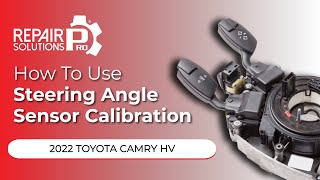
After replacing the sensor, clock spring, or performing a wheel alignment, you must calibrate the sensor to set the 'zero point'. This requires a specific calibration procedure using a compatible professional scan tool.
Tools: Advanced OBD-II Scan Tool (Intermediate)
When This Code Triggers (Freeze-Frame Conditions)
- Vehicle Speed: 15-55 mph (During normal driving, often when turning or maneuvering.)
- Steering Wheel Angle: Variable (Detected when the steering wheel turns and the 'B' signal reading is illogical compared to the 'A' signal.)
- System Voltage: 13.5-14.5V (Sets with the engine running and charging system operating normally. Low voltage causes similar codes but is a different root cause.)
- Time Since Engine Start: > 1 minute (Logged after control modules complete startup checks and actively monitor sensor inputs.)
Related Codes
- C0052 — Indicates a fault with 'Signal A'. If both C0052 and C0053 are present, the sensor has lost main power/ground, or the entire unit has failed.
- C0054 / C0055 — Refers to faults in 'Signal C' and 'Signal D'. Points to a failure within the same sensor component on different internal redundancy channels.
- C0710 — A GM-specific code for 'Steering Wheel Position Sensor Signal Malfunction'. Often appears alongside C0053 on vehicles like the GMC Acadia.
- U-codes (e.g., U0126) — Indicates a 'Lost Communication' network problem. If present with C0053, the issue is a wiring break or CAN bus fault, not the sensor itself.
Climate & Environmental Factors
- High Humidity and Water Intrusion: Moisture penetrates poorly sealed connectors, causing corrosion on the sensor's pins. This is a documented issue on GM models where water leaks into the A-pillar.
- Road Salt (Winter Climates): Corrosive brine splashes onto underbody components and wicks into electrical connectors, interrupting the sensor's ground or power supply.
- Extreme Cold: Extreme cold causes plastics and wiring insulation to become brittle, accelerating cracks or breaks in the flexible clock spring ribbon.
How to Talk to a Mechanic About This Code
Say this: "I have a C0053 code with the ABS and stability control lights on. I'd like to book a diagnostic appointment. Please check the live data from the steering angle sensor's A and B signals. If the code appeared right after my recent wheel alignment, please check the sensor calibration first."
Directs the technician to data-driven diagnostic steps (live data, calibration) instead of blindly replacing parts. Prevents misdiagnosis if the issue is just calibration.
Avoid saying:
- 'My stability control light is on, can you just fix it?'
- 'I think I need a new steering sensor, how much is it?'
- 'Just do whatever it takes to get the lights off.'
Questions to ask before authorizing the repair:
- Did you see a problem with the Signal B live data compared to Signal A?
- Does the estimate include the mandatory SAS calibration procedure afterward?
- Did you check for any Technical Service Bulletins (TSBs) related to this code for my vehicle?
- Can you confirm the horn and steering wheel buttons are working to help rule out the clock spring?
- Before we replace the part, can you show me the old one?
Where to Take It: Dealer vs Independent vs Chain
- Dealer:
A safe but expensive option. Best if the vehicle is under warranty or requires manufacturer-specific calibration tools.
Best for: Vehicles under warranty, Complex, brand-specific electronic issues (Subaru, BMW), Known issues covered by a manufacturer service campaign or recall.
Downsides: Highest labor rates, often 50% more than independent shops., Defaults to replacing entire assemblies (steering column) when a smaller component is the cause. (Typical cost: +50% vs. baseline) - Independent Shop:
Best choice for most situations. An ASE-certified independent shop diagnoses and repairs C0053 correctly at a reasonable cost.
Best for: Out-of-warranty vehicles where cost is a factor., Accurate diagnosis from experienced technicians., Building a long-term relationship with a trusted mechanic.
Downsides: Must verify they have an advanced scan tool capable of ABS/SAS diagnostics and calibration., May lack immediate access to the latest manufacturer TSBs. (Typical cost: +0% vs. baseline) - Chain Shop:
Avoid for diagnosis. They lack the tools to properly diagnose a C-code or perform the required SAS calibration.
Best for: Simple, routine maintenance like oil changes, tires, and brakes.
Downsides: Technician skill varies widely., Lacks advanced diagnostic tools needed for chassis (C) codes and calibration., Pressures technicians to upsell unnecessary services. (Typical cost: -10% vs. baseline)
When to Walk Away From the Repair
If the total estimated repair cost exceeds 40-50% of your car's private-party market value, seriously consider selling or trading in the vehicle.
- Car worth $5000, fix is $750: Fix it. This is a reasonable cost to restore critical safety features on a vehicle with decent value.
- Car worth $4000, fix is $2200: Walk away. The repair cost is over 50% of the car's value. Common with Hyundai Elantras needing a full steering column.
- Car worth $2000, fix is $1200: Walk away. The repair is more than half the car's value, and it's unlikely to be the last expensive repair needed.
What Scan Tool You Need for This Code
Minimum: A scanner that reads Chassis (ABS/SRS) codes, displays live data for the steering angle sensor, and performs the Steering Angle Sensor (SAS) calibration function.
A standard $20-$50 code reader only reads Powertrain (P) codes. It cannot see Chassis (C) codes like C0053 or perform the mandatory calibration needed to complete the repair.
Budget: TOPDON ArtiDiag500 / Foxwell NT510 Elite (~$99) — Reads ABS/SRS codes and views live data. SAS reset functionality is included but limited by vehicle make/model. Verify compatibility before purchasing.
Mid-range: Autel MaxiCheck Pro / Foxwell NT650 Elite / Launch CRP123i (~$150) — The sweet spot for DIYers. Offers ABS/SRS diagnostics, live data graphing, and dedicated SAS calibration functions for a wide range of vehicles.
Professional: Autel MaxiCOM MK808BT / Launch X431 Series (~$450-1200) — Provides full bi-directional control, all-system diagnostics, and OEM-level functions. Handles any C0053 scenario on virtually any car, including complex calibrations.
Rent vs buy: Buy. Free 'Loan-A-Tool' programs at auto parts stores offer basic code readers, not advanced scanners with SAS calibration functions. You must purchase a capable scanner to complete the job.
How to Clear the Code After You Fix It
- Use an OBD-II scan tool to clear the C0053 fault code from the ABS/ESC module.
- Perform the Steering Angle Sensor (SAS) calibration procedure using the scan tool.
- Perform a test drive that includes several left and right turns to confirm the repair.
Drive cycle (~20 minutes): Start the engine and idle for 2 minutes. Drive in a mix of city and highway conditions, making several full turns. A 20-minute drive verifies the repair. Chassis system checks are continuous and do not require a complex emissions drive cycle.
Readiness monitors affected: Chassis codes (C-codes) do not affect emissions readiness monitors.
Watch out for:
- Forgetting to perform the mandatory steering angle sensor calibration after the repair.
- Clearing the code without fixing the underlying issue, causing the code to return immediately.
- Using a basic code reader that cannot access Chassis (C) codes or perform calibrations.
Will This Fail Emissions / State Inspection?
No — by itself this code doesn't fail OBD inspection (but it can keep readiness monitors from setting, which causes a separate fail).
- California: C0053 won't fail the OBD-II data portion, but illuminated ABS, Airbag, or Stability Control warning lights result in an automatic visual inspection failure.
- New York: An illuminated ABS or Airbag light is cause for a safety inspection failure. The vehicle fails until repaired.
- Texas: An illuminated ABS warning light is NOT a cause for rejection in Texas, but an illuminated primary red 'BRAKE' light is. C0053 typically passes, but repair is highly recommended for safety.
Most Commonly Affected Vehicles
- GMC Acadia (2007-2017) — A highly common failure point on the first-generation Acadia, Chevy Traverse, and Buick Enclave, triggering 'Service Stabilitrak' messages.
- Chevrolet Equinox, Malibu, Traverse (2010-2017) — Frequently caused by water intrusion into body connectors (TSB 19-NA-243), which mimics a sensor failure.
- Ford Explorer (Police Interceptor Utility) (2020-2021) — TSB SSM 49386 states C0053 stores in the Trailer Module if police-specific steering wheel circuits are disconnected. In this context, the code is benign.
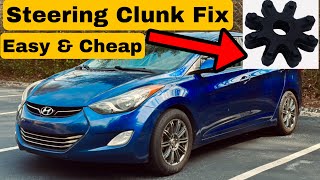
- Hyundai Elantra (2011-2016) — Notorious on this generation. Often misdiagnosed as a catastrophic failure when the true cause is a worn $10 flexible steering coupler.
- Toyota Camry (2007-2017) — Triggers a trio of VSC, TRAC, and ABS lights. Part number 89245-06040 is a common replacement for 2007-2011 models.
- BMW 3-Series (E90, E92) (2006-2013) — Frequently triggered after suspension work or a wheel alignment if the steering angle sensor is not recalibrated.
- Nissan Rogue (2014-2020) — Presents as a 'Chassis Control System Error' message, disabling advanced stability features.
- Subaru Outback, Legacy (2005-2014) — Disables the VDC (Vehicle Dynamics Control) system. Calibration requires a Subaru-specific tool to perform the 'VDC Sensor 0 Point Setting Mode'.
Manufacturer-Specific Notes
- General Motors (GM): Accompanied by a 'Service Stabilitrak' message. On older GM trucks (e.g., 1997 C1500), C0053 means 'Rear Isolation Solenoid Circuit Shorted' and is unrelated to steering.
- Ford: For 2020-2021 Police Interceptor Utility models, TSB SSM 49386 notes C0053 stores in the Trailer Module if police controls are uninstalled. Ignore if there are no symptoms.
- Subaru: Triggers the VDC warning light. Calibration requires accessing the 'VDC Centering Mode' via a Subaru Select Monitor (SSM) equivalent tool.
- Hyundai/Kia: A clicking noise in the steering column is usually a failed flexible steering coupler (Part # 56315-2K000-FFF). Hyundai extended the warranty on this part to 10 years/100,000 miles.
Real Owner Stories
2009 VW Passat Wagon at 126K miles
Airbag light on, horn and steering wheel buttons dead, and a rubbing noise from the steering column.
Outcome: The cluster of symptoms (airbag light, dead buttons, noise) confirmed a failed clock spring, which houses the wiring for all these components.
Lesson: When multiple steering wheel electronic functions fail simultaneously, the clock spring is the single point of failure.
2018 Ford F-150 after a dealership visit
Truck drove perfectly before a PCM recall update. Immediately after, the transmission shifted harshly and stalled.
Outcome: The PCM update reset the Keep Alive Memory (KAM), erasing the transmission's adaptive shift strategy. The harsh shifting was the transmission reverting to factory settings, revealing underlying wear.
Lesson: Software updates or battery disconnects reset adaptive learning modules, suddenly changing vehicle behavior and revealing pre-existing conditions.
Lifted Lexus GX after a wheel alignment
After a lift kit and alignment, the traction control light came on. The shop re-aligned it and recalibrated the sensor, but the light stayed on.
Outcome: A complex misdiagnosis chain. The initial problem was an alignment/calibration issue, but subsequent attempts introduced new variables leading to an incorrect dealer diagnosis.
Lesson: Post-alignment warning lights are almost always a calibration issue. Return to the original shop immediately to avoid muddying the diagnostic waters.
How to Prevent This Code From Triggering
- Ensure proper steering angle sensor calibration after every wheel alignment (After any alignment or suspension work) — Forgetting to recalibrate the sensor's zero point triggers a fault, even if all parts are perfectly functional.
- Avoid turning the steering wheel to full lock and holding it there (Daily driving habit) — Holding the wheel at full lock stresses the internal stops of the clock spring, accelerating wear on the internal ribbon cable.
- Protect the steering column from water intrusion (During vehicle use, especially for open-top vehicles) — Rain on the steering column corrodes the clock spring and sensor connectors. Use a cover during rain to prevent electrical damage.
- Secure the clock spring during steering column repairs (During any repair involving steering wheel removal) — The clock spring is easily destroyed if it spins freely when the steering wheel is removed. Secure it with tape to prevent misalignment.
Frequently Asked Questions
Can I fix code C0053 myself?
Diagnosing the root cause requires a capable scan tool and multimeter. Replacing the sensor or clock spring involves removing the steering wheel and airbag, carrying significant safety risks. Stop DIY and hire a professional if you lack experience safely disarming and handling airbag modules.
What are common misdiagnoses for code C0053?
The most common mistake is replacing the steering angle sensor when the true cause is a weak battery or a broken clock spring. Another frequent error is failing to perform the mandatory sensor calibration after a wheel alignment. On certain Hyundai models, a worn $10 steering coupler is often misdiagnosed as a catastrophic steering column failure.
Can a bad wheel alignment cause code C0053?
A bad alignment alone does not cause the code, but the repair process often does. If a technician adjusts the tie rods but fails to recalibrate the steering angle sensor to the new center point, the module flags an invalid reading. Always demand a steering angle calibration after an alignment.
Will the C0053 code clear itself?
No, this code will not clear on its own. Because it relates to critical safety systems, the warning lights remain illuminated until the underlying fault is repaired. You must manually clear the code and recalibrate the sensor using an advanced scan tool.
Is my airbag going to work with a C0053 code?
Assume the airbag system is compromised and will not deploy correctly in a crash. The airbag control module relies on steering angle data to calculate deployment timing and force. The illuminated airbag warning light confirms the system is disabled or operating with reduced functionality.
What is a clock spring and how does it relate to C0053?
The clock spring is a coiled ribbon cable behind the steering wheel that maintains electrical connections while the wheel turns. A break in this ribbon is a primary cause of code C0053. This failure typically disables the horn, cruise control, and steering wheel buttons simultaneously.
What is the difference between a steering angle sensor and a clock spring?
The clock spring is the rotating electrical harness, while the steering angle sensor is the electronic module that measures the wheel's rotation degree. On many modern vehicles, manufacturers integrate both into a single, non-serviceable assembly. If one fails, you must replace the entire unit.
Why did the C0053 code appear right after a wheel alignment?
During an alignment, technicians adjust the steering geometry, which changes the steering wheel's physical center position. If they skip the final step of electronically recalibrating the steering angle sensor, the computer sees a conflict between the physical and electronic center. This mismatch instantly triggers code C0053.
Key Takeaways
- Code C0053 disables critical safety systems like stability control and ABS by flagging a missing or erratic 'B' signal from the steering angle sensor.
- The two most common hardware failures are a broken clock spring (often accompanied by a dead horn) or a dead steering angle sensor, costing between $300 and $750 to replace.
- Always check your battery voltage (needs to be 12.4V+) and perform a steering angle sensor calibration before buying replacement parts.
- Do not drive at highway speeds or in wet weather with this code, as your vehicle's anti-skid and airbag systems are compromised and will not protect you in a crash.
Helpful Videos


The information in this article is provided for general reference and educational purposes only. Vehicle specifications, procedures, and part compatibility can vary by production date, trim level, and region. Always consult your vehicle's factory service manual and verify part numbers before purchasing or performing repairs. Safety-critical components such as airbags, seat belts, and braking systems should be installed by a qualified professional.
- 🎬 Helpful Videos
- What Does C0053 Mean?
- Can I Drive With C0053?
- Common Causes
- Symptoms
- Diagnostic Flowchart
- Common Fixes & Costs
- Used vs. New Parts: Buying Guide
- What Happens If You Wait — Timeline
- Cost of Not Fixing It
- Diagnosis Steps
- When This Code Triggers (Freeze-Frame Conditions)
- Related Codes
- Climate & Environmental Factors
- How to Talk to a Mechanic About This Code
- Where to Take It: Dealer vs Independent vs Chain
- When to Walk Away From the Repair
- What Scan Tool You Need for This Code
- How to Clear the Code After You Fix It
- Will This Fail Emissions / State Inspection?
- Most Commonly Affected Vehicles
- Manufacturer-Specific Notes
- Real Owner Stories
- 2009 VW Passat Wagon at 126K miles
- 2018 Ford F-150 after a dealership visit
- Lifted Lexus GX after a wheel alignment
- How to Prevent This Code From Triggering
- Frequently Asked Questions
- Can I fix code C0053 myself?
- What are common misdiagnoses for code C0053?
- Can a bad wheel alignment cause code C0053?
- Will the C0053 code clear itself?
- Is my airbag going to work with a C0053 code?
- What is a clock spring and how does it relate to C0053?
- What is the difference between a steering angle sensor and a clock spring?
- Why did the C0053 code appear right after a wheel alignment?
- Key Takeaways
- 🎟️ Get 5% Off