

C0051 on 2014-2018 Mazda CX-5: Steering Angle Sensor Fault Causes and Fixes
Code C0051 on a 2014-2018 Mazda CX-5 indicates a fault with the Steering Angle Sensor (SAS). This often happens after a wheel alignment or battery disconnect and may only require a simple lock-to-lock steering wheel recalibration. If calibration doesn't work, a known TSB (04-003/19-3589a) points to a faulty DSC/ABS module on 2013-2018 models, while on others the sensor itself may have failed.
- Code C0051 disables critical safety systems like stability and traction control, so it should be addressed promptly.
- For 2014-2016 models, check if TSB #04-007/18 applies before replacing the steering angle sensor, as the DSC module could be the actual problem.
- The first and cheapest diagnostic step is to try and recalibrate the sensor, either with a scan tool or by turning the steering wheel fully left and then fully right with the ignition on.
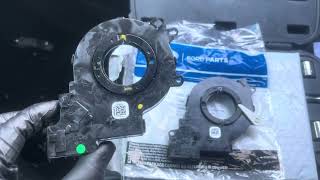
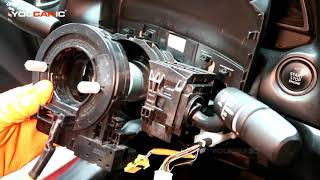
- If the sensor itself has failed, it is located behind the steering wheel and is often integrated with the clock spring assembly.
What's Unique About the 2014-2018 Mazda CX-5

For the CX-5 (and platform mates), Mazda issued Technical Service Bulletin #04-003/19-3589a, which supersedes several older versions. This TSB is critical because it applies to 2013-2016 models and extends to 2017-2018 models within specific VIN ranges for the code C0051:62. It states that certain maneuvers, like turning immediately after starting the engine and then accelerating, can falsely trigger the code due to a software logic issue in the DSC Hydraulic Unit/Control Module (HU/CM). In these specific cases, the correct fix is to replace the DSC module with an updated part, not the steering angle sensor. This makes diagnosis critical to avoid replacing the wrong, expensive component.
Diagnostic Flowchart
Tap your situation to follow the diagnostic path that matches what you're seeing on this vehicle.
Generation note: The 2014-2018 range covers the first generation (KE, 2014-2016) and the start of the second generation (KF, 2017-2018). A specific TSB for code C0051:62 applies to 2013-2016 models and also 2017-2018 models up to VIN JM3KF**476255 (produced before Sept. 29, 2018), pointing to a potential DSC module issue. For models outside the TSB scope, the cause is more likely standard SAS failure or calibration loss. Both generations rely on the same fundamental system.
Symptoms You May Notice
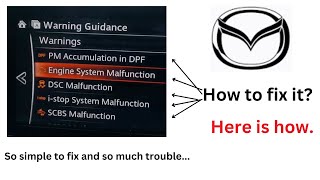
- TCS/DSC indicator light is ON
- TPMS (Tire Pressure Monitoring System) warning light is ON or flashing
- For models equipped, the Smart City Brake Support (SCBS) warning light may be ON with a message 'SCBS Inspection Required'
- Adaptive Front Lighting System (AFS) warning light may be ON (if equipped)
- In some cases, the power steering may feel heavy or assistance may drop intermittently
- Replacing the Steering Angle Sensor when the actual fault is the DSC module software issue on 2013-2018 models as described in TSB #04-003/19-3589a.
Most Likely Causes

- Loss of Steering Angle Sensor (SAS) Calibration 🔴 High Probability Calibration is commonly lost after a wheel alignment, battery replacement, or any steering/suspension repair. The system requires re-learning the straight-ahead position.
How to confirm: Attempt the manual recalibration procedure. If the warning lights turn off and the code clears (or can be cleared), this was the issue. This is a common topic in owner forums.
Typical fix: Perform the Steering Angle Sensor calibration. A manual reset is often successful: With the ignition ON (engine off), turn the steering wheel from full right lock to full left lock, then return to center and turn the ignition off. If this fails, a scan tool is required for a forced reset.
Est. part cost: $0 - Faulty DSC Hydraulic Unit/Control Module (Software Issue) 🟡 Medium Probability TSB #04-003/19-3589a identifies a software flaw in the DSC module on 2013-2018 CX-5s (within VIN ranges) that incorrectly sets code C0051:62 after specific low-speed maneuvers.
How to confirm: On an affected model, verify the code is C0051:62 and that the customer reports the light appeared after turning immediately from a stop. Confirm no other EPS codes are present. If conditions match the TSB, the DSC module is the confirmed cause.
Typical fix: Replace the DSC HU/CM with an updated part number specified in the TSB, such as KAY1-43-7A0C (2016 models) or KJY2-43-7A0A (2014-2015 models).
Est. part cost: $800-$1200 for an OEM module - Faulty Steering Angle Sensor 🟡 Medium Probability The sensor is integrated with the clock spring, an assembly of moving electronic parts behind the steering wheel that can wear out over time, leading to signal failure.
How to confirm: Using a scan tool, monitor the live data from the steering angle sensor. The angle should read 0° when wheels are straight and change smoothly without jumping, sticking, or drop-offs as you turn the wheel. An incorrect reading at center (e.g., reading 22° when straight) points to a bad sensor or severe misalignment.
Typical fix: Replace the steering angle sensor, which is sold as part of the clock spring assembly. After replacement, a calibration is required.
Est. part cost: $150-$400
Rare But Worth Checking
- Wiring or Connector Issue: Damage to the wiring harness or corrosion in connectors for the SAS or DSC module can interrupt the signal. One owner on a forum reported a quote of over $7000 for a full harness replacement due to physical damage, highlighting the importance of inspecting wiring before replacing modules.
- Faulty Body Control Module (BCM): In rare cases, the BCM, which processes signals from the steering column, can fail. This is unlikely and should only be considered after all other possibilities have been exhausted.
Diagnosis Steps
- Scan for Codes & Suffixes: Use a scan tool that can read Chassis (C-codes) to confirm C0051 and, most importantly, note the suffix digits (e.g., :62, :67).
- Attempt Manual Recalibration: Before further diagnosis, perform the simple manual reset. Turn ignition ON (engine off), turn the wheel lock-to-lock, return to center, and cycle the ignition. If the lights go out, the problem is solved.
- Check for TSBs: If the code is C0051:62 on a 2014-2018 model, check your VIN against TSB #04-003/19-3589a. If the VIN and customer complaint match the TSB conditions, the DSC module is the likely cause.
- Check Live Data: Monitor the Steering Angle Sensor live data on the scan tool. Verify it reads 0 degrees (or very close) when the steering wheel is centered and wheels are straight. Turn the wheel lock-to-lock and ensure the reading changes smoothly without jumping or getting stuck.
- Inspect Wiring: If calibration fails or live data is erratic, visually inspect the wiring and connectors at the base of the steering column (for the SAS/clock spring) and at the DSC/ABS module for any visible damage, corrosion, or loose connections.
- Test the Sensor: If wiring is okay, the sensor's behavior in the live data test is the primary confirmation of its failure. A stuck or erratic signal confirms the need for replacement.
- Component Replacement: If the sensor is confirmed bad, replace the clock spring assembly. If following the TSB, replace the DSC HU/CM. After any component replacement, a final calibration with a scan tool is required.
Parts You'll Likely Need

- Steering Angle Sensor / Clock Spring
(OEM #KD49-66-CS0A (Example for Gen 1, verify by VIN))— This sensor is the primary component that fails electronically or loses calibration. It is integrated into the clock spring and replaced as a single unit.
Trusted brands: Mazda (OEM)
OEM price range: $250-$400
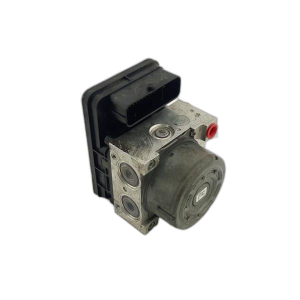
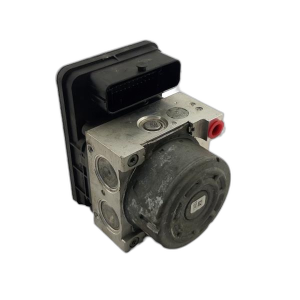
Aftermarket price range: $150-$250 - DSC Hydraulic Unit / Control Module
(OEM #KAY1-43-7A0C (2016), KJY2-43-7A0A (2014-2015), see TSB for others)— For models under TSB #04-003/19-3589a with code C0051:62, a known software issue requires the replacement of the entire module with an updated part.
Trusted brands: Mazda (OEM)
OEM price range: $800-$1200
Aftermarket price range: Not Recommended
Related Codes That Often Appear With This One
- U0100 — This code indicates a loss of communication with the ECM/PCM. One user report linked it with C0051 when a battery current sensor failed, disrupting the vehicle's entire electrical system, though this is not a typical pairing.
- P011A — A Reddit user reported this Engine Coolant Temp Sensor code appeared at the same time as C0051. While seemingly unrelated, it could indicate a broader electrical system issue or a failing battery causing multiple, unrelated codes to be stored.
Technical Service Bulletins (TSBs) & Recalls
- 04-003/19-3589a (supersedes 04-007/18, 04-003/19, and 04-003/13): Addresses TCS/DSC and TPMS lights on with DTC C0051:62 on 2013-2018 CX-5s, pointing to a DSC module software issue and requiring module replacement.
Platform-Specific Known Issues
- A Technical Service Bulletin (TSB #04-003/19-3589a) exists for 2013-2018 CX-5 models (within specific VINs) where code C0051:62 is stored. The cause is identified as a software logic issue in the DSC HU/CM, not a failure of the steering angle sensor itself. The fix is to replace the DSC module with an updated part.
Mechanic-Grade Diagnostic Values
- Steering Angle Sensor Input Voltage — expected: 10 - 14 V. Failure: Voltage below 10V or above 14V indicates a problem with the power supply or harness.
Hidden / Shadow Codes Worth Checking
- C0051:25: A sudden change in the steering angle sensor signal was detected while driving. (see via Mazda-specific scan tool (like Mazda IDS) or advanced aftermarket tools like FORScan.)
- C0051:62: The difference between the steering angle calculated by vehicle dynamics sensors (yaw, lateral-G, wheel speed) and the angle reported by the SAS is greater than the specification while driving straight. This is the subject of TSB 04-003-19-3589a. (see via Mazda-specific scan tool (like Mazda IDS) or advanced aftermarket tools like FORScan.)
- C0051:64: The DSC module determines there is a steering angle malfunction by comparing the SAS signal with yaw rate and lateral-G sensor data during driving. (see via Mazda-specific scan tool (like Mazda IDS) or advanced aftermarket tools like FORScan.)
- C0051:67: The DSC module could not estimate the steering angle neutral position for a specified amount of time. This can be triggered by accelerating while turning sharply or driving on a banked road just after starting the engine. (see via Mazda-specific scan tool (like Mazda IDS) or advanced aftermarket tools like FORScan.)
- C0051:86: An error signal was received from the EPS (Electric Power Steering) control module, often because the EPS has not completed its own steering angle neutral position learning. (see via Mazda-specific scan tool (like Mazda IDS) or advanced aftermarket tools like FORScan.)
Scan Tool Commands That Help

- Mazda IDS / FORScan: Steering Angle Sensor Calibration / Reset — This function is required after replacing the steering angle sensor, clock spring, DSC module, or performing a wheel alignment to 'zero' the sensor and tell the system the straight-ahead position.
- Mazda IDS / FORScan: Live Data Monitoring (PID: SAS_Angle) — Used during diagnosis to observe the sensor's output in real-time. The reading should be 0° when driving straight and change smoothly without glitches as the wheel is turned. This is the primary method to confirm a faulty sensor.
Wiring & Ground Locations
- G09 — Behind the instrument cluster / behind the dash.. This is a major grounding point for multiple instrument panel and control modules, including the Start Stop Unit which communicates with the SAS. A poor ground here can cause erratic behavior in various electronic systems.
- G03 — Left front of the engine compartment.. This is a primary chassis ground in the engine bay. The DSC/ABS module is located nearby, and a poor connection at this point could affect its operation and power stability.
- G11 — Lower left center of the dash.. Another key interior ground point that services components in the driver's side dash area, near the steering column and OBD-II port.
- Steering Angle Sensor Connector — Attached to the clock spring assembly, behind the steering wheel. Requires removing the steering wheel and column covers to access.. This is the direct connection point for the sensor. Checking for secure connection and clean pins is a crucial step before replacing the sensor itself.
Real Owner Repair Stories
- Reddit user ilovemud on r/CX5 (2016 Mazda CX-5) — Check engine light on with codes P011A (Engine Coolant Temp Sensor) and C0051 (with suffixes :62 and :67).
❌ Tried (didn't work) The user did not report trying any fixes themselves before going to a dealer.
✅ What actually fixed it A dealership technician flushed the heater core, which resolved the P011A code. The C0051 codes were likely cleared and did not return, possibly having been triggered by the unrelated electrical fault or a calibration loss that was reset during service. - Mazdas247 Forums user timberstx (Year not specified, but likely Gen 1 (pre-2017)) — Check engine light, TCS, and TPMS lights on. Codes C0051, C1031, C0040, and multiple P0571 codes were stored.
❌ Tried (didn't work) Initial diagnosis pointed to multiple failures.
✅ What actually fixed it All codes were caused by a faulty brake light switch. Replacing the brake switch resolved all the warning lights and codes, including C0051.
OEM Part Supersession History
KAY1-43-7A0, KAY1-43-7A0A, KAY1-43-7A0B→KAY1-43-7A0C— Updated software logic to prevent false triggering of DTC C0051:62 as described in TSB 04-003-19-3589a.
Heads up: Using an older, non-superseded part will not fix the software-related issue and the code will likely return under the conditions described in the TSB.
Model Year Variations Within This Range
- 2017-2018 (KF Generation): The second-generation CX-5 (2017+) was significantly redesigned. While the fundamental steering and stability systems are similar, it features a more premium interior, a redesigned steering wheel, and introduced G-Vectoring Control, which uses steering input to subtly adjust engine torque for smoother cornering. The body structure was also stiffened, and more sound deadening was added, changing the vehicle's dynamic response. These changes mean that while the C0051 code has the same meaning, the interaction with other systems is more complex.
Helpful Videos
We Have This Part in Stock





The information in this article is provided for general reference and educational purposes only. Vehicle specifications, procedures, and part compatibility can vary by production date, trim level, and region. Always consult your vehicle's factory service manual and verify part numbers before purchasing or performing repairs. Safety-critical components such as airbags, seat belts, and braking systems should be installed by a qualified professional.
- Mazda CX-5:
- 🎬 Helpful Videos
- 🛍️ Shop This Part
- What's Unique About the 2014-2018 Mazda CX-5
- Diagnostic Flowchart
- Symptoms You May Notice
- Most Likely Causes
- Rare But Worth Checking
- Diagnosis Steps
- Parts You'll Likely Need
- Related Codes That Often Appear With This One
- Technical Service Bulletins (TSBs) & Recalls
- Platform-Specific Known Issues
- Mechanic-Grade Diagnostic Values
- Hidden / Shadow Codes Worth Checking
- Scan Tool Commands That Help
- Wiring & Ground Locations
- Real Owner Repair Stories
- OEM Part Supersession History
- Model Year Variations Within This Range
- 🎟️ Get 5% Off