

C0051 on 2017 Honda CR-V: Causes and Fixes for Steering Angle Sensor Issues
On a 2017 Honda CR-V, code C0051 almost always means the steering angle sensor needs recalibration, typically after changing the battery or getting a wheel alignment. The easiest fix is to drive the car for a short distance, which often allows it to relearn on its own. If that fails, a simple reset procedure with a scan tool or, occasionally, a manual turn-by-turn method is needed.
- C0051 on a 2017 CR-V is a calibration code, not a broken part code.
- It is most often caused by a battery replacement or jump-start and is considered normal.
- First, try driving the car for a few minutes to see if the warning lights turn off on their own.
- If driving doesn't work, a simple calibration procedure with a scan tool (or sometimes manually) is the definitive fix.
- Do not replace expensive parts like the steering angle sensor or VSA module unless a proper diagnosis confirms they have failed.
What's Unique About the 2017-2017 Honda CR-V

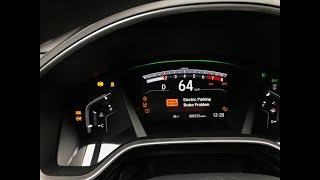
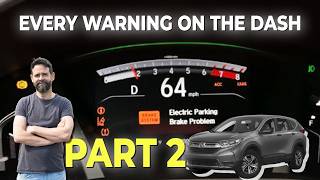
For the 2017 Honda CR-V, which is the first model year of the fifth generation, this code is considered a normal occurrence after any interruption of battery power. The vehicle's advanced driver-assistance systems (ADAS)—like Vehicle Stability Assist (VSA), Adaptive Cruise Control (ACC), and Lane Keeping Assist (LKAS)—heavily rely on precise steering angle data. When this data is lost, these safety systems are temporarily disabled, triggering a cascade of warning lights on the dashboard 🎬 Watch: How to perform a full reset for multiple warning lights until the sensor's neutral position is relearned. This can be alarming to owners, but is usually not a sign of a serious fault.
Diagnostic Flowchart

Tap your situation to follow the diagnostic path that matches what you're seeing on this vehicle.
Symptoms You May Notice

- Vehicle Stability Assist (VSA) warning light is on
- Electric Power Steering (EPS) warning light is on
- Traction control warning light is on
- A cluster of ADAS warning lights: Adaptive Cruise Control (ACC), Collision Mitigation System (CMBS), and Road Departure Mitigation (RDM) problem messages.
- Lane Keeping Assist (LKAS) system is disabled
- A 'Radar Obstructed' message may appear sporadically on the multi-information display (MID). [Bulletin #A17-064, 4, 17]
- Brake System and Brake Hold System problem messages may appear.
- Replacing the steering angle sensor when only a calibration is needed.
- Replacing the VSA modulator-control unit due to a software bug where related codes (U0416-68, U0416-92) remain after a battery disconnect, even though the C0051 issue is resolved. Honda explicitly states to clear these codes first and see if they return before proceeding with diagnosis.
Most Likely Causes

- Battery Disconnected, Replaced, or Jump-Started 🔴 High Probability Honda explicitly states in technical service bulletins that this is normal behavior after a power interruption. The VSA module loses its calibration memory.
How to confirm: Check if the battery has been recently serviced. The code will appear immediately after power is restored and the vehicle is started.
Typical fix: Drive the vehicle straight for a short distance (a few hundred yards). The system is designed to automatically relearn the center position, and the lights will often turn off on their own. If not, a scanner-based relearn is the next step.
Est. part cost: $0 - Wheel Alignment Performed Without Sensor Reset 🟡 Medium Probability Adjusting the vehicle's toe-in/out during an alignment changes the steering wheel's center point. The sensor must be recalibrated to match the new straight-ahead position, or the VSA system will see a discrepancy between the steering angle and the direction of travel.
How to confirm: The code and warning lights appear immediately after a wheel alignment service.
Typical fix: Return to the alignment shop and request they perform the 'Steering Angle Sensor Neutral Position' calibration with their scan tool. This is a standard final step they should perform. A typical alignment costs between $122 and $179.
Est. part cost: $0 - Recent Suspension or Steering Repair ⚪ Low Probability Replacing components like tie rods, control arms, or the steering rack itself will alter the steering geometry, requiring a recalibration just like a wheel alignment.
How to confirm: The code appears after steering or suspension parts have been replaced.
Typical fix: Perform a four-wheel alignment followed by a steering angle sensor calibration using a compatible scan tool.
Est. part cost: $0
Rare But Worth Checking
- Faulty Steering Angle Sensor: While the C0051-54 code points to a calibration issue, a persistently returning code that cannot be cleared by relearning may indicate the sensor itself has failed. This is more commonly associated with a C0051-96 code (internal sensor failure) or C0051-62 (signal failure), but a complete failure can prevent calibration.
- VSA Modulator-Control Unit Internal Failure: In very rare instances, a fault within the main VSA (ABS) computer can prevent it from retaining the calibration data. This would typically be accompanied by other VSA-specific trouble codes and would not clear with standard procedures.
Diagnosis Steps
- Confirm if the vehicle's battery was recently disconnected, jumped, or replaced. If so, this code is expected and normal.
- Start the vehicle and drive it straight for a short distance (a few hundred yards). In many cases, the warning lights will turn off as the system recalibrates itself. This is the official first step recommended by Honda.
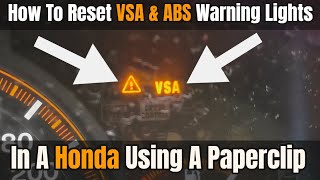
- If driving does not clear the code, attempt a manual relearn (note: success varies). Park on a level surface, start the engine, turn the steering wheel all the way to the left until it stops, then all the way to the right until it stops, and finally return it to the center. Cycle the ignition off and on. 🎬 Watch: Simple DIY steps to reset VSA and ABS warnings
- If the lights remain on, use a bidirectional OBD-II scan tool capable of accessing the ABS/VSA module. 🎬 See a walkthrough of the steering angle sensor calibration process This is the most reliable method.
- Navigate to the 'Special Functions', 'Work Support', or 'Calibrations' menu for the ABS/VSA system.
- Select 'All Sensor Calibration' or 'Steering Angle Sensor Neutral Position Memorization' and follow the on-screen prompts precisely.
- After the calibration procedure passes, clear all DTCs from all modules. Per TSB #ATS161223, codes U0416-68 and U0416-92 may need to be manually cleared. If they do not return, no further repair is needed.
- If the calibration fails or the C0051 code returns immediately, check the live data from the steering angle sensor. The value should be near 0 degrees when the wheel is straight and change smoothly as you turn the wheel. If it's stuck, erratic, or not responding, the sensor itself (part of the clock spring assembly) may be faulty.
Parts You'll Likely Need

- No Parts Needed - Calibration Required — In the vast majority of cases, this code is resolved by a simple relearn procedure (either by driving or with a scan tool) and does not require any replacement parts.
OEM price range: $0
Aftermarket price range: $0 - Steering Angle Sensor (Clock Spring Assembly)
(OEM #77900-TLA-A12)— Only needed in the rare event that the sensor itself has failed and will not accept a recalibration. The sensor is integrated into the clock spring assembly. Note: Part number 77900-TLA-D21 is listed for later CR-V models (2019+) and may not be compatible. The part number 77900-TBA-A12 is for the Civic but is often cross-referenced incorrectly.
Trusted brands: Honda (OEM)
OEM price range: $200-$250
Aftermarket price range: $100-$180
Related Codes That Often Appear With This One
- U0416-68 — This code for 'VSA Not Accept Request' or 'VSA System Malfunction' often sets alongside C0051-54 after a battery disconnect. It's due to a documented software bug or communication interruption between the ADAS and VSA systems. [Bulletin #A17-064, 4, 13]
- U0416-92 — This code for 'Temporary Stop of Integrated Driver Support' also commonly appears with C0051-54 after a battery disconnect, as the driver support systems cannot function without valid steering angle data. [Bulletin #A17-064, 4, 13]
- P2583-76 — This code for 'misalignment millimeter wave radar' can also be set along with C0051-54 due to an internal software issue in the millimeter wave radar, as described in TSB A17-064.
Technical Service Bulletins (TSBs) & Recalls
- A17-064: Addresses DTC C0051-54 appearing with other codes (U0416-68, U0416-92, P2583-76) and ADAS symptoms after battery replacement or due to a millimeter wave radar software issue. The fix may involve a software update.
- ATS161223: Explains that C0051-54 is a normal code after battery disconnection and will clear on its own by driving. It explicitly mentions a software bug that causes U0416-68 and U0416-92 to persist, which should just be cleared.
Platform-Specific Known Issues
- A known software issue can cause codes U0416-68 and U0416-92 to remain stored after a battery disconnect, even after C0051-54 has cleared. Honda TSB ATS161223 advises technicians to simply clear these codes and, if they don't return, consider the issue resolved without further troubleshooting.
- This code can be associated with symptoms like fluctuating speed on adaptive cruise control and false 'Radar Obstructed' messages, which are addressed by a software update for the millimeter wave radar unit mentioned in TSB #A17-064.
Scan Tool Commands That Help
- Honda HDS, Launch X431, Autel: VSA Sensor Neutral Position Memorization / All Sensor Calibration — This is the definitive scan tool procedure to force the VSA module to relearn the neutral position of the steering angle sensor, lateral G sensor, and brake pressure sensor after a battery disconnect or alignment. It is used when simply driving the vehicle does not automatically clear the C0051-54 code.
- Snap-on Scanners: Functional Resets and Calibrations > Electric Power Steering Angle Sensor Value Clear — This function is used on Snap-on scan tools to perform the steering angle sensor relearn. It guides the technician through the process, including cycling the ignition to complete the procedure.
Wiring & Ground Locations
- VSA Modulator-Control Unit — Located in the engine compartment, typically on the passenger side, near the front corner.. This module is the computer that stores the steering angle sensor's calibration data. All wiring for the steering angle sensor ultimately communicates with this unit. A poor connection at this module's main connector could theoretically cause communication issues, though it is far less common than a simple calibration loss.
- Data Link Connector (OBD-II Port) Fuses — Fuse #7 (10A) in the under-dash fuse box and Fuse #18 (10A) in the under-hood fuse box provide power to the OBD-II port.. If a scan tool cannot communicate with the vehicle to perform the calibration, one of these fuses may be blown. A technician would check for power at pin 16 and ground at pins 4 and 5 of the OBD-II port.
Real Owner Repair Stories
- YouTube video by user 'macdaddypimpping' (Honda vehicle (procedure is generic for models with VSA)) — ABS and VSA warning lights with exclamation mark icon are illuminated and cannot be cleared with a standard scan tool.
❌ Tried (didn't work) Using a scan tool to clear the codes was unsuccessful.
✅ What actually fixed it A specific manual reset procedure was used. It involved shorting pins 4 and 9 of the OBD-II connector with a paperclip, then following a sequence of pressing and releasing the brake pedal and VSA OFF button while cycling the ignition key. This forces the VSA module into a relearn state. Warning: This is an advanced, non-standard procedure that carries risk if performed incorrectly.
OEM Part Supersession History
77900-TLA-A11→77900-TLA-A12— Standard part revision by the manufacturer.
Heads up: Part number 77900-TLA-D21 is for 2019 and newer CR-V models and may not be backward compatible with a 2017 model. Part 77900-TVA-A12 is for the Accord/Insight and is often confused. Always verify the part number with the vehicle's VIN.
Helpful Videos

The information in this article is provided for general reference and educational purposes only. Vehicle specifications, procedures, and part compatibility can vary by production date, trim level, and region. Always consult your vehicle's factory service manual and verify part numbers before purchasing or performing repairs. Safety-critical components such as airbags, seat belts, and braking systems should be installed by a qualified professional.
- Honda CR-V:
- 🎬 Helpful Videos
- What's Unique About the 2017-2017 Honda CR-V
- Diagnostic Flowchart
- Symptoms You May Notice
- Most Likely Causes
- Rare But Worth Checking
- Diagnosis Steps
- Parts You'll Likely Need
- Related Codes That Often Appear With This One
- Technical Service Bulletins (TSBs) & Recalls
- Platform-Specific Known Issues
- Scan Tool Commands That Help
- Wiring & Ground Locations
- Real Owner Repair Stories
- OEM Part Supersession History
- 🎟️ Get 5% Off