

C0051 on 2016-2019 Ford F-150: Steering Angle Sensor Fault Causes and Fixes
On a 2016-2019 F-150, code C0051 is most often caused by a software glitch in the ABS module, especially with specific suffixes like :54 or :64. The primary fix is a software update from a Ford dealer, as outlined in TSB 20-2046. If software isn't the cause, the issue could be a faulty steering angle sensor, incorrect wheel alignment (especially after installing a leveling kit), or a problem with the sensor's calibration.
- For a 2016-2019 F-150, C0051 is very likely a software issue, not a failed part.
- Before replacing any parts, check if your truck is covered by TSB 20-2046 or SSM 47701.
- The first step in diagnosis should be a software check/update at a Ford dealer.
- If you've recently had an alignment or installed a lift/leveling kit, a steering angle sensor recalibration is likely needed.
- Do not replace the expensive Power Steering Control Module (PSCM) unless all other possibilities, especially software and calibration, have been exhausted.
What's Unique About the 2016-2019 Ford F-150

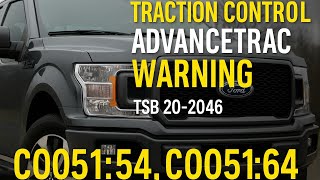
For this specific generation of F-150, Ford has officially acknowledged that code C0051 is frequently not a hardware failure. Multiple Technical Service Bulletins (TSBs), specifically TSB 20-2046, point to software parameters in the ABS module as the root cause for codes C0051:54 and C0051:64. These can be triggered by normal activities like towing or even driving in heavy crosswinds. This means that unlike in many other vehicles where this code points directly to a bad sensor, the first step for an F-150 owner should be to check for and perform a dealer-level software update, especially if their truck matches the TSB criteria.
🎬 Watch: How this TSB software fix resolves AdvanceTrac warnings.Diagnostic Flowchart

Tap your situation to follow the diagnostic path that matches what you're seeing on this vehicle.
Symptoms You May Notice

- "Service AdvanceTrac" warning message
- Traction control warning light illuminated
- ABS warning light illuminated
- "Hill Descent Control Fault" message
- "Hill Start Assist Not Available" message
- "Pre-Collision Assist Not Available" message
- Intermittent loss of power steering or a "heavy" steering feel
- Turn signals not staying on (but lane-change feature works)
- Replacing the Power Steering Control Module (PSCM) without proper diagnosis. TSB SSM 47701 specifically warns technicians not to replace the PSCM based on ABS pinpoint tests alone, as the root cause is often elsewhere.
- Replacing the ABS module when only a software update is needed. A new ABS module can cost over $1,000 plus labor, while the software update is a fraction of that or covered by warranty.
Most Likely Causes

- ABS Module Software Requires Update 🔴 High Probability Ford TSB 20-2046 (superseding 19-2394) explicitly identifies a software glitch causing C0051:54 and C0051:64 on 2018-2019 F-150s with the 3.5L EcoBoost, 145-inch wheelbase, XL/STX trim, and max trailer tow package, built within specific date ranges.
How to confirm: A Ford dealer can check the vehicle's VIN and build date against TSB 20-2046. The build dates are: Dearborn Truck Plant from 17-Jul-2017 to 4-Aug-2019, and Kansas City Assembly Plant from 14-Aug-2017 to 6-Aug-2019.
Typical fix: Reprogramming the ABS module with the latest software at a Ford dealership. The specified labor time for this operation is just 0.3 hours.
Est. part cost: $0 - Incorrect Wheel Alignment or Steering Angle Sensor Calibration 🟡 Medium Probability The system is highly sensitive to the steering wheel being perfectly centered. The installation of aftermarket lift or leveling kits is a very common trigger for this code if an alignment and sensor recalibration are not performed immediately after. Even a standard alignment can cause the issue if the sensor isn't reset.
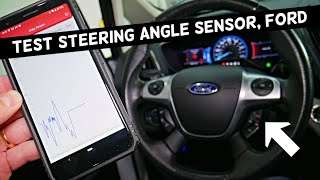
How to confirm: Use a scan tool (like FORScan) to view the live data from the steering angle sensor. It should read 0 degrees when driving straight on a level surface. If it's off by even a few degrees, it needs calibration. 🎬 See how to test your steering angle sensor live data.
Typical fix: Perform a four-wheel alignment followed by a steering angle sensor calibration. This can be done at a dealership or by an advanced DIYer using software like FORScan. The specific function is often called 'IVD Initialization' in the ABS module service procedures.
Est. part cost: $0 - Faulty Steering Angle Sensor ⚪ Low Probability While less common than software or calibration issues on this platform, the sensor itself is an electronic component that can fail. It is typically integrated into the clock spring assembly within the steering column.
How to confirm: Monitor the sensor's live data with a scan tool while turning the steering wheel lock-to-lock. The reading should be smooth and linear. Jumps, dropouts, or no signal at all indicate a failed sensor.
Typical fix: Replace the steering angle sensor/clock spring assembly and perform a calibration. Disconnecting the battery for at least 10 minutes is recommended for safety before working on steering column components.
Est. part cost: $100-$250
Rare But Worth Checking
- Wiring or Connector Issues: SSM 47701 mentions that harness or connector concerns for the ABS or PSCM circuits can cause this code. This is worth checking if software and alignment fixes fail, especially if the truck has had other electrical work done or after installing suspension modifications where wires could have been stretched or damaged. A common area to inspect is a large Molex connector located near the spare tire and rear bumper.
- Loose or Worn Suspension/Steering Components: Excessive play in components like tie rods or a loose pitman arm bolt can lead to a discrepancy between steering input and the vehicle's direction, triggering the code as noted in SSM 47701.
- Low Battery Voltage: Some owners have reported that a weak or failing battery can cause a cascade of electronic issues, including the AdvanceTrac warnings associated with C0051, as various modules may not receive the required voltage.
Diagnosis Steps
- Scan the ABS module for diagnostic trouble codes. Note the full code, including the suffix (e.g., C0051:54, C0051:64), as this is critical for diagnosis.
- If the code is C0051:54 or C0051:64, check your vehicle's VIN and build date against Ford's TSB 20-2046. The affected range is 2018-2019 F-150s with specific configurations built between July 2017 and August 2019.
- If a TSB applies, the first and most crucial step is to have a Ford dealer perform the ABS module software update. This is a 0.3-hour job.
- If the TSB does not apply or the code persists, check for any recent modifications like a leveling kit, new tires, or a recent alignment.
- Use a scan tool (such as FORScan for DIY) to view live data from the steering angle sensor. With the wheels straight, it should read 0 degrees. If not, perform a steering angle sensor calibration (sometimes called 'IVD initialization' in the ABS module).
- While monitoring live data, turn the steering wheel lock-to-lock. The reading should change smoothly and without dropouts. If it's erratic or unresponsive, inspect the wiring and connectors to the steering angle sensor and clock spring.
- Per SSM 47701, inspect for loose steering and suspension components (tie rods, etc.) and check tire pressures.
- If wiring and mechanical components are intact and the signal is still bad, the steering angle sensor (likely part of the clock spring assembly) is the probable cause and should be replaced.
Parts You'll Likely Need
- Steering Angle Sensor
(OEM #HC3Z-3F818-A (supercedes older numbers, verify with VIN))— If software updates and calibration do not resolve the issue, the sensor itself may have failed. It is often integrated with the clock spring.
Trusted brands: Motorcraft, Dorman, Duralast
OEM price range: $150-$250
Aftermarket price range: $80-$150
Related Codes That Often Appear With This One
- C0034 — This code relates to a wheel speed sensor. A fault in a wheel speed sensor provides conflicting data to the ABS module, which can trigger C0051 as the system struggles to correlate steering angle with wheel speeds.
- U0415:00 — This code indicates 'Invalid Data Received From Anti-Lock Brake System (ABS) Control Module A'. It often appears alongside C0051, confirming that other modules on the vehicle network are recognizing the faulty data coming from the ABS system.
Technical Service Bulletins (TSBs) & Recalls
- TSB 20-2046: Supersedes 19-2394, updating build dates for a known software issue causing C0051:54 and C0051:64.
- SSM 47701: Advises technicians on diagnosing C0051, pointing to common triggers like towing, alignment, and mechanical wear, and warns against replacing the PSCM without thorough diagnosis.
- TSB 19-2394: Original TSB for the C0051:54/64 software issue, later superseded by TSB 20-2046.
Platform-Specific Known Issues
- TSB 20-2046: Ford identified that on 2018-2019 F-150s with the 3.5L EcoBoost, 145" wheelbase, XL/STX trim, and Max Trailer Tow package, codes C0051:54 and C0051:64 are caused by a software issue. The fix is a simple reprogram. Build dates are Dearborn: 17-Jul-2017 to 4-Aug-2019; Kansas City: 14-Aug-2017 to 6-Aug-2019.
- SSM 47701: This Special Service Message applies to 2016-2019 F-150s and notes that C0051 can be set by normal driving conditions like towing or heavy winds, as well as by mechanical issues like poor alignment or loose suspension parts. It warns against prematurely replacing the PSCM.
- Leveling/Lift Kit Complication: A very common trigger for C0051 is the installation of a leveling or lift kit. The change in suspension geometry requires an immediate wheel alignment and steering angle sensor recalibration to prevent the fault.
Mechanic-Grade Diagnostic Values
- Steering Angle Sensor Live Data (PID) — expected: 0 degrees when the steering wheel is physically centered and the vehicle is driving straight.. Failure: The value is not 0 degrees (e.g., -11 or +22 degrees) when driving straight, indicating a need for alignment and/or calibration. The value should change smoothly and linearly when turning the wheel lock-to-lock.
Hidden / Shadow Codes Worth Checking
- C0051:54: Missing Calibration. This is the most common sub-code identified in Ford TSBs 20-2046 and 19-2394, pointing to a software parameter issue. (see via Ford IDS/FDRS, FORScan, or other advanced diagnostic scan tools.)
- C0051:64: Signal Plausibility Failure. Also identified in Ford TSBs and points to a software parameter issue. (see via Ford IDS/FDRS, FORScan, or other advanced diagnostic scan tools.)
- C0051:62: Signal Compare Failure. Indicates a discrepancy between the steering angle sensor signal and other vehicle dynamics sensors (like wheel speed or yaw rate). (see via Ford IDS/FDRS, FORScan, or other advanced diagnostic scan tools.)
- C0051:16 / C0051:17: Circuit Voltage Below/Above Threshold. These codes suggest an electrical circuit fault (short to ground or power) in the sensor itself or its wiring, rather than a calibration or data mismatch issue. (see via Ford IDS/FDRS, FORScan, or other advanced diagnostic scan tools.)
Scan Tool Commands That Help
- FORScan / Ford IDS / FDRS: ABS Module Service Procedure: 'IVD Initialization' — This is the primary function to use after a wheel alignment, suspension change (like a leveling kit), or steering component replacement. It calibrates the longitudinal accelerometer which is tied to the steering angle offset and is often the required step to clear a C0051 code when the cause is calibration.
- Advanced Scan Tools (Autel, Launch, etc.): Steering Angle Sensor (SAS) Calibration / Reset — This function writes the 'zero point' or straight-ahead position to the control module. It must be performed after a wheel alignment or sensor replacement to ensure the system knows when the wheels are straight.
- FORScan / Ford IDS / FDRS: PSCM Self-Test — As recommended by SSM 47701, this test should be run to check the health of the Power Steering Control Module itself before considering it for replacement.
Wiring & Ground Locations
- ABS and EPAS Fuses — In the under-hood fuse box (Battery Junction Box). For a 2018 F-150, examples include Fuse 35 (ABS module run/start) and Fuse 36 (Electric power steering run/start).. A blown or poorly seated fuse can cause a loss of power to the ABS or steering modules, leading to communication errors and fault codes like C0051.
- Rear Chassis Harness Connector — A large, multi-pin Molex connector located near the spare tire and rear bumper.. This connector carries signals for rear chassis components, including potentially the rear wheel speed sensors. Corrosion or moisture intrusion in this connector can disrupt ABS system signals, indirectly causing a C0051 fault due to implausible data.
- Steering Angle Sensor Connector — Located on the steering column, connecting to the clock spring/steering angle sensor assembly.. A loose connection or damaged pins at the sensor itself will cause a direct signal failure, often resulting in voltage-related sub-codes like C0051:16 or C0051:17.
Real Owner Repair Stories
- Ford F150 Forum (2015+ F-150 with Carli lift kit) — Steering wheel angle sensor was off after lift kit installation and alignment. The physical steering wheel was centered, but the sensor was reading incorrectly.
❌ Tried (didn't work) A standard alignment did not fix the sensor reading.
✅ What actually fixed it Performing the 'IVD Initialization' sequence in the ABS module using a scan tool (FDRS in this case). This procedure calibrated the Longitudinal Acceleration Sensor, which corrected the steering alignment offset and resolved the issue. - Ford F150 Forum (F-150 (year not specified, but within generation)) — Received 'Hill start not available' and 'Service advancetrac' warnings, followed by 'Steering fault service required' and total loss of power steering.
❌ Tried (didn't work) Driving the vehicle to the dealer, where the power steering suddenly started working again upon arrival.
✅ What actually fixed it The final fix was not posted, but the diagnosis from the dealer was codes C0051 (Steering angle sensor) and C0034 (right front wheel sensor). The user noted the fault only reappeared during hard turns (greater than 15 degrees), which points away from a constant hardware failure and more towards a wiring or calibration issue that only manifests at the extremes of steering input.
OEM Part Supersession History
EJ7Z-3F818-A→HC3Z-3F818-A— Part revision or update by the manufacturer.
Heads up: HC3Z-3F818-A is the specified replacement for EJ7Z-3F818-A. Using the older part number if the new one is available is not recommended. Always verify with VIN.
Model Year Variations Within This Range
- 2018-2019: A specific software issue causing C0051:54 and C0051:64 affects only certain 2018-2019 models with the 3.5L EcoBoost, 145" wheelbase, XL/STX trim, and Max Trailer Tow package. This is addressed by TSB 20-2046 and requires a dealer software update, a fix not applicable to 2016-2017 models.
Helpful Videos

The information in this article is provided for general reference and educational purposes only. Vehicle specifications, procedures, and part compatibility can vary by production date, trim level, and region. Always consult your vehicle's factory service manual and verify part numbers before purchasing or performing repairs. Safety-critical components such as airbags, seat belts, and braking systems should be installed by a qualified professional.
- Ford F-150:
- 🎬 Helpful Videos
- What's Unique About the 2016-2019 Ford F-150
- Diagnostic Flowchart
- Symptoms You May Notice
- Most Likely Causes
- Rare But Worth Checking
- Diagnosis Steps
- Parts You'll Likely Need
- Related Codes That Often Appear With This One
- Technical Service Bulletins (TSBs) & Recalls
- Platform-Specific Known Issues
- Mechanic-Grade Diagnostic Values
- Hidden / Shadow Codes Worth Checking
- Scan Tool Commands That Help
- Wiring & Ground Locations
- Real Owner Repair Stories
- OEM Part Supersession History
- Model Year Variations Within This Range
- 🎟️ Get 5% Off