

C0050 on 2015-2019 Hyundai Sonata: Right Rear Wheel Speed Sensor Circuit Fault Causes and Fixes
Code C0050 on a 2015-2019 Sonata means there's a fault with the right rear wheel speed sensor circuit, disabling your ABS and stability control. The most likely cause is a failed sensor, followed by damaged wiring or a bad wheel hub. A new sensor costs about $45-$100. In some cases, sub-codes like C0050-18 (low signal) or C0050-5A (implausible signal) may be present, helping to pinpoint the issue.
- Code C0050 means your Sonata's ABS and stability control are turned off due to a fault with the right rear wheel speed sensor.
- The most probable fix is replacing the right rear wheel speed sensor itself, which is a moderately easy DIY job.
- Before buying parts, use a scan tool to watch the live wheel speed data to confirm the sensor is failing.
- If a new sensor doesn't fix it, inspect the wiring and the magnetic ring on the wheel hub for damage; a damaged hub requires a more involved replacement.
- Do not ignore this code. The loss of ABS and stability control significantly reduces vehicle safety in emergency maneuvers.
What's Unique About the 2015-2019 Hyundai Sonata
For the 2015-2019 (LF generation) Sonata, the wheel speed sensor reads a magnetic encoder ring that is integrated into the wheel hub bearing assembly. While the sensor itself is a common failure point, it's also possible for this magnetic ring to become damaged or contaminated with metallic debris, which can cause an erratic signal and lead to misdiagnosis. Unlike older designs with external toothed 'tone rings', a problem with this integrated magnetic ring requires replacing the entire wheel hub assembly. This design is shared with its platform-mate, the 2016-2020 Kia Optima (JF generation), which experiences identical failures.
Symptoms You May Notice
- ABS warning light is on
- Electronic Stability Control (ESC) or Traction Control System (TCS) warning light is on
- ABS and stability control systems are disabled
- Cruise control may be disabled
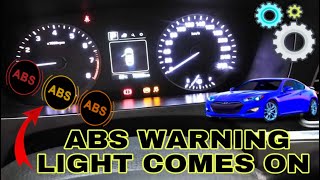
- Brake system warning light may be on 🎬 Watch: Diagnosing ABS and traction control lights on a Sonata.
- Replacing the wheel hub assembly when only the inexpensive wheel speed sensor has failed.
- Replacing the wheel speed sensor when the actual problem is a simple wiring break or a contaminated magnetic ring on the hub.
- Replacing the sensor when the wiring harness connector has corrosion. Always inspect the connector pins.
Most Likely Causes
- Failed Right Rear Wheel Speed Sensor 🔴 High Probability The sensor is exposed to the elements behind the wheel, including water, salt, and road debris, which can lead to internal failure over time. This is the most common point of failure for this code.
How to confirm: Use a scan tool capable of reading ABS live data. While driving, observe the speed readings from all four wheels. If the right rear sensor reads 0 mph or shows an erratic signal while the others read correctly, the sensor is likely bad. You can also test the sensor with a multimeter for resistance or by spinning the wheel and checking for a frequency signal.
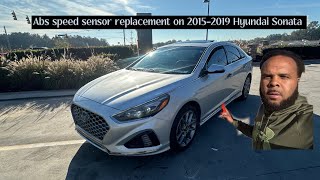
Typical fix: Replace the right rear wheel speed sensor. 🎬 Watch: Step-by-step guide to replacing the rear wheel speed sensor. Ensure the mounting surface is clean before installing the new sensor.
Est. part cost: $45-$100 - Damaged Wiring or Connector 🟡 Medium Probability The wiring harness runs near the suspension and wheel, making it vulnerable to damage from road debris, improper jacking, or corrosion at the connector pins. Rodent damage to the wiring is also a possibility.
How to confirm: Visually inspect the entire length of the wiring from the sensor to where it enters the vehicle body. Look for chafing, breaks, or green corrosion inside the connector plug. A multimeter can be used to check for continuity (no breaks) and for shorts to ground or power.
Typical fix: Repair the damaged section of wire with solder and heat shrink, or replace the pigtail connector if it is corroded. In some cases, the entire sensor harness (e.g., part 59930-C1000) may need replacement.
Est. part cost: $15-$40 for a pigtail connector, $60-$90 for a full harness section. - Damaged or Contaminated Wheel Hub Magnetic Encoder Ring ⚪ Low Probability The magnetic ring is integrated into the wheel hub bearing seal. Rust can form between the bearing and knuckle, causing the ring to crack or swell ('rust jacking'). Metallic debris from brake wear can also stick to it, disrupting the sensor's reading.
How to confirm: After removing the wheel speed sensor, use a flashlight and a small mirror to inspect the magnetic ring through the sensor's mounting hole. Rotate the hub and look for cracks, swelling, or a build-up of metallic shavings. A loose or noisy wheel bearing is also a strong indicator of a hub-related issue.
Typical fix: The entire rear wheel hub and bearing assembly must be replaced, as the magnetic ring is not serviced separately. It is critical to ensure the new hub is installed with the magnetic ring facing the sensor.
Est. part cost: $100-$250
Rare But Worth Checking
- Faulty ABS Control Module: This is the least likely cause. Before condemning the module, all other possibilities (sensor, wiring, hub) must be exhaustively ruled out. A module failure would typically require professional diagnosis with advanced tools and may be accompanied by other, non-wheel-specific codes.
Diagnosis Steps
- Connect an ABS-capable OBD-II scanner and confirm the presence of code C0050. Check for any sub-codes (e.g., C0050-18, C0050-5A) for more specific diagnostic direction.
- Access the live data stream on the scanner and monitor the wheel speed from all four sensors while driving slowly in a straight line.
- Confirm if the Right Rear (RR) wheel speed sensor is reading 0, lagging, or providing an erratic signal compared to the other three sensors.
- If the signal is faulty, raise and safely support the vehicle. Remove the right rear wheel.
- Visually inspect the wheel speed sensor and its wiring harness for any obvious signs of damage, such as cracks, fraying, or melting. Check the connector for corrosion or loose pins.
- If the visual inspection reveals no issues, the most common fix is to replace the wheel speed sensor.
- If a new sensor does not resolve the code, remove the sensor again and carefully inspect the magnetic encoder ring on the wheel hub assembly for cracks, rust jacking, or metallic debris. A dry, soft nylon brush can be used for cleaning.
- Check for wheel bearing play by grabbing the tire at the 12 and 6 o'clock positions and attempting to rock it. Any play indicates a failing hub assembly.
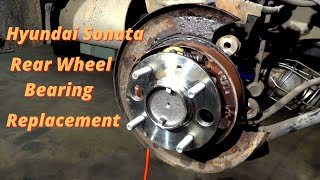
- If the magnetic ring is damaged or the bearing is loose, the entire wheel hub and bearing assembly must be replaced. 🎬 See this walkthrough for replacing the rear wheel hub assembly.
- If the sensor, wiring, and hub are all confirmed to be good, the issue may lie with the ABS control module, which requires advanced diagnostics.
- After any repair, clear the trouble code with the scan tool and perform a test drive to ensure the warning lights do not return.
Parts You'll Likely Need
- Right Rear Wheel Speed Sensor
(OEM #59930-C1000 (This is the sensor and integrated harness for models without electric park brake))— This is the most frequent failure point for code C0050. It is an electronic component exposed to harsh conditions that fails over time. Note: Part number 59930-C1200 may be referenced but 59930-C1000 is more commonly listed for the 2015-2019 Sonata with a manual parking brake.
Trusted brands: Hyundai (OEM), Mando, Bosch, NGK/NTK, Delphi
OEM price range: $70-$120
Aftermarket price range: $45-$80 - Rear Wheel Hub Bearing Assembly
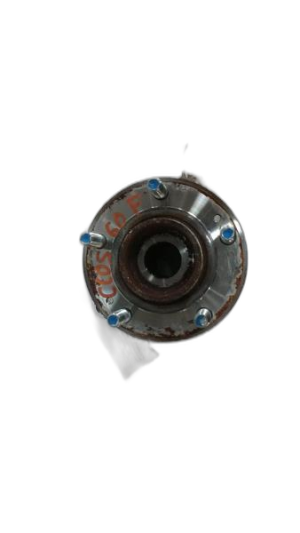
(OEM #52730-C1000)— Replaced if the integrated magnetic encoder ring is found to be cracked, damaged, or the bearing itself has failed, causing excessive play or noise.
Trusted brands: Hyundai (OEM), Timken, SKF, MOOG, GMB
OEM price range: $200-$300
Aftermarket price range: $100-$180
Technical Service Bulletins (TSBs) & Recalls
- TSB 19-BR-001H-1: While for the Santa Fe and other models, this TSB is relevant as it shows Hyundai's move to make the rear wheel speed sensor a separate service part from the hub, reinforcing that the sensor is a common failure item.
- GM TSB #PIT5499B / ACDelco Guidance: Though for GM vehicles, the diagnostic principle is universal and highly relevant. It describes how ferrous debris on the magnetic encoder ring can cause C0035-C0050 codes and advises cleaning with a soft nylon brush.
Platform-Specific Known Issues
- Some Hyundai models have been subject to service campaigns for water intrusion into the wheel speed sensor connectors, particularly in coastal areas with high salt content. While not specific to the Sonata, TSB 17-01-009-2 for the Santa Fe shows a history of this type of issue. The fix involved applying silicone or replacing a sensor cap.
Documented NHTSA Reports
While C0050 is a standard wheel speed sensor code for Hyundai, other manufacturers use this identifier differently. For example, NHTSA ODI #10763888 describes a case where C0050 was used to identify a faulty power steering control module (PSCM) on a different make, requiring a full steering column replacement. Additionally, NHTSA ODI #11228687 notes a vehicle where C0050 appeared alongside several other communication and sensor codes (C0035, C0040, U0077) that remained unrepaired after initial diagnosis. On some platforms, as noted in NHTSA ODI #11649367, the code may trigger after brake service if extra fluid is required to return caliper piston contact to the brake pad, disabling the ABS and supporting systems.
Mechanic-Grade Diagnostic Values
- Sensor Harness Voltage — expected: 5V or 12V reference voltage at the harness connector with key on, engine off.. Failure: No voltage suggests a wiring or ABS module issue upstream from the sensor.
- Sensor Harness Ground — expected: Less than 1 ohm of resistance between the ground pin on the harness and a known good chassis ground.. Failure: High resistance or an open circuit (OL) indicates a bad ground wire.
- Wiring Harness Continuity — expected: Less than 2 ohms of resistance on each wire between the sensor connector and the ABS module connector.. Failure: High resistance or an open circuit (OL) indicates a break in the wire.
Hidden / Shadow Codes Worth Checking
- C0050-18: Low Signal Amplitude. This indicates the signal from the sensor is weak, which can be caused by an excessive air gap, metallic debris on the magnetic ring, or a failing sensor. (see via Professional scan tools like the Hyundai GDS can read these manufacturer-specific symptom bytes.)
- C0050-5A: Signal Not Plausible. The signal is illogical when compared to other wheel speed sensors. This often points to a damaged or cracked magnetic encoder ring on the hub or an intermittent wiring fault. (see via Professional scan tools like the Hyundai GDS can read these manufacturer-specific symptom bytes.)
- C0050-0F: Erratic Signal. The signal is inconsistent or choppy. This is commonly caused by a wiring issue, a failing sensor, or debris on the encoder ring. (see via Professional scan tools like the Hyundai GDS can read these manufacturer-specific symptom bytes.)
Scan Tool Commands That Help
- Hyundai GDS (Global Diagnostic System): Live Data Graphing / Wheel Speed Sensor Comparison — This is the primary function used to diagnose a C0050. By graphing all four wheel speeds simultaneously during a test drive, a technician can instantly see if the right rear sensor is dropping out, lagging, or reading erratically compared to the others.
- Hyundai GDS (Global Diagnostic System): Read DTC with Symptom Byte — When a C0050 code is stored, using the GDS to read the detailed fault can reveal sub-codes like -18, -5A, or -0F, which provide crucial clues to whether the root cause is mechanical (debris, bad ring) or electrical (wiring, sensor).
Wiring & Ground Locations
- ABS Control Module — In the engine bay, typically attached to the hydraulic pump assembly, near the brake fluid reservoir.. This is the computer that receives the signal from the right rear wheel speed sensor. All circuit testing (continuity, shorts to ground) will terminate at the connector for this module.
- ABS Fuses (ESC1, ESC2, ESC3, IG1, MDPS) — There are multiple fuses located in both the under-hood fuse box and the interior fuse panel that power the ABS/ESC system.. While a blown fuse is unlikely to cause a single wheel speed sensor code, a loss of power to the module can cause various ABS faults. A video guide for a similar generation Sonata shows the locations of up to six related fuses.
- Right Rear Wheel Speed Sensor Connector — Located directly behind the right rear wheel hub assembly, where the sensor pigtail connects to the main body harness.. This connector is a primary point of failure due to exposure to water and road debris, leading to corrosion. It is the first place to perform voltage and ground tests when diagnosing the circuit.
Real Owner Repair Stories
- YouTube user 'elvrolet' (2012 Hyundai Sonata (similar YF generation, but relevant principle)) — Random ABS and Traction Control lights, coupled with a loss of throttle response/power. Also noted that several tail light bulbs had burned out in a short period.
❌ Tried (didn't work) Cleaning the ABS sensors on the wheels., Taking it to a shop which could not diagnose the intermittent issue.
✅ What actually fixed it The issue was a disintegrated rubber stopper for the brake light switch, located on the brake pedal arm. The broken stopper caused the switch plunger to not be fully depressed, making the car's computer think the brakes were being applied while driving, which triggered the ABS/TCS fault and cut power. The owner created a temporary fix using a body panel clip and washer. - NHTSA ODI #11693418 — An owner reported that after a diagnostic showed code C0050-00, the rear brake pads, rear rotors, and adapter plate all required replacement to resolve the underlying mechanical issues.
OEM Part Supersession History
52730-C1000→52730-C1100— Standard part number update or revision by the manufacturer.
Heads up: 52730-C1100 is the correct replacement for 52730-C1000 and fits FWD models. It is a bolt-on assembly for both left and right rear applications.59930-C1000→N/A— This is the current part number for the right rear sensor harness for models with a manual parking brake.
Heads up: This part is specific to the right side and for vehicles WITHOUT the electronic parking brake (EPB). The left side harness is 59910-C1000. Do not confuse them.
Model Year Variations Within This Range
- 2015-2017 vs 2018-2019: The Hyundai Sonata LF generation had a facelift for the 2018 model year. While the fundamental design of the wheel speed sensor and hub assembly remained the same, always verify part numbers with a VIN. For example, some parts catalogs show a change in the left side harness part number starting from March 2017.
Diagnostic Flowchart
Other Known Issues on This Vehicle
Issues unrelated to this code that are worth knowing about as an owner of this generation:
- Theta II Engine Failure (2.0L Turbo & 2.4L GDI) 🔴 High — Widespread issue affecting 2015-2019 models. Manufacturing debris can lead to connecting rod bearing failure, causing engine knocking, seizure, and potential fire risk. (Ref: Multiple recalls (e.g., NHTSA 15V568000) and a class-action lawsuit settlement led to an extended warranty and a Knock Sensor Detection System (KSDS) software update (TSB 21-01-066H).)
- Excessive Oil Consumption 🟠 Medium — Commonly reported on the 2.4L and 2.0T engines, often a precursor or symptom related to the larger Theta II engine problems. Can lead to engine damage if not monitored closely. (Ref: Related to the Theta II engine issues and recalls. Owners are advised to check oil levels frequently.)
- Peeling Exterior Paint 🟡 Low — Particularly common on white-painted vehicles, where the paint can begin to flake and peel off in large sections over time. (Ref: No universal recall, but Hyundai has offered extended warranty coverage for this issue on a case-by-case basis or for specific production runs.)
- Turn Signal Malfunction 🟠 Medium — The turn signal may activate in the opposite direction of what the driver intended. (Ref: NHTSA Recall 21V790000. The fix involves a software update for the Smart Junction Box (SJB).)
- Trunk Latch Failure 🟡 Low — The trunk latch may become damaged, preventing the trunk from being opened from the inside. (Ref: NHTSA Recall 20V594000. Affects 2017-2018 models.)
Used vs. New Parts: Buying Guide for This Vehicle
When a used part is the smart pick: A used wiring harness from a junkyard can be a cost-effective solution if the failure is confirmed to be a wiring break or connector damage, and not the sensor itself. The sensor and hub assembly are wear items and should not be purchased used.
Donor-vehicle mileage cap: roughly under 75000 miles for the part to have meaningful remaining life.
What to inspect on the donor part:
- For a wiring harness, inspect the entire length for any signs of brittleness, cracking, or previous repairs (e.g., tape, butt connectors).
- Check the connector pins to ensure they are straight and free of any green or white corrosion.
- Select a donor vehicle from a dry, non-salt-belt region if possible to minimize the risk of corrosion.
- Verify the donor vehicle does not have ABS or traction control lights on, if possible.
OEM-only on this vehicle (don't cheap out):
- Wheel Hub Bearing Assembly: Aftermarket hubs can have lower quality bearings and magnetic encoder rings that may fail prematurely or provide a noisy signal, leading to a repeat of the C0050 code. OEM or high-quality OE-supplier brands like Timken or SKF are strongly recommended.
Aftermarket brands forum-validated for this vehicle:
- Sensors: Bosch, NGK/NTK, Delphi
- Hubs: Timken, SKF, MOOG
Brands owners have reported issues with on this vehicle:
- Unbranded, ultra-low-cost sensors and hubs from online marketplaces have a high rate of out-of-box failure or short service life.
Real Owner Stories
Aggregated from forums and TSBs cited above. Mileages and costs reflect what owners reported in those sources.
2017 Hyundai Sonata
Symptoms: ABS and Traction lights came on. A shop diagnosed a fault with the rear hub reading.
What fixed it: Replacement of the rear hub assembly because the magnetic ring the sensor reads was broken or damaged from rust.
Source hint: Reddit r/MechanicAdvice thread titled '2017 Hyundai Sonata - ABS/Traction Lights'
2016-2020 Kia Optima (Platform Mate)
Symptoms: Dashboard displayed ABS and ESC warning lights.
What fixed it: Replacement of the rear wheel speed sensor; a technician noted they perform this specific repair multiple times a week on this platform.
Source hint: Reddit r/kia thread titled 'Anybody\'s optima done this before?'
Related OBD-II Codes
Frequently Asked Questions
Is there a specific TSB for the 2015-2019 Hyundai Sonata regarding wheel speed sensor water intrusion?
Can I replace just the sensor on my 2015-2019 Sonata, or do I need a whole new hub?
What part number might I need if the wiring harness for the right rear sensor is damaged?
Why is my cruise control not working along with the ABS light?
Could the common Theta II engine issues on my Sonata be related to the C0050 code?
Helpful Videos
Used OEM Parts in Stock
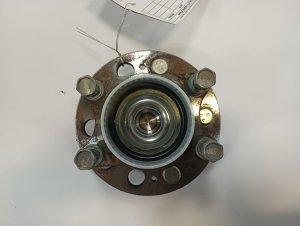
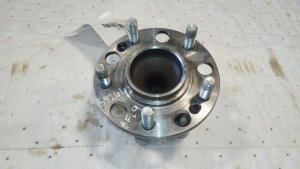


New Aftermarket Parts Available

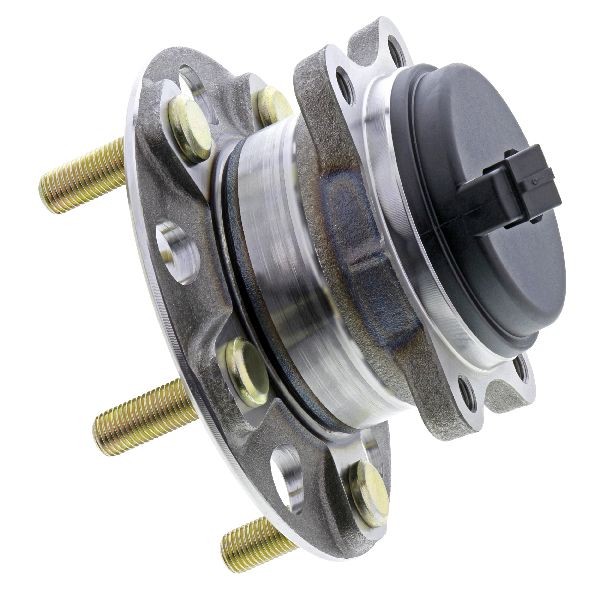

The information in this article is provided for general reference and educational purposes only. Vehicle specifications, procedures, and part compatibility can vary by production date, trim level, and region. Always consult your vehicle's factory service manual and verify part numbers before purchasing or performing repairs. Safety-critical components such as airbags, seat belts, and braking systems should be installed by a qualified professional.
- Hyundai Sonata:
- 🎬 Helpful Videos
- 🛍️ Shop This Part
- What's Unique About the 2015-2019 Hyundai Sonata
- Symptoms You May Notice
- Most Likely Causes
- Rare But Worth Checking
- Diagnosis Steps
- Parts You'll Likely Need
- Technical Service Bulletins (TSBs) & Recalls
- Platform-Specific Known Issues
- Documented NHTSA Reports
- Mechanic-Grade Diagnostic Values
- Hidden / Shadow Codes Worth Checking
- Scan Tool Commands That Help
- Wiring & Ground Locations
- Real Owner Repair Stories
- OEM Part Supersession History
- Model Year Variations Within This Range
- Diagnostic Flowchart
- Other Known Issues on This Vehicle
- Used vs. New Parts: Buying Guide for This Vehicle
- Real Owner Stories
- 2017 Hyundai Sonata
- 2016-2020 Kia Optima (Platform Mate)
- Related OBD-II Codes
- Frequently Asked Questions
- 🎟️ Get 5% Off