

C0050 on 2007-2014 GMC Acadia: Causes and Fixes for the Right Rear Wheel Speed Sensor Fault
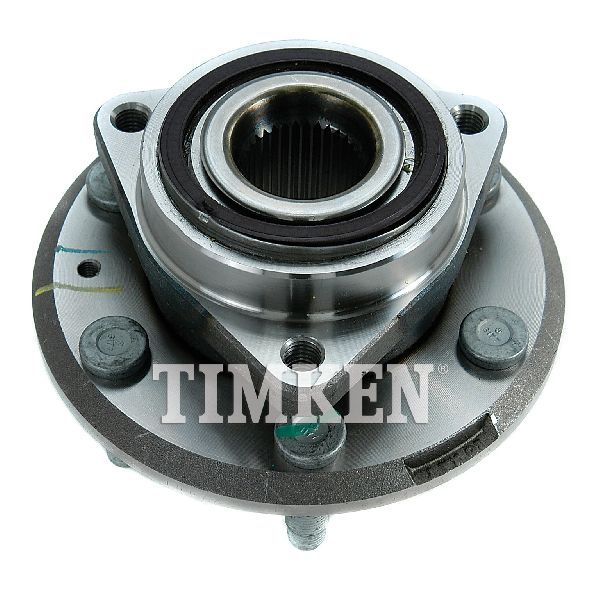
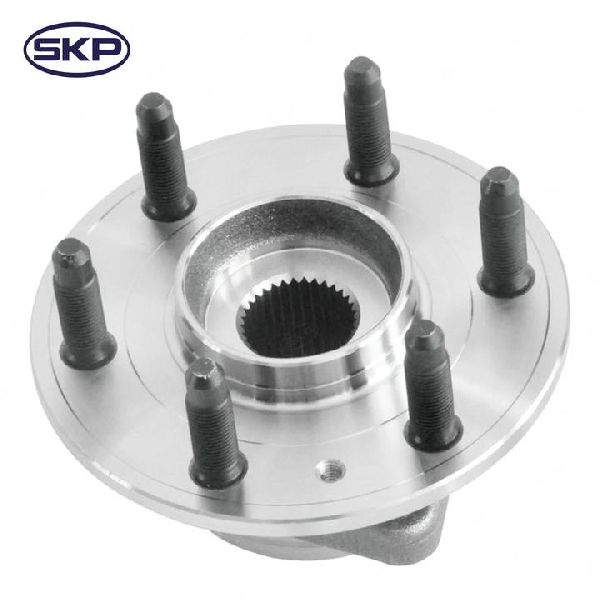
On a 2007-2014 GMC Acadia, code C0050 almost always points to a problem with the right rear wheel hub assembly. The magnetic encoder ring on the hub gets contaminated with debris or fails, or the integrated sensor fails. The most common fix is replacing the entire right rear wheel hub assembly, which costs between $150 and $300 for the part.
- Code C0050 on a 2007-2014 Acadia means there's a problem with the right rear wheel speed signal.
- The most likely cause is metallic debris on the magnetic ring of the wheel hub, or the ring itself is damaged.
- First, try cleaning the magnetic ring on the inboard side of the right rear hub. If that doesn't work, or if the ring is visibly damaged, the entire wheel hub assembly must be replaced.
- This is a safety-critical repair as the code indicates your ABS and StabiliTrak systems are offline.
- The wheel speed sensor is integrated into the hub; do not try to buy it separately for a rear wheel.
What's Unique About the 2007-2014 Gmc ACADIA

The first-generation GMC Acadia, along with its GM Lambda platform siblings (Buick Enclave, Chevy Traverse, Saturn Outlook), uses a magnetic encoder ring instead of a traditional toothed reluctor wheel. This encoder, a magnetized nitrile rubber ring with embedded north and south poles, is integrated into the inboard side of the wheel bearing hub assembly. This design is notoriously susceptible to collecting ferrous metallic debris from brake dust and road grime, which disrupts the magnetic field and causes the wheel speed sensor to send an erratic or missing signal to the EBCM. GM has issued multiple revisions of Technical Service Bulletin PIC5428 acknowledging this specific issue across a wide range of vehicles using this hub design.
Diagnostic Flowchart

Tap your situation to follow the diagnostic path that matches what you're seeing on this vehicle.
Symptoms You May Notice

- ABS warning light is on
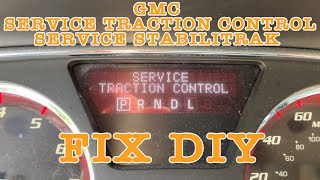
- "Service StabiliTrak" me 🎬 See this quick fix for Traction Control and StabiliTrak warnings.ssage on the driver information center
- "Service Traction Control System" message
- Traction control is disabled
- Grinding, clicking, or ratchet-like noises from the wheels, especially at low speeds (parking lot maneuvers)
- Unwanted ABS pump activation at low speeds
- "Service Steering" message and heavier steering feel at low speeds (on models with electric power steering)
- Replacing only the wheel speed sensor. On the Acadia, the rear sensor is integrated into the wheel hub assembly and is not typically sold as a separate, replaceable part. Even if a separate sensor were available, the problem is most often the magnetic ring on the hub itself, not the sensor.
Most Likely Causes

- Debris on Right Rear Wheel Bearing Magnetic Encoder 🔴 High Probability The design of the wheel hub assembly uses an exposed magnetic encoder ring that attracts and accumulates metallic debris from brake dust and road grime. This is a well-documented issue covered by multiple revisions of GM TSB PIC5428.
How to confirm: Visually inspect the inboard side of the right rear wheel hub. The encoder is a dark, rubber-like ring. Look for metallic shavings or a build-up of grime stuck to its surface. This may require removing the wheel for a clear view.
Typical fix: Carefully clean the encoder ring with a dry, soft nylon brush and, if needed, mild soap and water. 🎬 Watch: How to clean the magnetic ring without removing wheels. Do not use magnetic tools or harsh solvents, as they can permanently damage the encoder. If the code returns after cleaning, the hub assembly is likely damaged and needs replacement.
Est. part cost: $0 - Failed Right Rear Wheel Hub Assembly 🔴 High Probability Over time, the magnetic encoder ring can become brittle, crack, and have pieces fall off, creating a permanent signal gap that the sensor cannot read. The internal wheel speed sensor is also integrated into the assembly and can fail electronically. In either case, the entire hub must be replaced.
How to confirm: After cleaning the encoder, if the code persists, or if you can see visible damage (cracks, missing chunks) on the encoder ring, the hub has failed. A scan tool showing an erratic or zero speed signal from the RR wheel while driving confirms the failure.
Typical fix: Replace the right rear wheel hub and bearing assembly. This is the most common and definitive repair for a persistent C0050.
Est. part cost: $150-$300 - Damaged Wiring or Connector 🟡 Medium Probability The wiring harness runs near the wheel and suspension components, making it vulnerable to damage from road debris, corrosion, chafing against the frame or other components, or improper servicing.
How to confirm: Visually inspect the wiring harness from the right rear wheel hub to where it connects to the main body harness. Look for chafing, breaks, corrosion in the connector pins, or melted sections. A multimeter can be used to check for continuity and shorts in the circuit between the EBCM and the sensor connector.
Typical fix: Repair the damaged section of wire or replace the pigtail connector. Ensure the repair is sealed against moisture.
Est. part cost: $20-$50
Rare But Worth Checking
- Failed Electronic Brake Control Module (EBCM): This is rare. The EBCM is the computer that controls the ABS. It's unlikely to fail for just one wheel speed sensor circuit. You would typically see multiple wheel speed sensor codes or other communication errors if the EBCM were faulty.
Diagnosis Steps
- Confirm the presence of code C0050 using an OBD-II scanner capable of reading ABS/chassis codes. Note any symptom bytes (e.g., 18, 5A, 0F).
- Lift the rear of the vehicle and secure it on jack stands.
- Remove the right rear wheel.
- Visually inspect the wheel speed sensor wiring harness and connector for any obvious damage, corrosion, or loose connections. Trace it up into the wheel well and along the frame.
- Locate the magnetic encoder ring on the inboard side of the wheel hub assembly. It will look like a dark brown or black rubberized ring.
- Thoroughly inspect the ring for attached metallic debris. A flashlight and mirror can be helpful. If debris is present, clean it off gently with a soft, dry nylon brush and/or mild soap and water.
- Inspect the encoder ring for any physical damage, such as cracks, gouges, or missing sections. A visibly damaged ring requires hub replacement.
- If the ring was only dirty, clear the code and test drive. If the code returns, the hub assembly has likely failed internally.
- If the ring is visibly damaged, replace the entire wheel hub assembly.
- If the ring is clean and appears undamaged but the code persists, use a multimeter to test the wiring circuit for continuity and shorts between the sensor connector and the EBCM. An open circuit or high resistance points to a wiring issue.
- If wiring is good, the internal sensor in the hub assembly has failed. Replace the wheel hub assembly.
Parts You'll Likely Need
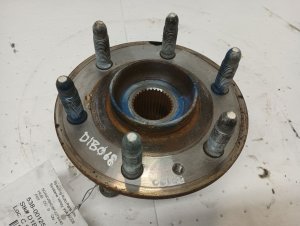
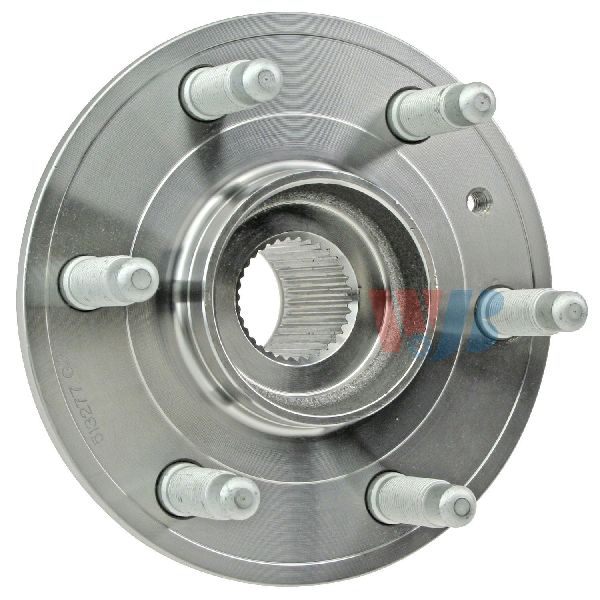
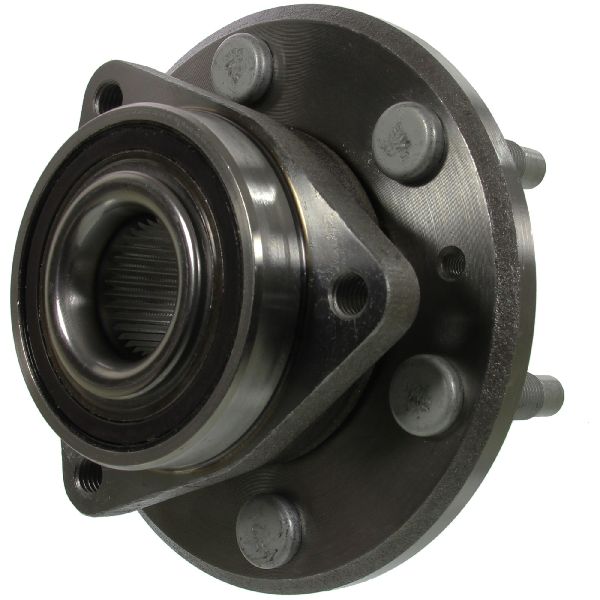
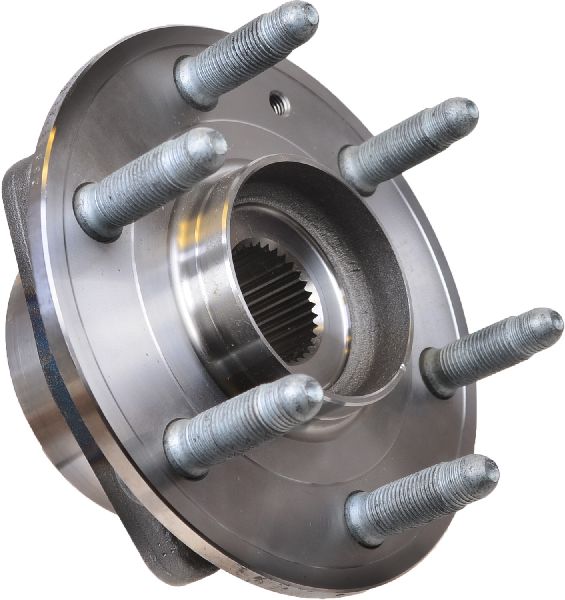
- Right Rear Wheel Hub and Bearing Assembly
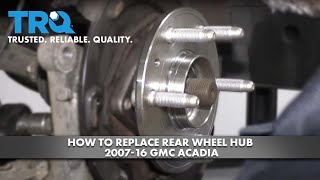
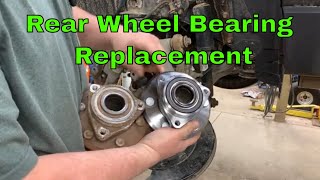
(OEM #25901201)— This assembly contains both the wheel speed sensor and the magnetic encoder ring, which are the two most common failure points for code C0050. Replacing the complete assembly is the standard and most reliable repair. 🎬 Watch: Step-by-step guide to replacing the rear wheel hub assembly.
Trusted brands: ACDelco (GM Genuine), Timken, MOOG, SKF
OEM price range: $250-$350
Aftermarket price range: $150-$250
Related Codes That Often Appear With This One
- U0415 — This code, "Invalid Data Received From Electronic Brake Control Module," can be set in the Power Steering Control Module on vehicles with electric power steering. It's a normal default action due to the loss of a wheel speed signal, which may cause a heavier steering feel at low speeds.
- C0035, C0040, C0045 — These are the codes for the other three wheel speed sensors (LF, RF, LR respectively). It is common for multiple hubs to fail or accumulate debris around the same time due to similar age and exposure to the elements.
- C0050 with symptom bytes 18, 5A, or 0F — GM TSBs specifically mention these symptom bytes. '18' indicates low signal amplitude, '5A' indicates the signal is not plausible, and '0F' indicates an erratic signal. These point directly towards debris or damage on the encoder ring.
Technical Service Bulletins (TSBs) & Recalls
- PIC5428G: EBCM Wheel Speed Sensor Diagnostic Aid for ABS Message, Click Or Ratchet Noise, Service Traction Message, Service Stabilitrak Message. This TSB (and its many revisions like B, D, E, F) is the primary document from GM acknowledging that debris on the magnetic encoder causes codes C0035-C0050 and advises cleaning as a first step. It lists a huge range of affected GM vehicles.
- 17-NA-047: This bulletin eventually superseded PIC5428G, containing the same core diagnostic information about cleaning the magnetic encoder ring.
Platform-Specific Known Issues
- The primary vehicle-specific issue is the high failure rate of the wheel bearing hubs due to contamination or physical damage to the integrated magnetic encoder ring, as documented in multiple GM Technical Service Bulletins.
- Owners on forums frequently report that cleaning the encoder ring is only a temporary fix, with the code returning weeks or months later, ultimately requiring hub replacement.
- In some cases, the wiring harness can chafe on the frame or A/C lines in the right rear wheel well area, causing an open or short in the circuit that mimics a sensor failure.
Mechanic-Grade Diagnostic Values
- Wheel Speed Sensor Power Supply Voltage — expected: Approximately 12 Volts (Battery Voltage) with key on, engine off.. Failure: Voltage is not present or is significantly lower than battery voltage, indicating a problem with the EBCM or wiring.
- Wheel Speed Sensor Signal Output (Oscilloscope) — expected: A clean digital square wave that increases in frequency as the wheel is spun.. Failure: The waveform is erratic, has dropouts, is missing entirely, or does not change with wheel speed. This confirms a faulty sensor/hub assembly.
Hidden / Shadow Codes Worth Checking
- C0050 18: Symptom byte '18' indicates the signal amplitude from the sensor is too low. (see via Requires a scan tool capable of reading GM-specific chassis codes, such as a Tech2 or GDS2.)
- C0050 5A: Symptom byte '5A' indicates the signal is not plausible (e.g., it conflicts with other vehicle speed data). (see via Requires a scan tool capable of reading GM-specific chassis codes, such as a Tech2 or GDS2.)
- C0050 0F: Symptom byte '0F' indicates the signal is erratic. (see via Requires a scan tool capable of reading GM-specific chassis codes, such as a Tech2 or GDS2.)
Scan Tool Commands That Help
- GDS2 / Tech2 / Professional Scan Tool: Live Data > EBCM > Wheel Speed Sensors — This is the first diagnostic step after reading the code. Monitor and graph the speeds of all four wheels while driving. A faulty RR sensor signal will drop out, flat-line, or show erratic readings compared to the other three sensors.
- GDS2 / Tech2: Module Programming / Setup — This is only required in the rare event that the Electronic Brake Control Module (EBCM) itself is replaced. The new module must be programmed to the vehicle.
Wiring & Ground Locations
- EBCM Connector Pins 3 & 4 — At the main electrical connector for the Electronic Brake Control Module (EBCM), located on the ABS hydraulic unit in the engine bay.. These two pins are the specific terminals for the Right Rear Wheel Speed Sensor circuit. Pin 3 is typically the 12-volt supply from the EBCM, and Pin 4 is the signal return. Testing for continuity and voltage here can isolate a wiring fault from a failed hub.
- G402 — Described in wiring diagrams as being located 'above right rear wheelwell'.. A corroded or loose chassis ground in the vicinity of the sensor can introduce resistance or electrical noise into the circuit, potentially causing an erratic signal and triggering a C0050 code even if the sensor and wiring seem intact.
- Rear Subframe Harness Routing — The section of the wiring harness that runs from the main body, over the top of the rear subframe, and down to the wheel hub.. This area is a known chafe point. The harness can rub against the frame or other components, eventually wearing through the insulation and causing a short or open circuit that mimics a sensor failure.
Real Owner Repair Stories
- Mitchell1 SureTrack Community Fix (2014 Chevrolet Tahoe LTZ 5.3L (Similar GM Platform)) — ABS light on, code C0050.
❌ Tried (didn't work) Initial inspection of wiring and connector found no faults.
✅ What actually fixed it Diagnosis found no 12V supply at the sensor. The tech replaced the EBCM, which restored power, but the signal was still erratic on a lab scope. The new wheel speed sensor (hub assembly) was also found to be faulty. The final fix required replacing BOTH the EBCM and the right rear wheel hub assembly. - YouTube video by user 'Dan Ben' (2013-2016 GMC Acadia) — Service Stabilitrak and ABS lights on.
❌ Tried (didn't work) The user first bought cheap wheel speed sensors from Amazon for around $20. After installation, the ABS and traction control lights came on immediately, indicating the parts were bad out of the box.
✅ What actually fixed it The user purchased correct, higher-quality sensors for $55 each, which resolved the issue after installation. This highlights the risk of using low-quality aftermarket electronic parts. - YouTube video by Phillip Bailey (2017 GMC Sierra (Similar diagnostic principles)) — ABS and TCS lights on, active code C0050.
❌ Tried (didn't work) Visual inspection of the harness did not immediately reveal the problem. The original sensor was temporarily reinstalled to test.
✅ What actually fixed it Using a graphing ohmmeter, a corroded wire was found near the sensor pigtail connector. The connector was full of sand, and the wire's insulation was compromised, causing a high-resistance failure. Repairing the single wire and cleaning the connector fixed the code.
"I Checked Everything" — The Actual Cause
- In a scenario equivalent to a 'smoke test clean,' a technician may replace the wheel hub assembly for C0050, clear the code, but have it return immediately. A case study showed that after confirming the wiring was good, the technician found no 12V power coming from the EBCM. They replaced the EBCM, but the code *still* persisted. The final root cause was a dual failure: the original EBCM had failed, and the brand new replacement hub assembly was also defective out of the box. This required scoping the new part to condemn it, leading to the replacement of both the EBCM and the hub.
When the Usual Fixes Don't Work
- While the vast majority of C0050 codes on this platform are fixed by replacing the right rear wheel hub assembly, there are documented cases where this does not solve the problem. In one instance, a technician replaced the hub but the code remained. The ultimate cause was a dual failure where the EBCM had also failed and was not providing the necessary 12-volt supply to the sensor. Both components had to be replaced to resolve the code. In another case, the hub and sensor were perfectly fine, but a single corroded wire in the pigtail connector near the sensor was the root cause, requiring a wiring repair instead of a hub replacement.
OEM Part Supersession History
84329995→84401914— This is the part number supersession for the Electronic Brake Control Module (EBCM), not the wheel hub. This is relevant for the rare case where the EBCM is the cause of the C0050 code.
Model Year Variations Within This Range
- 2017: In 2017, GM sold two different Acadias. The 'Acadia Limited' was a continuation of the first generation (2007-2016) and is subject to all the issues described in this guide. The all-new second-generation 'Acadia' (non-Limited) was also released and uses different parts and does not share the same chronic magnetic encoder ring failure mode.
Helpful Videos
Used OEM Parts in Stock
New Aftermarket Parts Available


The information in this article is provided for general reference and educational purposes only. Vehicle specifications, procedures, and part compatibility can vary by production date, trim level, and region. Always consult your vehicle's factory service manual and verify part numbers before purchasing or performing repairs. Safety-critical components such as airbags, seat belts, and braking systems should be installed by a qualified professional.
- Gmc ACADIA:
- 🎬 Helpful Videos
- 🛍️ Shop This Part
- What's Unique About the 2007-2014 Gmc ACADIA
- Diagnostic Flowchart
- Symptoms You May Notice
- Most Likely Causes
- Rare But Worth Checking
- Diagnosis Steps
- Parts You'll Likely Need
- Related Codes That Often Appear With This One
- Technical Service Bulletins (TSBs) & Recalls
- Platform-Specific Known Issues
- Mechanic-Grade Diagnostic Values
- Hidden / Shadow Codes Worth Checking
- Scan Tool Commands That Help
- Wiring & Ground Locations
- Real Owner Repair Stories
- "I Checked Everything" — The Actual Cause
- When the Usual Fixes Don't Work
- OEM Part Supersession History
- Model Year Variations Within This Range
- 🎟️ Get 5% Off