

C0050 on 2008-2014 Cadillac CTS: Right Rear Wheel Speed Sensor Fault Causes and Fixes
Code C0050 on a 2008-2014 Cadillac CTS indicates a fault in the right rear wheel speed sensor circuit. This usually triggers ABS and StabiliTrak warning lights. The most common cause is metallic debris on the magnetic encoder ring of the wheel hub, which can often be fixed by cleaning. If cleaning doesn't work, the wheel hub assembly or the sensor itself may need replacement. The code is often accompanied by symptom bytes like 0F (erratic signal), 18 (low signal amplitude), or 5A (signal implaus
- C0050 on a 2008-2014 CTS points directly to the right rear wheel speed sensor circuit and will disable ABS and StabiliTrak.
- Before buying any parts, your first step must be to remove the sensor and thoroughly clean the magnetic ring on the wheel hub, as per GM's own service bulletin.
- If cleaning does not fix the issue, the most likely failed part is the entire wheel hub assembly, not just the sensor.
- A scan tool that can read live ABS data is extremely helpful to watch the sensor's signal and confirm the fault.
- Driving with this fault is possible but risky, as key safety features are inactive.
What's Unique About the 2008-2014 Cadillac CTS

The second-generation Cadillac CTS, like many GM vehicles from this era, uses a design where the magnetic encoder ring for the speed sensor is integrated into the inboard side of the wheel hub bearing. This design is particularly susceptible to attracting and accumulating ferrous metallic debris from the road and brake wear. GM acknowledged this issue in Technical Service Bulletin #PIC5428G, which specifically points to this debris as a primary cause for C0050, often making a simple cleaning the correct fix instead of unnecessary parts replacement. The bulletin explicitly warns technicians not to use a magnet for cleaning, as it can damage the encoder ring.
Diagnostic Flowchart
Tap your situation to follow the diagnostic path that matches what you're seeing on this vehicle.
Symptoms You May Notice
- "Service StabiliTrak" message on the Driver Information Center (DIC)
- "Service Traction Control" message
- ABS warning light illuminated
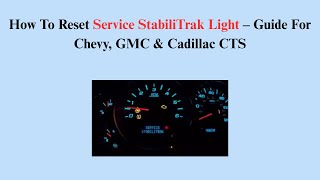
- Traction Control warning light illuminated 🎬 Watch: How to reset the Service StabiliTrak light.
- ABS and Traction Control systems are non-functional
- A brief and intermittent clicking, grinding, or ratchet noise from the wheels at low speeds.
- Flashing Traction Control light at low speeds with no codes set.
- "Service Steering" message and heavier steering feel at low speeds (if equipped with electric power steering).
- Replacing the wheel speed sensor when the actual problem is only metallic debris on the wheel hub's magnetic ring. Always perform the cleaning procedure first as per TSB PIC5428G.
- Replacing the wheel speed sensor when the hub's integrated encoder ring is damaged. If cleaning doesn't work, the hub is the next most likely failure point.
Most Likely Causes

- Debris on Wheel Hub Magnetic Encoder Ring 🔴 High Probability The design of the hub's magnetic encoder ring makes it act like a magnet for metallic road debris and rust particles. This is a well-documented issue cited in GM TSB #PIC5428G as the most common fix.
How to confirm: Remove the right rear wheel and the wheel speed sensor (10mm or T30 bolt). Visually inspect the flat, metallic ring on the inboard side of the wheel hub for any attached debris, which often looks like a metallic 'fuzz'.
Typical fix: Carefully clean the debris from the magnetic encoder ring using a dry, soft nylon brush and/or brake cleaner. Do not use a magnet or a sharp tool to clean it, as this can permanently damage the encoder. Reinstall the sensor, clear the codes, and test drive.
Est. part cost: $0-$15 - Failed Wheel Hub Bearing Assembly 🟡 Medium Probability The magnetic encoder ring is part of the hub assembly. If the ring is cracked, corroded, or damaged, or if the bearing itself has excessive play, it will produce an erratic signal. Sometimes the hub can fail internally and produce an erratic signal without any audible noise or noticeable play.
How to confirm: After cleaning the hub, if the code returns, inspect the encoder ring for physical damage. Check for any play or roughness in the wheel bearing. A scan tool showing erratic or dropping readings from the right rear sensor while driving is a strong indicator. A technician may swap sensors side-to-side; if the code stays on the right rear, the hub is the likely culprit.
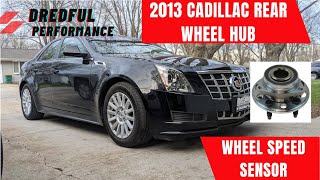
Typical fix: Replace the entire right rear wheel hub bearing assembly. This is the definitive fix if cleaning fails. Due to dissimilar metal corrosion between the aluminum knuckle and steel hub, removal can be very difficult. 🎬 Watch: This walkthrough shows how to replace the rear hub.
Est. part cost: $100-$500 - Failed Right Rear Wheel Speed Sensor ⚪ Low Probability The sensor lives in a harsh environment and can fail electronically or break during removal, though it's less common than hub debris on this platform.
How to confirm: After confirming the hub is clean and the wiring is intact, test the sensor's resistance with a multimeter or use a scan tool to observe its live data output while spinning the wheel. An absent or jumpy signal points to a bad sensor. Swapping the left and right rear sensors is a practical way to confirm; if the code moves to the other side (C0045), the sensor is bad.
Typical fix: Replace the right rear wheel speed sensor.
Est. part cost: $25-$90 - Damaged Wiring or Connector ⚪ Low Probability The wiring harness leading to the wheel is exposed to road debris, moisture, and flexing, which can lead to chafing, breaks, or corrosion in the connector pins. Wires can break right at the back of the connector shell, making a simple splice difficult.
How to confirm: Visually inspect the wiring harness from the sensor to where it enters the car body. Check for chafed wires, especially near suspension components and the frame. Unplug the connector and check for green corrosion or bent pins. A multimeter can be used to check for continuity from the EBCM connector to the sensor connector.
Typical fix: Repair the damaged section of wire with solder and heat shrink tubing or replace the connector pigtail.
Est. part cost: $10-$50
Rare But Worth Checking
- Failed Electronic Brake Control Module (EBCM): This is the least likely cause. Before condemning the expensive EBCM, all other possibilities (hub, sensor, wiring) must be definitively ruled out. An EBCM failure often triggers multiple wheel speed sensor codes, not just one.
Diagnosis Steps

- Read the codes with an ABS-capable scanner to confirm C0050 is present. Note any symptom bytes (e.g., 0F, 18, 5A) which point to a mechanical fault.
- Safely raise and support the rear of the vehicle and remove the right rear wheel.
- Locate the wheel speed sensor on the steering knuckle. It is held by a single 10mm or T30 bolt. Inspect its wiring harness for obvious damage, chafing, or corrosion.
- Unbolt and carefully wiggle the wheel speed sensor to remove it. They can become seized in the knuckle.
- Thoroughly inspect the magnetic encoder ring on the face of the wheel hub. Look for a build-up of metallic 'fuzz' or debris.
- Clean the encoder ring with brake cleaner and a soft nylon brush. Also, clean the tip of the wheel speed sensor. Do not use a magnet for cleaning.
- Reinstall the sensor, clear the DTCs, and perform a test drive while monitoring live data from all four wheel speed sensors with a scan tool.
- If the code returns and the live data for the right rear sensor is still erratic, dropping out, or missing, the problem is likely the wheel hub assembly or, less commonly, the sensor or wiring.
- Test the sensor and wiring circuit for proper resistance and continuity back to the EBCM connector to rule out an electrical fault. A common failure point is the wiring right at the sensor connector.
- If the sensor and wiring test good, the wheel hub bearing assembly is the most likely culprit and should be replaced.
Parts You'll Likely Need

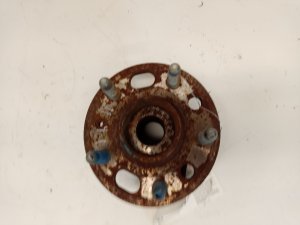
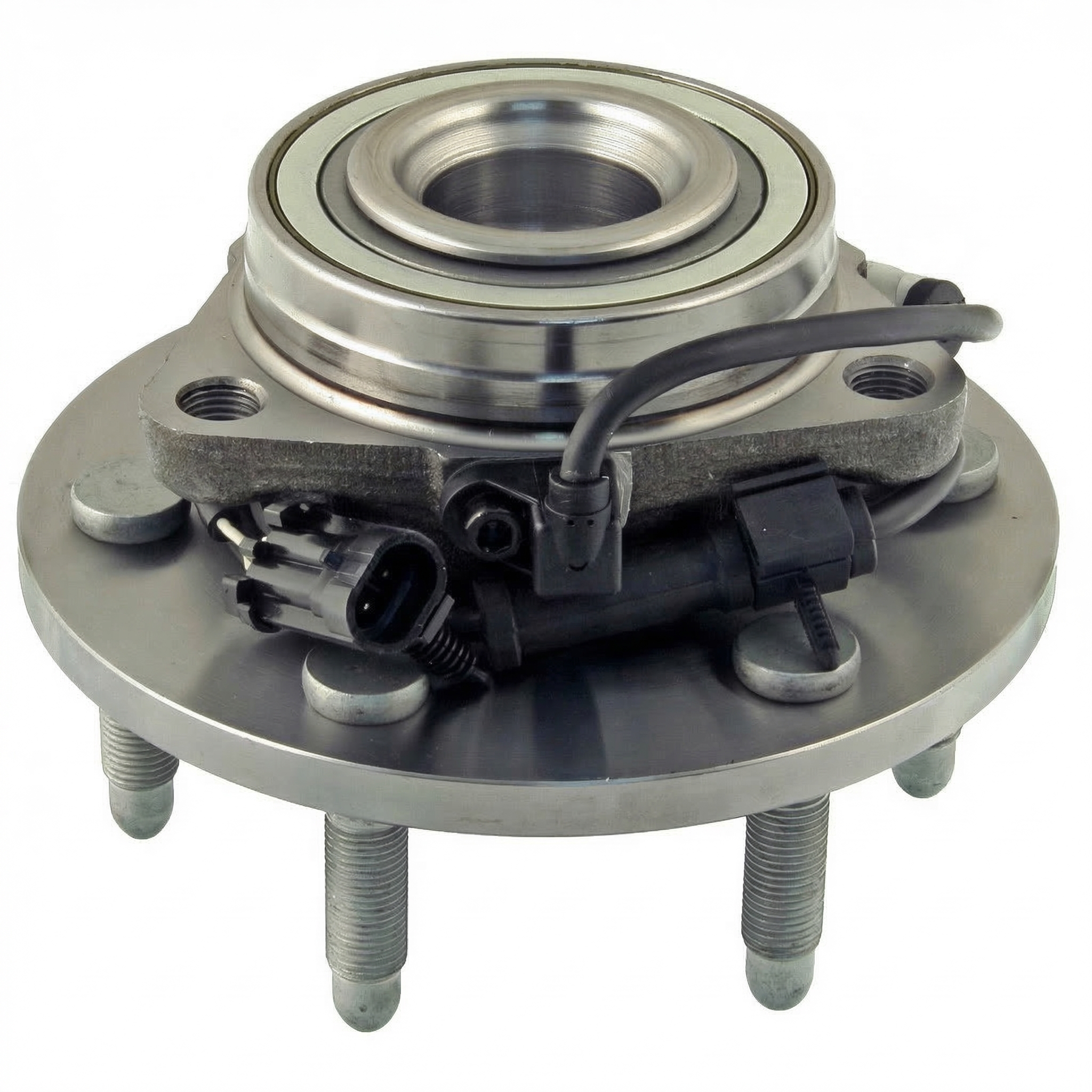
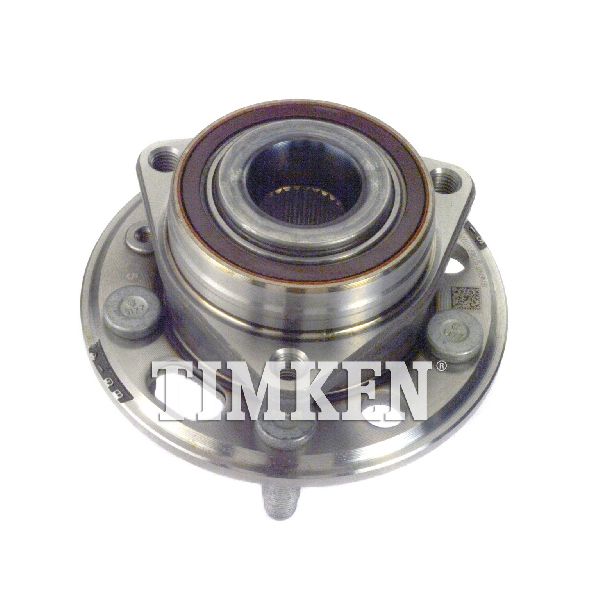
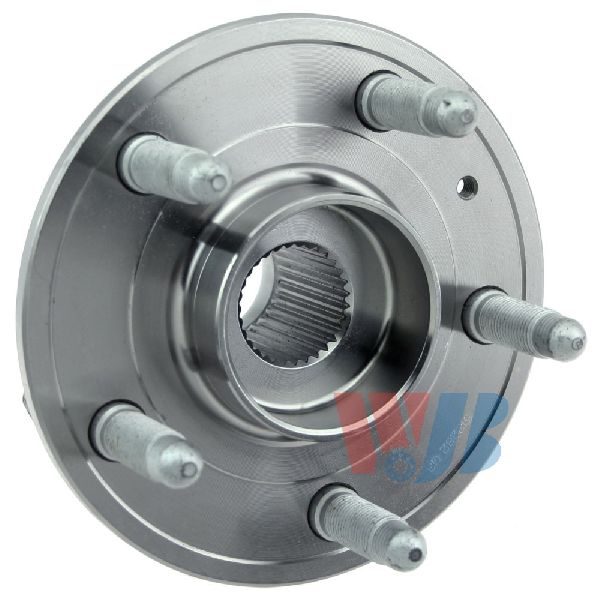
- Rear Wheel Hub Bearing Assembly
(OEM #13546785)— This is the most common repair when cleaning the hub doesn't resolve the issue, as the failure-prone magnetic encoder ring is integrated into the assembly.
Trusted brands: ACDelco (FW420, 513282), Timken (HA590242), MOOG (513282), SKF (BR930689)
OEM price range: $250-$400
Aftermarket price range: $100-$250 - Rear ABS Wheel Speed Sensor
(OEM #25996838)— Replaced if the sensor itself is tested and found to be faulty after cleaning the hub and checking the wiring.
Trusted brands: ACDelco (GM Genuine), NGK (AB0233), Delphi (SS11684), Standard Motor Products (ALS1987)
OEM price range: $70-$90
Aftermarket price range: $25-$50
Related Codes That Often Appear With This One
- C0045 — This is the code for the Left Rear Wheel Speed Sensor. Seeing both C0045 and C0050 could indicate a shared wiring problem, debris on both hubs, or a potential EBCM issue.
- U0415 — As noted in TSB PIC5428G, a loss of a wheel speed sensor signal can cause the Power Steering Control Module to set this code, resulting in a 'Service Steering' message and heavier steering feel at low speeds. This is a normal default action.
Technical Service Bulletins (TSBs) & Recalls
- PIC5428G: Notes that StabiliTrak lights with DTCs C0035-C0050 are often caused by ferrous debris on the wheel bearing's magnetic encoder ring and provides a cleaning procedure as the primary fix. It also lists dozens of other affected GM vehicles.
- 17-NA-047: This bulletin supersedes PIC5428G, updating the model years and reinforcing the diagnostic and cleaning procedures. It explicitly warns against using magnetic tools for cleaning.
Platform-Specific Known Issues
- GM Technical Service Bulletin PIC5428G directly addresses code C0050 (along with C0035, C0040, and C0045) on the 2008-2014 CTS. It states that in most cases, the fault can be repaired by cleaning accumulated debris from the magnetic encoder ring on the wheel bearing.
- The TSB specifically mentions that symptom bytes 0F (erratic), 18 (low amplitude), and 5A (not plausible) are strong indicators of this debris issue.
- Owners and technicians report that the steel hub can seize into the aluminum knuckle due to galvanic corrosion, making removal extremely difficult without specialized pullers or significant force.
Mechanic-Grade Diagnostic Values
- Continuity/Resistance of Right Rear WSS Circuit — expected: Less than 2.0 ohms. Failure: A reading higher than 2.0 ohms indicates high resistance or an open in the circuit.
- WSS Signal Current (Active Sensor) — expected: Switches between 7mA (Low) and 14mA (High) as the wheel rotates.. Failure: A signal that is static, absent, or does not switch cleanly indicates a faulty sensor or encoder ring.
- Voltage at WSS Connector — expected: Approximately 12V on the power supply pin and a bias voltage (around 1.0V) on the signal pin with the key on, sensor disconnected.. Failure: Absence of the 12V supply points to a problem with the EBCM or wiring. Absence of the bias voltage can also indicate a wiring or EBCM issue.
Hidden / Shadow Codes Worth Checking
- C0050 02: Right Rear Wheel Speed Sensor Circuit Short to Ground. (see via An ABS-capable scan tool like a GM Tech2 or GDS2 will display the main code with its two-digit symptom byte.)
- C0050 05: Right Rear Wheel Speed Sensor Circuit High Voltage/Open. This indicates a break in the wiring or a disconnected sensor. (see via An ABS-capable scan tool.)
- C0050 0F: Right Rear Wheel Speed Sensor Circuit Signal Erratic. This is set when the EBCM sees a wheel speed change that exceeds 20 km/h (12 mph) between two 10-millisecond samples, suggesting a physically damaged encoder or heavy debris. (see via An ABS-capable scan tool.)
- C0050 18: Right Rear Wheel Speed Sensor Circuit Low Signal Amplitude. This points to a weak signal, often caused by debris, an excessive air gap, or a failing sensor. (see via An ABS-capable scan tool.)
- C0050 5A: Right Rear Wheel Speed Sensor Signal Plausibility Failure. The signal is not consistent with the signals from other wheel speed sensors. This is often caused by debris or a damaged encoder ring. (see via An ABS-capable scan tool.)
Scan Tool Commands That Help
- GDS2, Tech2, or equivalent professional scan tool: Live Data > EBCM > Wheel Speed Sensor Data — This is the primary diagnostic step. While driving in a straight line, all four wheel speed sensors should read within 1-2 MPH of each other. A reading from the right rear that is erratic, drops to zero, or doesn't match the others confirms the fault location.
- GDS2, Tech2, or equivalent professional scan tool: Clear DTCs — Used after a repair attempt (like cleaning the hub) to clear the code from the EBCM's memory. A test drive is then required to see if the code returns.
Wiring & Ground Locations
- EBCM Connector — The Electronic Brake Control Module (EBCM) is the silver aluminum block attached to the ABS pump assembly in the engine bay, typically on the driver's side.. This is the termination point for the wheel speed sensor harness. Testing at this connector is crucial for diagnosing if a fault is in the wiring, sensor, or the module itself.
- EBCM Pins (Right Rear WSS) — At the 38-pin EBCM harness connector, the Right Rear WSS uses Pin 3 (Ignition Voltage) and Pin 2 (Signal).. Knowing these specific pin numbers allows for targeted continuity and voltage tests of the right rear sensor circuit directly from the module, which can quickly isolate a wiring break.
- G110 (or similar) — On earlier CTS models, a key ground point (G110) is located on the right frame rail in the engine compartment, near the ABS module. The exact location for the 2008-2014 models may vary, but checking frame rail grounds near the EBCM is critical.. A poor ground for the EBCM can cause a host of erratic issues, including phantom sensor codes. Because the battery is in the rear, the engine and chassis grounds are especially important.
Real Owner Repair Stories
- Mitchell1 SureTrack Community Fix (2014 Chevrolet Tahoe LTZ 5.3L (Similar GM ABS system)) — ABS light on, code C0050.
❌ Tried (didn't work) Visual inspection of wiring was clean. Clearing codes resulted in immediate return.
✅ What actually fixed it A dual failure. A multimeter test found no 12V supply at the sensor connector. The EBCM was replaced and programmed, which restored power. However, a lab scope showed the new sensor signal was still erratic with dropouts. Replacing the right rear ABS wheel speed sensor in addition to the EBCM finally resolved the issue. - YouTube channel - 'DiagnoseDan' (2017 GMC Sierra (Similar GM ABS system)) — ABS and TCS lights on, active code C0050.
❌ Tried (didn't work) Visual inspection of the harness and connector near the wheel showed no damage.
✅ What actually fixed it An intermittent open circuit in the wiring. A graphing ohmmeter was connected between the EBCM connector and the sensor connector (with the sensor end jumped). Wiggling the harness caused the resistance to jump from a good reading to an open circuit, revealing an internal wire break that wasn't visible. Repairing the corroded wire fixed the problem.
OEM Part Supersession History
13502216, 13507374, 13580135, 13589507, 13589509→13546785, which is now superseded by 13564982— Standard part evolution for improved durability or manufacturing efficiency.
Heads up: The listed parts are generally interchangeable for the specified generation, but always confirm fitment with the vehicle's VIN.25866179→25996838, which is now superseded by 19435260— Standard part evolution and supplier changes.
Heads up: The listed parts are generally interchangeable for the specified generation.
Model Year Variations Within This Range
- 2008-2014: The underlying issue of debris accumulation on the magnetic encoder, the diagnostic procedure, and the primary part numbers for the hub and sensor are consistent across the entire second generation of the Cadillac CTS. No significant variations related to this specific code have been noted.
Helpful Videos

Used OEM Parts in Stock


New Aftermarket Parts Available



The information in this article is provided for general reference and educational purposes only. Vehicle specifications, procedures, and part compatibility can vary by production date, trim level, and region. Always consult your vehicle's factory service manual and verify part numbers before purchasing or performing repairs. Safety-critical components such as airbags, seat belts, and braking systems should be installed by a qualified professional.
- Cadillac CTS:
- 🎬 Helpful Videos
- 🛍️ Shop This Part
- What's Unique About the 2008-2014 Cadillac CTS
- Diagnostic Flowchart
- Symptoms You May Notice
- Most Likely Causes
- Rare But Worth Checking
- Diagnosis Steps
- Parts You'll Likely Need
- Related Codes That Often Appear With This One
- Technical Service Bulletins (TSBs) & Recalls
- Platform-Specific Known Issues
- Mechanic-Grade Diagnostic Values
- Hidden / Shadow Codes Worth Checking
- Scan Tool Commands That Help
- Wiring & Ground Locations
- Real Owner Repair Stories
- OEM Part Supersession History
- Model Year Variations Within This Range
- 🎟️ Get 5% Off