

C0050 on 2016-2017 Buick Enclave: Right Rear Wheel Speed Sensor Faults & Fixes
On a 2016-2017 Buick Enclave, code C0050 almost always points to an issue with the right rear wheel speed sensor circuit. The most common cause is metallic debris on the wheel hub's magnetic ring, a well-documented issue in GM TSB PIC5428G, which can often be fixed by cleaning. If that fails, or the ring is cracked, the next most likely fix is replacing the entire right rear wheel hub bearing assembly.
- Code C0050 means there is a problem with the Right Rear Wheel Speed Sensor circuit, which disables ABS and StabiliTrak.
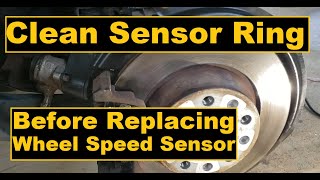
- Before replacing any parts, always remove the sensor and inspect the magnetic ring on the wheel hub for metallic debris. A thorough cleaning often resolves the issue for free.
- If the magnetic ring is clean but visibly cracked or has missing pieces, the entire wheel hub bearing assembly must be replaced.
- Only replace the wheel speed sensor if the hub ring is in perfect condition and you have confirmed the sensor is faulty, for example, by swapping it with the other side.
- Ignoring this issue is a safety risk, as your vehicle's emergency braking and stability control systems are compromised.
What's Unique About the 2016-2017 Buick ENCLAVE
The first-generation Buick Enclave and its GM Lambda platform siblings (GMC Acadia, Chevy Traverse, Saturn Outlook) are particularly known for a specific failure mode related to this code. As documented in GM Technical Service Bulletin PIC5428G, ferrous metallic debris, resembling a metallic paste, frequently accumulates on the magnetic encoder ring that is integrated into the wheel hub bearing assembly. This debris disrupts the magnetic field the wheel speed sensor reads, causing the fault code, often before the sensor or bearing itself has mechanically failed.
Diagnostic Flowchart
Tap your situation to follow the diagnostic path that matches what you're seeing on this vehicle.
Symptoms You May Notice
- ABS warning light is on.
- Traction Control warning light is on.
- "Service StabiliTrak" message appears on the driver information center.
- Cruise control may be disabled.
- In some cases, a "Service Steering" message may appear and steering may feel heavier at low speeds, which is a normal default action when a wheel speed signal is lost.
- A brief grinding or ratchet-like noise may be heard at low speeds as the system attempts to engage.
- Replacing the wheel speed sensor without first inspecting and cleaning the magnetic encoder ring on the hub. Many owners and shops replace the sensor only to find the code returns because the root cause was debris on the hub.
Most Likely Causes
- Debris on Right Rear Wheel Hub Magnetic Encoder Ring 🔴 High Probability This is a well-documented issue for this GM platform, as cited in TSB PIC5428G. The design of the hub bearing's magnetic ring makes it susceptible to collecting metallic dust and road grime, which looks like a metallic paste.
How to confirm: Remove the right rear wheel speed sensor (a single 10mm or Torx bolt). Use a light to look into the mounting hole and inspect the brown magnetic ring on the hub for a build-up of dark, greasy, metallic debris. Rotate the hub to inspect the entire surface.
Typical fix: Gently clean the magnetic encoder ring with a dry, soft nylon bristle brush and/or mild soap and water. A bore brush can be effective. Do NOT use a magnet or harsh solvents 🎬 Watch: How to clean the magnetic ring without removing wheels to clean it, as this can damage the encoder. Reinstall the sensor, clear codes, and test drive.
Est. part cost: $0 - Damaged or Cracked Wheel Hub Bearing Magnetic Encoder Ring 🟡 Medium Probability Over time, the magnetic ring, which is made of a magnetized nitrile rubber material, can become brittle, crack, or have sections break off, causing a complete or erratic loss of signal.
How to confirm: Visually inspect the magnetic ring through the sensor hole. If large chunks are missing or it is visibly cracked, it has failed. A YouTube video by 'Mike Borders' shows a clear side-by-side of a failed hub with a flaked-off piece of the ring versus a new one.
Typical fix: The magnetic ring is integrated into the wheel hub bearing. The entire right rear wheel hub bearing assembly must be replaced.
Est. part cost: $100-$280 - Failed Right Rear Wheel Speed Sensor 🟡 Medium Probability Like any electronic component, the sensor can fail internally from age, heat cycles, or moisture intrusion. The sensor can also become seized in the knuckle due to corrosion, making removal difficult.
How to confirm: After confirming the magnetic ring is clean and intact, the sensor is the next suspect. A professional scan tool can monitor its live data output. A common DIY method is to swap the right rear sensor with the left rear sensor. If the code changes to C0045 (Left Rear), the sensor is bad. You can also test the sensor's resistance with a multimeter, comparing the reading to the sensor on the other side; they should be very close.
Typical fix: Replace the right rear wheel speed sensor. It is typically held in by a single bolt, but may require careful prying or use of penetrating oil if seized.
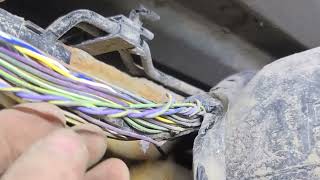
Est. part cost: $20-$60 - Damaged Wiring or Connector ⚪ Low Probability The wiring harness runs near moving suspension components and is exposed to the elements, making it vulnerable to chafing, corrosion, or impact damage. The harness section running over the rear subframe is a known potential chafe point. The main connector (X411) under the rear of the vehicle is also a known weak point for corrosion, as noted in TSB PIT5427B.
How to confirm: Visually inspect the entire length of the wiring harness from the sensor to where it enters the vehicle body. Check for breaks, chafing, or corrosion in the connector pins. Use a multimeter to perform continuity and voltage drop tests on the signal and reference circuits between the sensor connector and the EBCM connector.
Typical fix: Repair the damaged section of the wiring harness or replace the pigtail connector.
Est. part cost: $15-$50
Rare But Worth Checking
- Failed Electronic Brake Control Module (EBCM): This is the least likely cause. The EBCM is the computer that controls the ABS and StabiliTrak systems. It should only be considered after all other possibilities (sensor, hub, and wiring) have been definitively ruled out. Failure of the EBCM usually triggers multiple, more severe codes, not just a single wheel speed sensor fault.
Diagnosis Steps
- Read the fault codes with an ABS-capable scanner to confirm C0050 is present. Note any symptom bytes like '18' (weak signal), '5A' (implausible signal), or '0F' (erratic signal), which point to a mechanical issue like debris or a damaged ring.
- Use the scanner to view live data. Compare the Right Rear wheel speed reading to the other three wheels while driving slowly in a straight line at a speed greater than 13 mph (20 km/h). An erratic, zero, or mismatched reading from the RR sensor confirms the issue is isolated to that corner.
- Lift and safely support the rear of the vehicle. Remove the right rear wheel.
- Locate and remove the single bolt (typically 10mm or Torx) holding the wheel speed sensor in the steering knuckle. The sensor may be seized with corrosion; gentle prying or tapping may be needed to free it.
- Carefully pull the sensor out and inspect its tip for damage or heavy debris.
- Shine a light into the sensor mounting hole and slowly rotate the wheel hub. Visually inspect the brown magnetic encoder ring on the hub for caked-on metallic debris, rust, or physical damage like cracks or missing sections.
- If debris is present, use a soft nylon brush (like a bore brush) and/or a rag with mild detergent to thoroughly clean the entire surface of the ring. Blow out any remaining dust with compressed air. Reinstall the sensor, clear the codes, and test drive.
- If the ring is clean and intact, inspect the wiring harness for any visible damage, especially where it passes over the subframe. Unplug the connector and check for bent or corroded pins.
- If no visible issues are found, the most likely remaining culprits are a bad sensor or a damaged hub ring. A robust next step is to replace the wheel hub bearing assembly, as this replaces the failure-prone magnetic ring. Alternatively, swap the right and left rear sensors to see if the code changes to C0045, which would confirm a bad sensor.
- If the problem persists after replacing the hub and sensor, perform detailed wiring tests for continuity and shorts between the sensor connector and the EBCM before considering the rare possibility of a failed EBCM.
Parts You'll Likely Need
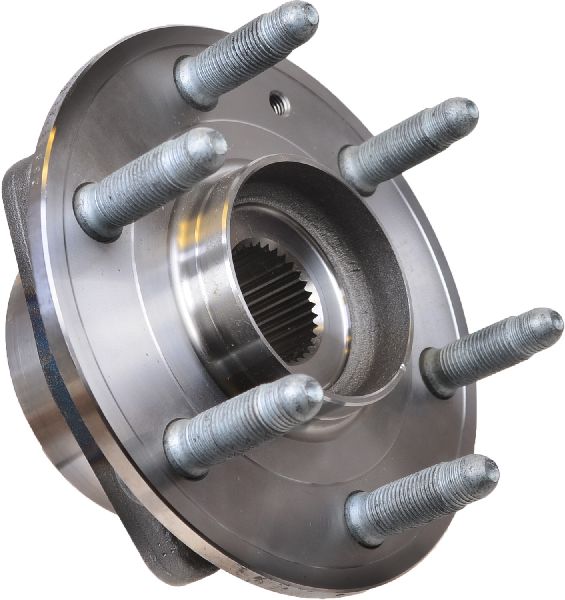
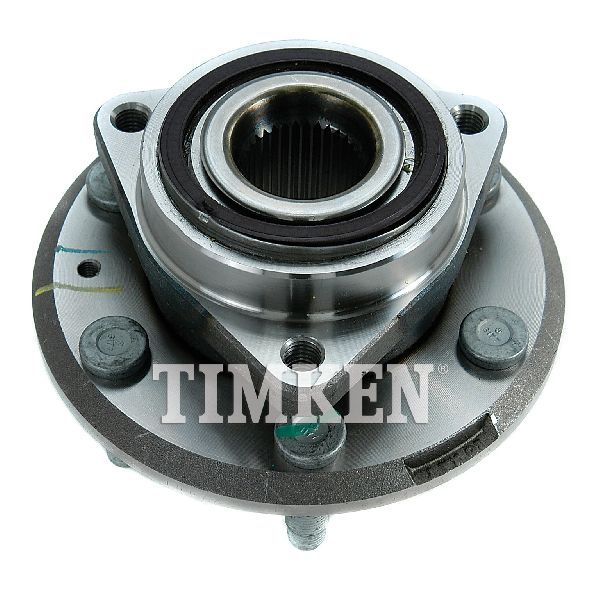
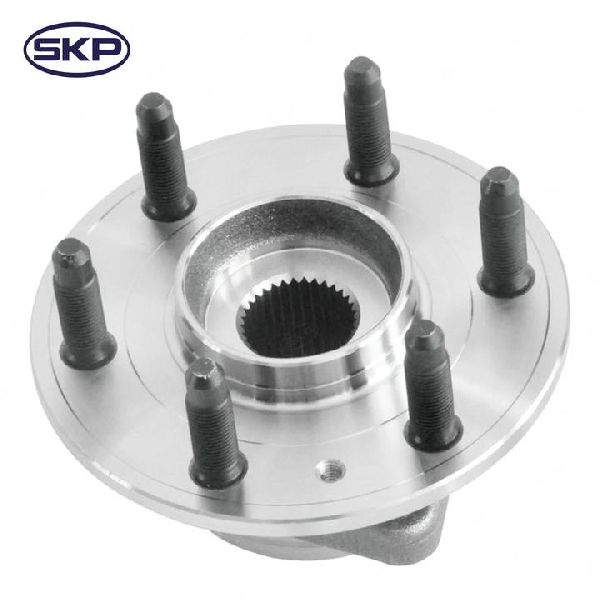
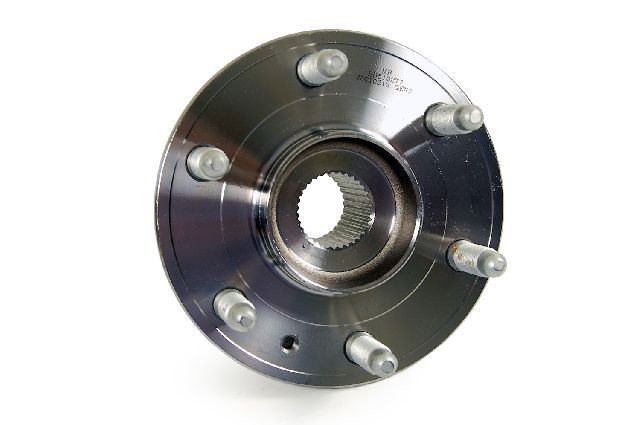
- Rear Wheel Hub Bearing Assembly
(OEM #513277, 22756832)— This is the most common repair if cleaning the magnetic ring doesn't work. The ring is integrated into the hub, so if it's damaged, the entire assembly must be replaced. This part number is widely cross-referenced for the Enclave, Acadia, and Traverse for both front and rear fitment.
Trusted brands: ACDelco, MOOG, Timken, Duralast
OEM price range: $200-$300
Aftermarket price range: $100-$180
Related Codes That Often Appear With This One
- U0415 — This code can be set in the Power Steering Control Module. It indicates an invalid signal was received from the EBCM, which is a normal secondary effect of the wheel speed sensor fault that can cause heavier steering feel at low speeds.
- C0035, C0040, C0045 — These are the codes for the other three wheel speed sensors (Left Front, Right Front, Left Rear). They are often mentioned together in service bulletins because they share the same failure patterns and diagnostic procedures.
Technical Service Bulletins (TSBs) & Recalls
- PIC5428G: This is the primary TSB for this issue across dozens of GM models. It states that codes C0035-C0050 with symptom bytes 18, 5A, or 0F are frequently caused by ferrous debris on the magnetic encoder ring and provides a cleaning procedure.
Platform-Specific Known Issues
- Real-World Repair: Cleaning vs. Replacement: Owners on forums for the Enclave and its siblings (Acadia, Traverse) frequently share stories of being quoted for an expensive hub replacement by a repair shop. Many who chose to first attempt the cleaning procedure outlined in TSB PIC5428G found it solved the problem for $0 in parts. This highlights the importance of starting with the simplest, most common fix.
- Real-World Repair: Cracked Encoder Ring: A common repair story involves the cleaning method not working. Upon closer inspection or after replacing the sensor with no change, the owner replaces the entire hub assembly. The old hub, once removed, often shows a visible crack or a missing chunk from the brown magnetic ring, confirming it was the point of failure. The YouTube channel 'DIY with Michael Borders' has a video clearly showing this exact failure mode.
Mechanic-Grade Diagnostic Values
- Resistance between sensor signal circuit and 12V reference circuit at the EBCM connector — expected: Less than 2 ohms. Failure: A reading greater than 2 ohms indicates an open or high resistance in the wiring or sensor.
- Resistance between the sensor's 12V reference circuit terminal and ground — expected: Infinite resistance (OL). Failure: A reading less than infinite indicates a short to ground in the circuit.
- Voltage on the sensor's 12V reference circuit — expected: Ignition voltage (typically >9.5V). Failure: Low or no voltage indicates a problem with the power feed from the EBCM.
Hidden / Shadow Codes Worth Checking
- C0050 06: Right Rear Wheel Speed Sensor Circuit Low Voltage/Open. This points to a likely break in the wiring or a complete sensor failure. (see via Professional scan tools like the GM GDS2 can read these manufacturer-specific symptom bytes.)
- C0050 0F: Right Rear Wheel Speed Sensor Circuit Signal Erratic. This suggests the EBCM is receiving a signal, but it's inconsistent or choppy, often caused by a failing sensor, wiring issue, or debris on the encoder ring. (see via Professional scan tools like the GM GDS2 can read these manufacturer-specific symptom bytes.)
- C0050 18: Right Rear Wheel Speed Sensor Circuit Low Signal Amplitude. The signal from the sensor is weak, often caused by an excessive air gap, debris, or a failing sensor. (see via Professional scan tools like the GM GDS2/Tech2 can read these manufacturer-specific symptom bytes.)
- C0050 5A: Right Rear Wheel Speed Sensor Circuit Plausibility Failure. The signal from this sensor is out of sync with the other wheel speed sensors, a key indicator for the debris/damaged ring issue. (see via Professional scan tools like the GM GDS2/Tech2 can read these manufacturer-specific symptom bytes.)
Scan Tool Commands That Help
- GDS2 (GM Global Diagnostic System 2): Module Diagnostics > EBCM > Live Data — Use this function to monitor and compare the signal from all four wheel speed sensors in real-time during a test drive. An erratic or zero reading from the right rear sensor while others are reporting speed confirms the fault location.
- GDS2 (GM Global Diagnostic System 2): Clear DTCs — This is used after a repair attempt (like cleaning the encoder ring or replacing a part) to reset the module and turn off the warning lights. The fault must be absent during the subsequent drive cycle for the lights to stay off.
Wiring & Ground Locations
- EBCM Connector — The Electronic Brake Control Module is typically located on the ABS hydraulic unit in the engine compartment, near the brake booster.. This is the main connection point for all wheel speed sensors. Testing for voltage and continuity at the EBCM pins for the right rear sensor can determine if a wiring fault exists between the sensor and the module.
- X100 Connector — A 16-pin intermediate connector located on the passenger side of the engine compartment.. The wiring for the rear wheel speed sensors passes through this connector. It can be an easier access point to test the circuit with an oscilloscope or multimeter without having to access the main EBCM connector. For the left rear sensor (C0045), the tan wire is the 12V feed and the orange wire is the signal.
- X411 Connector — A large harness connector located under the rear of the vehicle.. This connector is a known weak point for corrosion and water intrusion, which can cause intermittent or permanent faults for the rear wheel speed sensors. GM TSB PIT5427B specifically mentions this connector as a potential cause for C0050.
Real Owner Repair Stories
- YouTube video by 'Mike Borders' (Chevrolet Traverse (Lambda platform sibling to Enclave)) — ABS and StabiliTrak warning lights, with codes C0045 and C0050.
❌ Tried (didn't work) The video focuses on direct diagnosis rather than failed attempts.
✅ What actually fixed it The magnetic encoder ring on the wheel hub assembly had become brittle and a piece had flaked off, creating a gap in the signal. Replacing the entire wheel hub assembly, which includes a new magnetic ring, was the definitive fix.
OEM Part Supersession History
22756832→19434718— This is a common supersession for the GM front/rear wheel hub bearing assembly.
Helpful Videos
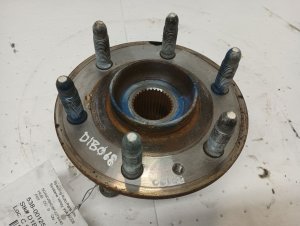
Used OEM Parts in Stock
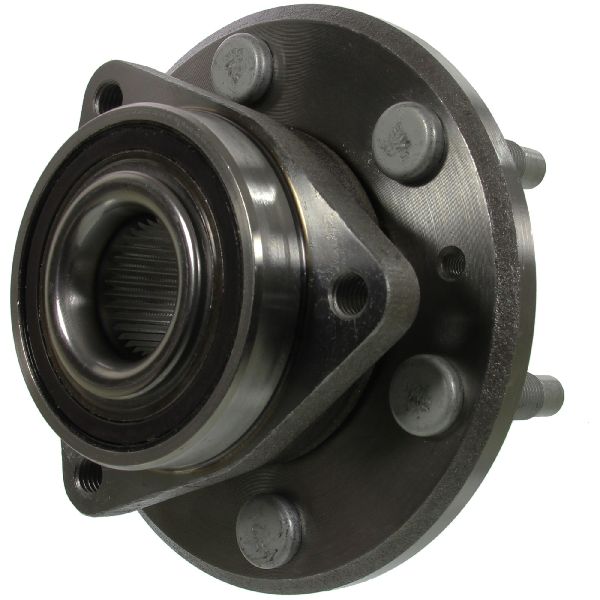
New Aftermarket Parts Available


The information in this article is provided for general reference and educational purposes only. Vehicle specifications, procedures, and part compatibility can vary by production date, trim level, and region. Always consult your vehicle's factory service manual and verify part numbers before purchasing or performing repairs. Safety-critical components such as airbags, seat belts, and braking systems should be installed by a qualified professional.
- Buick ENCLAVE:
- 🎬 Helpful Videos
- 🛍️ Shop This Part
- What's Unique About the 2016-2017 Buick ENCLAVE
- Diagnostic Flowchart
- Symptoms You May Notice
- Most Likely Causes
- Rare But Worth Checking
- Diagnosis Steps
- Parts You'll Likely Need
- Related Codes That Often Appear With This One
- Technical Service Bulletins (TSBs) & Recalls
- Platform-Specific Known Issues
- Mechanic-Grade Diagnostic Values
- Hidden / Shadow Codes Worth Checking
- Scan Tool Commands That Help
- Wiring & Ground Locations
- Real Owner Repair Stories
- OEM Part Supersession History
- 🎟️ Get 5% Off