

OBD-II Code C0049: Brake Fluid Level Circuit Malfunction
What C0049 means, why it triggers, and how to fix it
- Code C0049 indicates a fault in the brake fluid level sensor circuit, caused by either an electrical failure or genuinely low brake fluid.
- Safely pull over immediately and check the brake fluid reservoir; if the level is below the 'MIN' line, you have a leak or severely worn brake pads.
- For 2021-2025 Ford Broncos, resolving code C0049:01 requires replacing both the brake fluid reservoir and the connector pigtail simultaneously per Ford TSBs.
- Never ignore this code; driving without a functional fluid level warning system risks catastrophic, unannounced brake failure if a hydraulic line ruptures.
What Does C0049 Mean?

Code C0049 indicates the Anti-lock Brake System (ABS) module detects a problem with the brake fluid level sensor's circuit. The computer cannot get a reliable signal from the sensor monitoring the master cylinder reservoir. This occurs because the fluid is genuinely low, or the sensor, wiring, or module has failed.
Technical definition: The official SAE/OBD-II definition for code C0049 is Brake Fluid (Subfault) or Brake Fluid Level Circuit Malfunction. It means the ABS module detects the brake fluid level sensor signal is out of its expected range, pointing to a general electrical failure, an open circuit, or a short circuit.
Can I Drive With C0049?
Yes, But With Caution. Pull over safely to check your brake fluid level. If the level is correct and the brake pedal feels firm, drive cautiously to a repair shop. The primary risk is a sudden loss of braking ability. If a brake line develops a serious leak, the fluid escapes, and because the C0049 fault disables the warning system, your first indication of a problem is the brake pedal going to the floor. Address this code immediately.
Common Causes

- Low Brake Fluid Level (Very Common) — The sensor is operating correctly and reporting that the fluid level has dropped below the minimum safe line. This is caused by a leak in a brake line, caliper, or master cylinder, or from normal brake pad wear.
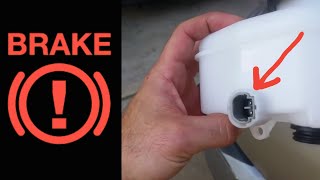
- Faulty Brake Fluid Level Sensor (Very Common) — The sensor fails electrically or mechanically (such as a stuck internal float). On many modern cars, the sensor is a non-serviceable part integrated into the brake fluid reservoir, requiring replacement of the entire reservoir assembly. 🎬 See this walkthrough on replacing the reservoir and sensor
- Damaged or Corroded Sensor Connector (Common) — The electrical connector attached to the sensor is exposed to moisture and heat. Corrosion on the pins or a loose connection disrupts the signal, triggering the code even if the fluid level and sensor are perfectly fine.
- Wiring Harness Damage (Common) — The wires running between the sensor and the ABS module chafe, pinch, or break from vibration or improper routing. This creates an open or short circuit that the module flags as a fault.
- Contaminated Brake Fluid (Less Common) — Brake fluid that absorbs excessive moisture or debris alters its electrical properties. This causes the sensor to return an inaccurate reading to the ABS module, triggering the code.
- Incorrect Service Procedures (Rare) — Specific workshop errors induce this code. For example, bleeding the brakes with the ignition on sets a C0049-7B code on Hondas. On Cadillac XT4s, swapping the identical brake fluid sensor and engine coolant sensor connectors during reassembly sets the code.
- Faulty ABS or TIPM Control Module (Rare) — The control module (ABS or the Totally Integrated Power Module on Jeeps) fails internally. Its circuits misinterpret a perfectly good signal from the sensor. Consider this only after eliminating all other possibilities.
Symptoms

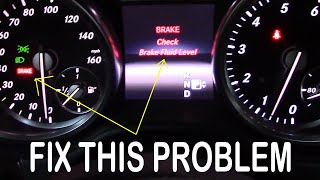
- Red 'BRAKE' Warning Light On — The main brake warning light on your dashboard illuminates 🎬 Watch: Fixing a brake light by replacing the reservoir sensor and stays on.
- ABS and/or Traction Control Lights On — Because the brake fluid level is critical for the ABS and traction control systems, their warning lights (like 'Service AdvanceTrac' on Fords) also turn on.
- Intermittent Warning Light — In the early stages of a sensor or wiring failure, the warning light flickers or turns on and off randomly before staying on permanently.
- Spongy or Soft Brake Pedal — If an actual fluid leak triggers the code, air enters the hydraulic system, causing the brake pedal to feel soft or travel further to the floor.
- Increased Stopping Distance — Associated with a soft pedal and a real fluid leak, your vehicle takes longer to come to a complete stop.
Diagnostic Flowchart
Tap your situation to follow the diagnostic path that matches what you're seeing on this code.
Common Fixes & Costs
- Top Off Brake Fluid and Inspect for Leaks — Parts: $5-$20, Labor: $100-$225 (includes inspection and bleeding if needed), ~0.5 hr book time (DIY)
- Replace Brake Fluid Reservoir with Integrated Sensor
— Parts: $50-$150, Labor: $150-$300 (includes bleeding the master cylinder), ~1.5 hr book time
(Intermediate)
Ford Bronco (2021-2025): OEM MB3Z-2K478-A (Alt: Dorman (Check specific application))
Jeep Grand Cherokee (2011-2016): OEM 68207364AA (Alt: Dorman, Cardone) - Replace Sensor Connector Pigtail
— Parts: $20-$40, Labor: $120-$180 (includes splicing and diagnostic time), ~1.2 hr book time
(Intermediate)
Ford Bronco (2021-2025): OEM CU2Z-14S411-BA (Motorcraft WPT-1240) (Alt: Dorman, Standard Motor Products) - Repair Damaged Wiring Harness — Parts: $10-$50 (for wire and connectors), Labor: $150-$450 (depending on location and extent of damage), ~2.5 hr book time (Advanced)
- Replace ABS Control Module — Parts: $600-$1100, Labor: $150-$300 (plus programming, if required), ~1.5 hr book time (Professional)
DIY vs Professional
- Top Off Brake Fluid — Beginner:
Tools: Correct DOT brake fluid (check manual), funnel, rags. - Replace Brake Fluid Reservoir — Beginner:
Tools: Wrenches, fluid extractor, new brake fluid, hose clamp pliers, brake bleeding kit. - Replace Sensor Connector Pigtail — Beginner:
Tools: Wire cutters, wire strippers, soldering iron, heat shrink tubing, heat gun, multimeter. - Repair Damaged Wiring Harness — Beginner:
Tools: Multimeter, wiring diagrams, depinning tools, wire repair supplies.
Used vs. New Parts: Buying Guide
When a used part is worth it: A used brake fluid reservoir is a budget-friendly option for older vehicles where a new OEM part is prohibitive. Source it from a low-mileage vehicle scrapped for reasons unrelated to the brake system.
Donor-vehicle mileage cap: roughly under 60000 miles for the part to have meaningful remaining life.
Donor quality checklist:
- Verify the donor vehicle part number matches exactly.
- Inspect the plastic for cloudiness, cracking, or brittleness.
- Ensure the integrated sensor connector pins are clean and free of corrosion.
- Avoid parts from regions with heavy road salt use.
Decision logic:
- If Vehicle is a Ford Bronco (2021+) with known TSBs for this issue → Always buy new OEM parts for both the reservoir and connector pigtail to ensure the latest design is installed.
- If The cost of a new aftermarket reservoir is under $75 → Buy new. The small savings from a used part are not worth the risk of premature sensor failure.
- If The part is a simple reservoir without an integrated sensor → A used part is acceptable, provided it is clean and not brittle.
Warranty tradeoff: Used parts from a salvage yard typically have a 30-90 day warranty. New aftermarket parts offer a 1-year to limited lifetime warranty. New OEM parts offer a 1-2 year warranty.
Worst-case if a used part fails: $200-$400 if a used sensor fails after the warranty period, requiring repeat labor and another brake bleed.
What Happens If You Wait — Timeline
- Immediate (0-2 weeks): The red 'BRAKE' light illuminates, and assists like ABS or traction control disable. Your primary warning system for a hydraulic leak is offline, but brakes likely feel normal. (MPG impact: 0%% · Added cost: $0)
- Weeks to Months (if a slow leak exists): If a slow leak is present, the fluid level drops until air draws into the master cylinder, leading to a soft brake pedal and increased stopping distances. (MPG impact: 0%% · Added cost: $150-$300 (Cost of a complex ABS bleed procedure required to purge air from the module).)
- Months (if caused by contaminated fluid): If caused by old, moisture-laden fluid, internal corrosion damages the delicate valves and solenoids inside the ABS hydraulic control unit. (MPG impact: 0%% · Added cost: $800-$2000+ (Cost to replace a seized ABS hydraulic unit).)
- Anytime (Sudden Hydraulic Failure): A weakened brake hose ruptures, causing rapid loss of all brake fluid. Because the warning was ignored, the brake pedal goes to the floor with no stopping force. (MPG impact: N/A% · Added cost: Potentially infinite. This represents the cost of a major accident, injury, or fatality.)
Cost of Not Fixing It
- Immediate: Loss of the primary warning system for a hydraulic brake fluid leak. You will not be alerted to a dangerous drop in fluid level. (Added cost: N/A)
- Weeks to Months: If a slow leak develops, the master cylinder runs dry. Air enters the ABS module and brake lines, requiring a complex and expensive bleeding procedure. (Added cost: $150-$300)
- Anytime: Catastrophic brake failure. If a brake line fails suddenly, fluid escapes rapidly. Without the warning light, the first indication is the brake pedal going to the floor with no braking force. (Added cost: Potentially infinite (cost of accident, injury, or fatality).)
Diagnosis Steps

- Perform a Visual Inspection of the Brake Fluid
Open the hood and locate the brake fluid reservoir. Check if the fluid level is between the 'MIN' and 'MAX' lines. If it is low, the sensor is working correctly; you have a leak or worn pads requiring immediate attention.
Tools: Flashlight, Rag (Beginner) - Read the Full Code with a Quality Scanner
Use an OBD-II scanner capable of reading ABS codes. Look for suffixes like C0049:01 (General Electrical Failure) or C0049-7B (Fluid Level Too Low) to pinpoint the root cause.
Tools: OBD-II Scanner (ABS capable) (Beginner) - Inspect the Sensor's Electrical Connector
With the ignition off, disconnect the electrical connector on the brake fluid reservoir. Look for green or white corrosion, bent pins, or moisture inside. A poor connection is a primary cause of electrical faults.
Tools: Flashlight (Beginner) - Test the Sensor with a Multimeter (Resistance)
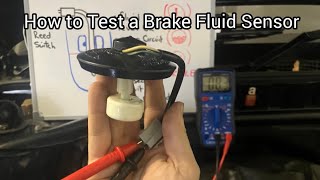
Disconnect the sensor and set a multimeter to Ohms (Ω). Test across the sensor's pins. When the fluid is full, it should read Open Line (O.L. or >1 kΩ). When fluid is low, it should show continuity (< 50 Ω). If readings do not change, the sensor has failed.
Tools: Multimeter (Intermediate) - Test the Sensor Circuit with a Multimeter (Voltage)
With the sensor disconnected and the ignition on, check the vehicle-side connector. One pin must have a reference voltage (typically 5V or 12V) and the other must be ground. If the reference voltage is missing, the problem is in the wiring toward the ABS module.
Tools: Multimeter (Intermediate) - Monitor Live Data with a Scan Tool
Use an advanced scan tool to display the brake fluid level status in real-time. Wiggle the connector and wiring harness while watching the data. If the reading flickers, you have confirmed a bad connection or broken wire.
Tools: Advanced Scan Tool (Intermediate) - Inspect the Full Wiring Harness
Trace the wires from the sensor connector back to the ABS control module. Look for chafing, melting from hot engine parts, or rodent damage. Repair any damaged sections.
Tools: Flashlight, Pry Tools (Advanced) - Perform a Voltage Drop Test on the Ground Circuit
Connect the black multimeter lead to the battery's negative terminal and the red lead to the ground pin on the sensor's connector (plugged in, ignition on). A reading above 0.1 volts indicates excessive resistance in the ground circuit requiring repair.
Tools: Multimeter, Back-probe Pins (Advanced) - Advanced: Jumper Wire Test for Circuit Integrity
Disconnect the sensor and use a fused jumper wire to connect the signal circuit pin to the ground pin on the vehicle-side connector. If the scan tool's live data changes to 'Low', the wiring to the module is good, and the sensor is faulty. If it does not change, the wiring harness or module is faulty.
Tools: Fused Jumper Wire, Advanced Scan Tool (Advanced) - Advanced: Check Jeep/Dodge Specific Voltage Threshold
For affected Jeep/Dodge vehicles, read the 'Brake Fluid Level Switch Sense' voltage in the TIPM via a scan tool. With the ignition on, a reading below 0.68 volts strongly indicates an internal failure of the brake fluid level switch. Higher voltages point to wiring or TIPM issues.
Tools: Advanced Scan Tool (Advanced)
When This Code Triggers (Freeze-Frame Conditions)
- Vehicle Speed: 0 mph (The ABS module performs a self-test of the brake fluid level sensor circuit at startup (ignition ON). The code sets before the vehicle moves.)
- System Voltage: 11.5-14.5V (The fault logs during normal operating voltage ranges. A low battery is not a typical trigger for this specific code.)
- Time Since Ignition On: < 10 seconds (The code stores very shortly after the vehicle turns on, as the ABS module checks critical sensor inputs immediately.)
- Brake Pedal Status: Not Applied (The fault relates to the static fluid level in the reservoir and does not depend on the brake pedal being pressed.)
Related Codes
- C0049:01 — A common suffix for Ford vehicles specifying a 'General Electrical Failure' in the circuit, pointing directly to a faulty sensor, connector, or wire rather than low fluid.
- C0049-7B — Used by Honda and Jeep, this suffix means 'Brake Fluid Level Too Low,' indicating the sensor correctly detected a legitimate low fluid condition.
- C0049:7A — Used by Mazda and Honda, this suffix indicates a 'Brake Fluid Leak or Seal Failure.' The module interprets a rapid drop in fluid level over time, pointing to a hydraulic leak.
- C0049:85 — Seen on Mazda vehicles, this suffix means 'Signal Above Allowable Range.' It triggers after a brake bleed if the fluid is overfilled or air is trapped in the system.
- C0050 — Often relates to a wheel speed sensor. If C0049 and C0050 appear together, it suggests a wider electrical issue affecting the ABS module or a shared wiring harness.
Climate & Environmental Factors
- High Humidity / Rain: Moisture penetrates non-sealed electrical connectors or damaged wire insulation, causing corrosion on the pins. This increases electrical resistance, disrupting the voltage signal and triggering code C0049.
- Road Salt (Rust Belt Regions): Salt spray accelerates the degradation of wiring harnesses, connector pins, and ground points exposed in the engine bay. This is a leading cause of electrical-fault-related C0049 codes.
- Extreme Cold: Extreme cold makes plastic wiring insulation and connectors brittle, increasing susceptibility to cracking from engine vibration. These cracks allow moisture to enter the circuit and cause corrosion.
How to Talk to a Mechanic About This Code
Say this: "I have a C0049 code and the red 'BRAKE' light is on. I checked the fluid level and it is full. I need a diagnostic to determine if the cause is the sensor, the connector, the wiring, or the ABS module."
This shows you performed the basic check and understand the possible causes. It directs the technician to perform a proper electrical diagnosis rather than suggesting a fluid flush, and prevents them from assuming you have a simple leak.
Avoid saying:
- 'My brake light is on, can you look at it?'
- 'I think I have a leak somewhere.'
- 'Just fix whatever is wrong with the brakes.'
Questions to ask before authorizing the repair:
- Did you find the fluid level was low, or is it full?
- If the fluid is full, did you test the sensor and check the connector for corrosion or damage?
- If you recommend a new reservoir/sensor, are you checking for TSBs that require replacing the connector pigtail simultaneously?
- Can you confirm the wiring between the sensor and the ABS module has good continuity before condemning the module?
- What is the warranty on this specific repair?
Where to Take It: Dealer vs Independent vs Chain
- Dealer:
Recommended for warranty work or if initial diagnosis at an independent shop is inconclusive. They are best-equipped for TSB-related fixes and deep module diagnostics.
Best for: Vehicles under warranty (especially 2021+ Ford Broncos with the known TSB)., Vehicles with manufacturer-specific quirks (like Jeeps requiring TIPM voltage checks)., Complex electrical diagnostics where factory wiring diagrams and tools are essential.
Downsides: Highest labor rates, often 20-40% more than independent shops., Defaults to replacing larger assemblies rather than attempting a wiring repair. (Typical cost: +40% vs. baseline) - Independent Shop:
Best fit for most out-of-warranty C0049 repairs. A qualified independent shop handles the vast majority of causes, from fluid leaks to sensor replacement, at a lower cost than the dealer.
Best for: Out-of-warranty vehicles where cost is a major factor., Common C0049 causes like a visible leak, a bad sensor/reservoir replacement, or connector pigtail repair., Building a relationship with a trusted mechanic.
Downsides: Diagnostic capabilities vary; ensure the shop has modern, ABS-capable scan tools and experience with electrical issues., Lacks immediate access to the latest TSBs. (Typical cost: +0% vs. baseline) - Chain Shop:
Use with caution. Acceptable for a simple fluid check or standard brake job, but AVOID for diagnosing an electrical fault. Their business model is not optimized for complex electrical troubleshooting.
Best for: Confirming the brake fluid level and topping it off if low., Basic brake pad and rotor replacement if worn pads cause low fluid.
Downsides: Technician skill varies widely; lacks advanced diagnostic tools or training for electrical circuit testing., High risk of misdiagnosis, leading to unnecessary part replacement. (Typical cost: -10% vs. baseline)
When to Walk Away From the Repair
If the estimated repair cost exceeds 50% of your car's private-party value, and the car has other pending issues, seriously consider selling it as-is. Because a brake warning light is a critical safety failure, fixing it is almost always required to sell the car to a private party.
- Car worth $4000, fix is $400: Fix it. The repair cost is only 10% of the car's value and is necessary for safety and resale.
- Car worth $3000, fix is $1500: Walk away. The repair requires replacing the ABS module, costing 50% of the car's value.
- Car worth $15000, fix is $1200: Fix it. Even a costly ABS module replacement is well below the walk-away threshold for a vehicle of this value.
What Scan Tool You Need for This Code
Minimum: A scanner capable of reading and clearing diagnostic trouble codes from the Anti-lock Braking System (ABS) module.
A basic $20 engine code reader cannot communicate with the ABS module. It will not see the C0049 code, cannot read the manufacturer-specific suffixes critical for diagnosis (like :01 or -7B), and cannot clear the brake warning light after the repair.
Budget: Topdon ArtiLink 500 / Autel AutoLink AL619 (~$75) — Reads and clears codes from the ABS and SRS modules. This is the minimum tool required to properly identify the C0049 code and reset the light after a repair like topping off fluid or replacing a sensor.
Mid-range: Foxwell NT630 Plus / XTOOL A30M (~$150) — Includes all budget pick features plus bi-directional control for the ABS system. Its key function is the 'ABS Bleed' capability, essential for purging air from the ABS module after replacing a reservoir.
Professional: Autel MaxiCOM MK808 / Innova 5610 (~$400-500) — Offers full bidirectional control, ABS bleeding, live data graphing for sensor signals, and access to OEM-level diagnostics. This tool is necessary for advanced diagnostics like reading the specific TIPM voltage on a Jeep or diagnosing an intermittent wiring fault.
How to Clear the Code After You Fix It
- Ensure brake fluid is exactly at the 'MAX' line.
- Use an ABS-capable OBD-II scan tool to clear the code from the ABS module.
- Turn the ignition off, then back on, and wait at least 10 seconds to verify the light remains off.
Drive cycle (~15 minutes): A specific drive cycle is not required. After clearing the code, a short test drive with several stops confirms the fix. The ABS module self-tests at startup; if the light stays off after a key cycle, the repair is successful.
Readiness monitors affected: None
Watch out for:
- Using a basic engine code reader that cannot access or clear ABS module codes.
- Failing to fix the underlying issue (e.g., a corroded connector), causing the code to return immediately.
- Forgetting to disconnect the battery before replacing electrical components.
Will This Fail Emissions / State Inspection?
Yes — this code typically fails an OBD-II emissions inspection.
- California: An illuminated primary brake warning light is an automatic failure for the state's safety inspection, performed alongside the smog check.
- New York: The annual safety inspection includes checking all dashboard warning lights. An illuminated ABS or BRAKE light causes the vehicle to fail.
- Texas: During the annual safety inspection, the brake warning lamp must illuminate when the key turns on and then go out. If it stays on, the vehicle fails.
Most Commonly Affected Vehicles
- Ford Bronco (2021-2025) — A widely known issue where code C0049:01 is caused by a faulty brake fluid level sensor and connector. Ford TSBs SSM 52362 & SSM 54431 advise replacing both the reservoir (MB3Z-2K478-A) and the connector pigtail (CU2Z-14S411-BA).
- Ford F-250 / F-350 (2012-2017) — This code often appears with a 'Service AdvanceTrac' warning. The cause is frequently a wiring issue in the main harness connectors near the emergency brake pedal rather than the sensor itself.
- Jeep / Dodge Grand Cherokee / Durango (2011-2016) — Diagnosis requires checking voltage at the Totally Integrated Power Module (TIPM). A voltage reading below 0.68 volts on the sensor sense circuit points to an internal sensor failure.
- GMC / Chevrolet Sierra / Silverado (2019-2022) — C0049 relates to faults in the trailer brake control system wiring or presents as a high voltage/open circuit fault. The exposed wiring harness is prone to corrosion.
- Honda Accord / CR-V (2015-2018) — Suffix code C0049-7B specifically means 'Brake Fluid Level Too Low,' indicating genuine low fluid from pad wear. The code falsely sets if brakes are bled with the ignition on.
- Cadillac XT4 (2019-2020) — GM bulletin PIC6374 identifies that the brake fluid level sensor connector can be accidentally swapped with the identical engine coolant temperature sensor connector after service, immediately setting code C0049.
- Mazda Mazda3 / CX-5 (2019-2022) — Owners report setting C0049 with suffixes like :7A or :85 after performing a brake bleed, suggesting the system is highly sensitive to bleeding procedures or minor fluid level variations.
- Can-Am Spyder (Motorcycle) (2008-2024) — A frequent issue for Spyder owners. The sensors are highly sensitive and trigger even when fluid appears correct. A common diagnostic step is swapping the front and rear reservoir sensors.
Manufacturer-Specific Notes
- Ford: On 2021-2025 Broncos, C0049:01 is almost always a failed sensor and connector. The official fix per TSBs SSM 52362 and SSM 54431 is replacing both the reservoir and the connector pigtail simultaneously. Attempting to replace only the reservoir results in the code returning.
- General Motors (Chevy/GMC/Cadillac): Per TSB PIC6374 for the Cadillac XT4, the brake fluid level sensor connector is identical to the engine coolant temp sensor connector. Swapping them during reassembly stores a C0049. Always verify connector locations.
- Honda: The service manual explicitly notes that bleeding the brakes while the ignition is ON causes DTC C0049-7B to be stored. The system misinterprets the fluid level change during the bleed as a fault.
- Jeep / Dodge / Chrysler: The brake fluid level sensor circuit routes through the Totally Integrated Power Module (TIPM). Diagnosis requires using a scan tool to check the sensor voltage directly from the TIPM against a specific threshold (e.g., 0.68V).
Real Owner Stories
2022 Ford Bronco with C0049:01
At 15,000 miles, the red 'BRAKE' warning light illuminated intermittently before staying on permanently. The fluid level was full and the brake pedal felt normal.
Outcome: Following Ford TSB SSM 52362, the dealer replaced both the brake fluid reservoir (MB3Z-2K478-A) and the sensor's electrical connector pigtail (CU2Z-14S411-BA). The warranty repair resolved the code.
Lesson: On 2021+ Ford Broncos, do not just replace the reservoir. The TSB explicitly requires replacing the connector pigtail simultaneously to prevent the fault from returning.
2012 Ford F-250 with 'Service AdvanceTrac' Light
A persistent C0049 code appeared alongside the 'Service AdvanceTrac' light. The owner confirmed the brake fluid was full.
Outcome: The owner traced the fault to a wiring issue deep in the harness near the emergency brake pedal. Advanced diagnostics were required to find the specific point of failure in the circuit.
Lesson: On work trucks, C0049 is often a wiring issue far from the sensor. Replacing the sensor will not fix it. A full circuit trace or voltage drop test is necessary to find the high resistance.
2020 Mazda 3 with C0049:85 after DIY Brake Bleed
Immediately after a DIY brake bleed, a 'Braking system fault' warning appeared. The brake pedal felt softer than before.
Outcome: The owner allowed the master cylinder reservoir to run low during bleeding, introducing air into the ABS system. This caused the soft pedal and the unexpected sensor reading.
Lesson: Never let the master cylinder reservoir run dry when bleeding brakes. If it happens, an advanced scan tool is required to perform an 'ABS bleed' procedure to purge trapped air from the module.
Honda CR-V with Multiple Warning Lights
The dashboard lit up with multiple warnings, including the brake light. A scan revealed code C0049-7B, indicating a low fluid level.
Outcome: The code was 'latched' in the ABS control module. The fault remained active until manually cleared using an ABS-capable OBD-II scanner. Once cleared, all lights turned off.
Lesson: Fixing the root cause is only the first step. Many ABS codes will not clear themselves and require an ABS-capable scan tool to reset the warning light.
How to Prevent This Code From Triggering
- Perform a brake fluid flush (Every 2-3 years or 30,000 miles) — Brake fluid absorbs moisture, lowering its boiling point and causing internal corrosion of sensitive ABS components like valves and pumps.
- Inspect and protect electrical connectors (During any under-hood service (e.g., oil change)) — Applying a small amount of dielectric grease to the connector seal creates a barrier against moisture, preventing the corrosion that causes faulty signals.
- Perform regular visual fluid level checks (Monthly) — Looking at the translucent reservoir ensures the fluid level never drops low enough to trigger the light due to normal pad wear, and helps spot slow leaks early.
- Secure and inspect wiring harnesses (During any major service or repair) — Ensuring sensor wiring is properly secured prevents chafing against sharp metal edges or hot engine components, avoiding short circuits.
Frequently Asked Questions
Is it safe to drive with code C0049?
It is not recommended. While brakes function normally now, the warning system for a dangerous fluid leak is disabled. Check your fluid immediately; if full and the pedal is firm, drive carefully to a shop.
Can I fix code C0049 myself?
Topping off low fluid is a simple DIY task requiring the correct DOT fluid. Replacing the reservoir or connector is an intermediate job that requires bleeding the brakes to remove trapped air. Diagnosing complex wiring or replacing the ABS module requires professional tools and expertise.
Will topping off the brake fluid make the C0049 code go away?
Topping off the fluid only resolves the code if the level was genuinely low (e.g., code C0049-7B). If the code stems from a faulty sensor, connector, or wire (e.g., C0049:01), the warning light remains on. You must fix the electrical fault to clear the code.
Will the C0049 code clear itself?
The code rarely clears itself unless the fault is a highly intermittent loose connection. For most causes, the code 'latches' in the ABS module and keeps the warning light on. You must manually clear it with an ABS-capable OBD-II scanner after repairing the issue.
How much does it cost to fix code C0049?
Adding brake fluid costs under $20 for the bottle. Replacing the reservoir and sensor ranges from $200 to $450 for parts and labor. Wiring repairs cost $150 to $450, while a new ABS module exceeds $750.
What do the numbers after C0049, like ':01' or '-7B', mean?
Manufacturer-specific suffixes provide exact diagnostic details. For example, Ford's ':01' indicates an electrical circuit failure, while Honda's '-7B' confirms the fluid level is physically low. You need a professional-level scanner to read these specific sub-codes.
What are common misdiagnosis mistakes for C0049?
A major mistake is replacing only the reservoir on 2021+ Ford Broncos, as TSBs require replacing the connector pigtail simultaneously. Another error is replacing an expensive ABS module before thoroughly testing the sensor and wiring harness. Always verify identical connectors weren't accidentally swapped after engine bay service.
Why did the C0049 light come on right after a brake job or bleed?
If the reservoir runs empty during a bleed, air enters the ABS module and triggers the code. Additionally, bleeding brakes with the ignition ON causes the control module to misinterpret the fluid level change as a fault on vehicles like Hondas. Always keep the reservoir full and the ignition off during standard bleeding.
How do I reset the C0049 code?
After repairing the mechanical or electrical fault, connect an OBD-II scanner with ABS capabilities to the vehicle. Navigate to the ABS module menu and select the option to clear diagnostic trouble codes. A basic $20 engine code reader cannot access or clear this specific code.
Key Takeaways
- Code C0049 indicates a fault in the brake fluid level sensor circuit, caused by either an electrical failure or genuinely low brake fluid.
- Safely pull over immediately and check the brake fluid reservoir; if the level is below the 'MIN' line, you have a leak or severely worn brake pads.
- For 2021-2025 Ford Broncos, resolving code C0049:01 requires replacing both the brake fluid reservoir and the connector pigtail simultaneously per Ford TSBs.
- Never ignore this code; driving without a functional fluid level warning system risks catastrophic, unannounced brake failure if a hydraulic line ruptures.
Helpful Videos

The information in this article is provided for general reference and educational purposes only. Vehicle specifications, procedures, and part compatibility can vary by production date, trim level, and region. Always consult your vehicle's factory service manual and verify part numbers before purchasing or performing repairs. Safety-critical components such as airbags, seat belts, and braking systems should be installed by a qualified professional.
- 🎬 Helpful Videos
- What Does C0049 Mean?
- Can I Drive With C0049?
- Common Causes
- Symptoms
- Diagnostic Flowchart
- Common Fixes & Costs
- DIY vs Professional
- Used vs. New Parts: Buying Guide
- What Happens If You Wait — Timeline
- Cost of Not Fixing It
- Diagnosis Steps
- When This Code Triggers (Freeze-Frame Conditions)
- Related Codes
- Climate & Environmental Factors
- How to Talk to a Mechanic About This Code
- Where to Take It: Dealer vs Independent vs Chain
- When to Walk Away From the Repair
- What Scan Tool You Need for This Code
- How to Clear the Code After You Fix It
- Will This Fail Emissions / State Inspection?
- Most Commonly Affected Vehicles
- Manufacturer-Specific Notes
- Real Owner Stories
- 2022 Ford Bronco with C0049:01
- 2012 Ford F-250 with 'Service AdvanceTrac' Light
- 2020 Mazda 3 with C0049:85 after DIY Brake Bleed
- Honda CR-V with Multiple Warning Lights
- How to Prevent This Code From Triggering
- Frequently Asked Questions
- Is it safe to drive with code C0049?
- Can I fix code C0049 myself?
- Will topping off the brake fluid make the C0049 code go away?
- Will the C0049 code clear itself?
- How much does it cost to fix code C0049?
- What do the numbers after C0049, like ':01' or '-7B', mean?
- What are common misdiagnosis mistakes for C0049?
- Why did the C0049 light come on right after a brake job or bleed?
- How do I reset the C0049 code?
- Key Takeaways
- 🎟️ Get 5% Off