

C0040 on 2011-2019 Ford Fiesta: Brake Pedal Switch 'A' Circuit Fault Causes and Fixes
On a 2011-2019 Ford Fiesta, code C0040 almost always indicates a faulty brake light switch. This is an inexpensive part (around $25-$50) located on the brake pedal arm, and replacing it is a common DIY fix that can be done in under 30 minutes. The issue often appears with code P0504.
- C0040 on a Ford Fiesta means there is a problem with the brake pedal switch circuit, NOT the wheel speed sensor.
- The most common fix is to replace the brake light switch, an inexpensive part located on the brake pedal arm.
- Symptoms are serious and include malfunctioning brake lights, ABS/Traction Control lights, and potentially being unable to shift out of Park.
- Do not drive the vehicle until repaired, as the lack of brake lights is a major safety hazard.
What's Unique About the 2011-2019 Ford Fiesta
For the Fiesta, the C0040 code typically points to a simple component failure—the brake pedal switch itself. However, it's important to be aware that on other Ford models, this same code has been linked to more complex issues like water intrusion in the main fuse box (TSB 22-2044 on Super Duty trucks) and chafed wiring harnesses (SSM 50245 on Escapes and Bronco Sports). While less common on the Fiesta, this pattern means that if a new switch doesn't solve the problem, a closer look at the wiring is warranted, especially since the switch is a known high-failure item that owners sometimes replace multiple times.
Generation note: The 2011-2019 year range covers the sixth generation (Mk6/B2E Platform) of the Ford Fiesta sold in North America. A mid-cycle facelift occurred around the 2014 model year, but the underlying platform and the function of the brake pedal switch circuit remained consistent. The part number for the switch is the same across these years.
Symptoms You May Notice
- ABS warning light is on
- Traction control or stability control (ESC) light is on
- Brake lights do not turn on, stay on constantly, or work intermittently
- Cannot shift automatic transmission out of Park
- Cruise control cannot be engaged or turns off by itself
- Engine start may be inhibited (requires brake press to start)
- Right Front Wheel Speed Sensor. Many generic OBD-II code databases incorrectly list C0040 as a fault for the 'Right Front Wheel Speed Sensor Circuit'. For Ford vehicles, including the Fiesta, C0040 specifically refers to the Brake Pedal Switch 'A' Circuit. Replacing the wheel speed sensor will not fix this code on a Fiesta.
Most Likely Causes
- Faulty Brake Pedal Switch (Brake Light Switch) 🔴 High Probability This is a high-use electromechanical part with internal contacts that wear out over time from normal use, leading to failure. It is the most common point of failure for this code.
How to confirm: Use a scan tool to monitor the brake pedal switch's status in the live data stream while pressing and releasing the brake pedal. The status should change from 'Off' to 'On'. Alternatively, use a multimeter to test for continuity and voltage changes at the switch connector as the pedal is operated. A visual inspection may reveal a stuck or broken plunger.
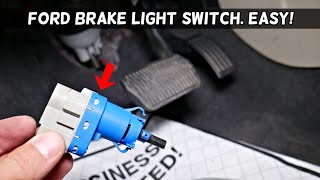
Typical fix: Replace the brake pedal switch. It is located on the brake pedal support bracket and is typically a blue sensor that is removed with a simple counter-clockwise twist. 🎬 Watch: How to replace a Ford brake light switch It is recommended to use an OEM Motorcraft part for longevity.
Est. part cost: $29-$38 - Damaged Wiring or Connector 🟡 Medium Probability The wiring harness near the brake pedal and steering column can be subject to stress or chafing from foot movement or adjustments to the steering wheel. Ford TSB SSM 50245 for the Escape and Bronco Sport notes a similar issue where the harness rubs on the steering shaft u-joint.
How to confirm: Visually inspect the wiring harness leading to the brake pedal switch for any signs of chafing, pinching, or breaks. Check the connector for corrosion, backed-out pins, or loose connections.
Typical fix: Repair the damaged section of wire and secure the harness away from any moving parts. Replace the connector pigtail if it is damaged.
Est. part cost: $5-$50 - Blown Fuse ⚪ Low Probability
How to confirm: Locate the fuse for the stop lamp circuit in the vehicle's fuse box (consult the owner's manual for location, often in the Body Control Module panel) and check if it is blown.
Typical fix: Replace the blown fuse. If the new fuse blows immediately, it indicates a short circuit in the system that must be diagnosed.
Est. part cost: $1-$5
Rare But Worth Checking
- Faulty ABS Control Module: This is rare and should only be considered after the switch, wiring, and fuses have been confirmed to be good. This is an expensive part and often requires programming.
- Water Intrusion in Battery Junction Box (BJB): While documented for Ford trucks (TSB 22-2044) and not a common Fiesta issue, water leaks into the under-hood fuse box can cause a wide range of electrical issues. It's worth a quick inspection for any signs of moisture or corrosion if other causes are ruled out.
Diagnosis Steps
- Scan the ABS module for codes. Confirm C0040 is present and note any other codes, especially P0504.
- Check the fuse for the stop lamp circuit. Replace if blown.
- With the help of an assistant or by backing up to a reflective surface, check the operation of the brake lights when the pedal is pressed. Note if they are inoperative, always on, or intermittent.
- Visually inspect the brake pedal switch (typically a blue sensor on the pedal bracket), its connector, and the surrounding wiring harness for any obvious damage, chafing, or loose connections.
- Using a scan tool with live data capability, monitor the PID (Parameter ID) for the brake pedal switch. The status should change from 'Off' to 'On' (or similar) the moment the pedal is pressed.
- If a scan tool is unavailable, use a multimeter to test the switch. Check for the presence of voltage at the switch connector. Then, test the switch's internal contacts for continuity, confirming that it opens and closes correctly as the plunger is depressed and released.
- If the switch and fuse are good, but the problem persists, carefully trace the wiring from the switch to the Body Control Module (BCM) and/or ABS module to check for opens or shorts. Pay close attention to areas where the harness might rub against the steering column.
- If all wiring and components test good, the fault may be internal to the ABS module, though this is the least likely cause.
Parts You'll Likely Need
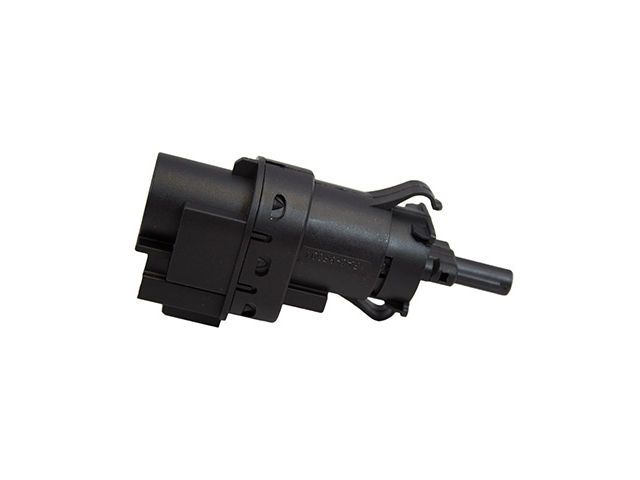
- Brake Light Switch / Stop Lamp Switch
(OEM #AA6Z-9C888-A)— This is the most common failure point for the C0040 code on this vehicle. It is a high-wear item.
Trusted brands: Motorcraft (SW-6545 or SW-7020), Standard Motor Products, Duralast
OEM price range: $29-$45
Aftermarket price range: $15-$30
Related Codes That Often Appear With This One
- P0504 — This is a generic powertrain code for 'Brake Switch A/B Correlation'. It often appears with C0040 because the Powertrain Control Module (PCM) also monitors the brake switch and detects the same implausible signal as the ABS module. This is mentioned in Ford TSBs SSM 51432 and TSB 22-2044.
Technical Service Bulletins (TSBs) & Recalls
- SSM 51432: Mentions C0040 on 2020-2022 F-Super Duty vehicles related to a no-shift-from-park condition, establishing a symptom pattern.
- TSB 22-2044: Links C0040 on 2021 F-550 SD to water intrusion in the Battery Junction Box (BJB), showing a potential, though less common, cause on Ford platforms.
- SSM 50245: Notes C0040 on 2020 Escapes can be caused by a wiring harness chafing near the brake pedal, a relevant potential cause for the Fiesta.
Mechanic-Grade Diagnostic Values
- Brake Pressure Sensor (BPS) PID vs. Switch PIDs — expected: Using a Ford IDS scan tool, the BRAKE_LAMP and CRUISE_CANCL PIDs should change from OFF to ON before the BPS PID value exceeds 44 psi.. Failure: If the switch PIDs change to ON after the BPS PID is greater than 44 psi, the brake pedal position switch is faulty or misadjusted and should be replaced.
- Brake Pedal Switch Continuity — expected: When the switch's plunger is out (pedal pressed), continuity between the signal pins should be near 0 Ω. When the plunger is in (pedal released), resistance should be infinite (Open Line).. Failure: If there is no continuity when the plunger is out, or if there is continuity when the plunger is in, the switch has failed internally.
- Brake Pedal Switch Signal Voltage — expected: The signal wire should switch between ~0V and battery voltage (~12V) or a 5V reference when the pedal is pressed and released. The exact logic (0V when pressed vs. 12V when pressed) depends on the specific circuit design.. Failure: No voltage change when the pedal is operated indicates a faulty switch or a wiring issue (open or short).
Hidden / Shadow Codes Worth Checking
- C0040:64: Signal Plausibility Failure. This indicates the ABS module received a brake switch signal that conflicts with other vehicle data, such as the vehicle decelerating without a brake signal being detected. (see via Professional scan tools like Ford IDS or high-end aftermarket scanners capable of reading manufacturer-specific sub-codes.)
- C0040:72: Actuator Stuck Open. The ABS module does not detect a brake pedal input when other sensors (like the brake pressure sensor or wheel speed sensors) indicate the vehicle is braking. (see via Professional scan tools like Ford IDS or high-end aftermarket scanners capable of reading manufacturer-specific sub-codes.)
- C0040:73: Actuator Stuck Closed. The ABS module detects that the brake switch is 'On' while the vehicle is accelerating or traveling at a steady speed, indicating the switch is stuck in the activated position. (see via Professional scan tools like Ford IDS or high-end aftermarket scanners capable of reading manufacturer-specific sub-codes.)
Scan Tool Commands That Help
- Ford IDS (or FORScan/Pro-level Scanner): Datalogger > Chassis > Braking > Brake Switch Parameters — This is the primary diagnostic function to confirm the fault. It allows you to simultaneously monitor the status of the Brake Pressure Sensor (BPS), BRAKE_LAMP, and CRUISE_CANCL PIDs to verify if the switch is sending a plausible signal at the correct time.
- Ford IDS (or FORScan/Pro-level Scanner): Datalogger > PID: BOO_ABS (Brake On/Off) — This is a simpler live data check to quickly see if the ABS module is receiving the on/off signal from the switch at all. The status should toggle immediately when the brake pedal is pressed and released.
Wiring & Ground Locations
- Brake Light Switch Connector — Directly on the brake light switch, which is mounted on the brake pedal support bracket in the driver's side footwell.. This is the most common location for a wiring issue to occur. A loose connection, corroded pins, or wires damaged from foot traffic can directly cause code C0040.
OEM Part Supersession History
AA6Z-9C888-A→AA6Z-9C888-A (current)— This part number appears to be stable for the 2014-2019 model years.
Heads up: The associated Motorcraft part number is often SW-7020. A general web search for 'SW-7020' may return results for a Sherwin-Williams paint color called 'Black Fox', which is an unrelated data collision. Another valid Motorcraft number is SW-6545. Always verify fitment using the vehicle's VIN.
Model Year Variations Within This Range
- 2011-2019: Some Fiesta models may have two separate switches on the brake pedal assembly. One is for the brake lights (typically black or blue), and the other is for cruise control deactivation (often blue). While C0040 points to the primary brake light switch ('A' circuit), a fault in the secondary switch can sometimes cause related codes like P0504.
Diagnostic Flowchart
Other Known Issues on This Vehicle
Issues unrelated to this code that are worth knowing about as an owner of this generation:
- PowerShift (DPS6) Dual-Clutch Transmission Failure 🔴 High — Extremely common on 2011-2016 models with automatic transmission. Symptoms include shuddering, hesitation, slipping, and complete failure to engage gears. (Ref: Multiple class-action lawsuits and extended warranty programs (e.g., 14M01, 14M02) were issued.)
- Faulty Door Latches 🔴 High — Common on 2011-2014 models. A broken pawl spring tab can prevent doors from latching or cause them to open while driving. (Ref: Multiple recalls were issued, including NHTSA #20V331 (Ford recall 20S30), which superseded earlier attempts (15S16, 16S30).)
- HVAC Blend Door Actuator Failure 🟡 Low — Common across all years. A repetitive clicking or ticking sound from the dashboard upon startup or when changing climate settings indicates stripped plastic gears inside the actuator.
- Throttle Body Failure 🟠 Medium — Reported in 6th generation models, causing high idle, poor acceleration, and potential stalling due to carbon buildup.
- Coolant System / Water Pump Leaks 🟠 Medium — Owners report coolant leaks, particularly from the water pump on the passenger side of the engine, which can lead to overheating. (Ref: Recalls were issued for some 1.0L EcoBoost models due to coolant hose failure.)
Used vs. New Parts: Buying Guide for This Vehicle
When a used part is the smart pick: It is strongly recommended to NOT use a used part for this repair. The brake light switch is an inexpensive, high-wear electromechanical component. The cost savings of a used part are negligible compared to the risk of premature failure and the labor to replace it again.
What to inspect on the donor part:
- Not applicable, as a new part is the only recommended fix.
OEM-only on this vehicle (don't cheap out):
- Brake Light Switch: While some aftermarket brands are acceptable, OEM Motorcraft is highly recommended for this specific part due to its critical safety function and to ensure proper communication with the vehicle's modules.
Aftermarket brands forum-validated for this vehicle:
- Standard Motor Products
- Duralast
Real Owner Stories
Aggregated from forums and TSBs cited above. Mileages and costs reflect what owners reported in those sources.
Ford Fiesta ST
Symptoms: No brake pressure after track sessions; ABS module threw code C0040:64-68.
What fixed it: Replaced the 'Brake Pedal Switch A (the blue/cruise control switch)'.
Source hint: Fiesta ST Forum - 'No brake pressure after track sessions.' (2019-03-25)
2012 Ford Fiesta 1.6L
Symptoms: Engine warning light (Drivetrain) illuminated with codes C0040 and P0504 appearing together.
What fixed it: Replacement of the brake switch, which is a common failure point for this code pairing.
Source hint: Ford Owners Club - 'Fiesta 1.6L 2012 model - Engine warning light (Drivetrain)' (2023-11-27)
Related OBD-II Codes
Frequently Asked Questions
I have a 2012 Ford Fiesta and my brake lights are staying on constantly. Is this related to code C0040?
My Fiesta won't shift out of Park and the ABS light is on. What part do I likely need?
Does Ford TSB SSM 50245 apply to my Fiesta's C0040 code?
Can I use any aftermarket part to fix the C0040 code on my Fiesta?
I'm seeing C0040 and P0504 at the same time on my 2012 1.6L Fiesta. Is this normal?
How do I remove the brake pedal switch on a 2011-2019 Fiesta?
Helpful Videos
We Have This Part in Stock




The information in this article is provided for general reference and educational purposes only. Vehicle specifications, procedures, and part compatibility can vary by production date, trim level, and region. Always consult your vehicle's factory service manual and verify part numbers before purchasing or performing repairs. Safety-critical components such as airbags, seat belts, and braking systems should be installed by a qualified professional.
- Ford Fiesta:
- 🎬 Helpful Videos
- 🛍️ Shop This Part
- What's Unique About the 2011-2019 Ford Fiesta
- Symptoms You May Notice
- Most Likely Causes
- Rare But Worth Checking
- Diagnosis Steps
- Parts You'll Likely Need
- Related Codes That Often Appear With This One
- Technical Service Bulletins (TSBs) & Recalls
- Mechanic-Grade Diagnostic Values
- Hidden / Shadow Codes Worth Checking
- Scan Tool Commands That Help
- Wiring & Ground Locations
- OEM Part Supersession History
- Model Year Variations Within This Range
- Diagnostic Flowchart
- Other Known Issues on This Vehicle
- Used vs. New Parts: Buying Guide for This Vehicle
- Real Owner Stories
- Ford Fiesta ST
- 2012 Ford Fiesta 1.6L
- Related OBD-II Codes
- Frequently Asked Questions
- 🎟️ Get 5% Off