

C0040 on 2007-2014 Chevrolet Tahoe: Right Front Wheel Speed Sensor Faults and Fixes
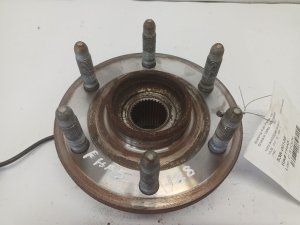
Code C0040 on a 2007-2014 Tahoe almost always means the right front wheel speed sensor has failed. Because the sensor is integrated into the wheel hub, the fix is to replace the entire right front wheel hub assembly. However, the wiring harness is a known weak point and should be inspected thoroughly before replacing the hub. Expect to pay $150-$400 for the part and 1.5-2.5 hours for labor.
- C0040 specifically points to a fault in the right front wheel speed sensor circuit, which will disable your ABS and StabiliTrak systems.
- The most common fix is to replace the entire right front wheel hub and bearing assembly, as the sensor is integrated into it.
- Before buying a new hub, always inspect the wiring harness between the hub and the vehicle's frame for visible damage, as this is a common and cheaper-to-fix point of failure.
- A scan tool that can read ABS live data is the most effective tool for confirming which wheel sensor is failing.
- This is a safety-critical repair. If you are not comfortable working on brake and suspension components, professional service is recommended.
What's Unique About the 2007-2014 Chevrolet Tahoe
On the GMT900 platform, which includes the 2007-2014 Tahoe and its siblings like the Yukon, Silverado, and Escalade, the front wheel speed sensor is not a separate, replaceable part. Instead, it is permanently integrated into the sealed wheel hub and bearing assembly. This design means that a simple sensor failure, or a bearing failure that damages the internal magnetic reluctor ring, requires the replacement of the entire hub assembly, making the repair more involved and costly than on vehicles with standalone sensors.
Symptoms You May Notice
- ABS warning light illuminated on the dashboard.
- StabiliTrak or Traction Control warning light illuminated.
- "Service StabiliTrak" or "Service Traction Control" message on the Driver Information Center (DIC).
- ABS system is inoperative, leading to potential wheel lock-up during hard braking.
- Cruise control is disabled.
- Unusual brake pedal feel or unwanted ABS activation at very low speeds (less common, but can be caused by a failing sensor or damaged wiring).
- Replacing the EBCM before thoroughly testing the wheel hub assembly and its wiring harness.
- Replacing the wheel hub assembly without first checking the wiring harness for damage, which is a cheaper and simpler fix if it's the culprit. Many forum users stress the importance of checking the wiring first.
Most Likely Causes
- Failed Right Front Wheel Hub and Bearing Assembly 🔴 High Probability The wheel speed sensor is integrated into the hub assembly and is exposed to harsh conditions (heat, water, vibration), leading to eventual electronic failure. More commonly, wear in the wheel bearing itself introduces play or 'wobble', which damages the internal magnetic encoder ring or creates an excessive air gap, disrupting the sensor's signal.
How to confirm: After confirming wiring is intact, use a scan tool to monitor live data from the right front wheel speed sensor while driving. If the reading is zero, erratic, or doesn't match the other wheels, the hub assembly is faulty. You can also check for physical play by trying to wiggle the tire at the 12 and 6 o'clock positions.
Typical fix: Replace the entire right front wheel hub and bearing assembly.
Est. part cost: $150-$400 - Damaged Wheel Speed Sensor Wiring or Connector 🟡 Medium Probability The wiring harness leading to the hub is subject to constant movement with the suspension and steering. It can stretch, chafe, or break internally, often near the connector or where it's clipped to the frame or control arm. GM TSB PIC-5992-A specifically calls out harness inspection for this code on other models, highlighting it as a common GM failure point. A common failure mode is an internal wire break that isn't visible from the outside; stretching the wire by hand may reveal it is flimsy and broken inside the insulation.
How to confirm: Visually inspect the harness from the back of the hub up to the main connector on the frame for damage. Wiggle the harness while monitoring the live sensor data on a scan tool. Use a multimeter to check for continuity and shorts between the two wires in the harness. A broken wire inside the insulation may not be visible.
Typical fix: Repair the damaged section of wire or replace the pigtail connector. In some cases, the entire sensor-side jumper harness is replaced.
Est. part cost: $20-$50
Rare But Worth Checking
- Failed Electronic Brake Control Module (EBCM): This is a rare cause and should only be considered after the hub assembly and wiring have been ruled out. TSB PIT5499B on other GM models suggests that water intrusion into the EBCM connector can cause various wheel speed sensor codes, including C0040. A failure of the module itself is also possible but less likely than a wiring or hub issue. A poor ground connection for the EBCM is a more common cause of module-related issues than internal failure.
- Damaged Reluctor Ring: The sensor reads a magnetic encoder ring built into the hub. While uncommon, this ring can become contaminated with metallic debris from a failing bearing or crack, causing an incorrect signal. Since the ring is part of the hub assembly, the fix is the same (hub replacement), but the root cause is physical damage rather than electronic failure.
Diagnosis Steps
- Connect an OBD-II scanner capable of reading ABS/Chassis codes to confirm C0040 is present.
- Check for any other related trouble codes that could provide more context, like C0035 or U-codes.
- Use the scan tool's live data feature to monitor the speed of all four wheels while driving slowly. Confirm that the right front wheel speed sensor reads 0 mph or shows an erratic/jumpy signal compared to the other three sensors.
- Safely raise and support the vehicle. Visually inspect the wiring harness for the right front wheel speed sensor, from the hub to the frame connector. Look for any signs of chafing, breaks, melting, or corrosion. Pay close attention to flex points near the control arms.
- Disconnect the sensor and inspect the connector pins on both the harness and hub side for corrosion (green crust) or damage.
- With the key on, use a multimeter to check for a reference voltage (typically 5V or 12V, check service info) and a good ground at the harness-side connector.
- If wiring appears intact and power/ground are good, the most likely cause is a failed sensor within the wheel hub assembly.
- For advanced users: With the connector plugged in, use a graphing multimeter or oscilloscope to back-probe the signal wire. Spin the wheel by hand; you should see a clean square wave signal that increases in frequency as the wheel spins faster. A missing or erratic wave points to a bad hub/sensor.
- If the wiring and connectors are good, replace the right front wheel hub assembly.
- After replacement, clear the codes and perform a test drive to ensure the light does not return.
Parts You'll Likely Need
- Right Front Wheel Hub and Bearing Assembly
(OEM #84856654)— The wheel speed sensor is integrated into this assembly and is the most common point of failure for code C0040 on this vehicle. The original part number was 25918329, which has been superseded by 84856654.
Trusted brands: ACDelco (GM Original Equipment), MOOG, Timken, SKF, Dorman
OEM price range: $250-$400
Aftermarket price range: $150-$250 - Wheel Speed Sensor Pigtail Connector — If the wiring is found to be corroded or damaged at the connector, replacing the pigtail is the standard repair.
Trusted brands: Dorman, ACDelco
OEM price range: $30-$60
Aftermarket price range: $15-$40
Related Codes That Often Appear With This One
- C0035 — This is the code for the Left Front Wheel Speed Sensor. Seeing both C0035 and C0040 together could point to a common problem affecting both front wheels, such as a wiring harness issue at a shared connector, a problem with the EBCM, or simply that both hubs are failing around the same time.
- U0121 — This code indicates a loss of communication with the EBCM. It can appear alongside C0040 if there is a severe electrical issue, water intrusion at the EBCM connector, or a failure within the module itself.
Technical Service Bulletins (TSBs) & Recalls
- PIC-5992-A: While written for the Impala/Lacrosse, this TSB is highly relevant as it instructs technicians to inspect the wheel speed sensor jumper harness for internal breaks or damage when diagnosing C0035 or C0040, especially when the fault occurs during turns. This highlights a known GM-wide issue with harness durability.
- PIT5499B: This TSB, for the Colorado/Canyon, notes that codes like C0040 can be triggered by water intrusion into the Electronic Brake Control Module (EBCM) connector. This serves as an authoritative, though less common, diagnostic path.
- 04-05-25-002D: This bulletin addresses ABS lights and communication loss codes (like U1041) by instructing technicians to clean the EBCM ground connection (G110 for full-size trucks) located on the frame beneath the driver's side door, noting that a poor connection causes unnecessary EBCM replacements.
Platform-Specific Known Issues
- source
- source
- source_type: nhtsa_complaint | id_or_name: ODI #10472531 | relevance: While on an Impala, this complaint is relevant to the broader GM issue. The owner reported that the internal wiring for both front wheel speed sensor harnesses was coming apart, causing code C0040, which directly supports the wiring harness as a primary failure point.
Mechanic-Grade Diagnostic Values
- Wheel Speed Sensor AC Voltage Output — expected: 50mV - 700mV AC while spinning the wheel by hand. Failure: No voltage produced, or voltage is erratic.
- Wheel Hub Axle Nut Torque — expected: 177 ft-lbs. Failure: N/A
- Wheel Hub Mounting Bolt Torque — expected: 133 ft-lbs. Failure: N/A
Hidden / Shadow Codes Worth Checking
- C0040 02: Indicates the EBCM has detected a short to ground in the right front wheel speed sensor circuit. (see via Requires a professional scan tool capable of reading GM-specific ABS sub-codes (e.g., Tech2, GDS2, or high-end aftermarket scanners).)
- C0040 05: Indicates the EBCM has detected a short to power or an open in the right front wheel speed sensor circuit. (see via Requires a professional scan tool capable of reading GM-specific ABS sub-codes.)
- C0040 0F: Indicates the EBCM has detected erratic operation from the right front wheel speed sensor. (see via Requires a professional scan tool capable of reading GM-specific ABS sub-codes.)
- C0040 18: Indicates the EBCM has detected the right front wheel speed sensor signal amplitude is below the minimum threshold. (see via Requires a professional scan tool capable of reading GM-specific ABS sub-codes.)
Scan Tool Commands That Help
- GDS2/Tech2: Live Data > Wheel Speed Sensor Data — This is the primary diagnostic step. It allows the technician to view the speed reading from all four sensors in real-time while driving to confirm the right front sensor is the one providing an erratic, mismatched, or zero mph signal.
- GDS2/Tech2: Automated Bleed — This service function is required after replacing the EBCM or if air has been introduced into the ABS hydraulic unit. It cycles the internal solenoids and pump to purge trapped air from the system.
Wiring & Ground Locations
- G110 — On the frame rail, located beneath the driver's side door.. This is the main ground for the Electronic Brake Control Module (EBCM). A poor connection here due to corrosion is a very common GM issue that can cause various ABS codes, including C0040, and may lead to misdiagnosis of the EBCM itself. GM issued a TSB (04-05-25-002D) specifically for cleaning this ground.
- Right Front WSS Connector — Typically clipped to the frame or upper control arm area in the right front wheel well.. This is the connection point between the hub's integrated sensor pigtail and the main body harness. It's a frequent point of failure due to corrosion or wires breaking from suspension and steering movement. Testing for voltage, ground, and signal should be done at this connector.
- EBCM Connector — The EBCM is located on the driver's side frame rail, typically under the driver's seating area.. This is the main electrical connector for the entire ABS system. Probing the specific pins for the right front wheel speed sensor here can confirm if the signal is reaching the module, thus isolating the fault to the wiring/sensor or the module itself.
Real Owner Repair Stories
- GM-Trucks.com Forum User (2007 Silverado 4x4) — ABS light on with codes C0035 and C0040.
❌ Tried (didn't work) Replacing both front wheel speed sensors (pigtails)., Replacing both front wheel hub assemblies., Replacing the EBCM.
✅ What actually fixed it The user was advised to re-check the wiring harnesses from the hubs to the module and to clean all related grounds, as this was the likely remaining point of failure after replacing all major components. - YouTube video by 'ABS-Fixer' (General GM Vehicle) — Intermittent ABS light with code C0040, sometimes triggered by turning the steering wheel.
❌ Tried (didn't work) The previous shops had already replaced the wheel hub assembly.
✅ What actually fixed it The technician found an internal break in the wheel speed sensor wiring harness. The wire insulation looked intact, but the copper inside was broken. Stretching the wire by hand revealed its flimsy, broken state. The fix was to cut out the bad section of wire and splice in a new piece. - GM-Trucks.com Forum User (Leveled GM Truck) — ABS codes C0035 and C0040 appearing after installing a leveling kit.
✅ What actually fixed it A technician noted a pattern where installing a leveling kit can cause the suspension to droop excessively, pulling the wheel speed sensor wire out of its bracket. This allows the wire to rub against the wheel or axle, eventually wearing through the insulation and causing a short. The fix was to repair the damaged wire and properly secure it in its retaining clips.
OEM Part Supersession History
25918329→84856654— Standard part number evolution and potential design/material improvements.
Heads up: The new part number (84856654) is the correct and current replacement for all previous numbers including 10393171, 22841381, and 25976819 for this application.
Diagnostic Flowchart
Other Known Issues on This Vehicle
Issues unrelated to this code that are worth knowing about as an owner of this generation:
- Cracked Dashboard 🟠 Medium — Extremely common, especially on vehicles exposed to sun/heat. Cracks typically form near the passenger airbag and instrument cluster. (Ref: No official recall, but the subject of class-action lawsuits due to safety concerns about airbag deployment.)
- Active Fuel Management (AFM) Lifter Failure 🔴 High — A significant issue on the 5.3L and 6.2L V8 engines, particularly in 2007-2011 models. Can occur anywhere from 70,000 to 150,000 miles, leading to ticking noises, misfires (P0300), and potential camshaft damage. (Ref: Multiple TSBs exist, including 21-NA-199, addressing diagnosis and repair.)
- Excessive Oil Consumption 🔴 High — Closely related to the AFM system, many 5.3L V8s consume 1-2 quarts of oil between changes. This is often caused by oil spray onto pistons during cylinder deactivation or a faulty PCV system in the driver-side valve cover. (Ref: GM released an updated valve cover design to mitigate the issue. Many owners also disable the AFM system with a tuner to prevent consumption.)
- Broken Exhaust Manifold Bolts 🟠 Medium — The bolts securing the exhaust manifolds to the cylinder heads on the V8 engines are prone to breaking, causing an exhaust leak and a ticking noise, especially when the engine is cold.
- Power Door Lock Actuator Failure 🟡 Low — A very common annoyance where one or more door lock actuators fail, resulting in a buzzing noise or the door failing to lock/unlock electronically.
Used vs. New Parts: Buying Guide for This Vehicle
When a used part is the smart pick: It is strongly advised to NEVER purchase a used wheel hub and bearing assembly. As a primary wear-and-tear component critical to safety, its remaining lifespan is unknown, and it may have come from a vehicle with existing problems. The labor cost to replace it is significant, making it unwise to risk installing a part that could fail shortly after installation.
What to inspect on the donor part:
- Not applicable. Do not buy used.
OEM-only on this vehicle (don't cheap out):
- While not strictly 'OEM-only', using a GM Genuine (ACDelco OE) part is the safest bet for guaranteed compatibility and longevity. Some low-quality aftermarket hubs use inferior bearings or poorly calibrated ABS sensors that can cause immediate or premature failure.
Aftermarket brands forum-validated for this vehicle:
- Timken: Often cited as the original equipment manufacturer for GM; a high-quality choice.
- SKF: Widely regarded as a top-tier bearing manufacturer with a strong reputation.
- MOOG: Historically a top brand, though some users report a decline in quality with some parts being made in China. Still generally considered a reliable option.
Brands owners have reported issues with on this vehicle:
- Unbranded, low-cost 'white box' parts from online marketplaces. These often use inferior steel, poor seals, and out-of-spec ABS sensors, leading to noise, premature failure, and persistent ABS faults.
Real Owner Stories
Aggregated from forums and TSBs cited above. Mileages and costs reflect what owners reported in those sources.
2012 Chevrolet Silverado (Platform Mate)
Symptoms: C0040 RF Wheel speed sensor circuit malfunction; the ABS light returned even after replacing the hub and pigtail.
What fixed it: Inspection of the truck-side connector for corrosion (described as 'fuzzy and green') and checking for a loose hub or damage further up the harness.
Source hint: Chevy Silverado and GMC Sierra Forum - "C0040 RF Wheel speed sensor circuit malfunction"
Chevrolet Tahoe
Symptoms: Hesitation upon initial acceleration and a sensation of the front brakes locking up on their own.
What fixed it: Diagnosis of a faulty wheel speed signal causing unwanted ABS activation.
Source hint: Tahoe Yukon Forum - "Hesitation upon initial accelleration"
Chevrolet Tahoe
Symptoms: Service 4WD message appearing along with both C0035 and C0040 codes.
What fixed it: Checking the wiring harness for faults before replacing the sensors/hubs, as the wiring is a known weak point.
Source hint: Tahoe Yukon Forum thread "service-4wd-message-and-c0035-and-c0040"
Related OBD-II Codes
Frequently Asked Questions
Does TSB PIC-5992-A apply to my 2007-2014 Chevrolet Tahoe if I have code C0040?
Could a bad ground on my Tahoe's frame cause the ABS light and C0040 code?
Is it possible for water intrusion to cause code C0040 on my Tahoe?
Why does my Tahoe hesitate or feel like the brakes are locking up when I accelerate with this code?
Should I replace the sensor or the whole hub assembly on my 2007-2014 Tahoe?
Can I just repair the wiring instead of buying a new hub?
Used OEM Parts in Stock

New Aftermarket Parts Available


The information in this article is provided for general reference and educational purposes only. Vehicle specifications, procedures, and part compatibility can vary by production date, trim level, and region. Always consult your vehicle's factory service manual and verify part numbers before purchasing or performing repairs. Safety-critical components such as airbags, seat belts, and braking systems should be installed by a qualified professional.
- Chevrolet Tahoe:
- 🛍️ Shop This Part
- What's Unique About the 2007-2014 Chevrolet Tahoe
- Symptoms You May Notice
- Most Likely Causes
- Rare But Worth Checking
- Diagnosis Steps
- Parts You'll Likely Need
- Related Codes That Often Appear With This One
- Technical Service Bulletins (TSBs) & Recalls
- Platform-Specific Known Issues
- Mechanic-Grade Diagnostic Values
- Hidden / Shadow Codes Worth Checking
- Scan Tool Commands That Help
- Wiring & Ground Locations
- Real Owner Repair Stories
- OEM Part Supersession History
- Diagnostic Flowchart
- Other Known Issues on This Vehicle
- Used vs. New Parts: Buying Guide for This Vehicle
- Real Owner Stories
- 2012 Chevrolet Silverado (Platform Mate)
- Chevrolet Tahoe
- Chevrolet Tahoe
- Related OBD-II Codes
- Frequently Asked Questions
- 🎟️ Get 5% Off