

C0040 on 2013-2020 Chevrolet Malibu: Right Front Wheel Speed Sensor Fault Causes and Fixes
C0040 indicates a fault in the right front wheel speed sensor circuit. This usually means the sensor itself, its wiring, or the magnetic ring on the wheel bearing is bad. The most common fix is replacing the sensor/harness assembly, which costs about $30-$70 for the part and is a straightforward DIY repair. In some cases, the entire wheel hub/bearing assembly needs replacement if the integrated magnetic ring has failed.
- Code C0040 on a 2013-2020 Malibu means there's a problem with the right front wheel speed sensor circuit, which will disable your ABS and StabiliTrak systems.
- The most likely fix is replacing the right front wheel speed sensor and its attached wire.
- Before buying parts, use a scanner with live data to confirm the right front sensor is the one failing.
- Always perform a thorough visual inspection of the sensor's wiring and connector for damage or corrosion, as this can mimic a sensor failure.
- On this car, also inspect the magnetic ring on the wheel bearing for damage, as this is another known cause of the code.
What's Unique About the 2013-2020 Chevrolet MALIBU

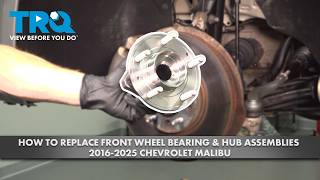
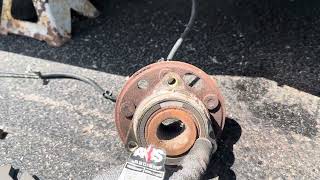
On this generation of Malibu, the C0040 code is very commonly caused by the failure of the sensor itself or the short wiring pigtail attached to it. These components are exposed to harsh conditions in the wheel well. A video of a 2015 Malibu with this code points to the magnetic reluctor ring on the wheel bearing failing due to corrosion and contamination, which is a known GM issue. Additionally, GM has issued TSBs like #PIC5720B for 2013 models, which warn that the main engine harness can rub against pulleys and cause a short, triggering C0040 and other codes, highlighting the need to check wiring beyond just the wheel well.
Diagnostic Flowchart
Tap your situation to follow the diagnostic path that matches what you're seeing on this vehicle.
Generation note: This year range covers the end of the 8th generation (2013-2016 Limited) and the 9th generation (2016-2020). The meaning of code C0040 is the same for both, but the specific part numbers for the wheel speed sensor and wheel bearing assembly will differ. The diagnostic process remains consistent across both generations. The 8th gen sensor is part number 23483145, while the 9th gen uses a different part, such as 13518959.
Symptoms You May Notice
- ABS warning light illuminated.
- Traction Control or StabiliTrak/ESC warning light on.
- "Service StabiliTrak" or "Service Brake Assist" message on the driver information center. 🎬 See how to diagnose and fix these common dashboard warnings.
- Cruise control may be disabled.
- Brake pedal may pulse at low speeds as the ABS incorrectly activates.
- Unusual braking behavior, especially on slippery surfaces.
- Replacing the entire wheel hub/bearing assembly when only the less expensive, separately available wheel speed sensor or its wiring pigtail is faulty.
- Replacing the wheel speed sensor when the actual problem is a broken wire inside the harness insulation, which isn't visible externally.
Most Likely Causes

- Faulty Right Front Wheel Speed Sensor 🔴 High Probability The sensor is an electronic component located in a harsh environment, exposed to water, road salt, and vibration, leading to internal electronic failure over time.
How to confirm: Use a scan tool with live data capability to monitor all four wheel speeds while driving. If the right front sensor reads 0 MPH or shows erratic dropouts while the others read smoothly, the sensor is likely bad. Alternatively, disconnect the sensor and measure its resistance with a multimeter; compare the reading to the left front sensor. A significant difference or an open circuit indicates a bad sensor.
Typical fix: Replace the right front wheel speed sensor. It is often sold with a short pigtail harness and is held in by a single bolt. 🎬 Watch: 2015 Malibu wheel speed sensor replacement walkthrough.
Est. part cost: $25-$70 - Damaged or Corroded Wiring/Connector 🟡 Medium Probability The wiring harness leading to the sensor is subject to constant flexing with steering and suspension movement, which can cause internal wire breaks even if the insulation looks intact. Corrosion at the connector pins is also common.
How to confirm: Visually inspect the wiring harness from the sensor into the wheel well for breaks, chafing, or corrosion. Disconnect the sensor and check the connector pins for corrosion or damage. Wiggle the harness while monitoring the live sensor data or resistance to see if the signal cuts in and out.
Typical fix: Repair the damaged section of wire or replace the pigtail connector harness. In many cases, the break is right at the connector where the wire flexes.
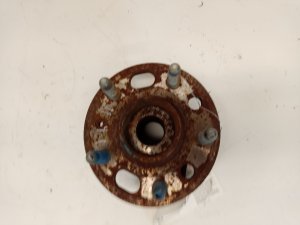
Est. part cost: $15-$40 - Damaged Wheel Bearing/Tone Ring 🟡 Medium Probability On many GM vehicles, the magnetic tone ring (or reluctor) is integrated into the wheel bearing seal. This seal can fail, allowing rust and metallic debris to accumulate on the magnetic surface, or the ring itself can crack, corrupting the sensor's signal. A failing bearing can also introduce excessive wobble, which damages the sensor.
How to confirm: After removing the wheel speed sensor, visually inspect the tone ring on the wheel hub for rust, cracks, or metallic debris stuck to it. A failing wheel bearing may also produce a humming or grinding noise while driving that changes with speed.
Typical fix: Replace the entire right front wheel hub and bearing assembly. 🎬 Watch: Step-by-step front wheel hub and bearing replacement guide.
Est. part cost: $80-$200
Rare But Worth Checking
- Chafed Engine Bay Wiring Harness: As cited in GM TSB #PIC5720B for 2013 models, the main wire harness under the hood can rub against the A/C compressor or crank pulley, causing a short that triggers C0040 and other codes. This should be inspected if no fault is found at the wheel, especially if codes C027B or P0CBE are also present.
- Faulty Electronic Brake Control Module (EBCM): This is an uncommon cause and should only be considered after the sensor, wiring, and wheel bearing have all been ruled out. An EBCM failure will often set multiple wheel speed sensor codes (e.g., C0035, C0045, C0050), not just one.
Diagnosis Steps
- Connect an OBD-II scanner capable of reading ABS/chassis codes to confirm C0040 is active. Note any symptom bytes (e.g., 0F, 18).
- Access the live data stream on the scanner and monitor the speeds of all four wheels while driving slowly (5-15 MPH).
- Observe the 'Right Front Wheel Speed' reading. If it is stuck at zero, reads erratically, or does not match the other sensors, the problem is in that circuit.
- Safely raise and support the vehicle and remove the right front wheel.
- Visually inspect the wheel speed sensor and its wiring harness for any obvious damage, such as cuts, melting, or severe corrosion. Pay close attention to where the wire flexes.
- Unplug the sensor's electrical connector. Check for bent, broken, or corroded pins on both the sensor and harness side.
- With the sensor unplugged, use a multimeter set to Ohms to measure the resistance across the two pins on the sensor itself. Compare this reading to the sensor on the left front wheel. A reading of 'OL' (open loop) or a drastic difference points to a failed sensor.
- Remove the single bolt holding the sensor in place and pull the sensor out of the steering knuckle.
- Inspect the magnetic tone ring on the wheel bearing assembly. Look for cracks, heavy rust, or metallic debris stuck to it. Clean any debris and re-test.
- Check for excessive play in the wheel bearing by grabbing the tire at the 12 and 6 o'clock positions and attempting to rock it. Any noticeable play indicates a worn bearing.
- If the wiring and tone ring appear intact, the wheel speed sensor is the most probable cause of failure.
- If the problem persists after replacing the sensor, perform a continuity check on the wiring harness between the wheel and the EBCM to find a hidden break.
- If other codes are present, investigate potential shared causes like the harness chafing issue mentioned in TSB #PIC5720B.
Parts You'll Likely Need

- Front Wheel Speed Sensor
(OEM #23483145 (8th Gen, 2013-16 Limited), 13518959 (9th Gen, 2016+))— This is the most frequent failure point. The sensor and its integrated pigtail are exposed to the elements and fail electronically. Always verify with your VIN.
Trusted brands: ACDelco, Standard Motor Products (SMP), Delphi, Dorman
OEM price range: $40-$70
Aftermarket price range: $25-$50 - Front Wheel Hub and Bearing Assembly — This is needed if the integrated magnetic tone ring is found to be damaged or if the bearing itself has failed, which is a known failure mode on these vehicles.
Trusted brands: ACDelco, Timken, MOOG, SKF
OEM price range: $150-$220
Aftermarket price range: $80-$150 - ABS Wheel Speed Sensor Connector
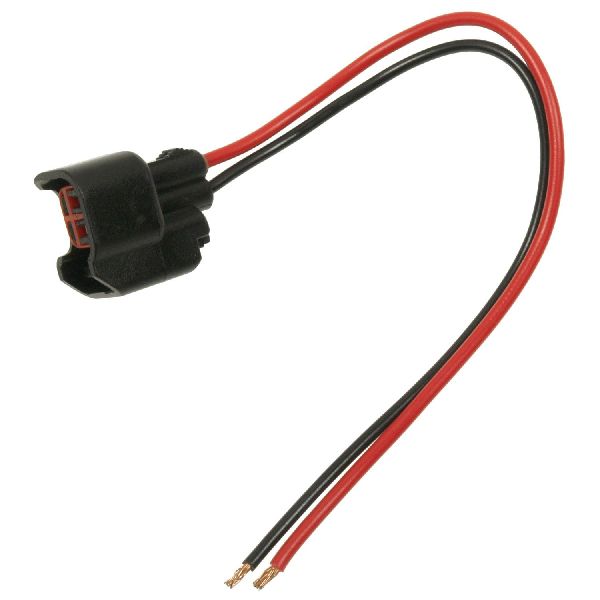
(OEM #ACDelco PT2160)— The connector pigtail is a common failure point due to flexing and corrosion. It is often replaced along with the sensor or as a separate repair if the wiring is found to be broken internally.
Trusted brands: ACDelco, Standard Motor Products (S-824), Dorman
OEM price range: $25-$40
Aftermarket price range: $12-$25
Related Codes That Often Appear With This One
- C0035 — This is the code for the Left Front Wheel Speed Sensor. Seeing both C0035 and C0040 could indicate a common wiring issue affecting both front sensors, a problem with the EBCM, or a systemic issue noted in TSBs like PIE0533A.
- C0800 — TSB #PIC5837 notes that this code can appear with C0040, indicating a potential power supply issue to the control module that uses the wheel speed data. The TSB advises diagnosing the C0040 code first.
- C027B, P0CBE — According to TSB #PIC520B, these codes may be present alongside C0040 when the specific issue is a damaged wiring harness in the engine bay contacting the crank or A/C pulley.
- C0040 with symptom bytes (e.g., 0F, 18, 5A) — Advanced scan tools may show extra digits. '0F' indicates an erratic signal (often debris/wiring), '18' means a missing signal, and '5A' indicates an implausible signal compared to other sensors. These point to different failure modes.
Technical Service Bulletins (TSBs) & Recalls

- PIE0533A: Acknowledges engineering information on inoperative wheel speed sensors setting DTCs including C0040.
- PIC5720B: Details a potential for the engine harness to chafe on pulleys, causing C0040 and other codes.
- PIC5837: Instructs technicians to diagnose C0040 first when it appears alongside a C0800 code and a 'Service Stability' message.
Platform-Specific Known Issues
- TSB #PIC5720B: For 2013 models, this bulletin points to a specific issue where the engine wire harness may contact the A/C compressor or crank pulley, causing a short and triggering code C0040. The fix involves inspecting for contact and repairing the wiring.
- TSB #PIC5837: This TSB addresses a "Service Stability" message with C0800 and a wheel speed sensor code like C0040. It instructs technicians to diagnose and fix the C0040 fault first before addressing the C0800 code.
- TSB #PIE0533A: This is an informational bulletin indicating that GM engineering had concluded its investigation into C0035, C0040, C0045, and C0055 codes, suggesting the root causes were well understood by 2019.
- Reluctor Ring Contamination: A common real-world failure, documented in owner forums and videos, involves the magnetic reluctor ring on the wheel bearing becoming contaminated with rust and debris, causing an erratic signal. Cleaning is a temporary fix, but replacement of the hub is often necessary.
Mechanic-Grade Diagnostic Values
- Active Wheel Speed Sensor Signal (at sensor connector) — expected: Switches between 7mA and 14mA when the wheel is spun slowly.. Failure: Current is steady, zero, or does not switch between the two states.
- Wheel Speed Sensor 12V Reference (at harness connector, sensor unplugged, ignition ON) — expected: Greater than 11 Volts between the signal circuit pin and a good chassis ground.. Failure: Voltage is significantly lower than 11V or absent, indicating a wiring or EBCM issue.
- Passive Wheel Speed Sensor Resistance (less common on this platform) — expected: Typically 800-1,700 Ohms, but can vary. Compare with the sensor on the opposite side.. Failure: Open circuit (OL) or a reading significantly different from the known-good sensor.
- Wiring Harness Continuity (from WSS connector to EBCM connector) — expected: Less than 5 Ohms end-to-end on each wire.. Failure: Resistance is higher than 5 Ohms or infinite (OL), indicating a break or corrosion in the wire.
Hidden / Shadow Codes Worth Checking
- C0040 0F: Erratic Wheel Speed Sensor Signal. This often points to a damaged tone ring, debris on the sensor, or an intermittent wiring connection. (see via Professional scan tool like a GM Tech 2 or GDS2 that can read symptom bytes.)
- C0040 18: Missing Wheel Speed Sensor Signal. This suggests a complete loss of signal, often due to a broken wire, fully failed sensor, or disconnected plug. (see via Professional scan tool like a GM Tech 2 or GDS2 that can read symptom bytes.)
- C0040 5A: Implausible Signal. The EBCM is receiving a signal, but it doesn't make sense compared to the other wheel speeds (e.g., one wheel reads 5 MPH while others read 50 MPH). This can be caused by an incorrect part or a failing bearing. (see via Professional scan tool like a GM Tech 2 or GDS2 that can read symptom bytes.)
Scan Tool Commands That Help

- GDS2 / High-End Scan Tool: Wheel Speed Sensor Simulation — After finding a break in the circuit, you can use a tester to send a simulated wheel speed signal from the sensor connector up to the EBCM. If the scan tool now reads a speed, it confirms the vehicle-side harness was the fault.
- GDS2 / High-End Scan Tool: Live Data Graphing — Graphing all four wheel speeds while driving is the fastest way to see which sensor is dropping out or reading incorrectly compared to the others. A faulty sensor will show sharp drop-offs to zero or erratic spikes.
Wiring & Ground Locations
- EBCM — Attached to the ABS hydraulic block, typically located in the engine bay on the driver's side, sometimes under the coolant reservoir or battery tray.. This is the control module that receives the signal from the C0040 sensor. The wiring harness from the right front wheel terminates here. A bad connection or corrosion at the main EBCM connector can cause this code.
- EBCM Connector X1 — The main electrical connector plugging into the EBCM module.. For the Right Front WSS, the signal wire is typically at Pin 7 and the low reference is at Pin 6. These are the pins to test for continuity back from the wheel speed sensor connector.
- G110 — A common chassis ground point located in the engine compartment, often on the left radiator support or near the battery tray.. While the WSS has a dedicated low reference wire back to the EBCM, the EBCM itself relies on a solid chassis ground. A poor ground at G110 can cause various unpredictable issues with the EBCM, including phantom sensor codes.
Real Owner Repair Stories
- YouTube channel 'ABS BRAKE, auto repair' (2012 Chevrolet Impala (similar GM W-Body platform)) — ABS light was on and off erratically, especially when turning the steering wheel. Code C0040 was present.
❌ Tried (didn't work) A previous shop had already replaced the entire right front wheel hub/bearing assembly in an attempt to fix the issue, but the code returned.
✅ What actually fixed it The technician found an internal break in the wire of the short pigtail harness for the wheel speed sensor. Even though the wire insulation looked fine, stretching the wire revealed it was broken inside. Replacing the pigtail harness resolved the problem permanently. - YouTube channel 'Chris Fix It' (Chevrolet Impala (similar GM platform)) — ABS and Traction Control lights on, codes C0035 and C0040 present.
❌ Tried (didn't work) Initial visual inspection did not show any obvious damage.
✅ What actually fixed it The video demonstrates that the wire commonly breaks inside the insulation right where the harness flexes near the lower control arm. After cutting open the loom, pulling on the individual wires revealed the internal break. The fix was to splice in a new pigtail harness.
OEM Part Supersession History
Unknown→23483145— Standard part evolution and improvement by the manufacturer.
Heads up: This part is specific to the 8th generation Malibu and will not fit the 9th generation (2016.5+). Always verify by VIN.
Model Year Variations Within This Range
- 2013-2016 (8th Gen) vs 2016-2020 (9th Gen): The 2016 model year is a split year. The 'Malibu Limited' is a continuation of the 8th generation, while the new body style is the 9th generation. They use different wheel speed sensors (PN 23483145 for 8th gen, 13518959 for 9th gen) and have different EBCM and wiring configurations. It is critical to identify which 2016 model is being worked on.
Helpful Videos
Used OEM Parts in Stock


New Aftermarket Parts Available


The information in this article is provided for general reference and educational purposes only. Vehicle specifications, procedures, and part compatibility can vary by production date, trim level, and region. Always consult your vehicle's factory service manual and verify part numbers before purchasing or performing repairs. Safety-critical components such as airbags, seat belts, and braking systems should be installed by a qualified professional.
- Chevrolet MALIBU:
- 🎬 Helpful Videos
- 🛍️ Shop This Part
- What's Unique About the 2013-2020 Chevrolet MALIBU
- Diagnostic Flowchart
- Symptoms You May Notice
- Most Likely Causes
- Rare But Worth Checking
- Diagnosis Steps
- Parts You'll Likely Need
- Related Codes That Often Appear With This One
- Technical Service Bulletins (TSBs) & Recalls
- Platform-Specific Known Issues
- Mechanic-Grade Diagnostic Values
- Hidden / Shadow Codes Worth Checking
- Scan Tool Commands That Help
- Wiring & Ground Locations
- Real Owner Repair Stories
- OEM Part Supersession History
- Model Year Variations Within This Range
- 🎟️ Get 5% Off