

C0040 on 2015-2020 Chevrolet Impala: Right Front Wheel Speed Sensor Causes and Fixes
Code C0040 on a 2015-2020 Impala means there's a problem with the Right Front Wheel Speed Sensor circuit. The most common cause is a damaged wiring harness rubbing against the CV axle, a known issue addressed by TSB PIC-5992-A. The second most likely cause is a failed wheel hub/bearing assembly with an integrated sensor ring. Expect a repair cost of $150 to $500.
- C0040 on a 2015-2020 Impala points to the right front wheel speed sensor circuit.
- Before buying parts, carefully inspect the wiring harness near the CV axle for rubbing damage, as this is the most common fault.
- If the wiring is intact, the next most likely cause is a failed wheel hub assembly with a damaged magnetic encoder ring or worn bearing.
- This fault disables ABS and stability control, so it should be repaired promptly for safety.
- The warning lights will typically turn off on their own after a short drive once the repair is successfully completed.
What's Unique About the 2015-2020 Chevrolet IMPALA

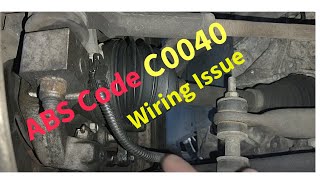
On this generation of Chevrolet Impala and its platform mates, the wiring harness for the front wheel speed sensors is a known weak point. As documented in GM Technical Service Bulletin PIC-5992-A, the harness is prone to chafing and breaking internally where it flexes with suspension travel and steering. This poor routing often causes the wire to rub directly against the CV axle, making a simple-looking sensor code a more involved wiring repair. Many owners and technicians have confirmed this failure pattern in online forums and repair videos, often demonstrating how to find the internal break by gently tugging on the wires within the loom.
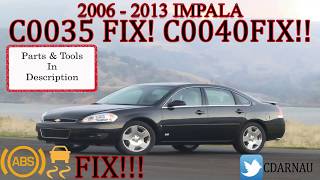
🎬 Watch: Step-by-step diagnosis and repair for the C0040 circuit code.Diagnostic Flowchart
Tap your situation to follow the diagnostic path that matches what you're seeing on this vehicle.
Symptoms You May Notice
- ABS warning light is on
- Traction Control or StabiliTrak warning light is on
- "Service Brake Assist" or "Service Traction Control" message in the driver information center
- ABS may activate unnecessarily at low speeds, causing a grinding or pulsing feeling in the brake pedal
- Cruise control may be disabled
- A clunking or grinding noise when turning from a stop at low speeds as the Stabilitrak system incorrectly activates
- Replacing the wheel hub assembly when the actual problem is the much cheaper and more common wiring harness failure.
- Replacing the wheel speed sensor (if separate) without first thoroughly inspecting the wiring harness for chafing or internal breaks.
- Assuming the sensor is bad without testing the circuit first. The code C0040 specifically points to a 'Circuit Malfunction'.
Most Likely Causes

- Damaged Wheel Speed Sensor Wiring Harness 🔴 High Probability The factory routing of the harness allows it to rub against the CV axle shaft or flex repeatedly, leading to chafed or broken wires inside the insulation. This is a well-documented issue. TSB PIC-5992-A specifically addresses inspecting this harness for damage.
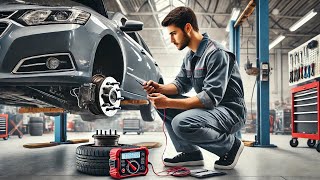
How to confirm: Visually inspect the entire length of the harness from the sensor to the main loom for signs of rubbing, especially near the CV axle. Perform a 'tug test' by gently pulling on each individual wire at the connector and along the harness; a broken internal wire will stretch like a rubber band. Wiggle the harness while monitoring live wheel speed data on a scan tool to see if the signal cuts out. A continuity test with a multimeter can also confirm an open circuit.
Typical fix: Repair the broken section of wire using solder and heat shrink, or replace the entire pigtail harness (recommended). Ensure the repaired harness is routed away from the axle, often using zip ties, to prevent recurrence.
Est. part cost: $25-$50 for a pigtail connector - Failed Wheel Hub & Bearing Assembly 🟡 Medium Probability The magnetic encoder ring (or reluctor ring) that the sensor reads is integrated into the wheel hub assembly. Corrosion can cause the ring to crack, break apart, or become covered in metallic debris, leading to an erratic signal. Excessive play in a worn bearing can also increase the air gap between the sensor and the ring, causing a signal loss.
How to confirm: With the wheel removed, visually inspect the magnetic encoder ring on the back of the hub for cracks, missing sections, or heavy rust/debris. Check for excessive play by rocking the wheel at the 12 and 6 o'clock positions. If the wiring harness is confirmed good, the hub is the next likely suspect.
Typical fix: Replace the entire wheel hub and bearing assembly. The sensor and encoder ring are not serviced separately on this platform.
Est. part cost: $100-$250 - Failed Wheel Speed Sensor ⚪ Low Probability While the sensor itself can fail, it is far less common than wiring or hub-related issues on this platform. The sensor is a solid-state component that is often replaced unnecessarily when the true fault lies in the wiring or hub. On many GM vehicles of this era, the sensor is sold as part of the hub assembly and not separately.
How to confirm: After confirming the wiring and hub are good, the sensor is the only remaining component. Use a scan tool to monitor live data from the right front wheel speed sensor while driving; the reading should be smooth and match the other wheels. If the signal is erratic or absent and wiring/hub are perfect, the sensor is faulty. You can also compare resistance (ohms) readings with the sensor on the opposite side; they should be very similar.
Typical fix: Replace the wheel speed sensor. On this vehicle, the sensor is typically integrated into the wheel hub assembly, requiring replacement of the entire hub.
Est. part cost: $30-$80 (if available separately), otherwise included with hub cost.
Rare But Worth Checking
- Faulty Electronic Brake Control Module (EBCM): This is rare and should only be considered after all other possibilities (sensor, wiring, hub) have been definitively ruled out. An EBCM failure will typically be accompanied by multiple wheel speed sensor codes, communication errors, or codes for other ABS components.
Diagnosis Steps
- Connect an OBD-II scanner capable of reading ABS codes to confirm C0040 is present. Note any sub-codes (e.g., C0040 06).
- Use the scanner's live data function to monitor the wheel speed of all four wheels while driving. Observe if the Right Front sensor provides an erratic, inconsistent, or zero MPH reading compared to the others.
- Raise and safely support the front of the vehicle. Remove the right front wheel.
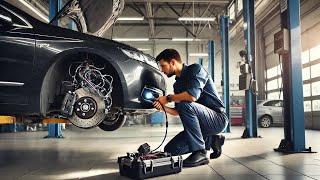
- Thoroughly inspect the wheel speed sensor wiring harness from the sensor connection down to where it enters the main loom. Pay extremely close attention to the area where it passes the CV axle for signs of rubbing, chafing, or exposed wires.
- Gently pull on each wire in the pigtail harness. If a wire stretches or feels 'spongy', it is broken internally. This is a very common failure point.
- Disconnect the sensor and inspect the connector terminals for corrosion, moisture, or damage.
- Inspect the wheel hub. Check for any side-to-side or up-and-down play by rocking the wheel at 12 and 6 o'clock.
- Visually inspect the magnetic encoder ring on the inboard side of the hub assembly. Look for cracks, missing segments, or a heavy buildup of rust and metallic debris.
- If wiring damage is found, replace the harness pigtail (ACDelco PT2160 or Dorman 970-042). Solder and use heat-shrink connectors for a durable repair.
- If the hub/bearing is worn or the encoder ring is damaged, replace the hub assembly.
- If no visual faults are found, use a multimeter to test for continuity and shorts in the wiring harness between the sensor connector and the EBCM connector.
- If wiring and the hub assembly are confirmed to be good, the sensor itself is the likely culprit and should be replaced (usually with the hub).
- Clear the code and perform a road test to ensure the ABS and traction control lights turn off and the code does not return.
Parts You'll Likely Need

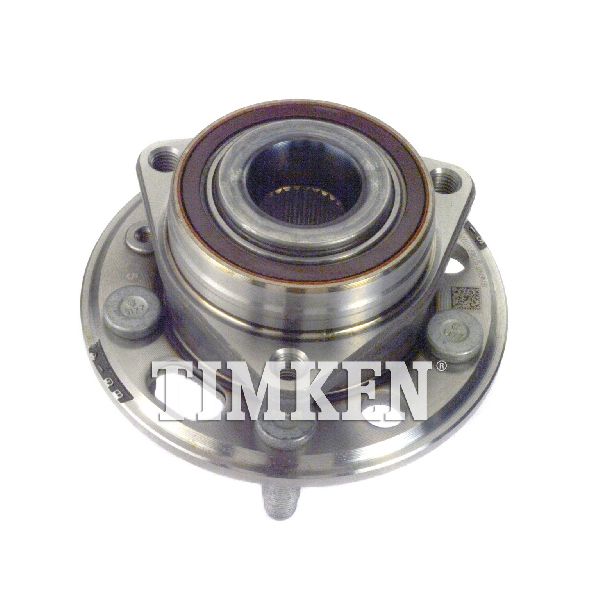
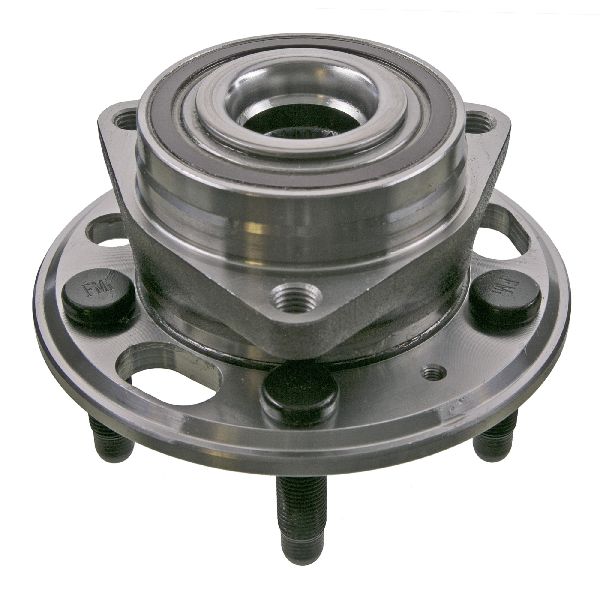
- Front Wheel Bearing and Hub Assembly
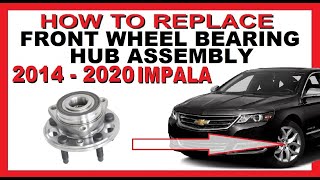
(OEM #ACDelco: 23103115, GM: 84608336)— The integrated magnetic encoder ring is a common failure point, and a worn bearing can also cause the code. The entire hub must be replaced. This is the second most common fix after the wiring harness.
Trusted brands: ACDelco (OEM), Timken (513341G), MOOG, SKF
OEM price range: $180-$250
Aftermarket price range: $100-$170 - ABS Wheel Speed Sensor Connector (Pigtail)
(OEM #ACDelco: PT2160, GM: 19300180)— This is needed to repair the harness when it becomes damaged from rubbing on the CV axle, which is the most common cause for this code on the Impala.
Trusted brands: ACDelco (OEM), Dorman (970-042), Standard Motor Products
OEM price range: $35-$50
Aftermarket price range: $20-$30
Related Codes That Often Appear With This One
- C0035 — This code is for the Left Front Wheel Speed Sensor. It's common to see both front sensor codes if there is a systemic issue or if both wiring harnesses have failed due to the same poor routing design.
- C0045 — This code is for the Left Rear Wheel Speed Sensor. Seeing multiple codes from different corners of the car could point towards a more central issue like the EBCM, though individual failures are still possible.
- C0050 — This code is for the Right Rear Wheel Speed Sensor. Similar to C0045, it may indicate a wider system issue if it appears with C0040.
Technical Service Bulletins (TSBs) & Recalls
- Directs technicians to inspect the front wheel speed sensor jumper harnesses for damage or internal breaks when codes C0035 or C0040 are present. It notes that simply checking with an ohmmeter may not be sufficient to find the fault.
- An engineering information bulletin concluding a data collection period for inoperative wheel speed sensors setting codes C0035, C0040, C0045, and C0050. This indicates GM was actively investigating this widespread issue.
Platform-Specific Known Issues
- GM Technical Service Bulletin #PIC-5992-A specifically instructs technicians to inspect the wheel speed sensor harness for damage when code C0040 is present, noting that the wire can be broken internally without visible external damage.
Mechanic-Grade Diagnostic Values

- Wheel Speed Sensor Internal Resistance — expected: 850 - 1350 Ohms. Failure: A reading of infinite resistance (open circuit), below 850 ohms (short), or significantly outside the specified range. Note that this test may not identify an intermittent internal wire break.
- Wheel Speed Sensor AC Voltage Output — expected: At least 100-200 millivolts (0.1-0.2 VAC) when spinning the wheel by hand at approximately one revolution per second.. Failure: No voltage or significantly lower voltage compared to the other sensors on the vehicle indicates a failed sensor or a problem with the magnetic encoder ring.
- Wheel Hub Bearing End Play — expected: Less than 0.005 inches.. Failure: Play exceeding this amount indicates a worn bearing, which can cause an erratic signal due to an inconsistent air gap between the sensor and the tone ring.
Hidden / Shadow Codes Worth Checking
- C0040 0F: Indicates the ABS module has detected an erratic signal from the right front wheel speed sensor. This is often caused by a damaged or debris-covered magnetic tone ring on the hub. (see via Professional scan tools like the GM GDS2 can display these symptom bytes (sub-codes).)
- C0040 18: Indicates the signal amplitude from the sensor is below the minimum required threshold. This can be caused by an excessive air gap (from a worn bearing), a weak sensor, or corrosion on the connector. (see via Professional scan tools like the GM GDS2 can display these symptom bytes (sub-codes).)
- C0040 06: Indicates a Low Voltage or Open Circuit condition. This strongly points towards a broken wire in the harness or a bad connector. (see via Professional scan tools like the GM GDS2 can display these symptom bytes (sub-codes).)
Wiring & Ground Locations
- Right Front Wheel Speed Sensor Harness — The harness runs from the wheel hub, is clipped to the lower control arm, and passes up through the fender liner into the engine bay. The most common failure point is where the harness flexes with suspension travel, near the CV axle.. This is the primary location for the wire chafing and internal breaks that cause code C0040 on this vehicle, as documented in TSB PIC-5992-A.
- EBCM Harness — The main harness branch for the Electronic Brake Control Module (EBCM) is located down behind the radiator surge tank, near the brake pressure modulator valve and the strut tower.. A GM bulletin for other models notes this harness can rub on a transmission mounting bolt if a retaining clip is mispositioned, causing abrasion, multiple DTCs, and blown fuses. While not specific to C0040, it's a known chafe point for the system.
Real Owner Repair Stories
- YouTube video by user 'Chris' (Chevrolet Impala (generation relevant to 2015-2020)) — ABS and Traction Control lights on, with code C0035 or C0040.
❌ Tried (didn't work) The video directly addresses the common misdiagnosis of replacing the hub when the wiring is the actual problem.
✅ What actually fixed it The internal wire of the wheel speed sensor pigtail harness was broken inside the insulation, right where it flexes. The fix was to cut out the old harness and solder in a new pigtail harness (ACDelco PT2160 equivalent), then secure it to prevent future rubbing. The break was confirmed with a 'tug test' where the broken wire stretched like a rubber band.
OEM Part Supersession History
ACDelco Professional PT2160→ACDelco Gold PT2160 / GM 88861094— Branding change from 'ACDelco Professional' to 'ACDelco Gold'. The part itself remains the same.
Heads up: The ACDelco PT2160 is a multi-purpose pigtail used for various sensors across GM and other brands, including camshaft position sensors and canister vent solenoids, but is the correct connector for this ABS application.
Helpful Videos

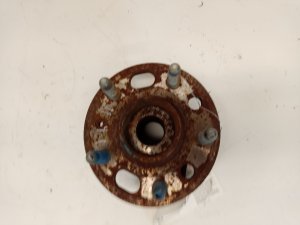
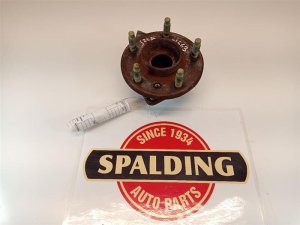
Used OEM Parts in Stock

New Aftermarket Parts Available



The information in this article is provided for general reference and educational purposes only. Vehicle specifications, procedures, and part compatibility can vary by production date, trim level, and region. Always consult your vehicle's factory service manual and verify part numbers before purchasing or performing repairs. Safety-critical components such as airbags, seat belts, and braking systems should be installed by a qualified professional.
- Chevrolet IMPALA:
- 🎬 Helpful Videos
- 🛍️ Shop This Part
- What's Unique About the 2015-2020 Chevrolet IMPALA
- Diagnostic Flowchart
- Symptoms You May Notice
- Most Likely Causes
- Rare But Worth Checking
- Diagnosis Steps
- Parts You'll Likely Need
- Related Codes That Often Appear With This One
- Technical Service Bulletins (TSBs) & Recalls
- Platform-Specific Known Issues
- Mechanic-Grade Diagnostic Values
- Hidden / Shadow Codes Worth Checking
- Wiring & Ground Locations
- Real Owner Repair Stories
- OEM Part Supersession History
- 🎟️ Get 5% Off