

C0040 on 2009-2017 Audi Q5: Right Front Wheel Speed Sensor Circuit Malfunction Causes and Fixes
On a 2009-2017 Audi Q5, code C0040 almost always means the right front ABS (wheel speed) sensor has failed or its wiring is damaged. Expect to pay $25-$75 for an aftermarket sensor or $90+ for an OEM part. It's a common and relatively easy DIY fix for many owners, though a seized sensor bolt can complicate the job.
- C0040 on a 2009-2017 Audi Q5 means there's a problem with the right front wheel speed sensor circuit.
- The most common symptoms are the ABS and traction control (ESC) lights turning on.
- The most likely fix is replacing the right front ABS sensor (Part No. WHT003856), which is an affordable and accessible repair for many DIYers.
- Driving is possible, but your vehicle's key safety systems (ABS, ESC) are disabled, so exercise increased caution.
- Always use a scanner that can read live ABS data to confirm which wheel sensor is faulty before buying parts, and be prepared for the sensor's retaining bolt to be seized.
What's Unique About the 2009-2017 Audi Q5
While wheel speed sensor failures are common across all modern vehicles, the Audi Q5's sophisticated Quattro all-wheel-drive and stability control systems are heavily reliant on accurate data from all four wheels. When one sensor fails, these systems are immediately disabled as a safety precaution, leading to prominent warning lights on the dashboard. There is no specific design flaw unique to the Q5 that causes this, but it's a frequent maintenance item due to the sensor's exposed location near the wheel. Owners in rust-prone areas often report the single Allen head bolt holding the sensor in place can seize, requiring drilling for removal.
Symptoms You May Notice
- ABS warning light is illuminated.
- Traction Control or Electronic Stability Control (ESC/ESP) warning light is illuminated.
- Cruise control may be inoperative.
- A 'Service StabiliTrak/ESC' message may appear on the driver information display.
- In some cases, the electronic parking brake light may flash or show a fault.
- Speedometer may behave erratically, though this is less common as it often relies on other sensors as well.
- Replacing the wrong wheel's sensor. The code C0040 is specific to the Right Front wheel.
- Confusing the code with a 'Brake Pedal Switch' fault. Some generic code readers or online sources may provide an incorrect definition for C0040 for other vehicle makes; for Audi, it consistently refers to the wheel speed sensor circuit.
Most Likely Causes
- Failed Right Front Wheel Speed Sensor 🔴 High Probability The sensor is an electronic component located in a harsh environment behind the wheel, exposed to water, dirt, road salt, and extreme temperatures, leading to eventual failure. It's a very common failure point.
How to confirm: Use an OBD-II scanner capable of reading live ABS data. While driving, observe the wheel speed readings from all four sensors. The right front sensor will likely show a speed of zero or an erratic reading that doesn't match the others. You can also test the sensor with a multimeter; as an active sensor, it should show a 5V signal.
Typical fix: Replace the right front wheel speed sensor. The sensor is typically held in by a single Allen bolt. Soaking the bolt with penetrating oil beforehand is highly recommended, especially in rust-belt regions, as they are prone to seizing and breaking.
Est. part cost: $25-$120 - Damaged Wiring or Connector 🟡 Medium Probability The sensor's wiring harness runs down the suspension and can be damaged by road debris, improper routing after previous repairs, or corrosion in the connector plug. The constant movement of the suspension can also cause internal wire breaks over time, even if the insulation looks intact.
How to confirm: Visually inspect the entire length of the wire from the sensor to its connection point in the wheel well. Look for breaks, chafing, pinch points, or green/white corrosion on the connector pins. Gently tug on the wires near the connector; if a wire stretches like a rubber band, it is broken internally.
Typical fix: Repair the damaged section of wire or replace the pigtail connector. In severe cases, a new harness section may be needed.
Est. part cost: $15-$50 - Damaged or Contaminated Reluctor Ring / Wheel Bearing ⚪ Low Probability The reluctor ring (or magnetic encoder), which the sensor reads, is integrated into the wheel hub/bearing assembly. If the bearing fails, it can introduce excessive play, altering the air gap to the sensor. Rust can also build up between the bearing and the knuckle, pushing the assembly out of alignment, or rust can form on the magnetic encoder itself, causing signal dropouts.
How to confirm: After removing the wheel speed sensor, visually inspect the magnetic encoder on the wheel bearing inside the hub for heavy rust, cracks, or metallic debris. Also, check the wheel bearing for any play by rocking the wheel at the 12 and 6 o'clock positions, or roughness when spinning the wheel.
Typical fix: If the reluctor ring is damaged or the bearing has failed, the entire wheel hub and bearing assembly must be replaced.
Est. part cost: $100-$300
Rare But Worth Checking
- Faulty ABS Control Module: This is rare and should only be considered after the sensor, wiring, and wheel bearing have been confirmed to be in good condition. This failure often triggers multiple wheel speed sensor codes or communication codes, not just C0040.
Diagnosis Steps
- Connect an ABS-capable OBD-II scanner to the vehicle.
- Confirm C0040 is the active or stored code. Note any other related codes.
- Access the live data stream for the ABS module.
- Monitor the speeds of all four wheels while driving slowly (5-15 mph). Confirm that the 'Right Front Wheel Speed' reading is zero, erratic, or significantly different from the other three.
- Raise and secure the front of the vehicle. Remove the right front wheel.
- Locate the ABS sensor mounted on the wheel hub/steering knuckle. It is held by a single 5mm Allen head bolt. Visually inspect the sensor and its wiring for any obvious signs of damage, corrosion, or loose connections.
- Follow the wire from the sensor to its connector in the wheel arch. Disconnect it and inspect the pins for corrosion or damage.
- If a visual fault is found in the wiring, repair or replace it.
- If no visual faults are found, the sensor itself is the most likely culprit. Remove the retaining bolt and replace the right front ABS wheel speed sensor. Be prepared for the bolt to be seized or to break.
- While the sensor is out, inspect the magnetic encoder ring on the wheel bearing for debris or damage.
- After replacement, clear the fault codes with the scanner and perform a test drive to ensure the warning lights do not return and the live data shows correct speed readings.
Parts You'll Likely Need
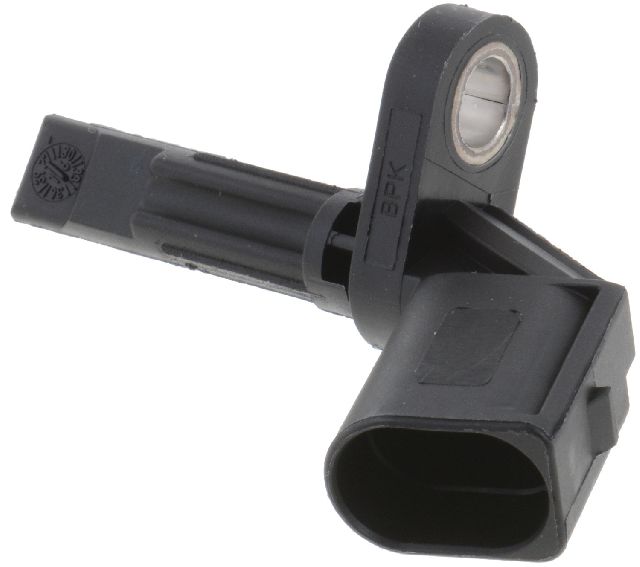
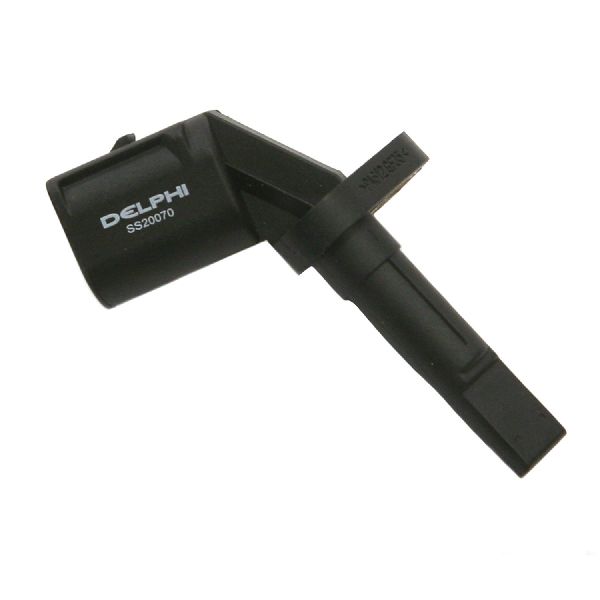
- Right Front ABS Wheel Speed Sensor
(OEM #WHT003856 (Verify by VIN, supersedes 4E0927804F/4E0927804D))— This is the most common failure point for the C0040 code. It is an electronic sensor that wears out over time due to its exposed location and harsh operating environment.
Trusted brands: Bosch (OEM), NTK, Delphi, Hella
OEM price range: $90-$120
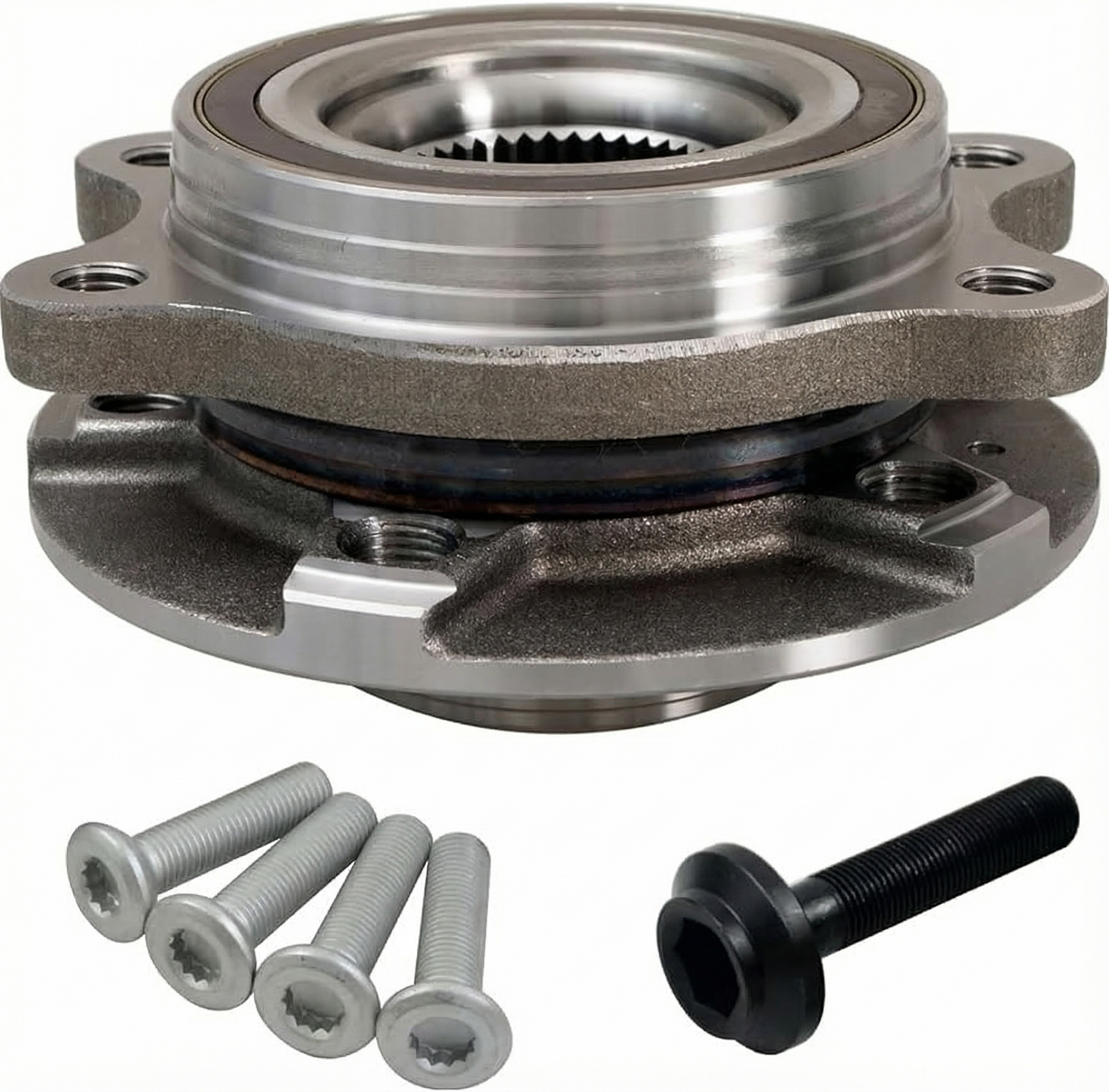
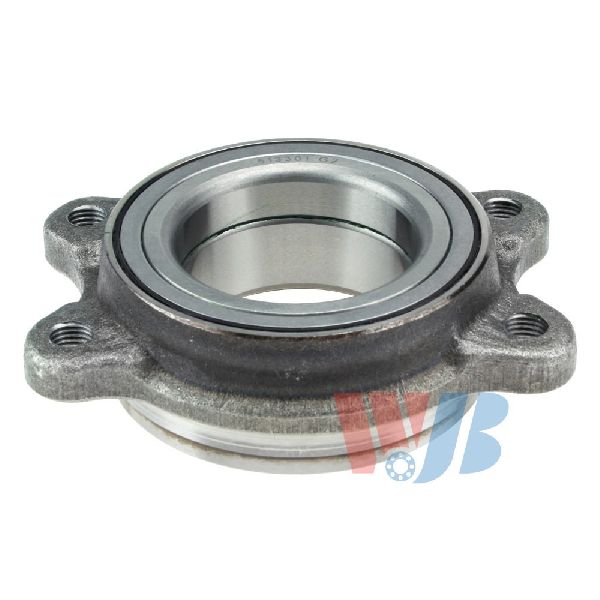
Aftermarket price range: $25-$75 - Front Wheel Bearing and Hub Assembly
(OEM #8K0498625A)— Needed if the integrated magnetic reluctor ring is damaged or if the bearing has failed, causing an incorrect air gap or signal interference for the sensor. Bearing failure is a known issue on this platform.
Trusted brands: FAG (OEM), SKF, Timken, INA
OEM price range: $200-$300
Aftermarket price range: $100-$180
Technical Service Bulletins (TSBs) & Recalls
- While no specific TSB for code C0040 was found, TSB #401548 addresses premature wheel bearing failure on 2009-2016 Q5 models, which can be a root cause of this code if the integrated reluctor ring is affected.
Platform-Specific Known Issues
- The single Allen head bolt (typically 5mm) that secures the ABS sensor is highly prone to seizing and stripping, especially in areas with road salt. It's recommended to use penetrating oil and heat before attempting removal. If it breaks, the remains must be drilled out, significantly increasing repair time.
- The wiring harness can become brittle and chafe where it is clipped to the suspension components, leading to intermittent open circuits that are hard to spot visually.
Mechanic-Grade Diagnostic Values
- Active Sensor Signal Voltage — expected: Approx. 5V or 12V reference voltage at the connector with ignition on, and a corresponding square wave signal when the wheel is turning.. Failure: No voltage, or voltage that does not switch cleanly, indicates a wiring or sensor fault.
Scan Tool Commands That Help
- VCDS (VAG-COM): Measuring Value Blocks (MVB) or Advanced Measuring Blocks — This is the primary method to diagnose a C0040. Use it to view the live data stream from all four wheel speed sensors simultaneously while driving. The faulty sensor's reading will be zero, erratic, or will not match the other wheels. For a 2011 Q5, MVB groups 001, 007, and 008 are relevant.
- VCDS or ODIS: ABS Module Coding / Basic Settings — This is NOT needed for a simple sensor replacement. It is only required if the entire ABS control module is replaced. A used module will require coding with the vehicle's original configuration and may require basic settings to be performed before the warning lights will clear.
Wiring & Ground Locations
- J104 — The ABS Control Module is located in the left side of the engine compartment.. This is the module that receives the signal from the wheel speed sensor. The wiring harness from the sensor ultimately terminates here, so checking for continuity would involve pins at this module's connector.
- Ground Point 12 — In the engine compartment, on the left side.. A poor ground for the ABS system can cause a variety of difficult-to-diagnose electrical faults. While less likely than a sensor or local wiring issue, it's a valid check for persistent problems.
- Ground Point 639 — On the lower part of the left A-pillar, behind the trim.. This is a major chassis ground point. Verifying it is clean and tight is good practice when chasing any electrical fault in the front of the vehicle.
Real Owner Repair Stories
- Ross-Tech Forums user (2010 Audi Q5 3.0 TDI) — ESP/ABS fault, Parking brake malfunction.
❌ Tried (didn't work) Attempting to simply pull the old sensor out.
✅ What actually fixed it The user correctly diagnosed the right front wheel speed sensor was faulty but the sensor was seized in the steering knuckle. The final fix required carefully drilling out the old plastic sensor body, being cautious not to drill too deep and damage the magnetic encoder on the wheel bearing face. - YouTube Mechanic Channel (General Motors vehicle, but principle is directly applicable.) — Intermittent ABS light, code C0040 for sensor circuit.
❌ Tried (didn't work) A previous shop had replaced the entire wheel hub/bearing assembly, but the code returned.
✅ What actually fixed it The wiring harness between the sensor and the chassis had an internal break. The copper wire inside was broken, but the plastic insulation was intact. The diagnostic trick was to pull on the individual wires; the broken one stretched like a rubber band. Repairing this section of the harness resolved the fault. - AudiWorld Forums user (2013 Audi Q5) — Random and intermittent ESC, ABS, Park Brake Malfunction, and TPMS lights. Code pointed to rear right wheel speed sensor.
❌ Tried (didn't work) Replacing the sensor with a new Bosch part, replacing the 9-year-old battery, cleaning the ABS module plug, and cleaning the ABS ground point did not fix the intermittent issue.
✅ What actually fixed it The thread concluded with another user suggesting the cause could be mismatched tire sizes or wear. On a Quattro AWD system, if one tire has a different rolling diameter, the ABS/ESP system detects the speed difference as a fault, disabling the systems. The original poster did not confirm the final fix, but it represents a critical diagnostic path beyond the sensor itself.
Model Year Variations Within This Range
- 2009-2017: No significant variations affecting the diagnosis or repair of code C0040 were found between the pre-facelift (2009-2012) and post-facelift (2013-2017) models of the first generation Q5. The system uses an active sensor that reads a magnetic encoder on the wheel bearing across all years.
Diagnostic Flowchart
Other Known Issues on This Vehicle
Issues unrelated to this code that are worth knowing about as an owner of this generation:
- 2.0T EA888 Engine Excessive Oil Consumption 🔴 High — Very common on 2009-2014 models. Caused by faulty piston rings and PCV system. Often requires piston/ring replacement if oil consumption is severe (e.g., 1 quart per 1,000 miles). (Ref: Multiple TSBs were issued and a class-action lawsuit resulted in an extended warranty for this issue.)
- 2.0T EA888 Timing Chain Tensioner Failure 🔴 High — Common on pre-2013 models with the original tensioner design, typically between 60k-100k miles. A rattle on cold start is the primary warning sign. (Ref: A class-action lawsuit addressed this. Failure to replace a faulty tensioner can lead to the chain jumping time, causing catastrophic engine damage.)
- S-Tronic (DL501) Mechatronic Unit Failure 🔴 High — Affects models with the 7-speed dual-clutch transmission. Symptoms include harsh shifting, flashing PRNDS indicator, and loss of gears. Can occur at various mileages. (Ref: No recall, but it is a widely documented failure. Repair involves replacing solenoids, the circuit board, or the entire mechatronic unit.)
- Water Pump and/or Thermostat Failure 🟠 Medium — Common on both 2.0T and 3.0T/3.2L engines. The 2.0T uses a plastic housing prone to cracking/leaking, while the 3.0T/3.2L pumps can also fail. Often occurs between 50k-100k miles. (Ref: An extended warranty was issued for some 2.0T models due to a class-action settlement for leaking water pumps.)
- Carbon Buildup on Intake Valves (FSI/TFSI Engines) 🟠 Medium — Inherent to all direct-injection engines (2.0T, 3.2L, 3.0T). Causes misfires, rough idle, and loss of power. Typically requires cleaning via walnut blasting every 60k-80k miles.
Used vs. New Parts: Buying Guide for This Vehicle
When a used part is the smart pick: For this specific repair, using used parts is generally not recommended. A used wiring pigtail from a junkyard could be a viable option if the original connector is damaged and a new pigtail is unavailable, provided the donor wiring is in excellent condition.
Donor-vehicle mileage cap: roughly under 80000 miles for the part to have meaningful remaining life.
What to inspect on the donor part:
- For a wiring pigtail, inspect for any signs of cracking, brittleness, or previous repairs.
- Ensure the locking tabs on the connector are intact.
- Check for any corrosion (green or white powder) on the connector pins.
OEM-only on this vehicle (don't cheap out):
- While not strictly 'OEM-only', the wheel bearing assembly should be sourced from a high-quality OEM supplier like FAG or SKF. The integrated magnetic encoder is critical for the ABS sensor signal, and cheap, unverified bearings are a common source of repeat problems.
Aftermarket brands forum-validated for this vehicle:
- ABS Sensor: Bosch (often the OEM supplier), NTK, Hella, Delphi.
- Wheel Bearing: FAG (OEM supplier for many German cars), SKF.
Brands owners have reported issues with on this vehicle:
- Unbranded, 'white-box' sensors and wheel bearings from online marketplaces. While the initial cost is low, forum discussions and mechanic reviews frequently mention premature failure and incorrect readings, leading to the job being done twice.
Real Owner Stories
Aggregated from forums and TSBs cited above. Mileages and costs reflect what owners reported in those sources.
2009-2016 Audi Q5
Symptoms: Sudden appearance of ABS and ESP warning lights while driving.
What fixed it: Replacement of a single wheel speed sensor.
Source hint: AudiWorld Forums thread titled 'ABS/ESP warning lights'
Audi B8 platform (A4/Q5)
Symptoms: ABS, ESP, and Parking Brake Fault lights illuminated simultaneously.
What fixed it: DIY replacement of the front ABS sensor; the owner noted the retaining bolt was seized and had to be drilled out.
Source hint: Audizine forum post 'ABS/ESP/Parking Brake Fault - Wheel Speed Sensor'
Related OBD-II Codes
Frequently Asked Questions
Does TSB #401548 apply to my 2012 Audi Q5 if I have a C0040 code?
I'm seeing a 'Service StabiliTrak/ESC' message on my Q5 dashboard; is this related to the right front sensor?
Can I just replace the sensor, or do I need to replace the whole wiring harness on my Audi?
Why is my electronic parking brake light flashing along with the ABS light?
Is there a specific tool I need to remove the sensor on a 2015 Q5?
Will a C0040 code affect my cruise control?
Used OEM Parts in Stock

New Aftermarket Parts Available


The information in this article is provided for general reference and educational purposes only. Vehicle specifications, procedures, and part compatibility can vary by production date, trim level, and region. Always consult your vehicle's factory service manual and verify part numbers before purchasing or performing repairs. Safety-critical components such as airbags, seat belts, and braking systems should be installed by a qualified professional.
- Audi Q5:
- 🛍️ Shop This Part
- What's Unique About the 2009-2017 Audi Q5
- Symptoms You May Notice
- Most Likely Causes
- Rare But Worth Checking
- Diagnosis Steps
- Parts You'll Likely Need
- Technical Service Bulletins (TSBs) & Recalls
- Platform-Specific Known Issues
- Mechanic-Grade Diagnostic Values
- Scan Tool Commands That Help
- Wiring & Ground Locations
- Real Owner Repair Stories
- Model Year Variations Within This Range
- Diagnostic Flowchart
- Other Known Issues on This Vehicle
- Used vs. New Parts: Buying Guide for This Vehicle
- Real Owner Stories
- 2009-2016 Audi Q5
- Audi B8 platform (A4/Q5)
- Related OBD-II Codes
- Frequently Asked Questions
- 🎟️ Get 5% Off