

C0036 on 2015-2016 Ram 1500: Left Rear Tone Wheel Failure Causes and Fixes
On a 2015-2016 Ram 1500, code C0036 almost always points to a problem with the left rear wheel speed signal. This is often caused by a damaged tone wheel, which requires replacing the entire left rear axle shaft, or a faulty wheel speed sensor. Expect to see ABS and traction control lights on your dash.
- C0036 on your Ram 1500 means there's a problem with the left rear wheel speed signal.
- Before buying any parts, remove the left rear speed sensor (one bolt) and visually inspect the tone wheel for damage or heavy rust.
- If the tone wheel is damaged, you will likely need to replace the entire left rear axle shaft.
- If the tone wheel looks fine, the wheel speed sensor itself is the next most likely cause.
- This fault disables your ABS and stability control, so it should be repaired promptly for safety.
What's Unique About the 2015-2016 Ram 1500
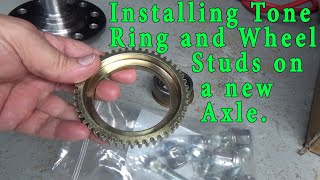
On this generation of Ram 1500 with a solid rear axle, the rear tone wheel is press-fit onto the axle shaft itself. Unlike vehicles where the tone wheel is part of a bolt-on hub assembly, a damaged tone wheel on this truck often necessitates the replacement of the entire axle shaft on that side. This makes the repair more labor-intensive and costly than a simple sensor swap. Forum discussions frequently confirm that rust swells under the ring, causing it to crack and generate the fault.
Diagnostic Flowchart
Tap your situation to follow the diagnostic path that matches what you're seeing on this vehicle.
Generation note: This issue is common on the 4th Generation Ram 1500 (2009-2018) and the Ram 1500 Classic (2019+), which share the same solid rear axle design where the tone ring is pressed onto the axle shaft.
Symptoms You May Notice
- ABS warning light is on
- Traction control or Electronic Stability Control (ESC) light is on
- "Service 4WD" light may come on intermittently
- Cruise control is disabled
- In rare cases, false ABS activation at very low speeds
- Brake pedal may make a bumping or grinding noise on startup or at low speeds
- Replacing the wheel speed sensor without first inspecting the tone wheel. A new sensor will not fix a signal issue caused by a cracked or damaged tone wheel, which is the most common failure on this platform.
- Replacing the ABS module before exhaustively checking the wiring harness for intermittent shorts or open circuits.
Most Likely Causes
- Damaged, Corroded, or Debris-Covered Left Rear Tone Wheel 🔴 High Probability The tone wheel is exposed to the elements under the truck. A very common failure mode on this platform is for rust to build up on the axle shaft underneath the press-fit tone wheel. This swelling of rust eventually causes the tone wheel to crack, leading to an incorrect signal.
How to confirm: Remove the left rear wheel speed sensor (one 8mm bolt). Use a flashlight and a small mirror to inspect the tone wheel through the sensor's mounting hole. Have a helper slowly rotate the axle and look for a visible crack, broken teeth, heavy rust scaling, or packed-in mud/debris. A cracked ring is the most common finding.
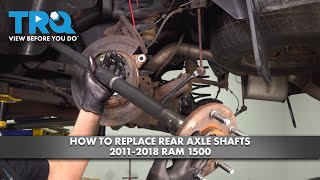
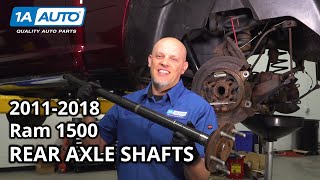
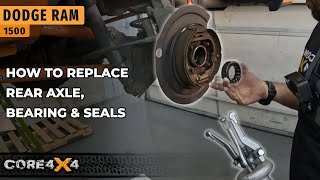
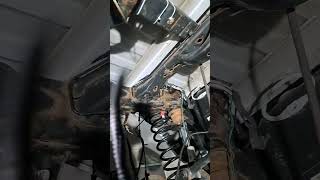
Typical fix: If the tone wheel is cracked or damaged, the entire left rear axle shaft must be replaced. 🎬 Watch: Step-by-step guide to replacing the rear axle shaft This involves removing the wheel, brake caliper, rotor, and differential cover, draining the fluid, removing an internal C-clip, and then sliding the old axle out. The new axle shaft comes with a new tone wheel already pressed on.
Est. part cost: $150-$400 for an axle shaft assembly - Failed Left Rear Wheel Speed Sensor 🟡 Medium Probability The sensor is an electronic component exposed to heat, vibration, and moisture at the wheel, which can cause it to fail over time. It's often replaced first, but the tone wheel is a more frequent cause of C0036 on these trucks.
How to confirm: If the tone wheel inspection reveals no damage, the sensor is the next likely culprit. Use an ABS-capable scan tool to watch the live wheel speed data from the sensor while spinning the wheel. The reading should be smooth and consistent with the other wheels. An erratic or absent signal points to a bad sensor or wiring.
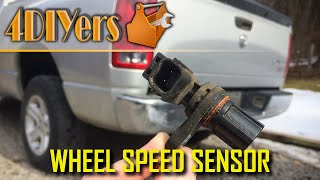
Typical fix: Replace the left rear wheel speed sensor. It is held in by a single 8mm bolt and can be removed after disconnecting its electrical connector. 🎬 Watch: How to test and replace the wheel speed sensor
Est. part cost: $25-$75 - Damaged Wiring or Connector 🟡 Medium Probability The wiring harness runs along the axle and frame, where it is vulnerable to chafing against suspension components, corrosion at the connectors, or damage from road debris.
How to confirm: Visually inspect the entire length of the wiring from the sensor to where it joins the main harness. Check the connector at the sensor and any intermediate connectors for corrosion, bent pins, or a loose fit. Perform a continuity test on the wires between the sensor connector and the ABS module connector to check for opens or shorts.
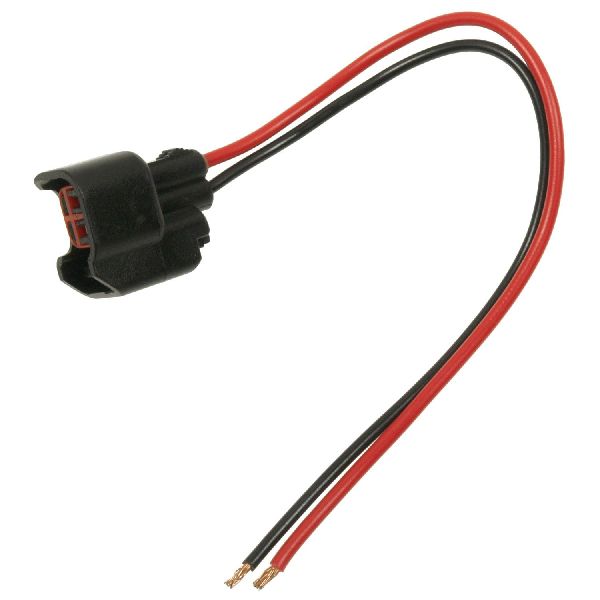
Typical fix: Repair the broken or shorted section of wire. If the connector is damaged, replace it with a new pigtail. Ensure the harness is properly secured away from moving parts.
Est. part cost: $10-$30 for a connector pigtail
Rare But Worth Checking
- Failing Wheel Bearing: A worn wheel bearing can cause excessive play or 'wobble' in the axle shaft. This changes the air gap between the sensor and the tone wheel, leading to an erratic signal. If you hear grinding or humming from the rear wheel, or if the axle has noticeable play, this should be investigated.
- ABS Control Module Fault: It is very rare for the module itself to fail, but it's possible. This should only be considered after all other possibilities (tone wheel, sensor, wiring) have been definitively ruled out. Some owners have replaced the module only to find the problem persisted, pointing back to a wiring or tone wheel issue.
- Metal Debris in Differential: In cases of significant differential wear, metal shavings can circulate in the gear oil and collect on the magnetic tip of the wheel speed sensor, disrupting its reading. This is more likely if you also hear whining or grinding from the differential.
Diagnosis Steps
- Connect an ABS-capable scan tool to confirm C0036 is the active code and check for any other related codes.
- Visually inspect the wiring harness for the left rear wheel speed sensor, looking for any obvious signs of damage, chafing, or corrosion. Pay close attention to where the harness runs near the frame and suspension.
- Disconnect the sensor and inspect the connector pins for damage or moisture. Apply dielectric grease upon reassembly.
- Remove the single 8mm bolt holding the wheel speed sensor and pull the sensor out of its housing in the axle tube.
- Crucial Step: Carefully inspect the tone wheel through the sensor hole. Use a flashlight and mirror. Have a helper slowly rotate the wheel or axle and look specifically for a hairline crack 🎬 See how to inspect the tone ring for cracks in the ring, in addition to broken/missing teeth, heavy rust, or caked-on debris.
- If the tone wheel looks perfect, use a scan tool to monitor live data for the left rear wheel speed while spinning the tire. Compare the reading to the right rear wheel. If the signal is absent, erratic, or jumps, the sensor is the likely failure.
- If you do not have a scan tool, you can test the sensor and wiring with a multimeter. Check for continuity and shorts in the wiring harness between the sensor and the ABS module.
- If the tone wheel is found to be cracked or damaged, the axle shaft must be replaced.
Parts You'll Likely Need
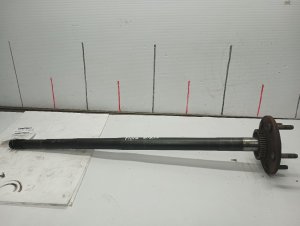
- Left Rear Axle Shaft
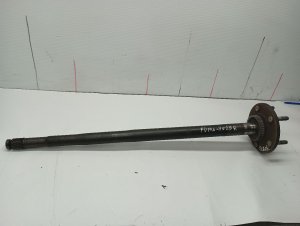
(OEM #68194217AB (Verify with VIN))— This is the most common fix if the tone wheel is found to be cracked, rusted, or damaged, as the tone wheel is pressed onto the shaft.
Trusted brands: Mopar, Dorman, Yukon Gear, Motive Gear
OEM price range: $300-$500
Aftermarket price range: $150-$300 - Left Rear Wheel Speed Sensor
(OEM #68471132AA (Verify with VIN))— If the tone wheel is visually okay, the sensor is the next most likely part to have failed.
Trusted brands: Mopar, Standard Motor Products (SMP), Delphi, Holstein
OEM price range: $50-$75
Aftermarket price range: $25-$50 - Differential Fluid and Gasket/RTV — Required for axle shaft replacement, as the differential cover must be removed. Typically 75W-140 synthetic gear oil is used.
Trusted brands: Mopar, Valvoline, Mobil 1, Permatex (for RTV)
OEM price range: $30-$50 per quart
Aftermarket price range: $20-$35 per quart
Related Codes That Often Appear With This One
- C0037 — This code is for the 'Left Rear Wheel Speed Sensor Circuit'. It often appears with C0036 because a problem with the tone wheel's signal (C0036) can be interpreted by the module as a sensor circuit fault (C0037), as seen in TSB #68292756A$.
Technical Service Bulletins (TSBs) & Recalls
- 68292756A$: Mentions C0036-02
Platform-Specific Known Issues
- A Technical Service Bulletin (TSB #68292756A$) was issued for 2016 Ram 1500s that lists C0036-02 'Left Rear Tone Wheel-General Signal Failure' among a set of potential ABS codes, confirming the manufacturer's definition and focus on this component.
- The primary failure mode specific to this platform is rust formation under the press-fit tone ring, which expands and cracks the ring. This is a widely documented issue in owner forums.
Mechanic-Grade Diagnostic Values
- Rear Wheel Speed Sensor Resistance — expected: 1,600 to 2,300 Ohms. Failure: A reading outside this range, or an open circuit (OL), indicates a faulty sensor. Some known good sensors have tested lower, around 1,037 Ohms, but the key is a consistent reading, not an open or short.
- Wheel Speed Sensor AC Voltage Output (Passive Sensor) — expected: A small, rising AC voltage as the wheel is spun by hand.. Failure: No AC voltage generated while spinning the wheel indicates a dead sensor.
- Wheel Speed Sensor Connector Voltage (Key On, Engine Off) — expected: On some Ram models, one pin should have battery voltage and the other should show a specific impedance (e.g., ~450 ohms).. Failure: Absence of voltage or an incorrect impedance reading points to a problem in the wiring harness or the ABS module itself.
Scan Tool Commands That Help
- wiTECH or AlfaOBD: ABS Initialization — This procedure is required after replacing the ABS control module to ensure it communicates correctly with the vehicle's other systems.
- AlfaOBD: Program VIN in Module — When installing a used (salvaged) ABS control module, the vehicle's VIN must be written to it. Failure to do so can result in a 'Mismatched VIN' fault code (like code 84 on older systems) and prevent the system from working correctly.
- wiTECH or other advanced scan tool: ABS System Bleed Procedure — If the hydraulic portion of the ABS unit (the HCU) is replaced, this bidirectional command is necessary to cycle the internal valves and solenoids to properly bleed all air from the brake system.
Wiring & Ground Locations
- ABS Module Fuses — In the main under-hood fuse box (Power Distribution Center), located next to the battery.. Check fuses F6 (40A, ABS Pump), F26 (30A, ABS Valves), and F76 (10A, ABS/ESC Control) before condemning the module. A blown fuse will disable the system and can set various codes.
- ABS Control Module — Under the hood, located beneath the main fuse box (TIPM), behind the battery.. This is the destination for the wheel speed sensor wiring. The connector here is a common point for corrosion, and the module itself can fail, though it's less common than sensor or wiring issues.
- Sensor Grounding Point — The wheel speed sensor's own mounting bolt.. On some Ram models, the sensor uses its mounting bolt for a ground path. A rusty or dirty mounting surface can create a poor ground, leading to an erratic signal and fault codes. Ensure the mounting surface is clean.
- Left Rear WSS Wiring Colors — In the harness running along the rear axle to the sensor.. While specific colors can vary, a wiring diagram for a similar model shows Dark Green/Yellow Stripe and White/Dark Green for the left rear sensor. Knowing the wire colors is essential for performing continuity and short tests between the sensor connector and the ABS module.
Real Owner Repair Stories
- RamForum.com user (2009 Ram 1500 5.7L) — Code C1020 'Rear Left Wheel Sensor Circuit'. Sensor not working.
❌ Tried (didn't work) Replaced sensor, Swapped sensor with known-good right side sensor, Performed continuity and short tests on wiring (which passed), Cleaned oxidized ABS module connector, Soldered wires directly to module pins to bypass connector
✅ What actually fixed it The user discovered a previous owner had worked on the harness. The wires for the sensor were swapped somewhere in the loom. By rotating the sensor connector 180 degrees and plugging it in 'reversed', the sensor began working correctly and the code was resolved. - RamForum.com user (2012 Ram 1500) — ABS light with code for right rear wheel speed sensor data below range.
❌ Tried (didn't work) Replacing the wheel speed sensor, Clearing the code (it returned immediately), Inspecting the harness near the sensor for breaks
✅ What actually fixed it An independent shop found that a previous owner had run a separate jumper wire from the sensor connector all the way to the ABS module under the hood, bypassing the factory harness. This jumper wire had developed a loose connection in the engine bay. Repairing the loose connection on the jumper wire fixed the problem for $209.
When the Usual Fixes Don't Work
- While a faulty ABS module can cause wheel speed codes, simply swapping it might not be the fix. One owner with rear wheel speed codes had the dealer replace the module and flash it, but the problem persisted. The root cause was that the dealer also needed to use the wiTECH scan tool to set the correct pinion factor and tire size in the new module. An incorrect configuration caused the rear wheels to report a speed that was 5% off from the front, confusing the ABS system and setting codes.
Model Year Variations Within This Range
- 2015-2016 and beyond: While the ABS module may look physically identical across several years, the internal software and part numbers can be different. For example, modules for 2016+ may have a different part number than earlier years. When replacing with a used module, it is critical to match the OEM part number exactly, not just the model year, to avoid compatibility issues.
Helpful Videos
Used OEM Parts in Stock

New Aftermarket Parts Available


The information in this article is provided for general reference and educational purposes only. Vehicle specifications, procedures, and part compatibility can vary by production date, trim level, and region. Always consult your vehicle's factory service manual and verify part numbers before purchasing or performing repairs. Safety-critical components such as airbags, seat belts, and braking systems should be installed by a qualified professional.
- Ram 1500:
- 🎬 Helpful Videos
- 🛍️ Shop This Part
- What's Unique About the 2015-2016 Ram 1500
- Diagnostic Flowchart
- Symptoms You May Notice
- Most Likely Causes
- Rare But Worth Checking
- Diagnosis Steps
- Parts You'll Likely Need
- Related Codes That Often Appear With This One
- Technical Service Bulletins (TSBs) & Recalls
- Platform-Specific Known Issues
- Mechanic-Grade Diagnostic Values
- Scan Tool Commands That Help
- Wiring & Ground Locations
- Real Owner Repair Stories
- When the Usual Fixes Don't Work
- Model Year Variations Within This Range
- 🎟️ Get 5% Off