

C0035 on 2013-2019 Ford Escape: Left Front Wheel Speed Sensor Fault Causes and Fixes
On a 2013-2019 Ford Escape, code C0035 indicates a fault with the Left Front Wheel Speed Sensor circuit. The most common fixes are replacing the sensor itself or repairing damaged wiring in the driver's side wheel well. Inspecting the ABS tone ring on the CV axle for cracks is also critical. Expect to pay $20-$60 for an aftermarket sensor.
- Code C0035 on a 2013-2019 Ford Escape means there is a fault in the LEFT FRONT wheel speed sensor circuit.
- Your ABS and stability control systems will be disabled, so drive with extra caution until the repair is made.
- Before replacing the sensor, always perform a thorough visual inspection of the wiring harness in the driver's side wheel well for damage or corrosion, as this is a common point of failure.
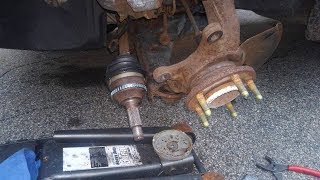
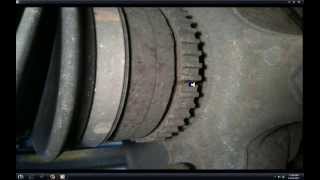
- Also, inspect the metal tone ring on the axle shaft for cracks or looseness, a known issue that can also cause this code.
What's Unique About the 2013-2019 Ford Escape
The 2013-2019 Ford Escape (third generation) is susceptible to C0035 not just from sensor failure, but also from two other common issues. The wiring harness leading to the sensor is exposed in the wheel well and can be damaged by debris or chafe against suspension components. Additionally, Ford platforms of this era, including the Escape and its platform-mate the Focus, can suffer from cracked ABS tone rings on the CV axle shaft. Corrosion builds up under the ring, forcing it to expand and split, which disrupts the sensor's reading and triggers this code.
Symptoms You May Notice
- ABS warning light is illuminated
- Traction control or stability control (AdvanceTrac) warning light is on
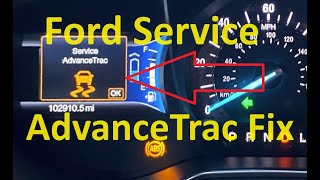
- "Service AdvanceTrac" message may appear on the instrument cl 🎬 Watch: Understanding the Service AdvanceTrac message and common fixes.uster
- "Hill Start Assist Not Available" message may appear
- Wheels may lock up and skid during hard braking
- Brake pedal may feel strange or pulsate incorrectly at low speeds if the tone ring is cracked but still giving an erratic signal.
- Replacing the wheel hub/bearing assembly when only the sensor, wiring, or standalone tone ring is faulty.
- Replacing the right front sensor due to confusion with generic OBD-II code definitions. C0035 on a Ford is for the left front side.
Most Likely Causes
- Failed Left Front Wheel Speed Sensor 🔴 High Probability The sensor is an exposed electronic component in a harsh environment (the wheel well) and fails over time from heat cycles, moisture, and vibration. It's the most frequent point of failure for this code.
How to confirm: Use an ABS-capable scan tool to monitor live data from all four wheel sensors while driving. The left front sensor will show 0 MPH or an erratic/lagging speed compared to the others. You can also test the sensor's internal resistance with a multimeter, though a voltage test is more accurate for this Hall-effect type sensor.
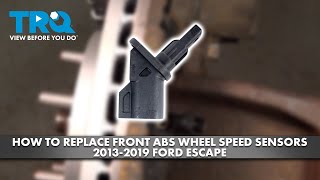
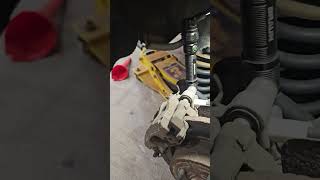
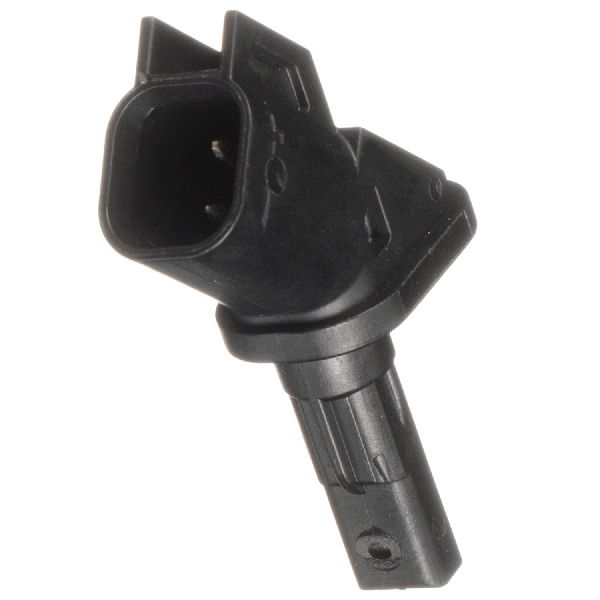
Typical fix: Replace the left front wheel speed sensor. 🎬 Watch: Step-by-step guide to replacing the front ABS sensor. The front left and right sensors are the same part.
Est. part cost: $20-$60 - Damaged Wiring or Corroded Connector 🟡 Medium Probability The sensor's wiring harness runs along the frame and suspension components, making it vulnerable to damage from road debris, ice buildup, or chafing against the wheel or strut. The connector pins can also corrode from road salt and water intrusion.
How to confirm: Visually inspect the entire length of the wiring from the sensor to its main connection point. Look for breaks, chafing, melted spots, or green/white corrosion on the connector pins. Wiggle the harness while watching live data to see if the signal cuts in and out.
Typical fix: Repair the damaged section of wire or replace the connector pigtail (e.g., Standard Motor Products S-799). Apply dielectric grease to the new connector to prevent future corrosion.
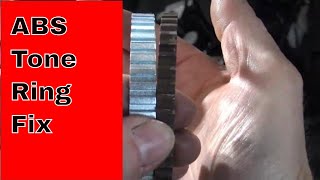
Est. part cost: $15-$40 - Cracked or Debris-Covered ABS Tone Ring 🟡 Medium Probability Corrosion can form on the CV axle shaft underneath the tone ring (a toothed metal ring), causing the ring to expand, crack, and spin freely on the axle. This is a well-documented issue on several Ford models of this era, especially in regions that use road salt.
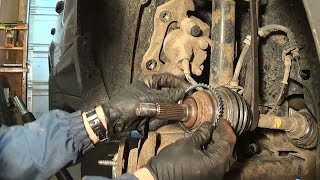
How to confirm: With the wheel removed, visually inspect the tone ring on the CV axle. Look for a visible crack or significant rust buildup. Try to move the ring with a screwdriver; if it moves independently of the axle, it is broken.
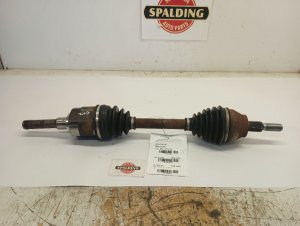
Typical fix: Ford does not sell the tone ring separately, so the official repair is to replace the entire front CV axle shaft. However, aftermarket tone rings are widely available and can be installed onto the original axle after cleaning the rust from the mounting surface.
Est. part cost: $15 (aftermarket ring) to $250 (CV axle)
Rare But Worth Checking
- Failed Wheel Hub / Bearing Assembly: A failing wheel bearing can cause excessive movement (play), which can damage the integrated tone ring or alter the air gap between the ring and the sensor, leading to an erratic signal. This is usually accompanied by a grinding or humming noise from the wheel that changes with speed.
- Failed ABS Control Module: This is very rare. Before condemning the module, exhaust all other possibilities (sensor, wiring, tone ring). This would typically be accompanied by other trouble codes, communication errors with the scan tool, or faults on multiple sensor circuits simultaneously.
Diagnosis Steps
- Connect an ABS-capable scan tool and confirm C0035 is the active code. Check for any sub-codes, such as ':2F', which indicates an erratic signal.
- View the live data stream for all four wheel speed sensors.
- Drive the vehicle slowly (under 10 MPH) and observe the speed readings. Confirm that the Left Front (LF) sensor reads 0 MPH or is erratic compared to the other three sensors.
- Raise and secure the front of the vehicle. Remove the left front wheel.
- Visually inspect the LF wheel speed sensor and its wiring harness for any obvious signs of damage, chafing, corrosion, or loose connections. Pay close attention to where the wire is clipped to the suspension.
- Carefully inspect the ABS tone ring on the CV axle. Look for cracks, missing teeth, heavy rust, or debris. Use a screwdriver to gently probe the ring to see if it is loose.
- If no visual faults are found, disconnect the sensor. Use a multimeter to test for proper voltage and ground at the harness connector coming from the ABS module. With the key on, you should see battery voltage (around 12V) on one pin and a good ground on the other. Wiggle the harness during testing to check for intermittent breaks.
- If the wiring is confirmed to be good, test the sensor itself. As it is a Hall-effect sensor, a resistance test is unreliable. A better test is to swap the left and right front sensors (they are the same part) and see if the code follows to the other side (e.g., becomes C0032).
- If the sensor, wiring, and tone ring are all confirmed to be good, the fault may lie in the ABS module itself, though this is the least likely cause.
Parts You'll Likely Need
- Front ABS Wheel Speed Sensor
(OEM #BV6Z-2C204-A (Superseded by LV6Z-2C204-A))— This is the most common failure point for code C0035. It is an electronic sensor that lives in a harsh environment and fails with age and exposure. The left and right front sensors are the same part.
Trusted brands: Motorcraft, Bosch, NTK, Standard Motor Products
OEM price range: $40-$65
Aftermarket price range: $20-$45 - ABS Sensor Connector Pigtail
(OEM #N/A (Aftermarket common))— If the connector is corroded or the wiring is damaged near the plug, replacing the pigtail is the standard repair.
Trusted brands: Standard Motor Products (S-799), Dorman
OEM price range: N/A
Aftermarket price range: $15-$30 - Front CV Axle Shaft — Required if the ABS tone ring is cracked and you are following the official Ford repair procedure, as the ring is not sold separately by Ford.
Trusted brands: Motorcraft, Cardone, TrakMotive
OEM price range: $200-$350
Aftermarket price range: $80-$200
Platform-Specific Known Issues
- A widely-documented issue on the 2013-2019 Escape is the cracking of the ABS tone ring. This is caused by rust forming on the CV axle underneath the ring, which exerts pressure until the ring splits. This is especially common in the salt belt. Aftermarket rings are available, allowing for a cheaper repair than replacing the entire CV axle.
Mechanic-Grade Diagnostic Values
- Sensor Supply Voltage at Harness Connector — expected: ~11-12V DC (Battery Voltage). Failure: 0V or significantly low voltage indicates a wiring or ABS module power supply issue.
- Sensor Signal Test (Hall-Effect Type) — expected: A resistance (Ohm) test is not a valid test for this type of sensor. A voltage test should be performed.. Failure: Testing resistance will show an open circuit (infinite Ohms), which is normal for a Hall-effect sensor but can be misinterpreted as a failure.
- Sensor Signal Voltage (Back-probed, while spinning wheel) — expected: Voltage should fluctuate slightly or toggle between a low voltage (near 0V) and a high voltage (5V or 12V).. Failure: No change in voltage while the wheel is spinning indicates a faulty sensor or a problem with the tone ring.
Hidden / Shadow Codes Worth Checking
- C0035:2F: The ':2F' is a sub-code indicating the signal from the sensor is 'Erratic'. This points more strongly towards a physically damaged or cracked tone ring, a loose sensor, or an intermittent wiring break rather than a completely dead sensor. (see via Ford's Integrated Diagnostic System (IDS) or a high-end scanner like FORScan.)
Scan Tool Commands That Help
- Ford IDS (or FORScan): ABS/EBCM Module Self-Test — Use this command after confirming the sensor, wiring, and tone ring are all in good condition. A failure of the self-test points towards an internal fault in the ABS control module, which is rare but possible.
Wiring & Ground Locations
- C135 — The main electrical connector on the ABS control module, located under the hood.. This is the termination point for the wheel speed sensor circuit. Testing for continuity and voltage here can confirm if the wiring harness is intact between the sensor and the module.
- C135 - Pin 19 — Pin 19 on the ABS module connector (C135).. This is the specific pin for the Left Front Wheel Speed Sensor signal (Circuit VCA03, VT-WH wire). Checking for a signal here can isolate a problem to the sensor/wiring or the module itself.
- G104 (or similar) — A primary chassis ground point, often located on the fender apron near the battery tray.. The ABS module relies on a clean, solid ground connection. A corroded or loose ground at this location can cause a variety of strange electrical issues, including phantom sensor codes like C0035.
Real Owner Repair Stories
- Reddit user on r/fordescape (2017 Ford Escape Titanium) — ABS, traction control, and 4x4 warning lights illuminated. A binding feeling and grinding noise when turning hard right at slow speeds.
❌ Tried (didn't work) Initial visual inspection.
✅ What actually fixed it After replacing the rear brakes and wheel bearings, a scan revealed a code for the right rear ABS sensor. The sensor itself was found to be physically broken (cracked mounting tab). Replacing the damaged sensor resolved the issue. This highlights that recent suspension work is a major clue. - Ford Edge Forum (similar platform) (Ford Edge (platform shares design principles)) — ABS fault code C0226 (Left Front Wheel Speed Signal Missing), which is functionally similar to C0035.
❌ Tried (didn't work) Initial diagnosis pointed towards sensor, but user suspected tone ring.
✅ What actually fixed it The tone ring had a hairline crack that was not easily visible. The user confirmed it was broken by prying it lightly with a screwdriver and seeing it move independently of the axle. The final fix was to replace the tone ring, not the entire CV axle, saving significant cost.
OEM Part Supersession History
BV6Z-2C204-A→LV6Z-2C204-A— Standard part number revision and update by Ford.
Heads up: None. LV6Z-2C204-A is a direct, backward-compatible replacement for the original part.LV6Z-2C204-A (OEM)→DY-1211 (Motorcraft Service Part)— This is the corresponding service part number sold under the Motorcraft brand.
Heads up: None. DY-1211 is the correct Motorcraft part for this application.
Model Year Variations Within This Range
- 2013-2019: While the front ABS sensor and tone ring-on-axle design is consistent for the C0035 code, be aware that on AWD models, the REAR wheel speed sensors are often integrated into the wheel hub/bearing assembly. A failure in the rear (e.g., C0037) would necessitate replacing the entire hub, unlike the front where the sensor is separate.
Diagnostic Flowchart
Other Known Issues on This Vehicle
Issues unrelated to this code that are worth knowing about as an owner of this generation:
- EcoBoost Engine Coolant Intrusion 🔴 High — Common on 1.5L (2017-2019) and 1.6L (2013-2016) EcoBoost engines. A design flaw in the engine block can allow coolant to leak into the cylinders, leading to misfires, white smoke, and eventual engine failure. (Ref: TSB 19-2346, TSB 22-2229, Customer Satisfaction Program 21N12.)
- 6F35 Transmission Shudder and Failure 🟠 Medium — Affects many vehicles with the 6F35 automatic transmission. Symptoms include shuddering/hesitation around 35-45 mph, harsh shifts, and eventual failure. Often attributed to premature fluid breakdown or torque converter issues. (Ref: Multiple TSBs exist for shift quality issues, but no widespread recall for the shudder as of late 2024.)
- Door Latch Failures 🟠 Medium — Widespread across many Ford models of this era. The door latch pawl spring can break, preventing the door from latching securely or causing it to open while driving. (Ref: Multiple recalls issued, including NHTSA recalls 20V177 and 16V549.)
- Shift Cable Bushing Detachment 🟡 Low — The bushing that attaches the shifter cable to the transmission can degrade and detach, causing the vehicle to remain in a different gear than what the shifter indicates. (Ref: NHTSA Recall 22V413000.)
Used vs. New Parts: Buying Guide for This Vehicle
When a used part is the smart pick: A used part is a smart choice for the CV axle shaft if the tone ring is the only issue. It is often cheaper than a new OEM axle and potentially higher quality than a new, cheap aftermarket axle. A used wiring connector pigtail is also a perfectly acceptable repair part.
Donor-vehicle mileage cap: roughly under 80000 miles for the part to have meaningful remaining life.
What to inspect on the donor part:
- For a CV Axle: Source from a vehicle in a dry, non-salt-belt region to minimize the risk of rust jacking under the tone ring.
- Inspect the tone ring on the donor axle for any visible cracks or heavy rust scale.
- Ensure the rubber CV boots are not torn, cracked, or leaking grease.
- Verify the donor vehicle had low mileage (ideally under 80,000 miles).
OEM-only on this vehicle (don't cheap out):
- None for this specific repair. High-quality aftermarket options are available for all common failure parts.
Aftermarket brands forum-validated for this vehicle:
- Sensors: Bosch, NTK, Standard Motor Products (SMP), Motorcraft (OEM).
- CV Axles: Cardone (new, not remanufactured), TrakMotive, GSP. However, many forum users prefer a good used OEM axle over a new aftermarket one.
- Tone Rings (standalone): No specific brand dominates, but their availability prevents the need for a full axle replacement.
Brands owners have reported issues with on this vehicle:
- Unbranded, ultra-low-cost sensors from online marketplaces like eBay or Amazon often have a high rate of out-of-box failure or incorrect physical dimensions.
Real Owner Stories
Aggregated from forums and TSBs cited above. Mileages and costs reflect what owners reported in those sources.
2013-2019 Ford Escape
Symptoms: Brake pedal may feel strange or pulsate incorrectly at low speeds; ABS and Traction control lights on.
What fixed it: Replacement of the ABS tone ring. The owner noted that shops often quote a full half-shaft replacement, but the ring can be replaced separately if the rust is cleaned from the mounting surface.
Cost: $15-$250
Source hint: Ford Truck Enthusiasts Forums - "please advise on cracked tone ring"
2013-2019 Ford Escape
Symptoms: Left front sensor showing 0 MPH or erratic/lagging speed compared to others on a scan tool.
What fixed it: Replace the left front wheel speed sensor.
Cost: $20-$60
Source hint: Article Context - Common Causes / Failed Left Front Wheel Speed Sensor
Related OBD-II Codes
Frequently Asked Questions
My 2013-2019 Ford Escape is showing 'Service AdvanceTrac' and 'Hill Start Assist Not Available.' Is this related to code C0035?
Can I just replace the ABS tone ring on my Escape, or do I need a whole new CV axle?
Is there a specific wiring pigtail recommended for repairing the sensor connector on this model?
Does the 2017-2019 Ford Escape 1.5L EcoBoost have any other major issues I should watch for while fixing this ABS code?
Are the front left and right wheel speed sensors interchangeable on the 2013-2019 Escape?
Helpful Videos
Used OEM Parts in Stock


New Aftermarket Parts Available


The information in this article is provided for general reference and educational purposes only. Vehicle specifications, procedures, and part compatibility can vary by production date, trim level, and region. Always consult your vehicle's factory service manual and verify part numbers before purchasing or performing repairs. Safety-critical components such as airbags, seat belts, and braking systems should be installed by a qualified professional.
- Ford Escape:
- 🎬 Helpful Videos
- 🛍️ Shop This Part
- What's Unique About the 2013-2019 Ford Escape
- Symptoms You May Notice
- Most Likely Causes
- Rare But Worth Checking
- Diagnosis Steps
- Parts You'll Likely Need
- Platform-Specific Known Issues
- Mechanic-Grade Diagnostic Values
- Hidden / Shadow Codes Worth Checking
- Scan Tool Commands That Help
- Wiring & Ground Locations
- Real Owner Repair Stories
- OEM Part Supersession History
- Model Year Variations Within This Range
- Diagnostic Flowchart
- Other Known Issues on This Vehicle
- Used vs. New Parts: Buying Guide for This Vehicle
- Real Owner Stories
- 2013-2019 Ford Escape
- 2013-2019 Ford Escape
- Related OBD-II Codes
- Frequently Asked Questions
- 🎟️ Get 5% Off