

C0035 on 2011-2015 Chevrolet Cruze: Left Front Wheel Speed Sensor Causes and Fixes
On a 2011-2015 Chevy Cruze, code C0035 almost always means the left front wheel hub and bearing assembly has failed. The wheel speed sensor is integrated into the hub and is not sold separately. Replacing the entire hub assembly is the most common and reliable fix. Before replacement, inspect the wiring harness for damage and the hub's magnetic encoder ring for metallic debris, as per a GM TSB.
- Code C0035 on a 2011-2015 Cruze points to a problem with the left front wheel speed sensor.
- This will disable your ABS and StabiliTrak systems, so drive with extra caution.
- The most common cause is a failed wheel hub assembly, as the sensor is integrated and cannot be replaced separately.
- Before replacing the hub, inspect the wiring and connector for damage, as this is a possible and cheaper fix.
- A GM Technical Service Bulletin suggests that cleaning metallic debris from the hub's magnetic ring can sometimes fix the code without replacing any parts.
What's Unique About the 2011-2015 Chevrolet CRUZE
For the 2011-2015 Chevrolet Cruze, the key issue is that the wheel speed sensor is not a small, separate part you can easily unplug and replace. Instead, it is integrated with a magnetic encoder ring into the sealed wheel hub and bearing assembly. This magnetic encoder, made of magnetized nitrile rubber, replaces the traditional toothed metal reluctor ring. This design means that if the sensor or the magnetic ring fails, the entire hub assembly must be replaced, turning a potentially simple sensor fix into a more involved and expensive repair.
Diagnostic Flowchart
Tap your situation to follow the diagnostic path that matches what you're seeing on this vehicle.
Symptoms You May Notice
- ABS warning light is on
- StabiliTrak or Traction Control (TC) warning light is on
- "Service StabiliTrak" or "Service ABS" message on the d 🎬 See how to fix ABS, Traction Control, and Stabilitrak lights.river information center (DIC)
- ABS system does not activate during hard braking (wheels may lock up)
- Traction control does not function on slippery surfaces
- Intermittent grinding or ratchet noise from the front of the vehicle at low speeds as the ABS incorrectly activates.
- "Service Steering" message may appear on some models, as the power steering module uses wheel speed data.
- Replacing only the sensor, which is not possible on this vehicle as it is integrated into the hub.
- Replacing the EBCM before thoroughly testing the hub and wiring.
- Replacing the hub assembly when the only issue was debris on the magnetic encoder ring, which could have been cleaned.
Most Likely Causes
- Failed Left Front Wheel Hub & Bearing Assembly 🔴 High Probability The wheel speed sensor and its magnetic encoder ring are integrated into the hub assembly. These components are exposed to harsh conditions and wear over time, and the entire unit is a common failure point. The internal sensor can fail, or the bearing itself can develop play, causing the signal to become erratic.
How to confirm: Use a scan tool with live data to monitor all four wheel speeds while driving. The left front sensor will read 0 MPH or show erratic speeds compared to the others. If the wiring is confirmed to be good, the hub is the cause. You can also check for physical play in the wheel by trying to wiggle it at the 12 and 6 o'clock positions.
Typical fix: Replace the entire left front wheel hub and bearing assembly.
Est. part cost: $70-$250 - Damaged Wiring or Connector 🟡 Medium Probability The wiring harness runs down the suspension and is subject to constant movement, stress, and exposure to road debris. Wires can break internally near the connector or chafe against the fender liner or suspension components, causing an open or short circuit.
How to confirm: Visually inspect the wiring harness from the back of the hub up into the wheel well for any signs of chafing, breaks, or corrosion. Unplug the connector and check for bent, broken, or corroded pins. A multimeter can be used to check for continuity from the EBCM connector to the wheel speed sensor connector.
Typical fix: Repair the broken section of wire or replace the connector pigtail. A common pigtail part is the Dorman 645-940 or ACDelco PT2160.
Est. part cost: $15-$50 - Debris on Magnetic Encoder Ring ⚪ Low Probability GM issued a Technical Service Bulletin (PIC5428G, later superseded by 17-NA-047) that applies to the Cruze, noting that ferrous metallic debris (rust flakes, metal shavings) can stick to the magnetic encoder ring on the hub, causing an incorrect signal. This can happen even on an otherwise healthy bearing.
How to confirm: Requires removing the hub assembly to visually inspect the inboard side for metallic debris stuck to the brown magnetic ring. A borescope might allow inspection without full removal in some cases.
Typical fix: Gently clean the debris off the encoder ring using a soft nylon bristle brush and mild soap if needed. Do not use magnets or harsh tools, as this can damage the encoder. In many cases, this can resolve the issue without replacing the hub.
Est. part cost: $0
Rare But Worth Checking
- Faulty Electronic Brake Control Module (EBCM): This is very rare. The EBCM is the computer that controls the ABS. It should only be considered after the hub assembly and wiring have been definitively ruled out as the cause. Usually, a faulty EBCM will trigger multiple other codes, often related to communication errors (U-codes) or faults on multiple sensor circuits.
Diagnosis Steps
- Confirm the presence of code C0035 using an 🎬 Watch this guide on diagnosing and fixing the C0035 code. OBD-II scanner capable of reading ABS codes. Note any symptom bytes (e.g., 18, 5A, 0F) as they can provide clues.
- Use the scanner's live data feature to view the wheel speed from all four sensors while driving slowly. Confirm that the Left Front wheel speed reads incorrectly (e.g., 0 MPH, erratic, or lagging) while the others read accurately.
- Raise the front left corner of the vehicle safely and secure it on a jack stand.
- Thoroughly inspect the wheel speed sensor wiring harness from the hub connector up into the engine bay. Look for chafing against the fender liner, suspension components, or sharp edges. Check for melted plastic or broken wires.
- Disconnect the connector. Inspect for green or white corrosion, bent pins, or moisture. Clean with electrical contact cleaner if necessary.
- If wiring appears intact, the next step is to evaluate the hub. Check for excessive play by grabbing the tire at 12 and 6 o'clock and attempting to rock it. Any significant movement indicates a bad bearing.
- If no play is present, consider the possibility of debris on the encoder ring as per TSB PIC5428G. This may require removing the hub to inspect and clean the magnetic ring on the inboard side.
- For advanced diagnosis, use a multimeter to check the sensor circuit. The sensor generates a DC current signal that switches between approximately 7mA and 14mA. An oscilloscope is the best tool to verify the square wave signal from the sensor while spinning the wheel.
- If wiring is confirmed good and cleaning the encoder ring (if applicable) does not solve the issue, the wheel hub assembly is faulty and requires replacement.
Parts You'll Likely Need
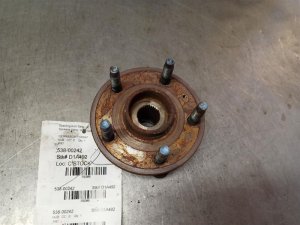
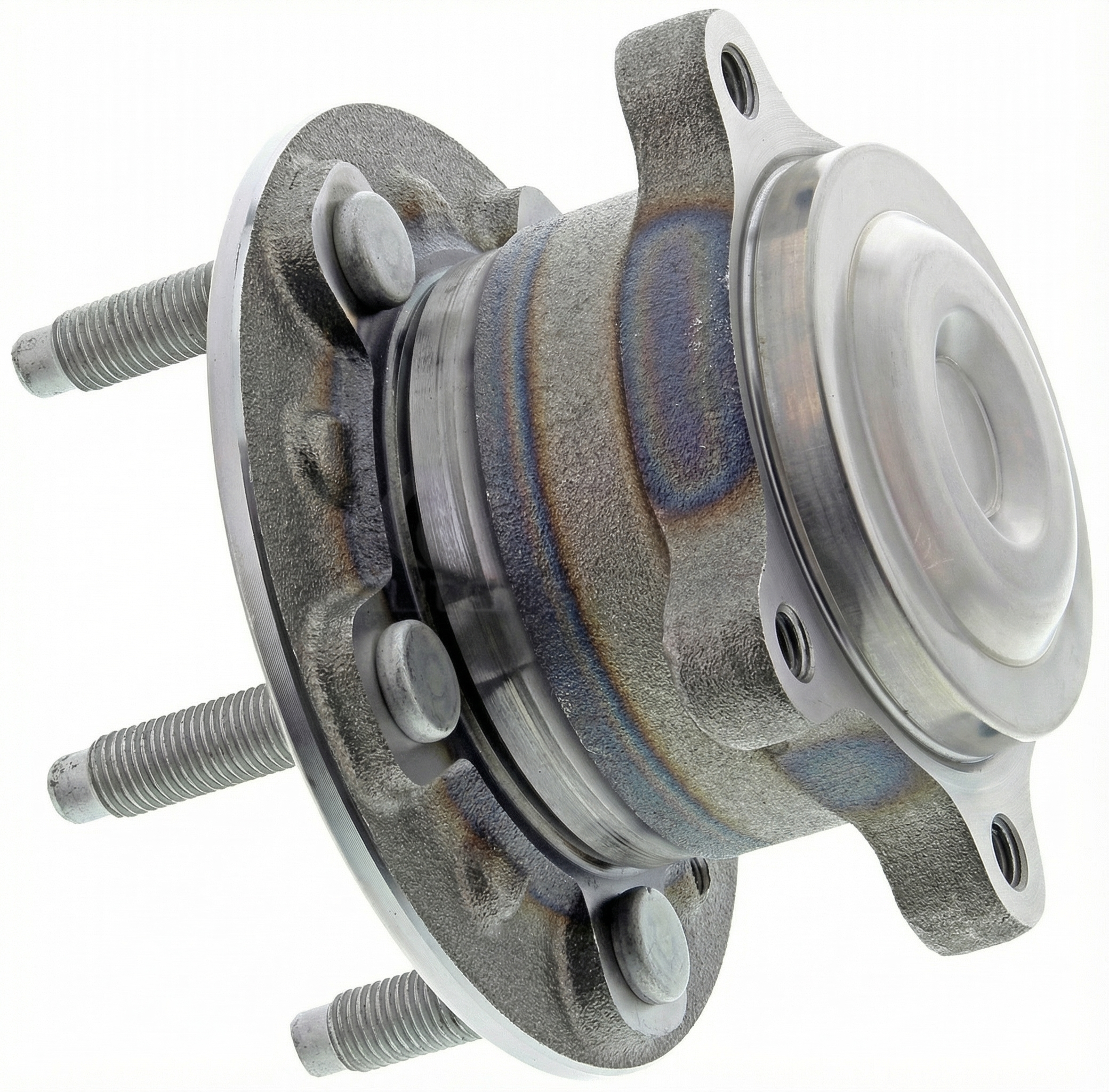
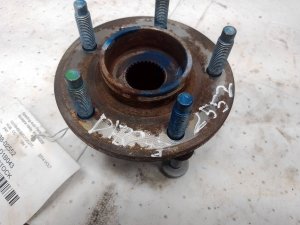
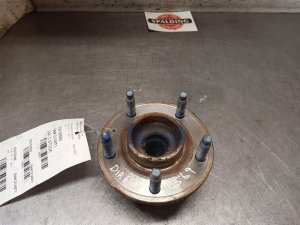
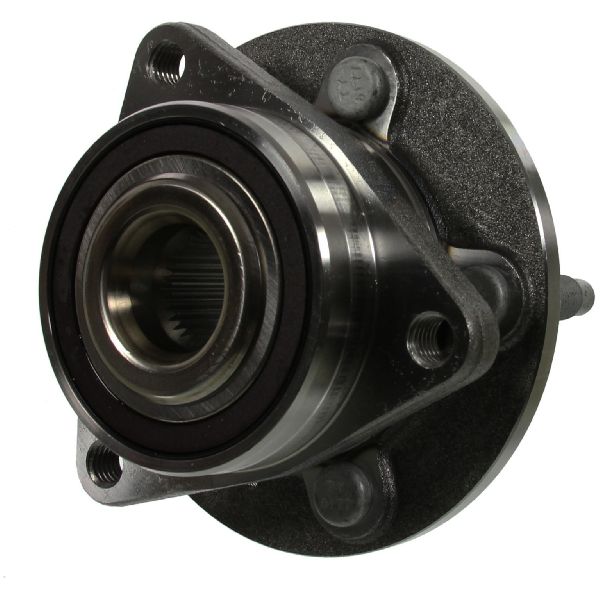
- Left Front Wheel Hub and Bearing Assembly
(OEM #GM 13580687 (ACDelco FW408))— The wheel speed sensor is integrated into this assembly. Failure of the sensor or the internal magnetic ring requires replacement of the entire unit.
Trusted brands: ACDelco (GM OE/Gold), MOOG, Timken, SKF, DuraGo
OEM price range: $150-$250
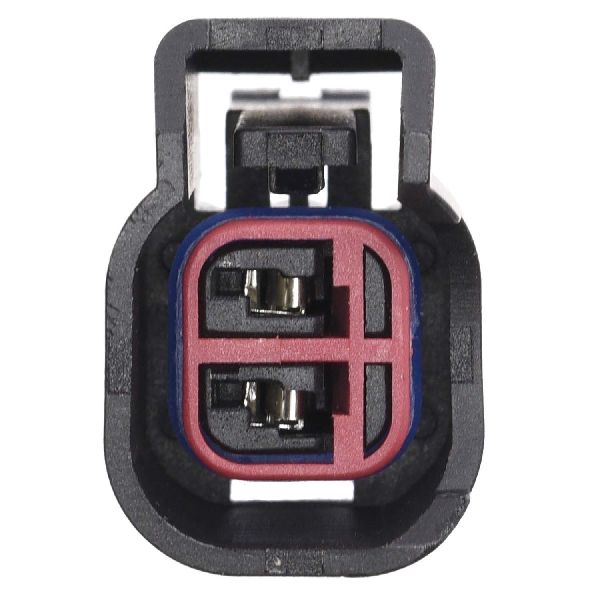
Aftermarket price range: $70-$160 - ABS Wheel Speed Sensor Connector Pigtail
(OEM #ACDelco PT2160)— If the wiring is damaged right at the connector, replacing the pigtail is the standard repair.
Trusted brands: ACDelco, Dorman (645-940), Standard Motor Products
OEM price range: $30-$50
Aftermarket price range: $15-$30
Related Codes That Often Appear With This One
- C0040 — Right Front Wheel Speed Sensor Malfunction. It's common for wheel bearings to wear out at similar rates, so seeing codes for both front wheels is not unusual.
- U0415 — Invalid Data Received From Electronic Brake Control Module. This code can be set in the Power Steering Control Module when it loses a valid wheel speed signal, which may cause a 'Service Steering' message. This is a known default action per GM TSBs.
- C0035 5A — This is a specific symptom byte indicating 'Implausible Signal'. This is often associated with debris on the encoder ring or a failing bearing causing an erratic signal, as noted in TSB PIC5428G.
Technical Service Bulletins (TSBs) & Recalls
- PIC5428G: EBCM Wheel Speed Sensor Diagnostic Aid. Notes that DTCs C0035-C0050 with symptom bytes 18, 5A, or 0F can be
Platform-Specific Known Issues
- Technical Service Bulletin PIC5428G (and its successors) is the most critical document for this issue. It directly addresses DTCs C0035-C0050 on the 2011-2015 Cruze. It highlights that ferrous metallic debris accumulating on the magnetic encoder ring is a primary cause that can often be fixed by cleaning, avoiding a costly hub replacement.
- The labor time quoted by GM for inspecting and cleaning the front hub encoder ring under this TSB is 0.6 hours, indicating it's a recognized and relatively quick procedure for a technician.
Mechanic-Grade Diagnostic Values
- Wheel Speed Sensor Current Signal — expected: Switches between ~7mA (low state) and ~14mA (high state) as the wheel is slowly rotated.. Failure: A signal that is stuck high, stuck low, or does not switch indicates a faulty sensor or circuit. A traditional resistance (Ohm) test is not applicable to this type of active sensor.
Hidden / Shadow Codes Worth Checking
- C0035 0F: Wheel Speed Sensor Erratic Signal. The EBCM sees a signal, but it is unstable or dropping out. (see via ABS-capable scan tool, such as GM GDS2/Tech2Win.)
- C0035 18: Wheel Speed Sensor Circuit Open or High Resistance. This indicates a break in the wiring or a failed sensor coil. (see via ABS-capable scan tool, such as GM GDS2/Tech2Win.)
- C0035 5A: Wheel Speed Sensor Signal Plausibility Failure. The signal from this wheel is not logical when compared to the other wheel speed sensors (e.g., three wheels show 30 MPH, this one shows 5 MPH). (see via ABS-capable scan tool, such as GM GDS2/Tech2Win.)
Scan Tool Commands That Help
- GM GDS2 (Global Diagnostic System 2): Module Diagnostics > EBCM > Data Display > Wheel Speed Sensor Data — This is the primary method for diagnosis. It allows a technician to view the live data stream from all four wheel speed sensors simultaneously while driving, making it easy to spot the sensor that is reading incorrectly.
Wiring & Ground Locations
- EBCM Ground G111 — On the driver's side inner fender, near the strut tower, in the engine bay.. This is the main ground connection for the Electronic Brake Control Module (EBCM). A loose or corroded connection at G111 can cause intermittent power loss to the module, leading to various ABS codes, including C0035, that may be misdiagnosed as a sensor or wiring issue.
- WSS Harness Chafe Point — The harness section that runs down the suspension strut and is held by plastic clips.. The harness is subject to constant flexing and vibration. A very common failure is for the wires to chafe against the strut body or the retaining clips, eventually breaking the copper strands inside the insulation. This often happens with no visible damage to the outer insulation sheath.
- Front WSS Connector — A 2-pin connector that plugs directly into the back of the wheel hub assembly.. This connector is exposed to water, salt, and debris. Corrosion on the pins is a common cause of an open or high-resistance circuit. The wires can also break internally right at the back of the connector from stress.
Real Owner Repair Stories
- cruzetalk.com forum user (2012 Chevrolet Cruze) — ABS and Stabilitrak lights on, code C0035.
❌ Tried (didn't work) Replacing the left front hub assembly with a cheap, unbranded aftermarket part from an online marketplace.
✅ What actually fixed it The code returned within a week. The problem was resolved by replacing the cheap hub with a premium aftermarket brand (MOOG). The user noted the quality difference was immediately apparent and advised against using low-quality parts for this repair. - YouTube video by a professional technician (2014 Chevrolet Impala (shares similar wiring design)) — ABS light on with C0035, previous repairs including two wheel bearings and an EBCM did not fix it.
❌ Tried (didn't work) Replaced wheel bearing/hub assembly (twice), Replaced Electronic Brake Control Module (EBCM)
✅ What actually fixed it The technician found the wire for the sensor was broken inside the insulation near the connector. Stretching the wire by hand revealed the insulation would stretch, indicating the copper inside was severed. Replacing the pigtail connector harness finally fixed the issue.
When the Usual Fixes Don't Work
- While a failed hub assembly is the most common cause, it is critical not to overlook the wiring harness. In a notable case, a vehicle had already had the hub and even the EBCM replaced without fixing the C0035 code. The actual root cause was found to be a broken wire inside the insulation of the pigtail connector. The wire was broken from repeated flexing, a common issue on this chassis. This highlights the importance of physically inspecting and testing the wiring harness for continuity and breaks before committing to a hub replacement, even if there is no visible damage.
OEM Part Supersession History
GM 13580687→GM 13580687 (current), ACDelco FW408 (service replacement)— This part number has remained relatively stable for the first-generation Cruze.
Heads up: While there are no major OEM supersession issues, there is a significant quality difference between OEM/premium aftermarket (ACDelco, MOOG, Timken, SKF) and low-cost unbranded hubs. Low-cost hubs are a very common cause of repeat failures within a short time frame.
Helpful Videos
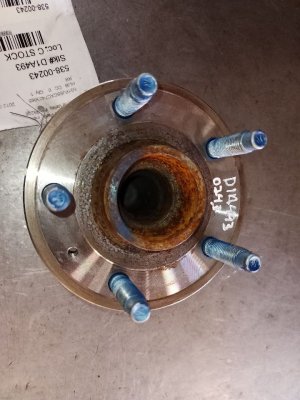
Used OEM Parts in Stock
New Aftermarket Parts Available



The information in this article is provided for general reference and educational purposes only. Vehicle specifications, procedures, and part compatibility can vary by production date, trim level, and region. Always consult your vehicle's factory service manual and verify part numbers before purchasing or performing repairs. Safety-critical components such as airbags, seat belts, and braking systems should be installed by a qualified professional.
- Chevrolet CRUZE:
- 🎬 Helpful Videos
- 🛍️ Shop This Part
- What's Unique About the 2011-2015 Chevrolet CRUZE
- Diagnostic Flowchart
- Symptoms You May Notice
- Most Likely Causes
- Rare But Worth Checking
- Diagnosis Steps
- Parts You'll Likely Need
- Related Codes That Often Appear With This One
- Technical Service Bulletins (TSBs) & Recalls
- Platform-Specific Known Issues
- Mechanic-Grade Diagnostic Values
- Hidden / Shadow Codes Worth Checking
- Scan Tool Commands That Help
- Wiring & Ground Locations
- Real Owner Repair Stories
- When the Usual Fixes Don't Work
- OEM Part Supersession History
- 🎟️ Get 5% Off