

C0035 on 2009-2012 Chevrolet Colorado: Causes and Fixes for Left Front Wheel Speed Sensor Fault
On a 2009-2012 Colorado, code C0035 almost always means the front driver's side wheel hub assembly has failed. The sensor is integrated, and rust on the hub's magnetic ring is a common cause. Expect to pay $150-$300 for a new hub assembly and plan for a 1-2 hour repair. In some cases, using non-OEM hubs can cause this code to persist.
- C0035 points to a problem with the driver's side front wheel speed sensor circuit.
- The most likely cause on a 2009-2012 Colorado is a failed wheel hub assembly due to a rusted or damaged magnetic reluctor ring.
- Before replacing parts, follow TSB PIC5428G and inspect/clean the magnetic ring for metallic debris.
- Driving with this code is risky because your ABS and stability control will not work.
- The repair is DIY-friendly for those with mechanical experience, but requires proper tools, including a 36mm socket for the axle nut, which must be replaced.
- Using high-quality OEM or reputable aftermarket hubs (like ACDelco or Timken) is recommended to avoid signal compatibility issues.
What's Unique About the 2009-2012 Chevrolet COLORADO

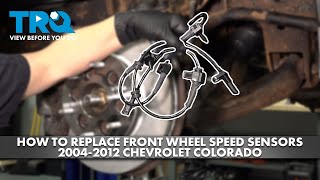
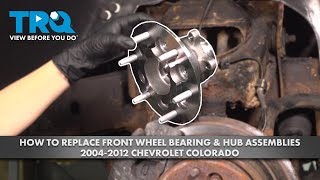
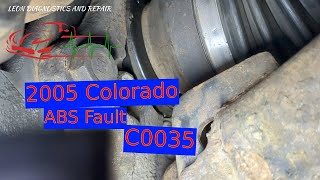
For this generation of the Chevrolet Colorado (and its platform mates, the GMC Canyon and Hummer H3), the front wheel speed sensor is not a separate, small component that can be replaced individually. Instead, it is integrated into the wheel hub and bearing assembly. As confirmed by owner experiences and TSB PIC5428G, the entire hub unit must be replaced 🎬 Watch: Step-by-step guide to replacing the front wheel hub assembly. to fix a failed sensor or a problem with the magnetic tone ring, which is a very common failure point due to rust and corrosion. Owners frequently report that replacing just the sensor wire does not fix the issue, as the root cause is the rusted reluctor ring on the hub itself.
Diagnostic Flowchart
Tap your situation to follow the diagnostic path that matches what you're seeing on this vehicle.
Symptoms You May Notice
- ABS warning light is on
- StabiliTrak or Traction Control warning light is on
- "Service Stabilitrak" or similar message on the driver information center
- ABS and Traction Control systems are disabled and will not activate
- Cruise control may be disabled
- Intermittent grinding or pulsing from the front brakes at low speeds as the system incorrectly tries to intervene
- Replacing only the sensor. On this vehicle, the sensor is integral to the hub assembly and cannot be replaced by itself. An attempt to do so would be futile as the part is not sold separately.
- Assuming the wiring is good without testing. An internal wire break can exist with no visible damage to the insulation.
Most Likely Causes

- Failed Front Wheel Hub and Bearing Assembly 🔴 High Probability The magnetic reluctor ring (tone ring) that the sensor reads is part of the hub's seal. It is highly susceptible to rust and corrosion, which causes it to crack, swell, or delaminate ('rust jacking'). This distorted ring provides a bad signal to the sensor. This is a well-documented issue on this platform, often cited in owner forums.
How to confirm: With the wheel removed, visually inspect the back of the hub assembly where the sensor wiring connects. Look for significant rust, cracking, or swelling of the magnetic ring. A scan tool monitoring live data will show the left front wheel speed at 0 mph or reading erratically while the other wheels show correct speed. In some cases, metallic debris from a failing bearing can stick to the magnetic ring and disrupt the signal, as noted in TSB PIC5428G.
Typical fix: Replace the entire left front wheel hub and bearing assembly. The sensor is integrated and not serviced separately. It is also recommended to replace the single-use axle nut.
Est. part cost: $150-$300 - Damaged Wheel Speed Sensor Wiring or Connector 🟡 Medium Probability The wiring harness is routed near the suspension and wheel, making it vulnerable to damage from road debris, chafing against moving parts, or corrosion from water and salt. Wires can break internally from repeated flexing, even if the outer insulation appears intact.
How to confirm: Visually inspect the entire length of the wiring from the back of the wheel hub up into the engine bay. Check for broken wires, chafed insulation, or corrosion in the connector pins. A multimeter can be used to check for continuity and shorts in the harness between the sensor connector and the EBCM connector.
Typical fix: Repair the damaged section of the wire or replace the pigtail connector. In some cases, the entire front ABS harness may need replacement.
Est. part cost: $20-$70 - Faulty Electronic Brake Control Module (EBCM) ⚪ Low Probability
How to confirm: If a new hub assembly and a verified good wiring harness do not resolve the code, the EBCM may be at fault. This requires advanced diagnostics by a professional, which may involve checking for power/ground at the module and scoping the signal directly at the EBCM input.
Typical fix: Replace and program the Electronic Brake Control Module.
Est. part cost: $400-$800
Rare But Worth Checking
- Use of incorrect or low-quality aftermarket hub assembly: Some owners have reported that after replacing a hub with a non-OEM part, the C0035 code persisted or returned. This can be due to the aftermarket sensor producing a signal (duty cycle) that is incompatible with the GM EBCM's expectations.
Diagnosis Steps

- Connect an OBD-II scanner capable of reading ABS codes to confirm C0035 is present and check for any GM-specific sub-codes (e.g., 5A, 18, 0F).
- Use the scanner's live data function to monitor all four wheel speeds while driving slowly. Confirm that the Left Front wheel speed reads 0 mph or is erratic compared to the others.
- Raise and secure the front of the vehicle and remove the driver's side front wheel.
- Thoroughly inspect the wheel speed sensor wire harness from the hub to where it connects to the main chassis harness. Look for any signs of physical damage, chafing, or corrosion. Pay close attention to flex points.
- Disconnect the sensor and inspect the connector pins for corrosion or damage.
- Inspect the back of the wheel hub assembly. Look for heavy rust, cracks, or swelling on the magnetic reluctor ring that the sensor reads. This is a very common point of failure.
- Per TSB PIC5428G, even if the ring looks intact, clean it with a soft nylon brush and mild detergent to remove any metallic debris that may have accumulated, then clear codes and re-test.
- If the wiring looks good but the reluctor ring is damaged or rusted, the hub assembly is faulty and must be replaced.
- If the visual inspection is inconclusive, use a multimeter to test for continuity and shorts in the wiring harness back to the EBCM.
- If the hub and wiring are confirmed to be good, the problem may lie with the EBCM, which requires professional diagnosis.
Parts You'll Likely Need
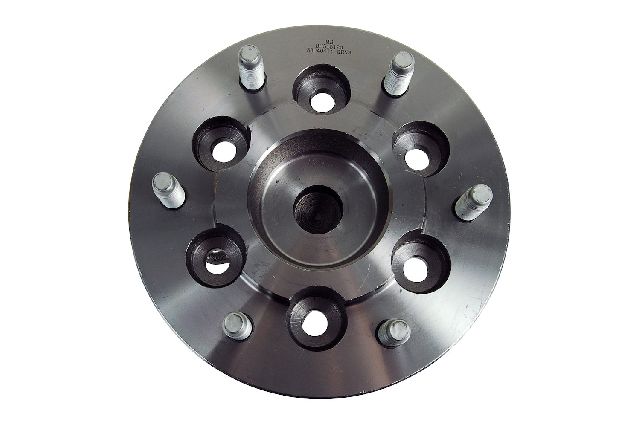
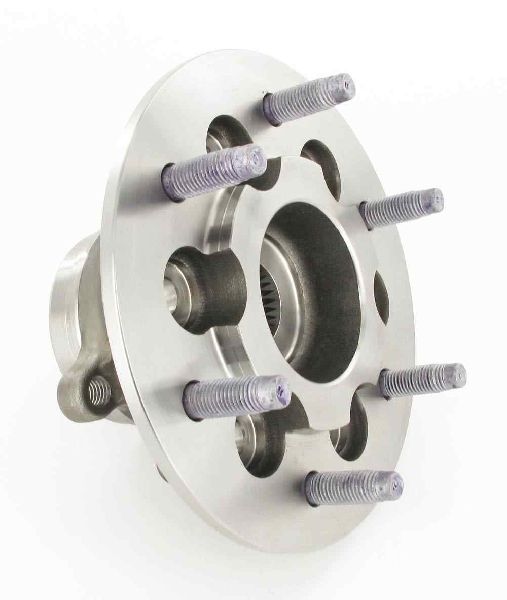
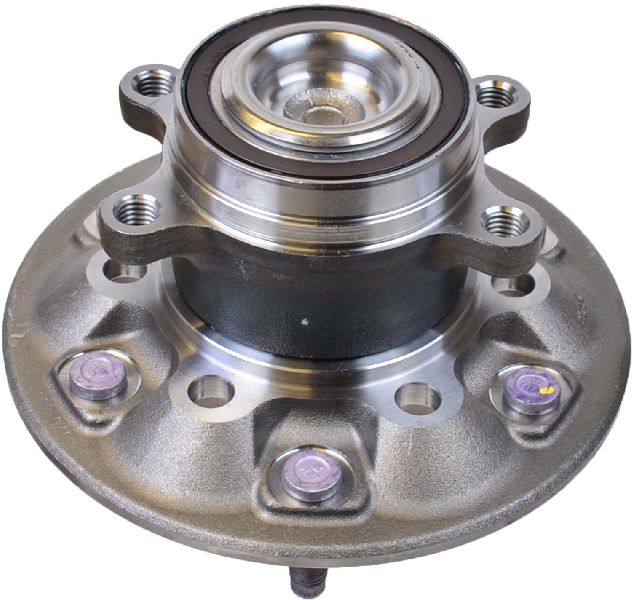
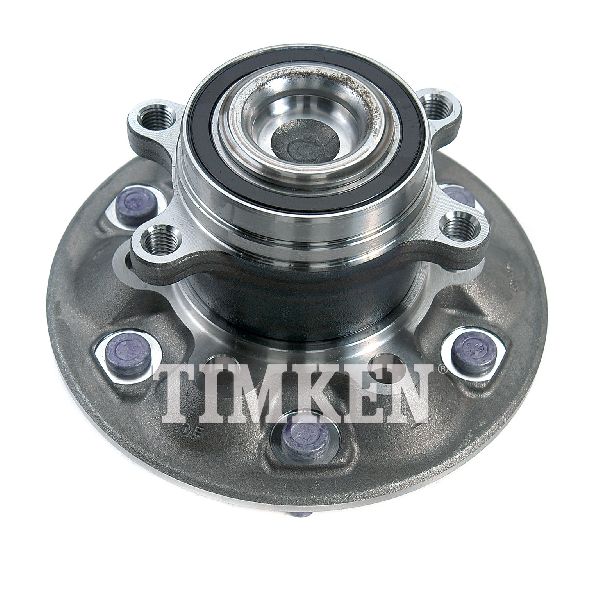
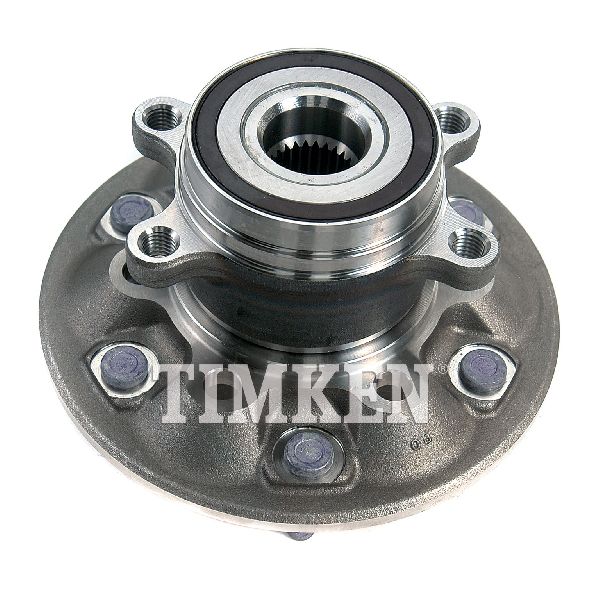
- Front Wheel Hub and Bearing Assembly
(OEM #ACDelco FW421 (GM 15946731))— This is the most common cause of code C0035, as the integrated wheel speed sensor or its magnetic reluctor ring fails from corrosion or wear.
Trusted brands: ACDelco (OEM), Timken (HA590243), MOOG, SKF
OEM price range: $220-$280
Aftermarket price range: $150-$220 - Front Axle Spindle Nut — This is a single-use, torque-to-yield nut that must be replaced any time it is removed, according to service procedures and owner experiences.
Trusted brands: Dorman, ACDelco
OEM price range: $10-$20
Aftermarket price range: $5-$15
Related Codes That Often Appear With This One
- C0040 — Right Front Wheel Speed Sensor Circuit fault. It's common for both front wheel hubs to fail around the same time due to similar exposure to age and elements.
- C0035 5A — This is a GM-specific sub-code indicating the signal from the wheel speed sensor is 'not plausible'. This often points directly to a problem with the magnetic reluctor ring on the hub assembly, such as rust jacking or debris.
- C0035 18 — This GM sub-code for 'Low Signal Amplitude' is also specifically mentioned in TSBs and often relates to debris on the magnetic encoder ring causing a weak signal.
- C0035 0F — This GM sub-code indicates an 'Erratic Signal'. This is a classic symptom of a cracked, warped, or debris-covered reluctor ring.
Technical Service Bulletins (TSBs) & Recalls
- PIC5428G: Mentions that DTCs C0035-C0050 can be set due to ferrous debris on the magnetic encoder ring. Recommends inspection and cleaning before component replacement. It explicitly lists the 2009-2012 Colorado and Canyon.
- 17-NA-047: This bulletin supersedes PIC5428G and contains similar information about cleaning the magnetic encoder ring, cautioning against using magnetic tools.
Platform-Specific Known Issues
- GM Technical Service Bulletin #PIC5428G directly addresses this family of codes (C0035-C0050) across many GM vehicles, including the Colorado/Canyon. It instructs technicians to inspect the magnetic encoder ring for ferrous debris and clean it before replacing parts. It notes that in many cases, cleaning the ring is sufficient to fix the fault.
- The use of low-quality aftermarket hubs has been reported to cause persistent C0035 codes, as the sensor signal may not match OEM specifications, confusing the EBCM.
Mechanic-Grade Diagnostic Values
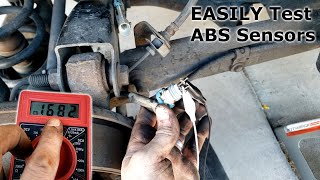
- Wheel Speed Sensor AC Voltage Output — expected: Greater than 100mV (0.1V) AC when spinning the wheel by hand. Voltage should increase with speed.. Failure: A reading of 0V or a voltage that does not increase as the wheel is spun indicates a failed sensor or a problem with the tone ring.
- Wheel Speed Sensor Resistance — expected: Approximately 800 - 1,700 Ohms (passive sensor type). The key is to compare the reading with the sensor on the opposite side; they should be very close.. Failure: A reading of OL (Open Loop) or 0 Ohms indicates a failed sensor.
- Sensor Supply Voltage (at harness connector) — expected: 4.5V - 5.5V DC with key on, engine off.. Failure: Voltage below 4.0V or no voltage indicates a problem with the wiring from the EBCM or the EBCM itself.
Hidden / Shadow Codes Worth Checking
- C0035 0F: Signal Erratic. Indicates the EBCM is receiving a signal, but it is unstable or jumping around, which is a classic sign of a cracked or debris-covered tone ring. (see via A professional GM-capable scan tool (e.g., GDS2, Tech2) that can read ABS module symptom bytes.)
- C0035 18: Low Signal Amplitude. Indicates the signal from the sensor is too weak. This can be caused by an excessive air gap between the sensor and ring, or metallic debris on the magnetic ring. (see via A professional GM-capable scan tool (e.g., GDS2, Tech2) that can read ABS module symptom bytes.)
- C0035 5A: Signal Not Plausible. Indicates the sensor's reading does not make sense when compared to other vehicle sensors, like the other wheel speeds. This often points to a damaged tone ring or an incorrect aftermarket part. (see via A professional GM-capable scan tool (e.g., GDS2, Tech2) that can read ABS module symptom bytes.)
Wiring & Ground Locations

- EBCM (Electronic Brake Control Module) — On the inner left frame rail, beside the transmission.. This module receives the signal from the wheel speed sensor. All wiring for the sensor ultimately terminates here, and it is the source of power and ground for the sensor circuit.
- SP105 (Splice Pack) — Driver's side of the engine bay, near the battery.. This is a major ground splice pack that provides a ground path for the EBCM. Corrosion or poor connections in this splice pack are a known issue on this platform and can cause various electrical problems, including ABS faults.
- SP106 (Splice Pack) — Passenger side of the engine bay, behind the engine airbox.. This is another major ground splice pack that provides a ground path for the EBCM. Like SP105, it is a common source of grounding issues.
- G103 — Lower left side of the engine.. This is a primary engine ground point. While not directly tied only to the ABS, a poor connection here can introduce electrical noise and voltage issues that affect various modules, including the EBCM.
Real Owner Repair Stories
- Chevrolet Forum user (2013 Chevrolet Equinox (shares similar EBCM logic)) — ABS pulsating aggressively, followed by ABS and Traction Control lights, "Service Stabilitrak" message.
❌ Tried (didn't work) Replacing the wheel speed sensor., Replacing the entire wheel hub/bearing assembly with an OEM part.
✅ What actually fixed it The user's issue persisted after replacing both the sensor and the hub, pointing towards a wiring or EBCM issue. The thread documents the frustration of replacing common parts without a fix, highlighting the need to test the wiring harness thoroughly. - YouTube Technician Video (Chevy Sonic) (2012 Chevrolet Sonic) — C0035 code, ABS module clicking and ratcheting, corrupt/intermittent wheel speed signal viewed on an oscilloscope.
❌ Tried (didn't work) Initial inspection of the sensor and wiring.
✅ What actually fixed it After replacing the sensor, the problem returned. A deeper inspection revealed a broken plastic spacer that was covering part of the magnet on the wheel bearing. Replacing the spacer provided a permanent fix, showing that even minor physical obstructions can corrupt the signal. - YouTube Technician Video (Chevy Impala) (2014 Chevrolet Impala (shares similar wiring design)) — ABS light on with code C0035.
❌ Tried (didn't work) Replacing the wheel bearing (twice)., Replacing the Electronic Brake Control Module (EBCM).
✅ What actually fixed it The technician found that the sensor wire was broken *inside* the insulation near the connector pigtail. The insulation would stretch when pulled, indicating the copper wire inside was severed. Replacing the pigtail harness finally resolved the code.
Helpful Videos
Used OEM Parts in Stock


New Aftermarket Parts Available


The information in this article is provided for general reference and educational purposes only. Vehicle specifications, procedures, and part compatibility can vary by production date, trim level, and region. Always consult your vehicle's factory service manual and verify part numbers before purchasing or performing repairs. Safety-critical components such as airbags, seat belts, and braking systems should be installed by a qualified professional.
- Chevrolet COLORADO:
- 🎬 Helpful Videos
- 🛍️ Shop This Part
- What's Unique About the 2009-2012 Chevrolet COLORADO
- Diagnostic Flowchart
- Symptoms You May Notice
- Most Likely Causes
- Rare But Worth Checking
- Diagnosis Steps
- Parts You'll Likely Need
- Related Codes That Often Appear With This One
- Technical Service Bulletins (TSBs) & Recalls
- Platform-Specific Known Issues
- Mechanic-Grade Diagnostic Values
- Hidden / Shadow Codes Worth Checking
- Wiring & Ground Locations
- Real Owner Repair Stories
- 🎟️ Get 5% Off