

C0035 on 2008-2015 Buick Enclave: ABS Light Causes and Fixes
This code means a problem with the left front wheel speed sensor circuit. On the Enclave and its platform mates (Traverse, Acadia), this is almost always a failed sensor inside the wheel hub assembly, requiring the replacement of the entire hub. Less common causes include metallic debris on the hub's magnetic encoder ring or a damaged wiring harness.
- C0035 on a Buick Enclave means there's a problem with the left front wheel speed sensor circuit.
- The most likely cause is a failed wheel hub assembly, which contains the non-serviceable sensor and magnetic encoder ring.
- Before replacing the hub, inspect the wiring for chafing against the CV axle and check for metallic debris on the hub's magnetic ring, as cleaning it can sometimes fix the problem per GM TSBs.
- This is a safety-critical repair, as the fault disables ABS and StabiliTrak. Professional installation is recommended if you are not experienced with brake and suspension work.
What's Unique About the 2008-2015 Buick ENCLAVE

On the 2008-2015 Buick Enclave and its GM Lambda platform mates, the wheel speed sensor is not a standalone, easily replaceable part. Instead, it is integrated into the sealed wheel hub and bearing assembly. Furthermore, these vehicles use a magnetic encoder ring on the inboard side of the hub, which can attract metallic debris, leading to signal dropouts and triggering the C0035 code. A series of GM Technical Service Bulletins (culminating in TSB 17-NA-047, which replaced PIC5428G) specifically notes that cleaning this debris can often resolve the issue without replacing parts.
Diagnostic Flowchart
Tap your situation to follow the diagnostic path that matches what you're seeing on this vehicle.
Symptoms You May Notice
- ABS warning light is on
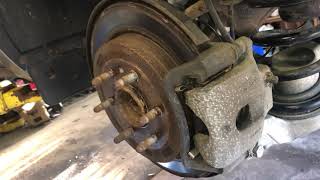
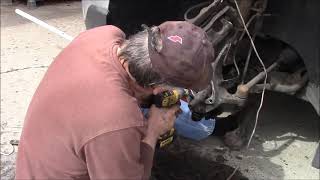
- "Service StabiliTrak" or "Service Traction Control" message displayed on the Driver Information Center (DIC) 🎬 Watch: How to fix common ABS and traction control warnings
- Traction Control or StabiliTrak systems are disabled
- A grinding, clicking, or ratcheting noise from the wheels at low speeds, which can be the ABS pump activating unnecessarily due to the bad signal.
- A heavier steering feel at low speeds (if equipped with electric power steering), often accompanied by a "Service Steering" message and code U0415.
- The magnetic encoder ring on the hub may be visibly cracked, broken, or missing entirely.
- Replacing only the wheel speed sensor, which is not possible on this vehicle as it is integrated into the hub.
- Replacing the EBCM before thoroughly testing the hub, wiring, and checking for debris.
- Ignoring the wiring harness, which can be the true culprit even if the hub appears to be the obvious cause.
Most Likely Causes

- Failed Wheel Hub and Bearing Assembly 🔴 High Probability The wheel speed sensor is integrated into the hub assembly. The internal sensor fails, the bearing itself wears out causing excessive movement that disrupts the sensor signal, or the magnetic encoder ring cracks and breaks apart.
How to confirm: Use an ABS-capable scan tool to monitor live data from all four wheel speed sensors while driving. If the left front sensor reads 0 mph or shows erratic data while the others read correctly, the hub assembly is the likely culprit.
Typical fix: Replace the entire left front wheel hub and bearing assembly. This is the most common and definitive repair.
Est. part cost: $80-$250 - Debris on Magnetic Encoder Ring 🟡 Medium Probability The hub's magnetic encoder ring can attract metallic debris (ferrous material) from road grime and brake wear. This buildup interferes with the sensor's ability to read the wheel's rotation, causing an erratic signal.
How to confirm: Visually inspect the inboard side of the wheel hub for metallic shavings or rust buildup stuck to the brown magnetic ring. This may require removing the hub for a clear view.
Typical fix: Carefully clean the debris from the magnetic encoder ring using a non-magnetic soft bristle brush and compressed air or mild soap and water. Do not use magnets or harsh solvents for cleaning as this can damage the encoder.
Est. part cost: $0 - Damaged Wiring or Connector ⚪ Low Probability The wiring harness leading to the wheel hub is exposed to road debris, moisture, and constant suspension movement. It can chafe against the CV axle or control arm, leading to breaks or corrosion in the connector pins. Owners have reported the harness being mis-routed from the factory or previous repairs, causing it to rub on the CV axle.
How to confirm: Visually inspect the wiring harness from the hub up into the wheel well for any signs of damage, fraying, or corrosion. Unplug the connector and check for bent or corroded pins. A common failure point is where the harness flexes near the control arm.
Typical fix: Repair the damaged section of wire or replace the connector pigtail. GM offers a repair harness (part number varies, e.g., 10340314 for some models).
Est. part cost: $15-$50
Rare But Worth Checking
- Failed Electronic Brake Control Module (EBCM): This is the least likely cause and should only be considered after all other possibilities (sensor, hub, wiring) have been definitively ruled out. It is an expensive part to replace and typically would present with multiple wheel speed sensor codes, not just one.
Diagnosis Steps
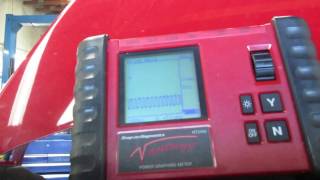
- Connect an ABS-capable scan tool and confirm the presence of code C0035. 🎬 See a professional walkthrough of the C0035 diagnostic process Note any specific symptom bytes (e.g., 18, 5A, 0F) which are mentioned in GM TSBs.
- Use the scan tool to view live data for all four wheel speed sensors.
- Drive the vehicle slowly (parking lot speed) and observe the speed readings. Confirm that the Left Front (LF) sensor reads differently (e.g., 0 mph, erratic, lagging) than the other three sensors.
- Raise and safely support the front of the vehicle. Remove the left front wheel.
- Visually inspect the wiring harness and connector going to the wheel hub. Look for chafing (especially near the CV axle), melting, corrosion, or loose connections.
- Spin the hub by hand and inspect the magnetic encoder ring on the inboard side for any accumulated metallic debris or physical damage like cracks.
- If debris is present, carefully clean it off with a soft nylon brush and air/mild soap. Do not use magnetic tools.
- If no debris is found, the wiring is intact, and the encoder ring is not damaged, the wheel hub/bearing assembly is faulty and contains a failed internal sensor.
- Replace the left front wheel hub and bearing assembly.
- Clear the DTCs with the scan tool and perform a test drive to ensure the light does not return.
Parts You'll Likely Need

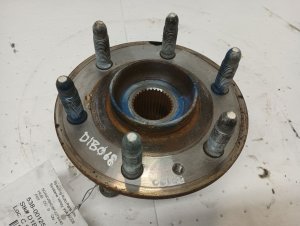
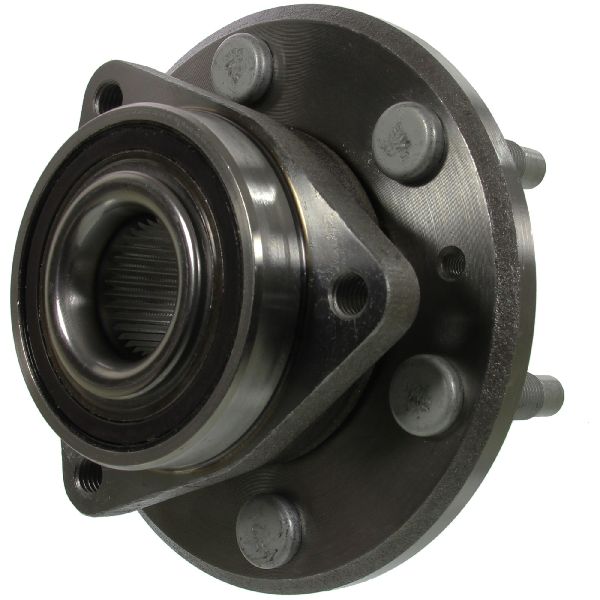
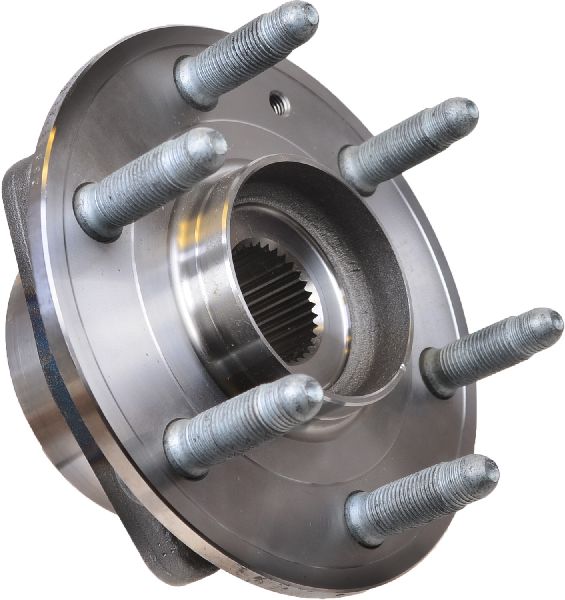
- Front Wheel Hub and Bearing Assembly
(OEM #ACDelco FW403 or 19434718 (GM OE))— This is the most common failure. The internal wheel speed sensor fails or the bearing develops play, causing the code. The sensor is integrated and cannot be replaced separately.
Trusted brands: ACDelco (OE), Timken (HA590227), MOOG (513277), SKF (BR930532), TRQ
OEM price range: $150-$250
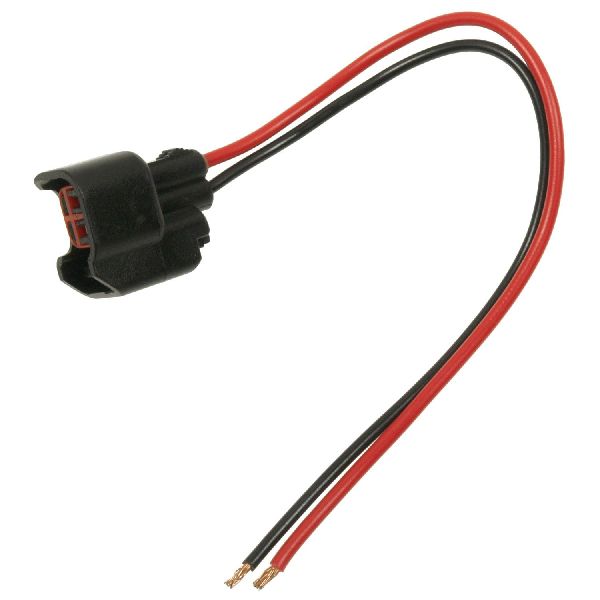
Aftermarket price range: $80-$160 - ABS Wheel Speed Sensor Harness Pigtail
(OEM #10340314 (Example GM P/N, verify for specific application))— Needed if the wiring or connector is found to be the source of the fault due to chafing or corrosion.
Trusted brands: ACDelco, Dorman
OEM price range: $30-$60
Aftermarket price range: $15-$40
Related Codes That Often Appear With This One
- C0040 — This is the code for the Right Front Wheel Speed Sensor. It's common for both front wheel bearings to wear out at a similar rate, potentially causing both codes to appear around the same time.
- U0415 — On models with electric power steering, a loss of a wheel speed sensor signal can cause the Power Steering Control Module to set this code, indicating it received invalid data from the EBCM. This often results in a 'Service Steering' message and increased steering effort.
Technical Service Bulletins (TSBs) & Recalls

- PIC5428G (and its predecessors/successors like 17-NA-047): Addresses DTCs C0035-C0050 with symptom bytes 18, 5A, or 0F. Advises technicians to inspect for and clean debris from the magnetic encoder ring on the wheel bearing before replacing parts. Also notes associated symptoms like grinding noises or heavy steering with code U0415.
Platform-Specific Known Issues
- A widely documented issue on this platform is the accumulation of ferrous debris on the magnetic encoder ring of the wheel bearing, which can cause an erratic signal without the bearing itself being mechanically failed. GM issued multiple TSBs (PIC5428 series, superseded by 17-NA-047) to address this, recommending inspection and cleaning before parts replacement.
- In some cases, the magnetic encoder ring can physically delaminate or break apart from the hub assembly, causing a complete loss of signal.
- The routing of the ABS sensor wire is critical. If not secured properly, it can easily make contact with the rotating CV axle, leading to a chafed wire and an open or shorted circuit.
Mechanic-Grade Diagnostic Values
- Wheel Speed Sensor Supply Voltage — expected: 4.5 - 5.5 Volts at the sensor connector with ignition on.. Failure: A reading below 4.0 Volts points to a wiring or EBCM supply issue.
- Wiring Harness Resistance (Signal or Reference Circuit) — expected: Less than 2.0 Ohms.. Failure: A reading higher than 2.0 Ohms indicates an open or high resistance in the harness between the EBCM and the wheel hub connector.
- Wiring Harness Short to Ground Test — expected: Less than 1.0 Volt between the signal/reference circuit pin at the EBCM connector (disconnected) and a known good ground.. Failure: A reading greater than 1.0 Volt indicates a short to voltage in that circuit.
- Sensor Signal Output (AC Voltage) — expected: At least 200 millivolts (0.2 VAC) when spinning the wheel at about one revolution every two seconds.. Failure: No voltage or voltage significantly below this threshold suggests a failed sensor/encoder ring.
Hidden / Shadow Codes Worth Checking
- C0035 with symptom byte 18, 5A, or 0F: These symptom bytes, referenced in GM TSBs, point specifically towards a mechanical fault with the sensor reading, such as an erratic signal due to debris on the encoder ring, rather than a purely electrical circuit failure. (see via A professional scan tool like the GM GDS2 or Tech2 is typically required to view these specific symptom bytes.)
Scan Tool Commands That Help

- GDS2 / Tech2 / ABS-Capable Scan Tool: Live Data Graphing — This is the primary diagnostic step. Graphing all four wheel speed sensors simultaneously during a slow test drive makes it easy to spot which sensor is dropping out, reading erratically, or not reading at all compared to the others.
- Advanced Scan Tool: EBCM Self-Test — After verifying the hub and wiring are good, commanding a module self-test can help confirm a suspected internal failure of the Electronic Brake Control Module (EBCM).
Wiring & Ground Locations
- G103 / G104 — The primary grounds for the front chassis components are typically located on the frame rails in the engine compartment. For the Enclave and similar platforms, look for a ground point labeled G103 on the left frame rail. On some other GM vehicles, the EBCM is grounded at G104 on the transaxle housing. A poor ground at these locations can cause various ABS faults.. A corroded or loose EBCM ground can cause erratic behavior and fault codes for various sensors, including C0035, even if the sensor and wiring are perfectly fine.
- EBCM Connector — The Electronic Brake Control Module is located on the ABS hydraulic block, typically low in the engine bay. It has a large, multi-pin connector (often 38-pin).. This connector is the termination point for the wheel speed sensor harness. Testing for voltage, ground, and continuity must be done at this connector to isolate a wiring problem from an EBCM problem.
Real Owner Repair Stories
- Reddit user mittyatta in r/chevycolorado (Chevy Colorado (similar GM ABS system)) — ABS light with code C0035.
❌ Tried (didn't work) Replacing the standalone ABS sensor (not applicable to Enclave, but shows the thought process)., Checking and replacing all ABS-related fuses.
✅ What actually fixed it The final fix was replacing the entire front hub assembly. The cause was not just debris, but the magnetic reluctor rings on the hubs were completely rusted out, which tricked the sensor into thinking the wheel was locked up. - YouTube channel 'Matt Fixes All' (General GM vehicle) — Wheel bearing noise and eventual ABS light.
❌ Tried (didn't work) Replacing the original hub with a MOOG-branded hub assembly, which failed within a few hundred miles., Replacing the faulty MOOG hub with a second warranty-replacement MOOG hub, which also failed quickly.
✅ What actually fixed it After two premature failures with aftermarket MOOG hubs, the owner purchased an OEM ACDelco hub. Upon inspection, the ACDelco part was identified as a Timken bearing made in the USA. This part resolved the issue permanently. The story highlights potential quality control issues with certain aftermarket brands.
OEM Part Supersession History
Varies→Varies— Brand Quality & Sourcing
Heads up: There is significant anecdotal evidence from mechanics and DIYers that the quality of some aftermarket brands, like MOOG, has declined over the years, with some parts failing prematurely. It is also common for different brands to source from the same manufacturer, leading to situations where a premium-priced Timken box might contain a Koyo or even a MOOG part. For critical components like wheel hubs, many experienced mechanics recommend using the OEM part (ACDelco) or a known high-quality equivalent like Timken, and inspecting the part upon arrival.
Model Year Variations Within This Range
- 2008-2015: The Buick Enclave received a major facelift for the 2013 model year, with updated styling, a new dashboard with the IntelliLink system, and retuned suspension. However, the core powertrain (3.6L V6) and ABS components related to code C0035 were not significantly changed. The relevant TSB (PIC5428G) covers model years 2008 through 2014, confirming the fault and diagnostic procedures are consistent across the pre- and post-facelift first-generation models.
Helpful Videos

Used OEM Parts in Stock
New Aftermarket Parts Available


The information in this article is provided for general reference and educational purposes only. Vehicle specifications, procedures, and part compatibility can vary by production date, trim level, and region. Always consult your vehicle's factory service manual and verify part numbers before purchasing or performing repairs. Safety-critical components such as airbags, seat belts, and braking systems should be installed by a qualified professional.
- Buick ENCLAVE:
- 🎬 Helpful Videos
- 🛍️ Shop This Part
- What's Unique About the 2008-2015 Buick ENCLAVE
- Diagnostic Flowchart
- Symptoms You May Notice
- Most Likely Causes
- Rare But Worth Checking
- Diagnosis Steps
- Parts You'll Likely Need
- Related Codes That Often Appear With This One
- Technical Service Bulletins (TSBs) & Recalls
- Platform-Specific Known Issues
- Mechanic-Grade Diagnostic Values
- Hidden / Shadow Codes Worth Checking
- Scan Tool Commands That Help
- Wiring & Ground Locations
- Real Owner Repair Stories
- OEM Part Supersession History
- Model Year Variations Within This Range
- 🎟️ Get 5% Off