

OBD-II Code C0033: Right Front Wheel Speed Signal Fault
The Ultimate 2026 Guide to Diagnosing and Fixing C0033
- Code C0033 disables your ABS and traction control, increasing emergency stopping distances by up to 20% on wet surfaces.
- This code indicates a signal quality problem, meaning the root cause is usually a failing wheel bearing or cracked tone ring, not a dead sensor.
- Always diagnose C0033 by graphing live wheel speed data on a scanner; a choppy signal from the right front wheel confirms a mechanical fault.
- If C0033 appears immediately after a wheel bearing replacement, the new bearing was likely installed backward or damaged during the press procedure.
What Does C0033 Mean?

Code C0033 means the ABS module detects an erratic, intermittent, or illogical signal from the right front wheel speed sensor. When this signal quality degrades, the computer disables safety features like ABS and traction control as a precaution, illuminating warning lights on your dashboard.
Technical definition: The SAE definition is "Right Front Tone Wheel (Subfault)" or "Right Front Wheel Speed Sensor (Subfault)". This specifies a signal quality failure (like periodic dropouts) rather than a simple open or short circuit (which triggers C0034). It points directly to a mechanical issue with the tone wheel, wheel bearing, or sensor air gap.
Can I Drive With C0033?
Yes, But With Caution. Yes, but drive with extreme caution. Your Anti-lock Braking System (ABS), Traction Control (TCS), and Electronic Stability Control (ESC) are disabled. This causes wheels to lock during hard braking, increasing stopping distance by up to 20% on wet surfaces and creating a high skid risk. On vehicles using this sensor for transmission logic, you will experience harsh shifting. Repair promptly to restore these critical safety systems.
Common Causes

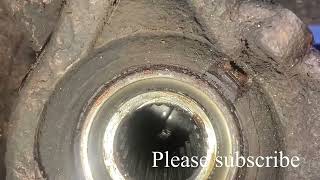
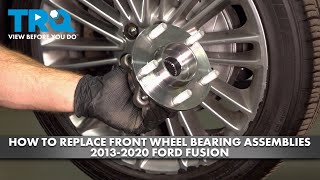
- Defective Wheel Bearing or Hub Assembly (Very Common) — A failing wheel bearing introduces excessive play (wobble), constantly changing the distance between the sensor and the tone ring, which corrupts the signal. In modern vehicles with integrated tone rings, this is the primary mechanical cause of C0033. 🎬 Watch: Replacing a Ford Transit hub bearing to fix C0033
- Dirty, Damaged, or Corroded Tone Wheel (Very Common) — The tone wheel (reluctor ring) gets coated in metallic brake dust, rust, or torn CV axle grease, blocking the magnetic signal. Road debris cracks the ring, or rust causes it to swell and delaminate, creating an erratic reading.
- Damaged or Corroded Wiring/Connector (Very Common) — Exposed to constant vibration and moisture, the sensor's wiring harness breaks internally or chafes against suspension components. Corroded connector pins also cause intermittent signal dropouts.
- Faulty Right Front Wheel Speed Sensor (Common) — The sensor fails internally from heat cycles and harsh conditions. However, mechanics frequently misdiagnose C0033 as a bad sensor when the actual fault lies with the tone ring or wheel bearing.
- Incorrect Air Gap Between Sensor and Ring (Less Common) — Rust buildup under the sensor's mounting point or hub assembly ('rust jacking') pushes the sensor away from the ring. This increases the air gap beyond the typical 0.4 mm to 1.3 mm specification, weakening the signal.
- Incorrect Tire Size or Pressure (Less Common) — A right front tire with significantly lower air pressure or a different size rotates at a different speed than the others. The ABS module interprets this consistent speed mismatch as a signal fault.
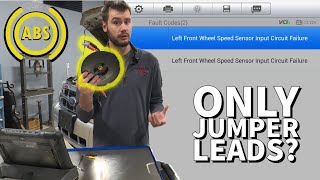
- Failing ABS Control Module (Rare) — The ABS control module suffers an internal circuit failure for the right front wheel channel. Consider this only after thoroughly testing the sensor, tone ring, 🎬 See how to test ABS wheel speed sensors yourself bearing, and wiring.
Symptoms

- ABS and Traction Control Lights On — The ABS and Traction Control/ESC warning lights illuminate and remain on, indicating these systems are disabled.
- ABS and Traction Control Inoperative — Wheels lock during hard braking, and tires spin freely when accelerating on slippery surfaces.
- Brake Pedal Pulsation at Low Speeds — As you slow below 10 mph, an erratic signal tricks the ABS module into thinking the wheel is locking. The ABS pump activates unnecessarily, causing a pulsating brake pedal just before stopping.
- Speedometer Malfunction — On vehicles that use the right front sensor for speed data (like many Ford models), the speedometer drops to zero, reads incorrectly, or bounces erratically.
Diagnostic Flowchart
Tap your situation to follow the diagnostic path that matches what you're seeing on this code.
Common Fixes & Costs
- Replacing Front Wheel Hub Assembly (with integrated ring) — Parts: $150-$450, Labor: $175-$450, ~2 hr book time (Professional)
- Cleaning Tone Wheel and Sensor — Parts: $5-$15, Labor: $60-$120, ~1 hr book time (DIY)
- Replacing Right Front Wheel Speed Sensor — Parts: $40-$150, Labor: $90-$140, ~1 hr book time (DIY)
- Repairing Wiring or Connector — Parts: $10-$30, Labor: $100-$200, ~1.5 hr book time (Intermediate)
- ABS Module Repair or Replacement — Parts: $200-$800, Labor: $150-$300, ~1.8 hr book time (Professional)
Used vs. New Parts: Buying Guide
When a used part is worth it: For a critical wear part like a wheel hub assembly, buying new is strongly recommended. A used part only makes sense on an older, low-value vehicle where budget is the absolute priority and you can source a part from a verified low-mileage donor.
Donor-vehicle mileage cap: roughly under 50000 miles for the part to have meaningful remaining life.
Donor quality checklist:
- Verify donor vehicle was in an accident, not scrapped for a failed engine or wear-related issue.
- Avoid parts from rust-belt regions to minimize risk of corrosion.
- Match the part number exactly; visual matches are not sufficient as magnetic encoders differ.
Decision logic:
- If The part is a wheel hub assembly → Buy a new, high-quality aftermarket (e.g., Timken, MOOG, SKF) or OEM part. The labor cost to replace a failed used part negates any initial savings.
- If Vehicle is >150K miles and budget is tight → A very low-mileage used hub is a high-risk option. Expect a significantly shorter lifespan.
- If The part is an ABS Control Module → A used module from a reputable recycler is a viable option. Ensure there is a warranty and return policy.
Warranty tradeoff: Used parts typically have a 30-90 day warranty. Aftermarket new parts range from 1-year to 'lifetime' warranties. New OEM parts usually carry a 1-2 year warranty and guarantee correct function.
Worst-case if a used part fails: $400-$900 if a used hub assembly fails prematurely, requiring a second replacement part plus a second payment for labor.
What Happens If You Wait — Timeline
- 0-1 month: ABS/TCS lights illuminate. You hear a faint humming or droning noise from the front wheel at highway speeds. The underlying wheel bearing is starting to fail. (MPG impact: 0%% · Added cost: $0 (Safety risk is the primary cost))
- 1-3 months: The noise progresses to a distinct grinding or growling that gets louder with speed and changes pitch when turning. Uneven tire wear begins. (MPG impact: 0-1%% · Added cost: $50-$150 (potential for one new tire due to uneven wear))
- 3-6 months: Grinding is loud and constant. You feel vibration in the steering wheel. The wheel has visible play. The bearing generates extreme heat, risking damage to the hub and spindle. (MPG impact: 1-2%% · Added cost: $200-$500 (damage to the hub assembly beyond just the bearing))
- Immediate risk after Stage 3: Catastrophic failure. The bearing seizes, locking the wheel and causing a loss of control. The wheel assembly separates from the vehicle, destroying the knuckle, axle, and fender. (MPG impact: N/A% · Added cost: $1,000 - $2,500+ (cost to repair seized bearing damage and suspension components))
Cost of Not Fixing It
- Immediate: ABS, Traction Control, and Stability Control are disabled. Increased risk of skidding and longer stopping distances in emergency braking. Potential for incorrect speedometer readings or harsh transmission shifting. (Added cost: N/A (Safety Risk))
- 1-6 months: Continued driving on a worn wheel bearing causes uneven tire wear and strains transmission components due to incorrect speed data. The safety risk remains high. (Added cost: $150-$400 (for a new tire))
- 6+ months: A severely worn wheel bearing fails catastrophically, leading to the wheel separating from the vehicle. This causes a major accident and extensive damage to the suspension, knuckle, and axle. (Added cost: $1500-$4000+)
Diagnosis Steps

- Read Codes and View Live Data
Use an ABS-capable OBD-II scanner to confirm C0033. Access the live data stream for all four wheel speed sensors. Drive safely and watch the graph. Three sensors should show smooth, identical lines. A problematic right front sensor shows a choppy, erratic line or drops to zero intermittently. This confirms a mechanical signal fault.
Tools: ABS-capable OBD-II Scanner with Live Data (Beginner) - Check for Wheel Bearing Play
Safely raise the front end. Grasp the right front tire at 12 and 6 o'clock and rock it back and forth. Any perceptible play, clicking, or grinding noise indicates a worn wheel bearing—a primary cause of C0033.
Tools: Jack, Jack Stands (Intermediate) - Thorough Visual Inspection
Remove the right front wheel. Inspect the sensor's wiring harness for chafing, melting, or green corrosion in the connector. Examine the visible portions of the tone ring for cracks, missing teeth, or heavy rust.
Tools: Lug Wrench, Flashlight (Beginner) - Clean Sensor and Tone Ring
Remove the bolt holding the ABS sensor and pull it out. Clean the magnetic tip. Use brake cleaner and a soft brush to thoroughly clean the teeth or magnetic surface of the tone ring to remove metallic brake dust buildup.
Tools: Socket Set, Brake Cleaner, Soft Brush, Safety Glasses (Intermediate) - Check Tire Size and Pressure
Confirm all four tires are the exact same size. Use a tire pressure gauge to ensure all tires are inflated to the pressure listed on the driver's door jamb sticker.
Tools: Tire Pressure Gauge (Beginner) - Check Air Gap
Use a non-magnetic feeler gauge to measure the distance between the sensor tip and the tone ring. The specification typically falls between 0.4 mm and 1.3 mm. An excessive gap caused by rust buildup triggers C0033.
Tools: Non-Magnetic Feeler Gauge, Service Manual (Advanced) - Measure AC Voltage Output (Passive Sensors)
For older 2-wire passive sensors, set a multimeter to AC Volts. Connect probes to the sensor pins and spin the wheel by hand. You should see at least 100-200mV AC. No voltage suggests a bad sensor, excessive air gap, or damaged tone ring.
Tools: Multimeter with mV AC setting (Advanced) - Measure Sensor Resistance (Passive Sensors)
Disconnect the 2-wire sensor. Set a multimeter to Ohms (Ω). Measure resistance between the pins. A common range is 800-2,000 Ω (check service manual). A reading of 'OL' or near 0 ohms indicates a failed sensor. Note: This does not work on modern 3-wire active sensors.
Tools: Multimeter, Vehicle-Specific Service Manual (Advanced) - Test with an Oscilloscope
Connect an oscilloscope to the sensor's signal and ground wires. Spin the wheel to view the waveform. A signal with missing waves, erratic amplitude, or 'noise' points directly to a damaged tone ring or excessive wheel bearing play.
Tools: Automotive Oscilloscope, Back-probe Pins (Professional)
When This Code Triggers (Freeze-Frame Conditions)
- Vehicle Speed: 20-55 mph (Steady driving or turning)
- Braking Status: Not Braking (The signal is monitored continuously, not just during braking events.)
- Time After Ignition On: > 30 seconds (Module requires a period of inconsistent data to confirm a fault.)
- System Voltage: 13.0-14.5V (Normal operating voltage; low voltage sets erroneous codes.)
Related Codes
- C0034 — The sister code, 'Right Front Wheel Speed Sensor Circuit'. C0033 indicates a problem with signal quality (mechanical), while C0034 points to a purely electrical problem like a broken wire or short circuit.
- C0031 — The identical fault code but for the Left Front Wheel. If you have both codes simultaneously, suspect a systemic issue like a shared wiring harness, ABS module failure, or mismatched front tire sizes.
- U0415 — Means 'Invalid Data Received from ABS Control Module'. The ABS module detects the C0033 fault, shuts down the ABS/TCS systems, and broadcasts an 'invalid data' message. Fixing C0033 clears U0415.
- C0035 — A general code for 'Front Right Wheel Speed Sensor Circuit Malfunction'. Some manufacturers use C0033 for mechanical tone wheel issues and C0035 for general sensor faults. The diagnostic process is identical.
Climate & Environmental Factors
- Road Salt and Humidity (Rust Belt Regions): Salt and moisture accelerate corrosion of the tone ring, wiring connectors, and hub assembly. It causes 'rust jacking,' where rust builds up between the hub and knuckle, increasing the sensor air gap and triggering C0033.
- Extreme Cold: Wiring harnesses become brittle and crack from vibration. Water that ingresses into a connector or sensor housing freezes and expands, destroying internal components.
- Heavy Brake Dust: Performance driving generates significant metallic brake dust. This dust accumulates on the magnetic tip of the sensor and the tone ring, weakening the signal.
How to Talk to a Mechanic About This Code
Say this: "I have an ABS light on and a C0033 code. I'd like to schedule a diagnostic. Please start by graphing the live data from all four wheel speed sensors, and then perform a physical inspection of the right front wheel bearing, tone ring, and wiring harness before recommending a repair."
This language directs the mechanic to perform a proper diagnosis for a signal quality fault (C0033) rather than just replacing the sensor, which is a common misdiagnosis. It focuses their attention on the most likely mechanical causes.
Avoid saying:
- 'My ABS light is on, can you fix it?' (too vague, invites expensive guesses)
- 'Just replace the right front ABS sensor.' (You may be asking for the wrong repair)
- 'Do whatever you think is best.' (gives up all control)
Questions to ask before authorizing the repair:
- What did the live data graph for the right front wheel speed sensor show compared to the others?
- Did you find any looseness or play in the wheel bearing?
- Were you able to visually inspect the tone ring, and was it cracked, damaged, or covered in debris?
- If you are recommending a hub assembly, what brand is it and what is the warranty on the part and labor?
- How did you rule out a simple wiring or connector problem?
Where to Take It: Dealer vs Independent vs Chain
- Dealer:
Best for: Vehicles still under warranty, Known manufacturer-specific issues (e.g., GM 'rust jacking' TSB), Repairs where you want a guaranteed OEM part and are not price-sensitive
Downsides: Highest labor rates and part costs., May recommend a full hub assembly when a simpler fix is possible. (Typical cost: +50% vs. baseline) - Independent Shop:
Best overall fit. A reputable independent shop with an ABS-capable scanner offers the best balance of expertise and value for this common repair.
Best for: Out-of-warranty vehicles where cost is a factor., Most C0033 situations, as they are typically mechanical (bearing, wiring) and don't require proprietary software.
Downsides: Shop quality and diagnostic skill vary widely. Vet shops based on reviews and ASE certifications. (Typical cost: +0% vs. baseline) - Chain Shop:
Use with caution. Acceptable if you are certain it's just a bad sensor, but risky for diagnosis. They may not correctly identify a bad bearing or wiring issue.
Best for: Simple part swaps like a sensor replacement if you have already diagnosed the issue yourself.
Downsides: Technicians lack deep diagnostic experience for intermittent or mechanical faults., High pressure to upsell services; may replace parts unnecessarily instead of diagnosing the root cause. (Typical cost: -10% vs. baseline)
When to Walk Away From the Repair
If the estimated repair cost for the C0033 fault exceeds 40-50% of your car's private-party value, pause and consider alternatives.
- Car worth $8000, fix is $750: Fix it. This is a critical safety repair and the cost is well within a reasonable percentage of the vehicle's value.
- Car worth $3500, fix is $850: Borderline. The repair is about 24% of the car's value. If the rest of the car is in good shape, it's worth fixing. If it needs other expensive repairs, consider selling.
- Car worth $2500, fix is $1600: Walk away. The repair cost (for a rare ABS module failure) is over 60% of the car's value. It is not economically sensible to proceed.
What Scan Tool You Need for This Code
Minimum: A scanner that reads and clears ABS/SRS fault codes AND graphs live data from all four wheel speed sensors.
A basic $20 engine code reader cannot communicate with the ABS module. It will not see the C0033 code or the live wheel speed data essential for diagnosing the sensor, bearing, or wiring.
Budget: BlueDriver Pro or Autel AutoLink AL619 (~$99) — Reads and clears the C0033 code from the ABS module and displays live wheel speed sensor data on your screen. This allows you to see the erratic signal from the bad wheel, confirming the fault.
Mid-range: Innova 5610 or Autel MaxiCOM MK808 (~$350) — Provides all functions of the budget pick with a faster tablet interface. Offers bidirectional tests to activate the ABS pump and valves, helping rule out a module issue.
Professional: Autel MaxiSYS Series or Automotive Oscilloscope (~$900-2500+) — Offers full OEM-level diagnostics. An oscilloscope allows a technician to see the raw electrical waveform from the sensor to definitively identify missing tone ring teeth or bearing play.
Rent vs buy: Buy. Free loaner tools from auto parts stores are basic models that cannot read ABS codes or show live data. Investing $100 in a capable scanner saves you a diagnostic fee of the same amount.
How to Clear the Code After You Fix It
- Use an ABS-capable OBD-II scan tool to clear the code from the ABS module.
- Perform the specified drive cycle to allow the module to self-test.
- Re-scan the ABS module to confirm the code has not returned.
Drive cycle (~10 minutes): Drive the vehicle straight ahead at a speed above 20 mph for at least 2 minutes. The ABS light turns off on its own if the repair was successful, as the system confirms all sensor signals are plausible.
Readiness monitors affected: None
Before emissions retest: drive at least 50 miles to fully set monitors.
Watch out for:
- The code returns immediately if the root cause (e.g., bad wheel bearing, damaged tone ring) was not fixed.
- Disconnecting the battery does not clear the code from the ABS module's memory on modern vehicles.
- Basic scanners that only read engine codes cannot clear C0033 from the ABS module.
Will This Fail Emissions / State Inspection?
No — by itself this code doesn't fail OBD inspection (but it can keep readiness monitors from setting, which causes a separate fail).
- California: An active ABS light will NOT fail a standard smog check. However, it fails the comprehensive 'Brake and Lamp Inspection' required for salvage-titled vehicles.
- New York: An illuminated ABS warning light is grounds for failure of the annual state safety inspection.
- Texas: An illuminated ABS warning light is explicitly listed as NOT being a cause for rejection during the state safety inspection. However, an illuminated primary 'BRAKE' light will fail.
Most Commonly Affected Vehicles
- Ford Focus, Fiesta, Transit, Transit Connect (2009-2018) — Extremely prone to this code because the magnetic tone ring is integrated into the wheel bearing seal. The ring is easily damaged during bearing replacement. On 2014+ Transit Connects, this fault causes the speedometer to fail.
- Dodge/Ram Charger, Ram 1500 (2011-2018) — Service manuals explicitly list checking for mismatched tires or incorrect pressure as a primary diagnostic step for C0033-02. On Ram trucks, a bad wheel bearing causing hub play is a very common cause.
- Chevrolet/GMC Silverado, Sierra, Tahoe, Suburban (2007-2014) — Susceptible to 'rust jacking,' where corrosion builds up between the hub assembly and the steering knuckle. This pushes the hub outward, increasing the air gap and causing a weak signal.
- Honda CR-V, Accord, Civic (2005-2016) — Triggered by standard sensor or wiring failures, but also a known symptom of an internal failure of the VSA (Vehicle Stability Assist) modulator-control unit.
- Toyota Camry, Corolla, RAV4 (2007-2018) — Most often related to a failed wheel speed sensor or damage to the wiring harness behind the fender liner. On higher-mileage vehicles, a worn wheel bearing assembly is the primary cause.
- Nissan Altima, Rogue, Sentra (2007-2015) — Commonly associated with sensor failure due to age and heat. Wiring damage from road debris and corrosion at the connector pins must be checked before replacing the sensor.
- Volkswagen Jetta, Golf, Passat (2011-2018) — The plastic sensor housing becomes brittle and cracks, allowing moisture intrusion and failure. Part numbers vary heavily by model year; always verify with VIN.
- BMW 3 Series (E90/E91/E92) (2005-2012) — Corrosion forms under the reluctor ring pressed onto the rear of the axle shaft. The rust causes the ring to crack and expand, hitting the sensor or producing an unusable signal.
- Subaru Outback, Legacy, Forester (2010-2014) — Often appears after a wheel bearing replacement. The cause is frequently a poor-quality aftermarket hub assembly with an improperly magnetized tone ring. Use OEM or premium hubs.
Manufacturer-Specific Notes
- Ford: The magnetic tone ring is integrated into the wheel bearing's dust seal. It is notoriously easy to damage during installation, or the bearing can be pressed in backward, causing an immediate C0033 code. There is no separate tone ring to replace.
- General Motors (GM): Severe corrosion builds up between the aluminum steering knuckle and the steel wheel hub assembly. This 'rust jacking' forces the hub outward, increasing the air gap and causing a weak signal.
- Dodge/Chrysler/Jeep: Highly sensitive to mismatched tire sizes and pressures. Official diagnostic procedures require technicians to verify and correct tire pressures and check for mismatched brands before testing hardware.
- Subaru: Using aftermarket wheel hub assemblies is a leading cause of post-repair C0033 codes. Magnetic encoder rings on cheaper hubs are weak or improperly shielded, leading to a noisy signal the ABS module rejects.
Real Owner Stories
2009 Ford Fiesta - The Classic Post-Repair Misdiagnosis
ABS light came on immediately after a shop replaced the front right wheel bearing. The shop then replaced the ABS sensor, but the C0033 code returned instantly.
What they tried:
- Replacing the right front ABS sensor (failed).
- Scanning the codes, confirming C0033 'Right Front Tone Wheel'.
Outcome: A second mechanic disassembled the hub and found the magnetic encoder ring on the new wheel bearing was physically damaged during installation. Replacing the wheel bearing assembly again with a carefully installed part fixed the issue.
Lesson: If C0033 appears right after a wheel bearing replacement, the new bearing is the prime suspect. The magnetic ring was likely damaged or installed backward. Do not waste money on a new sensor first.
2013 Ford Transit Custom - Speedometer Failure
While driving, the ABS warning light came on, and the speedometer suddenly dropped to zero. The code was C0033.
What they tried:
- The owner tested the ABS sensor, found it open circuit, and replaced it. The fault remained.
Outcome: Forum members advised that on these Transits, the tone wheel is integrated into the wheel bearing. The owner replaced the complete hub assembly, which restored the speedometer and cleared the code.
Lesson: On many Ford vehicles, the right front wheel speed signal drives the speedometer. A C0033 code paired with a dead speedometer almost always requires a hub/bearing replacement, not just a sensor.
2010 Chevy Silverado - The "Easy Fix"
ABS and Traction Control lights came on intermittently on a 150k-mile truck in a Rust Belt state. The C0033 code was present with no other symptoms.
What they tried:
- Removed the wheel and ABS sensor for a visual inspection before ordering parts.
Outcome: The tip of the ABS sensor and the tone ring were covered in a thick paste of metallic brake dust and rust flakes. The owner cleaned the sensor tip and tone ring teeth with brake cleaner. After re-installing, the light stayed off. Total cost: $5.
Lesson: C0033 points to a signal quality issue, and contamination is a frequent cause. Always perform a thorough visual inspection and cleaning before replacing expensive parts.
How to Prevent This Code From Triggering
- Regular Undercarriage Washes in Winter (Monthly during winter in salt-prone regions) — Road salt accelerates corrosion of the tone ring, sensor body, and wiring connectors. Washing the undercarriage minimizes salt buildup.
- Apply Dielectric Grease to Connectors (Whenever the connector is unplugged for service) — Applying dielectric grease to the connector's weather seal prevents moisture intrusion, a leading cause of pin corrosion and signal failure.
- Address Suspension and Tire Issues Promptly (As needed) — Worn shocks or unbalanced tires create excess vibration, accelerating wear on the wheel bearing and leading to premature failure.
- Avoid Deep Water and Mud (Daily habit) — Deep water overwhelms wheel bearing seals, allowing grit to contaminate the grease. This leads to rapid corrosion and bearing wear.
- Use High-Quality Replacement Hubs (During wheel bearing replacement) — Cheap aftermarket hubs often have poorly magnetized or shielded encoder rings that trigger C0033 immediately. Always use OEM or premium aftermarket parts (e.g., Timken, MOOG, SKF).
Frequently Asked Questions
Why did the C0033 code appear right after I replaced my wheel bearing?
The magnetic encoder ring on the new bearing was likely damaged during installation, or the bearing was pressed in backward. The sensor itself may also have been damaged during the repair.
Why is the C0033 code still on after replacing the sensor?
C0033 points to a signal quality issue, which is usually a mechanical problem, not a dead sensor. You must inspect the tone ring for damage, check for wheel bearing play, and verify wiring integrity.
Can I pass an inspection with the C0033 code active?
No. In almost all jurisdictions, an illuminated ABS warning light results in an automatic safety inspection failure. The system must be fully functional.
Can a pothole or hitting a curb cause the C0033 code?
Yes. A sharp impact cracks the tone ring, damages the wheel bearing (causing excessive play), or jolts the wiring harness. These are all primary triggers for this code.
Can a weak battery cause a C0033 code?
Yes. Low system voltage during startup causes electronic modules, including the ABS, to malfunction and set erroneous codes. Address slow-cranking or battery issues before replacing ABS parts.
What is the difference between a C0033 and a C0034 code?
C0033 is a signal quality issue (erratic or choppy data, usually mechanical). C0034 is a complete electrical failure, such as a broken wire or short circuit resulting in zero signal.
What is a tone wheel, and what does it look like?
A tone wheel (reluctor ring) provides the magnetic reference points the ABS sensor reads to determine speed. It is either a traditional notched metal gear or a smooth, magnetized ring built into the wheel bearing seal.
Can incorrect tire pressure cause a C0033 code?
Yes. A severely underinflated tire has a smaller rolling diameter, making it spin faster than the others. The ABS module detects this speed mismatch and flags it as a sensor fault.
Key Takeaways
- Code C0033 disables your ABS and traction control, increasing emergency stopping distances by up to 20% on wet surfaces.
- This code indicates a signal quality problem, meaning the root cause is usually a failing wheel bearing or cracked tone ring, not a dead sensor.
- Always diagnose C0033 by graphing live wheel speed data on a scanner; a choppy signal from the right front wheel confirms a mechanical fault.
- If C0033 appears immediately after a wheel bearing replacement, the new bearing was likely installed backward or damaged during the press procedure.
Helpful Videos

The information in this article is provided for general reference and educational purposes only. Vehicle specifications, procedures, and part compatibility can vary by production date, trim level, and region. Always consult your vehicle's factory service manual and verify part numbers before purchasing or performing repairs. Safety-critical components such as airbags, seat belts, and braking systems should be installed by a qualified professional.
- 🎬 Helpful Videos
- What Does C0033 Mean?
- Can I Drive With C0033?
- Common Causes
- Symptoms
- Diagnostic Flowchart
- Common Fixes & Costs
- Used vs. New Parts: Buying Guide
- What Happens If You Wait — Timeline
- Cost of Not Fixing It
- Diagnosis Steps
- When This Code Triggers (Freeze-Frame Conditions)
- Related Codes
- Climate & Environmental Factors
- How to Talk to a Mechanic About This Code
- Where to Take It: Dealer vs Independent vs Chain
- When to Walk Away From the Repair
- What Scan Tool You Need for This Code
- How to Clear the Code After You Fix It
- Will This Fail Emissions / State Inspection?
- Most Commonly Affected Vehicles
- Manufacturer-Specific Notes
- Real Owner Stories
- 2009 Ford Fiesta - The Classic Post-Repair Misdiagnosis
- 2013 Ford Transit Custom - Speedometer Failure
- 2010 Chevy Silverado - The "Easy Fix"
- How to Prevent This Code From Triggering
- Frequently Asked Questions
- Why did the C0033 code appear right after I replaced my wheel bearing?
- Why is the C0033 code still on after replacing the sensor?
- Can I pass an inspection with the C0033 code active?
- Can a pothole or hitting a curb cause the C0033 code?
- Can a weak battery cause a C0033 code?
- What is the difference between a C0033 and a C0034 code?
- What is a tone wheel, and what does it look like?
- Can incorrect tire pressure cause a C0033 code?
- Key Takeaways
- 🎟️ Get 5% Off