

OBD-II Code C0030: Left Front Tone Wheel Fault
What C0030 means, why it triggers, and how to fix it
- Code C0030 disables your ABS and traction control systems because the left front wheel speed sensor is sending an erratic or missing signal to the computer.
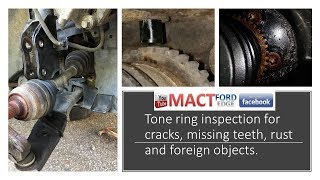
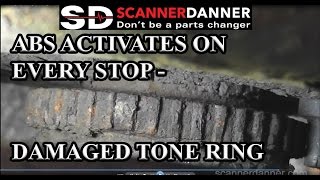
- Do not replace the wheel speed sensor without first inspecting the tone ring for missing teeth, heavy rust, or a cracked magnetic seal, which cause over 50% of these faults.
- Test the passive wheel speed sensor with a multimeter; a healthy sensor typically shows a resistance between 800 and 2,500 Ohms, while an 'OL' reading confirms internal failure.
- Expect to pay between $140 and $350 to replace a faulty wheel speed sensor at an independent shop, or up to $750 if the entire wheel hub bearing assembly requires replacement.
What Does C0030 Mean?

Code C0030 means the Anti-lock Brake System (ABS) module detects a fault with the left front tone wheel signal. The tone wheel (or reluctor ring) features teeth or a magnetic pattern and rotates with the wheel. The wheel speed sensor reads this pattern to determine wheel speed, which is fundamental for ABS and traction control. C0030 triggers when the left front wheel signal is erratic, missing, or illogical compared to the other wheels.
Technical definition: The official SAE/OBD-II definition is "Left Front Tone Wheel (Subfault)" or "Left Front Tone Wheel / Speed Sensor Fault". This indicates the ABS module detects an intermittent, missing, or incorrect signal from the left front wheel's tone wheel and sensor circuit. Some manufacturers, like Ford, use sub-codes (e.g., C0030:07) to specify a 'Mechanical Failure' like a damaged ring.
Can I Drive With C0030?
Yes, But With Caution. Yes, but drive with extreme caution. Your primary hydraulic brakes function normally, but the Anti-lock Braking System (ABS) and Traction/Stability Control are disabled. In a panic stop, your wheels will lock up, significantly increasing stopping distance and causing a loss of steering control. On slippery surfaces, the risk of losing control is high. Diagnose and repair this immediately to restore these essential safety features.
Common Causes

- Damaged or Contaminated Tone Ring (Very Common) — The tone ring is exposed to the elements. Rust, mud, or metallic debris covers the ring, interfering with the sensor's reading. Physical damage like broken or cracked teeth from road debris or pothole impacts is a primary cause.
- Faulty Left Front Wheel Speed Sensor (Common) — The wheel speed sensor fails electrically, suffering from internal shorts or open circuits. Exposed to harsh environments, it fails from heat, constant vibration, and moisture intrusion over time.
- Failing Wheel Hub Bearing (Common) — In many modern vehicles, the tone ring is an integral part of the wheel hub bearing assembly. A failing bearing introduces excessive wobble, disrupting the sensor-to-ring alignment. The magnetic ring on the bearing's seal also cracks or delaminates frequently.
- Damaged Wiring Harness or Connector (Common) — The wiring from the sensor to the ABS module is vulnerable. Wires fray from rubbing against suspension parts, connectors corrode from water entry, and pins bend or push out, leading to a lost or intermittent signal.
- Incorrect Air Gap (Rust Jacking) (Less Common) — The sensor requires a precise distance (air gap) from the tone ring to function. If rust builds up under its mounting point (a known issue on GM trucks), the gap becomes too large, weakening the signal.
- Faulty ABS Control Module (Rare) — The ABS module's internal processor or circuitry fails, causing it to misinterpret a valid signal. Consider this diagnosis only after definitively proving the sensor, tone ring, and wiring are fully functional.
Symptoms

- ABS and Traction/Stability Control Lights Illuminated — The ABS, Traction Control (TCS), and Electronic Stability Control (ESC) warning lights illuminate and remain on, as all these systems rely on the same wheel speed data.
- Erratic or Disabled ABS Function — An erratic signal tricks the ABS module into thinking a wheel is locking up during normal braking, causing unexpected brake pedal pulsation. During a hard stop, the wheels lock and slide because the ABS is disabled.
- Erratic Speedometer or Cruise Control Disengagement — On vehicles that use wheel speed sensor data for calculating vehicle speed, the speedometer behaves erratically, or the cruise control system fails to engage or disengages unexpectedly.
Diagnostic Flowchart

Tap your situation to follow the diagnostic path that matches what you're seeing on this code.
Common Fixes & Costs
- Replace the Left Front Wheel Speed Sensor — Parts: $40-$150, Labor: $100-$200, ~1.2 hr book time (DIY)
- Clean the Tone Ring and Sensor Mounting Surface — Parts: $0-$15, Labor: $75-$150, ~0.8 hr book time (DIY)
- Replace the Wheel Hub Bearing Assembly (includes tone ring) — Parts: $150-$350, Labor: $200-$400, ~2 hr book time (Intermediate)
- Repair or Replace Wiring Harness Section — Parts: $20-$100, Labor: $150-$350, ~2.5 hr book time (Professional)
- Replace the Tone Ring (if separate) — Parts: $30-$100, Labor: $150-$300, ~2.5 hr book time (Intermediate)
- Replace the ABS Control Module — Parts: $500-$1200, Labor: $150-$300, ~2 hr book time (Professional)
Used vs. New Parts: Buying Guide
When a used part is worth it: Buying used parts for this code is strongly discouraged. Wheel speed sensors and hub bearings are critical safety wear-and-tear items. A used hub assembly has an unknown history and fails quickly. A used sensor has a short remaining lifespan.
Donor-vehicle mileage cap: roughly under 10000 miles for the part to have meaningful remaining life.
Donor quality checklist:
- Avoid used hub assemblies entirely.
- Only consider a used OEM sensor from a very low-mileage wreck if a new part is unavailable.
- Cheap, unbranded aftermarket hubs and sensors cause repeat failures or immediate ABS/TCS system incompatibility.
Decision logic:
- If The fix is a wheel speed sensor. → Buy a new OEM or a high-quality aftermarket sensor from a reputable brand (e.g., Bosch, Delphi, NTK). The small savings on a cheap part aren't worth the risk of premature failure.
- If The fix is a wheel hub bearing assembly. → Buy a new assembly from a reputable bearing manufacturer (e.g., Timken, SKF, MOOG). Do not buy a used hub. A quality aftermarket part offers the best balance of value and reliability.
- If Your budget is extremely tight. → Wait and save for a quality new part rather than installing a used or low-quality hub bearing. The safety risk and repeat labor costs are too high.
Warranty tradeoff: Used parts from a salvage yard typically have a 30-90 day warranty. New aftermarket parts offer a 1-year to limited lifetime warranty. OEM parts carry a 12-month/12,000-mile warranty.
Worst-case if a used part fails: $400-$800 if a used or cheap hub fails prematurely, requiring a second replacement part and repeat labor.
What Happens If You Wait — Timeline
- 0-2 weeks: ABS and traction control lights illuminate. Safety systems are disabled. The root cause (e.g., bad bearing, wiring short) is present but has not caused other symptoms yet. (MPG impact: 0%% · Added cost: $0)
- 1-3 months (if caused by a failing bearing): If the root cause is a bad wheel bearing, a faint humming or grinding noise begins, often noticeable only at certain speeds or when turning. The bearing wear is minimal but progressive. (MPG impact: 0%% · Added cost: $0-50 in potential diagnostic fees if you investigate the noise.)
- 3-6 months (if caused by a failing bearing): The bearing noise becomes a constant growl. Wheel play (looseness) develops, leading to subtle steering wander and uneven tire wear. The bearing is now significantly damaged. (MPG impact: 0-1%% · Added cost: $250-500 for premature tire replacement due to cupping or edge wear.)
- 6+ months (if caused by a failing bearing): Catastrophic bearing failure becomes imminent. The wheel wobbles noticeably, and braking is affected. Complete failure causes the wheel to seize or separate from the vehicle, damaging the steering knuckle, CV axle, and brake components. (MPG impact: 0%% · Added cost: $700-$1500 to replace the hub, a damaged steering knuckle, and potentially an axle shaft.)
Cost of Not Fixing It
- Immediately: Loss of ABS, traction control, and stability control. This creates a significant safety risk, increasing the chance of wheel lock-up and loss of control during emergency braking or on slippery surfaces. (Added cost: Potentially infinite (cost of an accident).)
- 1-6 months: If the cause is a failing wheel bearing, continued driving leads to increased noise, vibration, and uneven tire wear. The bearing eventually fails completely, causing the wheel to wobble severely. (Added cost: $200-$1000 (cost of a new tire, damage to suspension components like the steering knuckle or CV axle).)
- 6+ months: Continued driving on a severely failed wheel bearing causes catastrophic damage to the wheel hub, steering knuckle, and brake components. The risk of a complete wheel separation at speed is dangerously high. (Added cost: $1500-$3000 (cost of replacing multiple suspension, brake, and driveline components, plus potential body damage).)
Diagnosis Steps

- Confirm Code and Analyze Live Data
Use an ABS-capable OBD-II scanner to confirm C0030. Monitor the live speeds of all four wheels while driving slowly. The left front wheel speed should read smoothly and match the others. If the reading is zero, erratic, or drops out intermittently, it confirms a problem in that corner.
Tools: ABS-capable OBD-II Scanner (Beginner) - Thorough Visual Inspection
Safely raise the vehicle and remove the left front wheel. Meticulously inspect the tone ring for cracks, missing teeth, heavy rust, or caked-on debris. Check if the sensor is securely mounted. Inspect the sensor's wiring harness for chafing, melting, or physical damage.
Tools: Jack, Jack Stands, Lug Wrench, Flashlight (Beginner) - Perform a 'Wiggle Test'
While observing the live data for the left front wheel speed sensor, have an assistant wiggle and flex the sensor's wiring harness at various points. If the live data reading cuts out or becomes erratic, it indicates an intermittent break or short in the wiring harness.
Tools: ABS-capable OBD-II Scanner (Intermediate) - Test Sensor Resistance (Passive Sensors)
Disconnect the sensor and use a multimeter set to Ohms (Ω). Measure the resistance between the sensor's two pins. A typical range is 800-2,500 Ω. A reading of infinite resistance (OL) means the sensor's internal coil is broken, and near zero means it is shorted. In either case, replace the sensor.
Tools: Multimeter, Vehicle-specific Repair Manual (Intermediate) - Check for Reference Voltage (Active Sensors)
Active sensors have two or three wires and are powered by the ABS module. Disconnect the sensor, turn the ignition ON (engine off), and check for voltage at the harness connector. You should find a reference voltage (typically 5V or 12V) on one pin and a good ground on another. If missing, the problem is in the wiring or ABS module.
Tools: Multimeter, Wiring Diagram (Advanced) - Dynamic Voltage Test (Passive Sensors)
Reconnect the sensor. Set your multimeter to AC Volts. Back-probe the two wires at the sensor connector. Safely spin the wheel by hand at about one revolution per second. You should see a small AC voltage generated (typically 0.1V-0.25V AC) that increases with wheel speed. If there is no voltage, the sensor or tone ring is faulty.
Tools: Multimeter, Back-probe Pins (Advanced) - Oscilloscope Waveform Analysis (Professional)
Use an automotive oscilloscope to back-probe the sensor's signal wire. A good passive sensor produces a clean AC sine wave. A good active sensor produces a clean digital square wave. Any dropouts, noise, or distorted patterns point directly to a damaged tone ring tooth, excessive air gap, or failing sensor.
Tools: Automotive Oscilloscope, Back-probe Pins (Professional)
When This Code Triggers (Freeze-Frame Conditions)
- Vehicle Speed: 15-45 mph (The fault registers during city or highway driving when the ABS module compares the left front wheel speed to the other wheels and detects an illogical difference.)
- Brake Status: Not Applied (The code sets during steady-state driving without brake input, especially if a damaged tone ring causes a constant signal dropout.)
- RPM: 1200-2500 (The code sets while the engine is running and the vehicle is in motion.)
- System Voltage: 13.5-14.5V (The fault occurs under normal charging system voltage, ruling out low voltage as the primary cause.)
Related Codes
- C0031 — C0031 specifically indicates an electrical fault within the Left Front Wheel Speed Sensor itself (e.g., open circuit, internal short). C0030 is broader, pointing to a problem with the signal from the tone wheel. If a resistance test on the sensor fails, C0031 is the more precise code.
- C0032 — This code, 'Left Front Wheel Speed Sensor Supply', indicates a problem with the power supplied to the sensor from the ABS module. If you test the sensor connector and find the reference voltage is missing, C0032 is the appropriate diagnosis.
- C0033 / C0034 — These are the identical fault codes but for the Right Front wheel. Seeing codes for both front wheels simultaneously suggests a systemic issue, such as a damaged wiring loom that serves both sides, or a problem with the ABS module itself.
- U0415 — This is a communication code meaning 'Invalid Data Received From ABS Control Module'. The C0030 fault causes the ABS module to broadcast unreliable data, which other modules flag as invalid. Fixing the root cause of C0030 resolves U0415.
Climate & Environmental Factors
- Road Salt and Humidity (Rust Belt/Coastal Regions): Salt and moisture accelerate rust and corrosion. This causes scale buildup on the tone ring, 'rust jacking' under the sensor's mounting point (increasing the air gap), and corrodes wiring connectors.
- Cold Weather: Extreme cold makes wiring insulation brittle and prone to cracking. Water that ingresses into a connector or sensor freezes and expands, breaking connections or cracking the sensor housing.
- Off-Road or Heavy Debris Conditions: Driving in mud, deep snow, or on gravel roads increases physical damage to the exposed tone ring, sensor, or wiring from rocks. Mud and dirt pack around the components, blocking the sensor's view of the tone ring.
How to Talk to a Mechanic About This Code
Say this: "I have an ABS light on and my scanner shows code C0030 for the left front tone wheel. I'd like to schedule a diagnostic. Please start by visually inspecting the tone ring and wiring, and check the live wheel speed data before recommending any part replacements."
This signals to the shop that you are an informed consumer. It directs them to follow a logical diagnostic procedure (inspect, test, then replace) rather than immediately jumping to the most expensive repair, like replacing a whole hub assembly when only a cleaning or a sensor is needed.
Avoid saying:
- My ABS light is on, can you fix it?
- Just do whatever it takes to fix it.
- I think I need a new wheel bearing.
Questions to ask before authorizing the repair:
- What did the live data from the left front wheel speed sensor show compared to the others?
- What was the physical condition of the tone ring and the sensor wiring? Can you show me a picture?
- If you are recommending a sensor replacement, what were the results of the electrical tests (resistance/voltage)?
- If you are recommending a hub assembly replacement, is that because the bearing has failed (is noisy/has play) or because the integrated magnetic ring is damaged?
Where to Take It: Dealer vs Independent vs Chain
- Dealer:
Recommended only if the vehicle is under warranty or if other shops have failed. Otherwise, it is not the most cost-effective choice for this common code.
Best for: Vehicles still under warranty, Complex, model-specific issues covered by a Technical Service Bulletin (TSB), When a previous shop has been unable to diagnose the problem
Downsides: Highest labor rates, Defaults to replacing a larger assembly (e.g., hub) when a smaller component (sensor) is the only issue (Typical cost: +50% vs. baseline) - Independent Shop:
Best fit. A reputable independent shop is the ideal choice for diagnosing and repairing a C0030 code. They have the necessary tools and are motivated to find the most efficient fix.
Best for: Most out-of-warranty vehicles, Getting a cost-effective and accurate diagnosis from an experienced technician
Downsides: Quality varies greatly; it is crucial to choose a shop with good reviews and ASE-certified technicians. (Typical cost: +0% vs. baseline) - Chain Shop:
Use with caution. Acceptable for a straightforward wheel speed sensor replacement if you already have a confident diagnosis. AVOID for the initial diagnosis, as they may not perform a thorough investigation.
Best for: Simple, clear-cut repairs like a confirmed bad sensor replacement
Downsides: Technician skill and diagnostic capability are inconsistent., Business model encourages upselling (e.g., recommending a hub replacement when only cleaning is needed). (Typical cost: -10% vs. baseline)
When to Walk Away From the Repair
If the estimated repair cost exceeds 50% of the car's private-party value, seriously consider replacing the vehicle. However, because C0030 disables critical safety systems, this threshold is worth exceeding if the rest of the vehicle is in good condition.
- Car worth $8000, fix is $450: Fix it. This is a relatively low-cost repair that restores critical safety features and is well below the threshold.
- Car worth $3500, fix is $700: Borderline. The repair is 20% of the car's value. Get a second opinion to confirm the diagnosis is correct. If the car is otherwise reliable, the repair is justifiable for safety reasons.
- Car worth $2000, fix is $1200: Walk away. The repair cost is 60% of the car's value. This is not economically viable. The money is better spent on a down payment for a more reliable vehicle.
What Scan Tool You Need for This Code
Minimum: An OBD-II scanner that can read and clear Chassis (ABS/SRS) codes and display LIVE DATA for all four wheel speed sensors.
A basic $20 engine code reader will not see Chassis codes like C0030. A slightly better one reads the code but won't show the live wheel speed data, which is the single most important tool for diagnosing whether the problem is the sensor, the ring, or the wiring.
Budget: BlueDriver Pro (~$99) — Connects to your smartphone via Bluetooth. It reads and clears ABS codes and graphs the live data from all four wheel speed sensors so you can visually identify the faulty one.
Mid-range: Autel MaxiCOM MK808S/MK808Z (~$350) — A full tablet-based scanner that provides all-system diagnostics, extensive live data graphing, and bidirectional controls. Bidirectional controls allow you to command ABS system components, which is useful for advanced diagnostics.
Professional: Autel MaxiSYS Series / Launch X431 Series (~$900-2000+) — Offers professional-grade, dealer-level diagnostics including advanced coding and programming functions. This is overkill for a DIYer fixing a C0030 code but is the standard for a professional repair shop.
Rent vs buy: Most auto parts stores read engine codes for free, but their ability to read ABS codes is inconsistent. Their free service typically does not include analyzing live data. For a C0030, buy or borrow a scanner with live ABS data capability to avoid misdiagnosis.
How to Clear the Code After You Fix It
- Use an ABS-capable OBD-II scan tool to clear all codes from the ABS module.
- Perform a short test drive including low-speed (under 20 mph) and medium-speed (30-45 mph) driving, with left and right turns.
- If the repair is successful, the ABS light extinguishes on its own after a few successful drive cycles.
Drive cycle (~15 minutes): After clearing the code, drive for 10-15 minutes, exceeding 25 mph. Include several smooth stops and turns. This allows the ABS module to verify the signal from the repaired wheel speed sensor is present, rational, and consistent with the other wheels.
Readiness monitors affected: None
Watch out for:
- Using a basic OBD-II scanner that cannot access or clear Chassis (C-codes) from the ABS module.
- Disconnecting the battery fails to clear the code from the ABS module's non-volatile memory.
- The code returns immediately if the root cause (e.g., a cracked tone ring, bad wiring) is not fixed.
Will This Fail Emissions / State Inspection?
No — by itself this code doesn't fail OBD inspection (but it can keep readiness monitors from setting, which causes a separate fail).
- General Note: C0030 is a Chassis code, not a Powertrain (emissions) code. It does NOT cause a failure of the OBD-II emissions test. However, the illuminated ABS warning light WILL cause a failure of the mandatory vehicle safety inspection in most states.
- California: The California Smog Check does not check for ABS codes. However, a lit ABS light indicates a safety defect that a technician notes, and it requires repair for safety reasons.
- New York: The NYS Vehicle Safety Inspection explicitly checks the ABS system. An illuminated ABS warning light constitutes an automatic failure.
- Texas: During the Texas Vehicle Inspection, the ABS warning lamp is checked. If the light is on, the vehicle fails the inspection.
Most Commonly Affected Vehicles
- Ford F-150 (2015-2020) — Presents with a cascade of 'Service AdvanceTrac' warnings. The cause is frequently a failing wheel hub bearing or a damaged sensor wiring harness.
- Dodge Journey (2009-2020) — Extremely common for the magnetic tone ring on the wheel bearing seal to crack or delaminate, causing an erratic signal. The only fix is replacing the entire wheel hub bearing assembly.
- Chevrolet / GMC Silverado, Sierra, Tahoe, Suburban (2007-2014) — Notorious for rust and scale buildup on the hub's sensor mounting surface. This 'rust jacking' pushes the sensor away from the tone ring. The fix involves removing the sensor and grinding the mounting surface clean.
- Hyundai Elantra, Santa Fe (2011-2018) — Prone to issues with dirt and metallic debris accumulating on the exposed reluctor ring or simple sensor failure, leading to ABS and ESC warning lights.
- Subaru Outback, Forester, WRX (2015-2019) — The wheel speed sensor seizes inside the steering knuckle due to galvanic corrosion, making removal without destroying the sensor very difficult.
- BMW 3-Series (E90/E91/E92) (2006-2012) — The cause is often a cracked or heavily corroded tone ring on the rear of the CV axle. The tone rings are available separately, but replacement requires removing the axle shaft.
- Ford Edge (2011-2014) — Ford's service manuals contain specific, multi-step pinpoint tests for C0030 on these vehicles. Diagnosis points to the sensor, its wiring, or the integrated hub bearing.
- Honda HR-V, Clarity (2016-2021) — Presents with a sub-code like C0030-38, specifying 'Pulse Missing'. This points to debris or contamination on the magnetic encoder surface of the wheel bearing.
Manufacturer-Specific Notes
- General Motors (Chevy, GMC): On many trucks and SUVs (2007-2014), rust builds up on the hub's flat mounting surface directly under the wheel speed sensor. This 'rust jacking' physically pushes the sensor away from the tone ring, increasing the air gap. The fix is to remove the sensor, grind the mounting surface to bare metal, apply grease, and reinstall the sensor (TSB PI0023A).
- Ford: Ford systems use a two-digit suffix to provide more detail. Code C0030:07 specifies a 'Mechanical Failure'. This helps differentiate between a wiring issue and a physical problem like a damaged tone ring or a failing wheel bearing.
- Dodge / Chrysler / Jeep: These brands heavily utilize wheel hub bearings with an integrated magnetic encoder ring that serves as the tone wheel. This ring is exposed on the inboard side of the hub and is highly susceptible to cracking, delaminating, or collecting metallic debris.
- Mazda: Mazda's diagnostic procedures place a strong emphasis on checking for improper clearance or an incorrect installation angle between the sensor and the sensor rotor. A misaligned sensor causes an abnormal signal waveform, especially at higher speeds.
Real Owner Stories
2013 Dodge Journey at 115K miles
ABS and Traction Control lights came on intermittently at first, then stayed on. No other symptoms were noticed initially.
What they tried:
- Owner first suspected a simple sensor failure. A shop scanned the C0030 code.
- Upon visual inspection, the technician found the magnetic ring on the back of the front left wheel bearing had a visible crack and a section was missing.
Outcome: The entire front left wheel hub bearing assembly was replaced. The code was cleared and did not return.
Lesson: On many Dodge/Chrysler/Jeep vehicles, C0030 is commonly caused by a failed magnetic tone ring integrated into the wheel bearing. Always visually inspect the ring for cracks or delamination before replacing the sensor.
2008 Chevy Silverado at 150K miles
ABS light would come on, and the brakes would pulse unexpectedly at very low speeds (under 5 mph), like when pulling into a parking spot.
What they tried:
- The owner replaced the left front wheel speed sensor, but the problem persisted.
- Following a forum recommendation, they removed the new sensor and inspected the mounting surface on the wheel hub.
- They found a significant buildup of rust and scale on the flat mounting surface.
Outcome: The owner used a wire brush and a small file to clean the mounting surface down to bare metal, applied a thin layer of grease, and reinstalled the sensor. This restored the correct air gap, and the problem was solved.
Lesson: On many GM trucks, 'rust jacking' is a well-documented cause (TSB 03-05-25-007) that increases the sensor's air gap. Always clean the sensor mounting surface thoroughly during any sensor or hub replacement.
2016 Ram 1500 after a brake job
ABS, Traction Control, and 'Service 4WD' lights all illuminated immediately after the owner replaced their front brake pads and rotors.
What they tried:
- The owner feared they had damaged the hub or sensor with a hammer while trying to remove a seized rotor.
- They scanned the C0030 code and re-inspected their work.
- They discovered the wheel speed sensor's electrical connector was not fully seated and had not 'clicked' into place.
Outcome: The connector was properly unplugged and re-seated until it clicked. The codes were cleared, and the lights went away.
Lesson: The wheel speed sensor connector is often disconnected during brake or suspension work. Always ensure the connector is clean, dry, and securely latched during reassembly. A 'wiggle test' of the wiring quickly identifies a poor connection.
Nissan E-NV200 in an urban area
ABS and traction control warning lights appeared on the dashboard overnight with no prior issues.
What they tried:
- A diagnostic scan pointed to a wheel speed sensor fault.
- A visual inspection of the wiring harness under the vehicle revealed that the cable leading to the sensor had been chewed through.
Outcome: The damaged section of the wiring was repaired. To prevent a recurrence, the owner installed a protective braided wrap over the new wiring harness section.
Lesson: External factors like rodents chewing on wires cause this fault, especially on vehicles parked outside. If the code appears suddenly with no mechanical cause, inspect the full length of the wiring harness for physical damage.
How to Prevent This Code From Triggering
- Clean hub and sensor mounting surfaces during brake service. (Every brake job or tire rotation.) — Proactively removing rust and debris from the tone ring and sensor mounting pad prevents signal interference and 'rust jacking' that increases the air gap.
- Apply dielectric grease to sensor connector and mounting surface. (When sensor is replaced or inspected.) — A thin layer of dielectric grease on the connector seals out moisture to prevent corrosion. Applying wheel bearing grease to the cleaned mounting surface inhibits rust formation, preserving the correct air gap.
- Inspect wiring for secure routing and integrity. (During oil changes or underbody inspections.) — Ensuring the ABS sensor wire is properly secured in its clips and not rubbing against suspension or steering components prevents chafing that leads to a broken wire and signal loss.
- Consider installing protective guards for off-road use. (Once, for vehicles frequently used off-road.) — For vehicles driven in conditions with high debris (gravel, mud, branches), aftermarket guards provide physical protection for the exposed sensor and wiring, preventing damage from impacts.
- Avoid driving through deep standing water when possible. (Daily habit.) — Submerging the hub assembly forces water and contaminants past seals and into connectors, accelerating corrosion and increasing the risk of electrical failure in the sensor circuit.
Frequently Asked Questions
Can I just clean the sensor to fix a C0030 code?
Yes, if the issue is an accumulation of metallic brake dust, mud, or rust on the tone ring or sensor tip. Cleaning the area thoroughly with brake cleaner and a wire brush restores the proper signal and resolves the code. This is the cheapest and easiest first step in any repair.
Will my brakes still work with a C0030 code?
Your standard hydraulic braking system continues to function normally. However, your Anti-lock Braking System (ABS) and traction/stability control are disabled. In an emergency, your wheels will lock up, increasing stopping distance and making it impossible to steer during a skid.
What is the most common misdiagnosis for C0030?
The most frequent mistake is immediately replacing the wheel speed sensor without performing a thorough visual inspection. The true cause is frequently a cracked tone ring, a failing wheel bearing, or a simple wiring issue. Always inspect the physical components and test the wiring before replacing parts.
Can a bad alignment cause a C0030 code?
Not directly. However, a severely worn suspension component (like a ball joint) that causes the bad alignment also creates excessive play in the wheel hub. This alters the sensor-to-ring air gap and triggers the code.
How much does it cost to fix code C0030?
Costs range from $75 for a simple cleaning to $750+ for a full wheel hub bearing replacement. Replacing a wheel speed sensor typically costs between $140 and $350 including parts and labor. Accurate diagnosis is critical to avoid paying for unnecessary parts.
Why did my ABS and traction control lights come on at the same time?
ABS, Traction Control (TCS), and Electronic Stability Control (ESC) all rely on accurate data from the same four wheel speed sensors. When one sensor provides a faulty signal, the computer cannot trust the data. It disables all these systems as a safety precaution and illuminates their respective warning lights.
What does a C0030 sub-code like C0030:07 mean?
Manufacturers like Ford use sub-codes to provide specific failure details. For example, C0030:07 indicates a 'Mechanical Failure'. This directs the technician to inspect physical components like the tone ring or wheel bearing rather than performing electrical tests.
Key Takeaways
- Code C0030 disables your ABS and traction control systems because the left front wheel speed sensor is sending an erratic or missing signal to the computer.
- Do not replace the wheel speed sensor without first inspecting the tone ring for missing teeth, heavy rust, or a cracked magnetic seal, which cause over 50% of these faults.
- Test the passive wheel speed sensor with a multimeter; a healthy sensor typically shows a resistance between 800 and 2,500 Ohms, while an 'OL' reading confirms internal failure.
- Expect to pay between $140 and $350 to replace a faulty wheel speed sensor at an independent shop, or up to $750 if the entire wheel hub bearing assembly requires replacement.
Helpful Videos

The information in this article is provided for general reference and educational purposes only. Vehicle specifications, procedures, and part compatibility can vary by production date, trim level, and region. Always consult your vehicle's factory service manual and verify part numbers before purchasing or performing repairs. Safety-critical components such as airbags, seat belts, and braking systems should be installed by a qualified professional.
- 🎬 Helpful Videos
- What Does C0030 Mean?
- Can I Drive With C0030?
- Common Causes
- Symptoms
- Diagnostic Flowchart
- Common Fixes & Costs
- Used vs. New Parts: Buying Guide
- What Happens If You Wait — Timeline
- Cost of Not Fixing It
- Diagnosis Steps
- When This Code Triggers (Freeze-Frame Conditions)
- Related Codes
- Climate & Environmental Factors
- How to Talk to a Mechanic About This Code
- Where to Take It: Dealer vs Independent vs Chain
- When to Walk Away From the Repair
- What Scan Tool You Need for This Code
- How to Clear the Code After You Fix It
- Will This Fail Emissions / State Inspection?
- Most Commonly Affected Vehicles
- Manufacturer-Specific Notes
- Real Owner Stories
- 2013 Dodge Journey at 115K miles
- 2008 Chevy Silverado at 150K miles
- 2016 Ram 1500 after a brake job
- Nissan E-NV200 in an urban area
- How to Prevent This Code From Triggering
- Frequently Asked Questions
- Can I just clean the sensor to fix a C0030 code?
- Will my brakes still work with a C0030 code?
- What is the most common misdiagnosis for C0030?
- Can a bad alignment cause a C0030 code?
- How much does it cost to fix code C0030?
- Why did my ABS and traction control lights come on at the same time?
- What does a C0030 sub-code like C0030:07 mean?
- Key Takeaways
- 🎟️ Get 5% Off