

OBD-II Code C0027: Wheel Speed Sensor Circuit Malfunction
What C0027 means, why it triggers, and how to fix it
- Code C0027 indicates an electrical fault in a wheel speed sensor circuit, immediately disabling your ABS and traction control systems.
- Over 80% of C0027 codes stem from a failed sensor, corroded wiring at the wheel hub, or a rust-damaged tone ring.
- You can drive with this code, but without ABS, your emergency stopping distance on wet roads increases by up to 37%.
- Never replace parts blindly; use an ABS-capable scanner to view live wheel speed data and pinpoint the exact failing corner before turning a wrench.
What Does C0027 Mean?

Trouble code C0027 indicates your vehicle's ABS module detects an electrical fault in a wheel speed sensor circuit. This represents an open wire, a short circuit, or an erratic/missing signal. The computer requires this speed data to operate ABS and stability control. When it detects a fault, it shuts down these systems and illuminates dashboard warning lights.
Technical definition: The SAE/ISO definition for C0027 is a generic chassis code indicating a fault in a wheel speed sensor circuit. The specific wheel location varies by manufacturer and is specified by a sub-code (e.g., C0027-01), but an ABS scanner identifies the affected wheel. The ABS control module sets this code when it detects an open circuit, short circuit, high resistance, or an implausible signal from the sensor.
Can I Drive With C0027?
Yes, But With Caution. Yes, you can drive, but with significant caution. Your regular brakes still function, but the Anti-lock Braking System (ABS) and traction/stability control are disabled. On wet surfaces, a vehicle without ABS takes up to 37% longer to stop, so repair this immediately to restore critical safety systems.
Common Causes

- Failed Wheel Speed Sensor (Very Common) — The sensor fails internally over time due to heat cycles, vibration, and moisture intrusion. This is a straightforward component failure.
- Damaged or Corroded Wiring/Connector (Very Common) — The wiring harness is exposed to road debris and constant suspension movement. Wires break internally or connector pins corrode, causing immediate signal loss.
- Debris or Rust on Sensor Mounting Surface (Common) — Rust accumulates on the magnetic tip or the wheel hub mounting hole. This increases the 'air gap' between the sensor and tone ring, weakening the signal until it becomes unreadable.
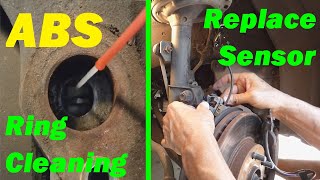
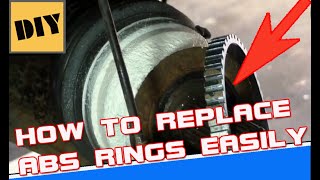
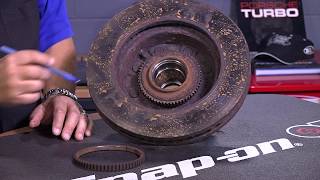
- Cracked or Debris-Covered ABS Tone Ring (Common) — The tone ring is a toothed ring the sensor reads. Rust buildup underneath causes it to crack or swell, disrupting the magnetic signal and causing an 'implausible signal' fault. 🎬 Watch: How to replace a damaged ABS tone ring.
- Failing Wheel Bearing or Hub Assembly (Less Common) — A worn wheel bearing creates excessive play in the hub. This wobble changes the air gap, leading to an erratic signal that the ABS module flags as a fault.
- Incorrectly Installed Wheel Bearing (Less Common) — Modern vehicles integrate the magnetic encoder into the wheel bearing seal. Installing the bearing backward gives the sensor nothing to read, triggering an immediate C0027.
- Faulty ABS Control Module (Rare) — The internal circuits processing the sensor signal fail, requiring module repair or replacement.
- Low Battery Voltage (Rare) — Extremely low voltage causes the ABS computer to behave erratically and set false codes. Check the battery if multiple unrelated codes are present.
Symptoms

- ABS and Traction/Stability Control Lights On — The amber ABS, Traction Control, and Stability Control warning lights illuminate and stay on because these systems share the same wheel speed data.
- ABS and Traction Control Inoperative — Safety features like anti-lock braking and traction control fail to activate during hard braking or on slippery surfaces, causing wheels to lock up.
- Erratic ABS Activation at Low Speeds — A failing sensor or rust buildup causes the ABS to activate unnecessarily under 10 mph, resulting in a grinding noise and pulsing brake pedal.
Diagnostic Flowchart
Tap your situation to follow the diagnostic path that matches what you're seeing on this code.
Common Fixes & Costs
- Replacing the Wheel Speed Sensor — Parts: $30-$150, Labor: $100-$250, ~1 hr book time (DIY)
- Cleaning the Sensor and Hub Mounting Surface — Parts: $5-$20, Labor: $75-$150, ~0.8 hr book time (DIY)
- Repairing the Wiring Harness/Connector — Parts: $10-$50, Labor: $100-$200, ~1.2 hr book time (Intermediate)
- Replacing the Wheel Hub Assembly — Parts: $150-$450, Labor: $150-$350, ~1.5 hr book time (Intermediate)
- Replacing the ABS Control Module — Parts: $500-$1,200, Labor: $150-$300, ~1.5 hr book time (Professional)
Used vs. New Parts: Buying Guide
When a used part is worth it: Buying a used wheel speed sensor rarely makes sense because new aftermarket sensors are inexpensive and warrantied. Used ABS control modules, however, save significant money.
Donor-vehicle mileage cap: roughly under 40000 miles for the part to have meaningful remaining life.
Donor quality checklist:
- Source from a low-mileage vehicle in a dry climate to minimize corrosion risk.
- Ensure the OEM part number matches exactly.
- Avoid parts if the donor vehicle suffered an accident involving the wheel area.
Decision logic:
- If The part is a wheel speed sensor or hub assembly → Buy new. The cost savings of a used part are minimal and not worth the risk of premature failure.
- If The required part is an ABS Control Module → A tested, guaranteed used module from a reputable salvage yard saves 50-70% over a new unit.
Warranty tradeoff: Used parts typically have a 30-90 day warranty covering the part only. New aftermarket sensors carry a 1-year to limited lifetime warranty.
Worst-case if a used part fails: $150-$250 if a used sensor fails after installation, requiring repeat labor costs.
What Happens If You Wait — Timeline
- 0-1 month: ABS, Traction Control, and Stability Control lights are on. These safety systems are fully disabled. The vehicle's base braking system functions normally. (MPG impact: 0%% · Added cost: $0. The primary cost is the immediate reduction in vehicle safety.)
- 1-6 months: The vehicle fails state safety inspections. If the root cause is a failing wheel bearing, it continues to degrade. (MPG impact: 0%% · Added cost: $50-$150 in potential inspection re-test fees.)
- 6-12 months: A persistent wiring issue develops a short to ground, potentially stressing the input driver circuit within the ABS control module. (MPG impact: 0%% · Added cost: Risk of secondary damage rises, turning a simple wiring repair into a module issue.)
- 12+ months: Worst-case scenario: a long-term, unresolved short damages the ABS control module. (MPG impact: 0%% · Added cost: $800 - $1,800+ to replace the ABS control module on top of the original fix.)
Cost of Not Fixing It
- Immediate: ABS, traction control, and stability control systems are disabled. This increases the risk of skidding and loss of control in emergency braking. (Added cost: Negligible in parts, but high in potential safety risk.)
- 1-6 months: Continued driving without stability control leads to uneven tire wear if braking habits change. The vehicle fails state safety inspections. (Added cost: $50-$300 for tire rotation/replacement or inspection re-test fees.)
- 6+ months: A short in the sensor wiring potentially damages the ABS control module, escalating the repair cost significantly. (Added cost: $500-$1500 for a replacement ABS module.)
Diagnosis Steps

- Read Codes and Analyze Live Data
Use an ABS-capable OBD-II scanner to confirm C0027 and identify the specific wheel location. View live data from all four sensors while driving slowly. The faulty sensor shows 0 MPH, an erratic reading, or a speed that doesn't match the others.
Tools: ABS-capable OBD-II Scanner (Beginner) - Visual Inspection of Wiring and Hub
Raise the vehicle and inspect the affected wheel's sensor, connector, and wiring harness. Look for broken wires, rubbed-through insulation, or corroded pins.
Tools: Jack, Jack Stands, Flashlight (Beginner) - Inspect the Tone Ring and Hub Play
Remove the sensor and use a flashlight to check the tone ring for cracks or missing teeth. Grab the tire at 12 and 6 o'clock to check for wheel bearing play; significant movement indicates a bad bearing.
Tools: Basic Hand Tools, Flashlight (Intermediate) - Test Sensor Output (AC Voltage or Digital)
For passive sensors, set a multimeter to AC Volts, back-probe the connector, and spin the wheel; a good sensor produces 100-250mV AC. For active sensors, use an oscilloscope to verify a clean square wave pattern switching between low and high voltage.
Tools: Multimeter or Oscilloscope, Back-probe pins (Advanced) - Check Wiring Harness Continuity
Disconnect the harness from the sensor and ABS module. Use a multimeter to check for continuity and ensure no shorts to ground exist. A significant voltage drop indicates corrosion or a broken wire.
Tools: Multimeter, Vehicle-specific Wiring Diagram (Advanced)
When This Code Triggers (Freeze-Frame Conditions)
- Vehicle Speed: 10-40 mph (The code sets when the vehicle moves, as the ABS module compares all four wheel speed signals and detects one is missing or implausible.)
- ABS System Status: Self-Test Active or Continuous Monitoring (If the circuit is open, the code sets immediately upon startup. Otherwise, it sets during driving when one sensor's reading deviates significantly.)
- Steering Angle: Varies (A damaged wire flexes during a turn, causing the signal to drop out intermittently. The freeze frame shows a specific steering angle if this is the cause.)
Related Codes
- C0035, C0040, C0045 — These are identical codes for the other wheel speed sensor circuits (e.g., C0035 for Left Front). A scanner is required to pinpoint the exact corner of the vehicle with the fault.
- U0121 — Means 'Lost Communication With ABS Control Module.' If present with C0027, it indicates a severe power/ground issue affecting the entire module, or complete module failure.
- C0057 — A 'sympathy code' stored because another primary fault exists. Fixing the primary code (like C0027) often resolves C0057.
Climate & Environmental Factors
- Road Salt and Humidity: Salt and moisture accelerate corrosion of wiring connectors, sensor mounting surfaces, and ABS tone rings. Rust buildup on the hub increases the sensor's air gap, causing signal loss.
- Cold Weather and Ice Buildup: Snow and ice pack into the wheel wells, temporarily blocking the signal. Extreme cold makes wiring insulation brittle, while temperature swings cause moisture to freeze inside connectors.
How to Talk to a Mechanic About This Code
Say this: "I have an ABS light on and my scanner shows a C0027 code. I'd like to book a diagnostic appointment. Can you please use a scanner to check live data from all four wheels and inspect the sensor, wiring, and tone ring at the affected wheel before recommending a repair?"
This signals you understand the code's common causes beyond just a 'bad sensor'. It directs the mechanic to perform a thorough diagnosis, reducing the risk of paying for unnecessary parts.
Avoid saying:
- 'My ABS light is on, can you just fix it?'
- 'I think I need a new wheel speed sensor.'
- 'Just do whatever you think is best.'
Questions to ask before authorizing the repair:
- What did the live data from the wheel speed sensors show? Did one wheel read 0 MPH or was it erratic?
- Did you visually inspect the tone ring for cracks or rust, and the wiring for damage?
- If the sensor needs replacement, does the estimate include cleaning rust from the hub mounting surface?
- What is the warranty on the recommended parts and labor?
Where to Take It: Dealer vs Independent vs Chain
- Dealer:
Best for: Vehicles still under warranty, Complex diagnostics involving a suspected ABS control module failure, Known manufacturer-specific issues covered by a Technical Service Bulletin (TSB)
Downsides: Highest labor rates, Often recommends replacing an entire assembly (like a hub) when only a smaller component failed (Typical cost: +50% vs. baseline) - Independent Shop:
Best fit for most situations. C0027 is a routine code that any competent independent shop diagnoses and fixes effectively.
Best for: Most out-of-warranty vehicles, Diagnosing and repairing common causes like a failed sensor, damaged wiring, or a bad wheel bearing
Downsides: Diagnostic capabilities vary; ensure the shop has modern ABS scan tools., Quality varies, so check reviews and look for ASE certifications. (Typical cost: +0% vs. baseline) - Chain Shop:
Use with caution. Acceptable if you are certain only the sensor needs replacement. AVOID for initial diagnosis.
Best for: Simple, pre-diagnosed repairs like replacing an easily accessible wheel speed sensor.
Downsides: Technicians lack in-depth electrical diagnostic experience., High pressure to upsell services leads to misdiagnosis. (Typical cost: -10% vs. baseline)
When to Walk Away From the Repair
If the estimated repair cost exceeds 40-50% of your car's private-party value, seriously consider selling or trading it in.
- Car worth $5000, fix is $650: Fix it. A $650 repair for a wheel hub assembly is well below the 50% threshold and restores a critical safety system.
- Car worth $3000, fix is $1600: Walk away. The repair cost for a failed ABS module is over 50% of the car's value.
- Car worth $10000, fix is $250: Fix it. A standard sensor replacement is a minor cost relative to the vehicle's value.
What Scan Tool You Need for This Code

Minimum: A scanner that reads and clears Anti-lock Braking System (ABS) codes and displays LIVE DATA from all four wheel speed sensors.
A basic $20 engine code reader cannot communicate with the ABS module. It will not see the C0027 code or provide the live wheel speed data essential for diagnosis.
Budget: INNOVA 5210 or similar (~$99) — Reads and clears ABS codes and provides live data graphing for all wheel speed sensors, the minimum needed to identify the faulty circuit.
Mid-range: FOXWELL NT630 Plus or Autel AL619 (~$130) — Provides robust ABS diagnostics, live data, and includes ABS-specific functions like automated brake bleeding. The Foxwell offers bidirectional tests.
Professional: Autel MaxiCOM MK808 / MK906BT or XTOOL D8S (~$500-1200) — Offers dealership-level diagnostics. Provides advanced features like bidirectional control to test the ABS pump, detailed wiring diagrams, and access to all vehicle modules.
Rent vs buy: For a one-time fix, use the free loaner tool program at stores like AutoZone or O'Reilly Auto Parts. Ask for an ABS-capable scanner. Buy a scanner only if you plan to do regular diagnostics.
How to Clear the Code After You Fix It
- Use an ABS-capable OBD-II scan tool to clear the fault codes from the ABS module.
- Perform a short test drive exceeding 15 mph to allow the ABS module to verify the repair.
- Re-scan the module to ensure the code does not return.
Drive cycle (~10 minutes): Start the vehicle and drive for 5-10 minutes above 15 mph. The ABS light turns off after its initial self-test and remains off if the repair is successful.
Readiness monitors affected: This is a chassis code and does not affect emissions readiness monitors.
Watch out for:
- Using a basic scanner that only clears engine codes fails to clear C0027 from the ABS module.
- Disconnecting the battery rarely clears the code from the ABS module's non-volatile memory.
- If the underlying issue remains, the code returns immediately on the next drive.
Will This Fail Emissions / State Inspection?
No — by itself this code doesn't fail OBD inspection (but it can keep readiness monitors from setting, which causes a separate fail).
- California: An illuminated ABS light is not a reason for failure in a standard smog check, but shops note it as a safety concern.
- New York: Under current NYS DMV regulations, an illuminated ABS warning light is NOT a cause for rejection during a safety inspection, though legislation proposes changing this.
- Texas: An illuminated ABS warning light is NOT a cause for rejection in the Texas vehicle safety inspection, provided regular service brakes function correctly.
Most Commonly Affected Vehicles
- Chevrolet / GMC Silverado 1500 / Sierra 1500 (2007-2013) — Prone to rust buildup on the hub mounting surface, pushing the sensor away from the tone ring. This causes signal loss at low speeds, leading to unwanted ABS activation (TSB 03-05-25-007D).
- Ford Fusion (and Lincoln MKZ) (2013-2014) — Ford SSM 44504 points to corrosion inside the wiring insulation 1-3 inches from the sensor connector, causing an open circuit even if the wire looks fine externally.
- Subaru Outback, Impreza, Forester (2005-2014) — C0027 almost always points to the rear left sensor. The most frequent cause is a cracked or rusted-out tone ring on the rear axle shaft, requiring axle replacement.
- Honda Civic, Accord, Odyssey (2006-2016) — Caused by rust buildup on the hub's sensor mounting surface. Thoroughly cleaning the mounting hole back to bare metal during sensor replacement is critical.
- BMW 1-Series, 3-Series (E90) (2004-2013) — Suffers from sensor failure or damage to the sensor tip from contact with a corroded reluctor ring. The trifecta of DSC, ABS, and brake warning lights is a classic symptom.
Manufacturer-Specific Notes
- General Motors: Rust buildup under the sensor's mounting flange causes the ABS pump to activate incorrectly under 5 mph. TSB 16-NA-298 recommends cleaning the hub surface and checking sensor AC voltage output.
- Ford: Special Service Message (SSM 44504) points to wire corrosion a few inches from the connector, causing internal wire breakdown while the exterior looks undamaged.
- Subaru: Frequently associated with the rear left wheel speed sensor. Inspecting the physical tone ring on the axle shaft for cracks is a critical diagnostic step before replacing the sensor.
- Honda: Rust buildup inside the sensor mounting hole on the steering knuckle is common. Clean the hole back to bare metal to ensure the new sensor sits at the correct depth.
Real Owner Stories
2010 Mazda 3 with 170k miles - The Misdiagnosis
After replacing both front wheel bearings, the ABS, brake, and power steering lights all came on.
Outcome: The owner discovered a common DIY mistake: press-in wheel bearings with integrated magnetic encoders were installed backward. With the non-magnetic side facing the sensor, no signal generates. The mechanic re-did the labor to flip the bearings.
Lesson: If C0027 appears immediately after a wheel bearing replacement, the bearing is likely installed backward. Confirm the magnetic side faces the sensor before pressing it in.
2003 Chevrolet Silverado - The Easy Fix
Owner experienced a grinding noise and brake pedal pulsation only under 10 mph. The ABS light flashed intermittently.
Outcome: The hub's mounting surface was covered in rust, pushing the sensor away from the tone ring. The fix was thoroughly cleaning the mounting surface to bare metal and reinstalling the original sensor. Total cost was under $20.
Lesson: On GM trucks, low-speed ABS activation is usually caused by rust on the hub, not a failed sensor. Always clean the mounting surface thoroughly.
2010 Subaru Impreza - The Unusual Cause
ABS and traction control lights were on, and a scan showed code C0027.
Outcome: Inspection revealed the metal tone ring on the axle shaft had rusted through and cracked. The sensor read a broken ring, creating an erratic signal. The fix required replacing the axle shaft to get a new tone ring.
Lesson: Always visually inspect the tone ring for cracks or heavy rust. A new sensor reading a bad tone ring fails to fix the code.
2013 BMW 3-Series - The Pothole Victim
Immediately after hitting a severe pothole, the DSC and ABS warning lights illuminated.
Outcome: The impact snapped the delicate wire inside the sensor's wiring harness, though the outer insulation looked undamaged. The fix was replacing the sensor and its integrated wiring pigtail.
Lesson: If ABS lights appear instantly after hitting a pothole, the impact likely broke the sensor's internal wiring or cracked the tone ring.
How to Prevent This Code From Triggering
- Perform regular undercarriage washes, especially in winter (Monthly in 'Salt Belt' regions) — Removes corrosive road salt that accelerates corrosion of the sensor body, wiring connectors, and tone rings.
- Apply dielectric grease to sensor connectors (Whenever connectors are disconnected) — Fills the air gap in the connector, blocking moisture to prevent corrosion on the electrical pins.
- Clean the sensor mounting surface during brake service (Every brake pad replacement) — Removing rust from the hub surface ensures the correct 'air gap' is maintained, preventing signal failure.
- Inspect wiring harness for secure mounting and chafing (During every tire rotation or oil change) — Ensures the harness isn't rubbing against suspension components, which wears through insulation and causes a short circuit.
Frequently Asked Questions
Is it safe to drive with the ABS light on?
You can drive the car, but it is not recommended. Your normal braking system works, but the anti-lock and stability control safety features are disabled. This significantly increases your risk of losing control in a panic stop, potentially increasing stopping distances by over 30%.
Why did my traction control and stability control lights also come on?
The ABS, traction control, and stability control systems all rely on information from the same four wheel speed sensors. When one sensor provides faulty data, all of these systems are disabled as a safety precaution.
Can I just clean the sensor to fix it?
Sometimes, yes. If the problem stems from metallic debris or rust buildup on the sensor tip or mounting surface, cleaning it thoroughly restores the signal. This is a highly effective first step on many GM and Honda vehicles.
Can a bad wheel bearing cause the C0027 code?
Yes. A failing wheel bearing allows for too much movement or 'wobble' in the hub, constantly changing the distance between the sensor and the tone ring. This creates an erratic signal that triggers the code.
What does 'Wheel Speed Sensor Circuit' mean?
The 'circuit' refers to the entire electrical path for the sensor. This includes the sensor itself, the wiring harness, connectors, and the processing circuits inside the ABS module. The code indicates a fault anywhere along this path.
What are common misdiagnosis mistakes for C0027?
A common mistake is immediately replacing the wheel speed sensor without checking for other causes. Technicians often find the actual problem is a cracked tone ring, corroded wiring, a rust-clogged mounting hole, or a backward-installed wheel bearing. Always inspect the entire circuit and watch live sensor data first.
I replaced the sensor and the code is still there. What now?
If a new sensor doesn't fix the code, the problem lies elsewhere in the circuit. Inspect the tone ring for damage and check the wiring harness for continuity to the ABS module. Also, verify any newly installed wheel bearing isn't facing backward.
Do I need a special scanner to read this code?
Yes. A basic code reader only reads 'P' (Powertrain) codes from the engine computer. Code C0027 is a 'C' (Chassis) code stored in the ABS module, requiring a scanner that specifically reads ABS codes.
Key Takeaways
- Code C0027 indicates an electrical fault in a wheel speed sensor circuit, immediately disabling your ABS and traction control systems.
- Over 80% of C0027 codes stem from a failed sensor, corroded wiring at the wheel hub, or a rust-damaged tone ring.
- You can drive with this code, but without ABS, your emergency stopping distance on wet roads increases by up to 37%.
- Never replace parts blindly; use an ABS-capable scanner to view live wheel speed data and pinpoint the exact failing corner before turning a wrench.
Helpful Videos



![Ford Fusion Wiring Diagrams 1999 to 2016 [Complete]](https://img.youtube.com/vi/Lgdf7Xj8IYw/mqdefault.jpg)


The information in this article is provided for general reference and educational purposes only. Vehicle specifications, procedures, and part compatibility can vary by production date, trim level, and region. Always consult your vehicle's factory service manual and verify part numbers before purchasing or performing repairs. Safety-critical components such as airbags, seat belts, and braking systems should be installed by a qualified professional.
- 🎬 Helpful Videos
- What Does C0027 Mean?
- Can I Drive With C0027?
- Common Causes
- Symptoms
- Diagnostic Flowchart
- Common Fixes & Costs
- Used vs. New Parts: Buying Guide
- What Happens If You Wait — Timeline
- Cost of Not Fixing It
- Diagnosis Steps
- When This Code Triggers (Freeze-Frame Conditions)
- Related Codes
- Climate & Environmental Factors
- How to Talk to a Mechanic About This Code
- Where to Take It: Dealer vs Independent vs Chain
- When to Walk Away From the Repair
- What Scan Tool You Need for This Code
- How to Clear the Code After You Fix It
- Will This Fail Emissions / State Inspection?
- Most Commonly Affected Vehicles
- Manufacturer-Specific Notes
- Real Owner Stories
- 2010 Mazda 3 with 170k miles - The Misdiagnosis
- 2003 Chevrolet Silverado - The Easy Fix
- 2010 Subaru Impreza - The Unusual Cause
- 2013 BMW 3-Series - The Pothole Victim
- How to Prevent This Code From Triggering
- Frequently Asked Questions
- Is it safe to drive with the ABS light on?
- Why did my traction control and stability control lights also come on?
- Can I just clean the sensor to fix it?
- Can a bad wheel bearing cause the C0027 code?
- What does 'Wheel Speed Sensor Circuit' mean?
- What are common misdiagnosis mistakes for C0027?
- I replaced the sensor and the code is still there. What now?
- Do I need a special scanner to read this code?
- Key Takeaways
- 🎟️ Get 5% Off