

OBD-II Code C0014: Right Front Wheel Speed Sensor Circuit
The Ultimate 2026 Guide to What C0014 Means, Why It Triggers, and How to Fix It
- Code C0014 flags a fault in the front passenger-side wheel speed sensor circuit, instantly disabling your ABS and stability control systems.
- Avoid driving in wet or snowy conditions, as stopping distances increase by up to 20% when ABS is disabled.
- Check the wheel hub for physical play before replacing the sensor; a failing $300 wheel bearing is the actual root cause in many GM and Ford trucks.
- Use an OBD-II scanner with live data to graph the sensor output at 5 MPH to definitively prove if the sensor is dead before buying parts.
What Does C0014 Mean?
Code C0014 means the Anti-lock Brake System (ABS) control module detects an electrical circuit malfunction for the right front (passenger side) wheel speed sensor. This sensor reports the wheel's rotational speed to the safety systems. Without this data, the ABS cannot prevent wheel lock-up, and traction control cannot prevent skids, triggering a fail-safe shutdown of these systems.
Technical definition: The SAE/ISO definition for C0014 is "Right Front Wheel Speed Sensor Circuit Malfunction". Some manufacturers use specific sub-definitions, such as C0014:01 for a general electrical failure. The code indicates a hard fault within the sensor's electrical circuit, encompassing the sensor, wiring, connectors, and the ABS control module's input.
Can I Drive With C0014?
Yes, But With Caution. You can drive the vehicle, but your Anti-lock Braking System (ABS) and Electronic Stability/Traction Control (ESC/TC) are disabled. Your wheels will lock up during hard braking, increasing stopping distance by 20% or more on slippery surfaces and causing skids. If a failing wheel bearing causes the code, ignoring it leads to catastrophic wheel separation—a repair exceeding $2,500. Prioritize this repair immediately.
Common Causes
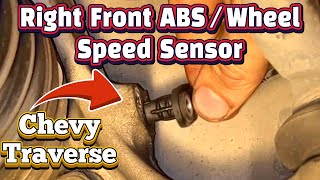
- Faulty Right Front Wheel Speed Sensor (Very Common) — The sensor is an electronic component exposed to harsh conditions. Internal failure due to age, heat cycles, vibration, or moisture intrusion is the most frequent trigger for this code. 🎬 See this step-by-step guide on replacing the front wheel speed sensor.
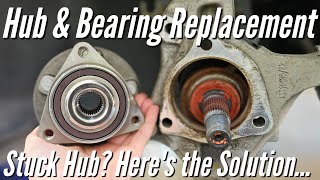
- Failing Wheel Hub Bearing Assembly (Very Common) — On modern vehicles, the sensor and tone ring are integrated into the wheel hub. A worn bearing creates excessive play, which damages the internal sensor or disrupts its signal. A grinding noise often accompanies this.
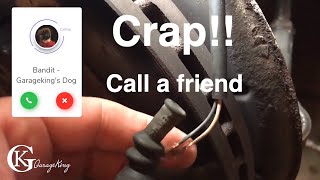
- Damaged or Corroded Wiring/Connector (Common) — The wiring harness is vulnerable to road debris and suspension movement. Wires break, chafe through insulation, or connector pins corrode from water and salt, causing a lost signal. 🎬 Watch: How to properly repair a damaged ABS wiring harness.
- Damaged or Debris-Covered Tone Ring/Encoder (Common) — The sensor reads a toothed or magnetic ring. If this ring is cracked, missing teeth, warped, or heavily coated in metallic brake dust and rust, the sensor cannot generate an accurate reading.
- Improper Sensor Installation or Air Gap (Less Common) — If recently replaced, the sensor may be installed incorrectly. An excessive air gap between the sensor tip and the tone ring results in a weak or non-existent signal.
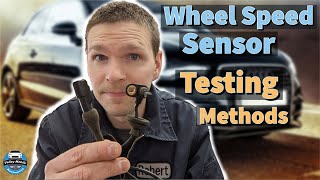
- Faulty ABS Control Module (Rare) — The ABS computer's internal driver circuit for the right front sensor burns out. Consider this only after definitively ruling out the sensor, wiring, and hub. 🎬 Watch: A pro mechanic shows how to test wheel speed sensors.
Symptoms
- ABS Warning Light On — The primary and most immediate symptom. The amber ABS light illuminates and stays on.
- Traction/Stability Control Light On — Because traction and stability control rely on wheel speed data, their warning lights illuminate simultaneously.
- Brakes Lock Up Under Hard Braking — With ABS disabled, the wheels lock and skid during a panic stop, especially on wet surfaces, leading to loss of steering control.
- Cruise Control Inoperative — Vehicles disable cruise control when a wheel speed sensor fault is detected, as it relies on this data to maintain speed.
- Unstable Braking or Pulling — The brake pedal feels different, and the vehicle pulls to one side during braking as the system operates without ABS modulation.
- ABS Activates Unnecessarily at Low Speeds — A cracked tone ring sends a false signal, tricking the ABS computer into thinking a wheel is locking up. The ABS pump activates and the pedal pulsates at low speeds.
Diagnostic Flowchart
Tap your situation to follow the diagnostic path that matches what you're seeing on this code.
Common Fixes & Costs
- Replace Right Front Wheel Speed Sensor
— Parts: $40-$150, Labor: $100-$200, ~1 hr book time
(DIY)
2014-2018 Chevrolet Silverado 1500: OEM {'brand': 'ACDelco', 'part_number': '23156576', 'estimated_cost': '$50-$80'} (Alt: {"brand": "Standard Motor Products (SMP)", "part_number": "ALS2539", "estimated_cost": "$40-$60"}, {"brand": "Bosch", "part_number": "0265009514", "estimated_cost": "$45-$70"})
2015-2018 Ford F-150: OEM {'brand': 'Motorcraft', 'part_number': 'FL3Z-2C204-A', 'estimated_cost': '$40-$60'} (Alt: {"brand": "Dorman", "part_number": "970-020", "estimated_cost": "$35-$55"}, {"brand": "Denso", "part_number": "5S12345", "estimated_cost": "$50-$75"})
2011-2018 Ram 1500: OEM {'brand': 'Mopar', 'part_number': '68145428AD', 'estimated_cost': '$60-$90'} (Alt: {"brand": "NTK", "part_number": "AB1934", "estimated_cost": "$45-$65"}, {"brand": "Walker Products", "part_number": "240-1078", "estimated_cost": "$40-$60"}) - Replace Wheel Hub Bearing Assembly
— Parts: $200-$600, Labor: $250-$450, ~2 hr book time
(Intermediate)
2014-2018 Chevrolet Silverado 1500: OEM {'brand': 'ACDelco', 'part_number': '84426461', 'estimated_cost': '$250-$400'} (Alt: {"brand": "MOOG", "part_number": "515159", "estimated_cost": "$200-$300"}, {"brand": "Timken", "part_number": "SP580310", "estimated_cost": "$220-$350"})
2015-2018 Ford F-150 (4WD): OEM {'brand': 'Motorcraft', 'part_number': 'JL3Z-1104-B', 'estimated_cost': '$300-$500'} (Alt: {"brand": "GMB", "part_number": "720-0550", "estimated_cost": "$180-$280"}, {"brand": "SKF", "part_number": "BR930896", "estimated_cost": "$250-$400"})
2011-2018 Ram 1500 (4WD): OEM {'brand': 'Mopar', 'part_number': '68283479AE', 'estimated_cost': '$280-$450'} (Alt: {"brand": "Driveworks", "part_number": "NT515139", "estimated_cost": "$150-$250"}, {"brand": "Detroit Axle", "part_number": "515139", "estimated_cost": "$120-$200"}) - Repair Damaged Wiring or Connector — Parts: $15-$60, Labor: $125-$300, ~1.5 hr book time (Intermediate)
- Clean Tone Ring and Sensor Tip — Parts: $10, Labor: $75-$150, ~0.8 hr book time (DIY)
- Replace ABS Control Module — Parts: $600-$1,800, Labor: $150-$350, ~1.5 hr book time (Professional)
DIY vs Professional
- Replace Right Front Wheel Speed Sensor — Beginner:
Tools: Socket set, wrenches, jack and jack stands, torque wrench. - Repair Damaged Wiring or Connector — Beginner:
Tools: Multimeter, wire strippers, wire crimpers, heat gun, quality weatherproof butt connectors or soldering iron/solder. - Replace Wheel Hub Bearing Assembly — Beginner:
Tools: Large socket/breaker bar for axle nut, heavy-duty torque wrench, hub puller, basic hand tools, jack and jack stands. - Clean Tone Ring and Sensor Tip — Beginner:
Tools: Brake cleaner, wire brush, rags, jack and jack stands.
Used vs. New Parts: Buying Guide
When a used part is worth it: For a standalone wheel speed sensor, buying used is never recommended due to the low cost of new parts and unknown history. For a complete wheel hub assembly, a used OEM part from a low-mileage vehicle is a cost-effective alternative to cheap aftermarket parts, but carries longevity risks.
Donor-vehicle mileage cap: roughly under 50000 miles for the part to have meaningful remaining life.
Donor quality checklist:
- Verify the donor vehicle's mileage; under 50,000 miles is required.
- Avoid parts from rust-belt states, as internal corrosion destroys the bearing and integrated sensor.
- Match the part number exactly, specifically noting 2WD vs 4WD applications.
- Ensure the used part includes a minimum 30-day functional warranty.
Decision logic:
- If The part is a standalone sensor → Buy new. The $20 cost savings for a used part do not justify the risk of premature failure.
- If The part is a wheel hub assembly and the vehicle has over 100K miles → Buy a new OEM or premium aftermarket part (e.g., Timken, MOOG, SKF) for maximum longevity.
- If Budget is the primary concern and the part is a hub assembly → A used OEM hub with verified low mileage (<50K) outperforms a cheap, no-name aftermarket hub.
Warranty tradeoff: Used parts offer a 30-90 day warranty. New aftermarket parts range from 1-year to limited lifetime warranties. New OEM parts carry a 1-2 year warranty.
Worst-case if a used part fails: $300-$600 if a used part fails prematurely, requiring repeat labor costs for replacement.
What Happens If You Wait — Timeline
- 0-4 weeks (Sensor/Wiring Fault): Code C0014 sets, ABS and TC lights illuminate. Base braking is unaffected, but ABS/TC is disabled. No physical driving symptoms exist. (MPG impact: 0%% · Added cost: $0)
- 1-3 months (Failing Wheel Bearing Cause): A faint humming or grinding noise begins from the right front wheel between 20-50 MPH. The C0014 code is intermittent. Steering feels slightly loose. (MPG impact: 0-1%% · Added cost: $0-$50 (potential for minor, uneven tire wear))
- 3-6 months (Advanced Bearing Wear): The grinding noise is constant and loud. A noticeable vibration travels through the steering wheel. The wheel exhibits significant play ('wobble'). Uneven tire wear is obvious. (MPG impact: 1-3%% · Added cost: $200-$400 (cost of a new tire due to severe cupping))
- 6+ months / Catastrophic Failure: The wheel bearing completely fails. The wheel seizes up or separates from the hub entirely, causing a total loss of control and destroying surrounding suspension components. (MPG impact: N/A% · Added cost: $2,500-$5,000+ (cost to replace hub, knuckle, axle, brake caliper, and body damage))
Cost of Not Fixing It
- Immediate: ABS and Traction/Stability Control are disabled. Increased risk of skidding and loss of control during panic braking or in slippery conditions. Automatic failure of state safety inspections. (Added cost: 0)
- 1-3 months: If the cause is a bad wheel bearing, continued driving degrades the bearing further, causing grinding noises, steering wheel vibration, and uneven tire wear. (Added cost: $200-$400 (for a new tire if wear is severe))
- 3+ months / Catastrophic Failure: Complete failure of a worn wheel bearing causes the wheel to wobble excessively, seize up, or detach from the vehicle entirely, leading to a total loss of control and severe accident risk. This destroys the axle, steering knuckle, and brake components. (Added cost: $2,500-$5,000+ (for repairs to the wheel hub, knuckle, axle, and body damage))
Diagnosis Steps
- Scan for Codes and Analyze Live Data
Use an ABS-capable OBD-II scanner to confirm C0014. Graph the output from all four wheel speed sensors and drive slowly (under 5 MPH). The right front sensor will read 0 MPH or show an erratic signal compared to the smooth readings of the other three.
Tools: OBD-II Scanner with ABS Live Data Capability (Beginner) - Thorough Visual Inspection
Safely raise the front passenger side. Locate the wheel speed sensor and follow its wire harness. Look for chafed insulation, broken wires, or impact damage. Inspect the connector for corrosion, moisture, or pushed-out pins.
Tools: Jack, Jack Stands, Flashlight (Beginner) - Inspect Tone Ring and Check Bearing Play
Inspect the tone ring for cracks, missing teeth, or heavy rust. Grab the tire at the 12 and 6 o'clock positions and rock it. Significant play or a grinding noise when spinning the wheel confirms a bad wheel bearing, which houses the sensor.
Tools: Flashlight, Brake Cleaner, Rag (Intermediate) - Test Sensor Resistance (Passive Sensors Only)
Disconnect the sensor. Set a multimeter to Ohms (Ω) and measure resistance between the two sensor pins. A typical passive sensor reads 800-2100 Ohms. An open circuit (OL) or short indicates failure. Do not resistance test active (3-wire) sensors.
Tools: Multimeter (Intermediate) - Check Harness Reference Voltage and Ground
With the key 'On', test the vehicle-side harness connector. Active sensors require a reference voltage (5V or 12V) and a ground (<0.1 Ω to chassis). Passive sensors show a small bias voltage. Lack of voltage confirms an upstream wiring break.
Tools: Multimeter (Intermediate) - PRO TIP: Back-Probe for Signal Generation
Reconnect the sensor. Back-probe the signal and ground wires with T-pins. Spin the wheel by hand. Passive sensors generate AC voltage (>250mV). Active sensors toggle DC voltage in a square wave (e.g., 0.5V to 4.5V). No signal with good power/ground confirms a dead sensor.
Tools: Multimeter, T-pins (Advanced) - PRO TIP: Analyze Signal with an Oscilloscope
Connect a lab scope to the sensor wires. A good passive sensor produces a clean sine wave; an active sensor produces a sharp square wave. Dropouts, erratic patterns, or a flatline instantly confirm a fault in the sensor or tone ring.
Tools: Automotive Oscilloscope (Lab Scope) (Advanced) - Check Wiring Continuity to ABS Module
If the sensor signal is good at the wheel, disconnect the battery, sensor connector, and ABS module connector. Check for continuity (<1 Ohm) on both wires from end to end. Check for shorts to ground or power (should read OL).
Tools: Multimeter, Vehicle-specific wiring diagram (Advanced)
When This Code Triggers (Freeze-Frame Conditions)
- Vehicle Speed: 10-40 mph (The ABS module continuously runs self-tests. The fault logs during initial vehicle movement or steady-state driving when the right front sensor signal drops out or mismatches the other wheels.)
- Brake Pedal Status: Not Applied (The code sets even without the brakes applied because the module constantly monitors sensor voltage and frequency while in motion.)
- System Voltage: 12.0-14.8V (Normal operating voltage. The code triggers due to a localized sensor circuit fault, not a systemic low-voltage issue.)
- ABS/Traction Control Status: Active/On (The system was enabled and performing self-checks when it detected the circuit malfunction, forcing the system to disable and illuminate the warning lights.)
Related Codes
- C0035 — The identical fault for the Left Front wheel. Seeing C0014 and C0035 together points to a systemic issue like a damaged central harness, a bad ground, or an ABS module fault.
- C0045 / C0050 — Codes for the Left Rear and Right Rear sensors. Multiple codes for different corners increase the likelihood of a central ABS module or power supply issue.
- U0121 — Means 'Lost Communication With ABS Control Module'. Diagnose U0121 first. Fixing the communication loss often clears the C0014 code automatically.
- C0051 — Relates to the Steering Wheel Position Sensor. A fault in the steering angle sensor circuit occurs alongside wheel speed sensor issues as part of a larger stability system problem.
Climate & Environmental Factors
- Cold Climates / Road Salt: Road salt and brine solutions accelerate the degradation of wiring insulation, connector pins, and the sensor housing. Moisture seeps into connectors, causing shorts that trigger C0014.
- High Humidity: Moisture penetrates non-sealed connectors or compromised wiring insulation, leading to corrosion and electrical faults over time.
- Off-Road / High Debris Environments: Vehicles driven off-road are highly susceptible to physical damage to the sensor and wiring from rocks. Mud packs around the tone ring, obstructing the signal.
How to Talk to a Mechanic About This Code
Say this: "I have an ABS light on and my scanner shows code C0014 for the right front wheel speed sensor circuit. I'd like to schedule a diagnostic to confirm the cause. Can you please check for a bad sensor, wiring issues, or a problem with the wheel hub assembly?"
This signals you understand the possible causes beyond a 'bad sensor'. It directs the technician to perform a comprehensive diagnosis of the entire circuit, preventing them from replacing the most obvious part without confirming it is the true cause.
Avoid saying:
- 'My ABS light is on, can you fix it?' (Too vague; invites a shop to start replacing parts without a clear diagnostic plan.)
- 'Just replace the right front ABS sensor.' (Prevents the technician from diagnosing the actual problem, which could be the wiring or hub.)
- 'I think it's the wheel bearing.' (State the code and symptoms, not a self-diagnosis. Let the diagnostic data lead the repair.)
Questions to ask before authorizing the repair:
- Did you test the sensor's signal with a scope or multimeter, or just read the code?
- Did you inspect the wiring harness and connector for damage or corrosion?
- Did you check for play in the wheel bearing and inspect the tone ring?
- If you're recommending a wheel hub replacement, is it because the bearing has failed or because the sensor is integrated and cannot be replaced separately?
- What is the warranty on the parts and labor for this repair?
Where to Take It: Dealer vs Independent vs Chain
- Dealer:
Recommended only if the vehicle is under warranty or if an independent shop confirms the ABS module requires replacement and programming.
Best for: Vehicles under warranty., Complex electrical issues requiring ABS module replacement and programming., When a manufacturer-specific quirk or TSB is involved.
Downsides: Highest labor rates and part costs., Defaults to replacing larger assemblies when a smaller component is the issue. (Typical cost: +40% vs. baseline) - Independent Shop:
Best fit. A reputable independent shop with ASE-certified technicians is the ideal choice for cost-effective and accurate diagnosis.
Best for: Most out-of-warranty vehicles., Diagnosing and repairing common C0014 causes like bad sensors, wiring, or wheel hub assemblies.
Downsides: Diagnostic capabilities vary; ensure the shop uses modern scanning tools for live data. (Typical cost: +0% vs. baseline) - Chain Shop:
Use with caution. Acceptable if you have already diagnosed the issue as a simple sensor swap. Avoid for initial diagnosis to prevent misdiagnosis of wiring or hub issues.
Best for: Simple, confirmed fixes like replacing a standalone, easily accessible wheel speed sensor.
Downsides: Technician skill and diagnostic equipment are inconsistent., High pressure to upsell services is common. (Typical cost: -10% vs. baseline)
When to Walk Away From the Repair
If the estimated repair cost for C0014 exceeds 40-50% of your car's private-party value, pause and consider your options.
- Car worth $3000, fix is $1500: Walk away. The repair cost is 50% of the car's value. It is not economically sensible unless the car is otherwise in perfect condition.
- Car worth $10000, fix is $800: Fix it. This repair is well below the threshold and is a critical safety repair.
- Car worth $5000, fix is $2200: Borderline. The repair is 44% of the car's value. Get a second opinion and evaluate the car's overall health before proceeding.
What Scan Tool You Need for This Code
Minimum: A scanner that reads and clears 'C' (Chassis/ABS) codes. A basic engine-only code reader will not see code C0014.
A cheap scanner won't communicate with the ABS module. To diagnose C0014, you must pull the specific ABS code and view the live data stream from each wheel speed sensor to identify the failure.
Budget: Autel AutoLink AL619 (~$70) — An excellent entry-level choice. It reads and clears engine, SRS, and ABS codes, confirming C0014 is active and allowing you to clear it after the repair.
Mid-range: BlueDriver Pro or Foxwell NT630 Plus (~$120-150) — Ideal for DIY diagnosis. They reliably read ABS codes and provide a live data stream. This allows you to drive the car and watch the speed readings from all four wheels simultaneously, making the failed sensor obvious.
Professional: Autel MaxiCOM MK808 / MK906BT (~$500-1200) — Provides full bidirectional control, allowing you to command the ABS module. It offers advanced live data graphing and performs ABS module programming.
Rent vs buy: Auto parts stores scan ABS codes for free, which is the best first step. If diagnosing yourself, buying a mid-range pick like a BlueDriver is a smart investment for future ABS, airbag, and engine repairs.
How to Clear the Code After You Fix It
- Use an OBD-II scan tool with ABS capabilities to clear the C0014 code from the ABS module.
- Turn the ignition off and then back on.
- Perform a test drive reaching speeds above 20 MPH to allow the ABS module to confirm the sensor reads correctly.
Drive cycle (~10 minutes): After clearing the code, drive the vehicle for 5-10 minutes, including left and right turns and reaching a speed over 20 MPH. The system performs a self-test upon startup and continuously monitors the sensors. If the repair is successful, the ABS light stays off.
Readiness monitors affected: This is a Chassis (C) code and does not affect powertrain emissions readiness monitors like the Catalyst or O2 sensor monitors.
Watch out for:
- Disconnecting the battery will not clear the code from the ABS module; a proper scan tool is mandatory.
- If the code returns immediately upon driving, the root cause (bad sensor, wiring break, or hub) remains unfixed.
Will This Fail Emissions / State Inspection?
No — by itself this code doesn't fail OBD inspection (but it can keep readiness monitors from setting, which causes a separate fail).
- California: An illuminated ABS light is grounds for a safety inspection failure. While not part of the emissions (smog) check, shops will not pass a vehicle for safety with this light on.
- New York: An illuminated ABS warning light is an automatic failure for the annual safety inspection.
- Texas: While Texas phases out safety inspections for non-commercial vehicles in 2025, the underlying brake system must still function correctly to pass.
Most Commonly Affected Vehicles
- Chevrolet / GMC Silverado / Sierra 1500 (2007-2018) — Commonly caused by a failing wheel hub assembly which integrates the sensor. Corrosion of the main ABS module ground wire under the driver's side battery tray is also frequent.
- Ford F-150 (2009-2018) — Wiring harness issues are prevalent, often chafing against the frame. The integrated hub/sensor assembly is a common failure point on later models.
- Dodge / Ram 1500 (2009-2018) — The front ABS sensor wiring is notoriously susceptible to damage from road debris and stress from suspension movement.
- Ford Explorer (2011-2019) — Widely known for premature wheel bearing and hub assembly failures, the primary cause of C0014 on this platform.
- Jeep Wrangler (JK/JL) (2007-2024) — Exposed wiring and off-road use make the wheel speed sensor circuits highly vulnerable to physical damage and water intrusion.
- Hyundai / Kia Santa Fe, Sorento, Sportage (2016-2022) — Failures stem from the sensor being integrated into the wheel bearing/hub assembly. Wiring harness connectors also develop poor connections over time.
- Subaru Outback, Forester, Crosstrek (2015-2020) — A faulty sensor disables Subaru's EyeSight system, Vehicle Dynamics Control (VDC), and All-Wheel Drive, prompting multiple dashboard warnings.
- Chrysler / Dodge Town & Country / Grand Caravan (2008-2020) — The wiring harness for the front sensors fails frequently due to fatigue from steering and suspension movement.
Manufacturer-Specific Notes
- General Motors (Chevy/GMC/Cadillac): The front wheel speed sensor is non-serviceable and integrated into the wheel hub bearing. The code almost always means the entire hub assembly must be replaced. Check the main ABS ground on the frame for corrosion.
- Ford: High-end scanners might pull a manufacturer-specific definition like 'Right Front Inlet Control', referring to an HVAC or ABS hydraulic fault, not the sensor. Use a scanner that differentiates these definitions.
- Chrysler/Dodge/Jeep/Ram: Wiring harnesses for the front sensors break internally near the connector from repeated suspension flexing, even with no visible external damage.
- Toyota / Lexus: Toyota systems set specific sub-codes (e.g., 'Short to Ground,' 'Open Circuit') that significantly speed up diagnosis by identifying the exact electrical fault.
Real Owner Stories
2015 GMC Sierra 1500 at 85,000 miles
ABS, Stabilitrak, and Traction Control lights illuminated intermittently during slow turns.
What they tried:
- Replaced the standalone right front wheel speed sensor ($60 part); code C0014 returned within a day.
- Took it to a shop that diagnosed excessive play in the wheel hub.
Outcome: Replaced the entire right front wheel hub assembly ($350 part + $250 labor). The integrated sensor and bearing were the actual points of failure. The codes cleared permanently.
Lesson: On GM trucks, intermittent C0014 during turns is a classic symptom of a failing wheel hub bearing. Checking for wheel play before replacing parts saves money.
2012 Ford F-150 at 110,000 miles
ABS light on with code C0014. Visual inspection showed no obvious damage to the sensor.
What they tried:
- Replaced the right front ABS sensor; the code returned immediately.
- Tested the harness with a multimeter and found zero voltage.
- Traced the harness and found a section near the upper control arm rubbed through, causing an open circuit.
Outcome: Spliced the broken wire using weatherproof, heat-shrink butt connectors ($15 kit). Cleared the code permanently. Diagnosis was the key to this cheap fix.
Lesson: Never assume the sensor is bad. A 10-minute electrical check of the wiring harness differentiates a sensor failure from a wiring break.
2018 Jeep Wrangler (JL) at 40,000 miles
ABS and ESC lights illuminated after off-roading. Code C0014 present.
What they tried:
- Hosed off the undercarriage, assuming mud blocked the sensor.
- Inspected closely and found the ABS sensor wire visibly torn away from the sensor body.
Outcome: Replaced the right front sensor ($50 part) and secured the new wire with extra zip ties to prevent snagging on branches.
Lesson: For off-road vehicles, physical damage is the primary suspect. Inspect the ABS wiring behind the wheels after trail use.
2016 Subaru Outback at 95,000 miles
ABS, EyeSight, and Vehicle Dynamics Control lights illuminated simultaneously. Cruise control disabled.
What they tried:
- Dealer quoted $1,500 for a new ABS module due to the number of systems affected.
- Independent mechanic used an oscilloscope to test the sensor signal directly at the wheel, revealing a flat line.
Outcome: Replaced the right front wheel speed sensor ($120 part + $100 labor). All warning lights cleared, and EyeSight resumed functioning. The ABS module was perfectly fine.
Lesson: A single sensor failure causes a cascade of warning lights on modern integrated systems. Advanced diagnosis with a scope prevents costly, incorrect repairs.
How to Prevent This Code From Triggering
- Apply Dielectric Grease to Connectors (Whenever a wheel is off for service (brake job, tire rotation)) — Dielectric grease is a waterproof sealant. Applying it inside the ABS sensor connector prevents moisture and road salt from corroding the pins, a primary cause of electrical faults.
- Regular Undercarriage Washes (Monthly, especially in winter (Salt Belt regions)) — Road salt and de-icing brines destroy electrical wiring. Washing the undercarriage removes corrosive agents before they degrade wiring insulation and connectors.
- Inspect Wiring Harness Routing (During oil changes or other maintenance) — Ensures the ABS sensor wire remains securely fastened in factory clips and does not rub against suspension components. Broken zip ties allow the harness to chafe, causing open circuits.
- Address Wheel Bearing Noise Immediately (As needed) — A humming noise is the first sign of a failing bearing. Ignoring it allows bearing play to worsen, eventually destroying the integrated sensor and triggering C0014.
- Use High-Quality Sealed Hub Assemblies (When replacement is needed) — Premium hubs (Timken, SKF, MOOG) feature superior seals against water and contaminants. Cheap hubs use inferior seals that fail quickly, allowing moisture to destroy the internal sensor.
Frequently Asked Questions
What's the difference between code C0014 and P0014?
They are completely unrelated. C0014 is a 'Chassis' code for the ABS wheel speed sensor circuit. P0014 is a 'Powertrain' code for engine camshaft timing, so engine parts will not fix this issue.
What is the most common mistake when diagnosing C0014?
The biggest mistake is immediately replacing the wheel speed sensor without performing basic checks. Always inspect the wiring for damage, check the connector for corrosion, and inspect the tone ring for debris first. These 10-minute checks save you from buying unnecessary parts.
What happens if I ignore code C0014?
Ignoring the code forces you to drive with disabled ABS and stability control, creating a major safety risk in bad weather. It also causes an automatic failure of state safety inspections. If the root cause is a bad wheel bearing, continued driving causes catastrophic wheel separation.
Can I just clear the code to fix it?
No. Clearing the code only turns the light off temporarily. The ABS module continuously self-tests and will trigger the light again within seconds of driving once it detects the physical hardware fault.
Can I replace just the sensor if it's part of the wheel hub?
No. If the sensor is integrated into the wheel hub bearing assembly, the entire hub must be replaced as a single, sealed unit. Attempting to separate them destroys the hub and the new sensor.
Can a bad alignment or new tires cause code C0014?
A bad alignment itself will not cause the code. However, careless work during an alignment or tire change easily damages the sensor or its wiring. Installing a significantly different tire size on one corner also triggers the code on sensitive systems.
Is it safe to drive in rain or snow with code C0014 active?
It is strongly advised against. Your ABS and traction/stability control are disabled, which are critical for preventing skids in slippery conditions. The risk of an accident is significantly higher without these systems active.
Key Takeaways
- Code C0014 flags a fault in the front passenger-side wheel speed sensor circuit, instantly disabling your ABS and stability control systems.
- Avoid driving in wet or snowy conditions, as stopping distances increase by up to 20% when ABS is disabled.
- Check the wheel hub for physical play before replacing the sensor; a failing $300 wheel bearing is the actual root cause in many GM and Ford trucks.
- Use an OBD-II scanner with live data to graph the sensor output at 5 MPH to definitively prove if the sensor is dead before buying parts.
Helpful Videos

The information in this article is provided for general reference and educational purposes only. Vehicle specifications, procedures, and part compatibility can vary by production date, trim level, and region. Always consult your vehicle's factory service manual and verify part numbers before purchasing or performing repairs. Safety-critical components such as airbags, seat belts, and braking systems should be installed by a qualified professional.
- 🎬 Helpful Videos
- What Does C0014 Mean?
- Can I Drive With C0014?
- Common Causes
- Symptoms
- Diagnostic Flowchart
- Common Fixes & Costs
- DIY vs Professional
- Used vs. New Parts: Buying Guide
- What Happens If You Wait — Timeline
- Cost of Not Fixing It
- Diagnosis Steps
- When This Code Triggers (Freeze-Frame Conditions)
- Related Codes
- Climate & Environmental Factors
- How to Talk to a Mechanic About This Code
- Where to Take It: Dealer vs Independent vs Chain
- When to Walk Away From the Repair
- What Scan Tool You Need for This Code
- How to Clear the Code After You Fix It
- Will This Fail Emissions / State Inspection?
- Most Commonly Affected Vehicles
- Manufacturer-Specific Notes
- Real Owner Stories
- 2015 GMC Sierra 1500 at 85,000 miles
- 2012 Ford F-150 at 110,000 miles
- 2018 Jeep Wrangler (JL) at 40,000 miles
- 2016 Subaru Outback at 95,000 miles
- How to Prevent This Code From Triggering
- Frequently Asked Questions
- What's the difference between code C0014 and P0014?
- What is the most common mistake when diagnosing C0014?
- What happens if I ignore code C0014?
- Can I just clear the code to fix it?
- Can I replace just the sensor if it's part of the wheel hub?
- Can a bad alignment or new tires cause code C0014?
- Is it safe to drive in rain or snow with code C0014 active?
- Key Takeaways
- 🎟️ Get 5% Off