

OBD-II Code C0005: In-Depth Guide to a Manufacturer-Specific Chassis Fault
What C0005 means, why it triggers, and how to diagnose and fix it like a pro
- C0005 is a manufacturer-specific chassis code that universally flags a fault within the Anti-lock Braking System (ABS) or Electronic Stability Control (ESC).
- Over 80% of C0005 codes stem from a faulty wheel speed sensor, corroded wiring harness, or a debris-covered tone ring.
- Driving is permitted, but your ABS and stability control are disabled, increasing stopping distances and the risk of skidding in emergencies.
- Diagnosis requires an advanced OBD-II scanner capable of reading manufacturer-specific ABS sub-codes and live wheel speed data.
- Always inspect the $30 wheel speed sensors and wiring harnesses before authorizing a $1,000+ ABS control module replacement.
What Does C0005 Mean?

C0005 is a generic, manufacturer-specific chassis trouble code. While it lacks a single universal definition, it almost always indicates a fault within the Anti-lock Braking System (ABS) or Electronic Stability Control (ESC). It acts as a general flag from the brake control module, requiring an advanced scanner to pinpoint the exact failing component.
Technical definition: ISO/SAE Reserved. This designation means the specific meaning of C0005 is assigned by the vehicle manufacturer. It indicates the ABS/ESC module is online and communicating, but has detected an internal or sensor fault. A professional-grade scan tool is required to extract the specific sub-code.
Can I Drive With C0005?
Yes, But With Caution. Yes, but with caution. This code disables your Anti-lock Braking System (ABS) and Traction/Stability Control. In an emergency stop, your wheels will lock up, causing you to skid and lose steering control. Stopping distances increase significantly on wet or icy roads. Do not drive the vehicle for extended periods; have it inspected immediately to restore these safety features.
Common Causes

- Faulty Wheel Speed Sensor (Very Common) — A wheel speed sensor has failed or provides an erratic signal. Located at the wheels, these sensors are highly susceptible to damage from road debris, water, heat, and corrosion.
- Damaged or Corroded Wiring/Connectors (Very Common) — The wiring harness leading to a wheel speed sensor or ABS module is frayed, broken, shorted, or corroded. Wires frequently rub against suspension components or frame parts, especially in wheel wells.
- Damaged or Debris-Covered Tone Ring (Common) — The toothed reluctor ring is cracked, missing teeth, or covered in rust and metallic debris, 🎬 See how to clean a magnetic tone ring without removing wheels. preventing accurate sensor readings. On vehicles like BMWs, rust causes the ring to swell and physically destroy the sensor.
- Low Battery Voltage (Less Common) — A weak battery causes unpredictable electrical faults across modules. Sensitive ABS electronics set fault codes when operating voltage drops below 10.5V during cranking.
- Faulty or Misadjusted Brake Light Switch (Rare) — The ABS/ESC module requires brake pedal status. A faulty brake light switch sends an incorrect signal, confusing the module and triggering a system disable.
- Failing ABS Control Module (EBCM) (Rare) — The Electronic Brake Control Module (EBCM) has an internal fault, such as a failed solder joint or short. Suspect this only after ruling out sensor and wiring issues.
- Faulty Yaw Rate / Lateral Acceleration Sensor (Rare) — These sensors measure vehicle rotation and sideways movement for the ESC system. A fault disables the entire stability system, triggering a general C0005 code.
- Sticking Brake Caliper (Very Rare) — On vehicles with advanced chassis control, a seized brake caliper prevents the system from controlling wheel speed as expected, setting a fault.
Symptoms
- ABS Light On — The ABS warning light illuminates permanently on the dashboard.
- Traction or Stability Control Light On — The Traction Control System (TCS) or Electronic Stability Control (ESC) light illuminates, as these systems share sensors with the ABS.
- ABS and Traction Control Inactive — Wheels lock up during hard braking, and traction control fails to activate on slippery surfaces.
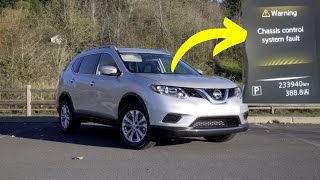
- Chassis Control System Error Message — A generic 'Chassis Control System Error' appears on the instrument cluster display, particularly on Nissan and Infiniti models. 🎬 Watch: Troubleshooting the Chassis Control System Error on Nissan models.
- Brake Pedal Pulsation at Low Speeds — The brake pedal buzzes or pulses at low speeds just before the system disables itself and triggers warning lights.
- Brake Lights Malfunctioning — Brake lights fail to illuminate when pressing the pedal, or stay on constantly, indicating a faulty brake light switch.
Diagnostic Flowchart
Tap your situation to follow the diagnostic path that matches what you're seeing on this code.
Common Fixes & Costs
- Replace a Faulty Wheel Speed Sensor
— Parts: $30-$100, Labor: $100-$150, ~1.0 hr book time
(DIY)
Chevrolet Silverado 1500 (2014): OEM ACDelco/GM: 84356647 (Alt: Standard Motor Products ALS2635, Duralast SU15096)
Nissan Rogue (2016): OEM Nissan: 47910-4CE0A (Alt: Duralast ABSD30885, NTK AB0775)
Ford F-250 Super Duty (2011): OEM Motorcraft/Ford: HC3Z-2C204-B (Alt: Standard Motor Products ALS2534, Delphi SS20379) - Repair Damaged Wiring or Connectors — Parts: $10-$50, Labor: $100-$300, ~1.5 hr book time (Intermediate)
- Clean the Tone Ring and Sensor Mounting Surface — Parts: $0-$15, Labor: $100-$150, ~1.0 hr book time (DIY)
- Replace/Adjust Brake Light Switch — Parts: $15-$50, Labor: $75-$150, ~0.8 hr book time (DIY)
- Replace ABS Control Module (EBCM) — Parts: $250-$800, Labor: $400-$1500, ~2.5 hr book time (Professional)
Used vs. New Parts: Buying Guide
When a used part is worth it: Buying a used wheel speed sensor is not recommended due to minimal cost savings and high failure risk. A used part only makes sense for an expensive ABS module assembly from a low-mileage donor vehicle.
Donor-vehicle mileage cap: roughly under 50000 miles for the part to have meaningful remaining life.
Donor quality checklist:
- Verify the exact part number match.
- Confirm donor vehicle mileage.
- Avoid parts from rust-belt regions.
- Ensure a minimum 30-day warranty.
Decision logic:
- If The part is a wheel speed sensor and a new aftermarket version is under $75 → Buy a new aftermarket part from a reputable brand (NTK, Delphi, Standard Motor Products).
- If The required part is an expensive ABS module/pump assembly → Consider a professionally rebuilt unit with a warranty. If buying used, ensure it does not require dealer programming.
- If Budget is the primary concern and the new part is over $150 → A used sensor from a reputable salvage yard with a 90-day warranty is viable, but carries a shorter lifespan risk.
Warranty tradeoff: Used parts include a 30-90 day part-only warranty. New aftermarket parts offer 1-year to limited lifetime warranties. OEM parts carry a 12-month manufacturer warranty.
Worst-case if a used part fails: $150-$300 for repeat labor and a replacement part if a used sensor fails.
What Happens If You Wait — Timeline
- Immediate: Code sets. ABS, Traction Control, and Stability Control warning lights illuminate. Safety systems are disabled. (MPG impact: 0%% · Added cost: $0)
- 0-3 months: Vehicle operates with standard hydraulic brakes. Increased risk of skidding in emergency stops. No direct mechanical damage occurs. (MPG impact: 0%% · Added cost: $0 (direct), but potential for accident costs ($500 - $25,000+))
- 3-12 months: Moisture intrusion spreads corrosion from the connector deep into the wiring harness, turning a simple fix into a complex repair. (MPG impact: 0%% · Added cost: $300-$500 in increased wiring repair costs)
- 12+ months: If triggered by an ignored failing wheel bearing, the bearing eventually fails completely, leading to a catastrophic loss of control or wheel separation. (MPG impact: 0%% · Added cost: $1,000 - $5,000+ for wheel bearing, hub, and suspension damage)
Cost of Not Fixing It
- Immediate: Loss of Anti-lock Braking (ABS) and Traction/Stability Control (TCS/ESC). This increases the risk of skidding and loss of steering control during emergency braking. (Added cost: N/A)
- 0-6 months: Increased risk of an accident in adverse weather or emergency maneuvers. (Added cost: $500 - $25,000+)
- 6+ months: No direct progressive mechanical damage occurs. The primary cost remains the significant safety risk and decreased vehicle resale value. (Added cost: Negligible direct cost, high liability risk.)
Diagnosis Steps
- Read the Code with an Advanced Scanner
Connect an advanced OBD-II scanner capable of reading manufacturer-specific ABS codes. A basic reader only shows 'C0005', while an advanced tool provides the critical sub-code (e.g., 'C0005: Right Front Wheel Speed Sensor Circuit Fault').
Tools: Advanced OBD-II Scanner (Beginner) - Monitor Live Data
Monitor live data from all four wheel speed sensors while driving under 15 mph. All sensors must read identically. A faulty sensor displays 0 MPH, an erratic reading, or a speed mismatch.
Tools: Advanced OBD-II Scanner (Beginner) - Visually Inspect the Wheel Speed Sensors and Wiring
Locate the suspect wheel speed sensor. Inspect the sensor and wiring harness for chafed wires, melted plastic, and green or white corrosion in the connectors. Focus on areas where the harness flexes or contacts suspension parts.
Tools: Flashlight, Jack and Jack Stands (Intermediate) - Inspect the Tone Ring
Look inside the hub at the tone ring. Check for broken teeth, cracks, or heavy metallic debris contamination. On some models, remove the sensor to verify if rust caused the ring to swell and contact the sensor tip.
Tools: Flashlight, Socket/Wrench Set (Intermediate) - Clean the Sensor and Mounting Surface
Rust buildup ('rust jacking') on the hub increases the air gap between the sensor and tone ring, weakening the signal. Remove the sensor and thoroughly clean both the sensor tip and the mounting surface.
Tools: Socket/Wrench Set, Wire Brush, Brake Cleaner (Intermediate) - Test Battery Voltage
Low system voltage triggers C0005. With the engine off, battery voltage must be at least 12.4V. While cranking, voltage must not drop below 10.5V. With the engine running, alternator output must be 13.5V-14.7V.
Tools: Multimeter (Beginner) - Test the Brake Light Switch
Verify brake lights operate correctly. Use a scan tool to monitor the brake switch status in the ABS module's live data, confirming the module registers pedal presses and releases.
Tools: Advanced OBD-II Scanner (Intermediate) - Pro Tip: Test Sensor with a Multimeter
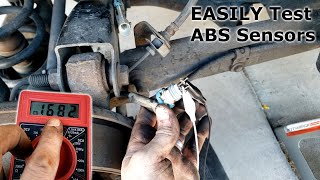
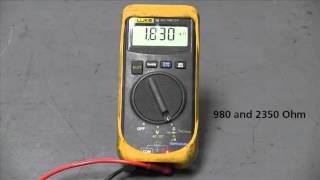
For passive (2-wire) sensors, disconnect and measure resistance (Ohms). A good sensor reads 800-2000 Ohms. Infinite resistance means an open circuit; zero means a short. Set to AC Volts and spin the wheel; it should generate 0.25V-1.0V AC. For active (3-wire) sensors, verify 5V/12V reference voltage and ground with the key on.
Tools: Multimeter, Vehicle-Specific Wiring Diagram (Advanced) - Pro Tip: Analyze with an Oscilloscope
Connect an oscilloscope to the sensor's signal wire and ground. Spinning the wheel produces a clean sine wave (passive sensor) or square wave (active sensor). Gaps or noise indicate a faulty sensor or tone ring.
Tools: Oscilloscope, Back-probe connectors (Professional)
When This Code Triggers (Freeze-Frame Conditions)
- Vehicle Speed: 10-25 mph (The fault is detected at lower speeds when the module performs self-tests or compares wheel speed signals after starting a trip.)
- Brake Pedal Status: Off (The code frequently sets during steady driving, as the module continuously monitors sensor inputs regardless of braking.)
- System Voltage: 13.5-14.5V (A low voltage reading (<11V) in the freeze frame points directly to a power supply or battery issue.)
- Wheel Speed Sensor (Faulting): 0 mph or Erratic Reading (Freeze frame data shows one sensor reading 0 mph or a value inconsistent with the other three while the vehicle is in motion.)
Related Codes
- C0035 to C0055 — Specific wheel speed sensor circuit codes (e.g., C0040 for Right Front). If present alongside C0005, diagnose the specific code first.
- U0121 — 'Lost Communication With ABS Control Module'. Indicates a power, ground, or CAN bus issue with the module itself, whereas C0005 means the module is communicating but detects an internal/sensor fault.
- B0005 — A Body code for the airbag system (e.g., Collapsible Steering Column Deployment Control on Fords). Do not confuse this with the C0005 chassis code.
- C123F — 'Yaw Rate Sensor Circuit Malfunction'. A fault in this ESC sensor causes the main module to set a general C0005 code on basic scanners.
Climate & Environmental Factors
- Road Salt / Humidity (Rust Belt Regions): Accelerates corrosion of wiring harnesses and connectors. Causes 'rust jacking' under the wheel speed sensor, increasing the air gap and destroying the signal.
- Cold Weather / Freezing Temperatures: Makes wire insulation brittle. Moisture inside sensor connectors freezes, expands, and causes intermittent open circuits.
- Snow and Ice Buildup: Packed snow in wheel wells physically blocks the wheel speed sensor's line of sight to the tone ring, causing a temporary fault.
How to Talk to a Mechanic About This Code
Say this: "I have an ABS and traction control light on, and my scanner shows a generic C0005 code. I need a diagnostic to pinpoint the specific fault in the ABS system. Please check for manufacturer-specific sub-codes and review the live data from the wheel speed sensors."
This demonstrates you understand the generic nature of the code. It focuses the shop's labor on finding the root cause (a specific sensor or wiring fault) rather than just reading the generic code back to you.
Avoid saying:
- 'My ABS light is on, can you just fix it?'
- 'I think I need a new ABS module.'
- 'Just replace the cheapest sensor and see if that works.'
Questions to ask before authorizing the repair:
- What specific manufacturer sub-code (e.g., C0040) did you pull?
- Did you verify the fault in the live data from the wheel speed sensor?
- Is the problem the sensor itself, the wiring harness, or the tone ring?
- Can you show me the damaged part or corroded connector?
- What is the warranty on parts and labor?
Where to Take It: Dealer vs Independent vs Chain
- Dealer:
Good, but expensive. Best if you suspect a complex module issue or if independent shops are stumped.
Best for: Vehicles under warranty., Complex, brand-specific electrical issues., Repairs requiring ABS module VIN programming.
Downsides: Highest labor rates and parts costs., Quick to recommend expensive module replacement over detailed wiring repair. (Typical cost: +50% vs. baseline) - Independent Shop:
Best fit for most cases. A qualified independent shop easily handles a C0005 diagnosis at significant savings over the dealer.
Best for: Out-of-warranty vehicles., Common repairs like wheel speed sensors and wiring diagnostics., Building a long-term relationship with a trusted mechanic.
Downsides: Diagnostic capabilities vary. Must vet the shop's ASE certifications., May lack the latest manufacturer-specific bidirectional tools. (Typical cost: +0% vs. baseline) - Chain Shop:
Use with caution. Acceptable if you have a specific sub-code and just need a sensor replaced. AVOID for initial diagnosis of a generic C0005.
Best for: Simple, clear-cut repairs like replacing an already-diagnosed wheel speed sensor.
Downsides: Technician skill varies widely., High pressure to upsell unnecessary brake services., Often lack advanced diagnostic tools for intermittent electrical faults. (Typical cost: -10% vs. baseline)
When to Walk Away From the Repair
If the estimated repair cost exceeds 40% of the vehicle's private-party value, strongly consider selling the vehicle.
- Car worth $5000, fix is $250: Fix it. This is a common repair and well below the threshold.
- Car worth $4000, fix is $1800: Walk away. The repair cost is 45% of the vehicle's value. Put this money towards a more reliable vehicle.
- Car worth $15000, fix is $1800: Fix it. While expensive, this repair is only 12% of the car's value and restores a critical safety system.
What Scan Tool You Need for This Code

Minimum: An OBD-II scanner specifically advertised to read and clear Chassis (C-codes) or ABS codes.
A basic $20 scanner cannot see ABS codes. It will report 'No Codes Found', which is misleading.
Budget: BlueDriver Pro Scan Tool (~$100) — Connects via Bluetooth. Reads manufacturer-specific ABS codes, clears them, and views live data from all wheel speed sensors.
Mid-range: Foxwell NT630 Plus / Autel MaxiCOM MK808 (~$150-400) — Handheld units offering robust live data, graphing, and bidirectional controls to perform an 'auto bleed' of the ABS module after replacement.
Professional: Autel MK906BT / Launch X431 Series (~$500-1200) — Provides full bidirectional control to test individual solenoids and advanced coding functions needed for ABS module replacement. Overkill for most DIYers.
Rent vs buy: For a one-time diagnosis, use the 'Loan-A-Tool' program at auto parts stores to borrow an ABS-capable scanner. Buy a tool only if you perform regular diagnostics.
How to Clear the Code After You Fix It
- Use an OBD-II scan tool to clear the chassis fault codes (C-codes).
- Turn the ignition off, then back on.
- Perform a short test drive above 15 mph to allow the ABS module to verify the repair.
Drive cycle (~15 minutes): Start the vehicle and drive for 10-15 minutes, including stop-and-go traffic and steady driving above 15-20 mph. The ABS light remains off if the repair was successful.
Readiness monitors affected: Chassis codes do not directly affect emissions readiness monitors., Disconnecting the battery during repair resets all emissions readiness monitors.
Before emissions retest: drive at least 50 miles to fully set monitors.
Watch out for:
- Clearing the code without fixing the underlying issue causes the light to return immediately.
- Basic OBD-II readers only clear powertrain codes (P-codes) and cannot clear C0005 from the ABS module.
- Skipping the test drive prevents the ABS module from confirming the sensor circuit is functioning.
Will This Fail Emissions / State Inspection?
No — by itself this code doesn't fail OBD inspection (but it can keep readiness monitors from setting, which causes a separate fail).
- California: An illuminated ABS light does NOT cause a smog inspection failure. The test focuses strictly on emissions.
- New York: An illuminated ABS warning light WILL cause a failure of the annual safety inspection.
- Texas: An illuminated ABS light does NOT cause a safety inspection failure, provided the regular service brakes pass the performance test.
Most Commonly Affected Vehicles

- Chevrolet / GMC Tahoe, Suburban, Silverado, Sierra (2007-2014) — Prone to chassis codes due to a chafed engine wiring harness routing over the transmission bell housing. Addressed in GM TSB PI1202A.
- Nissan Rogue / X-Trail (2014-2020) — Displays a 'Chassis Control System Error' message triggered by bad wheel speed sensors, low battery voltage, or dirty front radar sensors.
- Ford F-250 / F-350 Super Duty (1999-2016) — Diagnosis almost always leads to a faulty wheel speed sensor or wiring harness failure in the front wheel wells.
- BMW 3-Series (E90/E91/E92) (2004-2013) — The reluctor ring on the rear driveshaft corrodes and swells, physically destroying the wheel speed sensor.
- Honda Civic / Accord (2006-2012) — Known for setting wheel speed sensor codes due to 'rust jacking' under the sensor's mounting point.
- Subaru Outback / Legacy (2005-2014) — Searching for 'C0005 Subaru' often misleads DIYers to a knock sensor (part 2KNC0005), which is an unrelated engine part.
- Jeep / Dodge Grand Cherokee / Durango (2011-2021) — Wheel speed sensor and ABS module failures present as a generic C0005 code without an advanced scanner.
- Dodge Ram 1500 (2009-2018) — The wiring harness in the front wheel wells is a common failure point due to rubbing and exposure.
Manufacturer-Specific Notes
- General Motors (Chevrolet/GMC): On 2007-2014 trucks, the engine wiring harness chafes on the transmission bell housing, causing shorts that trigger chassis faults. Inspect this harness before replacing modules (GM TSB PI1202A).
- Nissan: A dirty front emblem or bumper sensor triggers a 'Front Radar Obstruction' warning, disabling the driver-assist suite and displaying a 'Chassis Control System Error'. Clean sensors before diagnosing.
- Subaru: A common knock sensor for 1998-2002 models uses part number '2KNC0005'. Do not mistakenly purchase this engine component for a chassis fault.
- BMW: Use only OEM or genuine OE supplier wheel speed sensors. Aftermarket sensors frequently fail out of the box. Rear reluctor rings are a known failure point.
- Ford: Related components may be covered under the factory bumper-to-bumper warranty (3yr/36k miles) or extended 'Ford Protect' plans.
Real Owner Stories
2016 Nissan Rogue at 75,000 miles
ABS and 'Chassis Control System Error' lights illuminated intermittently during wet weather.
What they tried:
- Obtained a free scan at an auto parts store, which only showed the generic C0005 code.
- Suspected a wheel speed sensor based on forums but lacked specific wheel data.
Outcome: An independent mechanic used an advanced scan tool to find a specific code for the 'Right Rear Wheel Speed Sensor Circuit'. The mechanic cleaned a corroded connector at the sensor and applied dielectric grease. Total cost was $120 for diagnostic labor. The code has not returned.
Lesson: A generic C0005 code hides a specific, actionable sub-code. Investing in a proper diagnosis prevents blind parts replacement.
2011 Ford F-250 at 120,000 miles
ABS light illuminated after hitting a large pothole.
What they tried:
- Used a basic OBD-II scanner, revealing C0005.
- Replaced the front left wheel speed sensor based on a guess. The light remained on.
Outcome: The owner removed the new sensor and discovered the tone ring was packed with mud and rust flakes. After cleaning the tone ring with brake cleaner and reinstalling the original sensor, the light stayed off. They returned the unnecessary new sensor.
Lesson: The sensor's environment—the tone ring and wiring—is just as likely to fail as the sensor itself. Thorough visual inspection and cleaning is a free, effective diagnostic step.
2008 Chevrolet Silverado at 155,000 miles
ABS and traction control lights appeared intermittently with a C0005 code.
What they tried:
- A mechanic diagnosed a bad ABS module and quoted $1,200.
- The owner sought a second opinion regarding known wiring harness issues.
Outcome: The second mechanic referenced GM TSB PI1202A. They found the wiring harness chafing against the transmission bell housing. The mechanic repaired the damaged wires and rerouted the harness for $250. The ABS system has worked perfectly since.
Lesson: Always check for Technical Service Bulletins (TSBs). Known manufacturing defects lead to faster, cheaper repairs than replacing expensive modules.
How to Prevent This Code From Triggering
- Flush and replace brake fluid every 2-3 years (Every 2-3 years) — Brake fluid absorbs moisture, which corrodes the sensitive internal components of the ABS hydraulic control unit and pump.
- Clean wheel wells and sensor areas (Seasonally or as needed) — Mud and road salt build up around wheel speed sensors and tone rings, causing corrosion or signal obstruction. A pressure wash prevents these issues.
- Apply dielectric grease to sensor connectors (When replacing brakes or sensors) — Applying dielectric grease before reconnecting a wheel speed sensor seals out moisture and prevents pin corrosion.
- Perform regular battery health checks (Annually) — The ABS control module is highly sensitive to low voltage. A weak battery causes the module to malfunction and set fault codes.
Frequently Asked Questions
Why can't I find a clear definition for code C0005?
C0005 is officially 'reserved for future use' by the SAE. Manufacturers use it as a generic flag for their own specific ABS/ESC faults, requiring an advanced scanner to read the true sub-code.
My scanner only says C0005. How do I know which wheel is the problem?
Without an advanced scanner to read live wheel speed data, you must manually inspect the wiring, sensors, and tone rings at all four wheels to locate the fault.
Can a bad wheel alignment cause a C0005 code?
No. A bad alignment does not directly cause an electrical C0005 code. However, a severely bad alignment contributes to premature wheel bearing wear, which eventually damages the integrated tone ring.
What are common misdiagnosis mistakes for a C0005 code?
The biggest mistake is replacing the ABS module without inspecting the $30 wheel speed sensors and wiring harnesses. Another pitfall is confusing the chassis code C0005 with the body code B0005 (airbag system).
Can I fix a C0005 code myself?
Yes, if the cause is a bad wheel speed sensor, dirty tone ring, or faulty brake light switch. However, diagnosing the exact cause without an advanced scan tool often leads to replacing the wrong parts.
Will clearing the code make it go away?
No. The code returns immediately upon driving if the underlying mechanical or electrical fault remains unfixed.
I found a part online with 'C0005' in the part number, should I buy it?
No. For example, a popular Subaru knock sensor uses part number 2KNC0005, which is an unrelated engine part. Always diagnose the specific cause on your vehicle before purchasing parts.
Key Takeaways
- C0005 is a manufacturer-specific chassis code that universally flags a fault within the Anti-lock Braking System (ABS) or Electronic Stability Control (ESC).
- Over 80% of C0005 codes stem from a faulty wheel speed sensor, corroded wiring harness, or a debris-covered tone ring.
- Driving is permitted, but your ABS and stability control are disabled, increasing stopping distances and the risk of skidding in emergencies.
- Diagnosis requires an advanced OBD-II scanner capable of reading manufacturer-specific ABS sub-codes and live wheel speed data.
- Always inspect the $30 wheel speed sensors and wiring harnesses before authorizing a $1,000+ ABS control module replacement.
Helpful Videos

The information in this article is provided for general reference and educational purposes only. Vehicle specifications, procedures, and part compatibility can vary by production date, trim level, and region. Always consult your vehicle's factory service manual and verify part numbers before purchasing or performing repairs. Safety-critical components such as airbags, seat belts, and braking systems should be installed by a qualified professional.
- 🎬 Helpful Videos
- What Does C0005 Mean?
- Can I Drive With C0005?
- Common Causes
- Symptoms
- Diagnostic Flowchart
- Common Fixes & Costs
- Used vs. New Parts: Buying Guide
- What Happens If You Wait — Timeline
- Cost of Not Fixing It
- Diagnosis Steps
- When This Code Triggers (Freeze-Frame Conditions)
- Related Codes
- Climate & Environmental Factors
- How to Talk to a Mechanic About This Code
- Where to Take It: Dealer vs Independent vs Chain
- When to Walk Away From the Repair
- What Scan Tool You Need for This Code
- How to Clear the Code After You Fix It
- Will This Fail Emissions / State Inspection?
- Most Commonly Affected Vehicles
- Manufacturer-Specific Notes
- Real Owner Stories
- 2016 Nissan Rogue at 75,000 miles
- 2011 Ford F-250 at 120,000 miles
- 2008 Chevrolet Silverado at 155,000 miles
- How to Prevent This Code From Triggering
- Frequently Asked Questions
- Why can't I find a clear definition for code C0005?
- My scanner only says C0005. How do I know which wheel is the problem?
- Can a bad wheel alignment cause a C0005 code?
- What are common misdiagnosis mistakes for a C0005 code?
- Can I fix a C0005 code myself?
- Will clearing the code make it go away?
- I found a part online with 'C0005' in the part number, should I buy it?
- Key Takeaways
- 🎟️ Get 5% Off